
Donating clothes? Here's how to increase the odds they'll get used!
In recent years, I've done some volunteering at an organization near us that helps people who are coming out of homeless situations.
Part of this volunteer work involves putting together boxes of donated clothing, and the process I've helped with is the initial sorting and culling of the donated clothes.
If you're donating clothing to a charity, you obviously want your clothing to be used, not thrown away.
But I've seen a lot of instances where the charity was just a pit stop on the way to the trash; a lot of donations never can be used!
So, I've learned a few things that can help you be a smarter clothing donator.
1. Wash your donations
Most places that accept donations do not have the ability to wash the donations.
And most places do not want to give or sell dirty clothes, which means they just get thrown away.
I've had to throw away things like an otherwise perfectly good men's coat. And had that coat been clean, it could have really served someone.
A clean item has a much higher chance of being used, so do your laundry first!
2. Rubber-band or tie shoes together
It is really, really easy to get shoes separated when you have massive amounts of donations to sort through. And shoe singletons got thrown away during my shifts.
So, take a minute to somehow attach pairs of shoes (hook the straps together or use rubber bands), especially if they are baby/toddler/kid shoes.
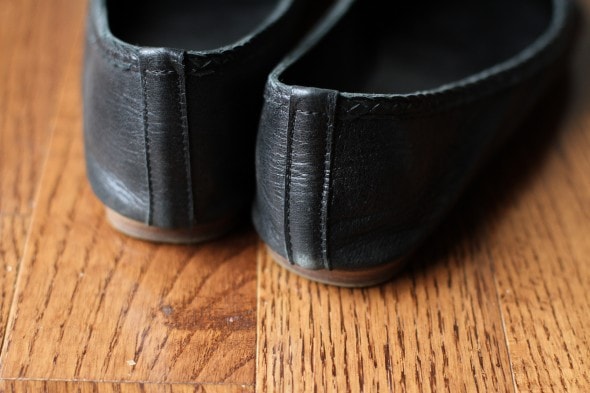
Rubber bands can break, certainly, but at least you're giving the shoes a fighting chance to be used.
3. Rubber-band tops and bottoms together
We got a lot of donated kid pajama tops and bottoms, and while I tried to find matching sets whenever possible, it was a little tough.
If you are donating two-piece items (adult or kid), try to secure them together somehow because matched sets are much more useful.
(Random insertion: I know this post is about clothes, but if you donate other items, such as baby gear, make sure all the pieces are together. I've come across some seriously random pieces that have confounded me!)
4. If it's a quick repair, do it before donating

If something is missing a button, has a broken zipper, or has holes, it will likely get trashed or sent off to recycling.
I totally understand if you don't want to replace a zipper before you donate something (that's such an annoying repair job!)
But if you have a minute to sew on a button, it will help your item get used.
5. Check for a place that accepts socks/underwear/bras
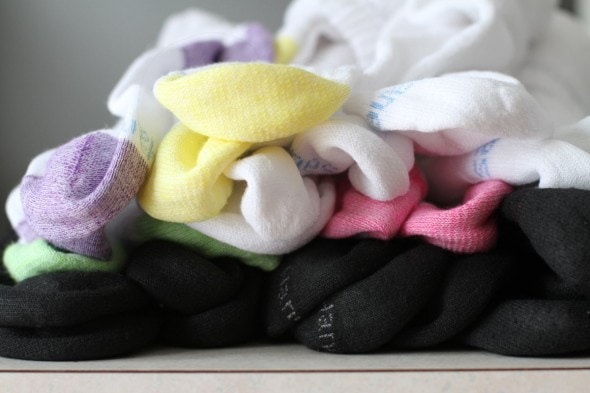
The organization I volunteer with can only keep and distribute brand new socks, bras, and underwear.
However, there are some places that can use those items, so instead of throwing them in with the rest of your donations, set them aside for a place with a specific use for them.
6. If your clothing is trash, try to make sure it gets recycled
(Edit: I initially suggested just throwing it out, but upon further reading, I've concluded that it does still seem to be more eco-friendly to give clothing to an organization that will try to reuse it in some way.)
However, there are a number of organizations that recycle unusable clothing, (or really, downcycle into something like industrial stuffing) so check to see if that's the case with your charity.
Generally speaking, usable items make the best donations, though: see the FAQs here from the American Textile Recycling Service.)
7. If you have a specialty item, try giving it away on a local group
The charity where I volunteered can make best use of items that are widely useful.
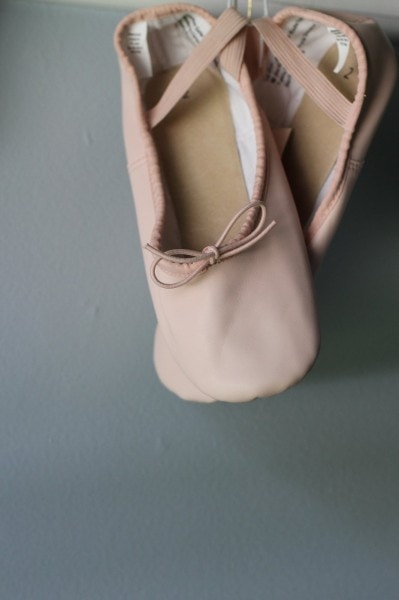
If you have specialty gear like a sports-related item, dance items, and so on, list them on your local Facebook group, Buy Nothing Group, or Next-door.
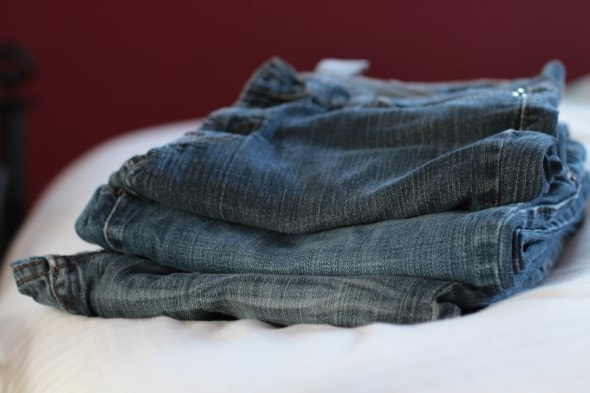
I've also managed to give away a bag of jeans with holes in them on these groups (someone did crafts with them)
It takes a little extra work, yes, but the satisfaction of knowing I paired my item with someone who wants it?
Totally worth it to me.
Can't bear to throw it out? Repurpose it at home.
A few ideas:
- No one wants your old family reunion t-shirt, so cut it up and use the pieces for cleaning rags.
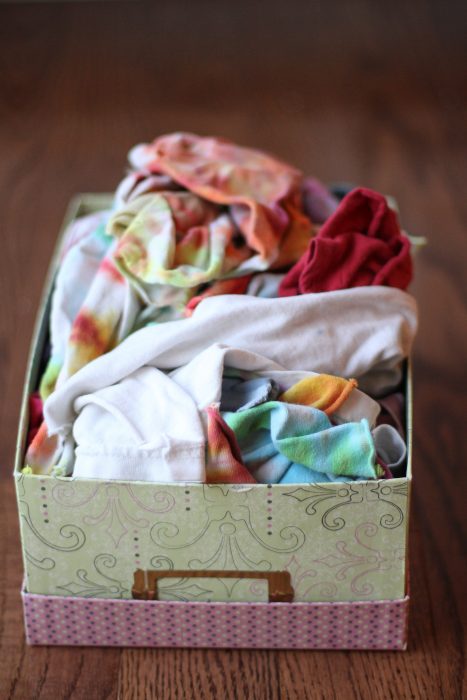
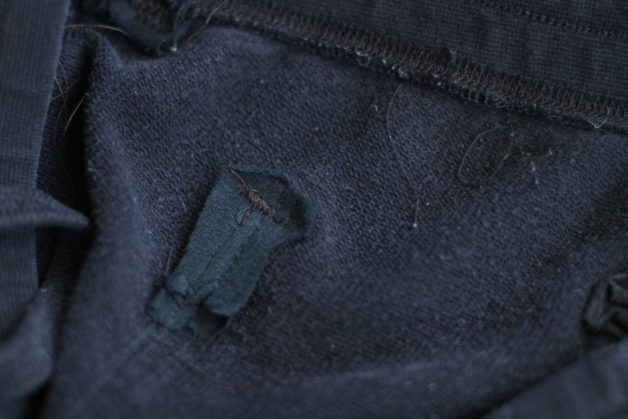
- Those kid leggings with holes in them? Keep a pair in your rag bag to use for repairs, like I do.
- Use a stained t-shirt as your painting shirt.
(I firmly believe in having both a summer and winter set of painting clothes!)
- Use old clothing to cushion your holiday items when you store them away.
- If you have old towels or blankets, you can donate them to animal rescues (I can attest to the fact that we use them where we volunteer.)
Readers, any other tips to add to mine?
P.S. On recycling: here's a BBC article about why clothes are so hard to recycle.
And here's another article on the problems with fabric recycling efforts.
P.P.S. A slightly related note: buying well-made, classic clothes, and taking good care of them is also a good way to prevent clothing waste. These types of clothes will last you a long time, or if you donate them, they'll likely be of use to someone else as well.



I respectfully disagree. The best thing to do is call the place you are considering donating to and ask them about their specific policies. The thrift shop near me recycles clothing they can't sell and washes everything before selling it (I still wash stuff before donating). They also accept stuffed animals, which many people have told me to throw away because thrift shops won't take them. It all depends!
Oh wow, I've never heard of a thrift store that has washing capabilities; that's great.
I volunteer at a thrift store. We're lucky to have a washer/dryer and a dishwasher, but using them takes time and resources, both of which take away from our goals by adding costs.
Love the DIY dryer ball suggestion! I'll be there tomorrow, watching for wool sweaters with holes.
Ooh, a dishwasher too! That must be very handy.
A lot of people who have dogs would gladly take elderly stuffed animals. Our dog feels the need to eviscerate every stuffed animal he sees, and spends the next few days carrying the body parts around like a trophy. Then we give him a new one and the cycle starts all over again. We love it when someone offers us their kid's castoff stuffies or I see them on the free FB group.
These are all such great tips! Thanks for sharing.
THANK YOU! When donating, I use the rule of "If I'd be embarrassed to give it to a friend as-is, then it's not good enough for a stranger, either!" Anything that isn't friendship worthy--clean and in good repair--is for the rag bin, chore clothes, or our local no-kill shelters.
This was a great post. Thank you.
I laughed at one of your very last bullet points, about storing holiday items in old clothing. My parents made a manger scene when they were first married. The ceramic figurines painted by my mom are wrapped for storage in old t-shirts and so on from our childhood, and it never fails to make us laugh to see our old, questionable clothing from the 80s. Also, when my dad first got a cell phone, it was huge and had no case, because that's what they were like in the 90s, so he used one of my old hot-pink 80s-style socks to keep it in. The Cell Phone Sock is part of family lore.
Anyway. Thanks for jogging those particular memories.
I had been told that Goodwill will take un-wearable clothes and cut them into rags to sell. Is that not the case? 🙁
The rag business is a complicated issue. Basically, the plainer and simpler the clothes are, the more likely they are to be turned into usable rags. For instance, a plain cotton t-shirt is useful as shop rag material; a nylon windbreaker with a broken zipper is not.
Even a cotton sweatshirt that has glitter or rhinestones on it (you know how little girl's clothes often do) is apparently not useful for cleaning rags.
I read a book about this topic and I cannot for the LIFE of me remember what it was called, or I would link it here. I remember the author interviewing rag companies and they said that there are fewer and fewer usable clothes-to-rags materials coming through because of things like synthetic fabrics, cheap fabrics, screen-printing, etc.
Are you referring to "Secondhand?"
Secondhand: Travels in the New Global Garage Sale by Adam Minter
Oh my gosh, yes! That's the one. Thank you!
My daughter works for a charity. She says that the biggest earner was rag so you should donate a cloths past there best.
Theses are great points. I try only to donate good useable items to my favorite thrift store. My community has a recycling drop off center for clothing and shoes that I use. I also try and match unwanted items to the user and utilize my Buy Nothing Group.
Of course, some things which some may consider unwearable such as super distressed jeans and vintage t-shirts are highly sought after. Check eBay or vintage app Depop.
Crafting and upcycling can get the last bit of life out of items. Here are a few ideas-
*Making wool dryer balls from an old sweater is super easy and requires little skill. Here’s that link. https://www.hgtv.com/lifestyle/clean-and-organize/diy-dryer-balls
*I have made throw pillows from unwearable clothing. Hawaiian print pillows are adorable on a porch.
* I have a girlfriend who collects cashmere sweaters with holes. She cuts the fabric into large squares and stitches them into luxurious cashmere throws.
I’m sure there are lots of ideas out there!
My daughter has a pretty successful Depop shop!
I still feel guilty and terrible that I threw away my little kids' high quality shoes when they outgrew them. It never occurred to me that anyone would want used kids' shoes. Ugh, I think I'll go make a donation to charity to feel better about it.
Also--it drives me crazy when people try to sell their old stuff at tag sales, etc, and then donate the unsaleable things. It's not really charitable to give away worthless items. These are people who are cheap, not who genuinely need every dime they can get.
Ah, you didn't know what you didn't know! It's ok; none of us handles these things perfectly.
To the second part of your comment: the organization I've worked with tries really hard to give their clients decent clothing, and I appreciate that they show their clients that level of dignity and respect. They don't want to give formerly homeless people embarrassingly worn or out-dated clothes.
Kristen--you are so sweet. Thank you.
I need to go through my clothes--I have wayyyyy too much. My plan is to get rid of 2/3 of what I have. I feel less guilty buying too many clothes if I can bless someone else with what I have.
I appreciate this post of yours so much. It is really very, very useful.
I will say--I loved, loved, loved splurging on my children's clothes back in the day--I treated them like dress up dolls and enjoyed every minute of it. Except for a few very special pieces, all of it was handed down and donated to others. So there's that, anyway.
You know what I loved? Little girl dresses. So fun! Here's a little photo collection of a white dress my girls all wore: https://www.thefrugalgirl.com/little-black-dress-nothin/
Oh, and this little pink striped dress. I LOVED this one. https://www.thefrugalgirl.com/i-bought-something-that-wasnt-on-clearance/
Rose, I'm a little confused by your last paragraph.....my husband and I had a yard sale two years ago, and what didn't sell was carted off to Goodwill. We didn't get a lot of shoppers, and there were a lot of very useful leftover items that we simply didn't want, need, or have room for - lamps, small kitchen appliances (a working, clean mini-food processor, for example), kid's clothes, for example. I don't consider us cheap people. Frugal, yes, but not cheap. (I should say, the only reason we had a yard sale was because our son wanted to have one.....I think he's over that now, lol).
I've tried having a yard sale a few times and man, I just found it to be so much work for so little reward. I'd rather just list things on eBay or Facebook Marketplace. I have decided that hosting a yard sale is just not for me.
Kristen, that has been our experience as well. Hubby and I had no interest in having a yard sale, and our son was bored after about 30 minutes. We do sell things on Facebook Marketplace, and sell or give away items on Next Door as well. We do not have a local Buy Nothing group.
Two friends and I hold a yard sale once a summer. We rotate the location and the host has to provide lunch while the other two bring donuts (the only time I get donuts!). We have a lot of fun chatting whenever the traffic slows, so if we don't make a lot no one worries about it. We even did it during the pandemic, behind masks and we gave disposable masks to people who walked up the driveway and also had hand sanitizer available. I would never do a yard sale if left to my own devices. The hosts also takes the leftovers to the dump or the Salvation Army, depending on the condition of the items. The last hour we make everything 50 cents, no matter what it is. We usually have very little left over when we close up.
I think I have the messiest kids on the planet, getting permanent stains on every single item of clothing they own. I hate throwing away clothes in good shape that happen to have a small pen mark or similar. Before throwing them away after my kids have outgrown them, I've made a habit of checking with a friend whose son uses our hand-me-downs. She doesn't mind clothes in play condition as her son is equally messy. Another idea is to offer them in a buy nothing group.
I do wish I knew how to recycle old fabrics/discarded clothes.
You might check with your local government recycling center; I know ours has some clothing recycling options, where you can separate unusable items from usable items.
Is visible mending a thing in the US? It can be done to cover stairs as well as fixing holes. Here in Norway it seems that it’s starting to be a mainstream thing instead of just the «hippies» 🙂 I find it quite meditating to do while we’re relaxing at the evenings.
Gunn, I haven't heard of it here in the States, but I'm not too surprised if it were to become more prevalent. My husband and teen son are very good with mending their jeans and don't mind the rips or seams, since many jeans come that way out of the store. I also place patches on the inside of my twins' pants to reinforce the knees as soon as they start to show any wear.
Most of my closet is secondhand and I really wear it down to the threads. My husband doesn't like shopping, so he buys clothes from really well-made domestic manufacturers that are pretty expensive, but then he wears them for a decade or more.
I never thought to rubber-band (is that now a verb???) shoes together. I always match up clothing items that go together to make it easier but I never used a rubber band to connect them--now I'm questioning how they are sorted. Are they carefully removed from their boxes/bags or are they thrown willy-nilly in a pile??? Thanks for giving us some insight into this, Kristen. I do suspect that different agencies handle donations differently so it might be worth checking with individual ones to see what their policies are. I know that our Goodwill will take items such as electronics that aren't working correctly, as they use it for training purposes (re-wiring and so on) for some of their employees. I typically ask at the door if I have a question about whether or not I can donate an item--so far, I've always been given the green light.
At the charity where I have volunteered, the bags get dumped onto a big table and then sorted through. I have no idea how it works somewhere like Goodwill, though; I look at their drop-off area and feel so overwhelmed at the amount of stuff they have to sort through! It seems like it would be extremely easy for things to fall through the cracks.
I figured it makes sense to give your matched items the best possible chance to stay together, so that's why I do the rubber band thing.
I think it's always a good idea to ask your specific charity about what they do and don't accept because like you said, sometimes even broken things could be useful to some charities.
I agree with all your tips for clothing donation. I also sometimes sort donations for a local organization. Another helpful thing is to generally sort into boxes before you donate and label the boxes...Women's Clothing, Kids Clothes 4T-6X, Hats and Scarves, etc.
If you have a yard sale, that can also be a great place to send clothes to a new home. I sell some of the best clothing, but I put most of it on my free tables. Whenever I have a yard sale, we do a free table to one side where people can help themselves. Pretty much all of it is gone at the end of the day!
I just donated some garden things and I made sure to clean everything up really good before donating.
Also if I have small things I put in zip lock bags and label what they are.
And just recently I have started rubber banding things together.
I don't know if it is due to covid or just lack of volunteers at my local church thrift shop but now we dump our stuff in bins marked with general labels and I have been concerned about things separating.
Thanks for sharing, Kristen. These are great tips that I haven't seen elsewhere. A donation isn't very helpful if it cause it's a net negative for the organization receiving it!
And if an item can't be used for the main purpose of the organization, that's a bummer, especially if the solution is as simple as throwing something in the washing machine.
When you donate to the organization I've volunteered with, you are hoping to help meet the needs of people who are coming out of homelessness. And the best way to do that is to donate an item that is either useful for the formerly homeless person or something that the charity can sell to raise money.
So either way, it helps the charity the most if we donate things that are clean, usable, and have all the parts.
Adding another comment here ... when my kids were little, I would take outgrown clothing to the local resale shop. I DID donate the items that the resale store didn't want--it wasn't due to the condition of the clothing that that the shop didn't keep them--it was because, in our area, only name-brand items (Old Navy, Gap, Children's Place, etc.) were the ones that would get purchased. Items from, say, Target or Walmart didn't sell, but that didn't mean that they were meant for the dumpster. Mine were still in good condition and I felt they were good options for people who wanted decent clothing for their kids but were on a strict budget. My rule of thumb was .... if I had a younger child of the same gender, would I pass it along to them? If my answer was no, then I pitched it. If yes, then it got donated.
Another thought--sometimes schools will take winter clothing items to share with kids who don't have them. Even if they were getting worn in the knees, the teachers were thrilled when I donated snow pants. Hats and mittens were also eagerly received. Some protection from the winter elements during recess was better than none at all.
I don't know why I never thought of using a rubber band on my shoes. I have tied shoelaces together before, however.
I always wash before donating, because it irks me no end to see people have donated dirty items, and not just clothes. I try to "market" my items in my yard sales by washing them, removing stains, and folding neatly, and gathering all the pieces of any multi-piece items, using tape, bag, box, whatever, so I bear that in mind when I donate. I try to make it easy for the thrift store to market the item as well.
I rarely throw away clothes, but it really is hard to re-use polyester, nylon, and other non-natural fabrics, and I haven't found a place even remotely near me where I can recycle any clothes for their fabric, so far. It gets disheartening, trying to get rid of clothes that I can't in good conscience donate, and aren't useful to me as anything else. I hate it when I end up throwing it away.
These were all good tips, though, and I'm glad you had the experience of sorting, so you can let us know how to help!
I agree - I try really hard to find homes for clothing so it doesn't end up in a landfill, but it's hard! I do have an outstanding selection of cleaning cloths. : )
If you have any Planet Aid collection bins around, they seem to cast a wider net for clothing: "nonprofit organization that collects and recycles used textiles to protect the environment and support sustainable development in impoverished communities around the world... A portion of that good-quality clothing goes to domestic thrift stores, but the majority is sold to overseas customers. This is a result of the high demand for used clothing in developing countries and the relatively low demand for used textiles in the U.S."
A tip for tops and such in polyester is to sew reusable giftbags. The easiest way is just a bag with no closure, for gifts one can just tie the top with a ribbon. But I like to sew drawstringbags so the reciever can use them as shoebags or for underwear when travelling (when we can do that again).
I find that the arms make great bags for winebottles ☺️
I sell clothing and household items on Poshmark and to get my items for resell, I go to garage sales and the Goodwill Outlet (where clothing can be bought by the pound). With garage sales, I often find clothing (especially children's clothing) that is far too expensive. (My limit is $2 or less, depending on the item.) I always shake my head that people think they can get rich by trying to sell children's clothing for $3 and more per item. (A coat for $3, yes. A tee-shirt for $3, no way.) Even when I buy clothing for my grandkids, I won't pay more than $2 for an item, and even then, $2 is $1.50 too much!
With the Goodwill Outlet, clothing is simply dumped into large table-like bins that the purchaser then sorts through. I would say about 30% of the clothing there is trash and not wearable due to stains, damage, or wear. Another 20% is very outdated or extremely low quality. It is worth my time and energy to spend a couple of hours sorting through clothing which has the quality level to be wearable and is right for resell, but it's disappointing to know so much obvious trash is donated in the first place.
I have heard that Goodwill will take clothing in any condition (although it should be clean!) and it will get sent to a textile recycler if not sold. My guess is they throw everything into the Outlet Store bins first, giving it a chance to be sold first, then sort it afterward for recycling. It does take some work to find the “gems” at the Outlet, but that’s why the prices there are so good.
Did you know you can donate gently used shoes to DSW? They then send them to the Soles for Souls organization. And by doing this you also get rewards to use for future purchases at DSW!
Xoxo
Jodie
www jtouchofstyle.com
Thank you, Jodie! 🙂 I didn't know that.
If you've got sneakers that are beyond repair, and you've got a Nike store nearby, they'll take them. Nike shreds them up and turns them into playground ground cover.
I just love watching videos on how companies or even towns recycle clothing (and other things) to come up with something new. For example, I watched one on an innovative woman from Australia who came up with a blend of glass and clothing to create kitchen tiles, for example. I absolutely love the idea of repurposing. Here's a few things I've done with old clothing:
-A colorful skirt that didn't fit is now a Christmas tree skirt
-We don't use top sheets so they go to our dog. They are light and easy to wash and dry and are quick to change out of her crate
-Same story with worn out fitted sheets that have lost their elasticity
-I made 2 duvet covers for my daughters out of red /red & white patterned clothing from things around our house and purchased from thrift stores. They are well loved. Girls are much older now and still use them.
-Old T-shirts can become throw pillows or frames Art (ex: concert tees, or that marathon you ran)
-Finally, just Google "Laundry Art" for fun 🙂
Thanks Kristen for all you do to inspire us all and to foster and encourage such a sunny, positive atmosphere in the real and virtual worlds : )
Great info!
Here in West Africa people buy big bundles of used clothes from other countries and sell the items individually. I've bought many clothes this way. Sometimes they'll still have a tag from a thrift store on them.
Oh, that's so interesting to hear! I've read about this practice in books about trash and clothing; it's wild how our stuff travels the globe.
Yeah, sometimes I wonder about the life of an article of clothing. Sold in the US and worn, makes its way across the ocean where I buy it, and then when I'm back Stateside, I take it back with me
If clothes could talk, the stories they would tell!
See this early article by the excellent journalist George Packer; hope you can read it over the NYT paywall (https://www.nytimes.com/2002/03/31/magazine/how-susie-bayer-s-t-shirt-ended-up-on-yusuf-mama-s-back.html). And I'll never forget the extra gallon or so of air I sucked in about 20 years ago when I was watching a BBC World News story about Zimbabwe and saw a village resident walking down a dusty road wearing an "Onondaga Tennis" t-shirt from my local community college.
A. Marie: Thank you for posting the article. It was very insightful! I wonder how much things have changed since 2002, especially with "fast fashion" being so much more prevalent in the U.S.
Ironically, the ads when I read the article were for dog clothing.
Yes! We've had similar experiences seeing people wearing t-shirts here that are from places in our area of the US!
White T-shirts that have a small stain make for good tie-dye projects.
I've been wearing old T-shirts as pajamas for most of my life now. Heck, a lot of my sleep shirts are from the late 90s-early 00s.
I know being a man I have a different perspective but I just don't understand how some people can own so many clothes.
Men tend to have fewer clothing items, but as a female, I join you in not understanding how some people have so many things!
If we were somehow responsible for the lifespan of clothing from manufacture through purchase through eventual destruction, I wonder if we would act differently.
MSN has an article today about the increasing amounts of unusable items that Goodwill is receiving as donations, and the increasing costs of disposing of this trash.
I think part of the men/women clothing issue is that men's clothes change so much less than women's do; women's fashions seem to go in and out of style more quickly than men's do.
So if you keep up with the fashions, then you could easily end up accumulating more clothes in a hurry.
True. I think that last sentence probably summarizes what Battra92 and I are not doing!
And it is not just the cost, it is the time spent obsessing if things are in fashion or not...I loved going to a Catholic boarding school where we wore the uniforms, so no wasting time trying on clothes for school the next day.
Lisey feels the same way about work uniforms; no need to fuss over what to wear!
These are great tips.
Completely agree with tying shoes together. Thanks for the Great advice, Kristen! A few suggestions to add: it’s okay to throw out worn-out items! Where I volunteer we get a lot of things, especially shoes, that are truly worn down — if the soles don’t have tread anymore, they have served you well but can be retired. Second, take a fresh look as in “would I buy this in its current condition at a thrift store?” And finally, do the research to find out what stores do accept - stores often have limited storage space so won’t take winter coats in the middle of summer, or shorts and swimwear in winter. Plan ahead to avoid frustration when donating. If you have a question, I suggest calling ahead.
Great suggestions. I recently learned of a local recycling organization that will accept many hard to recycle items, including shoes in any condition. My son wears his gym shoes out in no time flat (we buy a better name brand at a local outlet mall), so I'm glad to know about this place.
All great reminders! I donate our clothes to a local charity which provides clothes to those who need them so I try to make sure everything is in good shape and clean when I drop them off. I recently found out that they can recycle clothes that they can't use AND will take clothes to be recycled, if we mark it on the bag! I was excited to hear that as I have a pile of clothes that can't be reused, but waaaay too many rags already.
Lots of good information.
I know that a friend of mine collected old blue jeans that were used to make insulation, as part of an Eco-friendly group project.
I pretty much wear my clothes until they are worn out. I know it is good for the environment and it saves me time on shopping. I have been known to wear clothes that friends, my mother, my daughter, and my husband were getting rid of.
I try not to buy anything that will only be worn once. How many people get a new dress for an occasion and never wear it again?
When we have clothes to give away I try to donate them to others, either through clothing drives (for the homeless shelter or state hospital), on Freecycle or by putting them out for free when we have a community yard sale.
I wear clothes cast off by others, too! I am tall and often dated men about the same height and could wear their pants and shirts, and now I do that with my husband.
Really enjoyed reading this article. I have an idea about keeping shoes and items together without rubber bands.
I'm retired now and rarely wear dresses so I had a lot of older hosiery taking up precious drawer space.. I lay the nylons with the legs together and cut strips to make nylon bands. They are stretchy and work great for keeping things together. They can be reused and I find them better than rubber bands that break or dry out. I'm a quilter so my bands are useful when sorting fabric for projects.
Even better than rubber banding things together:
- Use safety pins to pin together clothing sets. My neighbors always give me a ton of them when I ask for this purpose.
- Save the shoe box and put your donatable shoes in them. If that's not possible, then put them in a plastic bag in addition to tying they laces together.
You can also give away your clean-but-ratty clothes as packing material for people moving. My experience is that this works best if you point out this possible use.
Savers thrift stores recycle donated clothing that doesn't make the cut. They sell it to a textile recycle company.
Do you know if Good Will sews on buttons, washes clothing, shines shoes, etc. Some how I thought I was giving men and women work to do with my recycled clothes. Perhaps I'm not....do you know?
So, I think they do provide jobs for people who work in the stores, but I don't know how much specific work they do on the donated merchandise.
I do think that the revenue from the store funds job-training opportunities outside of the stores, though!
Last summer I had a (not well-attended) yard sale out here in the country. I had a pile of those stained clothes and such for free; one fellow sorted through it for good rags for his shop. I was thrilled somebody could use my extra.
I had never heard about the "2nd dirtiest industry" -- Yikes! I thought I read somewhere that Goodwill and company will recycle old, unsaleable clothing and fabric -- maybe not? I do wear my clothes into the ground, usually, so maybe I will stick with making rags out of most of them. Great info and suggestions!u
Thanks for this information. It's always interesting to have the inside scoop on how a place operates. It makes complete sense why certain items can't be used and how some items are more of a burden for the donation center. We recently learned all about this with the recycling process. I know not to 'wishcycle' my plastics and now I know not to wishcycle my unwanted clothes.
I also volunteer at a thrift shop and we donate old denim jeans to a company that recycles them into insulation for homes. I don’t know if you have access to such a program but it might be something to look into. They take anything denim no matter how ratty and worn out.