
Worried about rising grocery prices? This can help.
Grocery prices are going up right now, and given the current situation, I will not be surprised if they continue to rise for a while.
This is a little bit unnerving for those of us who are budget-minded (which is probably most of the people reading this blog!)
When I feel nervous about something that's out of my control, I almost always feel better if I think about some related things that are in my control.
For instance, I cannot control the global health situation but I can:
- exercise
- eat good food
- sleep
- follow the recommended precautions
- focus on the good so that I don't get discouraged
And so on. Controlling the things I can control helps me feel calmer about the stuff outside my control.
So!
I thought I'd write about a few helpful ways we can react to the rising grocery prices so that we can all feel slightly more in control.
(Even if you don't actually put any of these options into practice, it can help to know that they are there.)
1. Eat less meat.
Meat prices are certainly rising, and the supply chain for meat is looking a little iffy too.
If prices rise too much or supply issues are too bad, here's the good news: you can always eat less meat.
(or no meat, obviously!)
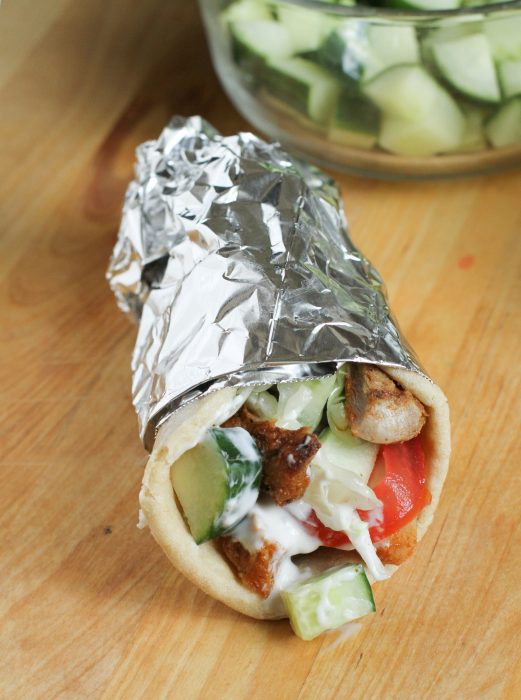
You could make meals that stretch meat, such as:
- salads
- sandwiches
- wraps
- stir-fries
- gyros
- pasta dishes
And you could get more of your protein from other, cheaper sources such as:
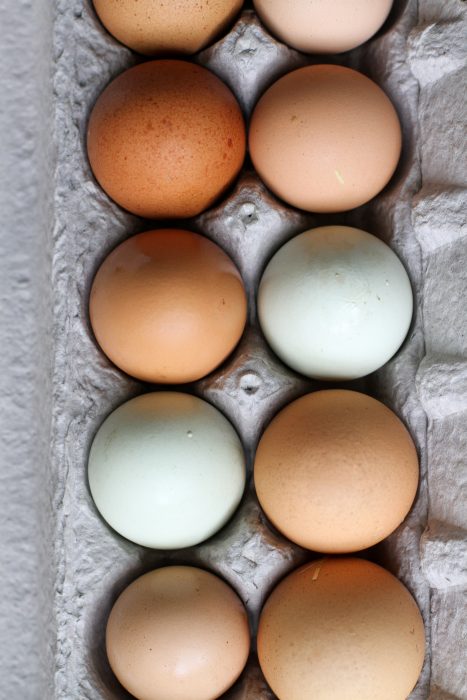
- eggs (even pricey eggs are cheaper than most meat)
- beans
- dairy products
- nuts (though these can be expensive if you don't buy in bulk)
2. Eat foods that are always relatively cheap
If food prices rise 5% across the board, that 5% increase will feel much worse on steak than on cornmeal.
(In the same way, a 5% price increase on a mansion is more significant than a 5% increase on a small cottage.)
It's like what I was saying about eggs above. Even if the price of eggs goes up, they're still going to be a cheaper source of protein than beef.
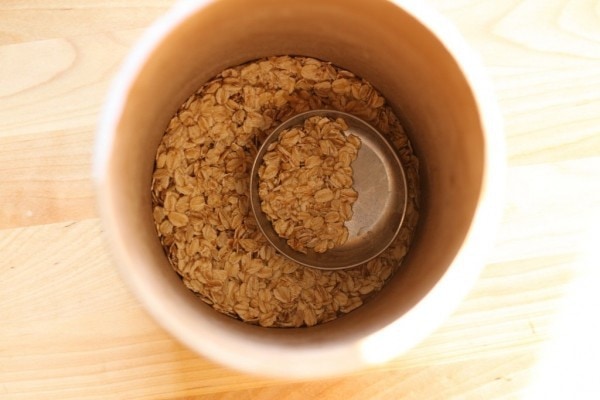
If push comes to shove, you can switch your diet to include things like polenta, bulk oatmeal, eggs, raisins, peanuts, pasta, beans, bananas, carrots, canned tomatoes, and other cheap staples.
3. Drink water
If your grocery budget gets too tight, you can't stop eating, but you can quit drinking most non-water beverages.
Or you can cut back on them.
Or you can switch to cheaper options (brew your own iced tea, make coffee at home, make juice from concentrate).

Since sweetened drinks are not nutritionally necessary, this is a grocery budget category you can slash without fear of malnutrition.
Actually, you'll probably be healthier for it!
4. Stop wasting food
Most of us are throwing away a lot of food that could have been eaten. This is real money, going into the trash can or compost.
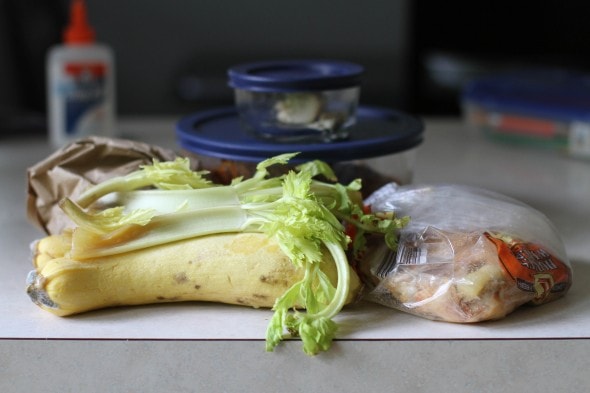
According to futurity.org, the average American household throws out $1866 worth of food each year.
That's a lot of money that could help stretch your grocery budget.
To get you started, here are my top 10 tips to help you stop wasting food.
And here's one more food-waste fighting bonus tip.
Ok, never mind, can't stop. 😉 ONE more: a simple but hard way to avoid food waste.
And if you want to dive deeper, my four-week food waste course could be helpful.
5. Spend less money elsewhere
You cannot control the price of food, and you obviously can't just stop eating.
This means that to some extent, rising grocery prices will affect you no matter what.
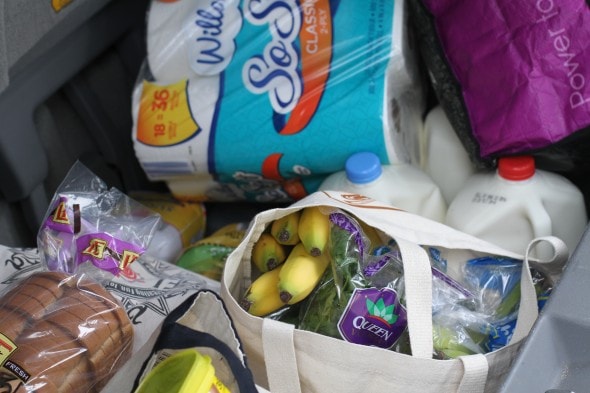
So, you can apply the previous four tips as best you can, but then you could also look for other areas of your budget where you could cut back.
That way, you'll have more to spend on groceries.
For instance, you could:
- not buy new clothes
- buy used items when you have to shop
- cancel subscriptions
- drive less
- repair instead of replace
And so on.
What other tips would you add to my list?
P.S. I am currently not doing a super bare-bones kind of grocery shopping; I'm still buying fun foods for my girls because I can. If you can afford that, and fun foods are helping your family's mental state, then go for it! I'm just sharing the tips in this post so that you've got something to fall back on if things get more serious for your food budget.
$1866 a year of food waste?!? That works out to $35 a week. That is 1/3 of my budget for a family of six. That is crazy. I have learned so many tricks and tips from you over the years for food waste. Thanks for blogging about it. We have been doing a lot of sandwiches, salads, and soups because the kids like them and it saves room in the budget for special foods (little smokies for pigs in a blanket and smore ingredients for fire pits and extra berries for waffles).
I concur. I would love to see specifics on this by the authos(s) of the article, or even better, a case study of one family's waste. The frugal me is horrified by this!
Some of the links in this blog post might be helpful: http://www.wastedfood.com/2016/09/27/dear-wasted-food-dude-waste-audits/
The NRDC estimates that American households throw out $1500 of food per year: https://www.nrdc.org/experts/darby-hoover/tackling-food-waste-city-level-nashville-food-waste-initiative.
Here's the money quote, from Bloom's site:
"[...] according to U.S. EPA data, the average person wastes about 20 pounds of food per month. That figure — more specifically 0.64 pounds per day — is slightly different than what you’re asking. It represents per capita U.S. food waste, or the total food waste generated in the U.S. food system (not including farms) divided by the number of Americans. But it provides a good ballpark estimate."
So it's total US food waste from every step of the process other than the first, allocated per capita. This is so much more than what we throw out at home.
It includes the grain that the cows at the feed lots grind into the mud, the grapes that fall underfoot during bagging, the bananas that go bad on the banana boat, the strawberries that go mushy in the supermarket (and all the other strawberries in the box, ouch!), the meat is tossed because it's past it's use-by date, the potato skins that the chef doesn't use, the flour that spills at the bakery, the bread that the restaurant insists on bringing to the table (ouch!) the tortilla chips and salsa that you don't finish at the restaurant, the restaurant leftovers that so many people don't take home (ouch!), the fast food leftover at the end of the day,...
BTW, the rule of thumb is that poor countries and rich countries waste about the same amount of food. Poor countries lose it in storage (rats getting into the grain stores, for example) and transport; rich countries in post-processing waste.
In the Bloom article, he says a little further down that we typically don't use about 20% of what we buy. Of course, that doesn't necessarily translate to 20% of our grocery spending; are we throwing away carrots or prime rib?
So, it's a messy business to try to put a dollar amount on it without doing an audit of yourself.
Which is actually what I wanted to say: we can postulate about how much money Americans are throwing away at home, but the accurate way to know how much money YOU are throwing away is to keep track of your food waste for a few weeks. It would be a rough estimate, of course (how much did 1/2 cup of that soup cost?), but it would give you a much more accurate idea than the estimates done by big studies.
Enjoying some hot cooked oatmeal this morning, using applesauce in place of milk and a dash of cinnamon and a few raisins. So good!
Great suggestions, Kristen! I has noticed our weekly grocery bill creeping up to around $160/week, up from about $130/week. Not going to Aldi has really impacted the budget, but I'm trying to go to one place for everything we need. Interestingly, and for the very reasons you mention, this increase hasn't hurt too badly since our gas, and eating out spending has grealy diminished. The husband isn't exactly onboard to reducing our meat consumption, but he would be onboard for sandwhiches/wraps/soups and salads. I'm looking forward to late June/July so we can start eating from our garden.
Great post Kristen! For so many of us who are naturally frugal (already following a lot of your tips) the rising prices at the grocery store really can be anxiety ridden.
I like your suggestion to focus on what you can control. This is really the attitude that can help us all at this time. I will say to myself “I get the chance to....” when facing this new challenge, I get to lean into vegetarian recipes, I get a chance to help the environment by limiting food waste...etc. this is another opportunity for my kid to become more resilient, flexible and resourceful! Thanks for continuing to inspire. Karen
Food prices are a problem everywhere right now. One way I stretch ground meat meals is to add red lentils to dishes such as spaghetti sauce, sloppy Joe mix etc. When my children were very young I used to run vegetables such a carrot, onion and celery through a food processor so they were fine and they were not noticed. Serving soup before a meal has been proven to reduce the amount of calories consumed at a main course that follows.
In recent weeks our long life milk has risen by 25%. Because we have had drought, bushfires and floods have affected Australia some basics such as cauliflower have risen to about $10 each.
Lol I miss the Food Waste Fridays posts too. I use a Foodsaver to make sure what I do have in my freezer does not get freezer burnt.
My biggest food waste is buying something I "think" hubs will eat but does not. We eat totally different and it is really hard to mesh them together. Being off for this Covid thing sure makes me wonder how I'm going to cook when we retire.
I will say that being at home and having to be a lot more mindful in how I shop has helped a TON with food waste. For a few weeks when groceries were super scarce, I raided the pantry and freezer and got creative. I'm happy to say in the last two weeks the only thing that really went to waste as some cherry tomatoes that got a little squidgy (they got pushed to the back of the produce drawer). Other than that, all perishable goods and leftovers were consumed!
Beth H next time you have squidgy cherry tomatoes cut them in two, glug some olive oil on them with salt, pepper and garlic powder if you like it and roast in the oven until squishy and a bit burnt. Makes a lovely side dish with some chopped basil leaves if you’re being fancy or plopped onto the top of a burger as a condiment!
I dislike tomatoes but my DH and DSs love it!
Yes! Aka Sundried Tomatoes, and they will keep afterward in the fridge for a couple more weeks if covered in olive oil. They are also delicious tossed into pasta.
My method is to cook at 250 for a couple of hours, turning the tomatoes midway.
I was about to say the same thing! I love tomatoes made this way. And they freeze well after you roast them, in case you have leftovers.
Joanne
Thanks for this tip. I prepared left over tomato this way (minus the baking) and used it for a pizza topping. Yummy!!
I cut back on my grocery budget in stages--I'll first do many of the cutbacks that you mentioned above, and then, if things get tighter, I'll do a "convenience" cutback. So, rather than buy applesauce pouches for the kids, I'll just buy the applesauce, or even just apples. Or rather than buy bread (which, since I have a family member with celiac, the gluten-free stuff can run $6-7/loaf!), I'll make it instead. The more I have to cut down on my grocery budget, the more I'm making from scratch. I cook a lot from scratch anyway, but there are a few areas where I'll go the convenience route just because it saves time, and also a lot of our snack foods are definitely more of the grab-and-go type, so those are often the first things to get cut, too.
I'm always working on food waste. The biggest factor in my reduction was buying less. I will buy 2 apples instead of 4. Then freezing, berries, leftovers we've had a couple days. Then when I want something quick it's leftovers to the rescue. I believe this keeps my bill lower.
Also sharing servings, we share a steak. We can afford 1 and cooking one saves on waste. Plus leftover hash made with steak is really good. Two meals, four servings, one steak.
The other big saving is buying what we like. I may think we should eat cheaper food, like tuna. But one of us hates tuna so it gets wasted. Now leftover chicken made into salad gets eaten without any waste. Better deal all around.
Good suggestions! You are right, we have ways to control some of this.
Planning for leftovers and not wasting food are money savers for me. Cooking from scratch is another way to lower food costs, obviously. Where we run into a problem, and this problem is specific to my household, I realize, is that our health conditions mean we can't eat much in the way of beans, pasta, rice, breads, corn meal, nuts, white potatoes and legumes, all of which are food stretchers or cheaper protein replacements. I can't even eat many eggs or a lot of cheese, having to space them out in my menu. I don't mean to complain about it, though, because I'm the one making these food choices. Complaining about the cost of our mostly organic, specific diet makes me think of someone complaining about the cost of gas as they fill their Rolls Royce.
I'm lucky in that my husband doesn't have a big appetite, but having to have a lot of meals centered on meat and pricier vegetables means I must be careful to use every scrap. Sometimes I'm almost embarrassed at what we spend on groceries, but at least I use it all up. I can't imagine wasting that much food in a year. That's so bad, for so many reasons.
I make sure to do a pizza night once a week, homemade dough is pennies, 1/3 a jar of pasta sauce is maybe $1, and a bag of cheese (I stock up on sale) is like $2. It fills us up and the kids love it, plus $3 for a meal is really do-able right now. I cook a dozen hard cooked eggs every week since they're an easy snack and also a great salad protein, and I've also begun to make my own sandwich bread every week. Two loaves is under $1 in ingredients! I've stopped buying almost all prepackaged snacks, pretzels and a bag of store brand potato chips a week are the only exceptions to that rule now. Everything else I've been making from scratch; cookies, cakes, pudding pops, ice cream, etc. It's a challenge but we'll manage!
During quarantine I have learned how to brew the perfect ( for me ) iced tea. I had to trial and error a few times, but now it is great. We are also eating less meat since it is very hot or miss available in metro Detroit since March 12.
This post was very helpful.
Always defrost your meat in the refrigerator, not/never on the counter. In addition to being safer, you can refreeze your raw meat without concern if your dinner plans go awry. That has saved me a bundle over the years!
Something that has helped me feel more in control of grocery spending has been having about 2 weeks of mostly shelf stable groceries as a back up plan for when things are either unavailable or priced too high on a given week.
I have relied on recipes from Budget Bytes website for years to cut down on our food costs. This meal plan in particular has been really helpful and means we don't waste food:
https://www.budgetbytes.com/pantry-recipes/
I'm also a Budget Bytes fan. Her no-knead focaccia rolls are one of our favorites.
No knead focaccia was the first recipe I ever made from her site!
My grocery costs are increasing because I'm minimizing trips to the store and not making a run specifically to pick up X item on sale. And my stores aren't running as many sales anyway. Even Sam's did away with their standard food sales this month. 🙁 But you're right, we're spending less in other areas, so it evens out for the moment.
I've also been making yummy homemade bread and serving a side of that for my growing boys alongside many meals.
Not wasting food is my number one saver. We are using all bits of food that remains for lunches or revamped into something new. We most definitely will be cutting back in other parts of the budget, from clothing, to gift buying, entertainment, to not only make up for the increased costs but income decreases as well. Still though, you are so right about making sure the food is healthy food and not cheap fillers.
I am renovating my kitchen in 3 weeks. Actually my contractor is. I have not had the best of eating habits over my lifetime. After watching a wonderful YouTuber who is a dietician I have decided to start changing our eating to mostly whole organic foods. Sine our Aldi is always stocked they carry a lot of organic things that are almost the same price of the not organic brand. I am now reading food labels and know what to look for the good stuff. We will eat through what we have and then when we move back in again not only will I have an amazing new kitchen, but the new refrigerator will be all filled with amazing clean food. It has been a little scary to start this process, but hopeful I can look back a year from now with great results. I am currently spending around $400/mos for the 3 of us. I just wanted to thank you Kristen for your amazing blog and insight you share with this community.
Tamara: I will follow up with your horror here!
Unless they do a "give us your trash and let us count what is in it" study, I don't think this is fair to say about the average family.
But what they did do is interesting.
The article Kristen linked first identifies research that has shown 30-40% of food in the U.S. is not eaten, based on studies that took the amount of food grown in the U.S., divided by how much was sold in stores and probably restaurants, and identifying how much was lost. The food never got all the way from the farm to a person, meaning waste in processing, shipping, not-selling, etc. That is not the fault of the family but of the production and supply chains we are now so sensitive to. "Wasted" food means "Un-purchased."
However, these researchers were attempting a different angle. It SEEMS, (and I might be quite wrong), they took the amount of food a family purchased, and then divided it by the nutritional needs of each person in that family, based on body weight, age, gender, metabolism, etc. Because families bought more than was needed to maintain nutritional needs, the researchers said the food was wasted. The study doesn't say the family did or didn't eat the food, only that they bought more than was needed to maintain optimal health, and thus categorized it as a "wasted" $1866.
One possible interpretation is simply that Americans eat too much. We buy (and presumably eat) more than our bodies need, . It is a variation on messages about learning to eat proper portion sizes, reading labels, recognizing when we are full, skipping the junk, etc.
This article does distinguish between food loss (what happens in fields, during production, etc.) and food waste (what happens in restaurants and homes) and despite the distinction between loss and waste also quotes the $1800 figure: https://foodprint.org/issues/the-problem-of-food-waste/ (lots of clickable footnotes in that article).
I haven't dug through all the links in that article, but I do know I've seen $1000+ estimates of annual household food waste from multiple sources (articles, and also Jonathan Bloom's book about food waste). Researchers do acknowledge that the numbers are estimates and could be low or high.
$1200 (a lower estimate) translates to $23 of wasted household food per week, which is not impossible for me to believe, given the wasteful habits of many Americans (and given my old food waste habits!)
I definitely think it's helpful to distinguish between food loss and food waste because individual Americans cannot be held responsible for food lost in the field or in production. It's a problem, yes, but it's not one to be solved by household habits.
Full confession - I can see my family wasting $34 per week by:
1. Throwing away leftovers. I pack them up but we don't always eat them.
2. Things going bad before I get to them. Bread, yogurt and eggs are 3 things I throw away more than I should. I don't have much freezer space so I am not one to freeze the bread, etc.
3. Buying stuff that it turns out nobody likes so I pitch or donate.
Generally I hope it isn't that much wasted, more like $10, but I know there are weeks when it probably is that bad. We've been doing a better job of prioritizing using up ingredients during our SIP, but when we are both working full time, it isn't always the priority.
Last night I made a variation of this recipe https://www.recipetineats.com/creamy-chicken-and-bacon-pasta/ It says it is for 4. We have 4 adults and 2 children. There is enough left today for lunch, depending how many have lunch, or my husband and me for supper. I used a little over a pound of chicken and substituted kale to use it up. I substituted a can of diced tomatoes and some left over sauce, to use it up. I also did not have room for all of the pasta, so I can make a small pasta salad for us.
A good filling meal is a vegetable risotto. I had a root vegetable risotto at a restaurant and then learned to make it. With a nice fresh loaf of bread and maybe a side salad. I would be happy.
If groceries are more expensive, then eating out will be more expensive--the restaurants do buy groceries. So make eating at home more fun. Theme night, have it go along with a movie or maybe a family read. Instead of a concert, how about a concert video?
Or have members of the family check out the pantry and find a recipe for the ingredients on hand.
One of my daughters and I share a Misfits box, a CSA, and we have expanded our garden this year. With that I will expand my vegetable cooking.
I don't buy granola anymore, as much as I like it. A big box of Aldi oatmeal and a bag of almonds makes a lot. I have made snacking very limited.
Food is so central to everyone's life--it should be interesting.
Unfortunately now many people are overeating. One way many can cut food costs is not to overeat and to handle stress/depression in some manner other than food consumption. Extra comfort food can make one feel better but it is only temporary. There are associated costs in terms of both money and health when it becomes a regular routine. Many obese adults started out as kids eating extra treats and unhealthy foods to make them feel better. It is a bad habit to start, even if they seem fine and healthy now. Eat to live not to drown your sorrows and you'll save money and your health.
I agree on the overeating, even before the pandemic.
I went through the article Kristen linked above, and one way to read the study referenced (which I might have misunderstood) is that the "waste" of $1866 per family comes from figuring out the difference between how much a family /should/ buy to eat based on age, size, gender, weight, etc., and how much a family /actually/ spent.
Since the USDA guidelines recommend much less than what the family eats, the difference is classified in this study as "wasted". This is not the same as food that is "wasted" because it was thrown out or never made it to the consumer in the first place. It is wasted because the family overate.
In any case, looking closely at portion sizes on packages and such guidelines can be a real eye-opener, especially for Americans. Even tracking a particular food nutrient (carbs, proteins, fats) could be very informative.
While this is true and easy to say, unless you have personally experienced an eating disorder, you have no idea how difficult it is; it's not simply a matter of magically changing your behavior to save on groceries. And while changing your behavior will definitely benefit your health and is an ideal thing to do, any grocery savings you achieve using this method will no doubt be spent on mental health care.
Bobi, much better to spend your money on mental health care and get to the real underlying issue and/or figure out better coping mechanisms than to keep harming your body by medicating with excessive and/or bad food. No respectable health professional will tell you to go eat a pizza and a bucket of ice cream to resolve your problems. Yet look at how many people do something just like that regularly. Nobody said it was easy. Many things worth doing are not easy but that shouldn't stop one from trying. But the truth remains - many people can cut the food budget by cutting down or eliminating overeating. There's other savings to being at an ideal weight too but that's a whole other discussion
Not everyone who has gained weight is overeating. Many people are not as active as they were pre-Covid and are having difficulty making the dietary adjustments. (Of course, I talking about myself here)
Stretchers such as rice, potatoes and pasta are higher in calories and carbs than lean meats and veggies. I find myself using a measuring cup to figure out the proper serving size. Trying to deal with food allergies and feed my family while navigating the new world of food shortages and higher costs is nothing short of challenging.
It also helps to choose better versions of those stretchers whenever possible. Brown rice instead of white, sweet or waxy, (yukon golds or red), potatoes instead of russets, and whole grain pasta, or even beans as they usually have a lot of fiber per serving. The other thing I use to make a meal more filling is vinegar slaw, less calories than creamy slaw, and cabbage, along with other cruciferous vegetables, is very good for you.
It's important to recognize the difference between simple and easy. Losing weight is simple - eat less, move more. Nonetheless losing weight is not easy.
Yep. That's why when I wrote this post: https://www.thefrugalgirl.com/a-simple-but-hard-way-to-avoid-food-waste/ I titled it "one simple (but hard!) way to avoid food waste".
Simple is totally not the same as easy.
The biggest way we've cut back our grocery costs is to simplify our menu. We eat a lot of the same things so I can buy in bulk and they will get used in time - rice, flour, spices, beans, cheese, tortillas. I also haven't been experimenting too much, which means that I'm not buying exotic ingredients or those that I won't really use. And simple ingredients are cheap. We also don't really buy anything in single serve packages.
Also we bulk up our meals with plain fruits and vegetables for sides. Strawberries and raw carrots, sugar snap peas and watermelon, steamed broccoli and apples, cucumbers and frozen blueberries, etc. Healthier and less expensive than making something more complicated like scalloped potatoes or creamed spinach.
Always love when someone says that. The sides for our dinners are usually a platter of raw fruits and/or vegetables. Makes me feel like a lazy cook sometimes but my kids eat more of them that way and it's less work!
Standard dinner Chez WilliamB is chunk o'meat, fruit, veg. The veg is cooked about 40% of the time.
Soup is a great way to stretch meat and many recipes include beans, which increase the protein content. I know not everyone is a fan of casseroles, but the reason they were made in the first place was because they are budget friendly. We've been having breakfast for dinner a lot. My family thinks it's a treat and you can get away with cheaper forms of protein. Similar to Kristen, I make my own pancakes using only whole grains and I make a fruit sauce for topping it off.
A big yes to breakfast for dinner! I used to love when my mom would make waffles for dinner, it was such a treat. She would mix in a little wheat flour and wheat germ in the waffles to add nutrients and serve it topped with yogurt and fresh fruit.
Some days when I am tired from work all I want is some simple scrambled eggs and toast for supper.
Look for places besides supermarkets to get your meat if it is a staple for you. If you can’t afford or don’t have to room to store a whole side of meat, look for people to share it with. Many of the food issues we are seeing with supply chain are from factory farming vs local.
I think food prices are higher because the costs of producing foods has increased as have the costs for grocery stores with all the Covid precautions. It is something I am lucky to not have a quibble with. We still have our usual income and our expenses are greatly reduced since we are not going anywhere. Being able to get what we want, within reason, feels like it is worth the price. I have been a proponent of avoiding food waste for many years, as environment ethical issue.
As usual, you have such a thoughtful post and wonderful comments. I can think of nothing to add.
I would add grow what you can where you can. We always have a garden (I'm hoping to get my plants in the ground this week) but I had a romaine head that I'm regrowing and I needed to get in soil a couple of days ago, so I put it in a pot. We look at what we'll use and compare it to what I can get from stores. For example, we've had a hard time getting good corn crops and they take up a lot of space, plus our discount produce store has sold corn really cheap the last couple of years, so we buy corn from them and use the garden space for other things that will save us money like butternut squash, tomatoes, lettuce, peppers, and green beans.
I add an extra cup or two of broth to every soup, so we end up with enough to eat for lunch the next day.
Ditto for casseroles, I add an extra cup of rice or pasta or potatoes to stretch it enough for a light lunch the next day.
I use my sourdough for everything from bread to cookies to cake. (This free downloadable publication from the Alaska Cooperative Extension will teach you more than you want to know about sourdough and includes a lot of recipes: http://cespubs.uaf.edu/publications/?cat=&s=Sourdough+recipes&=Search+Now )
We've increased the size of our garden, but even a few pots of greens and scallions can save a lot during the summer.
Thank you for the sourdough resource! We just got a starter and are on a learning curve now to figure out how to care for it and use it. We already make our own kefir but sourdough is something new.
You don't need perfect whole veggies to make stock. Save all the veggie scraps, including onion skins, celery roots, carrot peelings and tops, etc in a container in the freezer. When the container is full add it to a stock pot and cover with water. Simmer a few hours, then strain and store.
Take a good look at your toiletries to see what you really need to use. Can some products do double duty so you can buy one less thing? Can you use a little less and get just as good a result? Can you skip a day or two shampooing your hair?
Speaking of eggs, can you use one less egg in your scramble for several people? My husband and I used to use 4 eggs for the both of us and now use do three and add a dash of milk. It's one egg per meal, but that one egg each day adds up to seven in a week!
Good point about toiletries and reusing. My favorite is soap or cheap conditioner instead of shaving cream.
Exactly! One of my favorite multipurpose items is argan oil. I found an organic brand that is inexpensive but high quality. I use it to moisturize my face, soften my cuticles and dry elbows, and condition the ends of my hair. Only need a small drop so it lasts a long time.
As for shaving my husband works at home anyway so he skips a few days between shaves.
If you don’t want to reduce your meat consumption, try buying from the reduced section. Most meat departments have a small area for meats that are at/or near the sell-by date. But get there earlier in the day. In my experience, there is more to choose from the earlier you go to the store. I have done this for years now & it’s a great way to buy meat. Sometimes, there are even kabobs & marinated items.
Freeze, freeze, freeze! If anything is going off in our fridge or pantry, we throw it into the freezer. It gives me more time to think of a tasty way to use the ingredient. Using the freezer has been somewhat of a learning curve for me. I'm experimenting with freezing different items to see what works. If is ends of coming out of the freezer unusable, at least I learned my lesson with something that would have had to be chucked or composted anyway. One other thing we do is save the liquid from canned items such as beans or tomatoes to cook with later. It adds more flavor to future dishes and prevents the need for other ingredients like broth and spices.
We have been buying in to a CSA (community supported agriculture) subscription the last couple years, so that supplies us with fresh veggies from a local farmer throughout the summer. Our farmer said that the first veggies will be ready in the next couple weeks. Because we get a box each week, the veggies become the main part of our meals and we have meat "on the side."
A Facebook group has also been started in our area for "North Dakota Farm to Table." Local farmers, ranchers, bakers, canners, etc. can post if they have goods for sale.
Go on YouTube to learn to make your own yogurt, or make your own bread. You can make your own hummus using dried garbanzo beans you’ve soaked and cooked, if you have a blender or food processor. Hummus made this way tastes so much fresher and better than the store version (and no additives). Save the bottoms of green onions to put in water to restart and grow your own. Directions on YouTube for growing all sorts of things including indoor herbs. Lots of pantry recipes on YouTube for making cheap, tasty, filling suppers.
And put the bottoms of celery in a dish in water! I have two that make me smile, because they look like little desert islands with palm trees growing up on them.
Green onions can be regrown in soil as well as in water. Mine also grow taller in their plastic bag in my refrigerator drawer before I eat them.
I had over half of a red onion after making my cowboy caviar https://www.budgetbytes.com/cowboy-caviar/ so I decided to pickle them. Really easy to do, I followed budget bytes recipe for that also. They added delicious flavor to a simple bowl of black beans. I'm going to try this with other veggies that are going bad to extend their life a bit.
Popcorn from a bag of kernels (not microwave) is extraordinarily cheap.
I second that! We have popcorn for dinner every couple of weeks and it's very satisfying - filling because it's a good source of fiber, healthy because it's a whole grain, and stress-relieving because of the crunch. Omit the butter and go light on the salt. Bon appetit!
Enjoying a bowl of oatmeal this morning with applesauce in place of milk and a dash of cinnamon and some raisins.
Ziploc bags can be used to help you freeze your food and prevent spoilage. My wife and I do that with almost every vegetable we buy and we almost never throw out food.
Hi, Kristen! Just wanted to say thanks for linking to all those relevant, older posts! It gives me more to read; and I've got lotssss of time to read these days! 🙂
I'm so glad you are enjoying the extra posts!
Grocery shop only once a week. I used to go 2-3 times a week and everytime I would buy more than I intended. Going only once sure reduces impulse buying and saves money. Also forces me to use all the food at home (pantry, freezers) instead of hoarding it (or waste it)
These are all so helpful! I don't eat meat at all and save so much money because of it. If needed, all takeout could be cut, convenience foods such as veggies burgers, frozen pizzas, and other frozen / prepackaged meals could be replaced for cheap soups made in batches and frozen. I'm thinking a split pea, white bean and mirepoix, or veggie and rice would be good. I like to make veggie stock from scraps of vegetables and herbs which can easily be made into a flavorful and filling miso soup with miso paste, soy sauce / tamari / coconut aminos, hot sauce/siracha, and green onions, along with any mushrooms, peppers, or tofu left in the fridge. Eating foods raw is more filling (Think about 2 cups of spinach in a salad versus 2 cups of cooked spinach in pasta).