
Tuesday Tip | Make disposable products inconvenient.
This post contains affiliate links, which earn revenue for this site at no extra cost to you. See my disclosure policy here.
If you're trying to avoid using disposable products (a sensible frugal move!), make it inconvenient to use them.
And on the flip side, make it as easy as possible to grab a reusable item.
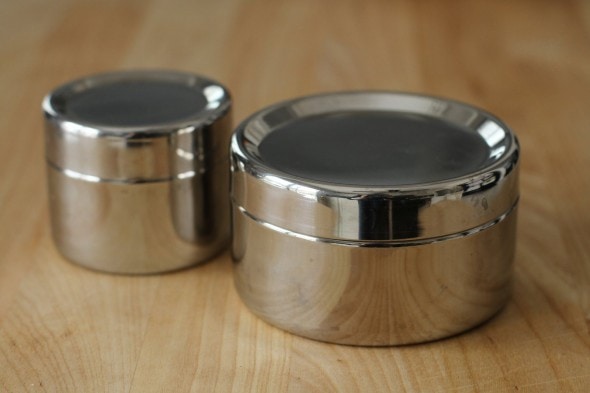
(These are To Go Ware sidekick containers. So great for lunch packing.)
For instance, store the glass/metal food containers in a convenient spot.
And keep the Ziploc bags on the basement shelf.
(If you really need one, you'll go get it, but you will not grab it out of convenience.)
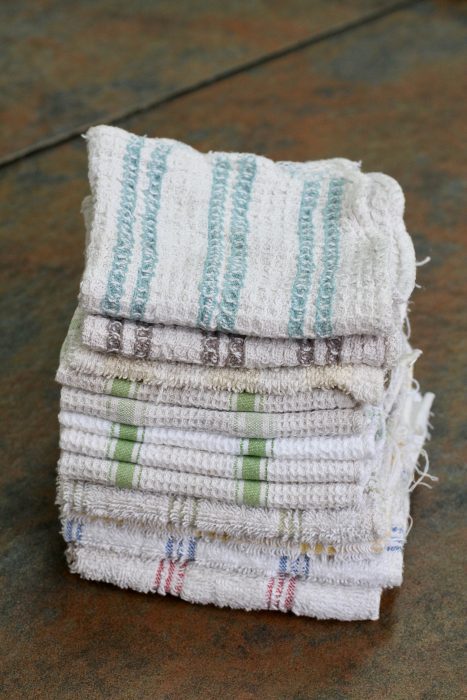
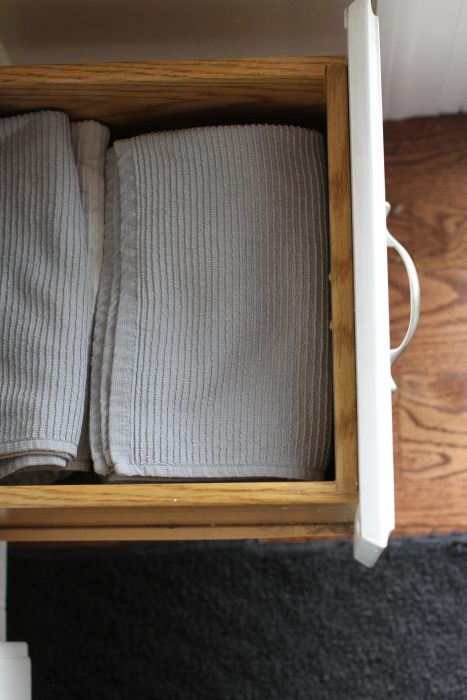
Keep washcloths, hand towels, and cleaning rags in convenient spots, and make paper towels harder to grab.
You can also just not buy a product at all, which makes it super inconvenient to use.
(A trip to the store is not at all convenient!)
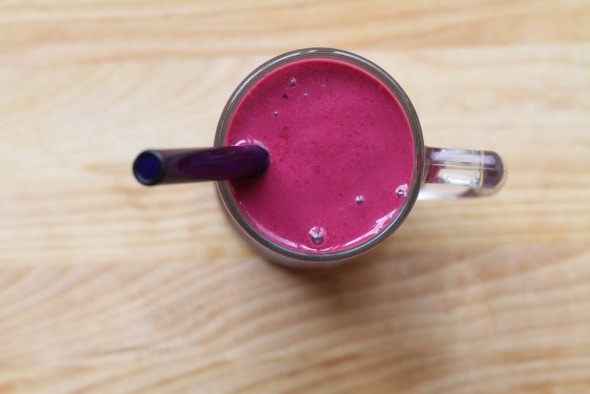
For instance, I don't buy disposable straws, which means that if we want a straw, we will always use the glass or metal ones we own.
Make the good choice easier, and the bad choice harder.
In the comments, I'd love to hear how you make the non-disposable option easier at your house!
______________________
P.S. The book Atomic Habits talks about this concept (make the good habit easier and the bad habit harder) and I realized that I've been doing this with disposable products, but I never really thought about it.
Now that I've read about it, though, I'm going to be more intentional about it with other habits I'd like to develop.
P.P.S. We use our glass straws a lot, but if you've got little kids, metal straw are great! We got a set of dishwasher safe metal smoothie straws from Amazon, and they're working out super well.
Been buying old fashioned glass containers at thrifty store as i see them. A good hardware store can help you find a cork top if there is none. Also buy pretty tea tins. Have,a big tin filled w tea bags, hot choc packets, mocha latte packets, chicken soup envelopes...for sick days.
Make your own mixes and put them in the glass containers!
This is what I do with taco seasoning! I mix up big batches of it and keep it in a container in my pantry.
Neat. I do this with junk food but it never occurred to me to do it with disposables.
Now you have me thinking... The only disposables we use a notable amount of, are ziplocs and paper towels, and we routinely wash and reuse ziplocs. I'm not sure a more inconvenient location would make a difference in my place, though. My roommate is a tad particular about the proper use of kitchen towels.[1]
[1] In the World According to Roommate, kitchen towels are used only to dry things that are both clean and wet. Sheesh! Whereas I would use them for all kitchen messes, including draining bacon. Compromise is the key to life, eh? Even so, our total paper towel consumption is about one roll every two months.
Just out of curiosity, does roommate wash the kitchen towels with the bath towels? My grandmother had a thing about bath towels polluting kitchen towels and washed them separately.
That's so interesting, because if I were to fret about this, I'd be inclined to worry about the kitchen towels polluting the bath towels! Ha.
But I don't worry about it either way. I throw them in the dryer, and the dryer heat kills all manner of unwanted bugs. And I boil my kitchen towels and washcloths if they start to smell funky.
I think her concern was body hair! 😉
Ok, well, that IS kind of gross if you think about it too hard. But on the other hand, I've never had a problem with it happening! Heh.
Beats me. He probably washes them separately - he's a bit weird about laundry, towels, and let's not get started on rags. ;-> Strangely, he doesn't sanitize the dishcloth, sponges, and scrubbies. You'd think someone that specific about his towels preferences would want to sanitized towels but nope. (I do it.)
Yes! I do that with paper towels. I keep them around for emergency grossness or road trips, but they are stored on a top shelf in a closet. On the other hand, the cloth napkins and towels are right in the kitchen drawers where the kids (and everyone else) can easily reach them. I also “hide” juice boxes in the basement to use for special treats and road trips in case we need a little something extra.
We have the Kleen Kanteen metal straws with flexible colored rubbery ends (from Target). They have been great for my younger kids (4&9) and we were able to completely phase out the disposable straws at our house.
Also thank you for another book recommendation! You have given me so many excellent reading material ideas over the years.
I love it when I receive a book recommendation, so I love to give them to other people. I heard about Atomic Habits on the recommendation of a blogging friend.
Another good trick is to save things like old sour cream containers or other things that come in plastic to take when you do have a need for disposable containers (e.g., when you're sending leftovers home with someone and don't want to worry about having to get the container back). You just want to make sure that those containers that aren't designed to be microwaved don't get microwaved!
I agree! Sauce jars and yogurt cups are the perfect size to throw a small amount of food in for lunch. My grandmother used to do this all the time yet so many have got away from saving these...because of clutter ,I guess.
If you use a yogurt cup, what do you do for a lid? Most yogurts I see just have a peel off lid, so then it seems like food would spill out in a lunchbox.
I was wondering the same thing about yogurt cups. I do purchase the larger containers of Greek yogurt (we use it in place of sour cream) and we save those both for storing frozen produce as well as when I take meals to someone and don't want to worry about getting my container back.
I store paper toweling under the sink, more to save counter top space, but it does help minimize consumption.
Kristen, I guess the idea of glass straws is scary to me--it seems like they could break off in your mouth. Then again, I don't *love* straws so I don't keep them around.
They're made of thick Pyrex glass, so they're surprisingly tough. If you drop one on a tile floor, it will break, of course. But never in your mouth. 🙂
I don't tend to use straws a lot, but when I'm drinking a smoothie, I do prefer to have one.
A set of small round silicone stretch lids come in really handy here. You could also use a bit of beeswax wrap or (for non-damp stuff) the foot of an old (clean!) pair of tights.
Where did you buy your silicone stretch lids? I have wanted to try them out and see how they work.
I have a few small ones by Lekue: https://amzn.to/2WdiNh8 But there are lots of brands. I do like my Lekue ones and I think they might actually fit a yogurt cup...they're pretty small (as in, they stretch over a regular mouth Mason jar.)
I buy the ones that have a plastic lid.
We cloth diaper but have disposables on hand for when they are super rashy or for nighttime use. We keep them in our bedroom in our closet. It is much less convenient for us to walk all the way across the house to get a disposable than to just fold a real diaper that is sitting in the changing table. I don’t even buy paper towels, (which drives my mother crazy when she visits). Ziplocks are only for freezing things. My biggest struggle is our dryer. It is much better to use the (humongous lovely FREE) clothesline in my backyard than to use our dryer. But we forget because the dryer is RIGHT there, and the clothesline is outside. I thought about unplugging it for the summer but I still have to use it on wet days....
How well do the straws stay clean in the dishwasher? I'm so paranoid about hidden mold/mildew etc. I saw they come with a cleaning brush and while I would be ...super intent on using it all the time... I can see my family just tossing it into the dishwasher and me not catching it.
I keep trying to convince my husband we don't need paper towels but oh my lord he can't seem to get it through his head that we can use handtowels/rags to drain fries/bacon on the extremely rare occasion we cook them.
Thanks to reading your blog we did get rid of nearly all the plastic in my kitchen over four years ago. I love my pyrex dishes so much. I also collect vintage pyrex and have my grandmothers old Corningware. The only plastic I can't seem to keep out of my house is the godawful plastic cups he and the kids collect at the Mardi Gras parades. Although I think my 'sweet loving nagging' has put that to a stop finally. I kid you not we have over 20 plastic Krew of Gemini cups, none of them recyclable just sitting in my cabinets. (We also have thick plastic drinking glasses that we use daily but after going through countless drinking glasses in the last couple of years I waved the white flag... I think my husband and kids are cosmically cursed to break drinking glasses on a weekly basis.)
Another thing we do to keep the plastic out (can you tell I'm really anti-plastic lol), while it's still considered disposable, is use freezer paper instead of plastic wrap or Ziploc bags for our freezer meats. Once used it can be rinsed off and recycled without fear of it taking forever to decompose.
Just yesterday my grandmother was shocked that I don't buy paper towels. When I drain bacon/fried chicken/fish etc. I do it on a cooling rack over a sheetpan lined with old newspapers. I don't buy newspapers but they do show up at my house a lot (sales flyers, adverts etc.)
That's neat using the cooling rack over newspaper! (We get a weekly one and paper flyers in our mailbox). I currently use the newspaper to line my stainless sheet compost bucket -- less mess to clean up after an empty into the compost bin and the paper can join the compost; also to make seedling pots that can go into the ground when planting -- less shock for the plant babies.
My mom is appalled that we don’t have paper napkins.
I cleaned out and reorganized the container cabinet so bases and lids are easy to find. I don't save containers unless it's truly a useful size, style, and shape so my cabinet doesn't get overstuffed like some others I have seen. My husband was more likely to reach for a baggie, (we do use some for freezer storage but try to reuse them as much as we can), so I put them in a lower cabinet. (Wish I could put them in another room but we live in a very small apartment.) I also try to set the example as much as possible since he will tend to copy my kitchen habits after a while. Still can't get him to let go of paper towels but I have encouraged him to use far less than he used to.
One of my tactful just-married moves was to convince my husband he could buy me the occasional flower but not have to include another tall skinny grocery store vase.
Several of the things I use for flower vases were designed for other uses-- Glass bottles from a fancy labeled green Perrier, some designer honey, a huge very old blue liquid Noxema, and some small medicine bottles. When sharing small bouquets from my garden, recyclable bottles (from beverages, extracts, spices, medicine, olive oil) hold water just fine and usually amuse the recipient.
I obsessively kept the water tubes from some florist-bought roses until I thought of a use for them. I put flowers in them and stuck in them in the pots to add color to some plants I was lending for an outdoor party.
A third category: make disposable reusable! I have vivid memories of my grandmother rinsing out ziplock bags and hanging them on the line to dry, and re-wrapping aluminum foil back on the roll, to use a 2nd time. True also for rubber bands, twist-ties and paper bags, all of which had multiple lives after the initial use.
We have rubber, stretchable covers that we use over plates instead of plastic wrap. We use Silpat's, instead of tinfoil, on the bottom of baking sheets. We have reusable zip lock bags. They are made of a thick silicone material that freeze very well. We use glass jars to store food in refrigerator and freezer. Saving glass jars from salsa or olives works well for this purpose. We have a ton of small cloth napkins we use instead of paper towel. We do still purchase paper towel, but only use it to clean nasty messes like cat barf. And we have some reusable glass containers we use to pack our lunches/breakfasts. It only saves a small amount of money yearly, but the savings adds up over the years. It's also better for our health and environment.
Good blog, and comments today. Sounds like some Mighty Nest users out there, like me. I love the metal cups they sell, and the silicone seals they sell that fit over them , including ones that have a a hole into which a silicone straw will fit. Grandson uses them all the time. The straws clean well with the straw brushes you can purchase. Air dry them. I would advise caution about buying the metal straws, although I like them. Daughter works for a dentist and tells me people break teeth on them, I guess by not gauging how far from the mouth they are and hitting the tooth hard. Just this week I tried the "one paper towel and a layer of newspaper" to drain cooked bacon. Recycled paper from in-laws endless supply of discards in their highrise. Can we put bacon fat in the compost, if it's an enclosed bin? I was told no protein (other than egg shells)as it attracts rodents. Would the grease have an adverse affect on the composting process?
The short answer is: no grease in the compost pile.
The explanation for the short answer: grease doesn't decompose well. IOW, it's not really about the rodents since any food could attract rodents and scavengers.
The long answer: it depends on whether it is a "hot" compost pile or a "cold" compost pile.
Hot piles have to be big (at least a cubic yard), have to be managed (primarily mixing the pile up every now and then, to get all the contents into the action), and get hot from the chemical reactions of decomposition (the pile will, at first, generate heat and steam, and feel warm to the touch). Cold compost piles are the ones where you dump your stuff and just wait till it turns into compost; no pile management necessary. Note: if your pile gets goopy and stinky, add "browns" - shredded paper or shredded leaves.
Vegetable protein and eggs will decompose in cold piles. Dairy, meat, and non-trivial amounts of grease need the more intense chemical reactions of a hot pile in order to decompose.