
All about grain grinding
A reader emailed me recently to ask if I had a post dedicated to the subject of wheat grinding, and I discovered that I really do not.

There are a lot of snippets about it in various Q&A posts*, but I thought his idea of putting it all in one spot was a great idea.
*posts like this one, which also covers religious frugal bloggers!
I haven't blogged much about grain grinding because I don't consider it to be a high priority in the frugal life.
(Cooking at home instead of eating out? THAT is a priority.)
But since I keep getting questions, I figured a post would be good to have.
(If you'd rather watch a video of me answering grain questions, here's a grain grinding YouTube video. If you prefer to read, well, keep scrolling!)
Why do you grind your own whole wheat flour?
Mainly it's because whole wheat doesn't stay fresh very long once it's ground.
How many times has your whole wheat flour gotten a rancid smell and taste? It doesn't take long unless you store your flour in the freezer.
I also find that fresh ground wheat flour has a milder flavor than store-bought whole wheat flour. Fresh flour just tastes better.
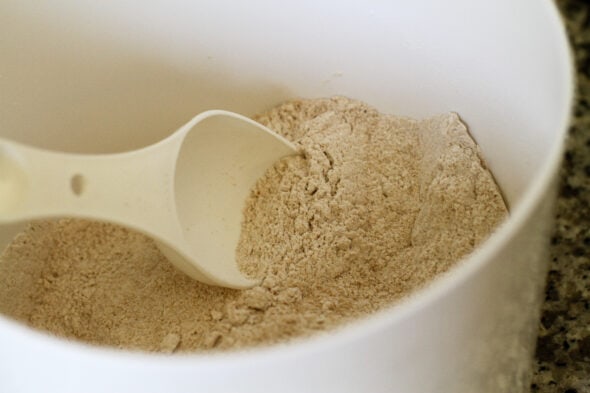
And since I grind it myself, I can just grind as much as I want without having to worry about safely storing the extra.
(Wheat berries can be stored pretty much indefinitely.)
Also, stores generally only carry one kind of whole wheat flour. But if you buy the wheat berries, you can get whatever kind you want; white whole wheat, hard red wheat, etc.
Lastly, it does appear that the fresher the flour, the more nutrients it will have (see this paper by the EAP at McGill University).
What grain grinder do you use?
For a wedding gift back in 1997, I got a Whisper Mill, which is no longer made.
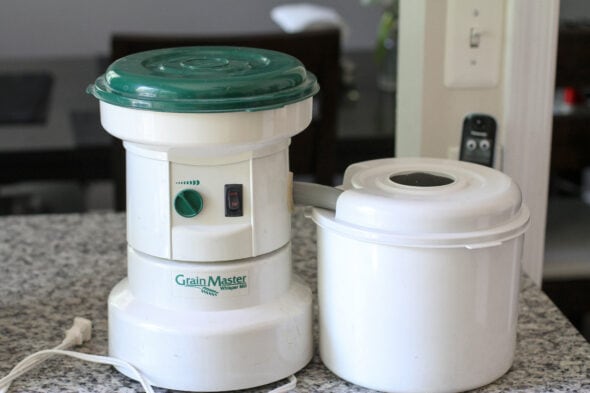
The WonderMill is almost identical to what I have, and you can buy a reconditioned mill for less than $250.
This machine is fairly quiet (though every grain grinder is somewhat loud), it produces very fine flour, and mine has been working for over 23 years.
How much does a grain grinder cost? Is it worth it?
Honestly, from a frugality standpoint, I'm not sure it does.
A mill normally costs about $250 (less for reconditioned), so it's not a small investment. You'd have to grind a lot of whole wheat flour from frugally-sourced wheat berries for it to make financial sense.

I think there are legitimate reasons to buy a grain grinder, but I don't think it's something you should buy for frugal reasons.
Luckily for me, I was gifted with a grinder, so my only cost has been the wheat berries.
To save money, you could try to find a secondhand grain grinder. I would imagine, like treadmills, grain grinders are something people buy with good intentions and then never use.
So, maybe someone in your area is selling one cheaply!
What else can you grind in a grain grinder?
I've only used it for wheat, but you can also grind rice, corn, quinoa, amaranth, beans, and legumes.
This could be super handy if you want to make gluten free flours, such as rice flour. If you use it for that purpose, I imagine the grain grinder would pay for itself pretty quickly.

Where do you buy wheat berries?
I buy it in 50 pound bags from a local co-op.
To make this remotely cost-effective, that's really what you need to do; buying wheat berries from the bins at your local Whole Foods is going to be much more expensive.
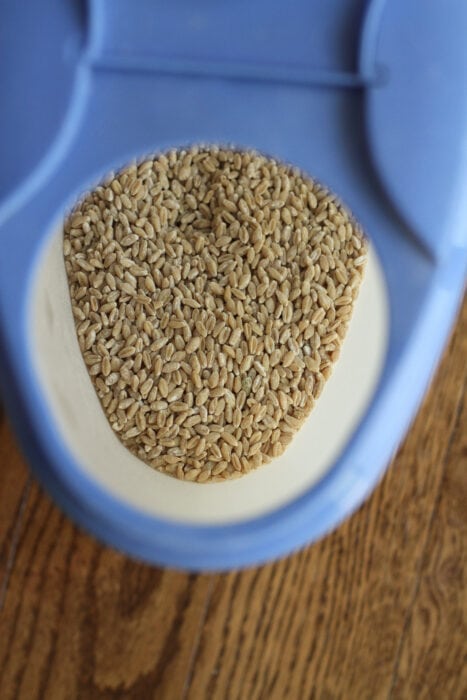
Google to see what wheat buying options are available where you live.
How do you store wheat berries?
I have a large food-grade bucket that I keep my wheat in, but I've also kept it in super large glass jars before.
I freeze my wheat when I first get it, just to kill any eggs hiding out in the grains*, and then I store it at room temperature.
*When your grains/flours get bugs in them, it's usually because they were already in your grains before purchase. That's unavoidable, but if you freeze your grains for 4-7 days (I hear conflicting advice on the length of time necessary), then you'll kill any hitchhiker eggs.
Any food-grade, air tight storage container will work.
What do you use whole wheat flour for?
Fresh-ground whole wheat flour works fine in any recipe calling for whole wheat flour. Here's a list to get you started. And of course, you can use store-bought whole wheat flour in any of these recipes too.
Whole Wheat Recipes
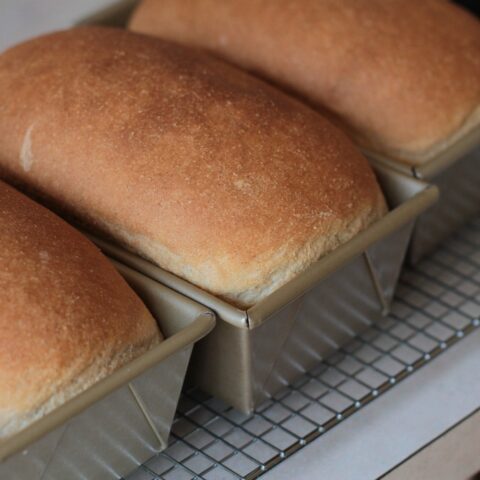
Whole Wheat Yeast Bread
A basic recipe for part white/part whole grain yeast loaves.

Whole Wheat Pizza
The best whole grain pizza dough I've ever tried. The intructions are pretty detailed, but the results are worth it.

Whole Wheat Buttermilk Pancakes
Easy, fluffy, 100% whole wheat pancakes!
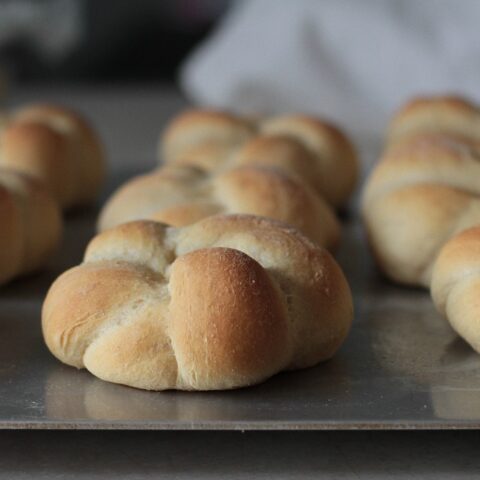
Whole Wheat Rolls
These rolls are beautiful and hearty. Leftovers make a great fried egg sandwich!
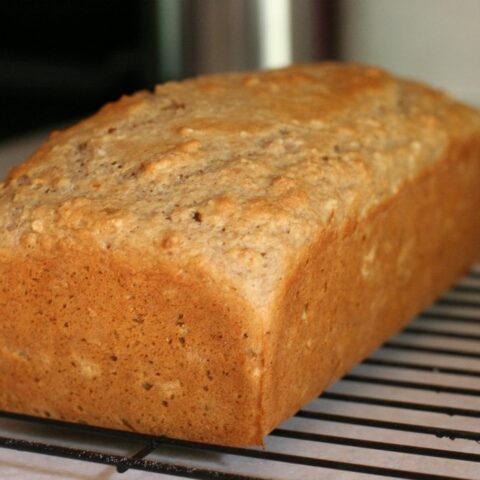
Whole Wheat Bread With a Twist
No yeast and no kneading required for this whole grain loaf.
Any other grain grinding questions for me?
P.S. If you want to see my grain grinder in action, the last few clips in the YouTube video show me turning grain into flour.
I don't have one to confirm but a lot of people use the Vitamix to mill flour.
The Vitamix will grind grain but not as finely as a grain mill and the grain mars the blender container so the markings are not visible.
I've had a Whispermill and a Nutrimill and I prefer the Nutrimill for ease of use and storage, although they are both great grain mills!
If you are in the southern US, Bread Beckers is a great source of grains and appliances.
I missed this too, but am happy you shared this post with us. It’s definitely made me think!
The Vitamix has a separate blender for grinding grain. Is that the one you use? I have the Vitamix but not the grinding container.
I didn't realize you ground your own, and have no idea how I missed that since I'm not exactly new here. My mom grinds for me, and herself, and gosh, lots of people. She has the advantage of being able to take the wheat directly off the combine — it's so neat to be able to track the flour back to the producer and even to identify exactly which wheat variety was used if you just really want to get the details. Mom's mill is a Blendtec Kitchen Mill, and it's a workhorse.
Huh. All these years reading, and I never knew you grind your own flour. Learn something every day. 🙂
To be clear, it's just my whole wheat flour. I'm using plenty of white flour, which I buy at the store!
I felt the same way! How did I miss this?? I don't know.
Echoing Kristin and Ruth T. No Idea you grind wheat. Really ups the ante for truly "homemade" bread. I looked into it a couple months back after seeing one on another blog. my short hair was blown back by the price of a mill. At 61 years old, enough years left to make it worth the price? hmmmm. Maybe request for Christmas. Too late for birthday this year. How many times would it take to recoup the cost of the grinder? Making ALL your own bread All the time? Maybe I should investigate a used one.
A small local bakery, mainly sells at farmers markets, makes breads and crackers, posted recently that they are dehydrating mashed potatoes to make potato flour. It has become a creative, innovative time for the small businesses to try to pay rent and stay in business.
I agree with everything you said!
I had a Nutrimill that lasted about 20 years before the burrs finally wore out. So last year I decided to look for something with a smaller footprint that I could leave on my counter. I ended up splurging on a Komo (made in Austria and beautiful!). BIG splurge. But I couldn't be happier. It grinds perfectly, doesn't take up much space, and it's easy to grind just the amount I need. No need to keep flour in the freezer - yay!
Another great option for wheat buying is the LDS Church's home food storage stores. You don't have to be a member to shop, but they have great stuff in bulk. You can either buy in store or online, but prices are cheaper in store.
Locations: https://providentliving.churchofjesuschrist.org/self-reliance/food-storage/home-storage-center-locations?lang=eng
Prices: https://providentliving.churchofjesuschrist.org/food-storage/home-storage-center-locations-map?lang=eng
1) TL;DNR: don't use the KA grain grinder attachment.
KitchenAid has a grain grinder attachment. Here's the funny thing: you shouldn't use it. The engine just isn't strong enough. My friend blew out two KA engines that way. KA replaced his machines but even so, he says he's never doing that again.
2) I think it's really weird that I've never had whole wheat flour go rancid on me. I keep it in a cool, but not cold, location and I've had some for 3.5 years (overbought during a sale). I can't figure it out but I'm grateful.
That is SO weird. I wonder why yours has stayed fresh for so long.
But if it ain't broke, don't fix it!
I bought a Nutrimill second hand and just pulled the owner's manual off the internet. I think I paid $80-85 dollars for it. I used it a lot until I discovered wheat and I aren't good friends, so I only use it occasionally these days to grind flour for special occasions. You are right, it is nice to have fresh flour, but a new one is not going to be a very frugal purchase unless you can get really good grain prices and use the mill often for a long time.
I could make cornmeal with it as well, but I don't have access to inexpensive corn, only small bags of expensive organic dried corn at the co-op, so I haven't tried it for that.
I'm so glad you shared this! At first, I didn't think this post would apply to us because my husband was literally just diagnosed with celiac right as all this stay-at-home stuff hit, but I think my mind was just blown to think of how much money we could save in the long run by grinding our own gluten-free flours! I'm a BIG baker, so his diagnosis has definitely not been fun, not to mention pretty expensive. I'm going to seriously look into getting me one of these! Thank you!
Check out America's Test Kitchens Gluten-Free Cookbooks. They have a chocolate chip cookie recipe that my husband thinks is as good as the real thing.
It is a big adjustment and baking will just be expensive and slightly less fun, but there are resources that make a big difference.
I have been using a Braun pass through burr coffee grinder to grind wheat berries for flour. It also grinds dried chick peas for falafel, rice for rice flour and so much more. I bought it for $1 at a flea market. It works wonderfully for small batches. Just make sure to clean it very carefully before using it.
I'll be honest and say I have zero intention of grinding wheat berries/making my own flour, but I loved the video! It's so fun to hear/see a person you've followed for so long. You did a GREAT job!
Aww, that's a great compliment to watch a video on a topic you have no interest in!