
Giving by Spending (carefully)
Last week, I told you that a song by the Gettys has been making me think about simple living and about giving.
As I've been pondering this whole topic, it's occurred to me that simple living/giving doesn't always mean living a spartan life and spending as little as possible.
In fact, I think it can sometimes take the form of spending and buying really, truly great products.
How so?
Giving sometimes does look like handing cash to someone or to an organization, but it can also look like spending more money than usual to pay someone for the work that they do...paying more to support small businesses.
For instance, buying a bar of soap or a tube of lip balm from the grocery store is sort of low on the giving scale (though it does support cashiers and such to a degree), but buying soap and lip balm from a company like Third Day Naturals ranks higher on the giving scale to me.
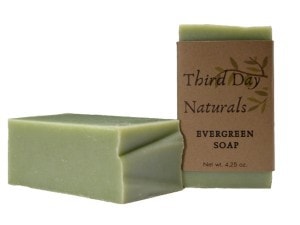
I don't know exactly how much the people in soap factories get paid, but I know that the family behind Third Day gets all of the proceeds from the soap (no middleman!), and I'd venture to guess their situation is a whole lot better than that of the factory workers.
(And their products are awesome. Seriously...best lip balm ever.)
Buying beef from the grocery store is about as giving as buying commercial soap (although it's probably a little worse, given the state of factory farming), but buying my portion of a cow from a local farm is a much more giving way to spend my money, I think.
It's more expensive than beef from the store, but I think this is an awesome way to give/spend my money...supporting a family whose livelihood depends on the cows.
I could buy super cheap toiletries and grocery-store beef and have more money in my bank account to give away, but somehow, that doesn't seem more ideal to me than spending more to support businesses I believe in.
Simple living plays into this, I think, because if you live simply, you can afford to spend more on the things you do buy.
And then a happy cycle is started, because if you spend more on the things you buy, they last longer, freeing up cash to invest in other well-made stuff (though this obviously doesn't apply to consumables, such as beef or soap.)
Buying a cheap (and cheaply-made) plastic toy from China isn't very giving, but spending more for a handmade toy is.
(Check out this awesome wooden food from Etsy!)
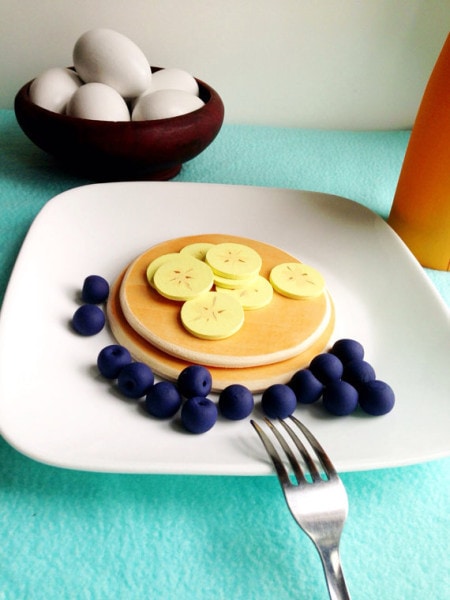
You won't be able to buy 100 pieces of food for $20 (This = the kind of toy food that is a huge waste of money. Seriously, don't even bother.), but the wooden food will be around long after the cheap plastic has hit the trash, and if you buy less toy food, you can afford to spend more on the toy food you do buy.
Since reading Overdressed, I've realized this applies to clothing as well.
If we dress more simply and buy fewer clothes, we can afford to spend more per item.
A hoodie from American Giant costs $89. That feels like a lot of money, I know. But how often have you gone to a clothing store and plunked down that much money for four poorly made items? Wouldn't it be better to buy one great hoodie instead of four not-as-great $25 hoodies?
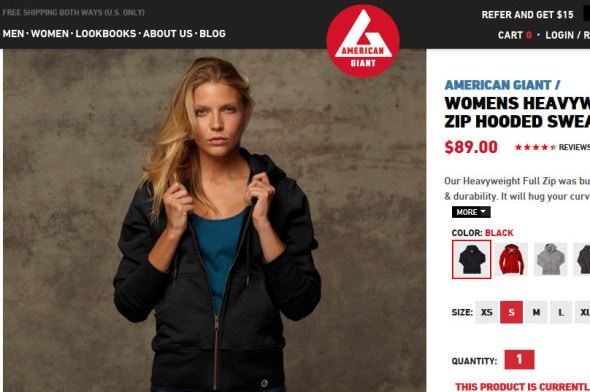
(Especially because your $89 pays a company whose product is domestically produced from the seed to the finished product.)
Jewelry is another example. The stuff from Claire's and other such companies is insanely, ridiculously cheap.
Practically everyone can afford to own 50 pairs of earrings when they're $9.99 for 6 pairs.
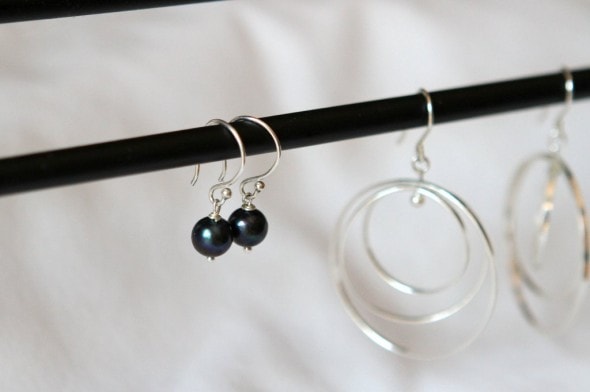
But what if we didn't need to own 50 pairs of earrings? What if we could be content with 20 pairs, or 10 pairs, or five pairs?
Then maybe we'd be willing to hop over to Novica and pay a fair-trade price for a pair of earrings that were handmade by artisans around the world.
The lovely thing about this is that spending/giving this way is a win for the businesses we support, but it's also a win for you and me, because a simpler life with quality things is far more luxurious than a life filled with disposable, cheaply made things.
_________________
Disclaimer the first: I realize that not everyone has the means to buy more expensive items. In order to stay financially solvent, you may have to live simply and AND buy the cheapest option available. Heaven knows the family FG was in that spot for years and years, so please don't hear me condemning you for buying your meat at the grocery store, ok? This post and my musings are directed at those of us who have a little more wiggle room and who are trying to give/spend extra income wisely.
Disclaimer the second: I also realize that none of us does this perfectly, myself included. (I buy beef from a farm, but at this point, my milk comes in a carton from the grocery store.) We're all making choices...ideal spending here, a little settling there. My point, though, is that giving isn't limited to donating cash, and that more of us could afford to give by spending if we lived more simply. Live simply, buy less, and buy mindfully.
Ok, I think that's it for disclaimers. Now I'd love to hear from you! What do you think about this whole giving-by-spending concept?

I went through this dilemma earlier this year. Obviously, being a woman religious, my wardrobe is already pretty basic. The questions was food and toiletries. After much consideration, prayer and discussion, we decided that paying more for quality food and buying locally produced soap as well as low-impact cleaning products were important for my health and our mission. I pay more for groceries than I used to, but I have noticed the benefits.
Like this idea. Trying to do something similar for my holiday shopping. Seeking out crafted items from local artisans and companies.
Yup, same here. I won't be able to do it perfectly, but I'm going to do my very best to support good companies and avoid poor quality.
I SO totally agree with you! I've talked to my daughter and this year, we are going to try to really focus our gift-giving with Locally Made items or items that are sold as fundraisers to support local organizations - or services which by their nature are local. One of my favorite places to shop is @ our local Farmer's Market where there are so many wonderfully crafted gifts. Some that I have my eye on are: lip balms, hand-blended herbal teas, hand-carved wooden spoons and utensils, beeswax candles and possibly a scarf-pin or earrings. Or maybe gift baskets filled with maple syrup, pancake mix & free range eggs? I guess though, I need to say that none of these purchases are donations - I'm spending more $ to get higher quality products and that's value not a donation.
Even though I am on a tight budget, I do spend more on food than I used to. Organic meat and dairy products are important to me and I'm willing to pay more for them. I would love to buy local meat, but the only way to do that is to buy half a lamb, which is too much for this single-person household 🙂
I've said this before, but even if you are on a tight budget, you can get good-quality things by buying them in op shops (thrift stores). When I moved into my current place I bought some plastic utensils new (for around $2) and haven't been happy with any of them. After that I bought a metal ladle and slotted spoon in an op shop for $1, and have been very happy with them (despite the orange 70s handles 🙂 ).
Liz, we're a 2 person household, and I haven't eaten red meat for years. My husband and some of our friends "cowpool" - they go in together to buy half a cow. That way no one needs a chest freezer and they all get very high-quality local meat. We've also been known to split Costco deals with friends with small households.
Yes! I thought about including a bit about thrift stores, but this was already getting so long, I decided against it. You're so right, though...we've gotten some great stuff through freecycle, thrift stores, and Craig's list (less expensive than new, cheaply made items and better quality!)
I just bought a small original watercolor painting - mostly because I fell in love with it, but also to support the local arts festival. I'm erestling mightily right now with Thanksgiving/Black Friday. The only way Icould possibly afford the excellent quality suit I want for work would be to hit the BF sales. But I categorically refuse to participate inBlack Friday madness, or in taking any retail worker away from their Thanksgiving.
This is a very Japanese outlook, did you know? There's a strong - but not, I think, universal - trend to buying fewer but higher-quality goods. The Japanese also have a very strong bias towards buying Japanese-made food or goods (whether this is a result of political lobbying, or cultural preference, or both, is an exercise left to the reader).
I find this very hard with ephemerals, because each purchase is a separate decision. I have to decide, each time I go shopping, if I'm going to buy a gallon of CAFO milk for $5 or a half-gallon of happy milk for $4; or virgin fiber TP for 1/3 less than recycled fiber TP.
It's easier for long-term goods. Not only are there fewer decisions, but I can amortize over the usage period. For decorative items, I don't buy unless I know where I'm going to put it; I have many decorative items so this limits the inflow of new goods.
And just so this isn't an echo chamber, and because I know FG welcomes politely expressed alternate opinions: I do not value US-made goods over foreign-made goods, just becuase of where they're made. Jobs overseas are just as valuable as jobs in the US. Reasonable people disagree on this, but if you value US jobs more, please at least be specific (to yourself, I mean; I'm not asking you to justify it to me) about why.
If the overseas jobs are the sort that are fair-trade, and where the workers are treated ethically, then yes, I have no issue with them (I happily buy from Novica, for example.)
However, I am almost positive that the American Giant employees are being treated better than the employees who make the $25 sweatshirts, so I feel much better about buying their product than I do buying one from a dangerous overseas factory, you know?
Totally agree about the long-term goods being easier! It's much harder to buy local chicken every week than to buy a solid-wood dresser once.
That is, indeed, one of the nubs of the decision process. I'm going to throw into the mix, the question of which is better (for the job, the world, one's soul, whatever): patronizing only known good jobsites, or patronizing likely not-so-good jobsites on the thought that worse-off folk will have a job and the jobsite will get better over time.
I don't have an answer to this question. It has been a subject of hot debate in economic circles for decades and I expect it will continue to be for decades to come.
It's really a hard thing! I obviously lean more towards the patronizing of good jobsites, only because very often, it seems that poor jobsites don't really get better, as the people in charge of them care more about money than about the people. If that's the case, more patronization and more money won't make them care about the people, you know?
Kristen, I totally agree with your philosophy. My husband and I have been trying to live by this principle for a few years now, and to make calculated and educated decisions about most things we buy. It's been working really well for us as a couple, but I feel like I'm failing at Christmas shopping this year. The responsibly sourced/higher quality things that some members of my family are asking for for Christmas are out of our budget, so it's now become kind of stressful for me. Do I buy the lower quality but cheaper option and get them what they want, or do I try to find something completely different that both fits with my shopping values and is also in budget? I wonder if any of your readers also are struggling with this.
Could you possibly do a group gift for those types of things? Then you could get the higher quality product but still stay within your budget.
Honestly, though, if you and your husband are faithfully buying high-quality items around the year, I wouldn't stress terribly over buying something of slightly-less-than-heirloom quality here and there around Christmas. Like I said, we all pick and choose what we spend on and what we don't, and none of us are going to do it perfectly (unless we're independently wealthy or something!)
I decide on my budget, and am happy to share (through gifts) with as many as I can afford. Last year, I bought two Gifts, and used the remaining money to make small batches of cookies, candy, and handmade cards. This year, I'm just sitting down to my list-making. But the idea is that it's the people that matter most (sharing time), then the thought, then the presents. And I'm very lucky to have family and friends who accept me for who I am: a generous, not-rich, non-Scrooge.
Great article - thanks for putting together a wonderfully thoughtful entry. I shared it on Facebook. Well done!
I love your blog and have been reading for several years but this post annoyed me. I know you care about feedback so I'd like to point out that despite your disclaimers, the parenthetical aside "(This = the kind of toy food that is a huge waste of money. Seriously, don't even bother.)" was both rude and unnecessary. Your post is easily understood without belittling the decisions (whether regretted or not) that others may have made. Honestly, I wish I'd bought only plastic pieces since I cringe every time the more expensive ones get inevitably abused by toddlers. I will continue to read despite finding an uncomfortable bit of elitism beginning to displace your practicality.
I'm sorry it came across to you that way...I meant it more lighthearted than it came across, though now re-reading it, I can understand why it made you feel the way it did.
Years ago, I bought some McDonalds branded toy food that was like the stuff I linked to, and sadly, the poor quality plastic meant that the pieces got smushed and the pieces caved in on themselves.
I don't personally own any wooden toy food (it didn't seem to be as widely available when my kids were little), but boy, the Little Tikes plastic food was have has worn so much better than the cheap McDonalds toy food has, and I wish I hadn't bothered to buy the McDonalds set. The Little Tikes stuff came with fewer pieces per dollar, but it was a much better use of my money.
Again, I apologize for the offense.
I am a single mom that recently became an empty nester. I have a modest 3 bedroom, 2 bath house. An opportunity to rent out a room to a friend from church presented itself. This does free me up to live simpler , give generously and be more mindful with my purchases.
It is so nice to wake up to read deep, economically literate thoughts. You could be an economist. ( I should clarify that I mean that as an enormous compliment.) I am shocked by how few people seem aware that we are all connected in the economy. Once you realize that, I think you are more thoughtful about how you spend your money. Don't forget that however you spend your money, even at Walmart, it eventually becomes someone's income. Although, I understand the sensitivity to having some unknown portion of your spending going to already wealthy people. Thanks for a thought-provoking post.
Along these same lines, something to ponder.........Do not use credit cards to pay for goods/services provided by small business owners. That puts more $ in their pockets. When you pay by credit card, the seller has to pay 3% of the sale to the credit card company.
Also, recently we had minor landscaping work down by a local small company. At the end of the day, my husband gave each of the 2 workers a $20 bill as a tip. When the bill arrives, I will pay by check. Hubby and are I are older now and need to hire others to do these types of jobs and we also have extra cash for tips, which we didn't have when we were much younger.
Oh, that's a good reminder! Thank you.
A rare counterexample: I recent bought some furniture and asked about a discount for paying cash. The owner actually prefered a credit card - he'd rather pay the fee than haul to the bank every day.
I completely agree with this post, especially the part about being OK with doing the best you can. We buy sustainably harvested salmon from the fisherman, locally raised beef from the rancher, local eggs, vegetables from the farmer's market as long as we can. And I have switched to mostly locally produced toiletries (no local contact solution available!).
But I live in Alaska and I am definitely buying milk in a carton that comes from a long distance, fruit and vegetables in the winter that are shipped in ( sometimes organic and sometimes not depending on the price). My food budget only stretches so far.
It's easy for me to find locally crafted gifts in our art town, and quality clothes are available with some searching. But I am ready for a revolution to hit small appliances--they are junk! A friend has asked for a crockpot for Christmas and it's hard to find anything that looks Well made. Price is not necessarily and indicator, I've discovered after buying my mom a name brand, fairly expensive blender last year that is crap. And I am limited by small town options and exorbitant shipping costs many companies apply to Alaska.
Jen - I've had good results using Consumer Reports and (for kitchen gear) Cook's Illustrated rating for small appliances. I also look to see if there's a consensus about what's a good product. For example, all the credible ratings list KitchenAids as the best standing mixers; but there's no consensus winner for electric smokers.
I happen to remember the results for blenders: CR and CI both rated Ninja blenders very highly (about $100 retail in the store), and also Breville blenders ($150?).
Yay for both those sources! They have an exceptionally strong methodology for their work, and are more than happy to explain it to you.
Those are two of my favorites too. I'd be lost without them!
Thanks. I don't subscribe to either of those sites since I buy so few appliances, but will keep them in mind if I need to do research.
Sorry, my previous post was not meant to be a reply to Amanda............
I have to start with the disclaimer that I live within 2 miles of 120,000 cattle, and within 6 miles of about 50,000 more cattle, and I am absolutely not a fan of large-scale feedlots. The level of stewardship possible with operations that large is not sustainable over the long term. I feel like these operators sell out their care for water, land and other resources in order to make a buck.
That said, grocery store beef comes from these feedlots, and it tastes fine. It's never going to be someone's hand-raised 4-H beef, but it's good. And, definitely, as Amanda points out, buying grocery store beef eventually supports people such as my neighbor, who works his tail off to support his five kids.
I realize this is sort of a red herring to the discussion at hand, but I feel like it illustrates the complicated-ness of these decisions.
That's true...but then I wonder, if we supported more small family farms, maybe beef farmers wouldn't have to run enormous feedlots, you know? If we're willing to pay more for our food, then farmers won't have to run things at such a large scale.
I don't know. It's confusing, and I'm no expert on the topic, so the complexities of supply and demand and subsidies and their effects are a little bit beyond me, but I feel compelled to spend at least part of my grocery budget supporting the efforts of small farms.
Kristen,
I too, really like that you're purchasing beef from a local farm. But I'd caution you as well that I feel that you're falling into some mainstream media hype about "factory farms".
For the record 98% of farms in this entire country are owned by family farms.
My family's farm, for example. Yes, it's an LLC. And we have 300 dairy cows. They're all named, they're cared for, they're pastured cows. As in most of the year pasture. And it's my parents, my brothers and my husband. We're not a big, bad corporation. And we sell our product to be shipped out, bottled and sold, wait for it...to the store.
And we don't use BST. And our milk is in the 'non organic' cartons. Yes! Truly! It's very discouraging to be called a factory farm!
We also raise and sell beef to be sold directly to consumers and butchered through a local butcher shop. We are proud of our product. Yes, please support your local butcher and your local farmer, but also, please understand that you are still supporting a local farmer when you purchase at the store.
Oh, but you're correct---direct sales are a lovely way of cutting the middle man. 🙂 They also reduce shipping, transportation, etc. I understand all this.
As an animal science (and consequently ag business) student, I feel it's very important to be educated about where our food comes from. I absolutely love small family-run farms and I think it's fabulous that people choose to support local, organic beef/chicken/pork/etc. On the other hand though, I feel the term "factory farms" vilifies a huge sector of the food producing community that does not necessarily deserve to be vilified. For example, my beef production class just went on a field trip to one of the largest beef-producing companies in the nation. It's a huge feedlot, and you could call it a factory farm. However, they run on a VERY small profit margin and are certainly not lining their pockets with cash in order to feed the growing population. It is definitely much easier to swallow (pun intended 🙂 to think of our food coming from happy cows that live in grassy pastures. However, it is simply not feasible at this point. Split between people and animals, there's just not enough usable land, potable water, or feedstuffs available to support enough livestock to feed people organically and free-range in an economical and sustainable way. What I mean by sustainable is that grazing cattle on range land can decimate the soil if there's too many cows for too long, which would hypothetically happen if all cattle were raised organic and free range. But, I do think organic has a great place and is a wonderful niche market and that support for increased agricultural advancements in order to make food production a more sustainable, natural, economical, AND local is absolutely essential. Also, I've been a reader for a long time and I LOVE this blog. It's changed the way I think about finances and purchases, plus it's just such a good read!
I understand that not everyone can eat grass fed beef (any more than everyone could eat cake in the days of Marie Antoinette). And, I understand that the world may not forever have the resources for such production. But, I don't see feedlot, mass slaughtered, factory farmed meat as the only alternative. A vegan or vegetarian diet is much healthier and MUCH more affordable than either beef option. I've been mostly-vegan for several years now, and it's very do-able. And, for those who love to eat meat - eating LESS, but still enjoying it occasionally might be a better option than deciding feedlot/factory/mass slaughter is the world's only choice.
And, just to be clear, I'm not trying to vilify those who make their living this way. We have a good family friend who has shown us his factory-type production. It is his livelihood, as well as that of his employees. He's a decent man - but he also wishes there was a better way to do it - like the way his father before him raised animals.
Denise, I have a question about beef. I bought 1/4 of a cow from a local farm this year because of the slaughtering differences. In my area, I belive much of the standard grocery store beef is from grass-fed cows raised on small farms, but then they get sent into the city for "processing" assembly-line fashion. The portion of beef I bought came from a cow slaughtered near its home and spared the assembley line death. I know some people think I'm crazy for caring about a cow's life and death experience, but I do. Are most family farms who supply the big chains still slaughtering this way?
I don't think you're crazy to care about an animal's death at all. It is a great question you've asked!
So, to answer it, yes, most animals are killed in processing facilities. There are very strict guidelines as to how the animal is to be killed. And yes, sometimes people mess things up. And even get desensitized to the process. And the footage inevitably ends up on the news. 🙁 I've often thought that these types of job would be pretty awful, truth be told.
It is stressful to an animal to take it from its environment and haul it in a trailer. There is no doubt of that. So, yes, mobile slaughtering shops that will come to your farm and kill and process the animal on site are a good fit for consumers such as you. And me, for that matter. 🙂
I also agree that cutting out a middle man means fresher food, more money in the farmer's pocket (and farmers aren't rich. Really!), and a more centralized and thriving local economy.
The reasons for farms selling their animals to markets in this way are this: the federal government has very strict guidelines for how farmers can sell their animals, first. Second, the number of specialty butchers was at an all-time low for the past two or three decades, but is happily on the rise again, and three, farmers CANNOT slaughter and sell their animals directly to consumers without a federally inspected butchering facility. And that takes a ton of capital. People want "safe" food, but they don't understand that farmers would like to directly sell to them as well, but cannot, under current government regulations.
The only way we can get around that is to sell an animal "on the hoof" (living) to a consumer (you) and then have a mobile slaughtering butcher (who is inspected by the government) butcher, cut and wrap the meat.
I'm a bit rambly here. Sorry for that. I hope I answered your question. :0
I love your blog Kristen, and totally agree with your thoughts on buying higher quality items which last longer and are better for you. I'm not sure where you live, but if you're ever in central California, I would love to give you a tour of my family's dairy farm. Factory farming has gotten such a bad reputation, and a simple tour can better explain so many aspects of it. Keep up the good work 🙂
I actually don't know a lot about factory dairy farming...what I was thinking of when I wrote this was more along the lines of feedlot beef.
Mr. FG adores California, so he'd love to come take a tour of your farm! Any excuse to get to CA. 😉
I think one of the chief confusions is that "factory" and "family" are mutually self-exclusive. It's often true that families build large farming operations by dint of hard work, long hours and sacrifices.
Unlike some others here, I'm not at all offended by this post, but I'm not persuaded, either. I tend to see the buy high-end-to-save philosophy just as self-indulgence that we're fooling ourselves about.
Your "don't even bother" toy is probably my daughter's all time favorite! It has gotten YEARS of use (both from us and from the previous owners who donated it to the thrift store!)- although she likes the wood & felt ones too. And, we bought it because she so enjoyed the 20 year old set just like it that belonged to a friend - so they DO last.
I'm not sold on the philosophy that it's frugal to buy upscale because it "lasts forever." Do I really NEED a hoodie (that will be out of fashion in a few years) or a child's toy (that she'll outgrow) to last "forever?" And if I buy a $3. hoodie from the thrift store that lasts as long as the fashion does, isn't that better than the $80. upscale model?
And, as for upscale beef, eggs, or dairy, I just omit those things - thereby saving my health AND my wallet. I omit the costume jewelry, too. Since these are things that I find easy to omit, it seems kind of silly to go for more expensive models rather than leaving them out.
I do agree on one thing, I don't care for some of the forced labor that goes on in China, so when I find an alternative made elsewhere, I tend to go for it.
Once again - not offended & not trying to be argumentative - just sharing my perspective.
Whoa, I'm amazed that that toy food lasted for you guys. We must just be really hard on toy food or something! The cardboard food boxes and such last a shockingly short amount of time around here.
As far as children's toys go, when I buy them, I'm thinking not just about how long my own children will use them, but also what will happen to them when my children are finished playing with them. Will they last long enough for grandchildren to use them? Can I hand them down to a niece or a nephew? Or will they be trash when my kids are done (or before!)? For instance, you can get a cheaply made, wobbly toy shopping cart that will maybe last through one or two kids, or you can pay more and get the Little Tikes shopping cart that's made of very thick, sturdy plastic. Our Little Tikes cart lasted through tons of abuse from my four kids and now lives on in my sister's house with her five kids. I'm pretty sure it'll last even though the abuse they can give it and will be able to go to another family after that.
I hope that helps to explain my thinking a little better.
I have 3 kids under 4 years old, and I've noticed that a lot of the 15-20 year old plastic toys we buy at yard sales are a sturdier plastic than the new toys we're given as gifts. My church has a set of that plastic food you linked to, but it's old (it was donated by a family whose youngest "kids" now have kids) and is made of a thick plastic. The newer set my library play group has is made of a thinner, more squishable plastic.
For mid-price-range plastic toys made in the USA, I buy Green Toys. They're made from recycled milk jugs in California. They're a really sturdy plastic, they're BPA-free, and dishwasher safe. We have a Green Toys tea set, air plane, rocket, and car key baby toy. My kids love them!
Yes, that's the problem with the new toy food...the plastic is just so thin, it holds up to almost no pressure. I hate that.
i agree with what you're saying, about spending more to buy something of better quality.but in this day and age how do you know if you spend more money,that the item will last.i feel like with so many things now, the days where you buy something and it lasts a long time are over. i need to be frugal, however in some cases i would spend more for something that is of better quality and will last longer. i just dont trust that it will.
Consumer Reports and Cook's Illustrated are two of my favorite sources, and I also do comb through review of products online.
First of all,thank you for sharing.. being a blogger opens you up to everyone's "humble opinions" and sometimes criticism.. goes with the territory I guess.But I admire and respect your opinions greatly!
I don't understand all the farm politics or free trade,etc.either.. I mean, come on.. I do the best I can! I watch videos,I read but I do not know it all.. ..
But the general theme here:Buy local,buy quality WHEN YOU CAN, and support your neighbors..who can fault that!!??
With holidays around the corner, a timely post. I'd rather receive one beautiful Le Creuset pan than a cheapo matched set of 4! I also love scouring thrift stores for old Corningwear items and other quality tools for living.
For gift giving-- I'd rather buy a crafted bar of soap at the local art fair from a local than a name brand from the store.
And so, we do the best we can, progress not perfection, as another blogger I follow says! 🙂
Yes, yes, yes to the pan thing. If I'm going to spend $150, I'd really rather have one great pan than four pans that are going to wear out quickly.
I really like this post but I do have a question. Now please please please do not see this as criticism. It is a honest question in the spirit of bloggy friendship. You are such a champion of buying used, shopping at thrift stores etc.............I was a bit surprised to see the new expensive hoodie. Now don't get me wrong. I have no problem with the new expensive hoodie. I am just surprised.
You have outdone yourself with this one!! Keep up the good work that is thought provoking.
No worries! In reading Overdressed and other books/articles about the clothing industry, I've come to believe that the prices we're accustomed to paying for clothes are artificially low, as are the prices we want to pay for food and for a lot of other things to. The low prices we pay come at a cost, and that cost is sometimes working conditions like we've seen in Bangladesh of late.
So, the two options I feel most comfortable with are either buying used (or getting used things free, such as through freecycle), or buying fair trade/responsibly made new things (or at least buying something that's really good quality). This means that my purchases are generally either super frugal (goodwill/freecycle) or on the more expensive end of things (American Giant).
The good thing is that since I don't buy a lot of things and a lot of what I buy is second-hand, I have room in my budget to afford the occasional more expensive item.
This topic has been on my mind as Christmas has neared and you articulated it perfectly! The older I get the more I value well made things - even if they cost more.
DH and I have been in debt repayment mode so I do not have as much wiggle room in the budget as I would like to spend the extra dollars all the time... but when the debt is gone this is one area I want to focus on!
My mom treated me to some lavender-tea tree scented goat's milk handmade soap (from a local farm). Washing my hands is now one of my favorite moments of the day!
I think you are wise beyond your years, and I like that you are such a balanced thinker and can express it for others to hear. Carry on ... please 🙂
I really appreciate the thoughtfulness with which you approach so many aspects of your life, and this article really gets me thinking about my spending/giving in a whole new way. Thank you for such thought provoking content.
Way to go Kristen! And to support your theory I should tell you of our Great Aunt Alice, who died many years ago. In the 1930's she was head buyer for the women's clothing department of a large department store in Chicago. In the 1970s she would tell me "Only the rich can afford to buy cheap!" I was young and single at the time and thought she was talking rubbish. But after I was married and had a young family, this became the mantra by which I lived. I always bought the best quality I could afford, but maybe one item instead of two. Some of the kids clothing went through all four kids and still didn't look washed out. And waiting for sales and watching clearance racks meant I could get even better quality - not always in my #1 colour choice though! Food didn't really fall under this category, especially when the kids were teenagers and sucked up food like vacuum cleaners. But even so cooking from scratch saved a bundle. I got satisfaction from this frugality, but wouldn't assume others should do the same. If they did there would be no bargains left for me!!