
Answering questions!
I'm just gonna do a questions-from-the-comments roundup every now and again so I can stay reasonably caught up with answering questions. 😉
Green smoothies and fish (NOT combined)
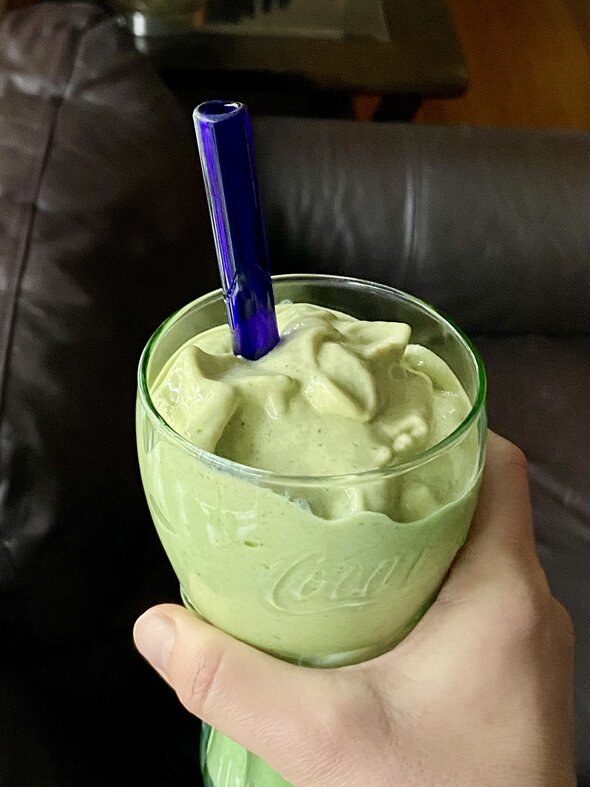
After I shared this smoothie photo, reader Liesl messaged and said:
That green smoothie looks good! I'd love if you can share 1. How you make your smoothies and 2. Good ways to cook a fish fillet because I'm terrible at it!
I do have a post about my smoothie-making method! Click here to read it. And that smoothie in the photo is...banana, yogurt, spinach, and peaches.
Also, here's a post about my Vitamix. And here's one comparing the Ninja and the Vitamix.
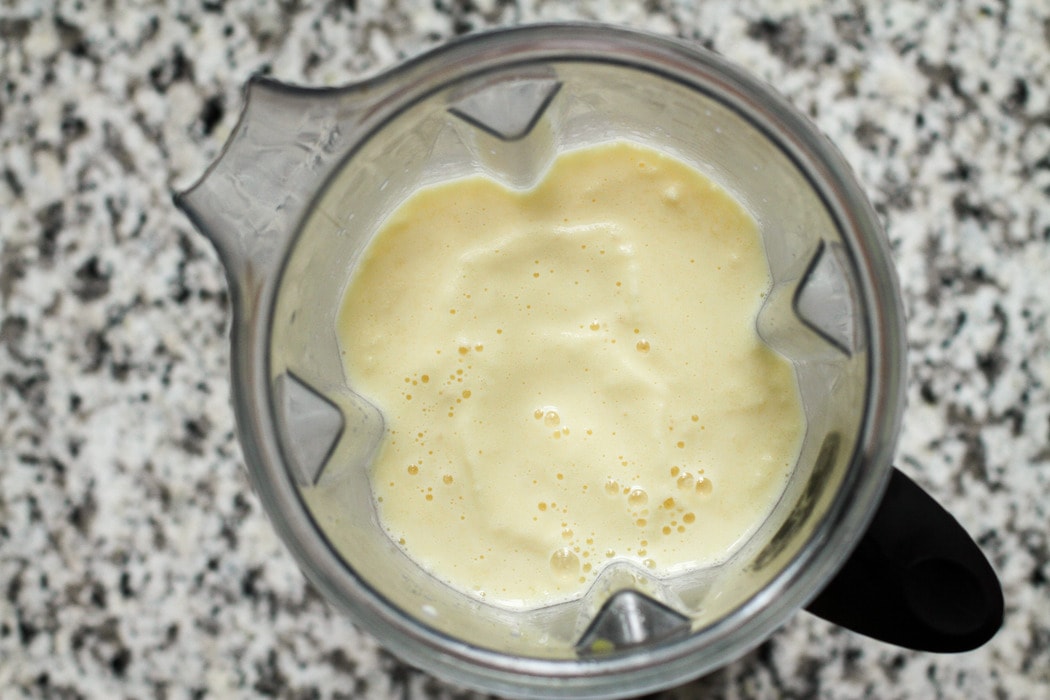
As far as fish fillets go...let's see. Probably one of the best things I learned from all my ATK/Cook's Illustrated recipes is this: to improve almost anything you're cooking, get your pan nice and hot, add a little oil, and brown your food.
This one thing will improve your cooking so much!
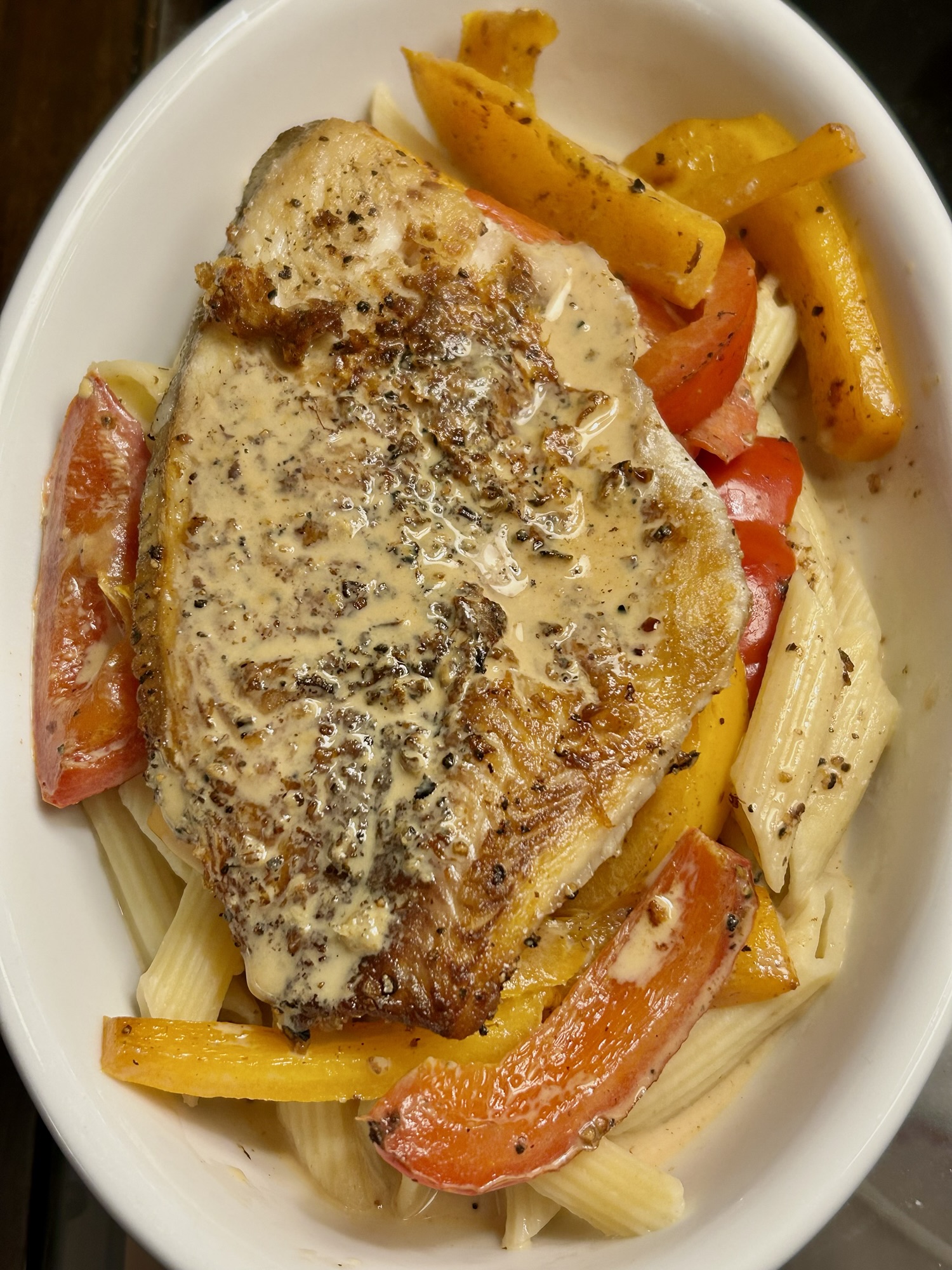
To help my fish fillets brown, first, I make sure they are nice and dry. Pat 'em down with a paper towel!
Then I season them with whatever I'm using that day, and I let the seasoning sit for a few minutes while the pan heats.
Once the pan is nice and hot, I add a little fat of some sort and place the fish in the pan.
Fish cooks awfully fast, so I flip the fillets after a couple of minutes and cook them on the second side until they flake with a fork.
Nurse Residency Program
Someone asked for clarification on what this is, and I don't think I've properly explained it before.
Many hospitals require new grads to sign up for a year-long residency program. At my hospital, this entails working full-time hours and participating in residency classes.

There were multiple days of these classes right after we got hired, and once those were over, we went down to once a month.
We get paid to be there, and the monthly sessions cover a range of topics, like evidence-based practice, practical skills, time management, and more. We also have to do an evidence-based practice project, which we present during Nurses Week.
That's a group project, but luckily for me, I am in a two-person group with my study buddy (and now work buddy) Brittany. Yay!

For the curious: we are doing a project on how the overuse of external urinary catheters negatively impacts our patient mobility efforts. Basically, these are so simple to put on a patient, hospital staff members sometimes use them to avoid the work of mobilizing a patient to the bathroom.
And sometimes patients want them because mobilizing to the bathroom involves more work and more pain. But, if a patient is able to move, we are supposed to make them move! Even if it's just a bedpan or a bedside commode, it's better than sitting in the bed and passively having your pee sucked into a cannister.
Movement helps people get better.
Anyway, my residency program graduation is in early August, and I'll be thrilled to be done with it. One less thing on my plate!
Victoria said:
Would you share what your iron supplement is? My iron is low and I haven't been able to boost it. Hoping to avoid iron infusions.
Sure thing! This is obviously not medical advice from me to you, but my doctor recommended that I try SlowFe, which is a gentler iron supplement.
It releases over time, which is supposed to help reduce some of the unpleasant digestive side effects of iron supplements.
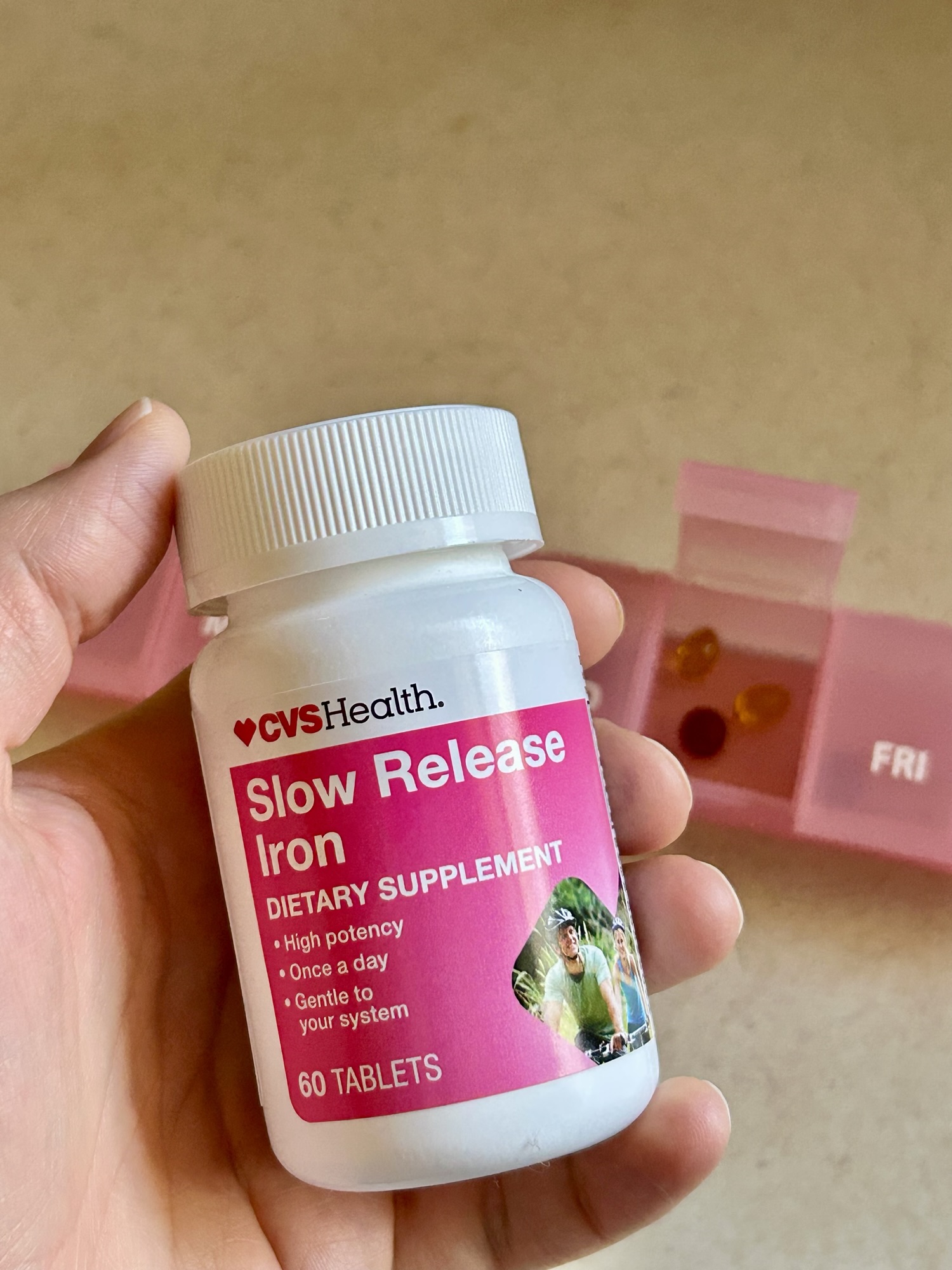
I went name-brand for my first package, but after that, I switched to the generic variety because it's much cheaper.



Hi Victoria,
I used to work as a nutrition counselor and specifically dealt with a lot of low iron. Some of the clients were recommended an iron supplement with good instructions; others less so. I don't want to post things on here that I'm not qualified to say or could be construed as medical advice, but the search "things that inhibit iron absorption" in Google gave me the exact info I would share with you, just in case! Maybe consider what you're eating/drinking with your supplement to make sure you're promoting absorption and not hindering it. Best wishes on your wellness!
And Kristen, so happy that you got "stuck" with the absolute perfect partner for this residency project!
And I can say in nursing school, we learned to always make sure we don't give antacids at the same time as iron pills, because that does block absorption. 🙂
Heather Mar and Kristen,
It's also fairly well known to eat/drink something that contains Vitamin C (like OJ, an orange, etc) when you take your iron supplement (or reasonably close to), as it helps with iron absorption.
Hi Kristen,
The hospital where I worked last before retiring had a Nurse Residency program. I thought then and think now that this is a very wonderful thing. Other medical professionals such as physicians aren't moved directly from school to practice. They experience a residency training program where they are supervised and taught as they practice.
Residency programs also allow for asking questions in a safer space, don't you think?
Deborah
I want to encourage your project. I see this with elderly family all the time in the hospital. She wants the device because she feels poorly and doesn’t want to walk to the bathroom (especially after her fluid pill!). The staff agrees because they don’t have anyone available to take her every half hour and dedicate ~15 mins per trip. A week of this leaves her in bed 90% of the time and then she wonders why she is so weak and unable to easily return to usual activities. 2-3 times this has required a rehab stay to transition back to home before eventual assisted living move.
Thanks for you hard work!!
Precisely. It's a lethal combo of it being easier for patients and also easier for staff.
Hi Kristen, would you recommend taking iron in general, regardless of if you're in a deficit or not? I take a vitamin D tablet daily (and try to remember to apply sunscreen) but nothing else.
I'm not a doctor or a registered dietician, but I do know there are some (uncommon) disorders which cause excessively high levels of iron, so I would suggest getting a blood test before taking a supplement. Everything in biology is about keeping things in the sweet spot, not too high or too low. More is not always better.
The risk with taking it before getting tested is that your iron levels might be fine, which means you could be taking in more iron than you need. Your body does have ways of storing extra iron, but still, it is possible to have too much iron. So, I personally would always get tested before adding an iron supplement.
That said, anyone who is menstruating regularly is quite likely to be a little anemic, so I would not be at all surprised if you're on the anemic side.
Also: your doctor can include a test to check your ferritin levels; ferritin is the protein that stores extra iron, so this can give you and your doctor a good idea of how your high or low your iron storage is.
My iron levels AND my ferritin were both low. I have the iron levels up, and now I'm just continuing supplementation until my ferritin levels get up to normal.
Thanks to you and STL Mom! I'll push through my squeamishness for blood tests and get my iron levels tested first.
You've got this! Make sure you're hydrated leading up to your blood test, and get yourself a nice little treat afterward.
One way to naturally add iron to your diet is to take a cue from Popeye the Sailor Man and eat spinach. Personally I dterst canned spinach but fresh spinach is great in salads. My dad had one of those "Square Foot Gardens" and grew spinach every year. In summer we'd go pick some, wash it off, and immediately out it in our salad. Can't get any fresher than that! Our salads also were made with delicious homegrown tomatoes, which contain Vitamin C and therefore help with iron absorption. I went to give blood and the Red Cross phlebotomist testing my blood could not believe a young woman still having periods could have such high iron levels. (This happened years ago.) She tested my iron level again, just to make sure. Then she laughed and told me that maybe I needed to stay away from any magnets. (She was joking of course. LOL!) Fresh spinach almost every day did the trick!
I eat spinach most days! I remember reading that the concept of spinach being a 'super food' for iron was a misreading of its actual amounts though...
My OT self LOVES your group project. I understand how external catheters can make life easier for nursing staff, but movement is so, so important for patients. Thank you for your efforts! In a more ideal world, there would be a much higher ratio of trained staff to deal with mobilizing patients.
YUPPP! I wish I had more time to mobilize my patients; the ones that really, really could benefit from mobilization are often the ones that take the most time to mobilize.
To the question about iron I learned something important from my hematologist. Iron shouldn’t be taken every day. Your body can’t absorb it. At most taken every other day. Don’t take with coffee and it should be paired with vitamin c to help absorption. I still ended up needing an infusion but my previous doctor told to take it twice a day and the hematologist was horrified.
Oh, interesting. This article seems to indicate the overall effect is fairly similar with both methods, but since iron can cause digestive issues, going the every other day route can be preferable: https://www.thebloodproject.com/oral-iron-once-a-day-vs-alternate-day-dosing/
Practically speaking, I never manage to take mine every single day so I probably average every other day. Ha.
Another tip, for fish and everything else, is to heat the pan first, then add the oil. If you add the oil first, it can break down while heating. Not only does the oil taste off but also it the food is more likely to stick.
Yup, that's exactly what I do...a screaming hot pan, and then the oil. 🙂
Iron: I am the kind of anemic where I get iron infusions (i.e. a liquid iron supplement through an IV) a few times a year and it's been life-changing.
Fish: I rotate between three very easy fish recipes:
1. Breaded fish: a filet gets dipped in flour, egg, panko, then baked at 425 until it flakes.
2. I pour stir-fry sauce on the fish, bake, sprinkle on some green onions, and eat with rice.
3. Fish gets baked over/under a mix of chopped up onion, tomato, lemon, oregano, parsley (if we have it) and some oil.
I noticed on Friday that tilapia, my preferred inexpensive fish, is up 30% from 2020. Literally two fillets for the price that used to get me three! Boo.
Oh, and regarding smoothies! I don't like yogurt OR banana in smoothies (I know, I'm very fussy) and my favourite smoothie recipe is just frozen mango, frozen cherries, a scoop of almond butter, and some hot water to start things blending. It's so good! I also learned a few years ago (in a rather unfortunate manner) that the sweeteners in most protein powders--the ones that end in -ol like sorbitol--do NOT agree with my digestive tract. I solved it by buying plain, unflavoured/unsweetened whey powder. I don't find I really need the added protein anymore, so I just use the nut butter for some protein and fat and call it good enough.
And lastly, on residency: As a medical resident/fellow it always makes me smile when other professions use the word "resident" or "residency." Much like an artist's residency, medical residents are called "residents" because we literally reside at the hospital! Nowadays, it tends to be in 24-30 hour blocks (and there are bedrooms and bathrooms available) but even a generation ago, the residents really did live at the hospital for longer periods of time. I understand that psychologists and nurses and other professionals are using in the modern sense; you've graduated but are having some supervised practice or additional training. And anyway, I know some folks with PhDs who get irritated that physicians are called doctors even though we don't have doctoral degrees. So I'm not fussy or a gatekeeper on terminology--I just find it interesting!
Meira@meirathebear,
Sugar alcohols (the sweeteners that end in -ol) are known for causing, ahem, GI issues. I try and avoid them for that reason. On the other hand, I've started using XyliMelts at night, on the recommendation of my dentist, because my cpap makes my mouth bone dry while I'm sleeping. This product really helps with that dryness, though it does contain xylitol. (I have no financial ties to this product, just a satisfied customer).
Yes! I'm not sure which ones are the worst for it, but I DO know that sorbitol is not my friend. I can't think of a time that I had an issue with sugar-free gum, though.
Re: iron. I've seen that there are some sublingual options for iron, and I'm curious. Does anybody have any experience or knowledge about this?
I think this is recommended for people whose digestive systems can't tolerate the usual oral iron pills, but I'm not sure if they are more or less effective than regular iron pills.
I wonder if it also could be useful for people whose digestive tracts are malfunctioning, especially in their ability to absorb nutrients.
I am a competent cook but cooking fish in a pan is an area I don't feel confident. I've been using some variation of this broiled fish recipe for years and it has never let me down. I play with seasonings, the "creamy" elements, and the fish (always sticking with a white fish) and it is always a fan favorite. So much so that we have renamed this "yummy fish!" https://www.allrecipes.com/recipe/50644/broiled-tilapia-parmesan/
This is similar to how I cook fish, too. The oven makes it easier to use less oil, and you can throw a side dish in there to make the oven do double duty. Regarding iron: investigate it for your own personal health by talking to a doctor/nurse practitioner and maybe getting labs done first. Everyone's physiology and nutritional needs are not the same! Over doing it on iron can cause other health-related issues.
Not able to speak on catheters. THANK GOODNESS!
In terms of smoothies, I am experimenting with boxed frozen spinach instead of fresh spinach. I am in an inexplicable season when I don't want to use fresh greens. I buy them then they start to go bad. Then I throw the green bag into my terrible side by side freezer which has no room. Messy. Also, I believe frozen spinach has equal nutrients and is cheaper. Let me know in the comments if you disagree. It is a working theory. My idea is to cut the blocked frozen spinach into cubes, save the cubes in a ziplock, and toss them in. Neater and cheaper? The experiment is waiting in the freezer for me to try it.
Oh, that's an interesting idea. Let us know how it goes!
When I have spinach that is about to go bad, I put the whole bag in my freezer just like you do. Once it's frozen, the spinach is super fragile and can be squished/broken down into a very compact size.
I have thrown spinach leaves that about to go slimy into the freezer and used those with no problem in my smoothies - if anything, they help with keeping the smoothie nice and cold. I feel like spinach that has been frozen into the blocks that you get in the freezer section at the market would have too much of that wet spinach taste for my liking. Worth trying though!
Mary Ann,
Commercially frozen vegetables have the same or more nutrients in them than fresh, because they're typically picked and frozen the same day. Fresh produce is picked and then shipped all over the country (or picked and shipped from another country), so may lose a small amount of vitamins along the way. (This does not include local veg and fruit sold at a farm or farm market). Not saying fresh is bad in any way; but your theory is correct, based on the things I've read!
Okay, question for you regarding the fish cooking: How do you handle the fishy kitchen smells that it causes? Ugh. Honestly, that has been part of my hesitancy about cooking fish more at home.
I often open my window for a few minutes! Same for when I cook broccoli which smells awful to me.
Honestly, if it`s breaded and deep fried, I try to limit it to the warmer days and make it outdoors...
As the wife of a stroke survivor who is in the hospital with an infection for the third time in 7 weeks, with a 2 week rehab hospital stay in between, allow me to sing my personal praises for the Purewick. Once dh is sick enough to make it to the hospital, he is bedridden, beyond OT/PT standing him up and possibly getting him to sit in the chair. With the Purewick, it gets every last drop (unless the seal is broken) and allows him to move around with some freedom. I know some hospitals have done away with them, but they are a lifesaver as he can't hold a urinal and deals with terrible skin breakdown from briefs. Can any nurses share their personal and professional opinion on them? Just curious as to whether there is evidence of a better option. He already deals with bladder and kidney infections and I believe I read that the standard catheters can cause those in older folks, which we are.
Yes, there are some cases where a Purewick is helpful. We are not saying they should never be used. But too often, patients with decent mobility scores (like a score high enough to use a bedside commode) are given Purewicks.
I want to have them available to us, for sure. I just want the overuse and misuse to stop. 🙂 For people who are truly bedridden, though, they are a godsend.
I’ve been taking generic brand slo fe iron for ages. I started when I tried to donate blood and was rejected c my hemoglobin was too low. Now I am proud to say my hemoglobin was at a 15 when I donated 2 weeks ago! I feel A lot better when I am consistent with it too. I have an Amazon subscription set up so it comes every 2 months.
Another tip with cooking fish: Once the fish is in the pan, lower the heat a little and if it's not coming loose from the pan easily, it's not ready to be flipped. Leave it for a while longer. With salmon, I press it into the pan (skin side down) for about 10 seconds with a spatula as recommended by serious eats. Also, what really helped me was getting a thermometer. I tended to overcook the fish in fear of leaving it undercooked; most of my non-vegetarian cooking experience was with chicken so I was always very concerned with that. The thermometer helped take out some of the guesswork and made me more confident.
Question to consider for a future Q&A, FG: Do you miss teaching? You were a homeschooler and a piano teacher - both of these required a lot of patience but also tangible rewards. I love that the last few years have allowed you to be a student and benefit from the learning but I wonder if you'd want to go back to teaching in some capacity, maybe teaching future nurses or doing continuing education.
Adding to the draft for next time!
I really enjoy this type of post as I don't usually go back and read all the comments. And you know if one person has a question, others have the same one too! 🙂
A postive spin on the external urinary catheters, I think they cut down on getting a UTI, speaking from experience.
But I do agree movement is important.
Oh yes, they definitely do! This is the best use-case for them; when someone would otherwise truly need a Foley.
The problem is that they are frequently overused, in patients who actually could mobilize, even if it's just to use a bed pan or bedside commode.
Yes! To getting the patients up and moving. Not only do pts get weaker staying in bed their chance for developing pneumonia increases.
off topic but Buddy our 4 yr. old cockapoo went to the vet for his rabies shot and we were told that his bloodwork is not normal. He may have kidney disease, and we have to bring him back in April. A quick check on google said kidney disease is fatal in dogs. Anyone here know anything more? thanks.
Kidney disease in dogs is treated with a special diet. The vet can write a prescription for it. In 2002, my 12-year-old Eskimo spitz girl was diagnosed with it. We followed the diet exactly and she lived 2.5 more years in good health until an infection got her in the last few days of her life. She had periodic blood tests to check her kidney function, but that and strict adherence to the diet were the extent of the medical treatment she needed.
thanks so much. meant to say june. i really appreciate your answer. someone in my apt complex said you can feed the dog cod and barley. am glad there is hope. hubby took buds to the vet. sorry for your loss thay give so much love and when you lose them it hurts so much.
The amount and quality of protein for dogs with kidney disease has to be carefully controlled. That's why the vet has to prescribe it, as it is not suitable for normal dogs. You can buy the prescription food from Chewy online.
It was so long ago that my dog was sick that we bought her food from her vet. The hard part was that there were no kidney-appropriate treats being made. That may have changed. My girl made it to an almost normal lifespan for her breed, and I have since heard of younger dogs that have lived most of long lives with kidney disease thanks to the prescription diet. It was sad to lose her, but she had fought a good fight and lived a good life.
thank you so much.
Oh my goodness, I read this as "cockatoo" and I thought you were asking about a bird, and then I was like, "Why is Ruby sharing about a dog?" lol
I think it's great that they do nursing residencies, and I have also seen teaching hospitals are doing nursing fellowships. That must really help the new grad's confidence.
I'm a long retired OT, and I see SO many new OT grads who are just thrust out into jobs and they feel unprepared, even though OT's must do at least 6 months of full time "fieldwork" which are clinical internships covering two areas of practice. I think it would be great for new OT's to have residencies, too, but the sad reality today is that most OT/PT in adult healthcare facilities (especially skilled nursing) is provided by contract companies and there is a disconnect between the facilities and the contract agencies. The contract agencies are all about revenue, not about supporting their staff. Sad days in healthcare.
I used a generic slowFE as well when I was almost anemic last year (couldn’t give blood). No GI issues!
But the thing that worked the best for me was switching from a nearly vegetarian diet to a meat and protein (essentially keto) diet.
Regarding cooking fish: First shoutout to Kristen's Asian-Glazed Tilapia recipe. It's delicious and easy. I usually make it in a non-stick skillet, so I don't worry too much about sticking. https://www.thefrugalgirl.com/asian-glazed-tilapia/
Otherwise, I almost always bake my fish. It's just so much easier and forgiving. You can try it in the air fryer too, though that will cook quicker. Season it, add a breadcrumb topping if you like (add a touch of oil or spray to the breadcrumbs so they brown); onto a sheetpan in a 400 degree oven for 10-20 minutes depending on the thickness of the fish. Push a fork through it to see if it flakes. When it flakes, it's done.
I've really been enjoying cod lately. It's a bit meatier than tilapia and I enjoy the flavor a lot. Not a strong flavor, just a clean white fish.
As a physio/OT assistant working in a hospital, I second that statement: " If a patient is able to move, we are supposed to make them move!"
Movement is key, and we want our patients to move as much and as often as possible!