
Do you have to replace your underwear every six months?
You guys. Apparently, there is a notion going around on social media (TikTok, I hear!) that says we all need to replace our underwear every six months.
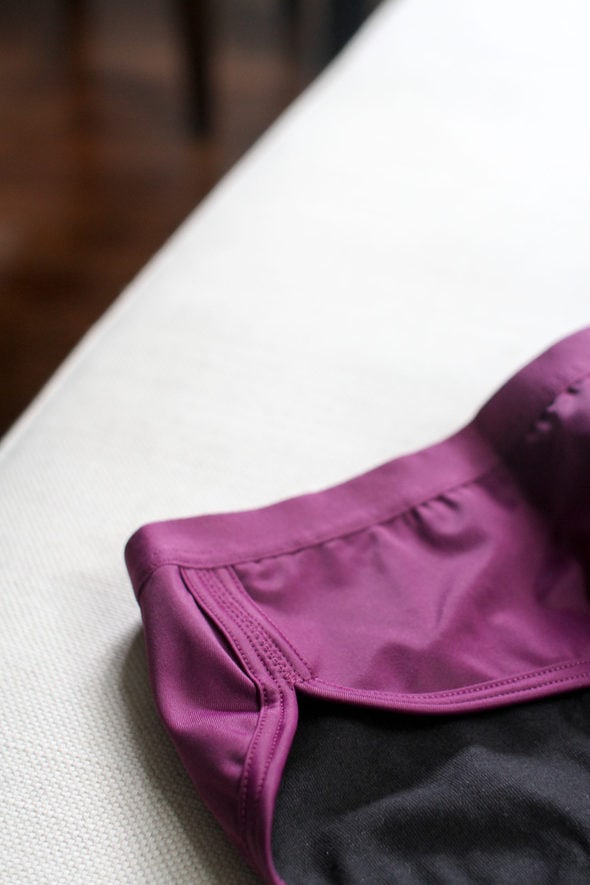
Like...throwing out the "old" ones and buying a whole new set.
When I heard this, I was like..."What???"
Because I have never in my life come even close to replacing mine every six months. I just replace them when they wear out.
The theory is basically that washing and drying them doesn't remove all the bacteria, and the concern is that this could cause an infectious problem.

I immediately thought about how this has never been an issue for me (to my knowledge, I have experienced zero underwear-borne infections). And I also thought about how this is a little bit silly because hello, every fresh pair of underwear is simply going on top of skin that is covered in bacteria.
It's not like a brand-new pair ensures a bacteria-free zone; the areas the underwear cover are never even close to being bacteria-free.
I took to Google to find out what the facts are, and indeed, articles popped up saying that "many wellness experts recommend you replace your underwear after six months".
(Conveniently, multiple underwear companies have articles about this. Hmmm. Also, I generally regard "wellness experts" with a degree of skepticism.)
Happily, I found this Today article quoting Dr. Jen Gunter of The Vajenda, and she thinks this underwear replacement trend is hogwash.

This Mental Floss article directed me to an article titled, "Application of Quantitative Risk Assessment for Formulating Hygiene Policy in the Domestic Setting" and I was able to access the full-text article through my school's library database.

I read the whole thing (of course), and it does say that washed and dried clothes maintain some bacterial load (E. coli doesn't survive very well, but Salmonella and Mycobacterium are more hardy). Interestingly, some bacteria get on your hands when you transfer wet laundry to the dryer, which makes sense because the dryer has not yet had a chance to kill the bacteria.
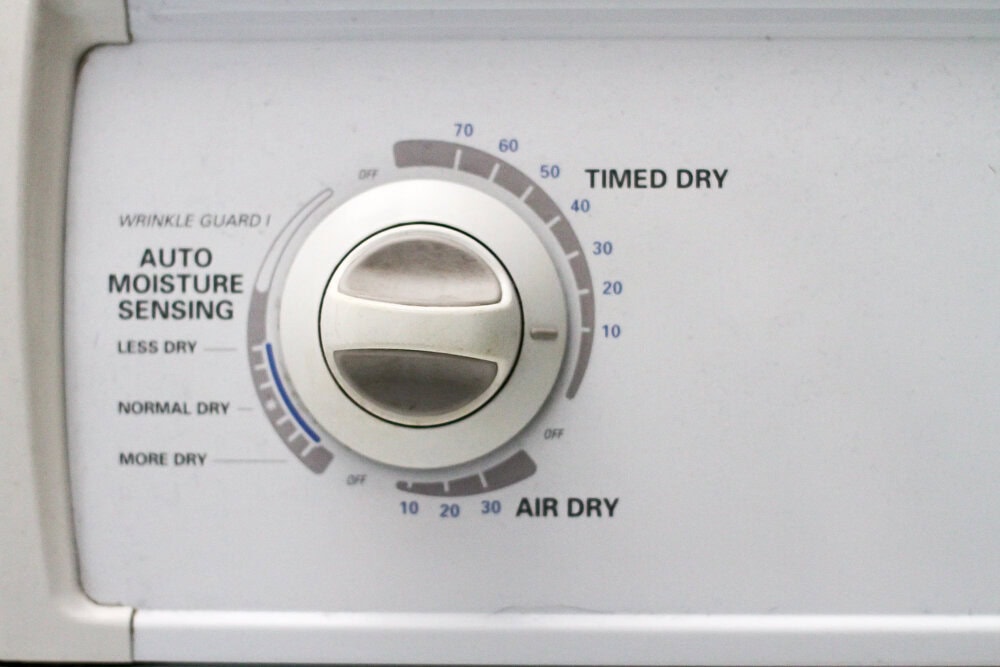
Based on this, it would seem sensible to wash your hands after a laundry transfer, before you eat or handle food, especially if someone in your house is sick.
My take on all of this
I am not prescribing any particular behavior for you, but here's how I'm thinking about it!
1. It is not possible to live a bacteria-free life
We are covered in bacteria. And our homes are covered in bacteria, too.
In fact, the Gerba article says that kitchen surfaces tend to have more fecal matter on them than bathroom surfaces, and that it would statistically be more sanitary to chop up salad ingredients on your toilet seat than in your kitchen.
Do with that what you will.
2. If you are healthy, you are at a lower risk
The Gerba article points out that babies, elderly people, and those who are immunocompromised are at the greatest risk of harm from acquiring an infection. So, in those cases, perhaps care should be taken to sanitize surfaces and linens more thoroughly.
(Obviously, this is one of the reasons hospital laundry gets a serious disinfection treatment!)
But for the average person, with a decent immune system, old-but-laundered underwear does not seem to pose a terrible risk. 😉
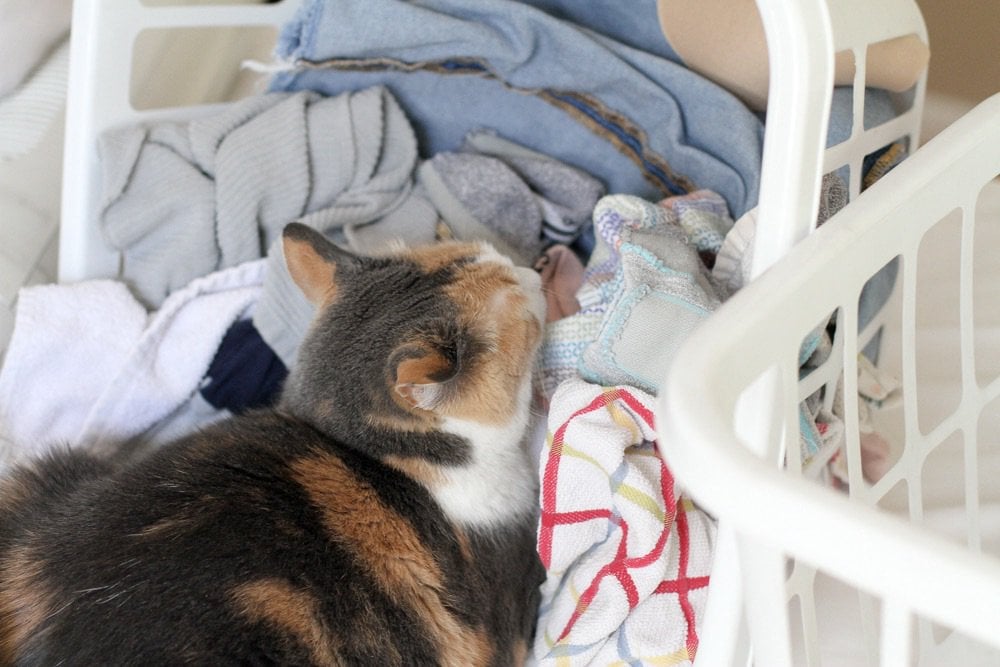
3. If this were dangerous for me, I would have noticed by now
It is easy to become alarmed upon learning about how omnipresent bacteria are. We think, "Oh my gosh! There are bacteria! That's bad! Bleach it all!"
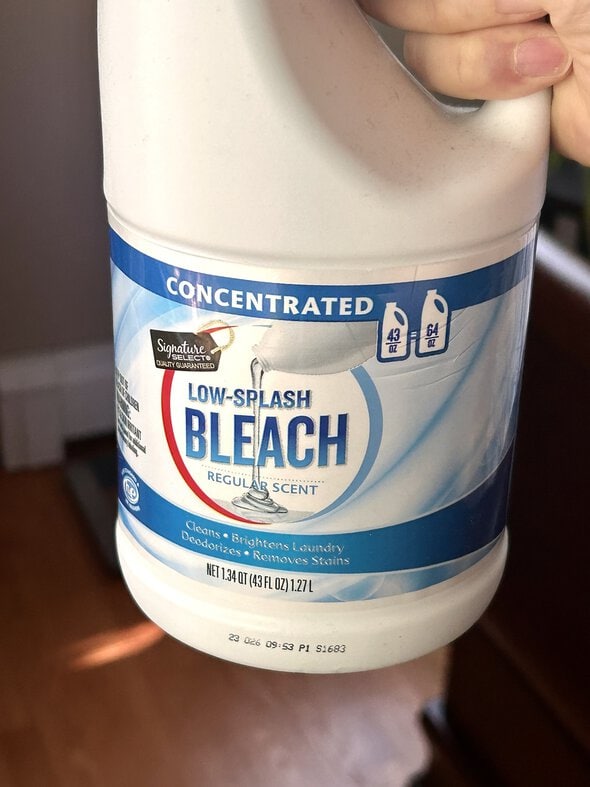
But hold on. If the sanitation level in my house were a problem, I'd be experiencing some consequences.
If the sanitation level in my underwear were a problem, I'd be experiencing infections.
I'm not, though! I can't remember the last time I got a UTI (the main fear with e. coli), and I am rarely sick with anything at all (thankfully!)
So, I can say that my current cleaning habits and underwear-replacement habits are not harmful for me.
4. It is wasteful and expensive to be unnecessarily sanitary
In the hospital, we do a lot of expensive and wasteful things to maintain a sanitary environment, and I reluctantly acknowledge that this is necessary.
But at home, I would incur unnecessary expense and produce unnecessary waste if I tried to maintain a bacteria-free environment. It would require more expensive cleaning products, more disposable products, and more item-replacement costs (like underwear!).
5. I do support good underwear hygiene
My personal underwear rules:
- Breathable underwear is best (this Pubmed article says that underwear with a non-cotton crotch are associated with yeast vaginitis, although this Dr. Gunter post says it's just important to wear undies that do not trap moisture against the skin.)
- Underwear should not be worn for several days (!!)
- A freshly laundered pair is in order when the current pair is soiled/sweaty, and it's better to err on the side of caution here
- Underwear that is actually worn out needs to be replaced
What's your take on this? How often do you think underwear needs to be replaced?
P.S. Just an FYI: it is normal for vaginal discharge to bleach the crotch of undies, due to the acidic nature of the discharge.
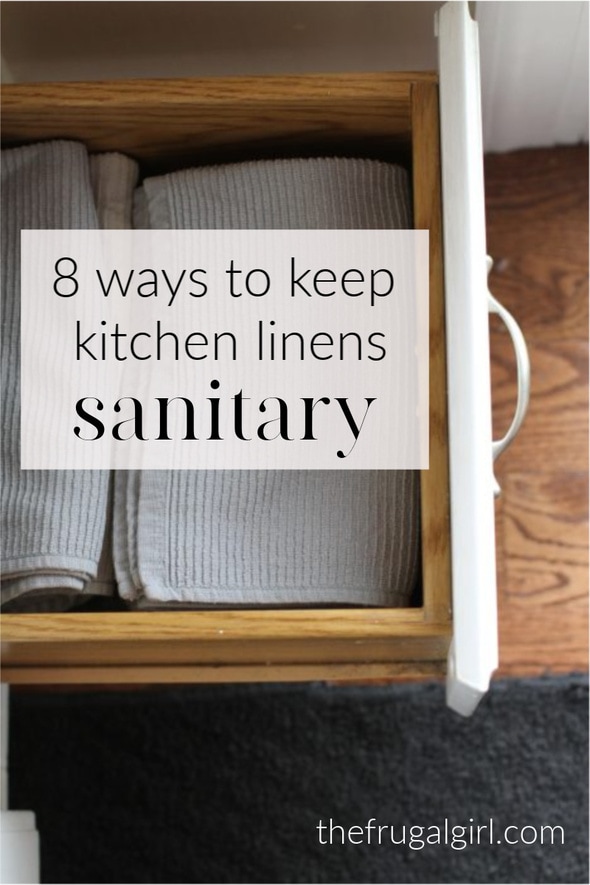
P.P.S. People sometimes lodge the "It's unsanitary!" accusation about dishcloths and towels, so here's how I keep mine sanitary.
Ewwww....
"In fact, the Gerba article says that kitchen surfaces tend to have more fecal matter on them than bathroom surfaces, and that it would statistically be more sanitary to chop up salad ingredients on your toilet seat than in your kitchen."
I would very much hope that is not the case in my kitchen!! I have what DH describes as a delicate tum, so any hygiene issues in the kitchen as I would know about it.
Like you, I renew my underwear when it is no longer fit for purpose and that is not every 6 months. My knickers get worn for one day and then going into the laundry basket ready to be washed. We don't own a dryer, so everything is air dried either indoors, or when the weather improves, on the clothes line to get lots of UV rays.
I really enjoy the down to earth way that you explain these things, so thank you.
Hilarious caption on the pic of Chiquita. I LOL'ed.
I laughed when I read the first sentence. You've got to be kidding me! I have never had a UTI and I don't put my underwear in the dryer. They go on the line outside. Maybe my body is used to fighting off all that bad bacteria.
I throw my ….used….rung out… food free….cotton….cheap… Dishcloth in the microwave for two minutes every few days… I’ve used the same washcloth for months…. Until it is totally worn out.
I do not have any stinky washcloths…. Which I know if it is not washed and dried well it can/will have an odor… thus would harbor bacteria.
I have done this for years. Cheap. Easy.
That bit about the salad chopping LOL ! In spite of this info I will keep cooking in the kitchen. I have seen students' dorm kitchens though...but the bathrooms there were not much better.
When I was first pregnant (now several decades ago) I a gynacologist recommended me to wear underwear with a double and always a cotton crotch, and definitely no panty liners. Panty liners apparently are prone to causing infections and irritations. So from that time forward I have always worn cotton underwear, and washed this at 60C (just like my bedlinens and kitchenlinens). I have a few pairs of very thin "invisible" undies to wear beneath very fitted garments and they are not breathable at all even though they are from a quality brand. During pregnancy I had a bladder infection once and after that, never any bladder or vaginal infections or irritations. I am not tempted to change a regime that works well for me.
With regards to the TikTok hype it seems to me it only aims to make people feverishly buy things they do not need. Thanks for debunking the myth Kristen!
1) always cotton, never ever re-worn (if I have a bad IBS blowout, will change more than once a day, and possibly throw out the soiled underwear AND pants), washed in cold water (no bleach, free and clear detergent), dried on high heat.
2) replaced when holey or otherwise worn (or see comment #1 above) or if the elastic has gone to heaven LOL.
3) am losing weight so may replace sooner with a smaller size.
SUELLEN. As an IBS and Crohns person...I feel your pain.
Alosetron (Lotronex) is a game changer for IBS. Mine is essentially gone. No more abdominal pain or cramping, no daily (or more) diarrhea, more freedom in my life.
I truly hope no one is actually doing this.
#3. There are so many things going around on the internet about everything. Many of them are head-scratchers like this one. I cannot guess the motivations behind them-- ignorance? click bait? selling something else? I think if you've lived to a certain age, you just have to let your common sense take over. Do I think I have ever been infected by my laundry? No. And I swished countless poopy diapers in the toilet with my hand. They were washed in the same washing machine as kitchen things. No problems. And I rarely use bleach.
Common sense. It's okay for us to start trusting something other than nebulous internet sources.
And I am sorry to say that many "wellness experts" are just nebulous internet sources. Ha. Even the name "wellness expert" is nebulous! It means nothing, exactly.
You’re probably writing from perspective of owning good quality cotton underwear. Some of the synthetic garbage sold these days doesn’t last 6 months, maybe those tik toks are just covering up quality issues.
Speaking as someone whose underwear should probably be stamped "Property of Lambeth Workhouse" to begin with (that line's a steal from Florence King's hilarious memoir Confessions of a Failed Southern Lady), and who wears it till the elastic gives up the ghost, I think I can safely say that I've never replaced my underwear every 6 months and have no plans to do so. At age 70, whatever kills me, it won't be the age of my u-trou!
Loved reading Florence King-- glad to see her mentioned.
If the undies have been washed and dried, whether air- or dryer- dried, and there is still a worry about bacteria, perhaps leaving them in a drawer for a few days will be enough for anything bacterial to die. E coli and salmonella need warm, moist environments.
“U-trou”!! Thanks for the grin.
After reading this, one phrase comes to mind "Make sense common again!" Although (as an "older" person!), I will say that some of the "underwear" I see these days barely passes as a sling shot! So, maybe, THOSE do need replacing quite often. :-/
Do we stock up on tide pods to snack on while shopping for underwear?"huge eye roll"
This is the way.
Well said, Kristen 🙂 I've also heard chatter about wiping out / sanitizing or switching baskets between the carrying of dirty and clean laundry loads. Is this a thing? Am I being embarrassingly negligent? I don't generally mind doing laundry, but I can't handle that level of maintenance. Thankfully, this hasn't caused any issues that I know of.... I am all for changing dishcloths and hand towels everyday, though. Undies, too!
I wouldn't think that was necessary unless someone in your house is actively sick with something that you really don't want to get!
My take is that people need to log off and calm down. (This applies to much more than underwear. 🙂 ) It must be exhausting to live worrying about everything all the time.
Amen!
Yes to exhausting. I refuse to do it. I have enough to juggle and to worry over. Worry is NOT a healthy lifestyle.
That would be mighty expensive to replace as the ones I buy, the only ones I like are $12 a pair.
My first and only thought, had I been aware of this so-called trend, would have been "I wonder how much the manufacturers paid the influencers to say this?"
If I had a second thought it would be "Extraordinary claims require extraordinary evidence."
Exactly—your first thought echoes my first thought, and your second thought is so wise.
Eye roll!!! I’ve made it 69 years only replacing my underwear when it is past it’s prime. Since I don’t use a dryer I figure the heat and sun do whatever disinfecting needed.
So many people have just gotten weird about hygiene matters since the Covid pandemic. I keep underwear until it wears out, which is years with good old cotton Jockey, and launder it appropriately. Not dead yet!
I've read elsewhere about this trend, and thought it was ridiculous, but have done none of my own research. So, I'm glad you did the science side of the reading for us! Unsurprising, as I follow these rules myself & my underwear lasts a really long time. 🙂
very interesting info today. but i would never consider getting new underwear unless the old one was worn out. thanks for the chiquita photo.
I replace my panties when the elastic wears out, or they develop holes! I admit I wash them in warm water, not hot, along with other clothes. I pay to launder, so I run full loads, which means I am not ever going to run a small load of just panties! Our dryers run pretty hot, so I think most bacteria gets nicely roasted there.
I have some questions. First, what about bras? I handwash mine, to preserve their livelihood. And I let them air dry in the bathroom. I have a friend who throws them in the washer and dryer, but she wears them several days before that. That grosses me out! I could never put a dirty bra back on. What's right here?
My other question is about panty liners. If they are really a risk, why is there a huge market for incontinence products? Is everyone wearing bladder leak pads and diapers at risk for infection? I'm confused. I have to wear the pads, or I'd be wearing wet pants all the time. (And I've had the bladder surgery -- the improvement doesn't last.)
Beth W,
I think I read somewhere, a long time ago, that wearing your bra more than once helps it retain its shape, or....something? It was truly a long time ago, such that I forget why it was a good thing to do. 🙂 This was long before influencers even existed, so it was probably in some magazine or something. Obviously, if you're sweating a lot, or your bra is not appropriate for re-wearing for whatever reason, I wouldn't do it. (I don't do it anyway).
As long as you are regularly changing the liners, I wouldn't imagine that they'd increase your risk for infection. A dry, fresh liner isn't going to be a breeding ground for bacteria.
The kindest thing I can say is that many people lack critical thinking skills and that influencers (often paid) have undue influence. I replace my underwear when it's worn out and not before.
I've never had this worry before! Obviously I do laundry regularly but I don't think about it much beyond that. Re the dryer killing bacteria, does that mean it's potentially less hygienic to line dry things? I'm not going to stop doing so, but this has piqued my interest. The Danish word for ending is slut - I try not to take it personally when the washing machine flashes the word at me when I take out the laundry 😉
I remember looking into a kitchen in a house opposite when I was a student and seeing a couple using the kitchen for, um, non-cooking purposes...!
I just bought new underwear and bras yesterday! Underwear is relatively inexpensive so I rotate new underwear in about every 6 months. But that doesn't mean I replace it all.... I just bring in some new ones and retire some. I probably keep underwear 2-3 years on average. I find after that many years of washing and living, it's sad and stretched out, and does not make me feel like the powerful amazing woman I am.
I live in the sweaty South and have a lot of underwear. Is that TMI?
....I came here three years ago for decluttering tips, and stayed for the writing. Never change, Kristen!
Aww, thank you! That is a lovely compliment.
One more ridiculous "influencer" idea. Dear Lord, preserve us.
I used to be a blogger, and I love blogs like yours, Kristen. But SO MANY of the bloggers I used to know have shifted to being influencers and/or salespeople. I'm all for affiliate links (I will click on yours deliberately!), but encouraging people to purchase unnecessary things is just not something I could do with a clear conscience. (Don't get me started on fast fashion. . . .)
One thing I've noticed with my younger friends. . . many of them regularly get bikini or Brazilian waxes wherein all their pubic hair is removed. My guess is that they have much higher instances of UTIs, since they've removed the natural element that would filter out bacteria. Even at that, though, 6-month underwear replacement is ridiculous, if you ask me.
Oh my goodness, yes, the fashion hauls and the Amazon hauls are out of hand. No one needs to order that much stuff on the regular!
Wash on hot. Use Lysol laundry disinfectant if you are paranoid.
Battra92,
Good to see you back!
A dear friend,who had many, many UTI infections was told by her doctor to
1. only wear cotton underwear
2. IRON her underwear
This was in Scotland. No more UTIs.
Now that's sensible! The iron would kill anything she would worry about, but not destroy the elastic like the dryer.
And how much underwear goes into that six month calculation? Rotating seven pairs means they are worn once a week, so 24 times in six months. Having twenty+ pairs means they are worn once every three weeks, so 8 times. I am not throwing out underwear after only 8 wearings, or even 24 if they are still in good shape. I've never really counted.
"Do with that what you will." lolol
OH GOOD GRIEF! Yet another instance of paranoia about something that *should* have been laid to rest in middle school biology class (yeah. these folks weren't paying attention. Eyeroll).
As Kristen so sensibly points out, we are covered in bacteria at all times. Keeping our systems in balance is what prevents the "bad" from overtaking the "good" (in other words, infection). Over-washing disrupts that balance.
And of course many underwear manufacturers would dearly love us to believe this nonsense!
Good Wednesday Everyone!
Thank you, Kristen for another great topic.
My niece who just moved out on her own, brought up this subject. I'm not active on social media, so I learn what's "new" from the kids. I sent her this post.
My grandma's neighbor boiled her underwear in a pot on the stove with rosemary. She was born in the late 1800's.
Your grandma's neighbor must have had great-smelling underwear! One use for rosemary I wouldn't have dreamed of.
I am reminded of the time a mattress company announced we should replace our mattresses every 7 years. That, too, was hogwash IMO. My friend Mary summed it up quite well: "They just want to sell more mattresses."
I remember from my public relations/advertising class that the so-called "Father of Advertising" said that to sell something, you need to create a need in the customer's mind. One way of doing this is to convince the customer he is deficient in some way if he does not buy your product.
We read about one case study in which the pork industry was upset that no one would buy certain parts of the pig, and it was just going to waste. So the advertising industry (this was in the late 1800s or early 1900s) did an ad campaign convincing housewives that they needed to serve bacon with their family's breakfast because it was healthy.
The campaign was a success: All of the sudden, everyone was eating bacon along with their eggs and toast. The public considered bacon to be part of a healthy breakfast.
The truth is that bacon is so bad for you that it is considered a fat on the diabetic diet; there's not enough protein to count it as a protein exchange. Did the advertisers care if it wasn't healthy? (Assuming they knew about this back then.) No, they just wanted to sell more pork products!
Likewise, I suspect the underwear thing is some manufacturer wanting to sell more panties. If you are truly worried about the bacteria, there is Lysol Laundry Sanitizer, bleach, and/or hot water.
About a year ago my daughter got a "good deal" on underwear from...get this...a subscription service. They would send 4 new pairs for 14.99 a month. She just had to buy 4 other items at regular price. The regular price was 20 to 40 dollars. I told her to skip it (She didn't) because it was too much like Columbia House. Then 6 months in after buying 4 regular priced things. She tried to cancel and they sent 3 more months of underwear. Their choices. This is "wear" I got in on it. I found a phone number and called, told them we had returned the last 2 months of underwear and they needed to stop shipping. Everything was tracked. She ended up getting a new debit card to finally end the whole thing. If you do the math she currently has over 28 pairs of underwear plus 3 bras and pj pants. All this for almost $150 because the first 2 months were free. Yes they used this scary advice to rope many in. But I taught her to change underwear twice a day mornign and night, only buy new underwear, and wash in hot water. I have not had a UTI in 15 years, she has never had one. I also wear them until they wear out, only mend if hole is smaller then my pinky nail. After my hysterectomy I had a pair for 7 years. Gross but they used to wear out faster and I lost track of how long I had them. But they were print and had been disconitinued for a long time.
I was SO happy to see this topic today. Because it is absolutely insane to consider replacing underwear every 6 months. I have just recently started buying better made undies, and they aren't cheap. The thought of needing to pay that again in 6 months would make me clutch my pearls.
On a side note: I've had conversations on my own FB about bath and hand towel replacement. Some friends toss them every. single. year. And just buy brand new ones. To me, this is akin to replacing the underoos every 6 months. I replace as needed...but my towels are still hanging in there...
Whoa, what?? They're replacing towels that often too? Yikes!
I have had towels last over 20 years, although the quality these days does not hold up that well.
Towels are perfect for laudering and when worn perfect for cleaning and when no longer good enough for that, good enough for any chore that involves polish or paint.
Today I discovered to my grief that old clothes with holes and tears will no longer be recycled for the car industry. Two large bags with textile remains will go into the landfill/incinerator. I will really try to wear our fabrics to threads.
I've still got 20-year-old towels in my rotation that either were trashpicked or came out of DH's rental properties. Always hanging them to dry (never running them through the dryer) makes them pretty much immortal. And yet, the bacteria haven't felled me yet. That which does not kill me makes me stronger! 😛
I have a towel that my mom bought in 1967 for me to take to college. It’s now threadbare and in the rag drawer. Every time I use it as a rag, I remember my mom bringing it home and me putting it in with the “stuff to take to college.” Then I think about how long ago that’s been!
Towels too? Good grief! My husband is hard on bath towels. When they get awful looking, they become dog washing towels, then car washing towels, and finally cleaning rags. If I get too many at any step down from drying humans, the animal shelter and our veterinarian are always happy with the excess.
I buy white cotton hand towels because they can be bleached.
Lol. Its a marketing ploy based on fear! Although anyone subject to UTIs should be careful. The whole antibacterial push is just marketing once it goes beyond basic cleaning and sanitation. All those special expensive products? Marketing. It has been my own personal experience that all the people that are paranoid about germs are sick way more frequently and more seriously than people who are not.
I have five dogs. Nothing in my house is ever going to be sanitary, but basically clean, yes.
As somebody who has had IBS for years I probably change my underwear way more frequently than most people. If they are soiled in any way they get a quick rinse in the bathroom and then hung up over the bathtub on a little rod that I have in there. Once dry, they go into the laundry.
Like most of the other people here in the comments I replace my underwear when the elastic is shot or they get holes. I probably have some underwear that I don't wear frequently that could qualify as antique or at least vintage. LOL. I do own a lot of underwear because of the IBS so most of them are not worn frequently but in a general rotation.
Good to hear that Jockey undies last a long time which is what I wear. Got them on sale of course.
My personal feelings about UTIs are that you must go pee after sex. Think of all the bacteria there. I had 1 UTI decades ago and not one since. I must have read this tip in one of my older sister's copy of Cosmopolitan magazines.
I supplement a new four pack once a year and get rid of my worst 2-3 pair. I am a minimalist at heart and only own about 8 total at any given time.
Thank you for doing the tedious verification for your readers on this absurd topic.
Just another mark against TikTok and looking to the “influencers” for wisdom.
Yes. Always fact check an influencer (and that includes me! I try to fact check myself, but I don't mind being fact checked either.)
This is ridiculous 😂. Makes no sense to me!
I wear cotton, wash in cold, air dry. I do use pantyliners, I am at that stage where every sneeze and laugh threatens to run down my leg! But everything is roomy for air flow. When my mom was alive and I was caretaking, I used a laundry sanitizer because there was a lot more bodily fluids and so forth; it had the nice side effect of removing the pee smell. That laundry sanitizer is as far as I:d go. Throwing out perfectly good underwear seems like a scam to get us to buy more and spend more.
Ride or die with my Spider-Man underoos.
I was wondering if this six-month warning was aimed at (or perpetuated by) women rather than men, as so many marketing trends seem to be.
That sounds plausible. I'm so painfully out of touch that I didn't even know this was an actual concern. If I was aware of this latest cause for pearl clutching, I would have laughed it off. I have underwear so old that I don't even have to pull them down. Thanks, Sir Isaac Newton!
No Batman?
Maybe in 6 months 😉
IMHO our society is less resistant to infection because we have never built up an immunity to omnipresent "Bacteria"
My underwear is years old and I've had exactly 1 UTI in my 74 years on this earth.
I wear 100% cotton briefs and wash them with bleach which destroys the elastic long before the panties actually wear out.
I keep underwear for years, usually until the elastic gives out. No noticeable health consequences. I save the old, worn out pairs for when I travel. Then I wear them (clean) one last time, and throw them out afterwards rather than bringing home dirty laundry.
That's such a good idea!
as long as you don`t feel them slowly slide down while wearing a skirt...
Kate, I do that too, it makes room in my carry on for a souvenir or two.
Happy travels! Candy
Kristen, thanks for tackling the issues we don't want to bring up!
I suffer from pancreatic insufficiency, and have occasional blowouts, like Suellen with IBS mentioned. Sometimes underwear goes directly in the trash; otherwise they are washed on hot.
The store I order my underwear from usually has a good sale right around this time of the year, in fact I just placed an order over the weekend. This way I can replace ones I have had to toss, and get rid of any that are stretched out. But no, replacing them every six months is ridiculous for pairs that are perfectly serviceable!
Is AI perhaps generating this crazy stuff? Every day when I read this kind of nonsense I just want to drop my so-called "smart phone" off a cliff.
Thank you again Kristen for being the voice of reason!
I am fine wearing my underwear until it finally gives up.
I had minor skin surgery lately and have worn the oldest bra I have, which is - old, because I thought something might spill on it that I couldn`t get out and I did not want to do that to one of my finer one`s. Original Katy: Yes, in your 50`s you may not give a thing!
Yes to cotton undies too, but really, I bought a 10 piece package cotton/elastane/nice comfy elastic lace waist two years ago. How could I go through them that fast?
Sure I still have them. If the elastic finally gives out I will replace them.
I machine wash my underwear, but not boiling hot (40°C). I do linedry my underwear if weather fits, which will kill some bacteria by sunlight, but really? I am not concerned.
The kitchen surfaces are something else, since we have wooden/butcherblock open pore surfaces. Now wood has antibacterial capabilities, but you still need to clean/care more. I love it though and wouldn`t go back. I trained my cat though to not enter these surfaces, because using the loo and not being able to wash his paws...eww.
Good read.. I also have never had an infection from my clothing! any of it!.. As a retired Women's Health Nurse Practitioner, and nurse, I never found myself recommending how to clean underclothing unless a woman had a persistent vaginitis.. And usually this was caused by other reasons. AND.... removing as much bacteria from one's life leads to infections, as our outer and inner microbiome helps protect us. Thinks good bugs and general resistance to bad ones. Removing all, leaves the body very suseptible to infections.
Thank you for doing this work and sharing!
I'm sure there are people out there financing underwear every 6 months and still paying for pairs they threw away 6 months ago, thanks to 'influences'.
I currently hand wash my underwear (SE Asia, no washing machine) and I can't open my mouth in the shower here- yet I am surviving, as are my neighbors who do the same. Although I do prefer to use a washing machine and lime dry in sun or dryer.
I figure if I do electrocute myself with the suicide shower set up to get hot water that I am invincible haha.
My BF is a microbiologist and always rolls her eyes at this. We have bacteria that we live with in order to be healthy. She has made a whole career out of coming up with products to help restore bacteria and managing chronic stomach conditions that are likely caused by our food etc not having enough bacteria on it.
I recently read that you should replace your bed pillows every year. Really?!
My flabbers were gasted when I read #1. WHAT?????!!!!! My question is, if you wash your hands after using the bathroom, how does fecal matter get on your kitchen counters? This is blowing my mind! (Granted, it does not take much to achieve this.) I wash my hands frequently (after using the bathroom, after emptying trash cans/taking out garbage, before & after preparing food, etc.) and I wipe down my kitchen surfaces with a, roughly, 10:1 mix of bleach & water in a spray bottle. I have one of these spray bottles in my kitchen, one in the bathrooms, and one by my elderly mother's bedside commode. BUT. I keep my dainties until they wear out.
Great post! I keep my underwear until it's worn out and then I buy new. I change my underwear daily and more if sweaty, during menstruation etc. I'm 47 and as far as I know I've never had an infection from my underwear. At times like this I'm glad I don't have any social media 😄
Most of my undies are several years old and still going strong. Heck, I have socks that are over 20 years old and still doing their job. In the summer my laundry goes up on the line for drying and that adds sunlight as THE disinfectant of choice. Also, I make sure to run at least one hot cycle on my washing machine every month, because it disinfects the machine and reduces the build-up of germs inside it.
Usually, articles about replacing something just for hygienic purposes are hogwash and this one is too.