And now for something we DO like...
On Tuesdays and Thursdays, I post a picture and just a few words.
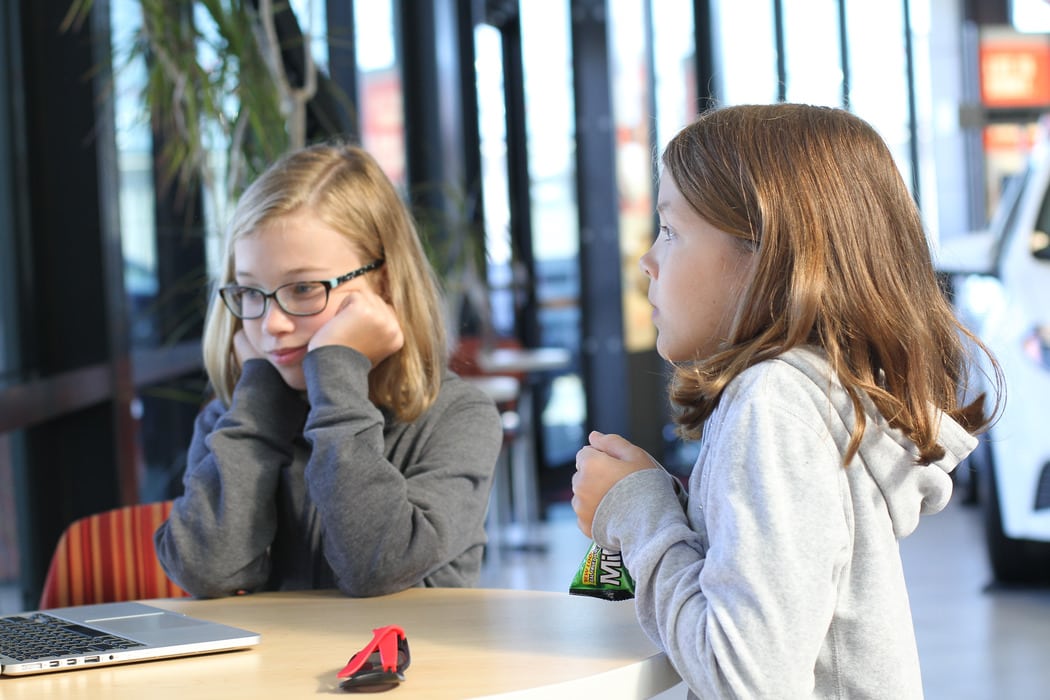
On Tuesday, I mentioned that our household is 6/6 for not liking math.
(Which I think is just fine. We don't love math, but we faithfully teach it/learn it!)
There was a lively discussion in the comments on the math post, and one reader mentioned that people tend to either love math/science or grammar/vocabulary/literature/history.
In our house, we definitely fall into the second camp.
Pretty much no one here has ever cried about grammar or vocabulary or spelling, almost no one needs help to finish those assignments, and they get very few answers wrong in these subjects.
(Math, on the other hand, has brought about the shedding of quite a few tears. 😉 )
All of my kids are good readers too, and half of them began reading before they even started kindergarten.

History? That's never been a problem for the kids or me either. I'm especially fond of Susan Wise Bauer's Story of the World series, which I've been using with Sonia and Zoe.
It's such a fascinating curriculum, and I only wish it had been around when I was a kid.
(My world history book was all, "date, date, fact, fact, date, fact, date." Basically completely unmemorable.)
This history curriculum is so engaging, though, and I'm learning about things I never even remember reading about in my childhood. Plus, I love all the recommend reading suggestions, and so do my kids.
(As I type this, Zoe is on the couch reading a historical novel that goes with what we were reading about the end of the Romanov dynasty. And she's choosing to do this in her own spare time.)
You know how I can tell I just naturally love history more than math?
After we finish a history lesson, I find myself wanting to know more about what happened.
What made Eva Braun tick? Why did Joseph and Magda Goebbels decide to kill their children? What did the Fuhrerbunker look like?
(Why yes, we ARE reading about the end of World War II right now. How could you tell? 😉 )
So, I read more just for fun and I check out books from the library, and I find myself anxious to tell Mr. FG what we've learned about.
But when we finish a math lesson, I never am tempted to read more about a concept, and I'm not prone to thinking a new math concept would make stimulating dinner conversation.
I know there are families that are just the opposite, who love to discuss math concepts at the dinner table, and I think that's great (though it's hard for me to imagine. 😉 )
Hmm.
I guess I'm breaking with the Tuesday/Thursday theme because 470 is more than just a few words. I'd better stop rambling now, or I'm gonna hit 500. 😉
__________________
Do you find the the math/science vs. words/history applies to you? I'd love to hear about it!
I'm just going by my own experience with school, since I don't have any kids old enough to see how it would play out with them. I was definitely more in the words/history camp--I've been reading as long as I can remember, and English/History were consistently among my favorite academic subjects throughout my school years. Of course, I also had some great teachers who gave us some really interesting hands-on projects, which I still remember fondly--even some of the ones I did in elementary school!
Honestly, though...even though math was my least favorite subject (aside from gym class), I really did like my science classes overall. Even chemistry, despite the math-heaviness, because we had a really great teacher and some really fun labwork! (I mean, how can you not like making ice cream in school?)
I prefer reading and history, too, but my husband loves math and science. Our daughter flip-flops. One thing we do love is Bedtime Math. Every night we are emailed a story problem that includes a story/facts of the day. For example, during the Olympics, there are stories and facts about the Olympics that are followed by Olympics-themed math questions. There are 3 levels of questions and a bonus for at least one of those questions. It's a great combination of math and reading, which is how life is, you know?
I'm kind of surprised that this is a thing. I guess that I knew that some people had subjects that they disliked but I didn't realize that it was so widespread. Neither my husband and I (we don't have any kids yet) have subjects that we hate. I could certainly rank subjects if required but I majored in anthropology and took history, english, linguistics, and trigonometry as electives in college. I loved loved every single one. And my husband is an electrical engineer who is a voracious reader, knows more about history than I do, and has lively debates with me about grammar and linguistics. I never thought we were particularly unique since most of our (large) families are that way as well. But maybe we're more unusual than I realized?
Maybe you are just an incredibly well-rounded person! I wish I had more well-rounded likes, but I just really can't imagine taking trigonometry for fun (I respect you for it, though.)
I think there is a dangerous fallacy in saying people are either math fans OR humanities folk. Hank Green says it well in this video, that ask the engineers he knows don't intrinsically find math easy, but that the enjoy solving hard problems.
The video in which he addresses this: https://m.youtube.com/?#/watch?v=uHzgdTPi2CM
Math is a tool. For a very select few, it is enough in and of itself. For the vast majority of people (myself included) who claim to like or enjoy math, it's not the math itself, it's how using it enables us to answer interesting questions. The xkcd what-if series is a fantastic example of this.
http://what-if.xkcd.com/
I didn't take 5 semesters of math in college because I liked it. It was freakin' HARD. I worked my butt off to earn B's. I learned it because understanding it helped me understand how to analyze designs to answer questions like "can we design an airplane wing that is stronger and lighter than the current standard" or "how does a heart pump in a way that allows turbulent blood flow but still doesn't cause fatal clots?"
To me, math is to understanding and contributing to our world as music theory is to enjoying or composing a concert - it enhances your creativity by giving you a deeper understanding of how our physical world fits together.
I'm an odd one who loves history and literature and ended up teaching Biology. 🙂 And I LOVE Biology....the more math based sciences, not so much. 🙂
I like biology too! I'm doing botany with Sonia and Zoe this year, and I think it's really interesting. But like you, more math-based sciences like chemistry are not at all appealing.
I wonder how much time I'm going to use/lose researching the Goebbels children, and wherever that leads me. (And someday I might need to share the story how the movie "Silverado" led me to read about mucopolysaccharides.)
What was interesting to me is that Magda and Joseph were just SO entrenched in the Nazi ideas, they felt that a world where the Nazis had lost would be so awful, it wouldn't be worth living in, even for their children. From what I gathered, they basically thought they were being merciful to their children.
(The parents also committed suicide after killing their children.)
Another thing that was interesting to me is that even some people close to Hitler didn't really realize what was going on in the concentration camps. I wonder how they'd have felt if they'd known the truth at the time.
One wonders if that were true ignorance or willful blindness... Just remember the modern reaction - at the time, mind you - to the horrors during the breakup of Yugoslavia or the Rwandan genocide.
Or the blind eye the world turned to the early persecution of the Jews before the war actually began.
Hard to believe that people close to Hitler did not know what was going on in concentration camps! We lived in Germany and visited Hitler's Eagle's Nest and many war landmarks including Dachau concentration camp outside Munich. Locals said that the smell of burning flesh from the ovens had permeated the air all around....but, it was the big pink elephant in the room that no one talked about. Burning flesh has a distinct odor. They knew...but probably afraid to question.
English--and foreign language-- person here, but the way history was presented made it hard to love. Later loved soc, psych, and phil. Being a grammar and word nut, I found algebra and logic/probability equality enjoyable. Geometry was difficult with my limited spatial ability. Those geometry struggles did help me understand learning problems when I became a remedial reading and English teacher, so it was for some good.
My daughter definitely did not love math and would complain constantly about needing to learn it until we found this book of math projects that finally made her excited about doing math! I got her to read the table of contents to pick out a few projects that might interest her - I was hoping for at least five or six and was happy to see that she had circled 19 of them! She loves seeing how math applies to everyday life. I highly recommend it - http://www.k-5mathteachingresources.com/math-projects.html
I am the SAME! I have watched almost every historical documentary Netflix offers, and World War II has always intrigued me--not so much the battles but the people who lived through it! I am off to read about the Goebbels too!
I am definitely a literature/history person. I have a degree in English/Professional Writing, and I barely made it through Algebra 1 with a D! That the end of my "math" career. I cannot recall one science or math class that I enjoyed-ever! However, my high school senior is definitely a "both/and" rather than an "either/or". He excels in math and science but is also a good writer and avid reader. I think if he thought you could make a good living, he would teach history! But, sadly, that's not usually the case. Oddly, though, we have one daughter who has always struggled with math and science but did very well in geometry??
I have always thought that most people "tipped" one way or the other. I find it fascinating how many others feel the same!
Yes! Netflix has a ton of awesome history documentaries - worth sending the kids to watch when/if you want them watching TV. There's a ton of fantastic Ken Burns documentaries on netflix recently.
I find that the older I get the more I love history. I did well generally in all subjects when I was younger, but never really appreciated it. Until I've lived and had struggles of my own (although nothing compared to most of our forefathers/mothers), I guess I couldn't really appreciate it all enough. Anywho, my ponderings for the day, back to work. 😉
How about history of mathematics / sciences? I find it fascinating to learn how mankind has built these disciplines over the centuries.
This aspect is more interesting to me because it's history. I love learning about people's stories and what made them tick and what life was like for them.
Admiral Grace Hopper. Ada Lovelace. The female "calculators" who underpinned the astronomical advances of the early 20th century at Mount Wilson Observatory. Marie Curie is almost too easy, as are Jane Goodall and Dian Fossey.
FWIW, I'm trying something new next year and doing a history-oriented science curriculum with my oldest. We'll be using the first book in Joy Hakim's Story of Science series, and then Jay Wile's Science in the Ancient World program.
But you LOVE math. Or at least, you spend a lot of time doing activities that require it, and you seem to love those things. For instance: photography, finances, cost comparisons, music, sewing, home repairs, painting things, and baking (which is also chemistry).
I agree that everyone doesn't have to like everything. But the way that math is often taught, it is no wonder that many people hate it and think they are bad at it. Maybe you could incorporate these things that you already love into your math lessons?
Oh yes, I fully appreciate the fact that math is useful!
And while I do love photography, I'm not super into the math that makes it possible. It's kind of how I like blogging and I'm so grateful for the code that makes it possible, but I really, really do not like it whenever I have to mess with the coding/back end of blogging.
(Whereas some people, like Amy Lynn Andrews, ADORE the coding part of blogging but have a hard time loving the actual writing. Which is wonderful because then people like me can hire code-lovers! ;))
So many math tears over the years! 😉 The one upside was that it was a way to bond with my engineering dad! My mom was our spell check/grammar godess, though her degree was also in engineering.
I remember my parents both getting excited about when we had parabolas in our homework ....really Mom and Dad?
Fast forward to college, I was getting my music degree and ended up needing to take Physics with a bunch of science majors! Fortunately, my high school had prepared me well, and with some help from my dad at the beginning of the semester, by the end, all the science students were asking me for help! maybe studying music theory intensively helped....
Oh, that's funny! I understand parabolas and can do the math associated with them, but I can't say I'm ever like, "WOOOOO!" when we get to them.
I got interested in conic sections when I realized *why* the audio equipment that recorded the quarterback calling plays, was called a parabolic reflector, and how it worked. (The sound is picked up by the parabolic surface, which shape naturally caused the sound waves to bounce to the focus. The focus, as became obvious once I learned the geometry, is where the sound received was located.) But I don't remember that math anymore. :-<
I love reading, writing, and some science. Math and history are ok. I really didn't care for physics in college, but I really enjoyed my engineering classes which were basically physics, but with practical applications.
I was shocked a couple years ago when I went to my sister in laws' graduation from a liberal arts school and realized that they only offered BAs. I can't imagine going to a university without the diversity of both artsy and science type people.
I'd say I like both and neither! My likes and dislikes in school varied a lot by the specific subject, teacher and their teaching concept. For example, I absolutely loved biology in 9th grade, but hated it a few years later when I took another class. I also absolutely loved reading and writing when I was younger, but was very frustrated by a teacher later on and just couldn't figure out what she wanted as the "right" answer. On the other hand, I hated math in junior high, but loved geometry in high school. Generally speaking, I like both math and science and words and history, but in both cases my love for a subject depends a lot on how I can apply it to my life. Physics and chemistry concepts are painfully boring to me, but I love playing with genetics, calculating real life numbers for architecture and even coding my own spreadsheets for building codes. I also love to read about people's lives, both real and fantasy, but am bored to tears with battles and dates.
People can love history AND math (combining them, you get cliometrics). It is really a shame that you're passing on your dislike of math to your kids and that you have a fixed mindset about it-- that somehow you naturally hate math and that will never ever change, and your kids are now set hating math forever and ever because they were born that way. Which isn't true. Dislike of mathematics is taught. Love of math is also taught.
I think that you are assuming parental influence has a lot more power than it does.
If parental influence was this powerful, then why does my so-not-a-pet-person self have 4 offspring who love pets? (we have 3 hamsters, two geckos, and a fish currently.)
Or how did I manage to have a son who is very into science, even though neither my husband or I are?
Or how did my wordy writing self end up with a daughter who loathes writing with every cell in her body?
If I had such power to affect my children's likes and dislikes, then one would assume that their likes and dislikes would all mirror my own.
I just don't think that you can teach everyone to like everything. If it were true (that love of a thing can always be taught), couldn't everyone be taught to love housework/exercise/cooking/landscaping/sewing?
I don't know you well, but I think I've gathered that you don't like some of those things (apologies if I'm wrong). Do you feel that could be rectified if someone taught you to love them?
(I'm not asking to be snarky...I am genuinely curious if you think that anyone can be taught to love anything, and I'd love to hear your answer.)
That's a mighty broad and harsh brushstroke to paint about the Kristen's daily teaching style based on a few words and photos. I gathered nothing nearly as extreme as what you're portraying.
And sometimes kids just have their own bents. I hated math in the lower grades and my homework was a source of great angst. I was also homeschooled. However, despite the fact that math is not my mothers strong suit, I ended up loving math by the time I finished high school and then went on to major in math and continue my education into a PhD program.
I think the most important thing my Mom did for me was to search for a curriculum that "worked" for the way I think and to make sure that I was consistent about completing my math homework. She was quite concerned that she would pass on her own struggles to me and so math homework was a non-wavering part of my childhood year-round.
We joke now that we cannot figure out where I came from.
I think so long as "not liking math" doesn't become an important characteristic of a family's identity it is quite possible for children to have interests that are different from their parents -- especially if a love of learning is part of the family's identity.
Yes. My kids don't seem to like math (at least not at this point) but we generally don't make a big deal of it. I don't want that to be a cornerstone of their identity, in part because I'd like them to have self-identity based more on what they DO like than what they don't.
I don't think of myself as a math-hater, but more as a word-lover, a photography-lover, a history-lover, and so on.
I also gravitated to words not numbers. But your post was timely because just last night I watched a NOVA episode on PBS about math (http://www.pbs.org/wgbh/nova/physics/great-math-mystery.html). It was fascinating and I think that if school had exposed me to this kind of learning I might have had more interest in it. You might try googling the Great Math Mystery, because when looking for this link I noticed some educational tool links that went along with it if you are interested.
I have always been a math/science person but I do love literature and history. I hated grammar and never understood how learning to diagram sentences was helpful in any way! My son seems to be following right along with me - he's very strong in math but loves to read.
I think there's a danger in labeling yourself as one or the other in that it can give someone an excuse to not excel in all subjects. I'm a firm believer that all people can learn and master all of the basic subjects, though it might take more work depending on how your brain works. My cousin struggled in math for a long time and always assumed it was because she wasn't a "math" person, but she discovered later that she actually has a learning disability and needed a little extra help to nail math concepts. If she had been diagnosed earlier instead of just being labelled as an English person, she may have saved herself years of frustration in math classes.
This is not to say you don't expect your children to master math concepts, of course, as I'm sure you do.
Absolutely, positively. We faithfully do math every school year, we finish each math book in its entirety, I correct my kids' math pages every day and go over all of the wrong answers/help them fix the wrong answers. No skipping of subjects we don't happen to like!
(I feel like I'd be failing my kids if we operated like that. Plus there's the little matter of it being illegal. Heh.)
So, yes! Excellence and hard work in all subjects is important. But I'm not upset with my kids if they don't happen to like a particular subject.
It is so admirable and impressive that you do ALL THE MATH every year with your kids! I find math so excruciating I think I would likely need mental health assistance if I attempted what you're doing. I have no doubt you have done a good job and have not "made" your kids not be math fans.
Thank you! Despite the fact that I do not love math (or teaching math!), I've tried my best to present it the same as I present any other subject. I'd be over the moon if my kids all adored math and worked on it for fun in their spare time (it's way more fun to teach someone a subject they're enthusiastic about!), but it just has not happened.
I loved English/writing/literature/history/geography in school and HATED math, but ended up becoming a statistics professor (seriously!). I loved the stats class I took to avoid trigonometry in college and ended up just taking more stats, then more math so I could take even more stats. I've always though of statistics as English with numbers. I help people tell a story about their data and it is interesting and incredibly satisfying. All that to say I still count myself as more of a word lover even though I clearly ended up in a math-y career.
I truly love history and literature because those things capture my imagination so completely. But I am definitely not a fan of grammar for grammar's sake. Grammar is actually a particular form of torture to me.
It is not so much that I hate math - I was just never very good at it and it took me longer than the average bear to pick up on concepts. I actually liked solving math problems once I could figure out how to do them, but there were a lot of tears along the way from elementary school up through high school. Math does not come naturally to me and so of course I preferred other things. At a certain point, of course, science involves a lot of math, so I was very frustrated with science after about middle school, although I loved certain things about it. As a result, I only took the minimum required credits of science and math in college.
oh this is so funny! So far we have two who love English/history etc. and one who loves maths and reading but is not as good in LA. I chose Sonlight curriculum because our girls gravitate towards reading and English. My girls also devoure books even history ones. I especially like the true story ones! Maths on the other hand has sparked lots of drama/tantrums/tears/anger (on mums part). Enough was enough and now I bribe them. They have to complete their maths lesson for the day, devotions etc and then they will get a treat, like a piece of candy, a couple of mms, a peanut butter cup etc. (I used leftover treats from Halloween, Christmas Easter etc). 'bribing' them has worked a treat in our house, maths get done without me begging them to do it! A win/win!
I used to be just like your family and I love history and English. I thought I hated math. But then I decided to change careers and had to take a lot of math. This time I looked at all the sources I could and really made sure I understood how to do each type of problem. After awhile it just clicks. Like with calculus I failed it the first time but the second time around I really understood trig and when I did problems I could picture the curve in my head or what exactly the functions represented. It's crazy to think Newton could figure all this out back then. I can honestly say I love math now.
My cousin and uncle are math professors. I definitely did not get the math gene! Math was torture for me. I very much preferred English and history.
My hubby is a biostats PhD, and I was a math major/math teacher. 🙂
Both our children excelled in math and science which made us wonder if we had the right kids, as neither my husband nor me likes or is very good at math/science. Just thinking about math makes me feel stressed. So when our kids hit the AP math classes we had to tell them they would have to get help from someone other than us! 🙂
However, I love grammar/reading, etc. and did very well in those related subjects in school.
Funny isn't it how people are usually one or the other.
My sister and I are both artsy crafty reading types who were also good at science and math in school. My sister got an art degree in college but now teaches math at a high school and enjoys it greatly. I love reading and write as a hobby, love grammar and diagramming sentences, love history, love biology and general science, but found math boring although I got A's. Probably the teaching methods were partly to blame, as I was fascinated by algebra when first learning it, but that sure changed as time went on. My husband only took a year or two of basic math in high school, didn't go to college, yet taught himself a great deal of math and engineering for his work, to the extent that the engineers would have him check their numbers for them, and enjoys math now that it has practical application. Yet he writes quite well and did well in that area in school. Being dyslexic, he reads some, but finds it to be too slow to be fun, so it's hard to say if he would be a reader or not. My kids did well in both language/writing and math/science, but one leaned more to language/writing, the other leaned the other way. The one who liked math better is also dyslexic, and reads only a little for pleasure -- that may have influenced her likes/dislikes. The language/writing kid reads voraciously and writes as a hobby as well.
Most of my friends are strongly one or the other, but I always scored about 50/50 on aptitude tests in school, and real life has born that out. The same for my husband and our kids; I think a lot of it must be genetic. We always said we had mixed up brains.
I have sympathy for your kids. I hated math all through the elementary grades and it was a source of conflict with anyone supervising my work. But then something changed about the time I hit algebra. I don't know what it was - perhaps the move toward problem solving and away from arithmetic - perhaps the fact that my work became largely independent in high school ( I was homeschooled ). Whatever it was, my dislike started melting and I ended up, through a winding journey, majoring in mathematics. Now I am working on my PhD in math. I do continue to love writing/history/reading as well. So basically I'm just an all around nerd. 🙂
I wholly disagree with this theory. I have a math degree. I worked hard for it, and got it because I had struggled with math throughout my whole educational history because I had unenthusiastic or just plain bad math teachers (I went to private schools with teachers doing 2 to 3 grades in the same classroom, so we tended to focus more on whatever the teacher's passions were; usually history/english), and as a result I didn't have the skills that were building blocks towards the big ones people learn later. I also got it because it was a challenge, which I wanted out of my college experience, and because I didn't want my grades to be subjective as they often seem to be when it depends on how my papers are written. I wanted to become a teacher or tutor (I prefer tutoring, personally) to help kids realize it's not _them_ that's bad at math, but their missing skills that's messing them up. While I was tutoring in college I would often emphasize that math is not a spectator sport; it takes work, it takes practice, but for me, once I got it, it was like this glorious lightbulb going on in my head that said (yes, lightbulbs talk now) "YOU DID IT!!!" I think you take a good attitude with things by toughing it out even though it's not your favorite subject. It's so important for people to learn even if they think they'll never use it. Who knows what your kids will be, after all? Medical professionals have to take and pass statistics and sometimes Calculus, musicians use programming and math to create synthesized music, historians use statistics to analyze old life expectancies or other features of history. I love math and I actually like working hard for it because it grows my brain and made me eligible for a decent-paying job.
But guess what I do in my spare time? I read. I read history, anthropology, fiction, biographies, psychology; because my parents inspired a passion for learning in me. I love hearing people's stories, I love imagining different worlds. If you had met me around age 12, I would've told you I was going to be a writer, because reading was pretty much my favorite thing growing up. I tend to think I got the best of both worlds because my parents encouraged STEM-related learning while my teachers encouraged reading and imaginative thinking. I still would've liked better math teachers, though. Not much to make math fun until I hit Geometry in High School. Just flash cards.
Amen to the value of toughing it out. That in and of itself makes math valuable for my not-math-loving kids. My parents did a great job of teaching me to persevere through difficulty, and that skill has helped me navigate so many challenges in my life!
I'm going with my own experience here, and your supposition doesn't apply to me. For example, I adore math, but not all things math. I abhor probabilities but like pretty much the rest of math. I think math is fun, like a game. But probabilities, I never understood, even at college level when I had to work really hard on them. In the end, for my exams, I dropped probabilities completely and focused on mastering completely the rest of the math curriculum. Risky, but it worked.
Likewise, I love physics but hate chemistry, I really liked geology, but biology not so much.
I never liked history or economics as it was told in books (like yours - date/fact/date/fact) but I love history novels (Ken Follett's, for example) - I do find them fascinating.
I absolutely adore grammar and vocabulary, but as a student I was never good at writing 'reading sum-ups' - I'm not sure how to translate that concept in English, sorry! In France grammar and vocabulary were taught by the same teacher as 'literature' stuff: it was just 'French' class. I do love reading, and I'm quite good at writing essays, but I always failed at any test that concerned reading materials, especially when we had to sum up a book or answer open questions about a book. But I love everything else I learned in this French classes.
I guess I'm weird... or maybe my brain is wired differently than most? To me, grammar has always been like math: a set of rules you apply to words instead of numbers 🙂
Your post today made me think of this video that my daughter shared with me the other day: Hitler in the Fuhrerbunker yelling about math!
https://www.youtube.com/watch?v=J_CA8c5Aa-0&feature=share
I don't even get half of what he's talking about but it's still funny. (I favor the humanities side of the scale and ended up teaching English grammar for over 20 years. If I had it to do over again I would major in history).
I love math! But figuring out things like what X cost me to make/cook/bake. How much our animals cost us to feed a day. What our milk from the cow costs us per litre in feed costs. That sort of thing. I geek out on that. But not really tricky math.
I always loved history and English, but also biology. Math not so much and I have a learning disability that made math especially challenging since in my day such learning issues were not recognized or treated (I was deemed "lazy" instead). The math issue made the "hard sciences" difficult for me, though I earned a Bachelor of Science degree Magna Cum Laude. With spreadsheets, computer programs, and apps I'm as functional as anyone else in the math realm (as long as I don't transpose the input numbers!).
Fortunately, my kids got their dad's "math gene". I wouldn't say either of them loves it, but they do well in advanced science and math and no tears.
I heard bits of an NPR opinion piece last week that it's not really necessary for most people to learn higher math skills because they aren't necessarily useful in every day life. But acquiring those skills is good for thinking and problem solving, and so that the person who WILL need the skills will be ready to use them (my eldest daughter is about to apply to medical schools).
But I still want one of those T-shirts that says "Another day and I didn't need algebra!"
I like it all!!! I have my masters in mechanical engineering and physics. So, I guess you could say math won. But I seriously considered journalism in college and I have faithfully blogged for almost 10 years. I wrote and corrected all my team project presentation papers during senior year and grad school. Oh, and I just love history. If I am not reading a science journal, give me historical non-fiction.
My Dad is a math professor and my mom taught English part-time so she could stay home with us. I have four siblings who are an accountant, nurse, paralegal, and airplane pilot. It looks like none of us took a strictly math or writing path.
I also love adding my grocery bill up in my head and having exact cash ready for them at the checkout. It is a fun game to play to keep your math skills sharp.
Tessellations, Tangrams, logic puzzles, sudoku puzzles ........I love, love, love them all and when I teach my middle schoolers I always include the 'art' side of mathematics and we do many math related art projects. Especially when children are involved. Also it's fun to take out a compass and create all kinds of designs. Math is so much fun! It's really a game to see if you can come up with the right answer. OK, I know long division is tough. I teach History and Math in the Los Angeles public schools.
I'm definitely on the English/history side of things, but I think it may be more that I like analyzing things rather than memorizing things. Because I'm terrible at the memorization side of history, and I like math that's more about figuring something out.
My oldest, at least, seems to take after both my husband and I in our love for analysis and lack of memorization skills. We can talk about the causes and implications of a historical event for hours, but don't ask any of us the date when it happened!
Oh, and that said, I think math, for some reason, is particularly tear-prone. The first year I homeschooled, we were using Handwriting Without Tears, and I can't remember what math curriculum we used, but my son called it "Math With Tears." He's really, really good at math, though. When he was in a charter school last year, he got very high scores on his math standardized tests. But, he finds it very frustrating when he can't figure a problem out, in a way that he doesn't find other subjects quite so frustrating.
We use the same handwriting curriculum, and at least two of my children cried while using it. So it's been Handwriting WITH Tears here. 😉
Maybe we should ask for our money back. Hee.
Why did you decide to home school your kids? If you don't mind me asking. Is it hard to do? Were you ever a teacher? Just curious. I know I could never do it.
No worries! I don't mind answering questions about it at all.
Here's a post I wrote about why I chose to homeschool: https://www.thefrugalgirl.com/2012/03/why-i-homeschool-my-children/
Homeschooling has its hard parts, but I imagine that having kids in school also has its hard parts (homework, fundraisers, inflexible schedule, etc.) and I try to remind myself of that on days when I'm feeling frazzled.
I've not been a school teacher (I was a piano teacher for many years), but most homeschool parents aren't school teachers, and given the high rate of academic success displayed by homeschooled kids, it would seem that you don't need to be a school teacher in order to teach your own kids (part of the reason is that the dynamic at home is so different and the skills needed to teach a classroom are really different than the skills needed to teach at home.)
I enjoyed your 2012 post. It is interesting to see all the benefits and how well it has worked out for your family. Thanks for sharing.
Not me--I love both math/science and reading/language arts. I was a math major in college and strongly considered double majoring in English (except, my brother was in that major). One of my favorite things to do? Diagram sentences.
Reading, however, is my absolute favorite thing. Reading about science, even better. 😉
Totally did not know that about Goebbels. Fascinating.
Thank you for sharing about SOTW. I just found out that our library has the CD version so we can borrow it for our road trip. Woohoo!
Hi Kirsten,
Interesting! In high school and in college, actually up to grad school, I could never make my pick. I still can't. Actually, I got two degrees, M.A. and M. Sc (and a Law degree) because I just never could decide.
Now, my eldest is thirteen and introduced to a wider array of subjects. It was a nice surprise, or should I say confirmation, that my son, too, likes both math and physics on one hand and geography and especially history on the other. He just does not want to prefer one over the other.
It is, of course, a chicken and egg sort of thing. I Always resented dividing between liberal arts and science, I really really do not agree with curricula that offer students the possibility to drop all subjects of one in favor of the other. I married a husband who thinks alike, and now my children share this conviction...
I think most people think that people either like math/science or reading/history/english. It really struck home with me when my mom (who is a retired math teacher) told me that in college she wanted to do an English minor with her Math major, but couldn't b/c all of those classes were scheduled at the same time--so she had to choose one or the other!
LOL @ the family discussing math around the dinner table... my boyfriend and I actually do have some pretty nerdy conversations while cooking, although usually more science than math (I'm a geologist and he went to school for engineering).
Interestingly, I don't think that dichotomy really fits for me. Never was particularly interested in history (although I guess in elementary school I read a lot of historical fiction), although getting into genealogy in the last year has made me a teeny tiny bit more interested. But I was ALWAYS a word nerd. All through K-12 I read and wrote a ton, and went to college planning to be a high school English teacher. My test scores were always highest in reading and writing, and although I was pretty good and I legitimately thought I was bad at science. Turns out I don't suck at science, just lab work (so hard/stressful trying to be ultra clean and precise at everything!!), and I LOVE understanding how the earth works, so I changed my major to geology and here I am years later with two geology degrees working as a scientist. I still love to read and write, though 🙂
Preciseness (is that a word??) isn't my strong suit either. I've always felt my big-picture-thinking self wouldn't make a good scientist. Or heart surgeon. Ha. Details just don't come that easily to me, so it would be fitting a square peg into a round hole.
I'm looking at curriculum for next year for my going to be 1st grader and preschooler do you think The Story of the World would be engaging for them, so far we've just had a very broad overview of some points in history using the living long ago book. Thanks for you opinion.
Well, it would depend some on the kids, but I'm thinking they might be a bit on the young side. The words of Story of the World are engaging, but there's not much in the way of illustrations, which seem important for preschoolers. I might wait until your preschooler is in kindergarten or first grade and then start it with both of them (doing two separate grades at once has not been a problem for us. Sonia and Zoe are two years apart and are doing fine together with Story of the World.)