
What I thought of The Life Changing Magic of Tidying Up
This book has been much-discussed in the blogosphere, and before I even read the book, the discussion made me think more about why I clean.
(It turns out it's because I want to.)
I promised I'd share my thoughts about the book once I actually read it, so that's what's on tap today.
(I keep a running list of books I've read in 2015, along with short thoughts about each book, but I wanted to say a little more about this book than would fit there.)
So.
There were some parts of this book that I loved and some that left me scratching my head.
Part of the head-scratching is likely due to cultural differences between Japan and the U.S., I think, and if I were more steeped in Japanese culture, the book would make more sense to me.
Also, I'm positive that some things get lost in translation, so if I were fluent in Japanese and could read the original version, that'd probably help.
How about we start with what I liked?
Decluttering books remind me that life is simpler with fewer possessions.
I know this, mind you, and if you asked me point blank, I'd always tell you that fewer possessions = simplicity.
But somehow, I keep needing to be reminded. It's like I need to catch the vision again, and decluttering books/blogs help to reinvigorate me.
She declutters in order to free people to live life.
The point of decluttering is not to devote your time to decluttering. The point is to get unburdened so that you can spend time doing other things.
While a low level of clutter doesn't eat up time, a high level does. When I can't find things or have no space to work, everything takes twice as long, whereas a clean space helps me work efficiently.
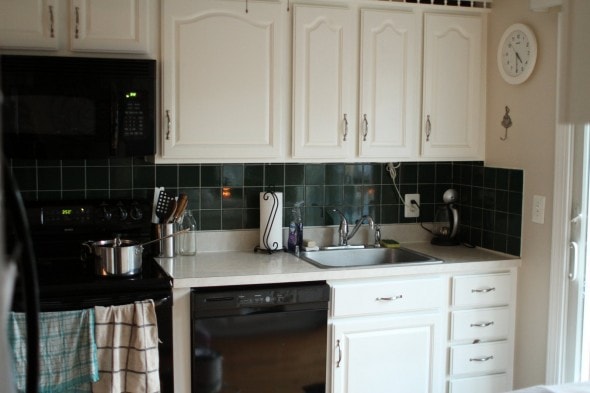
She advocates decluttering rather than organizing.
This is key to maintenance, I think. Simply organizing stuff you don't love or use is a little bit pointless because too much stuff, organized or not, is hard to maintain over the long haul.
She has good practical suggestions.
For example, she recommends decluttering by category (this works great with my kids), she advocates vertical storage instead of stacking, and she says you should put things on shelves and in closets in order to clear floor space.
So there's plenty of solid, practical advice in the book.
I (sort of ) like her "Does this spark joy?" question.
I do this when I declutter with my kids, asking them to separate out the things that make them really happy. Keeping only the things you really love and getting rid of the ones you feel, "meh" about means that what you're left with is a pile of super-happy possessions.
However, I think this breaks down a bit when you get to very practical stuff. Does my trash can spark joy? Do my sponges spark joy? No, but I do need them.
On the other hand, I kind of get what she's saying when it comes to practical stuff. For instance, my washing machine is pretty old and ugly, but the fact that it does a great job and is almost endlessly repairable does make me happy.
In the same way, when you look at something like kitchen equipment, you'd consider a great vegetable peeler to be a joyful possession but a dull, flimsy one is something you'd get rid of.
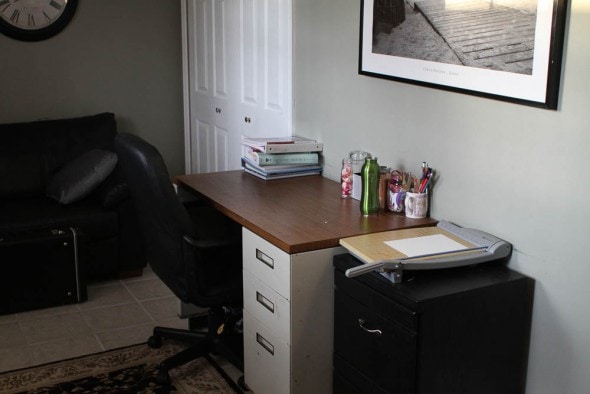
Now, on to what I didn't love so much.
I'm a little skeptical about never having to do this again.
Kondo promises that once you declutter using her method, you'll never have to do it again.
I dunno...maybe my problem is that I've never been ruthless enough or maybe the problem is that I'm not good enough at stemming the influx of things, but I've never been able to declutter once and be done forever.
Take clothing, for example. Even if you DO go through all of your clothing and only keep what sparks joy, what's to say those clothes will still spark joy in ten years? What if you change? What if your size changes? What if styles change? If any of those things happen, you'll have to go through your clothes again.
I think she goes past what is practical and helpful.
I'm all for cleaning and decluttering to the point where it serves me and my family. But Kondo seems to go a bit farther.
For instance, when she comes home every day, she completely empties her bag and puts everything in a dedicated spot (her train pass has a spot, her wallet has a spot, etc.)
This seems pointless. Why would I take out all of the things that I will just put right back into the bag the next day? I mean, if it makes her happy to do this, I don't begrudge her this at all, but I definitely am not going to spend my time packing and repacking my bag.
She also recommends removing all products from the shower each day, drying them off and putting them into a cabinet so that they will not get slimy.
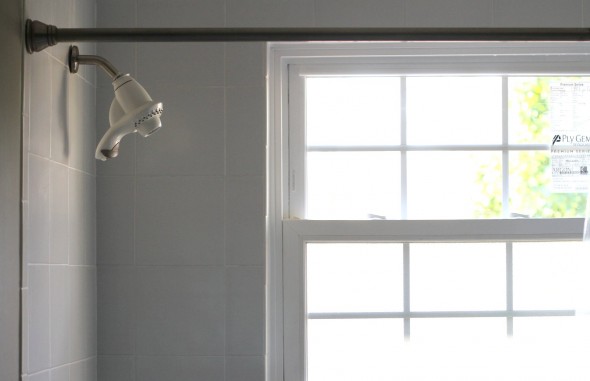
Maybe this is necessary in Japan's climate but at least where I live, I do not find this to be an important task, and besides, I have no room in my tiny bathroom cabinet to store shampoo!
She overstates the benefits of decluttering.
Years ago, I listened to a talk about the benefits of reading aloud to your kids, and the speaker pointed out that children who are read to are less likely to end up in jail.
Now, I'm a fan of reading aloud, and I don't doubt the statistic, but I'm pretty sure that our read-aloud sessions are not what will keep my kids out of jail (correlation, not causation!)
Anyway, the last section of the book reminded me a little of that.
Kondo claims that decluttering your stuff is detoxifying (you may get diarrhea, she says!) and she says her clients have slimmed down and gotten clearer complexions after decluttering. They've also found love, started a new career, and increased their good fortune.
I'm a fan of decluttering, but I'm not really sure it's quite that life-changing, aside from the fact that life is simplified with less clutter.
The anthropomorphism is a little...whoa.
I don't know if this is a cultural thing, but Kondo treats possessions as though they are living things. She talks to them, thanks them for service, and thinks about how they might be comfortably stored.
I'm all for taking care of things and treating them well, but there is no part of me that believes my possessions are sentient beings capable of hearing and understanding what I say.
______________________
So.
I don't regret reading this book as it was somewhat helpful, especially the first ¾, as the oddities emerged more in the last ¼.
I am a little surprised that this book is such a smash hit, though, as I'm pretty sure that a number of other decluttering books I've read are better than this one (and no one speaks to their clothing in those books!)
______________________
Alrighty. I'd love to hear from those of you who have read the book! What did you think??
Well, no, I have not read the book yet. I have booked it in the library but I think I will have to wait at least one month before receiving it. It seems that everybody wants to read this book now and I think that it is because it is much-discussed in the blogosphere, as you say. I will give my opinion as soon as I read it. 🙂
I had to wait a while for mine to come in at the library too! It's a very popular book.
I haven't read it yet (I have it on hold at the library but it's very popular so it'll be a while before I get it.) Your review is very helpful. I used to get frustrated with decluttering UNTIL I realized that is is a never-ending job like cooking or cleaning. Especially if you have kids - but even if you don't. The last part of the book sounds pretty whacko. I'm not sure why it is so popular in the blogosphere (that's what made me interested) - it does sound practical and interesting to some degree.
I just wanted to say that the last part of your 'review' actually made me laugh out loud. Talking to the clothes. Ha!
Thanks for a chuckle to start the day!
Blessings,
Deb
I haven't read the book yet. I have it on hold at the library. I can't even imagine taking things out of the shower and putting them up each day. Either she has way more time on her hands than I do, or I am really lazy!
I received the book for Christmas and have read it and had very similar impressions. I chuckled and shook my head in several locations but overall felt the book hit on the high points of less stuff=less stress. The idea that my clothes like to be folded a certain way and that I would eventually learn how they preferred, left me laughing out loud. I have not to date piled all of any one type of possession together to go through, though I did use the concept of keeping only my favorites as I have purged rooms and closets (those random things have now found new happy homes). I will be passing this book onto someone else as I won't be hanging onto it (does that mean it did not bring me joy?).
Glenna,
I love your review of this book. It made me chuckle to think that perhaps someday I might discover how my clothing feels about being folded in a crumpled ball when I don't have enough time to properly fold!
I think I may have to reserve this book after all.
I'll have to admit I didn't finish this book. When it got a bit strange, I decided it did not bring me joy.... so decluttered it and returned to owner.
LOL! Best comment!
Yes! I've read about 30 pages of the book. I find it repetitive and not very inspiring. The author talks too much about herself. Her claims are ridiculous (you'll only have to do this once and your whole life will be better forever) and her insistence that there is only ONE way to de-clutter (HER way) smacks of egotism. I've read much more inspiring articles about de-cluttering. I'm returning the book because it is cluttering up my house.
I really like your take-aways on this book. I find it interesting how we often hover between perfect order and perfect chaos, and never seem satisfied in either way. A book that stands on the other end of the spectrum from this is "A Perfect Mess: The Hidden Benefits of Disorder." I'd be curious to hear your take on their arguments, as well!
At any rate, I'm happy that you've talked about this lately. I've been working through my pile of mending and sewing projects to try to declutter a bit (taking all the things my dog destroyed as a puppy to make him a big-dog bed; using scraps of other old clothes and projects to make handkerchiefs and a baby blanket; etc.) but never seem to have all the dishes done and the kitchen cleaned. Your writing reminds me how nice it feels to see a clean kitchen - maybe I'll get around to it tonight!
I really like her organic method of clothing storage.. My closet is tidy and has stayed that way....if I remember to put away the clothes in the laundry basket. All my folded clothing is stored vertically now, either just on shelves or in baskets and my hanging clothing is arranged by color and type.
Ooh haven't read it yet, but yes, the anthropomorphism is cultural, and ties in with traditional eastern concepts of existence. Also, if you do think of your possessions in this way (not sure I can) I imagine it would be easier to remember to treat them with care. So I can see a reason to try it. 🙂
I mean no disrespect to a culture that I am not a part of, but I have a different view of this. I've found that having a deeper relationship with one's possessions makes the decluttering process much harder. We hold onto things longer than we should precisely because we have emotional attachments to them that are unnecessary.
Ah, but if you do anthropomorphize your possessions, you won't want to hang on to things that you don't love. For example, you may have a pair of jeans which, while perfectly serviceable, are not very comfortable. So you resent the jeans each time you have to wear them. You are constantly readjusting them and you can't wait to take them off at the end of the day. If you think of the jeans as having a sort of personhood, then they have a right to be worn by someone who will absolutely love wearing them. So you bring them to the Goodwill so they can find a new owner who will be overjoyed about finding the perfect jeans for $4.
This kind of thinking has been really helpful with my three year old. Small children naturally think of their toys as having feelings. So if he gets a toy that he doesn't love or grows out of, he wants to pass it on so it can find someone who will love it. He likes to tell us about how someone will find the toy at Goodwill and say, "I am so happy I found this toy! I love this toy!" And then the toy will say, "I am so happy I found this kid! I love this kid!"
I did read the book, and I did enjoy it. I did not find it life-changing, but I have also never had a problem getting rid of things.
I suppose that all depends on if you hold tight to things you love or let them go to be free. =)
Thank you for your review. I am #415 on the library wait list. So I ought to get it in 2016. I appreciate your insights and love reading your blog every day.
Hi Eileen,
a lot of the advice she gives in the book can be found in articles online. If you google her/her method and read a few articles, there is no need to wait with decluttering until 2016. I found there was quite a bit of filler in the book itself.
Best wishes
Dina
Oh my gracious! I can't believe the wait list is that long. Whoa.
I loved her recommendation to work on the decluttering in big batches. So much advice says to do a little bit each day, but you know what happens? I don't do it. I've always been an "all at once" type. Projects that take an hour or two get done, projects that couldn't possibly be finished in a day can take years because I just don't have the diligence to keep at it every day.
As I discussed with a friend recently, there is no order in a farmhouse with four kids age 7 and younger unless no one is home and I, the mom, was the last to walk out the door! This book figured in that conversation, and frankly, I think I've read enough about it (here, Katy, Amazon, even NYT) that I have the salient points and won't have to actually read the book itself.
Really interesting to read your opinion. I am as surprised aas you are that it's so popular in the States. I think the method lends itself very much for tiny spaces (living in London I could relate to that very much).
I have just gone through the process and felt the method worked well for clothing, books and other personal belongings, not so much for the practical items in the house. I feel relieved I am done with decluttering now but not sure this is really a once in a lifetime process - especially with kids.
That being said I think it also skilled my eyes in some ways - so if I no longer love a piece of clothing I will donate and replace it more easily now. It will be more a decluttering on the go-kind-of-thing. Though I also at first thought it to be ridicolous, I have started unpacking my bag at night (the cause being a distinct smell rather than the book though).
Have you written about your favorite decluttering books before?
Dina
I wondered that, too. Kristin, what are your favorite decluttering books?
Now I'm wracking my brain trying to remember! Tsh Oxenreider has one, and I also did a short review of another in this post: https://www.thefrugalgirl.com/2014/09/what-ive-been-reading-of-late-a-k-a-short-book-reviews/
I read the book a few months ago, and I agree with most of your comments. It was interesting, and I liked the suggestions of using shelves and drawers more. The emptying her bag every day is strange, and there is no way I could get my family to put their shampoo, etc away every day. But it's always motivating to read about people and their decluttering ideas!
There's a lot lost in translation and culture. I think most of the author's clients are singles living with their parents, so they have one room packed to the gills with stuff.
I kind of thought it was contrary to throw all your clothes on the floor and then thank them one by one as you bag them up and throw them away. Haha.
It isn't a book I liked or would recommend.
Very interesting to read this review! Having lived in Japan as a child (ages 8-11), the culture is vastly different from ours and that perspective certainly seemed to come across in the writing. As a culture, the Japanese are very polite, reserved, and. circumspect. It doesn't surprise me to read of the 'a place for everything and everything in its place' perspective almost taking on a life of its own. Yin and Yang, balance, feng shui - it is woven throughout their lifestyle. I appreciate your acknowledgement that something can be learned from those with whom we might have little in common. Nicely done!
I'm all about de-cluttering specifically because I want it to make my life easier. It is definitely not going to make my life easier to unpack my purse or move my shampoo bottle around!
Hi Kristen! We live in Hawaii where rent is really high, so clutter is our worst enemy because we have little room for storage! I'm very interested in this book, because I love inspiration for decluttering--like you, I find it to be a never-ending process. Your review was awesome!
Have you ever read Freedom of Simplicity by Richard Foster? I can't recommend it enough. My husband and I read it every year to make sure we are on the right track with our possessions and our money. It has a very balanced, level-headed Christian worldview towards the accumulation of stuff.
I'd never heard of the book before I saw it sitting on the library shelf and picked it up, so I came at it with no expectations.
Kristin, I really like how you stated the things you benefitted from; I got so frustrated with her that I forgot the good things she was saying (and I didn't finish the book).
I too think that her book would be great in Japan or in other places where adults live in one room of their parents' house with no children and are entirely responsible for their own things and nobody else's. It would probably work here for people who live in rooming houses or dorms. But if I were to toss all the stuff at my house that didn't bring me joy, there would be a handful of unhappy kids (who would say that *I* wasn't bringing THEM any joy and be ready to jettison ME).
I never did get around to dumping my stuff on the floor and sorting it. That sort of thing overwhelms me and I get paralyzed and can't deal with the stuff. Probably because I have too much stuff. But it was a good reminder to take a step back from my possessions and evaluate if they serve their function (for me, bringing joy is just one function that an item may have).
If you're wanting to declutter and are looking for inspiration, I think Flylady is a better way to go (at least, it works better for me). It isn't as overwhelming. Another site that has been useful for me is Project 333--the premise is that you chose 33 pieces of clothing that you'll wear for 3 months, and put the rest in a box somewhere. I know, that sounds worse than overwhelming, and I don't stick with the plan at all. But making a stab (OK, I got down to about 50 items, not counting shoes, coats, or accessories) helped me to understand the concept of "enough," as in, "I have enough scarves and I don't need to look at the sales rack today." This has spilled over into other areas of life ("I have enough vases," or "I have enough mixing bowls.")
I think most of us crave simplicity and order in some form or another, but we each define it differently, and we each have different ways of achieving it.
It sounds like you should really try the act of putting everything of one item on the floor! It IS overwhelming and I think that's the point - being overwhelmed at how much stuff we have and using that motivation to declutter (I was aghast at how many bags I had). As for your kids, the book says you cannot declutter for someone else as it will make them unhappy, they have to do it own their own after being motivated by watching you!
Thanks for the straightforward review. I am in the process of de-cluttering and you pretty much covered as much as I want to know about the book. I think I will stick with Mary Organizes tips and keep moving.
I've gotten about halfway through the book, and I had a very similar reaction to yours. I liked her advice about decluttering by type, rather than by room. I think that would be a really helpful thing for me to do, because I do tend to lose track of what I do and don't have when it's spread all over the house. And I do thing that, for me at least, doing a bit declutter works better than doing a teeny, tiny bit each day, probably for the psychological reasons she mentions. If I feel like I actually made some progress, I'm more likely to keep going.
However, I don't see how this could be a one-time thing unless you lived alone and had a very, very consistent routine. Even then, it seems like an illness or vacation could easily throw things off. So I felt kind of annoyed by how she sold her technique--it just did not seem honest.
And, from what you say about her advice about things like not leaving bottles in the shower and emptying her purse every day, that kind of strikes me like FlyLady and her shiny sink. I agree that walking into a kitchen with a clean sink is nice. I would much rather wake up in the morning to a clean, empty sink than to one filled with dishes that weren't done the night before, and it absolutely helps get my day off to a better start. But, when she starts talking about never letting people put dirty dishes in the sink and instead storing dirty dishes under the sink, she loses me. That just seems like a silly and impractical thing to do. Sinks are for cleaning dishes, not for sitting there clean and shiny to make us feel happy. So I feel like she takes good advice--keep up with the dishes! wash them as you use them as much as possible!--and just goes too far with it, until suddenly the sink is more about being there for decoration than for its actual purpose of cleaning dishes.
But, like FlyLady--who has some ideas I find very useful and others I think are silly or unnecessary--I thought the book, as far as I've read so far, had some good advice mixed in with some strange stuff and some really off-putting and overblown claims.
I did read the book and my thoughts were very much like Kristen's. I found some helpful ideas like vertical storage and keeping like items together. But, the talking to your stuff and thanking them for their service just sort of negated what I learned. It kind of made me think, " Ok I'm taking advice from someone that talks to inanimate objects"? I don't know, I'm pretty sure I've read most of this advice before so I don't really understand the fuss over the book.
The response to this book are interesting to me.
I have the ability to "take what I like and leave the rest" when I read a book on any topic, but some people get so hung up on things.... Not speaking of you Kristen, but some of the reviews are downright insulting to the author, a successful businesswoman, and her culture.
Anyway I digress.
I thought the anthropomorphisms were fn, they reminded me and my husband of how we thought as kids, attributing human feelings to things. But for me, I thought of the author's statements as more of a gratitude exercise than literal.
I also love the way my clothing looks folded like packets in my drawer. It's easier to fit everything, find it... And it looks pretty. It gives me an tiny jolt of happiness every morning!
And I think for practical types such as yourself (me too), appreciating the usefulness *does* spark joy in a sense. Either that, or buying a more attractive trash can might do the trick. 🙂
I am still waiting for the book from the library. Our wait list is pretty long too, but I'm glad to hear most of the info can be found online. I can see how decluttering can cause benefits in my situation. My clutter stresses me out, so decluttering would decrease my stress. I can see how decreasing stress could possibly affect one's complexion(stress related acne), ability to start a new career etc. When I'm less stressed my energies can be used for more challenging things. Thanks for the helpful review!
What decluttering books do you recommend?
Animism is part of the Shinto world view and is prevalent in Japan. I'm not surprised that it popped up in this book. As with anything else, know where the author is coming from. Use what is useful and meaningful for you and leave the rest. Being a 'creative' type, I tend to live with a fair amount of clutter before cleaning house. At the same time, I tend to have the clutter pretty well organized. When it no longer serves a purpose, or when it begins to disturb my peace - out it goes.
I thought the same, it was indicative of religious views rather than cultural differences. Honestly, I haven't found any book to tell me anything new on decluttering. Simply get rid of things that are not needed or useful, that's it;)
After i finished this post my phone suggested that next article I read is this. I think this is so funny
http://the-toast.net/2015/02/24/get-rid-clutter-live-abundantly/
This sounds like an interesting read, but I too would NEVER empty my bag at the end of the day. I would just have to put all my junk back in. Moisturizer, lip balm, sunglasses, daily medication-those things already have a home—in my bag. “Hello moisturizer, thank you for your service, now go back to your life in my purse. Say hi to chapstick while you’re there.”
Anyway, I’ve put the book on hold at the library (I’m #30 on the list!)
I had thoughts similar to yours. I was glad I borrowed the book from the library. I also was disturbed every time she talked about throwing out (many) garbage bags full of stuff. I got the impression they just went to the dump/landfill. It seemed as if much of her focus was on individuals, it is much easier to have less when you live alone.
The full version of the book is on YouTube:
https://www.youtube.com/watch?v=hKgS0PA3E7s
I have not watched it
I read the book too and I like her idea of folding clothes. It really gives more room to every drawer and it's easier to find them. I think talking to the plants/clothes (and thanking them) is a cultural to them or part of Shinto,I'm not really sure.There's also part of the book that I like when she points out to "first discard those that have outlived their purpose".
I agree about unpacking your bag each night and removing everything from the shower. I just completely disregarded those things.
And I don't believe my possessions are sentient or can hear me, but! I read this book around Thanksgiving and decluttered my Christmas things as I was putting them out. There was one particular figurine I don't really like, but it was a gift, and I have had it for years. The book was still fresh in my mind and I did actually thank the figurine for giving decorating my house for the last several years and there was something about doing that that made it easier for ME to let it go. I actually find thanking my things extremely useful, psychologically, in letting them go. And getting rid of that first thing really opened the floodgates in decluttering my Christmas stuff.
I really like what she has to say about gifts - that the purpose of a gift is to be received and once you have received it, and thanked the giver, then your obligation to the gift is done.
I read this book over Christmas and employed the techniques and am already about halfway through decluttering the house. Already I feel a huge sense of relief in getting rid of stuff. It has even changed my buying habits, and that truly is life-changing!
Having spent time in Japan, anything in the book that seems different or funny can definitely be attributed to their culture (they are obsessed with bowels) or religion, as Shintoism ascribes beings into inanimate objects. They have an innate sense of order and respect that must be seen to be realized! They also live in much smaller homes than we do, with fewer children, perhaps explaining why a major purge would only be done once. One visit to Japan will have all parts of the book making total sense.
I saw a newspaper article last week that the author was in the US to see how her book applies to American homes. I hope she puts out an addendum!
I enjoyed the book. I can't say there's been a "how to" or philosophy book that I have ever read and completely conformed to, but like everything, I can see how some of these ideas can be useful.
To comment on the "anthropomorphism" feel of the book- Gratitude is a huge cultural value in Japan. To be grateful to things isn't really accurate, as each thing is made by someone else's time and effort. A grain of rice isn't just a grain of rice. It's a crop that's painstakingly raised and planted through back-breaking labor. Being grateful of what something is truly worth and being careful not to waste things is something to aspire to. Don't you think?
Kristen,
I like your review of the book and totally agree with your take. I think (at least for me) the best takeaway from the book was that just organizing your clutter is not enough. I had spent a lot of time organizing and a lot of money on organizers and when I really just got rid of things, it was such a huge improvement.
I agree that her idea that possessions need to be comfortable and you should thank them sounds so strange. I like to think of it more as taking care of what I have. No, I'm not going to thank my coat for keeping me warm at the end of each day, but by actually hanging it up and keeping it neat I think I am doing a better job of being thankful in general that I have a nice warm coat and pretty closet to hang it in.
I do think the book is getting way more talk then it maybe deserves, but I am really glad I read it!
Hi Kristen,
I recently read this book and agree with your comments. I cannot figure for the life of me why this book is so popular. I liked some of the organisation tips, particularly around folding clothes to put in drawers but overall found some of the book a bit bemusing. I have just finished reading Stuffocation by James Wallman and found this fascinating, definitely worth a read. It's more of a how did we end up here and what next approach.
Ooh, that book sounds intriguing. Off to check my library...
Just read this article and thought of your post! (And I agree with your assessment of the book. Totally!)
"In the future, when you are hungry, eat your memories. The only thing that belongs in your refrigerator is mindfulness."
http://the-toast.net/2015/02/24/get-rid-clutter-live-abundantly/#RWPC76Mk3YXhxy7e.01
A friend of mine shared this on Facebook and it made me laugh! So great.
Ha! Thanks for this share. We just can't take ourselves so seriously all the time. It's good to be reminded to be real. Enjoyed your review Kristin. It was very thoughtful and I learned a new word. (anthropomorphism)
I have to confess. I did not like the book.
Her personal story and organizing games are fine. But it was not what i was looking for.
I really like her idea of declutter/organize so you can see the floor. It is a pain to sweep/vacuum around stuff even in a closet. Or if something falls behind a bin, there is little motivation to go fishing for it. Thanks for sharing!
One of the things I really liked about the book was that she emphasized sorting by category rather than by room. That makes complete sense to me. I also agree with the author that the solution isn't better storage systems, it's less stuff. Apparently Americans aren't the only people with way too much stuff!
I also found the anthropomorphism a bit strange, although it helps to know that it's a cultural difference. It does make me realize, however, that we need to treat our belongings with care and respect, as they are part of creation with which God has gifted us. It gives me new incentive to hang up my clothes...
You may appreciate this article that has had one too many encounters with this way of thinking http://the-toast.net/2015/02/24/get-rid-clutter-live-abundantly/
Yes! A friend shared that and I love it. So funny.
Ironically I just finished reading this book a couple of weeks ago. I loved it. I looked past the talking to your things. In regards to the things you didn't like about it, hear are my thoughts:
1. never having to do it again - I think the whole point is to make sure that every single thing has a place and that it goes back to that place. Of course as time goes on you can get rid of things that don't spark joy, and when you buy new things you need to find a home for them, but the BIG crazy decluttering session should only happen over one period.
2. past what is practical and helpful - It seems as though she uses a different handbag on a daily basis, like people used to do in the 90s and before, so it makes sense for her to unload her bag every day. Wouldn't make sense for me! I have found some of those crazier ideas to actually be helpful to me though. For example, I now shut down my computer completely at the end of the day. I keep my once a week shower stuff in my bathroom cabinet and my bathroom looks so much neater with only my daily shampoo/conditioner/husband's shaving cream/body soap/face wash in the shower. etc.
3. overstates the benefits - I agree with you, but then I wonder a little more about it. maybe these people that are hiring her have homes in such a state of disarray, clutter and dirt that they really have those symptoms as they declutter? Some of the photos that have been posted with her articles are absolutely disgusting, and I can't imagine EVER living that way.
We are going through her method category by category, and despite living pretty neat/organized/clean lives we've already discarded a bunch of stuff that we've been keeping for no good reason.
Thanks for this post - loved hearing your perspective.
and PS - In googling things about the KonMari method I came across a blogger who added that she now does the "one touch" method. So instead of draping her coat across a kitchen chair, then moving it to the couch at dinnertime, then finally hanging it, she puts things away with "one touch." I love that concept.
Oh! I had no idea there were pictures out there. Must google!
I just finished the book, and agreed with your review. At times, I was thinking, "Is she crazy?!" And I wondered a lot about the size of Japanese homes compared to many American homes. I have a friend who is drowning in her stuff, but she's got four levels of a large home to tackle. Not gonna happen all at once for an overweight person in her 60's!! I totally agree with her point about storage; not good to keep storing and storing. Get rid of all that does not spark joy is helpful, too.