
Overdressed, part two: What should we do?
So. Yesterday I wrote about Elizabeth Cline's book, Over-Dressed, but I didn't have space to really delve into how the information in this book should practically affect our lives.
Though it's nigh onto impossible to find clothing that's not made in an overseas factory, there are some things we can do to start shifting the tide towards a more sustainable clothing culture. And not all of them require buying uber expensive clothing.
(This is a blog called the FRUGAL girl, after all.)
Here are some ideas, from Cline's mind and mine:
1. Buy fewer clothes.
The average American buys 68 pieces of clothing a year (that's more than one per week!) Unless you're a growing child or are changing sizes quickly, there's no reason you need to obtain that much clothing in a year. Buy the amount of clothing you can really use.
(That's a good principle for plenty of things other than clothes, by the way.)
2. Buy better quality.
If you're buying fewer items, you can afford to spend more on each. Though it's frustratingly difficult to find fair trade or domestically-made clothing, you can still look for quality. For instance, there's generally a difference between a $4.99 shirt from China and a $29.99 shirt from China. Even though both may have come from a poorly run factory, a better quality shirt will last longer, and when you own items that last longer, you don't have to support the clothing factory industry as often.
Plus, environmentally speaking, it's much better to buy things that last.
3. Don't follow fads.
The odder the item, the more likely it is to go out of style quickly. I'm not saying one should never purchase a fun, trendy item, but the more you stick to classic styles, the longer you can wear your clothes.
Classic clothes also tend to be pretty versatile, so you can get a lot of mileage out of them.
4. Mend.

I've talked before about how mending can save you some serious cash. Sadly, mending is a bit of a lost skill, and there are many people today who throw away clothes simply because they don't know how to sew on a missing button. A hole in a seam is also a super easy fix, and patching isn't overwhelmingly difficult either.
Shoes can even be fixed if they're of fairly decent quality (If the problem is beyond the help of Shoe Goo, use Google to find a shoe repair shop in your area.)
4. Modify.
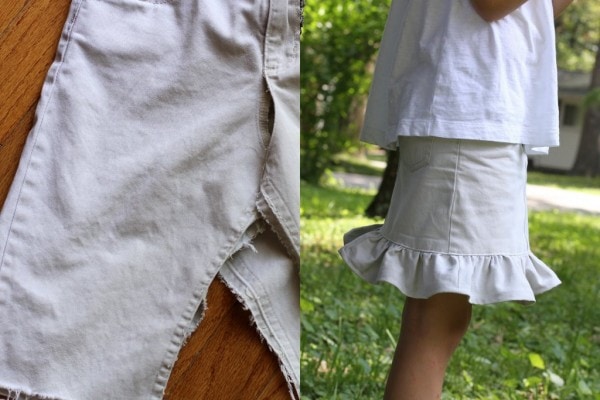
If you get a hole in the sleeve of your long-sleeved shirt, take a scissors and turn it into a short-sleeved shirt. Remove a collar that you hate. Replace buttons that are dated. Turn worn jeans or pants into a skirt. Throw faded clothes into a bucket of dye.
Or you can outsource the modifications. For instance, if you lose weight, you can hire a tailor to alter your wool coat so it still fits you. It'll still probably be cheaper than buying a new one.
5. Make your own.
In days past, people actually made their own clothes, as unthinkable as that might seem to us. This might not be a practical solution for everyone, but if you enjoy creating things, consider sewing some of your own clothes. You can make something that fits you perfectly and that's much higher quality than what you can buy.
(One should note, though, that you do have to obtain fabric somehow, and that may open another can of worms.)
6. Look for fair-trade clothing.
This is infuriatingly difficult to do, because companies like Walmart say they care about worker conditions and point to their regular audits as evidence. But according to Cline, what Walmart doesn't tell you is that they announce up to ¾ of the audits ahead of time, which makes the audits pretty meaningless (of course the factory workers will get lunch breaks on the day the auditor is there.)
If you're buying from a large corporation, I think you're pretty much not going to find fair trade items, no matter what they say. And generally speaking, if a company who sells super cheap clothing says they care about worker conditions, they're being deceptive because it's not possible to produce cheap clothing while treating workers fairly.
Fair trade clothing is going to cost more than the stuff you can find at Forever 21, and that's that.
7. Buy second-hand.
Sure, a lot of the clothing in second hand stores came from horrible factories, but the fact of the matter is, those clothes have already been produced and sold. When you buy them, no money goes to sweatshops, you're making use of something someone else didn't want, and you're also helping to make a dent in the glut of clothing second hand stores receive.
_________________________________
What do you think? I'm sure there are more good ideas that haven't occurred to me, so please share your ideas in the comments.
__________________________________
Joshua's 365 post: Flare

Small detail, but I think 68 pieces of clothing a year isn't more than one a day. More than one a week maybe?
Ha! Small brain cramp on my part, ey? I just fixed it.
This post is so timely.....I listened to the news about the factory collapse in Bangladesh with absolute horror. Today the news brought word of a factory fire in Bangladesh with more people killed.
I realize this sounds dramatic, but I'm starting to feel my clothing has the blood of 3rd world countries in it.......and I'm going to start voting with my wallet as I don't like this feeling.
I think it should also be mentioned that sometimes you can buy smarter. What I mean is I often buy better quality clothing for the same prices as the big box store poorly made stuff for just pennies more and often less by waiting for final clearance sales, using coupons if possible, and paying with discount bought gift cards. It takes a bit more time on my part but I find these clothes last longer and are often a classic style that can be passed down from child to child and then resold for close to what I paid for them on clearance.
It's also good karma to put some thought and effort into obtaining things. Plus, we tend to appreciate things that were more difficult to come by.
I need to get serious about my weight/size and get rid of everything in my closet that doesn't fit me the way I am today. I can always buy thrift when I do need new things.
I guess the option of buying (certainly less often) is to be buy quality made in the USA was left out because it isn't very frugal. But getting a piece of clothing that will last a long time is frugal, right?
And the sad commentary about fabric is that it is almost made all over seas - in China. One has to work REALLY hard at getting homemade fiber products at all!!!!
There are some great American companies making clothing and also some smaller vendors on Etsy that make trendy yet more carefully crafted clothing.
But, even if someone in the US is sewing the clothes, they are probably getting the fabric from overseas, right? A lot of the environmental costs of the fashion industry seem to come from manufacturing the cloth itself. Or at least, that has been my understanding.
I recently bought a pair of jeans from a company that does all its manufacturing (including fabric) in the US and seems to treat its workers pretty well. The cost made me choke, but I figured if I bought a cheap pair I would be paying in other ways. And since I live in jeans and they're really, really well made they're going to last me long enough to make the cost-per-use miniscule compared to many of my alternatives. Also, I can sleep at night.
I'd like to know more about how to find higher quality clothing. This is a very new concept to me. I am tired of my jeans always wearing the the same spot and not lasting. I don't want to spend more on clothing thinking it is better quality when it is just the same quality with more of a markup because of the name on it.
I would love to see a post on this, too! I've learned some things from my work and from ruining various items of clothing, but I'd love to hear more:
Buying:
- Pull on seams to see how sturdy they feel.
- For thinner fabrics, check the materials. Linen and silk are more durable, but cotton or rayon are more likely to develop problems.
- If your clothes tend to wear in the same spot, tweaking the fit can help. Wearing out pants in the upper thigh (my main failure spot) can be helped by making sure you buy a size that fits you well in that area and tailoring everything else down, or by looking for brands that have some spandex in the weave. Bras that develop the 'underwire on the loose' problem may be too small in the cup.
Care:
- Wash things often enough, but not too often. Airing out pants and skirts may be all they need before another wear, but anything that you've sweated onto should go in the next load, since sweat can break down fabric over time.
- Fasten all zippers and hook all bras before putting things in the wash.
- Wash in cold water, with the minimum amount of detergent needed.
- Don't overdry, especially bras and other delicates.
I agree with Em...I would like to know more about where to get the higher quality clothing...I have paid more at higher end places and had the same lack of wear from the items at times. I have complained in writing about a type of jeans my husband always wore and the all of a sudden the quality went away. The head office just said they were sorry we were disappointed with their jeans....what???? No intentions to fix the issue, etc!
I also think one other avenue that wasn't listed is clothing exchanges...either among friends or hand me downs for kids....that helped so much when I was raising my children. I trade now with a friend...she isn't my exact size but there are still things we can use since there isn't a huge difference and we each get something "new" and keep something out of the landfill.
I also think that Made in USA is a wonderful option...but for over three years I have been looking in stores and mostly to no avail. Someone commented on a site via The Non Consumer Advocate and I have it saved for when I do intend to shop. However, I really dislike ordering clothing via the internet due to fit and then having to return if it doesn't fit. But for other items, I am on board.
Yes! Clothing swaps are wonderful! I've had two so far with a group from my church, and it is such a great time. We all bring clothes (eliminate clutter=check!), swap (new-to-us-clothes=check!), then donate what is left (helping out=check!).
Fair Indigo is a company from which I've gotten some nice clothes. They have a variety of clothes, some of which are organic, fair trade, recycled, and/or made in the US.
I was recently in JC Penney's and they now have a super-cheap line of clothing: thin t-shirts, cheap sweaters, etc. I am disappointed in Penney's for doing this. I remarked to the gal folding clothes that the t-shirts were so thin and that everything was so cheap. I wasn't referring to the price but she thought so and happily agreed.
I was recently in JC Penney's and they now have a super-cheap line of clothing: thin t-shirts, shoddily constructed sweaters, etc. I am disappointed in Penney's for doing this. I remarked to the gal folding clothes that the t-shirts were so thin and that everything was so cheap. I wasn't referring to the price but she thought so and happily agreed.
Tammy, I sooo agree with you. I live in a very rural area and the nearest stores of any size is 20+ miles...and not many stores at that...JCPenney's is the main one. I am just put off by their current quality...some of the t's are so thin you can see your hand through them when you put it under the fabric. But the prices aren't very cheap either. I am thinking I will not be purchasing much there in the future. But they are interested in moving quantity...not quality. As long as we buy it that way...they will sell it.
It is not only JCP. Last year when I finally needed to replace my turtleneck jerseys I found that Lands End quality was diminished. The new fabric was thin and flimsy. I don't have any idea how it will wear--I did not buy.
As I was reading Over-Dressed last night, a phrase popped into my head "personal style". We have given up our personal style by accepting the idea of cheap clothing. When you look at the racks, the same dress, pants, skirt, etc. can be found in multiple sizes. And as I said yesterday, my mother used the same pattern, creating her own personal style, with different fabrics and trims.
LL Bean has also take a downhill turn in terms of quality lately. I have turtlenecks bought from them almost 10 years ago that still look fine, while the ones I bought last year are much lighter and already beginning to fray at the cuffs. Time to start sending stuff back totems other get the point.
I found that Lands' End quality went down after Sears bought them.
My husband used to buy a basic dress shirt at Penneys which he really liked. He got a new job and needed a few new shirts, so we bought the ones he has always bought, and they were terrible quality, with the same label. So we have had to go to the more expensive shirt for the same quality we used to get in the basic shirt. It is a frustrating trend.
I would also love to hear about what brands are truly quality. Or specific things to look for when buying quality clothes. I know nothing about fabrics or seams or how to know something is quality. Are Banana Republic and J.Crew clothes better quality simply because they're more expensive? I hate the thought that I'm being ripped off--that I could have bought an equally decent-looking pair of pants that would last just as long for a much lower price. It's just hard not to feel duped all the time.
I think clothing swap parties are a great idea. I have a monthly book group and I think I'm going to suggest that we each bring a clothing item (or two or three) to the party that we don't want anymore. Doing it monthly will make me pay more attention to closet, too.
Thanks for posting on this topic, Kristen!
If you really want to know the secret of finding quality clothing, take a sewing class at a local community college or trade school - or even on-line! Even if you have no intention of making your own clothing, you will learn what the key features of a well constructed garment will have with respect to stitching, fabric layout, etc. Failing that, seek out someone who is an experienced seamstress and pick their brain! Chances are they will tell you the most important thing to do is pick out a garment that fits well on the shoulders and across the hips. A too-tight garment will wear badly, and a too large garment (on an adult) is just plain uncomfortable!
It's been my experience that J Crew and band Republic have higher quality clothing on many of their pieces, but not all. It depends on the cut, fabric, and style so use your judgement. However, I was searching for a more timeless chambray shirt that I could wear forever and with anything, and I knew that Target was not where I was going to find such a durable shirt. I ended up with one from J Crew and I have heard that their chambray shirts last.
After years of experience, I only buy dress slacks -- whether cotton/wool/or blend -- from Banana Republic. When I scrimp on dress pants, I end up paying for it in other ways. I've found BR bottoms to be reliable -- today I am wearing a navy A-line skirt that I bought in 2006, and it looks good as new. I do think their clothes hold up.
What a wonderful summary of a very important book! I agree that buying less clothes of better quality is an excellent strategy for countless reasons. One thing I am contemplating is buying organic American-made fabric from this company to make a few basic wardrobe pieces: http://www.organic-cotton.com/
Oh yes....and how could I forget: Etsy! I love that I'm supporting a cottage industry which helps families put food on the table.
Many expensive clothes are also made in overseas EPZ's. And it's not just clothing, it's everything we own and use.
If you want to address this systemically, contact your representatives about this. Tell them you'd like to see a bill introduced that would penalize companies for using contractors that abused their workers and prevented them from forming unions and didn't pay them a living wage. Ask them to reexamine the trade agreements we have entered, as it's apparent that these agreements are not benefiting the people in the global south. Contact the companies and tell them to stop hiding behind contractors when they demand unreasonable deadlines for low, low prices. The fact is, even expensive items are made by underpaid, exploited workers. The company does not pass the reduced costs to the consumers.
The sad thing is, even if companies change their behavior, it doesn't necessarily mean an improvement in the workers lives. A few year ago, there was a a big outcry about Nike using sweat shops to manufacture thir clothes. Enough people complained & boycotted that they made some changes. Someone later interviewed some of the former workers (higher wages & better conditions meant that they then employed less people) who said that since they'd lost their jobs, they resorted back to selling their kids. So while people meant well by trying to get the sweatshops changed, it actually really hurt a lot of people. Just something to think about.
It can be disheartening to see the problems that persist after a big push for change, but that means that more change is still needed, not that we should have just left things alone in the first place.
Sustainable jobs - ones where workers are paid enough so that they can then support other businesses in their community - lead to lasting economic growth. Big companies that actually change their policies after a boycott are contributing to this, which means that everyone will benefit in the long term. (Companies that pull up stakes in the publicized area then move to open sweatshops in a different location are a different story.)
Yes, I agree with this. Allowing sweatshops to continue operating as-is definitely doesn't seem to be an ultimate answer, as the recent tragedies in Bangladesh have shown us.
When we first got married I taught my husband how to sew a button on a shirt and hem pants. Then when my son was a boy, I taught him the same. I didn't want either of them to feel helpless when it came to doing such ordinary things. And in exchange, my daughters and I have been learning some basic carpentry over the years.
I'd also add, if you sew, take worn garments and transform them into something totally new, by salvaging the good parts of the fabric. Quilts are the obvious one, but also draft snakes, cloth napkins, hankies, a woman's scarf, and one of my latest projects men's boxer shorts.
Lili, I have a quick question: what do you stuff the draft guards with?
Non-sewer, non-crafter, but I want to try that.
Elaine, I made 3 draft snakes this past fall, each slightly different.
One draft guard I stuffed with the remains of my childhood comforter. I had previously cut off a portion of the comforter, when making a duvet cover for my brother (turning a twin-size comforter into a full-size duvet cover with a bit of padding around the edges). For the draft dodger, I rolled up the comforter remains and stuffed into a fabric tube.
For another draft dodger I used more of same comforter, plus some pillow stuffing, some from a bag and some from an old cushion which had seen better days.
And for a non-sewer, I made one no-sew draft dodger, with a piece of wool fabric my M-I-L passed on to me years ago. I rolled up the fabric tightly, and hot-glued the seam. It kept well all winter and is tucked away in a closet until next year. You can see pictures and descriptions of the 3 that I made this past year here:
http://creativesavv.blogspot.com/2012/10/no-sew-draft-snake-its-no-3-and-it-was.html
Other suggestions for draft dodger stuffing would be torn up scraps of soft fabric, like fleece or flannel. CTMom, from CT on a Budget made several draft stoppers this past year, stuffing hers with bits of old and very worn clothing.
Thank you for your suggestions!
I'm not a good "out of the box" thinker, but I do OK when others give me ideas.
I have a draft dodger that's stuffed with beans (or maybe rice), courtesy of a friend. It works very well and makes a neat sound when I drop it on the floor.
Thanks for this post Kristen! I just ordered Overdressed from the library. I was in Target last night holding up a $7 t-shirt and got quesy thinking of those factory workers in Bangladesh. Needless to say, I walked out empty handed.
In addition to all Kristen and others' great ideas for reducing our dependence on clothing produced by workers who are abused, another thing you can do is support respected organizations that work to both improve labor rights for overseas workers and promote fair trade. They are a great source for educating ourselves about what has been happening and have suggestions for actions individuals can take to make a difference. One such organization is the International Labor Rights Forum, http://www.laborrights.org. In conjunction with another great organization, Sweatfree Communities, they publish a yearly shopping guide: http://www.sweatfree.org/shoppingguide
When both daughters were getting married, I was able to "save" money on mother of the bride outfits. I borrowed a lovely silk number from a friend for daughter #1; and after a search of several stores and finding nothing that I really liked, I found a dress in my closet. A 3-piece beaded number that I had bought at a resale shop a few years before. I still have it, still
finishing up--I still have it but don't know if I will wear it again. Maybe I can sell it for vintage!
You can add swap and borrow and hire to that list. With three sisters all similar in size I swap clothes and borrow clothes a lot. This was especially true for those once off special occasions. Going to a wedding for example. Borrowing g an outfit or even hiring a designer outfit from a clothes hire place for the weekend was a really good alternative to buying something that you probably won't wear all that often. You could also add raid family members wardrobe for cool vintage pieces hidden away in the back. My elderly aunt was finally doing a clear out and I offered to help. I got lots of wonderful vintage clothes and clothes my aunt had made or altered and were just spectacular. What I didn't use I sold on to vintage clothing stores for her and she was thrilled as she thought I would just recycle them.
68 pieces of clothing a year is crazy! I'm sure those figures aren't limited to the US either - I would expect it to be similar here. I guess it is partly because shopping for fun has become something people do on the weekend.
At the start of this year when I had to tighten my budget I decided to see how long I could go without buying clothes. I didn't buy any until a couple of weeks ago, when I happened to be in an op shop and found a lovely jacket for $8. I bought it and didn't beat myself up about it because I needed a jacket. I guess it's more about being purposeful.
Are they factoring in underwear? Because I do buy a lot of underwear and socks, and that could raise my number considerably.
I bought some pants about 3 months ago, and new running shoes in the past 6 months. When I do buy, I tend to buy several of the same thing (especially dress shoes) so I don't have to shop for that much longer.
I think that's a guy thing. I decide on a certain thing and I stick with it for years.
Maybe it is but I have found this works for me for my clothing. My tastes are simple so I can buy two or three colors of a top or a simple dress and change it up with pants/skirts and cardigans respectively.
I have two boys aged 2 and under, so all of my clothes fall victim to stains rather than wear, out of fashion, etc. Even with my best stain-removal laundry attention and techniques, my shirts won't last more than a year at best, which makes their long-lasting quality irrelevant. Not to mention the various size changes of two pregnancies in two years (with hopefully more to come). I think your advice is good for many stages of life, but young motherhood is not one of them.
As a young mother invest in some nice pieces that you aren't paying a fortune for so if they get stained or damaged the loss is minimal.
That was supposed to say 'nice thrifted pieces' 🙂
This is my exact problem too. I usually end up ruining most of my shirts within a year due to staining. I cook a lot and feed several small children and I must be messy at it because I always end up with small grease spots or other such yuck stained on my shirts. I try to make an effort to wear an apron when I'm cooking a big meal like dinner but it never fails. Buying quality for me wouldn't solve this problem. I've been doing a lot more thrifting lately so hopefully that will help with the cost.
I do the same thing and Shout really does get the grease/slime stains out. Spray until the stain is soaked and let it sit overnight- it even got spaghetti sauce out of my 4 year old's WHITE dress (what was my husband thinking)!
KimN--I think this is exactly why women used to wear "Hooverettes", house dresses, smocks, and big ol' aprons! I seem to have problems remembering to put on an apron and I don't even have small children to distract me.
Hi Kristen! Great post today. I've actually been lurking around here for months and thought I'd finally pop in to say hi! I LOVE your blog! I so appreciate your thoughts and totally get inspired, especially in the food waste/meal planning dept. In fact, I just saw this article with photos and thought of you! Very fascinating....What a Week of Groceries Looks Like Around the World...http://fstoppers.com/what-a-week-of-groceries-looks-like-around-the-world
Interesting comparisons between different countries on their groceries. I found myself playing "Where's Waldo?" looking for the Coca Cola products in each picture. Lots of other global brands in there, too.
you can also do a shopping ban challenge, and just keep away from buying anything for months!
This is not incredibly frugal if you do it every time you go out to dinner or something, but if you are incredibly into fashion but don't want to support the clothing industry too frequently, there is the option to rent designer clothing. I know of several sites but have heard better things about Rent The Runway. You pick out a designer piece, pay the fee, they ship it, you wear it, ship it back.
I haven't seen this mentioned in any comments, but I think there have been major shifts in cotton farming in the US. Most cotton farmers have had to learn to farm different crops (corn and soy) because cotton farming is no longer profitable. I worry about an agricultural economy which only produces a few products--what are the implications for a country which no longer knows how to produce textile fabrics? Do we want to put all of our eggs in the corn/soy basket? What if there is a long-standing drought (we already experienced one last summer)? Growing the same species of plant has been shown to reduce resistance to blight (the US does not grow a large variety of potatoes, for instance, even though many varieties exist) so diversification of plants seems to be perhaps the smarter move ... if one crop fails, perhaps another will survive ... but I'm no farmer ... maybe I'm way off-base?
Have you ever done a post on patching pants? Because I could *totally* use that. My oldest rips through the knees of his pants with stunning speed; I'm thrilled it's getting warmer, because his shorts have no knees he can make holes in!
Lori--your question reminded me of something I noticed the other day in a fitting (I work in a costume shop at a theater). A young, hip design assistant who always looks great was wearing a pair of jeans with several iron-on patches on them! I guess it's a look now.
Nice post - timely and well-reasoned approach to clothing. I might add that L.L. Bean in Maine has been selling quality clothes at reasonable prices with a life time guarantee for years and they ship free. Thanks again for the post.
I can't even imagine buying 68 pieces of clothing per year. I just checked in my closet there are 84 garments. I can only think of one that has been purchased, from a Rummage sale, in 2013. (there are some clothes in other closets and the laundry room & I didn't count undrewear but still I don't know what I'd do if I got 68 piece each year.
I love hand-me downs! I wore many of my older sister's clothing growing up. And I've been blessed so much by people who have given me clothes for our daughter! So many of the things she wears were simply given to us because another girl out grew them. In fact both the shirt and shorts she's wearing today were hand-me downs! 🙂
One idea I saw was to take all the t-shirts kids get and sew them together to make a blanket. No one else wants an old baseball, scout, or any other activity t-shirt. I am saving my son's t-shirts and hope to make a memory quilt/blanket for high school graduation. He is a freshman this year.
I've always wanted to do this, but most of my kids clothes were given away by the time I saw this idea. Plus I'm a little sewing challenged. People can also have someone else make the blanket/quilt for them.
Thanks so much for your post! It came in very handy this morning when I was buying an awesome t-shirt on Woot! Woot required me to choose a supplier for my shirt. I scrolled down to see if they had anything posted about the two suppliers. Sure enough, one shirt supplier makes the shirts in Honduras and one supplier makes the shirts in the USA. I bought the USA made shirt (for only $1 more) and happily went on my way! Thanks for bringing this to our attention!
I have been buying from secondhand stores for awhile now. I didn't think I would enjoy it because I generally hate shopping. But this seems to be the one shopping experience I like. It is so exciting to find a high end name shirt for $4. It's better than a sale.
I also buy most furniture there. I got a hutch made of oak with four glass doors and four wood doors for $59. It is my most wonderful bargain.
I enjoyed reading Overdressed (I'm sorry to hear your review copy never arrived -- I'm sure you sold some books for them with these two posts!) It definitely affected how I look at clothes. I went shopping at the infamous King of Prussia mall shortly after reading it, and I saw so much clothes that I didn't want. I didn't want it in my closet. I wound up buying a beautiful dress full price at Nieman Marcus -- something I really hadn't done much of -- and I have gotten so much wear out of it and so many compliments. Better one piece I love than 10 I don't, right?
As a side note, I loved how Cline invented a clothing company and went to all those factories in China to source her pieces. I think she was still getting emails from the factory managers a year later -- clearly they wanted the business!
I've been buying my clothes almost exclusively from second-hand stores for several years now and I love it! I can find good quality clothing that costs less than what Target or Walmart offers. If the item doesn't work for me (size or color) I take it to our local consignment shop and can usually make more money than I spent in the first place (good name brands always sell well). Bonus, if I spill coffee or spaghetti sauce on a shirt, who cares? It only cost a couple of bucks. I wish I had started shopping second hand when I was much younger and had less money to spare.
I mostly shop at The Limited for myself, Banana Republic for my husband, and H&M for our baby. I never ever pay full price on clothes at Limited and BR. I have clothes from Limited that I have been wearing for more than 5 years. Just last week I bought a $9 sweater for hubby from BR. When it comes to low-priced clothing like Target and Wal-Mart I believe you get what you pay for.
Aprons are part of my wardrobe! I have lengthened the life span of many outfits by making a habit of putting my apron on as soon as I can in the morning. I wear one pretty much all day. Love them!
My wife and I were talking clothes the other day and how she now needs new jeans. Is there even a source of good quality jeans any more?
Price doesn't always equate to quality, of course. A&F anyone?
Thank you so much for this post. I really enjoyed it! Fantastic ideas!
68 pieces of clothing a year? Really? Are they including underwear and socks? I can't believe the average person has enough money to buy even 68 items at cheap prices. And what adult would need 68 pieces of new clothing (again, Average american, not those whose work would require special and/or more clothing). Who would have room in a few years for all that stuff?
When I was young, single and had money to spend on clothes, and did, I never bought 68 pieces a year. NEVER. And I practically lived at the mall.
Of course, my clothing falls into two categories: Work and casual with a lot of overlap (and casual here in major city is probably the equivalent of "dress up" elsewhere). A few good jackets, skirts and pants. I aim for classic and well-made. I'm not interested in fads or trends. Plus I don't spend a lot on active wear (for exercising, etc.). That stuff is worn till it literally is in pieces.
The older I get, the fewer clothes I want. Simplify, simplify, simplify. If one has a high-profile job (beauty, PR, media, etc.) where you really need to dress up and in current fashion, then, maybe 68 pieces. But even then...yikes.
I'd rather spend money on attending events, travel or entertaining friends.
I think it's neat to see how much of a conversation starter this has been, by reading in the comments. Like I commented on our first post about this, I'm mostly a thrift store shopper. But sometimes you do need to get something new. I saw a few suggestions in the comments about sources of fair-trade and/or US Made products. Maybe that could be another blog post?
As somebody else commented, this problem is extremely complex. If nobody's buying clothing (from overseas), what happens to those factory workers then? Guess I need to make sure I keep donating to organizations that help people in such countries become more self-sufficient so they can make a (decent) living some other way.
Here's an example of #4 (modify). A bunch of well loved and remade blouses and some home dec fabric turned into a rug.
http://www.thimblefriend.com/blog/2012/11/depression-era-style-flower-rug-part-deux.html
I've made a different style of rug from old tee shirts too. It is the best for trapping all the sand and salt in the winter.
Okay, so I admit that I'm way behind on my Frugal Girl reading, but I know Kristen would forgive me because I've been spending time with my family and sticking to our budget. 🙂 Anyway, I just wanted to mention that there's a new brand called American Giant that really fits the bill. There's a great write-up on them here: http://www.slate.com/articles/technology/technology/2012/12/american_giant_hoodie_this_is_the_greatest_sweatshirt_known_to_man.html
Anyway, it's rather pricey, but the clothing is made in America and designed and tested like a piece of technology. I'm giving my husband one for Father's Day, and hopefully it will be the last sweatshirt purchased for him for quite some time!
Thank you for this post. These are great suggestions. While I am all about changing our shopping habits (I love me some thrift), and agree that we need to just consume less, period, I also think we need to change the global economic system on a whole. There is no reason CEOs should be making millions of dollars, while those working in factories are barely able to survive. I believe that the key to saving the environment and making sure the members of our global community are not being exploited, is to tear down the model that encourages corporations to manufacture clothing overseas in the first place. This is a three-pronged issue involving those who rely on corporations for work because their own economies aren't sustainable, corporations who cash in on this by treating those workers horribly, and those of us who are in a position to change our shopping habits AND improve the global economies of third world nations through helping them become self-sustaining.
I wrote a blog post about this issue that goes into more detail if you are interested.
http://thegreatfulmom.wordpress.com/2013/05/16/grateful-for-increased-awareness/
The American Giant brand mentioned a couple of replies above mine just released its women's line on May 16, by the way.
I originally went the thrift store route to motivate myself to lose weight...until I discovered better thrift stores. There is an upscale resale shop near my workplace, staffed by volunteers, and all the proceeds go to help families in the immediate community. Now, I buy the majority of my work clothing there. For me, the key to finding a good thrift store and then building a wardrobe is to visit many stores, and when I find a good one, visit regularly. If I have an immediate need, I will rarely find it, but I will find another great item instead. For example, I jumped for joy earlier this afternoon because I found a dress in a style that is incredibly flattering for the body I have right now. Still keeping an eye out for a suit.
I am able to find good-sized pieces of fabric at thrift stores quite cheap. Yesterday was a 50% off day at my favorite thrift store, and I got 7 yards of nice fabric for $5 and 4 yards of quilting cotton for $4. I have a good stash of fabric that I have found that way, and I can make clothes for my grandkids or myself, or quilts, etc. And a lot of it is better quality than what I would have bought in a fabric store on sale.
Another good thing about buying from thrift stores is often thrift stores are run by a charitable organization that directly helps your community. One of my favorite thrift stores ever directly helped homeless people and hired them on as workers when no one else would to help improve their conditions. Another thrift store I love gives a lot of its proceeds to those who live in impoverished circumstances, and they even give these people things they need, like enough money to keep their power on, etc. So, while the clothes MIGHT have been from third world countries previously (which is not good), at least they are now helping to contribute to something worthwhile.