
Monday Q&A | Pepper Freezing and Sweatshops
 Every Monday, I answer a few of the questions that my readers send me. If you have a question you'd like me to answer in a future Q&A post, just leave me a comment here or email me (thefrugalgirl [at] gmail [dot] com) and put Q&A in the subject line.
I bought a giant bag of mini-peppers at Costco, forgetting I'm going out of town for a few days. (Brilliant, I know.)
Can you tell me the best way to freeze them so they don't turn to mush when I pull them out? Or is the trick to just take them out of the freezer right before using them? I'd hate to waste these cute veggies.
Thanks much,
-Annette
They MIGHT actually be ok while you're gone...peppers hold up really well.
If you want to freeze them, you'll need to chop them and put them in a bag or container (I hear sautéing them first improves the end result).
Thawed fruits and veggies will never be crisp like they were originally because when they freeze, the water expands and bursts the cell walls. However, this type of produce works just fine if you'll be cooking them, and frozen fruits are great for using in smoothies.
Hope that helps!
In your posts on Aldi you mention that you like supporting this company because it gives employees a fair wage, benefits, etc. You've also shown clothes from Target and Old Navy whose factories abroad have made the news for sweatshop conditions. How do you reconcile this?
Perhaps you've stated before that you prioritize food sustainability over clothing sustainability and I just missed it so I figured I'd just ask! I hope you don't mind.
Thanks,
Amy
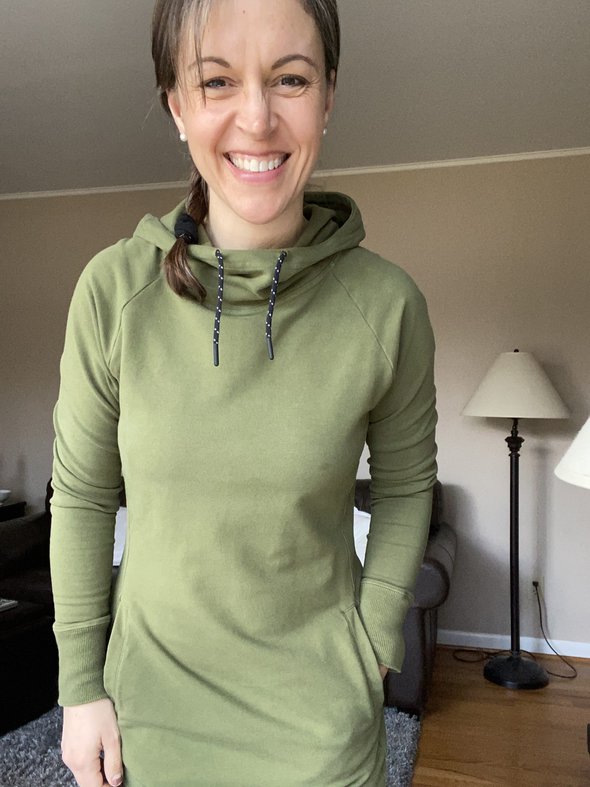
 (one of the outfits in question...pant are from Old Navy clearance)
That's an interesting question!
A few years ago, I shopped the clearances at Old Navy and Target a lot more than I do now, and that's when I bought most of the clothes that I showed you in that post. Since I discovered Goodwill, though, most of the clothes I buy for myself come from there.
Of course, some of the clothes I buy from Goodwill may very well come from sweatshops, but once something hits Goodwill, I feel like that's quite irrelevant. Shopping at Goodwill in no way supports sweatshops, since their inventory comes from donations.
I do still end up needing to buy some items new, and while I'd love to buy quality clothes that are made in the U.S. by companies that pay their workers fairly, I've been a little dumbfounded as to how to go about doing that. It seems like almost every clothing company imports their products (even L.L. Bean and Eddie Bauer stock mostly imported goods) to save on costs.
So, I guess my answer is that I try to depend on secondhand clothing for myself and my family as much as possible (in the form of freecycle, hand-me-downs, and thrift store shopping), and when I'm forced to shop at a regular store, I try to shop the clearance racks (Noble, no. Thrifty, yes.)
I also function on a fairly limited wardrobe and I tend to buy not-so-trendy styles that stay in fashion a fairly long time. And as those of you who've read Reuse, Refresh, Repurpose know, I make my clothes last even longer by modifying or dying them, and when they're too worn out for that, I make something else out of the fabric.
All of that means that even when I do buy new goods, the frequency and volume of my shopping is less than the average consumer's.
I think that if all of us didn't feel the need to have bulging closets stuffed with new fashions every season, we could afford to pay a little more for the clothing we did buy, and sweatshops wouldn't need to be so prevalent.
If you or any of my other readers have ideas about where to buy U.S. made clothing from companies that treat their employees well, I'd definitely be interested in learning about that!
________________________________
Today's 365 post: Looks like Christmas

I second Kristen's request as to companies that feature USA made clothes. I have looked and it is really tough - especially for certain clothes. I am interested in the reply.
I like this store in Victoria, Canada (also now in Vancouver,Canada)...
http://www.smokinglily.com/
The store that I've been in is about the size of a walk-in closet. They don't make everything themselves (I have a silk screened shirt that is made by American Apparel).
This is another reason I like to wear vintage clothing. Most of it was either handmade or made by unions in the United States, and a lot of good items can still be purchased really inexpensively at thrift stores.
I totally agree on "once the clothing gets to Goodwill, it's irrelevant." Yes, it's valuable to know that your clothing was ethically made, but it's at least a comfort to know that if it wasn't, your money didn't go to support that industry.
This past spring I lead the planning team for a Human Wrong Campaign (http://www.humanwrong.org/) against child slavery at my college. In my research I found that there is no THOROUGH resource for finding out the ethical sourcing of all the clothing companies available in malls today, which is sad and needs to be rectified.
However, there is http://www.free2work.org/ which is my go-to-resource. They grade companies from A to F and not only say what they're doing right and wrong but what they still need to do to make their companies more "slave free." It's not complete or comprehensive, but it's better than anything else I've found so far. The site is currently being revamped, but they have apps for the Android and for the iPhone. (handy for while you're shopping)
Their "parent" organization/website is http://www.notforsalecampaign.org/ if you're interested in learning more.
If anyone gives you any ideas for US made clothes, I'd sure love it if you would post them; we have a terrible time finding clothes made in the US and would gladly pay more for them in order to support a US company. Thanks!
"where to buy U.S. made clothing from companies that treat their employees well"
I think the only certain way is to hire a local tailor with an open shop, and thus pay a fortune for your clothes. Even then, what about the fabric or the fiber? You can ask the same questions about the weavers as you can about the sewers/ Or even about the nature of the fiber itself: cotton is hugely water-, pesticide- and insecticide-intensive; some allege that shearing sheep abuses and traumatizes them; rayon, although a natural product, takes a lot of chemicals and energy to produce; polyester is a petroleum product...
My solution is to recognize that I cannot do everything perfectly, even if there were an agreed definition of perfect. Doing a little is better than doing nothing, and if I try to do everything I will be paralyzed by dilemmas and get nothing done.
I absolutely love this reply. Thanks for posting it WilliamB!
Rereading my comment I realized it could sound more pessimistic than I meant. I should like to add:
Pick what's important to you and focus in it/them. It happens that working against sweatshop labor is tough because of the chain-of-inputs issue (clothing/fabric/fiber/growing environment/...). But markets respond to user input, so expressing your concern and helping create a movement really can work. Look what's happened with food issues in the past decade.
Agree 🙂
here, hear! i think buying second-hand clothing is a fantastic compromise on kristin's part. also, kuddos to kristin for answering this question with humility, as i think i would not have done so well. thanks williamb.
hi - i like to watch ABC News with Diana Sawyer as they have a Made in America series from time to time. I found this list of all kinds of american made products (at bottom of article on link). I try to buy American if I can while staying in budget or buy upcycle clothes from Etsy (some are pricey or I upcycle items myself). I think on ABC News they just had a series where if contractors used only 15% american-made products from the list they had, it'd create a great deal of jobs just from that (and sometimes items were cheaper). So I think making even baby steps in buying American is worth it even if you can't guy everything you need and/or recycling/upcycling of course. Here is site: http://abcnews.go.com/Business/MadeInAmerica/made-america-clothes-clothing-made-usa/story?id=13108258
Why I hate news articles, reason #812:
"A worker at the Chinese sock factory makes just $14 a day, or $270 in month. In America, a clothing worker makes $88 a day, or $1,760 a month."
True but incomplete #1: This stat is meaningless unless we know how many units per day each person makes. If the US worker makes 88 units per day and the Chinese worker makes 7 units per day, then the US worker is "cheaper" - i.e., more cost-effective. (This statement includes some simplifying assumptions, such as the cost of machinery being the same for both workers.)
True but incomplete #2: Without knowing the local cost of living, the datum is deceptive: it makes it look as if the Chinese worker is grossly underpaid for the same amount of work. ABC News apparently used the exchange rate - what we'd pay if we went to China and exchanged dollars for yuan. This is like comparing salaries for a New York City resident with a Spartanburg, NC resident.
I could go on but I won't. ("Thank heavens for the delete button," you should be thinking.)
oh you make brain hurt william B... 🙂 lol. I think we just need to try to make life simple, do the best we can in our own families/communities, don't crunch the numbers too hard or read too hard into the articles (it causes angry people)..it was just some thoughts and suggestions. But those don't seem to be coming across well lately it seems. So this is the last comment for me anywhere. STill will read your blog Frugal Girl...great tips! Love your positivity! Keep the encouragement going! 🙂
Oh, crud - I am *very* off today. Please accept my sincere apologies because I didn't intend this to be directed at you, B. I have been reading the US-made list today, thinking about what I can shift to buying there. Thank you for posting the link.
Funny, William B - I had the opposite reaction to your comment. You are 100% correct that these stories compare apples to kumquats time after time. They are selling you their story, not necessarily an objective view of the facts. The tale is often hastily assembled, incompletely researched and biased in the extreme. You and I follow some of the same blogs and I always appreciate your thoughtful, practical comments. And my brain feels just fine, thank you.
Have you looked at specialty markets like Etsy shops online? Every seller lists their product information - including if something was handmade, and their location - which gives the consumer much more control over their consumption. The trick with online sources like Etsy is that A: they are relatively expensive and B: you can't try anything on until you've actually purchased it... and returns can be tricky.
Also, you might try contacting your local community college, university or college of the arts. Chances are, if they have a fashion or design curriculum, there are going to be lots of students who might be willing to design/fabricate apparel for you for a small fee, designer's rights, and/or the ability to photograph the final product and use it in their professional portfolio... etc.
All that being said, you could also (in your LOADS of spare time!) investigate the option of making your own clothing. This is something that my husband and I are considering. There are some significant start-up costs - a sewing machine, patterns, fabric, and in my case sewing lessons. But over the long term, I think this is one of the most cost-efficient options for our family. (Of course, I also am factoring in the entertainment value of learning and practicing a new hobby/skill, and the potential that with enough practice I could craft and sell products in my own community.)
Good luck!
This option of "make it yourself" has just now become more of necessity for us. I have always shopped thrift stores, consignment sales and clearance for my girls. The oldest is now in a size where she really does not care for any of the style options for dresses and everyday wear. (There are few options at the kids consignment sales in her size) We do hit the local Goodwill, but it is very hit/miss. When I look at the preteen/teen sizes in the store I am grateful she feels this way! We have purchased a wonderful Brother sewing machine from Costco and another Kenmore from a thrift store. I spent this past summer teaching my 2 oldest girls to sew and they are well on their way to being able to sew for themselves! We are starting this week on simple PJ pants for Christmas presents.
Tamera, I don't want to stomp all over your suggestion of Etsy, as it's one good option, and can be excellent. However, I think it's important to note that Etsy does not police its sellers very well, particularly those who sell a lot. Etsy is lousy with resellers who take sweatshop products and list them as handmade or vintage. Finding legitimate sellers who truly are hand making clothing can be quite difficult.
I buy from stores that sell cheaply made overseas goods, and I make a lot of my own clothing and accessories as well. However, if you delve further into the handmade community, you'll find debates over the sustainability and business practices of the suppliers of the basic materials used to make clothing. There are very few textile mills left in the United States (though some companies are striving to produce truly American yarns and fabrics) and much of the material still comes through China.
That isn't to discourage anyone from going the handmade route. It can be expensive, but handmade clothing tailored to a person's body (particularly an adult person who is unlikely to change overmuch in height or size) is long lasting, fits well, and is rewarding in a way different from store bought clothing. When I make a sweater, I have something in the colors and textures I want, styled to fit my body and hopefully last a long time. If I don't love it later, I can unravel it and reuse the yarn. It's more akin to bespoke clothing than off the rack, and while expensive for off the rack, it's a bargain for a sweater fitted to me knit in materials I'd be hardpressed to find in a store. I don't often have to wash my knits, either, which saves in a different way.
I just think this speaks to the complexity of clothing morality. It's not a one size fits all game, nor is there any one solution. We do need cheaply available clothing in this world, but ideally we can narrow our wardrobes, hang on to clothing we can wear, and try to buy infrequently when we need to. Those of us who can afford to should try to buy sustainable and ethically sourced clothing and all of us should strive to make our wardrobes last.
Anyway, I hope this isn't taken as a rebuke on your very excellent suggestions, but rather an expansion. I know a couple of knit bloggers who have challenged themselves at times to go without new clothing other than what they can make or reuse, and it's been an education to me to see them live up to that challenge. It's harder with growing children to make such a practice work, but I may try something like that for myself in future.
One fantastic etsy seller I found is econica. I wore her beautiful wrap top in blue when I got married. No, her clothing is not cheap, but it is gorgeous, classy, and well made. I recommend her.
We buy many of our t-shirts, hoodies, and other cotton clothing from American Apparel. Made in the USA. No Sweatshops.
Other than that we take it on a case by case basis. The Husband recently needed new boots. Do you know how hard it is to find boots not made over seas? We finally found some, but it was a few weeks of research and emailing manufacturers. Conscientious consumption.
My next challenge is going to be figuring out where to buy American Made "underthings".
I know of one more American clothing maker. They are called Decent Exposures and sell undergarment fo women, as well as exercise tights, night wear and some baby things. Ggreat to work with, their products are sturdy and well-made, and their catalog/website models are their employees. So you can see how things might fit on an actual non-Kate Moss body.
http://www.decentexposures.com/
Yes, underthings! Those (underwear, sports bras, and socks) are the only things that I will not buy used, so hence the need for American made items. That is a company I would really like to find--that has reasonable prices!
I do wonder--what do you consider reasonable prices? Are reasonable close to what you are paying now? We tend to think those items are reasonably priced because that's what we've always paid for them and they're the cheapest of what is available out there. But they're most likely made over seas.
In America, the price would definitely jump a bit and not be so "reasonable". It would depend on if it's worth it to you to buy from your country of origin and pay more, or buy outside and pay less.
I think we've just been spoiled by having everything outsourced. If we made what we needed in the USA, then we'd be used to the higher prices and consider those reasonable as well!
I'd be interested in hearing if you found any undergarment places in the USA though!
See the comment above, Reese, for a link to an undies in the USA place. 🙂
I agree about the reasonable price thing...I think we're so used to sweatshop, imported prices, we've sort of lost any sense of what IS reasonable (and I include myself in that!)
Thank you for such a great answer to this question! It's hard, and it's one of the areas of consumption where my ideals and my practice are farthest apart, so I really appreciate your attention to it, especially since I often take the 'don't think about it because it's disappointing' approach. While I agree that a 'made in the USA' label isn't the only consideration (source of the cloth, etc.), I appreciate this reminder to not let the perfect be the enemy of the good.
Companies I've had good experiences with:
Two Star Dog - expensive hemp and other eco-fibers, based in Berkeley, CA, some production is still in the US. Full disclosure - I worked for them for a # of years.
Igigi - expensive women's plus sized clothing, very good quality, all made in the US.
Red Wing boots - also expensive, but custom made boots that will last FOREVER, very good for industrial work. Some are made in the US by unionized employees, but not all.
New Balance - is very clear about what's made in the US, what's assembled in the US. Have always had good experiences with their quality.
Oh, one note about 'reasonable' prices - I noted that the above places are expensive b/c I definitely experience sticker shock when I go there, however there are clothes that I got from TSD > 10 years ago that are still going strong with regular use. Though you can't always predict how things will hold up, I've started to focus on price-per-wear as my metric, since that allows the well-made items to compete on a more level playing field.
Try American Apparel: http://americanapparel.net/
They are more expensive than GoodWill or Target/Old Navy, but their clothing is made in the USA and they make undergarments too! 🙂
I'm glad American Apparel exists and wish their business model could spread, but it also irks me endlessly that nothing they make fits anyone in my family.
Blue Canoe also makes quality undergarments and some women's clothing. Made in USA and they use organic cotton. They tend to cost more than I like to spend, but they routinely have clearance items. I can also attest to the fact that the items I have purchased from them have lasted years!
http://www.bluecanoe.com/
To keep peppers (and things like cucumbers and lettuce) last longer, I wrap them. I use towels for this, or swatches that I have knit or crocheted out of cotton yarn. This absorbs some of the moisture and the peppers keep far longer. If they are small peppers, you can wrap several in each towel, just make sure there is a layer of fabric between each pepper. Hope this helps!
Great ideas and I totally agree with you when discussing used clothes. I also have a fur coat (gorgeous mink) that my Gran lef me. I wear it when it is beyond freezing and think of her. A LOT of people have issues with fur.
Bravo, Kristen... I totally agree with you about second hand clothing. It's kind of like the belief that the greenest car is a used car. Once you remove the acquiring of materials, manufacturing, distribution, etc. PLUS you consider that you are saving something from a landfill, it really changes the equation.
As for American Apparel... I have heard that argument about it being sweatshop free. I'm not sure I believe it. Have any other readers ever been to downtown L.A.? Or more specifically... the garment district where American Apparel is headquartered? I went there a few years ago for work and saw some very sad things. Once the graffiti-covered steel doors of the "factories" (or are they sweatshops?) close, the workers set up their sleeping bags and sleep on the sidewalks. Most of these workers appeared Hispanic. Of course, on my drive through this area there was no way to determine the immigration status of these folks, and I think that is beside the point. Their living conditions were dreadful and their employers were clearly aware of the situation. So I guess my point is that even "American made" clothing is questionable.
I must admit when I holidayed in the US in Mar/April this year I was disappointed that I found it difficult to find clothing made in the USA . perhaps I was a bit naive to expect that ? Australia's 'rag trade' is long gone, even Aussie designers get the clothes made up in China or Thailand
This is a good site for researching sources for various types of goods (including clothing) made in the US.
http://www.stillmadeinusa.com/
I used this web site to find baby stuff, too. It's a great site, but make sure you follow up with the manufacturers. Some of them make only *some* things in the U.S., and some have moved production overseas in recent years.
Thank you everyone for all these links! I'm going to go check them out.
I don't think American Apparel is Kristen's 'style'. Plus that company has a whole host of other issues that can make it quite controversial for some which I totally understand. (Particularly if you're religious as I've seen churches organizing campaigns against AA.)
This website is a directory and might me of some use. http://www.americansworking.com/
I was about to comment about American Apparel's website. I know nothing of their business practice. I clicked on the link that another commenter posted, and was very surprised at their marketing tactics. Just clicking through the women's apparel categories showed me way more skin and far more provocative poses than I would expect from a "family" clothing company.
Funny you should say that. I clicked through the site a bit while the kids were in the office, and suddenly I was like, "Oh dear! I didn't realize I was going to be looking at boobs." lol The number of sheer shirts with no bras was a little surprising.
The sweatshop question is a tough one. I know of UK companies that were always well respected that have been called into question as to their manufacturing. Do we really know how things are manufactured? Most things in the UK are imported now, and without getting into it too deep could well be a partial explanation for the problems we are now encountering - we turned ourselves into a 'service' economy rather than actually producing anything.
http://www.getamericanmojo.com is a company that gives good jobs to single mothers.