
If I had $45 for two weeks of groceries...
A reader wrote and asked if I could do a post on spending $45 for two weeks of groceries.
We exchanged a few emails on the topic, and amazingly, she is managing to stick to this budget; she just wanted some more ideas.
(She sent me this Reddit post as part of our discussion.)
I feel a bit unworthy of the task, though, because it has been a very long time since I've spent that little on groceries! So, I'm just gonna type some words on the topic and see what comes out.
My current grocery priorities
Since I have some wiggle room in my budget, cost is not the tip-top thing I focus on when I'm grocery shopping.
Instead of just focusing on cost, I try to:
- avoid eating out
- prioritize protein, whole grains, and fruits/veggies
- minimize super-processed foods
(And I recognize those last two are a privilege!)
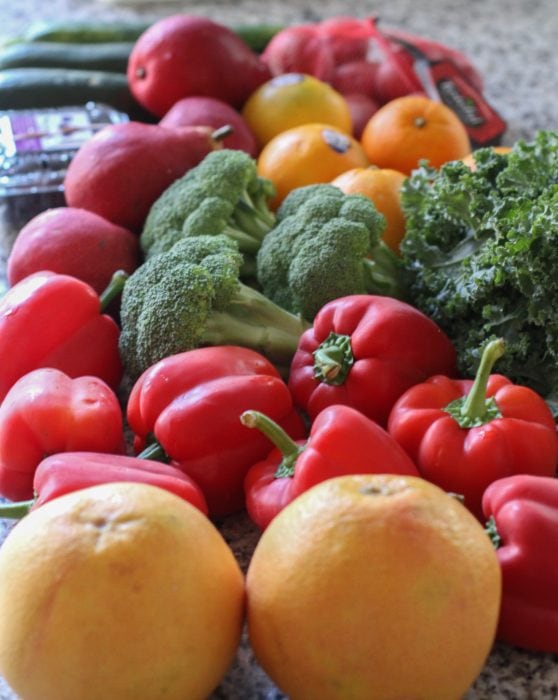
I also choose to get a Hungry Harvest box every other week to support their food-waste-fighting efforts.
Basically, when I'm feeding myself, I'm thinking, "What can I make that meets my nutritional goals and is also easy/quick enough to keep me from eating out?"
That's how I land on most of my meals, and it's enough to keep my spending at a reasonable level.
How some of my meals stack up
If I didn't care about nutrition at all and just wanted calories to survive, the obvious solution would be to just eat cheap, refined carbs: ramen, mac and cheese, and the like.
However, I know I'd be wanting to make healthy choices as much as possible.
The $22.50 budget gives you right about $1/meal, and I was curious how far of from this budget my usual breakfasts are.
- $0.24 for a slice of whole grain bread (Aldi's version of Dave's Killer Bread)
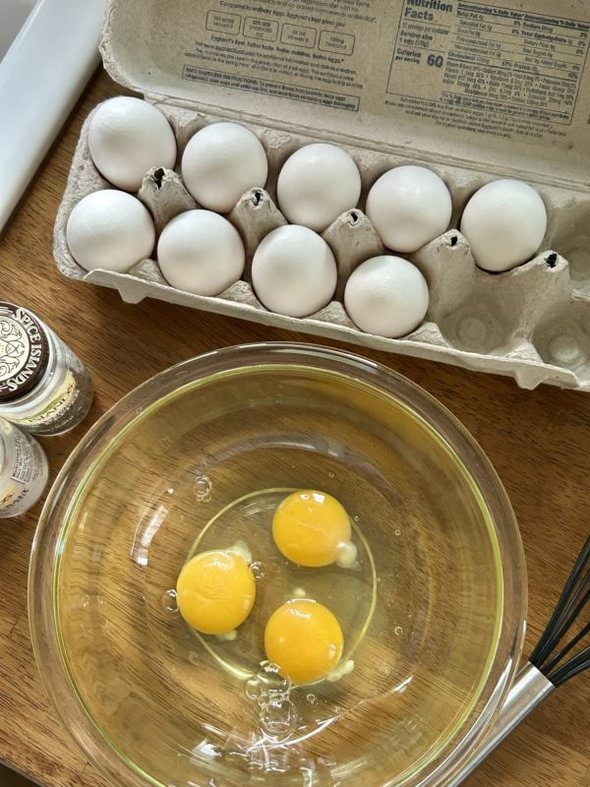
- $0.45 for two eggs
- $0.37 for 6 tablespoons of egg whites
- $.10 of butter (that is a serious guess on my part!)
- $0.23 for coffee grounds
- $0.16 for half and half
- negligible amount for sugar in my coffee and salt and pepper in the eggs
Soo, I am already at $1.55, which is a decent price for a breakfast that has plenty of protein and fiber, and includes coffee.

Butttt, I often add in some fruit as well, which could easily add another $1 to the price. I'm way over budget!
Oatmeal, another of my breakfast go-tos, is dirt cheap.

But oatmeal on its own has very little protein, which means it doesn't keep me full during a shift. So, I'd add protein powder (or milk at the very least) and that would bump me up over $1 in a hurry.
And honestly, I'm almost always adding some kind of fruit to my oatmeal as well.
I thought about one of my go-to meals after work, which I consider to be quite cheap: a tuna melt.

But a single can of tuna (which I eat in a sitting) costs $0.87, so I know even that meal would be over budget once you add the bread ($0.24), a slice of cheese, a few veggies, and some mayo.
One dollar per meal is HARD!
What I'd need to change
I think I would need to either eat less protein than I do, or I'd need to get very creative about how to get protein cheaply (like using dried beans and TVP).
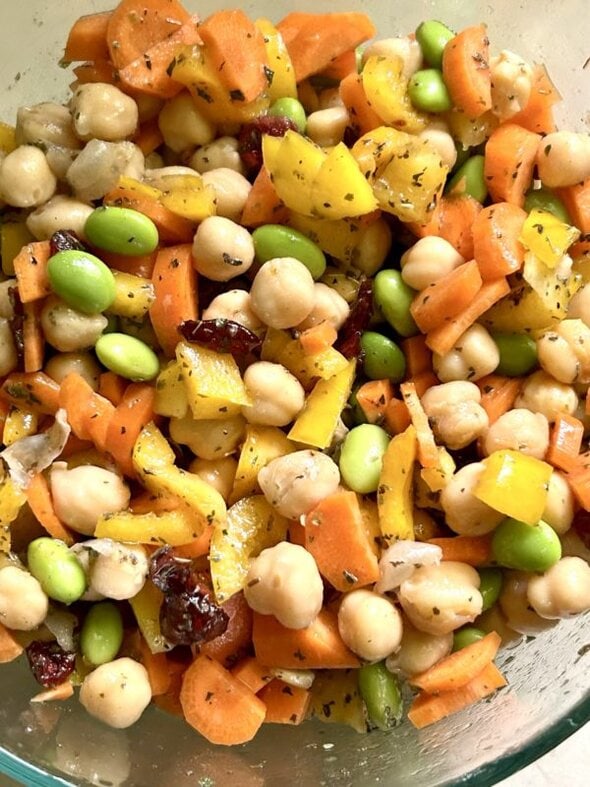
I'd need to stop buying berries, mangos, melons, and other slightly fancy produce, and instead eat super cheap produce like apples, carrots, and cabbage. I would not buy a Hungry Harvest box.

I'd need to go back to baking all of my own bread.
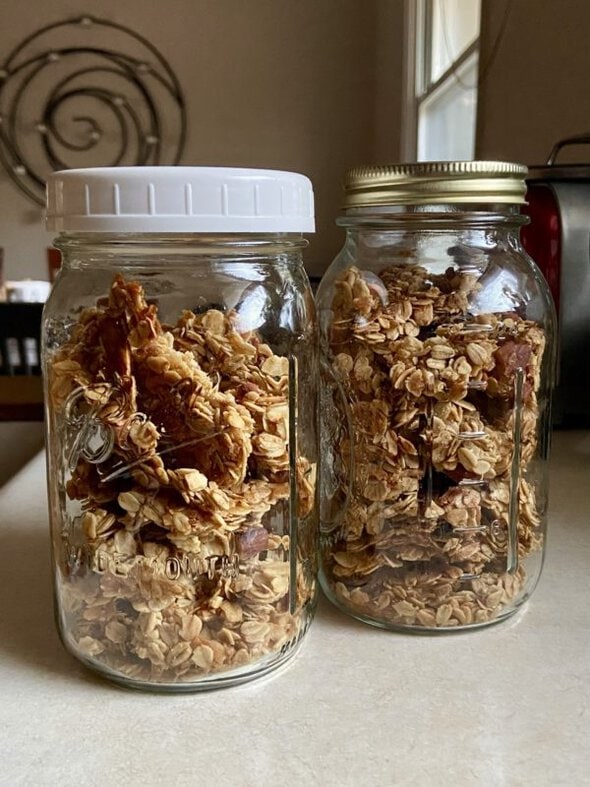
I'd keep on making my yogurt (so freaking cheap!), and I'd make my granola, but I'd use vegetable oil instead of coconut oil, and I wouldn't add nuts.
I'd also probably try to garden more.
I'd be doing my best to snag any free food on my Buy Nothing group.
And honestly, if my budget was so tight that $22.50 a week was my limit, I'd also take advantage of things like the free Hungry Harvest produce that my college offers.

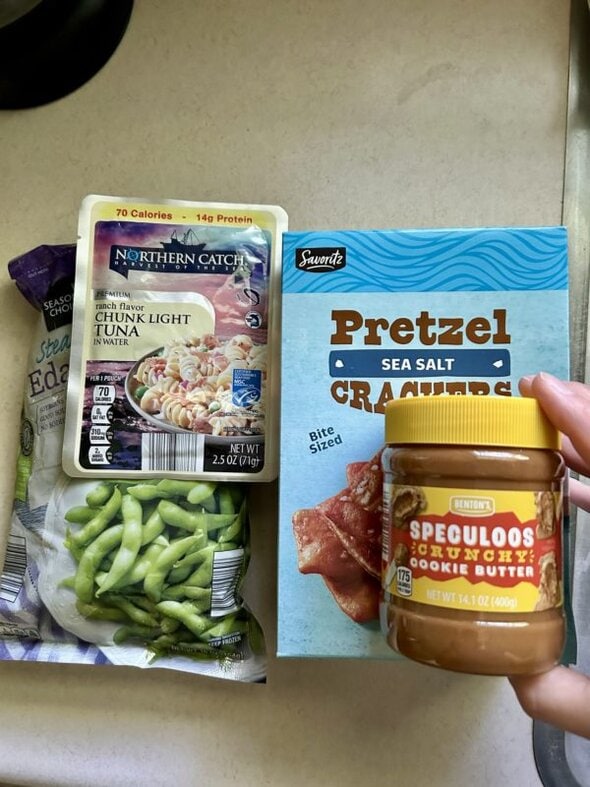
I would definitely not be able to buy cookie butter (!!!), ice cream, shrimp, tilapia, lunch meat, or interesting little cheeses (Aldi has so many to try!) And eating out would be entirely out of the question.
Honestly, these changes are not ones I'm willing to make, and that's because I am in the happy place of being able to afford more than $1/meal.
Could I feed myself on $22.50? Probably.
Will I? No.
I'd be trying hard to earn just a little more money
$22.50/week is such a low budget, even a tiny increase in earnings would make an enormous difference in the quality of food you could buy.
While I know it's not possible for everyone due to things like time constraints, I'd be wracking my brain to think of ways to bring in a little more cash.

Here are a few options off the top of my head that would work for me (and I am not suggesting they would work for everyone!)
I'd:
- pick up a few piano students
- consider doing DoorDash
- offer babysitting services or organizing services
- take up thrifting and reselling
- pick up free furniture, refinish it, and sell it
- sell homemade baked goods
- work holidays and weekends at my job for the pay differential
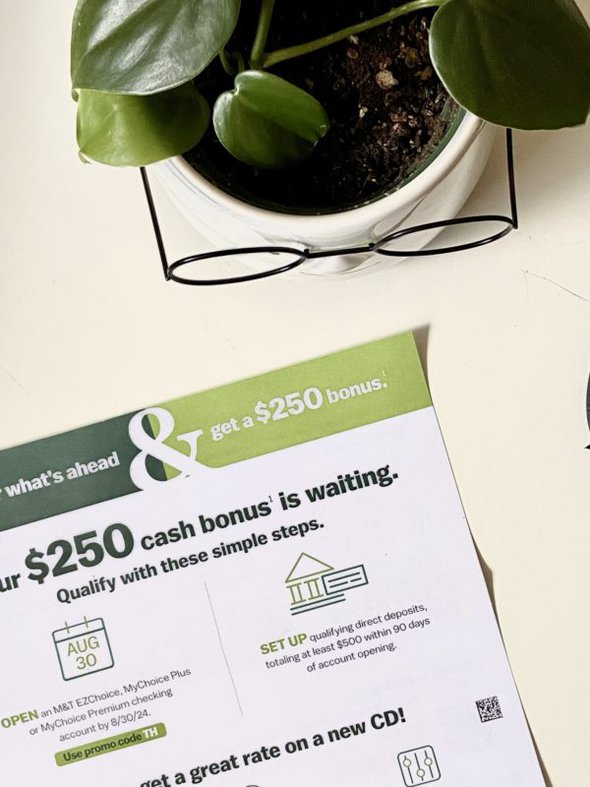
If my household had a paycheck coming in via direct deposit, I'd be taking advantage of a few checking account-opening bonuses a year. If you earned even $600 a year from that, that would give you another $11.50/week, which is a 50% increase from the $22.50 budget.
I'd be looking at other areas of my budget
Presumably, people who are maintaining a $22.50/week food budget have already done this.
But since I'm talking about me...before I'd be willing to slash my food budget that low, I'd be scrutinizing every other area of my budget.

For instance, I'd be giving up any subscriptions, I'd cut out every last bit of unnecessary shopping, I'd learn how to cut my own hair, I'd cancel my gym membership and just work out at home, and I'd switch my phone to Mint Mobile (Oh wait, I already did that. Ha.)
Finding even another $20-$40/month for groceries would make a world of difference in the quality of food you could buy.
I'd keep focusing on food waste prevention
Again, I'm operating on the assumption that people who maintain a $22.50 food budget are probably not wasting a bunch of food.
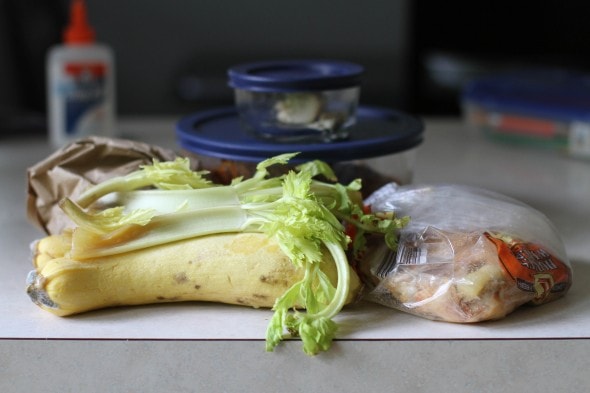
But I mention it because it is an oft-overlooked part of managing a grocery budget. Obtaining food inexpensively only does so much good if you end up throwing some of it away, and the typical American throws away a shocking amount of food.
(I did too, before I starting working on it back in 2008!)
Food is only a good deal if you actually eat it. 🙂

I always see beans and rice when I see posts on spending a small amount of money on groceries. When I was making much less and had a lot of debt, I did side gigs (tutoring, secret shopping, resale on ebay), shopped only second hand for clothes and household items, exchanged extra produce friends, made broth from bones and got really creative with leftovers.
Kristen, your blog taught me about not wasting food, especially produce. When I meal plan, I now look in my fridge and plan to cook with whatever might go bad first.
Now I'm making a little more, paid off most of my debt, and like Kristen, I can focus on good protein (salmon cakes and on-sale chicken breasts for me). Food is medicine for me, and too many beans in one week gives me belly aches.
@MommaJo, how did you find reputable secret shopping opportunities?
@Colleen, Lindsey wrote an in depth guest post on secret shopping. I don't remember if that was here on The Frugal Girl or on the Non-Consumer Advocate. Does any one else remember?
Yes, here! https://www.thefrugalgirl.com/a-mystery-shopping-primer-from-alaska-lindsey/
@Bee, it was Frugal Girl as I only recently started NCA.
@Colleen,
I saw an ad on a local grocery store flyer for CX group. I signed up, and I got to shop where I already shop, and get free food and a small payment each time I did this. I netted about 100 a month, which at the time was a good amount.
@Colleen, Market Force is a trustworthy secret shopping company. I did that for a while when I was doubling down on getting out of debt (bless Dave Ramsey!).
I definitely spend more than $1 per meal per person. Breakfast of white toast and eggs, not so bad, but lunch box items add up to $1.25 per child, and dinner needs meat. I aim for under $10 for a meal for 6 people. I like being able to shop carefully but buying what I want.
If I had to go down to $45 per person per week,we'd eat a lot of oatmeal, pasta, and eggs. ( now that eggs don't cost a kings ransom any more!). I did feed a family of 7 for under $250 for two weeks for some time, but that was years ago. Now, even oatmeal is expensive.
Could you supplement by visiting a food bank occasionally?
@Gretchen Mayer, And, also visit the Little Free Food Pantries that have sprung up in our town and maybe others lately.
@Gretchen Mayer, I was thinking the same. I volunteer at a food bank once a week that has limits on a lot of things like milk, cheese, meat, but the patrons can take as many fresh veggies and fruit as they can use. We literally have shopping carts they can fill up. They can visit once every two weeks. There are always great options and you could almost survive on the fruit/veggies and use the grocery budget for protein. They also have canned beans, tuna, chicken, salmon and peanut butter usually and rice and sometimes pasta and cereal and I don't think there are limits on those. Anyone utilizing this food bank who also has an additional $45 biweekly in grocery funds could eat very healthy I think. Limitless produce is so powerful. I love that this food bank offers this. I realize not all food banks are so spectacular as this one but it would sure be worth looking into. They even have a food delivery service for homebound clients where they will deliver a box of dry goods, one of produce and one of cold stuff every two weeks. It is amazing. I would definitely recommend checking out your local food bank and see if you can supplement your grocery budget a bit. I live in a very expensive area. I believe most of our clients are employed, many are families. It's just really costly to live here.
@KJ, I also have a food pantry like that in my city (but only once a month shops). And if you volunteer at it, you can shop an extra time a month. And you can do an extra shop once or twice a year. Often, we have unlimited on X, could be a canned veg, fresh fruit or veggies, or who knows what? Our bread is usually unlimited—we have so much it goes stale or moldy before we can get it out the door. There’s almost always milk, other dairy products, and meat available—and you can always take one of each—and sometimes more!
@Gretchen Mayer,
I teach ESOL to refugees and low income settled people and they also use the food bank at the church next door. It really broke my heart when a student came to tell me how excited she was to have been able to get fresh potatoes.
They only other thing I can think of is to switch stores sometimes. Find a bent-and-dent grocery for some of your food. Definitely shop sales on protein. Shop the time of day when meats are marked down at the grocery store. If there's a local farm, ask a farmer if you can trade work for produce? I'd definitely try to grow some of my own; Kristen's green onion trick comes to mind. Growing a few herbs would spice up boring food, and if you know somebody, they might have seeds from their own plants or a cutting to give you for free.
There is a really great creator on TikTok and Youtube, Dollar Tree Dinners. She has so many good videos of full meal plans on a tight budget, including one month where she only spent $100 on groceries for the full month. As the name implies, many meals are from Dollar Tree, which is important because there are many "food deserts" in America where other grocery stores are not accessible. Frugal Fit Mom on Youtube also posts meal plans for $1 a day, and has been doing this since at least 2020. I like how they both are careful to use ingredients throughout several meals, reducing food waste but still offering variety in meals. My biggest takeaway when watching these videos are that oatmeal, beans, and rice are cheap and nutritious, and one way to sneak in extra protein and flavor is to select cheaper cuts of meats (like bone-in chicken quarters).
@Andrea G / Midwest Andrea,
What a helpful comment.
@Andrea G / Midwest Andrea, another YouTuber who would be helpful is Southern Frugal Mama. She has many videos of money saving recipes and advice on sourcing ingredients.
@Ava, In her last video 5 dinners for $25 it involved using leftovers on the last day. Sometimes I watch these videos and wonder what they did with the leftover chili.
I don't know how much we spend on food. Like Kristen we focus on eating quality food and avoiding eating out.
A watermelon will give you a lot of fruit for the amount spent and cantaloupe can if you find a large one at a good price. Otherwise I think bananas are your cheapest fruit. I agree with carrots and cabbage as cheap vegetables.
@K D,
Great post Kristen and I like your approach to finding even a little more income, if at all possible.
@K D, I was at the Service desk, one time at Kroger, and all these people were in line. When it was my turn, I asked the clerk what they were all doing all had like a gift card. She told me that they were people who donated plasma, and they are paid on a debit card and they were there to cash it in. For some people, donating plasma might be another option to bring in some extra money.
@Joyce from arkansas,
we are regular blood donors, and I just cashed in $145 in gift cards from points earned from donating. Platelets donors can donate every 2 weeks and get even more incentives, but I'm disqualified from that one.
I have no idea where you or the reader who asked this question live, but living in a major metropolitan city, either number one or two in cost of living, there is no way I could even get a bunch of veggies for $22.50 a week. Let alone get proteins, etc.
Tuna at under $1 a can? We never have sales that low.
I won't bother detailing the costs but note that prices for things like fruits, veggies vary greatly day by day, anywhere they are sold around here. We (my aide shops for me as I cannot get out) carefully watch the pricing and sometimes hold off a day or two.
This is a one-person household and avoiding food waste while eating fresh food is tough (The freezer can only hold so much and I can only eat so much in a week. Right now, for whatever reason, I eat full meals (breakfast and dinner) but only two. I am simply NOT hungry. (If I get a pang inbetween what is often six to 9 or more hours, I will have a piece of fruit, or cheese. And yes, there are some crackers and pretzels (gluten free) that I do eat.
I shop Amazon Fresh because it has some very good pricing for items I use (and those I stock in my pantry.) I used to get incredible discounts when Stop and Shop delivered (it only does so now in Instacart and the prices are outrageous. Sale prices are higher than the regular price of many items.)
I also buy in bulk from Amazon Subscribe and Save (for things like paper towels and toilet paper) and do use both Costco from Instacart and directly from Sam's (It instituted a $50 minimum even for its premium members or you pay $8.95. As a result, we wait and consolidate orders. We only get shipping, not delivery, so no fresh or frozen items.)
In the winter, I stock up on frozen veggies and I do have canned beans, and some other shelf stable items (sauces, etc)
Fresh foods each week include: Two lettuces, some type of tomato, avocado, zucchini, rabe, spinach, spaghetti squash--two only because I can't eat them fast enough. I also get fresh ham off the bone (no processed deli, ever!) and some fresh roasted turkey breast and cole slaw, which are fresh and less expensive than those prepackaged ones.
Every now and then there is a rotisserie chicken, which ends up being multiple frozen bits for soup and otherwise.
I have lived in this city long enough to say that while I was in college and for maybe a decade after, I could get buy on $25 to $35 a week for food, and that would include a couple of $1 slices of pizza. I remember living for a year or more on hot dogs, lettuce, and canned vegetable soup. (I was in my 20s and super healthy. I was thin while eating what I would NEVER eat now...and it amazes me at how little I ate. I should also mention that I did have a perk: I had an expense account to entertain clients. My salary couldn't begin to support much more than a lot of pasta, pizza and carbs! London broil was a maybe twice a year treat!)
I would say that fresh vegetables for the week could vary but would probably be at least $20 if it included any fruits, for example. (Melons are now outrageously expensive and I only buy on sale.)
Fresh Direct is not cheap, nor is Whole Foods, but every now and then Whole Foods has an item or two with good value and Fresh Direct has some good veggie sales.
We used to have a fresh fruit and veggie stand up the block, and it had great prices. It closed last year and now we only have one food store and the prices for fruit, vegetables vary a lot and we adjust accordingly.
I do have a pantry, that I started during COVID. The key is being able to eat through it before stuff expires. (How I wish there was a problem where you could scan what you buy and have an inventory on hand that you could adjust as you eat something. Doing it by hand/eye is tiresome.)
Even if someone shopped for me at a Costco or BJ's, there are few if any things for me as I'm one person and the sizes are huge.
I get a lot of things like vinegar, oils like olive and avocado, and some other pantry items when they are on sale at Vitacost. They allow you to double promos, so when you combine a brand product sale with an overall 20% discount...I get some serious savings.
Question: I'm assuming that $45 is only for food and does not include paper goods and cleaning products?
With prices rising since January, I've been carefully "buying ahead" on some items like flour, coffee, tea, paper and cleaning goods. Prices will be going up even more with tariffs.
I spend way more than I would like but I would be spending a lot more if I didn't buy on sale and maintain a pantry.
What stores do you shop Kristin and where does the woman who asked about the budget? We only have a few supermarkets and the prices are sooooo expensive that we never shop at any of them. Luckily, my limited fish and chicken and turkey proteins can be purchased on sale at Amazon Fresh or Fresh Direct if we keep an eye out and freeze them.
@Irena, I believe that you are in the NY Metro area? If so, my JASNA BFF (who lives on the Upper West Side of Manhattan) can sympathize with you. The only grocery stores within easy reach of her are her local branches of the West Side Market and Whole Foods. She does get some of her produce from street vendors and Greenmarkets, but otherwise, her options are limited. No wonder she insists on at least one and usually two trips to my local Wegmans when she visits. (Yes, there are now two Wegmans in the NY Metro area--but she says that by the time she gets through taking multiple bus and subway rides to reach them, she'd just as soon wait till she visits me. She went home after her visit last week with two loaves of Wegmans Marathon bread and other treasures of the Western world crammed into her luggage.)
Our family’s budget for food is $.85/person/meal and you’re right, protein becomes a low priority. This is frustrating because my husband works out and wants to get a lot of protein. We use chickpeas a lot and buy all our beans dried from the local Asian market. Someone above mentioned Dollar Tree Dinners and her content is invaluable! So many creative ideas and the food can often be made cheaper if you are able to shop at a different store. I spend a lot of time meal prepping “dense bean salads” for our lunches and take advantage of the local food pantry. I also got involved in a community garden and we’re swimming in all the things we love to eat, like grape tomatoes!
@Emily, this takes a lot of hard work on your part. Way to go on all your hard work!
@Emily, yes to chickpeas! My husband learned to pan fry them with seasonings for a crispy outside. He saw it on a YouTube video,
This would be such a struggle for me now. Back when I was a broke college student, I probably came close to a budget like this but my meals included lots of ramen & store-brand mac n cheese, as Kristen mentioned. I'm more committed to better nutrition now, and thankfully, I have more space for it in my budget these days. If I had to adopt a budget like this again, my first instinct would also be to try to increase my income a bit. We were swamped with lots of medical debt going into COVID lockdown a few years ago and I started detailing cars in my driveway. I started with friends and then did friends of friends -- I never advertised on Facebook or anything. I made a decent amount of money, which put a dent in the debt, and enjoyed doing it. And many years ago I did well thrifting and reselling on ebay. I still dog sit.
I haven't broken our food costs down (six people, we never (rarely) eat out), but I did notice the other day that a can of store-brand tuna at Kroger now costs a whole dollar. A whole freakin' dollar! Doesn't matter if it's in oil or water (it used to be that the tuna in water was cheaper). A can of garbanzo beans, previously 87 cents, is also now a dollar. DH was aghast, and I wondered if it's the cost of cans, rather than the food inside, that has gone up due to tariffs. Anyway. DH marched right home and found a place to order dried garbanzo beans for cheap and he intends to cook them from scratch.
We are leaning more on beans these days--vegetarian chili is a regular on our menu rotation--and oats, which have gone up a bit but are still reasonable. And pasta is back on the menu, though I fret a bit about the protein content of that meal and throw more yogurt and collagen into my youngest's dinner smoothie when we have it. I try to remind myself that the average American gets plenty of protein!
@Karen A., if tuna is the same price in oil or water, definitely get the oil so you can use it in other dishes.
@Karen A., don't know what part of the country you live in but if you have any Amish/Mennonite stores near you, their oatmeal is so much cheaper than purchasing at either Aldi or Walmart. They sell it by the pound where we are and the last time I bought it was only .65 per pound.
@WilliamB, We do! A weekly staple (DH and DS#1 take them for lunches) are tuna burgers, made with tuna in oil. Don't drain the tuna and combine it with quick oats, some aquafaba and seasonings, and cook in a skillet. The oil in the cans means less oil used to cook.
@Jennifer G, I'll have to look into that! When I was single, I lived in a town with a quirky coffee shop that also sold bulk foods. I would bike there, buy several pounds of oats at a time, and that was my breakfast, plus an apple. The owner was very bemused and asked me once what I was going to DO with all that oatmeal--he thought I was making granola. Nope, that was too expensive to make for me. Just plain cooked oats. (I love granola, but I didn't want to spend on sweetener or oil or nuts...)
@WilliamB, I never really thought to use the oil from the tuna can. What do you use it for?
@Karen A., That sounds amazing. Thanks for the ingredients list. Will make those!
I'm always at a loss with this type of thing, because I really have no idea how much we spend on food. I don't track it. It comes from so many places: the steer we buy whole, the animals we butcher ourselves (I suppose the cost of hay would have to be taken into account there), the garden, the free food people give us, the things I buy online in bulk, and then the trips to the store. Many of those things are seasonal, too, so to figure it out I would have to keep track for an entire year and then average it out. I've never done that.
I also don't track it because it's the most important thing I spend money on, so, like Kristen, I don't have to and don't want to nickel and dime it right now for the sake of money-saving. I have four children. Three of them are boys. Two of those boys are actual teenagers and the one that isn't eats like a teenager. They are growing shockingly fast, and feeding them well is a priority. For us, that means lots of protein, and that is expensive in any form, pretty much. That's one of the reasons I don't buy steak at the store, or name-brand things, or prepared foods. Just buying milk, cheese, and sometimes cheaper meat is a lot.
I would explore outside help, such as SNAP, food pantries, and produce giveaways. There is absolutely no shame in using resources that are available. And education/training for better employment opportunities. My daughter and her roomie were poor like this when they were in their early 20s. They qualified for a giveaway of fresh produce. My daughter, who was raised to cook, got very creative with recipes and even learned how to cook rutabagas!
Potatoes! Very versatile, cheap per pound, rich with carbs and minerals when you eat the skin. Big pots of veggie soups, bruised veggies often sold cheap. Rice and beans.
@Kristina, Agree! Just tonight I baked three sheets of potatoes. We had baked potatoes (with broccoli, sausage and cheese sauce) for supper, and the rest of the potatoes will be used in eggs, burritos, or my daughter likes to just eat them as a snack!
I just hopped over to the Reddit thread Kristen referenced -- there are so many good links there (for inexpensive recipes as well as assistance). The app Too Good to Go is mentioned. It's just become available in Richmond. Right now it includes a handful of bakeries, but in larger, more established cities, I can see how it would be a cheap way to get food you couldn't otherwise afford, while preventing food waste. It takes work, though -- you have to be on the app early in the morning to snag the deals before they sell out. And then you have to be available to pick up the food, usually later in the day/evening.
Budget Bytes is also mentioned there -- I'd forgotten about that site. I used their recipes all the time when my kids were younger. I need to start doing that again.
@Beth (in VA),
I use Budget Bytes all the time. It is a great site filled with excellent recipes which fit well in all budgets.
@Beth (in VA), Budget Bytes is the best!
@Sophie in Denmark, I found Budget Bytes because you once linked to one of their recipes! Certainly more budget conscious than the New York Times cooking section.
@JDinNM,Oh yay! I hope it's useful.
This was a really interesting post. I'm also not at a place where this is a top priority (luckily), but I had a similar type of budget in college & it was both very difficult & not particularly nutritious. That said, I was not nearly as informed about cooking at the time, and had almost zero free time (worked 3 jobs).
Over the past few years, we've also fed a lot of additional people (two teens in the house, one who brings friends over for events regularly), so our food budget definitely went up for that happy experience. If our budget was $1 a meal, I would also be focused on: small ways to increase my income. Prolific (it's like a college user research site) is super easy & I do it while drinking my coffee. I stopped now that I have a job that starts very early in the morning, but I made $500 the first few months of the year. I'd also see what other resources we qualify for, and other areas of the budget that could be trimmed.
For awhile there I was trying $50 a week, then for some reason, I stopped doing that and focused on other things. There are many Instagram channels that do $10 challenges to feed a family of 5, and are quite interesting. There's also a guy who is living on $1 a day. I cannot imagine how hard that is, but he does it, one meal at a time. In college, many moons ago, I lived on $10 a week and it was very very basic. Buying tp could really wreck that budget. I bought bruised veggies, ramen, chicken legs, coffee. The sad reality is that often good nutrition and a super tight budget do not go hand in hand. The main thing I would do is add dry beans into my grocery planning. Personally I would skip the bread and yogurt entirely. I would rather add in more protein and chicken legs are cheap.
i hope this is ok to post but there is a you tuber that tackles budget meals and breaks down the cost. she has done $20 a week for dinner....type of videos. she has some WONDERFUL ideas and some great recipes that my family loves. you and your readers might want to check her out. Julia Pacheco
@Amanda,
Julia Pacheco is amazing, I highly recommend her for feeding your family, or yourself, on a budget. She is so 'uplifting' to watch, also!
I cost out my homemade granola ($0.54/serv) with pecans, homemade yogurt ($0.17/serv) and basil seeds ($0.76/serv) is my norm but chia seeds ($0.24/serv) would put me on budget. So total for my modified budget would be $0.95, which hopefully would leave wiggle room for canned fruit (foraged) or something.
Dinners would have to be tweaked or use resources like discount produce, snap/wic/food pantry, local foraging, garden, etc. I eat mainly vegetarian, my go to takeout fake-out meal is stir fry tofu with rice or noodles, veggies & homemade sauce. If I sourced the rice from food pantry or purchased the amount I would be using from a co-op that would help. Otherwise I tend to use fresh in season produce, but that would be too pricy. Total for meal came out to be $1.17 using frozen veggies and a mix of wild rice & white rice to help boost the protein.
Lunches are usually leftovers for me, or some variation of beans ($0.08), sweet potato ($0.40), greens ($0.78) or something cheaper?? Nutritional yeast ($0.18) & tortillas ($0.08).
I would probably switch to coffee on weekends and tea during the week as a budget cut. I would look at utilizing my local resources, swapping chores for some food items with friends, or having opportunities to shop with them to cut down on gas mileage & utilize more store options.
@Colleen, I have not heard of basil seeds before. Can you elaborate please.
I would also look for pasta options that boost protein. I used to shop chickpea, or red lentil or soy from the local scratch & dent store. I noticed Walmart offers coupons sometimes for higher protein pasta. I’m not big on pasta usually, but it is an easy meal with homemade dressing & beans with onion, tomato, corn, cucumber etc.
I have volunteered at a Food Pantry for two years. PLEASE, PLEASE put your local food pantry into your toolbox to feed yourself and your family! We’re not a “last ditch resort”, food pantries serve folks who are in so many different situations.
Much of what a food pantry distributes is meat, dairy, and produce NEAR expiration dates, donated by grocery stores.. so part of the mission to Avoid Waste. After that volunteers -like me- sort it so wholesome food is distributed to folks who will eat it.
It’s crazy that we live in such a rich nation with so many hardworking people who cannot afford to feed their families. Politics needs to change /m- but in the meantime, food pantries can help stretch a budget.
And the volunteers are often the cutest old people..
I write a Substack (not about frugality). You can read my bigger take on how food pantries work at MaryBethDanielsonStories and search for Santa Berries. There isn’t a convenient URL to post for that. Sorry.
@Mary Beth Danielson, I saw a comment recently saying that the problem is with distribution rather than actual resources.
My first thought is that it depends on where one lives. That $22.50 will go a lot further in Alabama than in San Francisco.
It also makes a difference if one can stock up. A large bag of frozen veggies is a very efficient use of money and also can be a lot of those bucks.
To your list I'd add:
- go largely vegetarian, with protein coming from beans and peanut butter (both of which I like, fortunately);
- other than that, not focus on protein because that will be enough;
- oatmeal all the way;
- use powdered milk when possible, including in the oatmeal;
- frozen chicken thighs are usually the cheapest meat, except in the fall when it's whole turkeys (but again, can be a lot of dollars at once);
- simmer the bird for meat and stock, using small amounts of the meat per meal;
- soup, soup, soup;
- ask supermarkets if they overripe bananas to sell - mine usually does, but not out, for about $1 for 10 lbs.;
- use generic veggie oil for everything, rather than butter or olive oil; if you need a solid fat, use crisco or margarine.
As for the extra work, consider working for a caterer. There's usually food left over after a gig, and no legal or moral problems about taking it home.
Even if you're not good at gardening, grow herbs and, if you like them, hot peppers. That'll make a world of difference in the taste of your food.
Shop at Chinese or Hispanic supermarkets, which are usually a lot cheaper than western ones.
Good luck! May this be a short phase of your life.
@WilliamB, I second the idea of working in catering. Often the work is evenings and weekends which might fit around another work or school schedule and free food is a definite perk. During university (late 90s) I spent about $20 a week for groceries, but ate very well because I regularly brought home chicken, green beans, potatoes, pasta, cheese, cold cuts, bread, raw veggies, etc., from my work. I even had real butter because it was placed on the tables and everything that had been put out couldn't be reused by the company. I was very thankful for that food!
@WilliamB, not so sure I'd agree with your SF/AL statement - plenty of food deserts in AL. AL *might* have the edge on ability to garden but I'd be hesitant to assure this as far too many areas have raw sewage floating on top of the all-too-much-clay soil.
Alabama was just an example to illustrate the point about price levels. If that particular example irks you, feel free to substitute low-price-level location of your choice.
@WilliamB, Not to be a downer, but I know someone who worked for a catering company and they were never allowed to bring food home and their bags would get checked as they left. Hopefully this was an exception rather than the rule.
Rereading this thread. The caterer I worked for positively encouraged us to take non-reusable stuff home. Heck, I've even gotten food waste for my compost pile - specifically, the small pumpkins used as soup bowls in the fall.
We are very fortunate that we don't have to worry about our food budget. I really have no idea how much we spend on food because I don’t track it. We focus on eating quality foods and not eating out. I cannot imagine feeding us for $1/meal. I spent more than that budget at the farmer's market alone for vegetables for the week.
Along with others here, I have the luxury of not having to try to make do with a food budget of $22.50 a week. And I can't think of any new words of wisdom to add to the many that are already here.
But here's what I actually do: (1) Rarely eat out. (2) Keep an Amy Dacyczyn-style price book (mostly in my head at this point) and buy things at the stores where they're cheapest. (3) Continue to buy my 1/4 steer per year for beef (and share this with others at my cost), and buy other meats and poultry either on special or Reduced for Quick Sale. (4) Continue to grow the few vegetables I can still grow (given the local deer and woodchuck pressure); considering that individual heads of garlic were $2/head last week at the Regional Market and I grew 17 heads this year, this is still sometimes cost-effective. And (5) make good use of my local grocery outlet and my Ollie's Outlet store.
I would recommend Lisa Dawn videos on YouTube, she does many $20/week meals from dollar tree X/Walmart/ALDI stores. Very basic and well balanced, she does easy recipes that look tasty and filling.
I meal prep brown rice cooked with lentils for extra protein, and a different dried soaked bean a week in my electric pressure cooker, freezing the excess, and using the beans to make a dip/spread (think hummus or refried beans), and veggie and bean-based soups, stews, curries, and chili— with or without meat, usually chicken hindquarters. All of these freeze well, so we always have a mix and match in our fridge currently thawing to make meals from the ingredients! And of course the stews/curry/chilis are stretched by eating alongside the brown rice with lentils!
We eat a lot of beans and rice usually in the form of burrito bowls with toppings. We make our own tortillas and simple no-knead bread recipes with added wheat bran too, freezing the excess.
We also make our own yogurt from whole milk, draining it longer to make a thick Greek yogurt that we use for snacks (sweetened with homemade freezer/fridge jam mixed with basil seeds, and we use a yogurt press to make a yogurt “cream cheese” too.
We used to make our own oat milk, but recently bought a soy milk maker that creates “milk” from about 1/8C of soybeans. We use this in our oatmeal/overnight oats and for eating our homemade granola made in the air fryer!
Lately I’ve been trying to make our own easy condiments— who knew mayonnaise is a breeze using an immersion blender?? I’ve been making watermelon rind pickles so there’s been no waste when we enjoy watermelon! Mango chutney is also very simple to make!
@Donna, I was also thinking that lentils are an inexpensive source of protein. I know that dried peas are probably not a favorite of most people, but we love pea soup, and there's a decent amount of protein in that, too. Another slightly controversial food item is raisins--a container of those will go a long way, storage lasts for a long time, and they can be added in both sweet and savory meals to pump up your fruit intake. Potatoes get a bad rap, but they can be cooked in a healthy way and are inexpensive. I mostly scrub mine instead of peeling them, to add more fiber. Just some thoughts!
@Donna, I'm so curious about making your own soymilk! I don't think the stores I go to even sell dried soybeans (but now I'll check). Is your soymilk machine pretty foolproof, and is it able to make other alternative milks (e.g. nut, oat)?
@Donna, my DIL makes homemade mayo and it is delicious. It only take a few minutes, and she says it is very easy.
@Suz, You can buy dried soybeans at almost any bulk store like WinCo or Natural Grocers, as people just use them like dried beans in recipes. We used to make our own oat milk from rolled oats, but we only had a small immersion blender food processor attachment at a time, and it would take two blends and straining thru two tea socks, plus all the clean up afterwards, and required maple syrup and vanilla to have any taste at all. Also, while you can use the leftover oat mush for baking or oatmeal, the milk would taste sour after max 3 full days, then it was do it all over again! We pretty much use it only for eating granola and and in recipes like overnight oats or baking, too.
We live in Bangkok, Thailand also--two retiree expats trying to live frugally! Rolled oats aren't as inexpensive as in the USA, and dairy is fairly pricey, esp things like yogurt and cream cheese. Soybeans, however are cheap. They have been eating them for a millennium over in Asia and use it for tofu and soy sauce, and a traditional Chinese breakfast is fresh hot soymilk with fried dough sticks (donuts!). Also, a lot of Asians tend to be lactose intolerant--grew up with less dairy in their diet. One benefit of living over here is that most kitchen appliances are manufactured over here, so a cheap no-name $14 usd electric soymilk maker from our local equivalent of Walmart (Big C) was a small expense. Rinsed 1/8C dried soybeans, water up to a line (had to Google Translate the Chinese markings), turn it on, and it heats and blends and we have hot soymilk in 20 min! I strain it once thru a fine mesh metal strainer while hot. The leftover "okara" residue we add to smoothies, soups, or mix with shredded veggies and eggs and seasonings to fry up Korean-styled veggie and seafood pancakes!
The soymilk, because it is cooked, I believe, lasts much longer in the fridge and doesn't seem to need any flavoring. We make two batches, and let it cool and keep in the fridge. I wish I could send a photo of our "COMPRO" brand, it looks like a plastic jug with a removable plug, tiny cup, and a cleaning brush and lid. There are small stainless steel blades and lining inside. The markings are Thick Soy Milk (this is what we use), Thin Soy Milk, Rice Paste, Supplementary Food (??), Boil Water, Juice, Keep Warm, and Cleaning. We have never used any settings besides the Thick Soy Milk and Cleaning. You can set it with a timer so that it makes Soy Milk for you each morning, like a coffee maker. It actually tastes quite good, like a warm milky drink.
The directions were fairly useless! I know that you can use a different combination of beans to flavor your "bean milk", like sesame seeds seem to be popular, or using red beans or mung beans. Oat milk should NOT be blended long, or I have heard it can become slimy--so less than 30 seconds. Unsure about nut milk, I know they require soaking overnight and blended and strained out. Rice would probably work, maybe? Nuts are expensive, too, even here in SE Asia.
I know Amazon sells similar looking soy milk makers, but they are 3x more expensive, probably due to tariffs and shipping! We have had no luck with making yogurt from soy milk, alas!
@Kris, Lentils and all sorts of beans/legumes are a great source of protein! Many people mix lentils or red lentils (tiny!) with meat to stretch it farther, or just use lentils. And we love split pea soup with barley and ham hock (just a bit, or use the bone), or smoked turkey. There's thousands of ways to use them in East Indian recipes! I've found really dried up raisins in my cupboards, forgotten, and re-hydrated them by soaking in hot water, worked great. Potatoes are terrific too, they are high in vitamin C and nutrients--there's some guy who ate only potatoes for a year and lost weight and got healthier. We live in Bangkok, Thailand, and native pumpkins are popular and dirt cheap here, they are delicious so we eat a lot of it roasted in a an air fryer, along with potatoes and carrots!
@Bee, It is super easy with an immersion blender! And I have read that if you add some plain yogurt, and let it ferment on your counter overnight, it will last for a month or more--but I have not tried this yet!
@Donna, This detailed info is very interesting; thank you for taking the time to share! It's really useful to know things like how long it lasts and how you may use the residue (maybe that's the Supplementary Food?? : ). I just did a quick look for soymilk makers and your point is exactly right @ cost here in the US. But I'm intrigued so I'll keep looking. I'm about to go grocery shopping so I'll be on the lookout for dried soybeans too.
Expats living frugally in Thailand - I'll have to search Kristen's site to see if you've done a Meet the Reader (if not, it would be fascinating!)!
My teenage son is voraciously hungry every day when he gets home from school and will decimate snacks if left to his own devices. One thing that I've started making him to try and at least he is getting some protein fiber is bean and rice burritos.
pound of dried pinto beans with water or broth, seasonings in the crockpot then mash them up.
make a pound bag of rice in a batch with seasoning (sazon, garlic, onion powder)
between buying large tortillas, the beans and rice, costs like $4.50 and I get 8 burritos out of it.
It's carb heavy but he also has soccer most nights so the carbs do him good.
another really cheap protein source other than beans is buying chicken quarters - sometimes a 10 lb bag will be on sale for $6.
Use every bit of that chicken, use it to make stock - stretch with making soups (chicken and rice is a staple here) - couple eggs, bit of chicken , salsa on a tortilla make a cheap and filling breakfast (or lunch).
I don't think I could go down to $45 for 2 weeks on my own, but I do think if you have multipliers it makes it slightly easier to do it in a pinch. So like $135 for 3 people I think would be easier than $45 for one since you could get the deals on bigger packages of things, like bulk chicken, rice, beans, potatoes, frozen veggies.
I definitely use the Tightwad Gazette method of shopping: stock up on loss leaders and sales when you don't need them. Of course you need storage space (don't forget under the bed if you live in a tiny place) to do this and hopefully a freezer. Using this method, I regularly score solid white tuna (yep, I'm a snob) for .50/can, a few weeks ago, I got 10 cans for .37/ea. I also frequently get boneless chicken breasts for less than $1/lb. Many supermarkets mark down their meats and I make a sweep and buy the best deals. A crockpot works well for getting less desirable cuts of meat tender. In my area (rural), we also have the luxury/privilege lot multiple grocery chains and lots of discount grocery stores. The discount stores do sell lots of poor nutritional items (snacks, candy, etc., Lindt chocolates for under $1, anyone? Yes, please!) but they are still worth a stop because most carry cheap local produce and things like giant cans of tomatoes for .40. They are also good for cheap spices, sometimes sold in bulk.
@Bobi, my local grocery outlet is a Greek-run operation, so that's my usual resource for olive oil and bulk buys on any herbs I don't grow myself (I get most spices at my Indian grocery). I scored a gallon of red wine vinegar there (for making herbal vinegars) for $6 on Saturday.
@A. Marie, Great deal on the vinegar! We don't have many ethnic stores in these parts, most of our bulk stores are run by Mennonites and Amish. I'm sort of jealous of the olive oil and vinegar, our stores tend toward lard and white vinegar. 🙂
A YouTuber named Julia Pacheco is great with this type of stuff. She's a young mom and has been very open about her financial struggles early in her marriage, including living on food stamps. I've honestly learned so much from her, and even her super budget recipes are good. If you check her out, look for some videos she calls "extreme budget" or "emergency budget" for the most low-cost ideas.
I don't even know if this would be possible in a Scandinavian city (Scandinavia is so expensive!) without sacrificing a lot of nutrition. Generally I would advise stocking up during sales and freezing as much as possible (I noticed that the ginger I use for stir-fries kept going bad before I finished it and then I started chopping and freezing it in advance). Supermarkets here and in England often reduce food at the end of the day so you could try that, if it's possible with your schedule. You could also grow vegetables in a window box or community garden (if you afford/borrow seeds and gardening tools).
@Sophie in Denmark, one of my favorite things about ginger is you can just throw the whole knob in the freezer and grate directly from frozen. I don't even pre-chop it before throwing it in the freezer!
@Emily U, and, no need to peel!
I would try to incorporate a once a month food bank. Groceries are so expensive right now.
I'd like to throw out a suggestion for Tyson (or store brand) Dino chicken nuggets. At Wal-Mart's current price, they are about 18 cents each. Good ingredients, no hormones/steroids, good source of protein. I always bake them longer than it says to get them crispier, but I'm in my 40s and the fact that they are dinosaur shaped makes them a little more fun. 🙂 Aldi may have an even better deal, I am not sure.
@Sarah C., I agree, I buy Purdue and often find them for as low as $1..25 for 12 oz.
It has been many years since I have been in this position, but I remember it clearly.
If you were looking to increase your income, look for ways to do so without any financial outlay. Reselling can be profitable if you sell things that you receive for free or things you already have. However, I caution anyone getting into reselling to do their research. One does not want to have much needed funds invested in slow moving inventory. If you do decide to get into reselling, buy and sell what you know. For example, if you know a great deal about books, don't try to sell jewelry.
There are many resources online to help Those with tight food budgets. There is a YouTube site called Tastemade. On this vlog, a chef cooks on an extremely tight budget. I would also suggest looking at the blog, A Girl Called Jack. This is written by a British woman who is a food activist and helps those who are food insecure. A search under struggle meals will bring meals will bring up many such resources.
When I was in this position, I cooked in bulk or batch-cooked. I think a lot of FG readers do this, For example, I would make a batch of bean enchiladas. The cost is about $10 now, but it yields 10 meals. I would also plan every little detail of my meals and measure my serving sizes exactly.
I do this the biggest food bargain for non- vegetarians on a tight budget is a $4.99 rotisserie chicken. I would eat each breast on two separate nights, then a leg with the wing on two others. With the leftover carcass, I would make a protein rich bone broth and pick every bit of meat off the bone. The bone broth would be made into vegetable noodle soup. If there was enough meat left, I would made chicken Perlo. This gave me at least 10 protein rich meals.
Of course, I ate inexpensive fruits and veggies, bananas, carrots, potatoes, frozen corn, and whatever I found on sale. Legumes and rice are always a good choice too.
In close, look for community resources such a food giveaways, food pantries, and co-ops. Many churches and organizations offer these. When my son lived in San Francisco, there was a free farm program in which extra farm produce was distributed in to anyone who wanted or needed it. He planned his meals for the week around that bag of food. Finally, if needed, don't be reluctant to look into supplemental food programs offered by the government.
At the moment, we are very far off from that. The Dr just put my 13 year old athlete on a very restricted diet as we try to figure out the triggers for some of his health challenges (which include debilitating migraines) He is mostly eating meat and produce. This has been really helping improve his symptoms. So we are spending a lot more on groceries, more like $3.57/meal/person. Still cheaper than eating out. That is fine with me for right now, I would spend a lot more to help him. I am very grateful that this is an option for us, that we’re not forced to make a choice between his health and rent.
In 2008, we were spending $30/week for just my husband and I. We relied on 1) dry beans 2) sourdough bread bc yeast was not in the budget 3) lots of homegrown bean sprouts to get some greens in 4) clearance produce only 5) eggs were cheap back then 6) lots of soup- homemade soup is a great budget stretcher. I spent a LOT of time in the kitchen.
I agree with picking up extra work at that budget level. This can be hard to do- pretty sure even DoorDash has vehicle and insurance requirements challenging for many folks to meet.
@Tarynkay, if your dr hasn't, please ask for a celiac screening blood test for your son. Celiac goes undiagnosed for so many but causes a dizzying array of symptoms. Doctors aren't well trained to diagnose it given the prevalence in the population.
This is actually very close to my food budget this month. Because I had a lot of expenses last month and will have more big expenses soon, I found I only had $88 I could afford to spend on food in August. I've done pretty much all of the things Kristen mentioned and have managed to stick to this budget without feeling deprived or unhealthy. It also helps that this is not an every-month situation for me, and I started the month with a well stocked pantry and freezer.
My usual budget is more like $150-200, still very low at today's prices. I do think the common suggestions to eat only rice and beans or ramen noodles are off base. It is possible, and very good for both physical and mental health, to have some variety and include fruits and veggies and even treats like cookies or chips in a very low budget diet. You have to look at what's in season and on sale, compare prices, and stock up when you find something you like at a good price, even if it's only buying one extra package. Learning to cook and bake also makes a huge difference.
As far as keeping other costs low, I always cut my own hair, use Tracfone for my cell phone service at $20 every three months, and limit the cost of subscriptions as much as possible. I have free Hulu and Peacock subscriptions right now, and have paused my Netflix subscription because I can't afford it this month. I use free streaming video sources like Tubi and Youtube, read books I already own, and use online sources of free books like openlibrary.org and thefreelibrary.com.
I exercise at home using Youtube videos and going for walks, and I shop secondhand for clothes, shoes, and household items whenever possible. I look for every opportunity to earn a little more money or get a discount or cash back on a purchase. It can be difficult, but reading blogs like this one helps by giving ideas I might not have thought of and general encouragement.
@Elizabeth M, just wamted to add after readimg some other comments, I also follow several Youtubers who have been mentioned and a few others: Dollar Tree Dinners, Julia Pacheco, That Lisa Dawn, My Thrifty Kitchen, Frugal Queen in France, and Ardent Michelle. They all have given me good ideas for creative cooking and use of leftovers in ways that make them not seem like the same old thing.
I sometimes work out the cost of specific meals, like the frittata I made for breakfast yesterday to use up some leftover rice and vegetables. 6 eggs for $1.56 and 20 to 25 cents each for small amounts of frozen potatoes and spinach, seasoned rice, and olive oil, which came out to $2.40 for 4 servings, or $0.60 a serving. I served it with corn tortillas and margarine (since I was out of bread) for an extra 19 cents, and the total per meal was $0.79. I put two pieces in the freezer for easy meals later.
Another breakfast I've had recently was store brand corn flakes ($1.99 for 18 oz, $0.15 a serving) with a spoonful (about a tablespoon and a half) of Sunbutter (around $0.40) and a few raisins ($0.15), total $0.70. These are not extremely high protein meals, but they are nutritious, filling breakfasts that don't leave me hungry by mid-morning. Just to demonstrate that a dollar or less per meal doesn't have to be lacking in nutrition, nor does it have to be all cheap carbs and no protein.
You are doing AMAZING. Cheering you on!
About 10 years ago, I regularly fed a family of 4 on 45 (2 adults and 2 children.) A couple of things I did to get through. Ask for gift cards and pantry staples for Birthday and holidays. Fried rice is so much better with soy sauce and it hides a lot of leftovers. I took leftovers home from everywhere(family gatherings, school events, bbqs and picnics.) We drank water, coffee, tea,kool aid and milk. Friday night was pizza night where we had some creative pizzas, but my kids thought each Friday was an occasion. Yes I did put lunch meat and keilbasi on pizza , not together. I garden and can. Lots of oatmeal and peanut butter toast for breakfast. Leftovers were first for lunch, grilled cheese and peanut butter and jelly were second.
I also tried very hard to get control over food waste at this time.
Right now I am feeding 3 adults on $100 a week so I share the OP's difficulty in meal planning. I love oatmeal too and I add a spoonful of peanut butter to mine. I heavily shop sales - peaches and blueberries have been dirt cheap lately. I take advantage of Food Lion's Shop and Earn program. For example, when I but $30 worth of meat this month, I automatically get $4 off my next order. I've gotten $17 off my orders so far this month.
Chicken bog is a SC dish that uses chicken quarters (such a great deal), rice, salt and water to create a hearty dish for very little cost. Many nights that is dinner without anything else.
Idk the ops situation, but I highly recommend signing up for Prolific and Cloud Connect Research to do surveys and studies. Depending on your demographic, there may be a waitlist, but I am on Prolific and can make a few dollars everyday. My lowest month since starting in October is $214 and highest is almost double that, but I keep it open all day. Most of the studies are from colleges and universities so interesting stuff at times. I'm 57, so if I can do it, anyone can. With times being what they are, I know we could all use a few extra dollars. If you have any questions, just ask.
I also wanted to add that OP is shopping in store to sign up for apps like Fetch rewards, where you can take a picture of your receipt (or, ahem, receipts you find in carts or self checkout trash cans, cough, cough) to earn points toward gift cards or Ibotta , where you can get cash back for buying certain products. They occasionally have offers for generic items like milk or canned veggies or bread. These will pay off later, but when you get that reward in hand (or on your phone like Fetch), it's worth it.
Our tiny community has a once per week dinner that anyone can partake. The local charter school has snacks, shelf stable foods available for students to grab on Friday. I buy many staples at estate sales. Look at expiration dates, but most canned goods are .25 ea.
If you are close to a bread outlet store you can sign up for $1 bags that usually hold 8 loaves or they run specials on Saturday in the larger towns.
Several churches also run co-op memberships. We do something similar in our family with over 20 participants. Buying in bulk is only frugal if you use it!
My mom raised us on $10/week in the mid 60's thru early 80's. We grow our own veggies, ground our own flours, hunted and fished, canned, dried and froze.
Good article. I have a little bit more than the $22.50 but as a retired senior, not much. I fear for the families struggling to survive on such low pay and high grocery bills. I'm glad you shared this info.
I have to admit, I have no clue how much I'm spending at the moment. When I did track my spendings several years ago, I spent around €400 a month, for me and my teenage son. I buy most of our food organic, we don't get much take-out but as a single working mom I choose convenience over low prices, like getting everything at one supermarket and buying bags of mixed pre-cut vegetables.
If I would need to cut down on food, I would have to stop buying organic and have to spend more time on cooking from scratch, so we would also eat more simple food. More plant-based as well, because I do not want to buy non-organic meat. And apples instead of other fruits. I love pulses, so that helps.
I read an article about eating healthy on a budget, scientists had analyzed this because it is a topic for debate. Their conclusion was that is is possible to eat healthy on a low budget, if you are willing to sacrifice convenience, flavour and cultural preferences....
So basically, cooking rice and beans from scratch. It does not sound appealing to me, but I know I am in a priviliged position to have a choice.
Well, this is giving me flashbacks. After my first husband left and wiped out our account, I could only budget $10 a week from my minimum wage job for groceries, cleaners and pet food (I had a 15-pound silky terrier). It was the 70's, so although it was still scary low, it was possible. If I needed a dollar or two more, I had to find a way to skimp on another budget item. I lost about 10 pounds, but losing weight is not uncommon after divorce, even if one isn't in financial straits.
What I did was buy whole chickens on sale, although I didn't have enough money to buy more than two at a time, and make those chickens last the week. I ate mostly peanut butter sandwiches for lunch with an apple, which I bought by the bag as that was cheapest. Rarely, I had tuna for lunch. My other fruit was bananas. I bought the lowest cost per pound bag of mixed frozen vegetables and cooked some for each evening meal with a piece of chicken. Breakfast was a bowl of oatmeal or an egg and a slice of (cheap bread) toast and some of my mother's homemade jelly. Iced tea and water to drink, a little milk with breakfast. No soft drinks, no candy, no beef, no pork, no snack foods, no fast food, no eating out at all. That is exactly what I ate for about 6-8 months, until DH and I started dating and he started finding excuses to grocery shop with me and pick up the tab, or go out to eat and pay for my meal. He wasn't making much himself then, but generosity was always one of his strongest attributes.
These days there are food pantries around, and I would use those, plus any food giveaways from other organizations. I would see about SNAP benefits. I actually applied for food stamps back then, and I didn't qualify; I want to say it was because I had a car, leftover from the marriage. I would definitely try to make more money, for which there are a few more options, at least, these days. I had moved to my current town in a severe economic downturn and almost no one was hiring at the time; I probably should have moved away, but moving is expensive.
Rice and beans are a wonderful way to get some nutrition, but I've never been able to tolerate a lot of it, and for about 20 years, I've been warned to avoid beans except in very small amounts by my specialist, so that is not going to be one of my options.
I spend more than I should these days, especially by shopping at local farms, all of which are organic in practice and charge prices like they feed the animals gold bars for breakfast. But I know they have a lot of costs, so, I pay it. I may not always be able to do so, but for now, I will.
A few thoughts:
Clearly, from reading this interesting thread, eating inexpensively takes more time, to plan and shop and cook, unless you set up a plan and stick to it for months, which can get boring.
Portion control is another big thing-- what looks right, what is in one container, etc., might be more than is necessary.
The biggest mistake we made with our sensory-sensitive special needs son was not getting control of his diet when he was little. It is very hard to change, and not the healthiest or the cheapest now that he is an adult.
Some blogs I have found helpful, not necessarily for the actions (I don't can, for instance) but for the attitudes are: Nana is Frugal/Nana Pinches Her Pennies, (she will review what she got from a food bank and what she will do with it, including re-canning something she gets in restaurant-sized cans). My Simple Frugal Life (includes foraging and saving every bit). The Bluebirds Are Nesting On The Farm (makes food look beautiful, always important!). Living on a Dime (simple recipes).
@Heidi Louise, I too enjoy reading Nana's blog. She's walked the walk and unlike too many I'm seeing, is not just cheap. I'm all for frugal, I abhor cheap. It doesn't help a local small business restaurant to only patronize it when they have a certain special. If you have to wait for a certain rock bottom special, you can't afford to eat out IMHO.
This reminds me of Budget Eats with June (by Delish) during Covid. I loved her series. She would shop for under a certain amount ($30-$50 typically) and would make meals for her and her partner for the week. She usually showed her shopping haul and what it cost. I would certainly suggest anyone on a very tight budget, google her videos on youtube! She's simply delightful and entertaining, but she also has a lot of tips and tricks.
https://www.bing.com/videos/riverview/relatedvideo?&q=Delish+Budget+Eats&&mid=D5A75FEC5269A8D91F3DD5A75FEC5269A8D91F3D&&FORM=VRDGAR
I love all of this - the question, the post, and all the comments! Such helpful and creative ideas. Here are some things that work for me:
- Buy a half gallon of whole milk and stretch it by adding water.
- Buy spices for pennies in the bulk section at a natural foods store.
- Let family, friends, colleagues and neighbors know that you're happy to take anything that they won't be using up.
- Eat just a little bit less than planned and see if you're still hungry before eating more.
- Eat from a smaller plate.
- Follow a vegetarian diet.
- Try using a little bit less of a product, like ground coffee, and see if you notice the difference.
- Attend events that offer food. Stay until the end, help clean up, and take home unused food.
- At events that offer coffee, bring a reusable beverage container to take home leftover coffee. Dilute it when you get home.
- Bring a leftover container kit to restaurants and immediately set aside a portion of your meal. I even put uneaten pickles and unpackaged condiments in containers.
- If you have a supply of samples or anything that came in small containers (hotel toiletries, dressing, condiments, peanut butter, jelly, etc.), use them!
- For those with a dog, instead of buying pricier treats, use nuggets from their regular dry food as their snacks.
I don't recall my exact budget, but this was my strategy when money was extremely tight:
-Buy only veggies and fruit in season, and find local growers or neighbors who can offer to share their crops or fruit, even by bartering.
-Make meals that "stretch" with a broth or other filler such as eggs and dairy, and where the protein and veggies are chopped into smaller pieces that fill up the flavor and texture. Think of things such as a soup, stew, casserole, homemade quiche or pizza.
-When only buying very cheap veggies such as onions, look up all the interesting recipes where onions are the main ingredient to make it less monotonous. I made French onion soup, onion quiche, even homemade onion rings.
-If only buying carrots or other root veggies that seem hard to cook, they can be grated into a salad, roasted in the oven, give flavor in soups, grated or pureed in things like muffins.
-Use little random ends of veggies in recipes like a vegetable souffle or a pureed soup with some cream, think cream of broccoli, it's delicious.
-Baking is more than just bread or dessert, think of all the foods you can contribute with a little flour and yeast or baking powder. As mentioned, homemade pizza dough, pita bread, focaccia with thinly sliced potatoes or zucchini, pop overs for breakfasts , etc.
-Soups taste better the next day or two. Make a big batch of soup and have it for several meals, such as for all your lunches for a few days.
-Lentil soup and pea soup are high in protein, so is lentil curry, vegetarian chili or bean stew. Cook up a big pot of dried beans and use them all week, one day over rice, the next in tacos with shredded cabbage, etc. Hispanic stores sell spices inexpensively.
-Ground beef can be stretched with pea protein substitute or lentils, beans.
-Pasta with just olive oil, home grown herbs and a little bit of parmesan or chopped olives is delicious.
-Tinned fish are high in omega 3s and provide a lot of flavor in a small amount.
@Kristina M., this is really good advice!
@Rachel R., thank you! Thankfully I'm off the onion and apple diet though I still like both.
I know that I could do this, but I probably wouldn't. I am planning on reducing food waste (I'm looking at YOU, rotten cucumbers lol) and also working on reducing impulse purchases. I make 20 to 30 per hour and I work full time plus (overtime!!) but I'm also planning for retirement in 18 months. Working on preparing for retirement needs to be more of a focus for me
I have a question!! I have had to go lactose free. I’d love to make yogurt with lactose free milk, has anyone done that? Any tips? is it possible?
@Caitlie, I haven't tried, but this recipe has good reviews:
https://www.laurafuentes.com/dairy-free-yogurt-recipe/
My only hesitation is that some lactose free milk is ultra pasteurized, and some readers have had difficulty using ultra pasteurized milk to make yogurt. But hey, it's a pretty low risk proposition to try it once and see how it goes. And if you can get lactose free milk that's not ultra pasteurized, then I definitely think that would work fine.
I once saw a really good blog post someone made about eating on a budget for $50 a week—a challenge by their church—and even that was a stretch. The person bought most of their food at the Dollar Tree, because you can even get things like meat, dairy, and frozen vegetables for what was then just a dollar (now $1.25, soon to be $1.75). The Dollar Tree has staples like flour, some herbs and spices, sugar, salt, pepper, coffee, tea, canned fish and meats, cooking oil, canned veggies and fruit, lots of pasta and processed food mixes and more. It’s not necessarily the best quality, and quantities are small. You can augment that with gardening, preserving foods with pickling, canning, freezing, buying some things in bulk when the price is right, etc. But even $50 a few years ago was tough.
It’s hard, and getting harder as inflation and tariffs on imports hit our food supply. A lot of fresh produce in the US during winter months comes from countries south of us and will go up in price as it becomes more scarce. We’ll all be eating rice and beans soon enough.
Off topic … this is the second time in two weeks, I’ve typed a comment and then had the page refresh automatically and have lost my “well-thought out” comment. I’m so disheartened, I haven’t retyped it. Has anyone else had this problem? My comments were several paragraphs, but not that long.
I realize I may just have to remember to type my comment in a google doc and then cut and paste. I just don’t think to do that.
Ooof, I am so sorry about that! Can you tell me what device and what browser?
@Kristen, thanks … iPad and Safari.
@PNW Casey,
Yes, had this happen to me several times
iPhone 11, safari
I'm about double that, per person. But then again, we often feed others too, so it can be hard to tell.
If I had to cut back more, I would:
- Stock up even more from the discount bargain store.
- Make my own bread more faithfully.
- Make snacks more faithfully (muffins, Pb oat bars)
- Cut back on the occasional fun drinks and treats... Unless they were extremely cheap.
- skip all canned beans and only do dry beans.
- Cook even more bean meals and fewer meat meals.
- Buy less sour cream and use plain homemade yogurt more.
- Have a bigger garden.
- Learn more about foraging (currently all I "forage" is careless weed from my back yard, I put it in eggs).
I really enjoyed today's post!
I have 2 kids who have celiac disease. I really don't think it would be possible to feed them for $1 per meal. Even your example breakfasts would be more expensive for them - gluten free bread is $0.50 per slice and certified gf oats are $0.37 per ounce. (Yes oats are gluten free but are usually grown and harvested next to wheat so they require special handling to be celiac safe!) Even at Aldi, gluten free pancake mix costs $1 more per box which is half the size of a wheat flour mix. Most hyper processed food is not gf. Other countries give celiacs a stipend to off set increased food costs since eating gf is the only treatment. The US just makes it super tough to even claim a tax deduction.
I shop at a local discount grocery store. You have to be careful when shopping at discount stores, because you don't want to buy things that have oils in them that are way past their use by date because they go rancid (things like chips, crackers, products with whole grains, etc.). But I save a TON of money this way. I just went last weekend and got organic whole milk Greek yogurt for $1 a 24 oz tub, Noosa yogurt cups for $.50 each, to name two things.
There are some very creative YouTubers who will spend very little on budget meals, and eat the whole week for $30. See Mindy Mom, Frugal Fit Mom, and Julie Pacheco are three that come to mind.
Also, I don't see how not eating processed food is considered a privilege. I grew up considerably under the poverty line and we never ate processed anything.
I would cross buying, refinishing, painting and selling furniture off your list. Your investment in the products to do that would be insane. Ask someone who does it for fun. Yeah, ask me how I know.
Out of curioaity, don't you believe in batch cooking and freezing? I save a LOT of money that way. Plus, I always have something to eat at home when I am tired, hungry, lazy and don't want to cook.
Use rebating apps like Fetch. Use social nature, gotoaisle. Buy cereal on sale and stack with app rebates and coupons.
I don't do the best job at tracking, and I definitely don't track per-meal cost, but I know it's a good bit more than $1.00 per meal.
One site I don't think anyone else has mentioned is Good Cheap Eats. I think some of the per-serving costs are a little optimistic, but it still does a great job of helping stretch grocery dollars.
I don't know the reader's situation, and I know this might be hard, but it might be worth mentioning to one or two people in your life that you're struggling with food. As a two-person household, we struggle a lot more with food waste than obtaining food (and I know that's coming from a place of privilege), so if I knew someone in our life was struggling to feed themselves, I'd be delighted to share. That might take the form of bringing them lunch to work if it's a co-worker, having someone over to dinner once or twice a week and sending them home with leftovers, sharing bulk purchases, passing on things that we won't get to before they expire, etc. In reading the comments, it looks like most of us are in a place where we could help someone, at least a little bit, with keeping well-fed.
Again, I know it might be hard to share something like that, but a lot of people have been there, or had help not to be, so should be understanding. Even just putting it out there that you'd be happy to take extra garden produce might help you a little bit.
For starters, I would invest in a daily multivitamin. I think they are about 20-30$ for a year supply at Costco, if you can get someone with a membership to buy a bottle for you. Just as a safety net.
Otherwise, here in Canada, this time of the year I would buy:
-rice, potatoes, pasta, bread, oats
-carrots, onions, beets, turnip, cabbage, frozen veggies (the cheapest)
- apples, bananas
- ground pork (cheapest ground meat when on sale), canned tuna, peanut butter
- milk
I would use "Flash Food" and "To Good to go", and would look into food banks and Buy Nothing for free food
Good luck!
@Isa,
and dried beans! And canned tomatoes
This is such a good post Kristen. I'm going to share it in my retiring on a budget group. We're 18 months away from retirement. Thankfully, we're well prepared & will be fine but there are some people in my group who are struggling on nothing but SS. I've tried sharing some of your ideas with them before but this post is so good covering three different ways to stretch your budget.
I haven't done the calculations, but when I was at a low point and had to scrimp scrump scrimp, I ate a LOT of rice, beans, canned tomatoes, and the cheapest real cheese I could find as a sort of casserole. With the rice, beans, and cheese, I had plenty of the right mix of protein, and the tomatoes were my default vegetable. I also had a garden and froze a lot of green beans and ate a lot of squashes.
I was divorced at the time and my main job only covered my car and house payments. I got a part-time job that covered most of my utilities, gas, and food, but not really, so twice a week I'd spend my lunch hour at the plasma center near where I worked, and selling my plasma put me over the top to where I could pay all my bills.
Once I paid off my car, I was able to give up the plasma center and the part-time me job, but things were still tight.
In the long run, I've been able to get to the point of being able to live comfortably, but it took time and planning!
I would also cut out Internet and go to the library.
Move to a cheaper area, and try to reduce spending on cars.
I did spend $50 a week for 4 people, but that was years ago. I try to stay close to that now, but it’s just the 2 of us and we don’t eat meat or dairy.