
How to use rewards to stay motivated
Back in January, I was listening to a Before Breakfast podcast episode about motivation. In it, Laura Vanderkam was talking about the relationship between progress, rewards, and motivation.
Basically:
Progress is rewarding.
Rewards are motivating.
Thus, rewards beget more progress.
And then you are in something that is the opposite of a vicious cycle! But sometimes it can take a while to see rewards, and when you are in that spot, motivation can flag a little.
Because I am a frugal blogger, my mind immediately turned to how this concept applies to money management, and I started pondering where my motivation for frugality comes from.
What rewards do I get for making progress in managing my money well? How do those rewards motivate me to continue?
And then I also started thinking about other things I do (like blogging, rehabbing furniture, working on my college classes) and what motivates me to keep at them.
So, this post is just my ponderings on the topic and at the end, I hope you will share your thoughts too!
I decided that rewards really fall into two categories: immediate rewards and future rewards.
Immediate rewards
Immediate rewards are the most fun, but I think they are also the type that can encourage not-so-great choices.
For instance, if you choose to order takeout, the immediate payoff is that you don't have to cook and you get a hot meal anyway. That's pretty rewarding!
If you choose not to get out of bed and go to work, the immediate reward is that you get to stay snuggled up in your comfy bed.
If I choose to not practice my chin-ups, the immediate reward is that I avoid the sweating and the muscle pain, and I can spend the time doing something more fun.
Future rewards
Rewards that will come in the future are obviously not as much instantaneous fun, but I do think they tend to be worth far more than immediate rewards.
To take the examples above:
If I choose to cook at home, I will keep more money in my bank account, put something healthier into my body, and also probably produce less trash. Those rewards aren't very immediate; this is more about the long-term health of my bank account, the long-term health of my body, and the long-term health of the planet.
Those are all super important things, but they are not terribly rewarding in the moment.
If you choose to get out of bed and go to work, you will get money at the end of the pay period, you'll be able to contribute to retirement accounts, you'll be able to pay your rent/mortgage, and so on.
Very important stuff! But not immediately rewarding.
If I choose to practice my chin-ups, and I keep doing this over time, I will eventually be stronger. I will fight against the age-related muscle mass loss, I will support my joints, I will stay limber, and my grip strength will increase.
Who wouldn't want that? But those benefits are slowwwww to come, so it's harder to feel motivated by them.
What's the solution?
I suppose the most obvious answer to this dilemma is to develop the art of looking into the future.
If I am only living for this current moment, I will make decisions that are immediately rewarding.
But if I can look forward to future rewards and really imagine my future self reaping those rewards, then I will be motivated to make good choices right now.
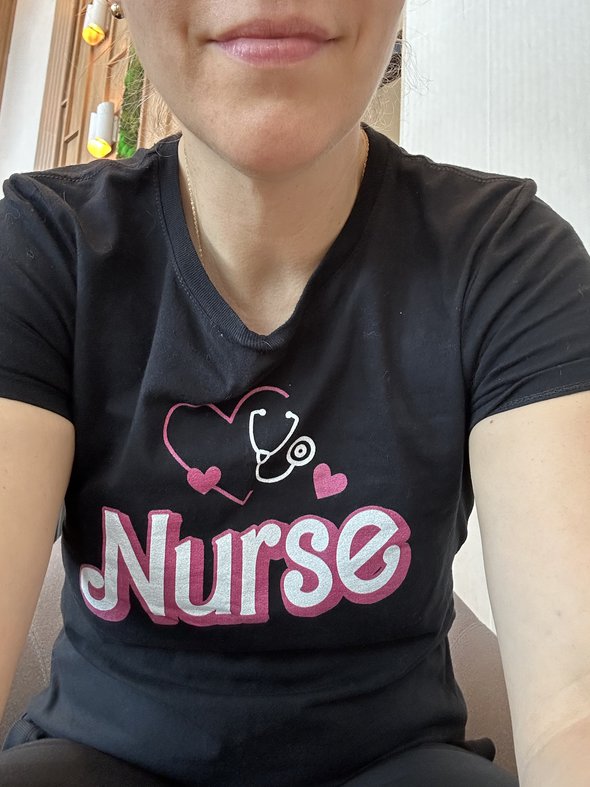
Basically, if I keep my eyes on the prize, that can help me keep working toward that prize. I want to be a nurse (the prize), so I will study the immune system (my current assignment in Anatomy and Physiology).
I can make decisions today that will bless Future Kristen!
I wonder, though, if a hybrid approach is most helpful. What if we could think of some immediate or semi-immediate rewards when we find our motivation flagging?
For instance, if you skip takeout and eat food from home, you could focus on the fact that you will probably feel immediately better after a salad at home than you would after fast food fries.
The long-term financial and health benefits are there too, but you also have a little immediate motivation.
Or what if we could put some "artificial" rewards into place?
Like...if you stick with your menu plan all week long, you could plan to reward yourself with one takeout night on the weekend.
For yet another option: what if you could think of money-saving activities as ways to give yourself multiple rewards?
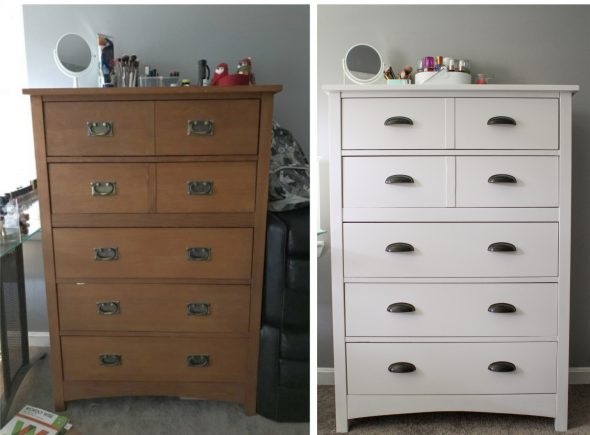
For instance, if I get a free piece of furniture and then paint it and turn it into a high-end looking piece, I have given myself several rewards:
- I get to keep my money in my pocket AND
- I get to have a very nice piece of furniture
If I eat my leftovers:
- I get to keep my money AND
- I get to have a healthy, homemade meal that is basically free
If I make a loaf of bread:
- I get to spend pennies on the dollar AND
- I get to eat super delicious bread
Of course, it is possible to motivate yourself by reminding yourself of negative consequences.
But you know me...I like to keep it positive, so I would rather motivate myself by thinking of all the ways my choices can bless me!
That makes me feel more like I am spoiling myself rather than depriving myself.
What helps motivate you?
And if you have any good tips for coming up with short-term rewards for yourself, I'd love to hear!
P.S. That whole concept of blessing yourself rather than depriving yourself: it's how I approach the way I eat as well.

I find that it's helpful to construct instant gratification rewards around sensory input. For example, I try to make the salads I make very visually appealing like an mandala of color. Or, I try to focus on the smooth way water feels in my mouth when I'm drinking it. I make little faces out of the vitamins my kids take. I focus on the pleasant clicking sound of the computer keys when I'm doing a mundane data entry task at work. All of these little sensory foci help me to keep plodding along.
Another thing I do to help with money saving specifically is I gamify it. For example, I try to make my Hungry Harvest order be as close to 30 dollars as possible because that is the amount that gets me free shipping and is also a reasonable amount to spend on vegetables. Within that goal, I also have to consider other game-like parameters such as which items don't ship well (soft fruits) and which items I can definitely get cheaper at Aldi (celery, peppers, apples) versus which items aren't likely to be available at Aldi (parsnips, blood oranges, tofu).
@Becca,
These strategies are helpful! As a person who is challenged with long-term goal visualization, I think making things fun in the present will keep me focused. Thank you, Becca!
@Sara,
You're so welcome! Come back and tell us about your progress so we can cheer for you!
I think I'm more progress-oriented than reward-oriented. I like to see that I'm moving forward on a project. If a chore stalls or takes more time than I anticipated it makes me feel like I failed. So, I try to make little jobs out of big ones. This way I'm still measuring progress without the guilt of not finishing right away.
As for little rewards, my favorite reward is the chance to do something I want to do instead of being a slave to my dogs and chickens. Every morning, I make sure all my animals are fed and watered (including the husband). I also study them as they walk around to make sure everyone is healthy.
Hubby's on the injured list right now, so he needs extra care. But once my duties are dispatched, I can sit here and read blogs or write in quiet. Time to myself is my rarest and most cherished reward.
I love spreadsheets, charts, graphs and other forms of analysis.These activities help to keep me on track.
If I am tempted to buy takeout, I quickly figure out how much it would cost to make a similar dish at home. For example, I love Panera’s Fuji apple chicken salad which now is $11, but I can make it at home for about $3.50. I love a latte which is now close to $6 where I live. However, for the cost of two lattes, I can buy a pound of good coffee that will provide my husband and me with our morning cups for nearly two weeks.
I also keep track of our debt reduction, net worth, and spending. I look at these things once every two weeks.
The hard thing for me is weight control. I gained 15 pounds during Covid. I’m having a heck of a time being motivated to take it off. I tried Noom which has lots of charts and graphs. I thought I would love it, but they require you to weigh yourself daily. I find those normal weight fluctuations completely disheartening. So I think you can overanalyze and over measure things too.
I suppose it’s all about balance.
@Bee, I'm also a data person for motivation, so some ideas that you may want to consider on the weight control side. Instead of weight loss, I track the following: calories/day, cardio minutes, strength/stretching workouts. I have an Apple watch, and also focus on closing all of my rings every day (I'm kind of obsessed). I only measure my weight weekly or so. Perhaps those could be options that would allow you to see progress (e.g. you are keeping your calories in check weekly, etc), but not fiddle around with daily weighing in.
I also set mini challenges like, "no snacking in a day" or "brushing my teeth immediately after dinner" or "getting 7 servings of fruit/veggies" and set goals for a week or month, and track those.
@Bee,
I hear you on the weight gain and lack of motivation. We should check in with each other daily and try to beat each other's steps. I enjoy a walk but a lot of days I am not motivated to do so unless there is an end goal--something I need to drop off at one of the businesses in town.
I also agree wholeheartedly about home vs. takeout/restaurant. The prices at restaurants is up and I understand because the prices are at home too. I check menus online to see what I would like to make. I buy my coffee at a local small roaster. It's more expensive but he is a young, small business; and it's a savings and tastes better than the local chain coffee/donut shops.
@Hawaii Planner, these are great suggestions. I think that I need to shift away from the focus on the scale.
@JEG, I am on of those strange people that actually loves to exercise. I walk quite a bit with Rescue Pup. However, I did not go to the gym for nearly two years during the Covid crisis. I also cooked constantly for my husband and son who are huge eaters with great metabolisms. This was not good. I’m hoping to get back in the swing of things. I’ll let you know how many steps that I finish with today.
@Hawaii Planner, I love this! My motivation is to feel comfortable in my existing clothes. I can get fixated on the daily weigh in. I once heard, Don’t let the scale dictate your mood. Weighing less frequently and focusing on the other things you mention sounds a lot healthier all around.
When I hang a quilt to dry on the back porch clothesline instead of putting it in the dryer, I get to save the cost of electricity to dry it and enjoy that lovely scent of something that dried outside in fresh air. The long-term savings is sparing our old dryer a heavy load that might be the thing that finally does it in.
We have been in super-frugal mode for so long that I had to think hard about what we consider a reward, but my husband and I both love a little chocolate, and when we decide to have a treat after a week of doing everything the right way, we get a bar of Lindt or Cadbury to share.
Thought of a couple more motivators:
Lists-you get to decide what you put on them and crossing off a task gives you a rewarding feeling so you should totally write brush teeth on your list. 😉
Counting-when I have a particularly arduous task in front of me, sometimes I count, like count the steps as I carry a heavy bag up them. I count how many scoops it takes to empty the litter box. I even counted through every contraction when I was in labor. I don't know why it helps, but it does.
Complaining/bragging-give yourself a social reward by sharing your accomplishments or struggles with someone else. I often preface it with what I want from them, like "Come and admire this garden bed! Didn't I do an awesome job weeding it? Do NOT look at the other beds!!!"
@Becca, counting does help me sometimes too, but I seem to have a short attention span and start over every time I get to 100! 😉
@Bobi, I had to get a shoulder MRI a few years ago. For whatever reason, the headphones to play music weren't working so I had to distract myself from the enclosed feeling and the very loud noises that the MRI makes. I tried a few things but counting seemed to be the best at distracting me--maybe because it also gave me a sense that this experience was for a period of time and that the time would eventually be up??
@Becca, I love a list and I cross my completed task off with a pink highlighter. The bright color signals completed.
Also, breaking a big job down into smaller increments so you can see success faster it’s also helpful.
Lists work very well for me! They're a memory jog AND I find it extremely satisfying to cross things off.
I definitely believe that a mix of short-term and long-term rewards works best for me. For physical tasks, I find a short break is a good reward. "Get this part finished and you can take a break" I say to myself. For tasks such as cooking, the reward is getting to eat something I love as well as the money savings of cooking at home. (Now that I live alone, I only cook what I really like.) For watching my food intake all week, I reward myself with a little treat.
Longer-term rewards for me are those such as watching a debt balance go down, watching savings balances go up, seeing the yard work paying off with a prettier, neater yard or getting the produce from a garden after weeks or months of care. Those will really get me motivated.
You are correct by the way, cats are rarely motivated.
@JD, you and I are pretty much on the same page, as usual. I use a similar mix of short- and long-term rewards.
But an occasional reward from a source outside the self is nice too, especially for those of us living alone. For instance, that's why my financial advisor's compliment yesterday on how well I was doing moneywise gave me such a charge (see my post in the latest FFT).
And I must respectfully disagree with both you and Kristen about motivating cats. My Betty is 100% motivated by the sound of a popping lid on a cat food can!
Well, that IS a fair point. The only time our cat runs is when she knows it's food time. Well, that and when a stranger comes to the house; then she flies under the bed. 😉
@A. Marie,
Ha, yes, a tuna can works, too.
@JD, we're having to give our rather skinny 15-year-old cat some massive allergy shots, and we've been motivating him to forgive us by getting out a slice of cheese. As soon as he hears the little plastic wrapper being pulled back, he forgets all about the big old shot I just had to give him.
@A. Marie, I noted how you wrote about the financial advisor's compliment, because I would have held that close to me all day as well if it were me!
Those sorts of words mean a lot.
I'm hoping someone will share something that resonates with me because I struggle mightily with this concept. I have mastered frugality but not exercise, diet, or chores. I find myself totally unmotivated by any type of reward, short or long-term. I'm not motivated by money, food or time. I had more discipline when I was younger, but now that my life offers more flexibility, it's really difficult to force myself to do things I can choose not to do (and yes, I realize this sounds very puerile!)
@Bobi,
I struggle with motivation for these areas too. For chores, my main strategy is that I listen to (free) podcasts while I am doing the tasks at hand. If I am watching TV with commercials (Hulu in my case) I play “commercial cleanup” and wash a couple dishes or tidy up while during the break.
For exercise, I listen to music during walks, either my own favorite songs or a playlist someone else has made.
Oh yes, listening to podcasts while I do boring tasks really helps me!
@Bobi, I am right there with you-the prospect of a better body, better sleep or even a tangible reward isn't enough to make me work out consistently. The strategy that works for me is "don't break the chain" but it there has to be a visible record...so I will stick stars on a calendar for each day I work out or use my apps to show that I met my goals or checkmarks on a habit tracker. I just need some way to see that I've checked off this "thing" over time and something about that reinforces that I *can* do it and it makes me make a conscious decision to not get it done.
@CrunchyCake, ooh, I see you are a Happier listener. 😉
@Bobi, I have some sense of what you are saying.
No commenter has directly mentioned internal and external motivations. That is a big problem for me, though I don't explain it well. I would, for instance, clean my house to have guests over, but not for when it was just myself, (a bad habit that has continued into marriage and child). When I worked, I would help others with their projects because I liked contributing to the whole, but things specific to me would get put off. If I have a deadline, I will meet it, but not far in advance.
There is also a newly named situation called "The Impossible Task," where something that is rationally do-able and simple feels overwhelming. It is not the same as laziness. My psychology is google-search based, and sometimes I find encouragement in looking up terms like these.
@Heidi Louise, cleaning out my garage would be “The Impossible Task.” It is overwhelming! I start it, but never finish it.
@Karen. and CrunchyCake, That was my reaction too! Soo many good ideas in the Happier podcast of how to make—or break—habits.
And listening to that or any enjoyable podcast is perfect for exercise, walking, and boring chores as many have said.
@Heidi Louise, Thanks for sharing about "The Impossible Task," I never heard of this and you're right about finding this type of research encouraging. I think it helps to know you're not the only one experiencing something. I'm with you on the internal/external motivation thing as well.
@Karen., very much so 🙂
@Bobi, Yes, we are not alone!
(One of the things I appreciate feeling when reading this blog and comments).
@Bobi,
I suggest you try what I call the rule of ten. Which is tell yourself you only have to do something for ten minutes and then you can stop. Or, you only have to do ten things-like with laundry, put away ten items and it's totally ok to pick the ten easiest ones. Sometimes when I'm feeling very unmotivated and down on myself, I will tell myself I just have to do ten things and I count things like brushing my teeth and putting on socks because I want to give myself credit for even very small things. Did I open the blinds? Bam, already up to three things. Look at me getting s*#$ done! The reason this works for me is that it gives me a feeling of accomplishment, and it gets me started. Sometimes the first step is the hardest, and if you can trick your brain into thinking you already passed the first step, it takes away that freezing feeling. Also, almost every time I tell myself to wash just ten dishes, I totally end up washing the rest of them. BUT, and this is important, I am ALLOWED to quit at ten. Sometimes I do, and that's ok because I made progress. And progress has momentum. Shoot for "better, not perfect" and you will feel better about yourself almost immediately.
This is thought-provoking. I use a mixture of rewards--the ability to delay gratification is an important skill that I have gotten better (but not perfect!) at as I have gotten older, but it's super helpful to me to find mini-rewards. As in, if I get XYZ done then I can read my favorite blogs .... eat my lunch outside on a nice day ... text a friend. For losing weight (yes, here I am again, trying to shed some pounds) I find that mini goals (5#) are easier on me mentally than bigger goals. The bigger number seems unattainable but the smaller number? I can do that! Once I achieve the first 5#, the next 5# seems easier. I also find I have to be careful not to slip into a mindset of deprivation/"punishment"--it's not helpful for me to avoid any mini-rewards but yet I will find myself thinking that I can't do anything enjoyable until I accomplish my reward. Just because I'm trying to lose weight doesn't mean I can't occasionally enjoy "fun" food--I just have to figure out how to fit it into my overall weight-loss scheme and also re-set my mindset as the the portion size.
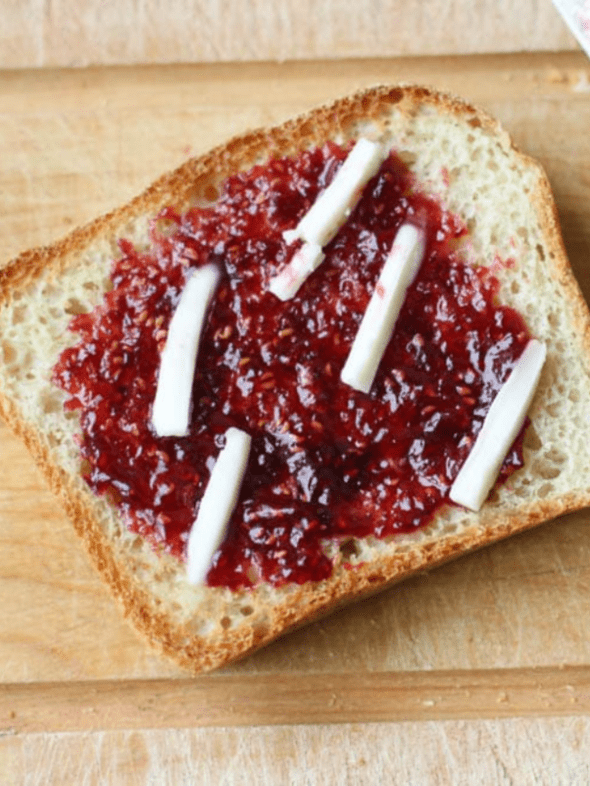
I hope my thoughts weren't too meandering! On a different note, Kristen, what's on top of your bread and jam? Cream cheese?
Butter! If I recall, I put the butter on last just because it looked nicer for the photo.
@Kristen, lol! I wondered, too! Cheese! Almonds! Radishes!
I am rewarded by the percent saved at the bottom of my Grocery receipt. If it is up over 30 percent I feel so happy. Small lil motivation. I only buy what I need and nothing crazy so the goal is a real goal. The is a reward to myself.
@Stephanie, I also find that to be a great little adrenalin (endorphin? some happy chemical?) boost.
@Stephanie, I only just started to realize that my grocery receipt will show savings (doh, late to the party, always). I am not grocery store shopping much for the next few months, eating down the pantry and doing some belt tightening to increase my savings, depleted when I helped my eldest and his sweetie with the downpayment on their first home. I have read elsewhere about putting the 'savings' away into an account or envelope, and I am planning on starting this practise next time I grocery shop (only the specials, only if we are needing them).
In addition, related, as I am on a belt tightening trip, I likely will be shopping the flyer and only buying the loss leaders. I read a lot of flyers (shrug- it amuses me, what can I say?) and my local grocery store, a couple of kilometres away, usually has the best deals. But I always look.
I'm a data & goal person. I need a to do list, and I greatly enjoy marking things off daily. That's part of my motivation. I also really like tracking & seeing my progress (be it how much I've saved during the year, how much I've earned extra, exercise minutes, closing my fitness rings, etc). I (almost) always know the right answer, but sometimes a little motivation goes a long way in helping me follow through.
I'm not great at the building in small rewards part. I don't find that as motivating, I suppose.
I struggled mightily with financial motivation once we paid off our mortgage. After using that as a daily number to track, work on, and devote all extra money to...it was a challenge to reframe & get excited about other goals. I'm still working on this.
@Hawaii Planner, I 100% agree - I need a visual record or indicator. It somehow lights up some feel good chemicals in my brain to *see* that I achieved something, even when I know I did. It's like getting bloodwork done. They call and say that everything looks great but until I see the numbers for myself and drop it into my spreadsheet and compare to earlier years, I just don't quite feel great about it.
Kristen, I was stunned at the small amount of jam on your toast. I adore Bonne Maman jam and I pile great heaps on my toast and I make sure it's spread clear to the edges. Since I am also trying to lose six pounds, you can see where the problem lies. I usually limit jam eating to the weekends, and then try to make the mountain of jam into a foothill.
My long term goal is to get the old lady stomach flattened by summer for the trip to Hawaii.
Yes to many things said already! I do struggle with motivation when it comes to exercize but if I can squeeze it in during my daily routine, I don't have to think about it as another stand alone thing to get done or to add to my day. So I would emphasize to look for or build opportunities where you can multitask without it seeming so. One thing I am trying now at work is to hold more "walking meetings." This works great if I am getting together with one or two colleagues. I ask first and usually they agree with this format. The immediate rewards are we've accomplished our goals and we've put in some steps too!
I am not sure how to motivate myself. I don't care about lists or star charts or any of that preschool stuff. Oh boy, I accomplished some stupid goal I set myself! And if I didn't--so what? Who is going to know or care, besides me?
I also don't care about "do this and treat yourself to ten minutes reading a good book" or "treat yourself to a bubble bath." Gimme a break. 10 minutes reading a book is a treat? What, do I live in the Gulag Archipelago? A massage is a treat. A hot fudge sundae is a treat. 10 minutes reading is like saying I'm allowed to breathe for ten minutes. A bath is nice but it's hardly a treat.
@Rose,
A friend of mine motivated herself by awarding herself an Oreo after every small completed task. It kept her going, but I'm not sure that it helped her weight.
When I take a break, I'll glance through a magazine, brainstorm on a new project, take my dog out for a short game of fetch, go look at my flowers in the yard or the fish in the pond, have a favorite drink (non-alcoholic, or the task might never get done!), eat a favorite fruit, even turn on a timer and lie down for 15 minutes. No way would reading a book for 10-15 minutes help me - that would just make me mad.
@Rose,
What is it you are trying to motivate yourself to do? And why is doing that thing important? I'm not saying it's not, but asking yourself those types of questions might help you come up with a plan that would work for you.
What motivates me most is thinking of others. I want to eat healthily and stay fit physically so that I can keep walking and dancing with my dear husband and so I can have good strength to care for a grandchild.
I want to be careful with our money so that we can be responsible with home, car, medical needs, etc. and still have some money to help others in need.
I try to keep our home fairly clean and tidy because I want guests to feel comfortable when they visit.
However, in all of these areas and more, I frequently fall short of goals. And I have many days when I feel discouraged because I can’t see measurable progress. But my husband graciously points out goals I’ve reached but I’ve overlooked or forgotten. He mentions accomplishments that I may not have realized counted for much. He reminds me of all the ways I’ve been able to bless others because of all the ways God has blessed me. And all of that motivates me to keep going!
The reward? Smiles from loved ones, and sometimes a ten-minute afternoon nap and sleeping well at night. Peace.
Aww, I love that he encourages you like this. What a keeper!
It is reassuring to find so many other members of the "Keep lists and spreadsheets" club. Keeping lists may have been something I learned in preschool, as someone disdainfully said, but if so, I am eternally thankful to my teacher for giving me a tool to keep life orderly and delay gratification. That tool continues to help me to accomplish things, for even huge tasks can be broken down into pieces I put on a list, and after finishing those pieces on those lists, I suddenly realize I have finished the huge task. (And sometimes those tasks spanned years worth of lists, like when I needed to keep myself on track, sometimes on a weekly basis, to finish the slog through grad school even during the writing of the dissertation that would never end. Honestly, some days my list included just "write 1000 words today.")
And the spreadsheets of spending, which my husband convinced me had value, is what made it possible for us to retire the day I turned 50, with all debts including our mortgage paid off despite a period of near bankruptcy when we each had a catastrophic illness. And thanks to how they continue to help me curb my tendency toward extravagance, we can continue living a life that includes being able to donate money to worthy causes. In essence, they give me a daily reward of seeing how thrifty I can be (without ever feeling deprived), as well as a long term reward of a lifestyle where we can take short term contracts that interest me or do nothing at all besides a volunteer gig we each have. My biggest regret is that I did not meet my husband when I was 20, so I could have retired at 40!
Other techniques, such as I get to read for 10 minutes or I get to have a piece of a candy bar don't work for me at all. I have friends who find those methods very helpful, but when I tried them, I just kept reading long after the 10 minutes and I would just shrug and eat the entire candy bar. (Plus, as someone who struggles with weight, rewarding myself with a candy bar would be counter productive. And, somehow the reward of a salad instead just would not do it.)
Thanks for this topic, Kristen. A few people have listed techniques I am going to try because while lists and spreadsheets have worked for most areas of my life, I still have places where I could use some help to stay on track. Calories, I am talking about you...
Add me to the "spreadsheet and list club" too! I am highly motivated by being able to cross things of my list each day. I do this at the start of each workday as a way to stay organized and get things done.
I printed out an amortization schedule with extra payments for our mortgage and would mark off the payment each month. We paid off our mortgage last year!
Also, I set financial savings goals each year and keep a running total on a spreadsheet. My motivation was early retirement and this is my last year working.
Another motivator for me is Fear.
I didn't want to struggle like my Mom did financially (she and my father divorced when I was young and she had full custody). I saw how hard it was without a college education or trade for her. This motivated me to get a college degree and later MBA. I worked all through college.
I also know Fear motivates me to exercise and eat well. Spending a few visits with the cardiologist and seeing the people in the waiting room was really jolting, one man in particular was in a wheelchair with a fresh surgery scar running down his leg. Also my brother was diagnosed with Type 2 diabities, but he's doing better (Thank goodness), so that motivates me to try not to end up on insulin.
Also, if I keep my weight down and exercise my knees don't hurt as much. I would like to lose 5 more lbs. though.
As a CPA I've seen many older clients who spend a small fortune on dental work (implants, etc.), so that has motivated me to floss everyday and really try to take care of my teeth.
Thanks for the Before Breakfast shout out! When I plan out long term projects, I generally aim to make each day’s work pretty small and manageable. No individual day inspires resistance because it is so doable (one chapter in War and Peace! It is 4 pages!). But if I stick with the schedule I will finish. And since time passes no matter what we do it is just a matter of plodding along.
For me, you hit the nail on the head when you mentioned Future Kristen. I think a lot about Future Shelagh (and incorporate chats about our future selves with my students). Many things that Present Shelagh doesn't want to do will benefit Future Shelagh (as well as others, our community, our planet, etc) and she'll be super pleased with me if I just get my butt moving!
Every payday I look at my savings account. Seeing that number grow is a reward for me. It's a symbol of my temperance or self control. I give myself a moment to be proud of myself.