
How to get rid of black cutting board mildew
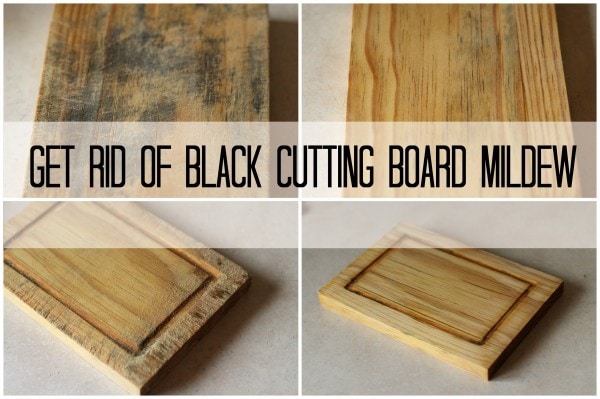
Many years ago, I got a small cutting board, sort of as a joke gift. But it's been awfully handy to have around, and as you can see by the scars, it's been well used.
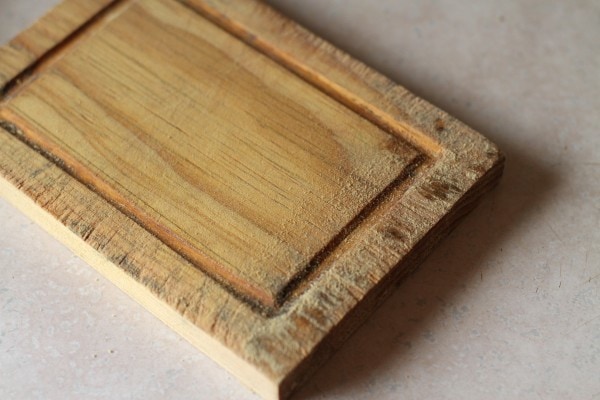
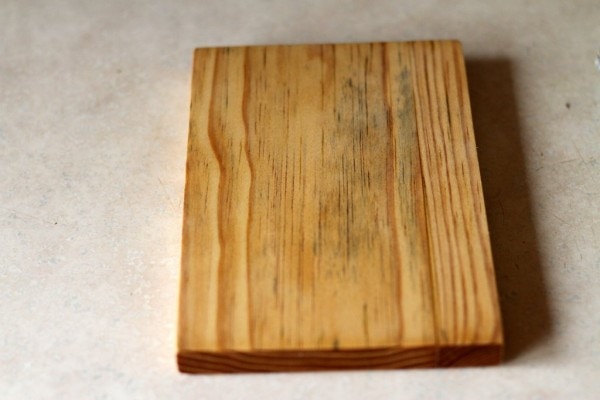
The scars weren't bothering me, but the black mildew, which happened because I didn't ever put any protective oil on this board, was.
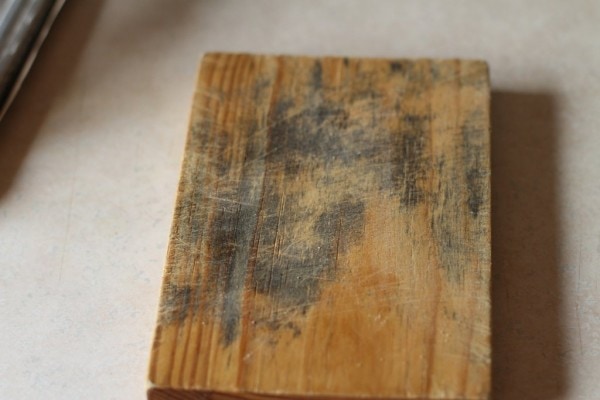
It's been bugging me for a while, but for some reason, I decided I really needed to deal with it yesterday.
I poked around on the internet, searching for fixes, and some people recommended using a bleach solution.
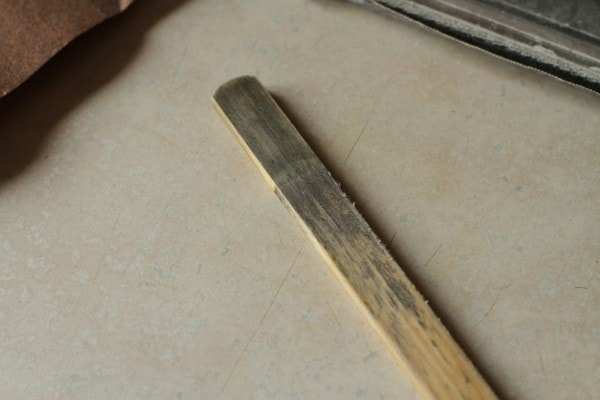
So, I poured a bleach solution into a glass, soaked a mildewy wooden spatula handle as a test, and experienced little to no success.
Then I tried a soak in straight up bleach, and even that did nothing.
At that point, I decided something a little more powerful would be good, so I dug out my handy-dandy orbital sander and went to work.
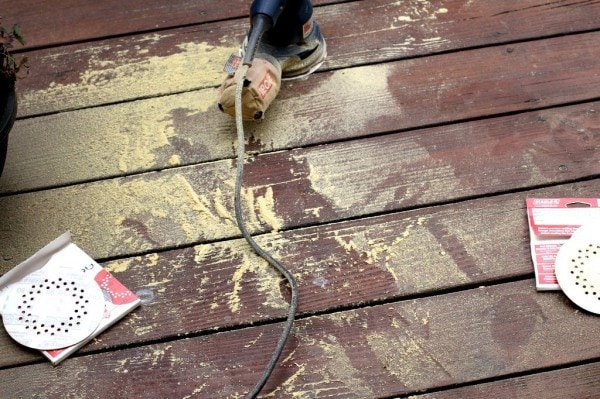
I made a big mess, but it really didn't take that long to sand this down, and the difference is pretty incredible.
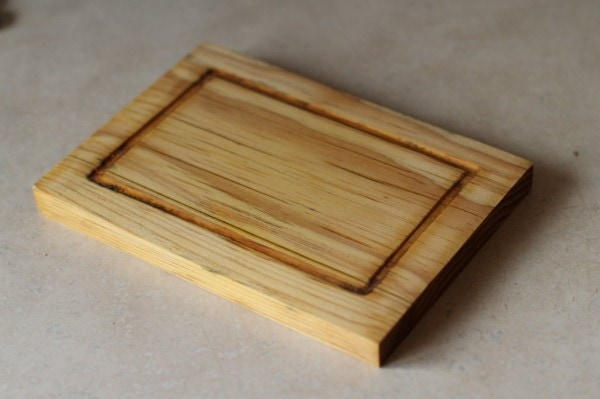
The back still has a teeny bit of black, but I think I can live with that amount.
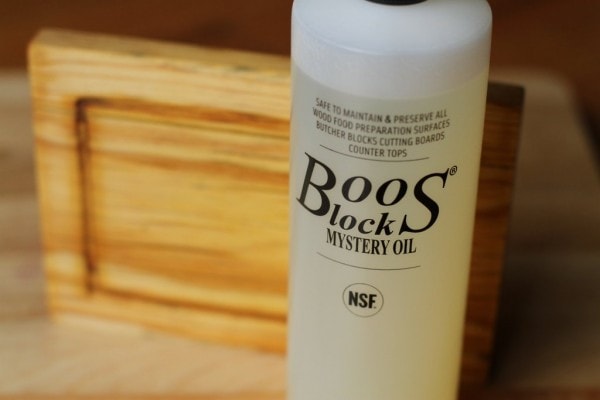
And to prevent more mildew problems in the future, I gave the board a nice coat of the oil I got with the cutting board I received at Christmas.
I decided my spatula handles were a lost cause because if I sanded them down like I sanded my board, they wouldn't be the right size to hold the rubber spatula part anymore. I think it would just fall right off.
But! I do have one new wooden-handled spatula that I picked up at Aldi recently, and since an ounce of prevention is worth a pound of cure, I put a coat of oil on that handle.
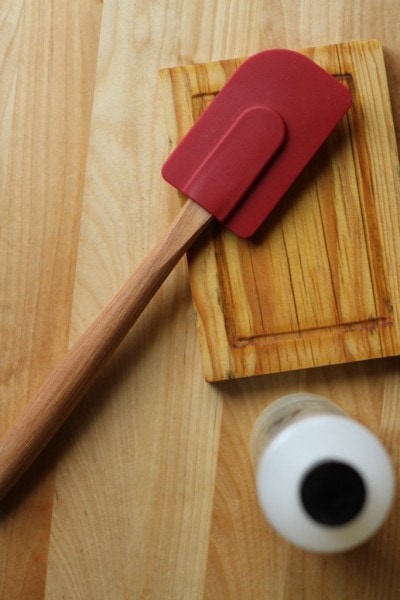
I also oiled the old spatula handles, because I figured I can at least keep more new mildew from growing.
I'm sure I'm not the only person who's dealt with this problem, so I'm very interested to hear if you guys have more tips for me. Do share!
____________________________
P.S. Food Waste Friday is over at Simply Being Mum today. And for the record, today I'm composting a bit of pineapple and a very mushy, disgusting avocado.
Joshua's 365 post: Behind the Door

Nice job Kristen! I love a bit of breathing life into things... off to wash some pillows which I've been told (by my Mother) need replacing. Wanna bet? They've got life left in 'em yet!
I had never even thought of oiling spatula handles, I am going to do that right now! I use olive oil to oil my cutting boards and was told by the guy who sold the last one to us that grapeseed oil is the best but olive is okay too. Mr Omnivore had a couple of old wooden chopping boards that had seen better days (but luckily had no mildew yet) and they came up beautifully with a bit of oil 🙂
Careful on olive oil. It can go rancid on you.
Mystery oil? hmmm...wonder what type of oil it is?
It's usually mineral oil. I bought some overpriced "cutting board oil" and when I got home I looked at the ingredients and it was just mineral oil!
I use Virgin Coconut Oil to condition my cutting board, wooden spoons, spatula handles etc. I also use the same stuff to cook with and as a moisturizer on my skin. I love this stuff, there are a million uses. I use it on my face as well and never breakout.
Me too! Love my coconut oil!!
If you didn't already have the Boo's oil, I would have recommended going down to your local Pharmacy's laxative aisle and picking up some plain old medicinal grade mineral oil (NOT THE HIGHLY TOXIC FURNITURE GRADE!)
Sanding down cutting boards is a chore, sure but hey that cost you nothing except a little time and maybe a sanding board.
As for wooden spoons, spatulas etc. I would recommend what we did after we got a new set from Ikea. Take a big 9x13 Pyrex style dish and pour an inch of mineral oil in it and place as many utensils in it that you can. Then let them soak for a half hour, flip and wait again. Take them out and let them drip off before rubbing them dry with a cloth. Repeat with the rest of your wooden utensils and then pour the remaining oil back into the bottle. The bonus to all this is your hands get nice and soft. 😛
Just because wooden utensils are super cheap doesn't mean they aren't worth taking care of.
I have both sanded down and bleached my wooden cutting boards numerous times, with moderate success. But there is still some black mold/mildew on the most used one.
Does anyone know--Is there any health risk associated with leaving some black mold or mildew on those? Mine also has a large crack running through it (it's about 25 years old, so not too surprising). Perhaps the crack is harboring spores.
For "wet" foods, I gave up and bought a plastic cutting board. I put that through the dishwasher after every time it's used. I save the wooden one for breads and nuts.
There is no way I would use a cutting board that had mildew on its cutting surface. A cracked board is definitely not safe - pitch it.
I suggest food-grade mineral oil over cooking oil because mineral oil doesn't rot but the cooking oil might. Important note: baby oil isn't food-grade.
I've never had that happen with a cutting board and my wooden cutting boards are on the order of 20 years old. I wonder if the difference is that they're end cut rather than long cut. I've also never oiled them.
Yeah I've seen boards get cut to Hell by knives but never had one mold on me.
Some of my spatula sticks are black like that, I thought it was because often the stick dries inside the silicon part.
I only buy ones where the spatula and handle separate. Never had a problem with mold.
I don't think I've ever had a mold problem and I'd throw it away if I did. Or at least not use it for food. Probably for cutting up my soap for homemade detergent, but the things I use to make that stay in the basement. Those little moody creatures burrow in deep. Probably deeper than what was sanded off. You could have sanded it and made some kind of game board, that way you could seal the ickies in there.
I really need to do that to one of my cutting boards. Mine isn't as bad, so I'm going to try bleaching it first, but I have a feeling that the bleach won't have much effect. I need to get out the oil for all of my wooden kitchen items.
Pampered Chef has wooden spoons made from bamboo. They are reasonably priced and impervious to taking on foods or getting gross. I've had mine for 10 years and they look brand new. Their spatuals are out of this world too. Again, 10 years, and look brand new. These are the only things I ever purchase from them and I get them all the time for newlyweds. Awesome product.
Bamboo molds too, and no, even a single piece unglued board should never be put in the dishwasher, it will warp, maybe not the first time, but after consecutive washings. The best thing to do is wash with warm soapy water, dry it with a paper towel then let it finish air drying, don't use it as a dish rack to dry your dishes on, and after it is completely dry and only after it is completely dry oil it once a week with mineral oil on all sides. I wanted to upload a photo of my mom's bamboo cutting board that molded, but I don't see anywhere that this site lets me do that. Sorry! Good luck everyone. I am a chef for the last 24 years, so I kind of know what I'm talking about.
I've never heard of using oil to protect cutting boards! Does sound like a great idea, though. I got some new bamboo boards for my birthday so I should probably start protecting them now. Maybe a spray with a diluted vinegar solution every night would also keep them from mildewing? Or possibly that wouldn't be compatible with the oiling process?
My mom has wooden cutting boards and I know she's never had a mildew problem with them. She doesn't oil them either, so I wonder how she manages this. She puts them in the dishwasher from time to time so maybe that stops any mildew before it can begin? Though I know the heat from the dishwasher isn't good for wooden things...
The only care my wooden cutting boards get is a swipe with a damp sponge and air drying, either on a rack or propped on a side - IOW with good air circulation. I've never even oiled them although I was told to do so when I bought them. (I use a poly board for raw meat.)
Wood can stand the heat but some finishes and glues can't. So in theory an unfinished/unvarnished single-piece cutting board would be fine in the dishwasher.
The only success I've had using bleach was when I soaked the wood overnight in 100% bleach. I think that improper drying techniques are to blame for the mildew in the first place. Since your mildew is on the bottom (and did I see it in the grove too?)I'm thinking that it has been left to dry sitting flat, no air can get to the bottom side. Same with the spatula the rubber spatula prevents air from getting to the wood. I remove my rubber heads for washing and let the two pieces air dry before reassembling.
I am surprised that bleach didn't work. How about trying a little lemon juice? I'm going to get the mineral oil out today to do a little preventative maintenance, particularly on the spatulas. Thanks!
My question is how do you keep your wooden cutting boards from warping? Washing in hot water made three of my wooden and bamboo boards warp so badly they're almost unusable, but I'm hesitant to not use hot water, especially after cutting meat on them.
I mentioned some of this above but in case you get email notifications of follow-up comments:
I use a poly board for raw meat. My wood cutting boards get wiped down with a damp sponge, nothing more. A good cutting board shouldn't warp in hot water unless it's been soaked; maybe yours are thin?
For heavens sake you people: throw those disgusting and probably dangerous old boards out! Sanding off mildew - This is the stuff people think frugal folks are crazy. .
I'd agree with you except that I've been using that board for a long, long time, and have experienced no ill effects. So, the board doesn't seem dangerous to me, although if someone else with a mildewed board wants to throw it out, I'm not going to criticize.
This is why I LOVE my Pampered Chef cutting boards and spatulas. This is one instance when spending money is worth it because it buys you peace of mind. Even if you have felt no ill effects so far, how do you know? Have you gotten sick? At all? I'm not talking about right after, I'm talking about a suppressed immune system where maybe you got a bug you wouldn't have otherwise gotten. Mold = time to throw away! Watching any home improvement show and see how seriously they take any black mold they discover and then tell yourself, it's worth the risk to your family to be frugal in this area.
Oddly enough, no! I haven't actually been sick for about two years now. A few weeks ago, I thought I was coming down with something finally, but nope-I was apparently just tired.
So, I don't think this cutting board has been causing problems. And since it's pretty clean now and is sealed with oil, I think I'm good to go. 🙂
Try a solution of 1/2 hydrogen peroxide and 1/2 baking soda. Make a paste and scrub with the grain with a steel wool pad. You can also soak in straight hydrogen peroxide. It kills germs and sanitizes surfaces. The paste solution is great for cleaning stainless steel, counter tops, and pans. I actually have a pot that is copper on the outside bottom and this works every time! Also great for bathrooms!
Studies have actually shown that wooden boards habor FEWER bacteria after cutting things like raw meat than a plastic board. There is an antibacterial property to wood. After a while, plastic boards become rough, and give the bacteria lots of breeding ground. This does not happen on wood.
I never soak my boards, but I scrub them down with hot water and let them dry upright in a dish rack. We have two boards, so if we're dealing with meat on one the other is for veggies.
One of my most cherished wedding gifts was a board handmade by a family friend. It's beautiful. I don't oil it. I probably should but I'm not sure I want to be ingesting any mineral oil and not sure what to use instead.
I've heard the same thing about wood and plastic. Also use two boards. Great advice.
@janknitz, if you read what the manufacturers of the best quality wooden cutting boards recommend, it’s oil. Mineral oil, food grade. (Used as a laxative in much larger quantities than whatever micro amount you’ll get from your board.) It’s worth doing to protect a cherished board, especially. Redo every 3 mos or so, or whenever water no longer beads on the board—easy to see when you wash it, or just sprinkle some water on to tell.
A longer-lasting version is to mix mineral oil and beeswax to make ‘board butter’, or you can buy it. It keeps a protective layer on the wood longer, though it’s a bit harder to apply, and makes it much less likely to deteriorate/crack/warp over time.
Anyway, I hope your treasured board lasts you many years. I’m a physician, and I wouldn’t be afraid of a bit of mineral oil residue, as long as you’re using the food-safe kind (usually found in the pharmacy section of the grocery store, with the other laxatives). Mineral oil is one of the gentlest laxatives because it isn’t absorbed by the gut, coats the stool, and makes it easy to pass—that’s why it is used to treat children!!! So no danger from ingesting it. And you won’t ingest enough from your cutting board to feel any laxative effect, so have no fear—you can take care of your cutting boards with aplomb!!!
I hate using bleach, and on the rare occasion that I break down and use it I, too, don't get the results I think I should.
Glad you found that remedy. Not for the faint of heart, but a very resourceful and creative solution!
That's awesome, love that! Sometimes the obvious isn't so obvious and that's why people toss out perfectly good items. The sand job made this look new again.Cheers Mr.CBB
With that much deep mildew, sanding it is probably the only way. Whenever my cutting board starts getting mildew I scour it with lemon juice and salt. The salt acts as an abrasive and the lemon juice is a weak acid to go after the mold. It always does the trick for me. Vinegar should work as well for the acid & is probably cheaper. Congrats on finding a way that worked!
I've found that rinsing with vinegar helps control mold.
Here's a link to how to make "wood butter" or "spoon oil:" http://www.creative-culinary.com/2011/11/wood-butter-helps-renew-wood-utensils-and-bowls/
It's actually pleasurable to use, fun to make, and non-toxic as long as you're using FOOD GRADE mineral oil. And is great for softening hands, too.
Cooks illustrated reviewed cutting boards, and found which didn't warp or dull knives lickety-split. And I'm envious of the bamboo utensils that don't wear away immediately. That reader must have nicer ones than I had...
I will admit to needing to sand down one of my cutting boards, as I was stupid enough to let something rot on it. Have washed vigorously, but still a faint stain.
Thanks for the reminder to oil all my wooden kitchen products!
I use canola oil on my wooden products (bowls, serving trays). We have resorted to plastic cutting boards that are easier to throw in the dishwasher though. We've never gotten mildew, but our climate is quite dry.
I think you did the right thing sanding. I use to want a wooden cutting board and at some point, I plan on having one. But for now, I have a HUGE glass one I use for meat and I have a smaller plastic/plastic like one I use for only fruit and veg. I clean them both with a vinegar solution. Anyways, as long as your board isn't cracked, I'd say you're good. Using the bleach solution will kill the mildew/mold. Sanding it removes it (although, I hope you wore a mask so you didn't breathe in spores!), and then once you seal it with the oil, I'm sure that it won't allow new growth. So, I think you're good!
We have a wooden cutting board that my husbands cousin made in shop class in high school (long time ago). We have never had a problem with mildew, however that particular cutting board is very large and we only use it occasionally for large pieces of meat for parties. After each use, we wash it thoroughly with soapy water, let it air dry and then my husbands treats it with the food grade mineral oil found in the laxative aisle. I think this was mentioned above. We have had good luck with this method for a long time.
I have glass cutting boards that I also use for putting cookie sheets on when I get them out of the oven. I just don't care for anything porous, but that is just me. WM has heatproof plastic spatulas (rubber scrapers) for $1.97 each. I use olive oil for my wooden handled items and my dining room table. 😉
I would be really hesitant to sand black mold. Since the mold is possibly toxic and if you're breathing in the dust created by the sanding, it could be harmful to your health. Just my opinion!
Great idea! I have been looking for a solution for my cutting board with the same problem and this is perfectly the right thing for me to try. 🙂 Thanks for sharing this.
I know this isn't terribly relevant but I'm curious about who gave you the board as a joke gift and why it was a joke.
Oh, it was Mr. FG and my brother. I have kind of a thing for miniature stuff, and so years ago, they bought me a bunch of mini kitchen stuff...a mini pair of kitchen scissors, a mini cheese grater, and a number of other mini things, including the mini cutting board. 🙂
I have one chopping board that developed the dreaded mould along the cut bottom edge. I eventually took action and sliced the bottom inch off the board. But the mould came back. I cut again (it's now more a landscape board rather than portrait) but the mould has re-grown.
My suspicion is that the wood is inoculated before the black mould presents, so even though it looks like you've cut or sanded it all away the mould is spreading through the wood far away from the black effects. I fear even oiling is a lost cause.
But thanks so much for posting this and having the comments to read. It's most enlightening.
There is a picture somewhere in my photo blog of my preferred chopping board which is simply a horizontal slice of tree and has been with me for 10 years and also been given as wedding gifts. http://nickbailey-co-uk.blogspot.co.uk/2006/11/wing-yip.html
I've just written a post about how I'm attempting to deal with the black mould in my chopping boards using a garlic rub. Currently on my front page: http://www.nickbailey.co.uk/ or later here on Blogger:
http://nickbailey-co-uk.blogspot.com/2015/09/protecting-my-chopping-boards-from.html
I would hesitate to use any mineral oil on a board used for food - it might prevent some nutrients from being of use in the body. I also can't use vinegar on any utensil used for food preparation, because i'm very intolerant of it. Olive oil seems a good idea, as does lemon juice. I'm going to try them. I live in a damp climate and I don't know if anything can be effective ver time. I hate using plastic cutting boards; I'm suspicious of them as germ carriers.
Olive oil will go rancid. Can you explain how mineral oil on your cutting board would cause your body to not absorb nutrients from the food you cut on your cutting board? I'm very confused.
THANK YOU! I would never have thought so sand the board down, even though we just did that with our floors!
Oh my, you have this amount of mold on a cutting board, burn it, that's the only way to get rid of the mold, never use it again, spores will be everywhere. If this mold like this grows on your wooden stuff it's your place, it's too damp!!!! I never had any problems with mold on wooden things until I moved to Scotland and their below standard shitty, moist houses....
Thanks for this bit of info. I don't have a sander, but will get some sand paper and have a go at it. Its mostly around the edges of boards and then I'll oil it with some food grade mineral oil. Wish me luck!
I know this is a late replay to the original post. But please do yourself a favor.
ANYTIME you see a product like this (i.e. "Mystery Oil") OR
A PRODUCT THAT DOES NOT LIST ITS INGREDIENTS .
Always look up the Material Safety Data Sheet (MSDS for short)
A quick Google of "John Boos MYSB Mystery Butcher Block Oil, MSDS" will tell you:
ITS MINERAL OIL!!! mostly, with
- di alpha tocopherol ( a synthetic form of vitamin E ) used for its antioxidant properties also found in many personal care products such as skin creams and lotions to promote skin healing and reduce scarring after injuries such as burns.
- Carnauba Wax - probably used as a thickening agent, a binder & sealer
- Beeswax - probably used as a thickening agent, binder & sealer
NO MYSTERY HERE. except WHY do people keep allowing themselves to be misled into buying overpriced repackage, relabeled... stuff (not my original choice of words). Brings to mind the old Snake Oil salesmen.
Granted the OP received this product with the cutting board...
Save yourself a ton of money and get the generic Mineral Oil from your local pharmacy dept, it's sold as a laxative so it's Food Grade.
Wow thank you
Thank you!! This helped so much.
The board looks a ton better mostly because you got rid of the knife grooves, not the mold. The black mold (which is what it is!) gets deep into the wood, unfortunately. Unless you really rout into that channel (which is still black in the ‘after’ photos), I don’t think you’re safe, oil or no oil. And no, bleach doesn’t do squat, at least when I’ve tried it. I’m trying vinegar, but I doubt very much that I’ll succeed.
Here’s the thing—that little ‘joke’ board is made of too soft a wood for your knives. I’ve had this problem with an acacia board I picked up at Aldi. Looked great, scratched far too easily, which meant bacteria and mold could accumulate in the grooves (it was ‘wounded wood’). My bamboo boards don’t scratch—but they dull knives too quickly, which is annoying. I’ve moved over to teak boards, which can be acquired at TJ Maxx and HomeGoods and places like that for decent prices. Oil them from the start, following the instructions, and they’ll take care of you far better than this risky little thing. I get that you’re frugal—I am, too—but this is a dangerous post, to suggest to people that what you did is an adequate remedy.
Now, if you were to take a router and completely eliminate the nasty stuff in the grooves, and then go back and sand all the way down until the black is gone, then treat with bleach or vinegar, then oil… you might be able to save it. But I’d be willing to bet that your tiny little ‘bar board’ (that’s what it’s for, cutting lemons and limes for cocktails) would break if you went far enough down to eliminate the mold. Worth trying; what do you have to lose? But it’s still obviously gross, and the oil will wash off over a few uses, and then you’re in trouble all over again.
I'm in the same boat you were, I just used a bleach mixture that seemed to have little to no results, I started sanding and here I am double checking to make sure it's worth my while, I appreciate the reassurance!
Thanks! I read advice about using salt & lemon & other solutions to get the black out of cutting boards, but nothing worked. I figured there was no solution except sanding it, will do that. Good to have confirmation.