A gym for human thought | in the age of AI
This is gonna be terribly off-topic for a frugal blog, so, you know, proceed as you wish. 😉
I am not the world's biggest fan of AI.
I know there are amazing ways that it is being used; for instance, I heard a Freakonomics podcast about how researchers are using it to sort through mounds of data in their efforts to find new uses for already-approved drugs, thus providing affordable, effective ways to treat diseases.
I think this is a great use of the technology!
My beef with AI has more to do with using it for writing. I am sick to death of seeing social media posts, newsletters, and even school discussion boards filled with the inane, robotic sameness that comes from using AI.
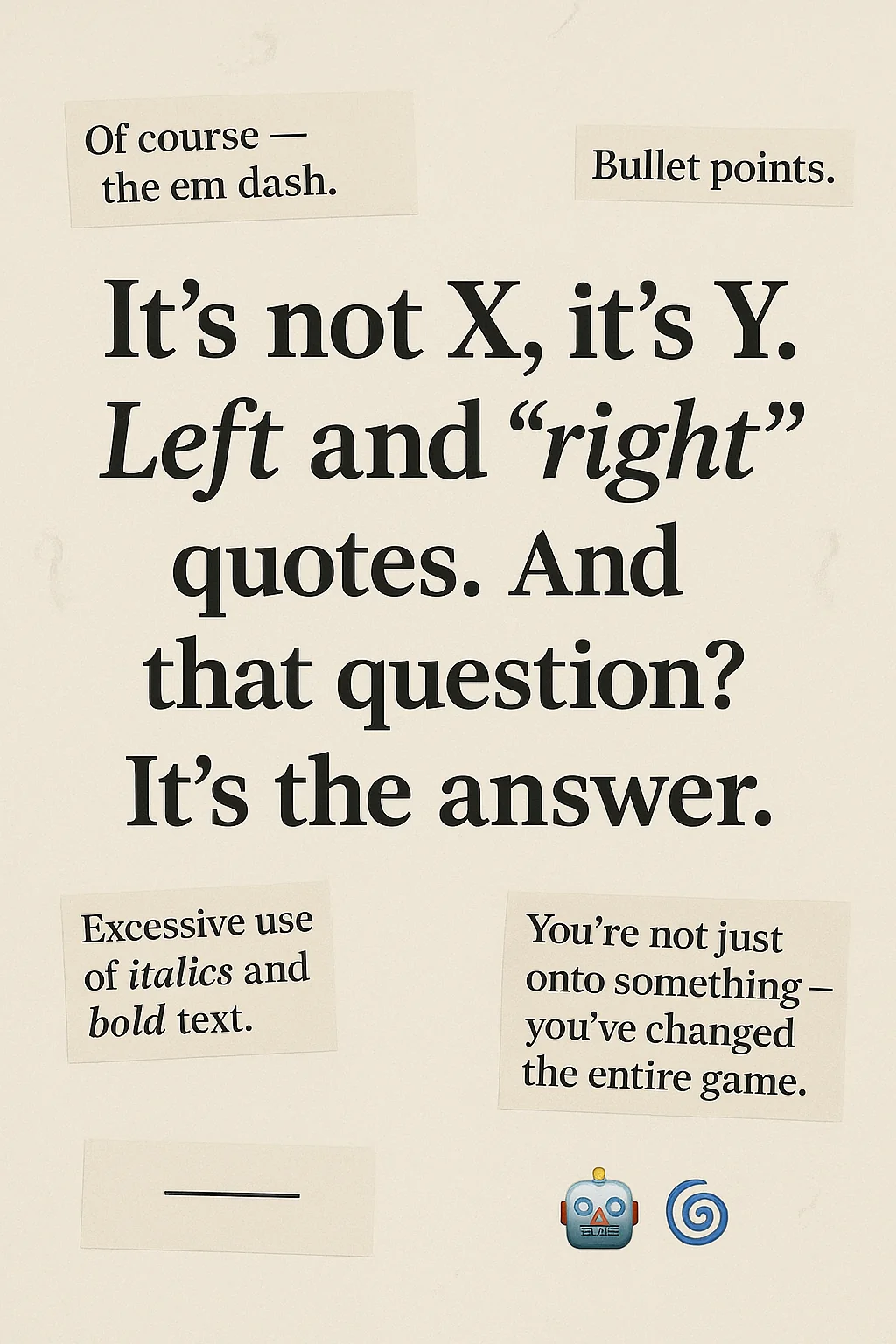
I feel like I am reading the output of a machine, not a person (which is, in fact, the case). Once you've read a few AI-produced things, you can pretty quickly spot the "voice", or really the lack thereof. As soon as I notice it, I am immediately bored, and I click away.
I want something real. I want something human!
So. I dislike being on the receiving end of AI-produced writing, but I also feel deeply concerned about what this is doing to our ability to form our own thoughts and then express them.
This is a skill, one that improves with practice (and conversely, dulls with disuse.) It is work to think about things, and it's even more work to write those thoughts down in a way that effectively communicates those thoughts to other humans. But that work is what builds the skill.
I see people using AI to write emails, blog posts, newsletters, social media posts, announcements, and even thank-you notes.
(That one is especially wild to me, because isn't a thank-you note supposed to express, from the heart, how you feel about a gift or service from someone??)
I know such casual AI-use is even more commonplace than what I've observed, because an interviewee on a recent Laura Vanderkam podcast suggested, as a challenge, that listeners try one AI-free day per week (one where they even write their own emails.)
I am a little disturbed that one AI-free day per week would be a challenge!
I also wonder: if we use AI to write all of our emails and posts and notes, will we lose some of our ability to communicate in person? Talking and writing both require us to organize our thoughts and then express them, so I imagine there's a lot of cognitive overlap between the two skills.
We may be able to use AI when we write, but what will happen when, say, someone at work asks us for an on-the-spot update? Will it be hard to produce something without the AI crutch? I don't know, but I wonder!
Writing as "a gym for human thought"
Last week, I came across an article about AI by Jamil Zaki, a Stanford professor. He compared the rise of AI to the time period when machinery became a common substitute for manual labor.
Because machines did our physical labor for us, our work became more sedentary, and we had to start exercising on purpose to maintain our physical health.
In the same way, if AI is going to do our thinking for us, we are going to need to exercise our minds on purpose, to maintain our cognitive health. Zaki says:
"AI has already allowed us to become cognitively sedentary, and that will only increase over time. But just as we must be responsible for our bodies in an era of office work, we must now keep our minds active. Writing is a gym for human thought we need now more than ever."
Machines replaced a lot of manual labor, and as it turns out, machines often do the work better than humans. Still, physical labor is important for our bodies, which is why we purposely lift weights and use gym machines that accomplish no purpose other than increasing our physical fitness.
(Imagine how surprised our ancestors would be if they could see us working out!)
Similarly, AI may advance far enough to adequately replace human writing, but Zaki says we should still be invested in writing practice for our own sake. This writing effort is like a set of cognitive "reps", part of what keeps our minds strong. And if we are not motivated to exercise our minds for the sake of others, we can at least do it out of self-interest.
Obviously, I write regularly, both here and on my Patreon, and I never use AI in any way for these posts. So, I know I'm taking my brain cells to the gym regularly.
But if you don't have a blog, and you want to try hitting the cognitive gym, there are other options. You could journal. You could write letters.
You could try poetry, if that's more your thing. And I suppose you could even write an email or two. 😉
Also: all of you who regularly comment here are working your brains! You read what I write, you think about it, and you type your thoughts out.
(And I hope you are not using AI for that. Ha. If I start seeing comments that say things like, "Measured. Mindful. Intentional. That's not cheap — it's frugal.", I'm going to be suspicious.)
Tell me what you think! Are you concerned about the way AI will change our thinking and writing abilities?
P.S. I had to Google to find out how to type an em-dash for my faux AI comment up there. Ha.
P.P.S. I realize that not everyone is a writer; still, every human needs some thinking/communicating skills to function in life, and writing is a great way to practice those skills.

I don't think its as clear cut as all that, though.
English isn't my first language ( it's either second or third), but my day to day "business writing " at work is 85% in English. It's much easier for me to throw my first draft of an important-enough message into the Claude project I specifically created that improves the grammar, flow and conciseness of that paragraph or three, while preserving MY tone and staying clear of corporate BS as much as possible, than it is to ask for help from an native English speaking coworker ( if available and relevant).
I don't think my command of the English language is any worse for it, and it saves me time. I never copy paste the results blindly, and usually end up editing it a bit, because, indeed, I don't want to sound like Chat GPT, i want to sound like me with slightly better English:)
I’ve used AI to help with conciseness, too. I have to complete legal paperwork in the form of IEPs and getting all of the required elements of a goal into one sentence is sometimes tricky. When I cant wordsmith it to make sense I’ll pop what I have into Gemini and ask for some help making it all fit clearly. It’s not a free pass because AI doesn’t know the rules I have to follow, but it does sometimes get the wording more clear. Then I’ve learned a new strategy to write better goals and apply it to other IEPs I have to write. I think AI can be a teaching tool, similar to a calculator, as long as we don’t depend on it.
I’m right with you for writing IEP goals! Sometimes the wording is hard to get just right, so AI helps me with it. I’ve never used a complete AI-generated goal, but I have appreciated the quick assistance!
Kat, I can appreciate that it is a good tool for second language learners for sure. I gently recommend that you run the final copy by a colleague or friend if it is important. I have several international teachers in my school, and I can tell when they use AI. It does not always convey the intended message, and the receivers get confused or angry, then they call me for clarification.
I am very concerned about AI. People are taking AI summaries as factual truth when it actually frequently hallucinates information. I won't go too far into this, as it's political, but I think a big issue we currently have with fake news and clickbait is down to AI. Another issue with AI is the detrimental effect of the environment.
I have never used chat gpt or other kinds of AI. I like to keep my writing skills sharp!
I work at a government research lab and for years I have been the editor of all papers that our small group at the lab writes. I think this has done wonders for my brain, but I plan on retiring in October. I'm not sure how to continue using my critical thinking and writing skills after that.
Mary Ann,I have been retired for 10 years,from nursing profession where I did a lot of “thinking” and problem solving.Now, I use my brain and my skills for writing poetry (haiku), I journal daily, I play around with writing a novel (will I EVER finish it??)
I write emails to friends,posts on line, I am in a few discussion groups online in topics I enjoy. I research topics of interest,using google to find PRIMARY RESOURCES ,not AI, to find info on nutritional things, exercise, science topics,etc..
I listen to podcasts daily in topics of interest .
You will find a way!
I also play WORDS with FRIENDS online with several friends, and I read tons of books,fiction and non fiction.I belong to a book club too..
Early days of retirement are full of experimentation: Have fun but also, take time for long quiet walks,too!! AND CONGRATS ON YOUR RETIREMENT!
Mary Ann, my old job sounds as if it was roughly similar to your present writing and editing duties for your group: I was a telecommuting copyeditor for a small publishing company specializing in mental health texts for mental health professionals--and my work often involved more rewriting than copyediting. Even folks with MDs and PhDs often can't write well--and my employers used to save all the worst manuscripts for me! (And I confess I sometimes wonder whether I'd still have a job if I'd stayed on, given the invasion of AI.)
But I'm confident that you'll find ways to use your skills in retirement, as I have. My first few years were largely taken up with caring for DH, of course. But now I serve as an editorial assistant and fact-checker for JASNA's two journals (one print and one online); I try to do a presentation a year for my local JASNA region; I comment here and on the NCA; and I keep a journal (which could probably be subtitled "The Daily Musings of a Cantankerous Septuagenarian").
As a high school English teacher, AI is the bane of my classroom existence! Critical thinking is one of the main things that makes us human, so it's deeply concerning that AI is starting to do that for us. However, I don't hate AI, and it has actually made me a better teacher in many ways. I have parameters in place for myself when I use it- never to critically think, grade, or write emails/other personal communication for me. But it has saved me so much time making rubrics, lesson plans, and directions and I can use that saved time for creating new/better units. I try to teach my students similar parameters, and Kristen would be happy to hear I'm making my students practice e-mailing me each week using just their brains!
Hi Hana,
Love your email assignment! Great idea. Students share a lot more when not everyone will hear what they're telling you. Solid writing and life skill practice along with relationship building.
I agree that there have been times when AI has benefitted me professionally to the extreme, while I maintain thoughtful use and weigh the factors of efficiency vs. thought and monitor the product for quality (it can produce some real garbage sometimes too haha).
Sending best wishes for the rest of your school year!
Hana, I am so proud of you for fighting the good fight.
In my last few years of teaching high school all of my assessments were performative - oral presentations, in class group work, non browser typed essays, timelines ( I was a history teacher) with great events written one per index card and time life photos matching other major events.
I would give the students a critical thinking question. We would write an answer together on the smart board. Then I would put the model answer into a chatgpt and lower the reading level for my second language students so they could see the idea in simpler vocabulary. They would take pictures of it with their phone. Then I would level the language up to college using academic critical thinking phrasing from They Say, I Say ( Buy this book!) Now the students have study notes at all skill levels. We would apply the same question to multiple events. For example, Was the _______ War costs worth the benefits? We went through every modern American war. Same frames, different context. They had to incorporate sentences like When I was little ......, From my experience ...... , Although some experts say ......
Another Blanket universal question was "How does reform ( defined as access to the American dream) occur in a democratic system? Then we went through various reform areas.
The tests were on demand in front of me (with their computer screens being shown on the smart board) were the EXACT same two questions. They had to pick an era or an war
My favorite final was showing Forrest Gump and they had to cite evidence of the effects of reform and war by just looking at the movie. OOOH - They hated that one..
We cannot teach to prepare students for the 20 century. We must teach students to thrive in the future.
Thanks for the book recommendation!
Ah, Kristen, you are a woman after my own heart. Well-said. Nicely done. Spot on. Society applauds the many conveniences we enjoy, but most people don't realize how those conveniences can negatively impact our physical and mental skills and abilities. I am most concerned about today's kids who will literally grow up living with AI and depending on it. What chance do their brains have of developing to their full potential?
I have a balanced view of AI. It can be used to help or used to harm. It will probably have both unforeseen benefits and consequences.
In the classroom, I teach Spanish. I try to express and help students understand that technology (including non-AI) can used to enhance learning or to bypass learning and how to use it helpfully. It is a work in progress. Both AI and tech have helped my own proficiency grow through the years, but that is along with my understanding of grammar and expanding vocabulary, pattern recognition, and the cognitive process of actually acquiring a language.
Last week, I had a student turn in a short paragraph I asked them to write with the first sentence (in Spanish) saying, "Of course! Here's a paragraph with the words you requested." (Insert eye roll and yes she didn't get credit for that). I have to continue to express to them that I don't want perfect work (impossible at their proficiency levels). I want THEIR work.
I completely agree that it is a tool, which can be used for incredible good or bad depending on its application. That's a funny story about the student submission, lol!
I love this whole article. It is scary to see how little people read and write for themselves.
Another concerning thing is how often it is wrong. As a scientist I see things all the time quoted as fact and they often aren’t true. It can sometimes analyze data, but it is only as good as the commands you are giving it and how it is programmed.
One of my friends is an English teacher and she decided to ask AI something in class as an example for her kids. It was something about geography and it spit out incorrect information each time.
It is the same way with data. Often people give it numbers and it spits out an answer and people quote it as fact. But they have no feel for if the number is rational. When I train my kids to use a calculator in math, I make sure they can also tell me about what the answer should be and the units (if it has units). So often in college my classmates would feed data into a computer and insist that they were correct, but the answer wouldn’t even have unit they made sense. It was garbley goop. Nonsense. Because a computer is only as good as what it is told to do and if you give it bad commands, you get bad data. So yes, I’m sure you can use it to research new drugs and that is a great use for it. But for the majority of us, we don’t know how to use it for those purposes and we should be very wary of the data think it is telling us.
You are so right about AI giving incorrect information and many people not being able to discern this fact. One day it actually told me the number 9 (nine) was an even number and should be placed in a column of even numbers. Gah!
I’m kinda irritated AI uses em-dashes. I’ve used them for years and I’m a smidge concerned that I’ll be suspected of producing AI content if I keep using them. I guess I’ll have to exercise my brain to come up with new ways to express my voice.
Yes! They are heavily used in legal writing so I've been using them for decades.
I find myself sometimes editing my own, original writing because I think, "Does this sound like AI?" FRUSTRATING!
Kaitlin, me too!
Yes! I always thought it produced a more interesting writing style and have used this forever. If my dash looks like AI, my use of TWO spaces after a period should help clear up that I’m actually writing my own stuff, ha!
I had to google what is an em dash. Then found out there's one called an en dash too!
I was lucky. I'm old enough that diagramming sentences and learning punctuation was part of my education from the first years.
I was also a reader from the time I was about 5 (My uncle taught me). My greatest achievement was being admitted to the adult library at age 10 to access a greater range of materials to read.
I've always been a reader and as a result, have a pretty extensive vocabulary. And doing the daily Spelling Bee from the New York Times daily increases it with so many words I never even heard of. I highly recommend it and Connections to keep your brain going at any age.
I loved diagramming sentences. My high school buddy and I always volunteered for diagramming at the chalkboard (yeah, I am a woman of a "certain age"). It was so much fun.
I am militantly, adamantly anti-AI for pretty much anything. This is more reactionary that rational, just because I encountered it in a very poorly executed "learning" program for English courses that I tutored and was so horrified by the abysmal quality that I immediately became distrustful of AI in general. This is probably because I am so much an English person, as well as an appreciator of art, that using something inhuman for these two very human endeavors is extremely distasteful to me. So I refuse to use it, period.
My husband likes it for troubleshooting issues with our vehicles, though, where I guess it works well because it mines all the information already available online. IN that way I guess it functions like a search engine.
Another thing: My children are exceptional writers and their high school teachers are actually concerned that their writing will be flagged as AI in college because it's TOO good. Their writing is actually much better than AI-generated writing, but I found that to be a sad and infuriating thing to have to consider.
Oh, this! I completely agree with this. I was typing a middle school paper as my son verbally dictated his words (which we do on rare occasion to help him get his thoughts out fluidly). We then went over it and I was teaching him about different writing techniques. I love the em dash -- especially for offsetting phrases -- and those showed up in the paper frequently. His teacher promptly questioned him about cheating with AI. Thankfully, the teacher knew me enough to accept his answer as truth. But I was annoyed. How dare AI put a proverbial black eye on my beloved em dash?!
Whoops! This was supposed to be a reply to Kaitlin's irritation about AI and the em dash.
I have a college degree in Professional Writing--one that I worked hard for and for which I paid a lot of money! It makes me sad to see AI becoming so prevalent. We will all be the worse for it. It is a disservice to poor writers because they don't learn how to write well, and it is a disservice to good writers because they don't get credit for their talent and hard work. It's a losing proposition for everyone.
I agree with all that you've said. I've recently been seeing many "how to avoid or delay dementia" focused podcasts, and almost all of them include reading and writing as ways to combat this mental decline. I teach middle school science at a hybrid private/homeschool and was SHOCKED when one of my 5th graders used chat GPT to organize sources he found online for a report. I immediately started putting "absolutely NO USE of any form of AI in any assignment" in my information to the students and their parents. I told the students that their brains are forming and they needed to help it form by reading, organizing, writing, and revising/editing ON THEIR OWN. To be completely candid, I definitely tend to think in worst-possible-outcomes; however, when I consider the ways things have seeped into our culture without us realizing or questioning the wisdom of allowing it to become such a fixture (I'm looking at you, social media!), I am alarmed. Watching documentaries on social media and reading books about allowing children to use screens too early and too often has me completely convinced that we ought to be treading far more cautiously and asking not "How can this benefit us and make our lives easier?" but rather, "What is the cost to using this tool both in the long and short term?"
Yes, I am especially concerned about this for the current young generations. Will their thinking "muscles" be ok from all this AI use?
I think this extends to technology, in general. I was recently talking to a college acquaintance about how public education has changed since I taught (more than 20 years ago). She said, "Jody, I think the biggest change you would notice in education is that the students have much shorter attention spans." She said that her students have (tops) 11-12 minutes. When she recently tried to show them a 15-minute-long documentary (in her history class), they couldn't handle how long it was. Cell phones are so bad for creating this problem because they are constantly with them.
Local universities are requesting students to put their cellphones in lockers during classroom time which seems to help a little. It's frustrating; I tried never to look at my phone during class when I studied Danish but sometimes I would pick it up automatically (I never used AI for homework though).
The 11-12 minutes is more than I expected. This is why I don't like going to movies these days, Too much of short sound bites instead of dialogue that requires your attention for more than a minute or two.
I love this Kristen! Thank you for posting it:)
I have many thoughts about AI, its effect on the environment in particular, but it really upsets me that kids are using it in school. I have a college sophomore and a high school junior. My junior gets frustrated because unless the assignment is specifically about how to use AI we are against it. He has classmates who use ChatGP and we point out to our son the old adage of "the one that does the work is the one who does the learning." In essence when his classmates use ChatGP not only is that cheating it is also cheating themselves of the learning. They are teaching Chat for free and missing out on the learning that comes with doing the work. It drives my college daughter crazy when classmates use Chat or AI for writing assignments because college is optional and everyone there is PAYING for the experience.
I think the way AI is being used for these orphan diseases is incredible and I think there are many useful ways AI can be integrated to improve society but right now I am uneasy. Social media information being churned out by bots is sowing discord and division. For writers it makes me sad that AI is replacing community. I hope that down the road when the AI dust settles it does more good than harm but for our children we should be super cautious in my opinion.
Last year in my son's English 101 (or 102), a class period was given for using AI in class to generate possible ideas for a thesis for a writing assignment. When the professor asked if he was already finished, he said something along the lines of, "No, I just want to learn how to do the work myself." And then she said something along the lines of, "Well, isn't that condescending." (He assured me that he didn't use a rude tone or anything.)
Sounds like the professor had the issue, not your son! Good for him for wanting to do the work himself and bummer that the professor didn't positively reinforce that.
I think about this. A lot. I am especially concerned about the effect this has on the arts -- especially fiction, which has already suffered a huge decline as people read less books.
The only constant is change and we still find ways to communicate with each other. With text talk and emojis. With AI generated/improved narrative writing. Language is constantly evolving and at one point people lamented the loss of the Queen's English and church services in Latin.
The shift in thinking is real. My husband and I talk about this constantly as we watch our teens make their way through public school. They read far less books. They do most of their work on a computer. They have little homework compared to us.
But again, the world is (always) changing. The economy is changing. Necessary skills are changing. Perhaps my son doesn't need to read Paradise Lost and memorize Shakespeare sonnets. Perhaps its a better use of his time to learn Adobe Creative Cloud software. Perhaps he should study the trades instead of getting an MBA.
What are we preparing our children, ourselves for?
Another question is what will happen when the AI bubble bursts? The wealthy will have access to the 'good' AI and others will have to subscribe or use one with ads - all of which harms the environment, critical thinking and knowledge as a whole.
I don't see AI on the same level as a tool such as a calculator because that is only used for one specific area, and doesn't replace general arithmetic skills. AI, however, is being pushed onto everyone. I think it's excellent for detecting patterns of disease and helping patients with catching illnesses early, but it cannot and should not replace writing, information and thought.
AI might not be inherently harmful, but the way companies are using it often is quite evil. I mind the lack of transparency in the use of AI throughout the internet and elsewhere. I mind the huge data centers to support AI that are popping up everywhere the companies can pay off government officials an allow them to be built: and if you believe these data centers will provide jobs and be a godsend to your town, I've got swampland in Florida for you. I mind that insurance companies are using it to deny even more claims, and to obstruct patients from getting access to needed healthcare. In fact, obstruction has increased in all forms of customer service. You can't get a human being, and when AI can't understand a question of even moderate complexity, it is implied that you are at fault for not being "clear".
I used to read books and write a lot, and enjoyed it. Entering college and the workforce, I just stopped both. I was too exhausted mentally to enjoy it any more. And with the advent of self-publishing and the internet, there is an overwhelming amount of crap being written already. However, Kristen is right. If you don't use it, you lose it, even with something like reading and writing.
I am, because I read a lot of cringeworthy texts already within our company, on Linkedin, and so on (I have no other social media). The number of characters used is inversely proportional to the content. My feelings on AI are actually very strong.
Our company requires us to educate ourselves on AI and that means I have to practise using good prompts, to ensure I get maximum output without fooling around with AI unnecessarily.
AI requires an inordinate amount of datacenter capacity. It literally uses power that could and should be used for new housing and businesses. Our country has built a datacentre for G.oogle that uses so much energy that it could light and heat a medium sized town for a year. For me, that means that we must be responsible enough to use the technology only for serious tasks and not for creation of moving pictures of cats on skis that present flowers to you on your birthday, to just name an actual example. To me, use of AI for non essential purposes is revolting - similar to leaving the tap open all day or setting fire to bank notes.
I'm seeing so much undeveloped land being eaten up by data centers. It makes me want to cry. And because some people feel the need to "just play around" with it. I even sometimes don't comment on here because I have this internal drama playing out about whether or not it is necessary, whether or not I'm causing more harm than good.
I've been concerned about critical thinking for a long time. It's obvious much of the population lacks this extremely important skill. AI is scary because internet usage is practically a given these days and before even adding AI to the mix, users need to be able to determine the veracity of the information they are seeking, sadly many lack this skill as well.
AI was on my mind first thing this morning, too. It occurred to me while brushing my teeth that humanity has gone to all the effort of creating recycling programs, but if you're one who recycles your toothpaste tube by mailing it in and you also casually use AI for whatever, then you're way off balance in energy consumption.
It's so hard for me to like much about casual AI use. It's almost never necessary. Then there's the jackwagons who use it for evil, and that's where I switch from distaste and (yes, not to my credit) scorn to outright hate.
Two examples that give me heartburn.
We had a million (literally) acres burn in Nebraska and it was unbelievable the number of overdramatized AI "reenactments" that proliferated. Seriously, there are plenty of photos and videos already. Just use the real thing. Bad enough is bad enough.
Then last night on a radio baseball game there was an ad voiced by AI. I could tell right away it was AI, but my husband could not. I'm sure there'll come a day when it's "good" enough that I also won't realize, and that's scary.
And there truly are good uses, like processing data for research or for crop production. It's the casual mindless (or malicious) use that I hate.
I continue to say — as a very committed em-dash user, Alt+0151 — that people who dive right into using AI have not read enough Isaac Asimov.
I concur on your stance on AI. The things that it can truly be useful for mankind are searching large datasets or doing something that is dangerous for humans. But the doing dangerous things is really robotics, but perhaps controlled by AI for the task at hand.
I am not a writer, but as I saw once saw in a meme: I don't want to be doing dishes while AI is writing poetry, I want to be writing poetry while AI is doing the dishes.
I absolutely hate AI. I have been encouraged to use it at work by our supervisors, and sometimes I put in what I've already composed to check the tone. I'm a pretty good writer and I love to write, so I usually write everything myself and skip AI. I'd rather run it by a colleague who knows our school culture. What's really hard is that lately, as a school administrator, I get litigious emails from parents in my school all of the time. I even "asked" chat GPT why they go to such extremes and it replied that it is due to the key words in the text. For example, if a parent suspects their child was picked on, it automatically pulls up the bully law, demands a meeting, says it will be recorded and sites laws (some are outdated laws). This actually slows things down because then I can't just call the parent and have a conversation once they threaten me with laws, recordings, and potential attorneys, so I'm then required to consult our school board attorney and superintendent before replying, which can take days. It's wearing me out. I love having problem solving conversations and I've had success in building relationships with families. It is building walls, not relationships, and is not helpful at all.
I am quite concerned. I can easily identify AI writing. I refuse to let AI take over my written words!
I will use AI in my work for things like lowering the reading level of messaging (something that is often necessary for writing for the public, which can have a 4th-grade reading level), or making a message more "family-friendly", or sometimes better organizing the information I've collected, or adding a point I'd not considered. Regardless, I ALWAYS read what's provided, making necessary adjustments and edits, correcting any misleading, confusing, or inaccurate information. It's surprising how often that occurs, which is one of the reasons why we cannot, and should not, rely solely on AI and what it provides.
I may also use AI when I need to cite works for a concept, idea, or fact. Again, double-checking to ensure the information is accurate and reliable.
A few months ago my work documentation software activated an AI option. You click the button, it farms information from all the drop-down menus and writes a narrative. My coworkers love it. Absolutely not. I process the call by writing the narrative. I can feel the stress from the PT care leave my body as I consider which adjectives to use, how to describe the pt demeanor, how to prove that I'm a good medic who did my best. Sometimes, it's to add a little humor to a mundane document - "Pt believes it is the late 1900s" is a thing I typed yesterday because I genuinely could not remember what year the PT thought it was, but it definitely wasn't this century.
I have read some of the AI narratives. It inserts information we can't know. It doesn't explain what actually happened - it doesn't give the pt humanity. I don't know how well these are going to hold up in court - especially if the medic looks at it and says, "Well, I didn't write that, AI did." Does that absolve them from any possible documentation discrepancy?
Writing is not a strong skill for many first responders (I could write a dissertation on why this might be), and I fear that my bosses might one day tell us we are no longer allowed to freehand our narratives because AI can do better than some. I don't fear that AI will take my job, but I do worry that it could take the part of my job that I love the most - writing about it.
I also will not ever be using AI to write my nursing notes. 😉
I was thinking about this issue recently! I have a lot of medical appointments and can tell which doctors use AI for their notes. Some have told me/asked for consent, some haven't verbally but it was probably part of the small print. Honestly, compared to person-only-written notes, they are much more complete and usually accurate (at least as accurate as those without AI).
I wonder if a good approach would be for an employee to write their work notes as normal, satisfying the joy of those like Sarah and legality concerns expressed, then AI makes suggested and clear edits, with the employee going through to select what suggestions to accept. I wish I had this kind of setup. For example, I currently need to remember how to use commas and have not had time to commit to learning all the rules again. I could instruct the program to specifically offer and explain all comma corrections which would allow me to learn in context. Sarah could tell hers to never suggest/correct adjective use.
There is also a lot of work material that I can't use AI for because of copyright or privacy. If I had a truly secure program (does that ever exist?), it would be much more beneficial.
I completely agree! I won't use AI in my personal life, I have blocked it from whatever apps I can. Glad to know I am not the only one!
I use AI nearly everyday for my work... and It's RAMPANT in the real estate business. Just know that 90% of all real estate property descriptions are AI garbage. For GOOD marketing... you won't be able to spot that it's AI. BAD marketing... absolutely 100% you'll know.
Too many people are relying on it to do the heavy lifting, when in fact, it's most useful if you use it for a couple bits, edit it and use it to assist what you already have. And the skillset you have.
I worry that people are relying on a technology that is faulty at best right now. And it definitely makes mistakes. I see AI manipulating and changing logos, altering colors, changing wording, and not ensuring things are legal. Blech.
I'm torn. It's helped me in my professional job. But for nonprofessional use, it's terrible to see 🙁
I think it's very telling that most AI services are not profitable. It's being rolled out in healthcare and it's a hot topic of discussion, but despite the hype, the actual outcomes so far range from mixed-to-negative, in terms of saving time and money.
AI means such a wide variety of things. A machine that can extract information from a particular data set, or a machine that can transcribe verbal information, or a machine that can "identify" which mole is potentially cancerous--these are just the next step in tools that already exist (a search engine, text-to-speech, and certain algorithms.) I don't see those things as threatening (even though we'll have to develop literacy in these tools--just like how we all now know we can trust a calculator if we've entered the data correctly, but not every search engine result is true.)
But AI is not "intelligent." It doesn't "think." When you "ask" AI a question, it gives you the answers that are common, not the ones that are true. That's really dangerous, because any bad actor can "flood" the internet with misinformation and skew the results. Even without malice, lots of wrong, outdated data gets repeated! That actually already happened, even before AI--the idea of "garbage in, garbage out." A really good example is how algorithms (and doctors) tend to be worse at identifying cancerous lesions on dark skin, because both doctors and algorithms are trained to look at white people. AI algorithms are not magically going to be more correct than a person, unless there's a concerted effort to change the data set that it's comparing to.
I can't stand the idea that AI is being used to replace human creativity. Why would I read something that no one bothered to write? Why would I look at art that's an amalgamation of a real people's creative processes, stolen? Why would I want to have any kind of relationship with a machine? Like others have said, I want machines to clean my house, fold my laundry, and cook my daily meals so that I can spend more time with my family.
I completely agree! I don't understand why people think AI is objective when it's essentially a data scraper; built by those who are prioritising a certain kind of information at best and misinformation at worst. If something is free, you're the product.
AI is being shoved down our throats in order for companies to make even more money (that will not trickle down). Not to be gross but I hope the day won't ever come where people can't make the decision to blow their nose, get out of a burning business, attend to other bodily functions etc.
I received an email at work that "let Co-Pilot access your files and emails to write your review". Uh hard no from me.
Every dog and pony show (all staff meetings) spend far too much time talking about AI. I guess they think if they say it enough, everyone will hop on the bandwagon.
And any time I do a Bing search for an issue related to my work, I take pride when Co-Pilot has no answers.
I wouldn't have the first clue how to use AI. I am frequently fooled by AI videos since some of them are so good. But to use it at work for emails? I feel that it is wrong. If anything, maybe use it to figure out a way to write something (like a polite way to fire someone) but don't just use the whole example. But it is really none of my business and I am not judging. I think. lol
Most people are fooled by AI, but sincerely believe that they aren't, and that's even more dangerous. I attended a seminar on AI, and obviously the opening salvo was to present several examples of AI generated information. No one was able to 100% identify the AI generated examples, and more importantly, not being experts in any of the subjects presented, they weren't able to identify the incorrect information (not all of it was incorrect) within the AI examples.
I had another thought; AI also adds to the incorrect idea that writing is 'easy'. I studied English Literature and Information Science and endless people told me anyone can write and learn things online...ignoring the fact that writing is a skill and, while you can look things up online, you also need to apply critical thinking, discern between sources, synthesize, and learn the difference between information and properganda - all things you learn in English class and not from AI.
Yep. Writing is brain exercise! It does become easier with practice, but if you don't practice it, it may always feel impossibly hard.
I have been writing in a journal for the last 9ish months? I hadn’t in a long time before that! It was really hard at first, my goal was 3 pages no matter what. Even if I wrote BLAH or “I dont know what to write” over and over 🙂 it has gotten so much easier though. I do still have moments of writing “blah”:). It’s usually when I have skipped a few days. My life, my mind, is in a much much better place when I write my 3 pages. There are no rules, I tell myself I’ll throw away the journal when I’m done. I try to use whole words and no abbreviations… all that to say I think your right writing needs to be exercised and practiced to in order for it to stay strong. The same with our brains and our mental head space. As always I love your perspective Kristen <3 🙂
I use AI in my work every day. It synthesizes two documents into one. It creates a process document for me that I can modify to fit what I really need. Most of all, it eliminates that "blank page" overwhelm that I struggle with. I find it much easier to modify a document than to create one from scratch. In my work life, AI is vital to being able to manage all of my responsibilities. I do agree that we need to write personal things from our own keyboard/fingers/brains, but for an offboarding process RACI document (created this morning), AI all the way!
Amen, preach it!! It is frightening to me how readily people abandon tasks, hand over autonomy, stop using their own capabilities.
I’ve just had to quickly look up what an em-dash is. Oh no! I often use them, and have done for many years. I’ll have to rethink my punctuation …
I agree wholeheartedly! I already see a lapse in communication skills due to cell phone use. What I mean is, I think people are losing the skill of small talk. A text is fine, but when even that is AI-driven that's truly scary!!
As an author, I want to believe that people are ultimately looking for the humanity in a piece of literature. A writer connects to her reader through conveying the human experience. While AI might someday write as skillfully as a human, it will never have the personal connection I think we all look for in our reading experiences.
Yes! This is how I feel, even when it comes to newsletters or social media ad copy.
I am frightened of the electrical costs and loss of clean water resources for data centers. You really do not need a picture of your dog in a spacesuit.
I am definitely of the 'use it or lose it' mindset, whether it's regarding your body or mind. I remember my grandparents would garden, do crossword puzzles, and chop wood when I was a child. A great aunt was my penpal for over a decade and it was a relationship I cherished.
Sure, getting memes from a friend tells me they were thinking about me, but I love when I get a longer text. One (lifelong) girlfriend and I have started having a monthly phone call and it brings me so much joy. An AI email doesn't provide that human interaction.
Interesting read! No, I’m not at all concerned about AI. It is new and I believe the dust will settle and it will become much more comfortable to use. Like so many new things there is resistance from those who feel something they love is in jeopardy or that their routines are changing. This isn’t new. Think about how the internet change everything. And if you resisted it at first as some of my friends did, you can’t any longer. I laugh when I recall my great aunt who was deathly afraid of telephones! And that was in the ‘50’s. Anyway, that’s my thinking.
I deal with AI a lot and I can tell you that one thing that worries me the most is how biased various ones are. ChatGPT for example will always give you a left wing bias. Grok tends to be a lot snarkier and frank. Google Gemini is a little more neutral but not really.
I use AI (though never ever ever in my writing or podcast drafting or anything creative) and I dislike AI. It's an amazing tool, and I hate that it exists! I agree that I hate reading an email that I can tell a robot wrote me -- I get a lot of podcast pitches that look this way and they are instantly archived because if they didn't' take the time to write to me, why should I take the time to respond?
I use it to look up medical stuff at work (using OpenEvidence which pulls from papers and provides the sources so you can check), and to get ideas for travel planning or workouts or nutrition. Things that are very . . . fact based and low stakes, I guess I would say (well the medical is not low stakes, but again I check the sources and the AI part is more just culling together what is already out there).
It's a great and complicated topic!
PS once I put my blog post text into an AI detector and it said "0% AI" and I was so happy. I'm glad I don't sound anything like the robots!
Yes! I have put my own schoolwork into an AI detector out of curiosity and it has always said 100% human. WHEW.
Garbage in. Garbage out.
I don't even know what an em-dash is! Lol! I don't use AI, though it does come up first if I do a Google search for something - in which case, I look at other sources to see if the AI information is in alignment with what other sources say.
I write a LOT at work (without using AI), so I feel I'm pretty proficient at this time. Once I retire (8-ish months!), I will do as some of the Commentariat has mentioned - I do email friends and family, I comment (on the comments) here frequently and on NCA, and I might start journaling. I have a friend who used it to help with meal planning for a week, which sounds intriguing (I think she included the number of people in her family, quick/easy after work meals, etc). So, I think it can be used for good, but also not-so-good reasons.
AI will lie!
I was trying to figure out how to easily convert handwritten notes on my iPad in OneNote to text. I used AI for suggestions and it was helpful at pointing me in the right directions. Once I had it figured out, I wrote a post on reddit explaining how. Then I checked AI one last time to see if I'd missed anything. This was minutes after my post, and guess what? AI had an explanation that was from my post almost word for word. That fast! Yikes!
I do find that when I do a search and there is an AI answer, I don't accept the answer out of hand. But most AI bots include links to the source material and I will read the sources of information, and if credible I might reference the source--not the AI-generated response itself.
Sometimes I use AI to clean up grammar or punctuation. It is perhaps lazy of me, because I could look it up in my style manual. But I do appreciate the time saved. My writing is my own, always. Good or bad.
I am with you, totally. I do a lot of fact checking for my work and Google uses AI in generating responses to my queries. However, I always, always, always, check other sources as I personally have seen incorrect answers from AI.
I would NEVER use it for writing, either professionally or personally. Perhaps it is because I am a trained writer and editor and actual writing for a living has been my career for decades (It disturbs me even more because a real professional writer now has difficulty getting work because people would rather use free AI instead of paying someone. These folks don't perceive any difference between the "products" produced.
What concerns me is that so many people already can barely read or write as if they were never taught anything in school. They don't know, or heed, rules of grammar and it shows in that they have the vocabulary of kids much younger than the adults with limited verbal skills.
You need to be able to communicate, in written and verbal forms, for most work today, even factories, etc. and it's clear that people don't do it well. (We could go on about errors of all types that result from poor and inaccurate information.)
I am not interested in a machine's take on who a person is. I want to hear THEM.
It certainly does make it harder for people to communicate when they rely on a machine to do the work.
Companies that allow employees to use AI to generate reports, run projects and even basic email are making a grave mistake, IMHO.
Use it or loose it, whether math or verbal or written.
I just read an article the other day where because cursive writing is no longer taught, many people cannot even sign their names on documents. OMG! Is this what we have come to?
The laziness behind so much of AI bothers me tremendously. It does have its place in certain situations (faster research and initial fact checking) but it is definitely not a replacement for original thought and expression.
We need to learn to intelligently use AI. We can’t opt out. It’s here. My kids are 14 and 10. Their school held an assembly for parents to address AI. They are teaching the kids to use it in school. They are not teaching the kids to replace their own thinking or writing with it. I think of AI as an intern who needs close supervision.
There are also different types of AI. Extractive AI functions within a closed universe of information. It is incredibly useful in spotting patterns within huge amounts of data, like your example about AI in the medical field. Generative AI is given free rein to information, so it doesn’t always know what is relevant, making it prone to hallucinations. It’s like the difference in answers you might expect in an open book vs closed book test.
Your mental gymnastics idea is interesting, but I’m not sure that using AI means that people aren’t using their brains. For example, I have a close friend who has started using AI to write novels. She uses it like a writing assistant. The AI isn’t doing the writing for her, but it’s helping her research and organize things. She wasn’t writing at all before this became an option, so I couldn’t say that AI has made her less creative.
Oh yes, I don’t think schools are teaching people to use AI in place of thinking. I just know it’s happening in unsanctioned ways, even at the college level (and that’s based on personal observed experience).
Seems to me that our reading skills need general improvement along with limiting AI uses. If we as critical readers can spot AI and further question its information, we should be able to keep its use more limited. A new language may emerge, a hybrid/creole of human English and AI...
I've mentioned before that my husband lives with Alzheimer's; his particular variant is primary progressive aphasia, so he is slowly but surely losing his language. This intelligent man who used to have such a way with words can no longer read more than a few words at a time, and no longer writes or types. One of the many lessons this experience is teaching me is 1) what a gift it is for us to be able to communicate and 2) how I need to "cognitively work out" as much as possible, both in celebration of this gift and in an effort to stave off the sedentary consequences you mention, Kristen.
I just had a conversation with my brother about AI a few days ago. I fully acknowledge that AI has done and can do some incredible things. I also acknowledge that it's here to stay. But on the whole, I have also decided that I would be willing to see it go away even if it meant losing some of the amazing progress that has been accomplished through it's use. I'm probably in a minority position, and that's ok. I certainly don't blame people who use it to make aspects of their life easier. Why wouldn't you? But I wonder about what the actual trade offs will be down the road.
I am also on the fence with AI, even as the university I work at continues to explore and promote ways for faculty and staff to incorporate it into our work. For me, the most important distinction I'm encountering is, "did someone use AI to refine their writing, or did someone ask AI to write something for them?" I can recognize the value of the refinement assistance, because who doesn't appreciate some proof-reading? But when colleagues (or sometimes even students) are plugging information into an AI tool to have it write the entire product for them, it definitely feel like something is being lost. I also really dislike the lack of transparency - at work and in my personal life - of what is AI-generated or -enhanced.
As a side note, I also feel like the time I see people spending using the AI tools means it's not the time-saving tool some would advertise.
I am a bit of an AI skeptic so enjoyed this post. If you liked that freakonomics episode, there is an excellent radiolab on the topic called the Medical Matchmaking Machine. SO interesting!
This is not about frugality at all, but it’s just something I would like to hear your thoughts about. How have you gone through everything you’ve been through in the past several years and maintained such a positive attitude? (At least from what we see.). Have you figured out any tips or tricks to not get yourself to dwell on the negative? I would love to hear any advice you have on moving past hurt and finding a place of joy. I enjoy your writing and thoughts so much that I’d love to read about this and think you probably have a lot of wisdom to share.
I work at a computer, and I find that my handwriting/ writing abilities seem to be slipping. Writing and good penmanship do not come naturally to me, so I have been keeping a notebook in my bag to maintain the skill.
I am a secretary a long time ago worked for a firm of lawyers and accountants. A similar argument was going on 20 years ago about the use of dictation. The younger managers, obviously having used computers in school and college, often liked to do a lot of their own typing because it was "faster" (I'm using quotation marks because the amount of time I would spend correcting and formatting their work was not insignificant).
The older partners would insist, or at least try to insist, that they use dictaphones. This wasn't just for the sake of hanging on to what some thought was an obsolete technology. It was a skill that needed to be learnt. And a skill that would also be useful in meetings and conversations with clients because if you are used to formulating your thoughts well enough to dictate long letters and memos without stopping the dictaphone every few seconds, then you can do the same on the spot and be able to formulate entire ideas and communicate them in full sentences.
Just something that came to mind when I was reading your post.
I haven't read all the comments yet but I'm sure others have also pointed out the environmental impact of AI. I can understand the benefits for medical research you mentioned, but I still haven't found any really convincing case for generative AI. And certainly not any case that's worth sending us into water bankruptcy.
If you don't use it you usually lose it. I find my phone writing for me irritating. I want to write my own emails, messages/texts, comments. I am old school as well as old. STOP helping me.
I love your blog and your writing. Thank you for sharing your life with us.
I don't usually write comments, but this resonates deeply with me. I don’t have a problem with AI or people using it, but if we don't address how we use it, humans will become like robots while robots act more like humans.
I started rebuilding with intention about a month ago, and I’ve been writing every single day—whether it’s a journal or a blog post. Recently, I wrote a post with AI and spent an hour editing it. After publishing, I felt unfulfilled. My true thoughts hadn't actually been expressed; I realized I had to write them myself to feel satisfied. My point is that outsourcing everything to AI means we use less and less of our own intelligence. We gain free time, but we often spend it on mindless scrolling and productive procrastination rather than on things that matter. We think we are growing, but in reality, we are just moving fast without direction. I hope influencers start guiding their followers on using AI as an assistant, not a replacement.
I love this! And also: in the hour you spent editing, you probably could have written the whole thing from scratch. 🙂
Cal Newport also published a NYTimes article about cognitive fitness: https://archive.is/9r0DB
Yes! I dislike I very much, I never even used it apart from asking a question on Google and it pop's up.
The problem also with AI is that if you are a great writer it becomes suspicious. My 16 yo writes stories, and she writes well, no mistakes and rich vocabulary. I feel like it's just a matter of time before we get a message from a teacher, suspecting her of cheating using AI because it's "too good"
Believe it or not, I'm trying to not be overly negative about this subject, but that might be beyond my human limitations: I absolutely loathe ai and refuse to use it, read it, watch it or listen to it. It reeks of phoniness and laziness. Nearly all of our entertainment viewing is on youtube and the second I realize it's ai, I click off.
Recently, I was searching for a book on cottage core and something just didn't seem right about the one I selected. It was ai. Cottage core ai! It just doesn't get any more contradictory than that.
Last week a friend of mine (since 1963) and I had a conversation about cars. She loves all the bells and whistles and technology. I hate it so much I won't be buying a new car, probably ever again. Thankfully, I was able to tone down my remarks out of respect for her, but I was sorely tempted to say "I don't need Mary Poppins driving my car for me."
We're quickly getting to the place where we don't do anything for ourselves any more. Canned music at church, faux education, pre-made food from the store, shopping delivered to our house, cars that drive us.
Where does it end?
The parallel to physical exercise is something that has genuinely stuck with me since reading this. We invented machines to do the heavy lifting and then had to invent gyms to compensate for what we lost. We seem to be doing the exact same thing with our minds now. Writing for a blog has that effect in a particular way because you are not just recording your thoughts, you are organizing them for someone else to follow, which is a completely different cognitive task. That added constraint makes the workout harder and I think more useful.
You expressed my thoughts and worries about AI so well. I'm really concerned about brain deterioration as a result of using AI to do our writing and thinking, and it seems like most people I mention this to don't think it's a big deal! I'm also worried about lack of accountability when used at work (i.e. right now if a staff person prepares something for me I can have some level of trust that they care about their work and are accountable for what they produce, but with AI, I would have to review so much more carefully as nobody has accountability). Not sure if that makes sense haha!