
Wednesday Baking-Braided Loaves
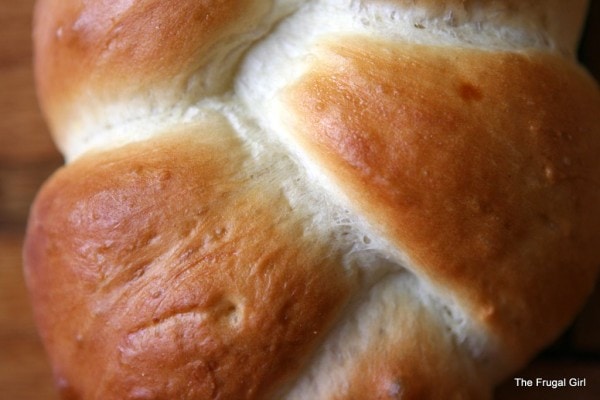
This recipe is from a newer Fleischmann's Yeast cookbook that I got for free somehow a number of years ago. Actually, it was a lot of years ago, as I know I had this for a while before I got married (I was the sort of weird teenager who sends away for yeast baking freebies!), and it's been 12 years since I tied the knot (or, more appropriately, since we tied the knot).
Anyways.
It's a basic bread dough that can be used in a number of different ways, and over the course of the next few Wednesday Baking posts, I hope to show you the other things you can do with the dough.
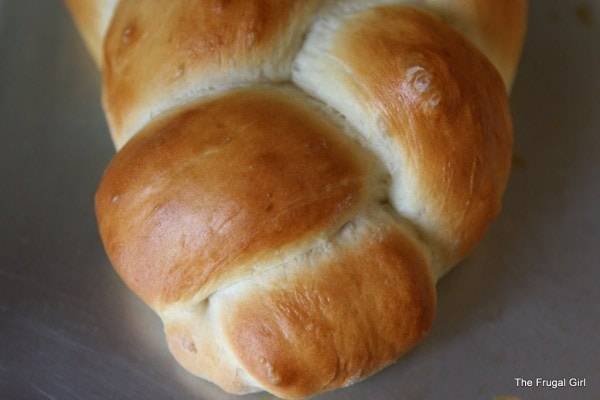
Today's post is about the most common way I use this dough, and that is to make braided loaves of bread. A braided loaf looks really lovely and impressive but is not at all hard to make.
Here's how you can be the proud owner of some gorgeous braided loaves.
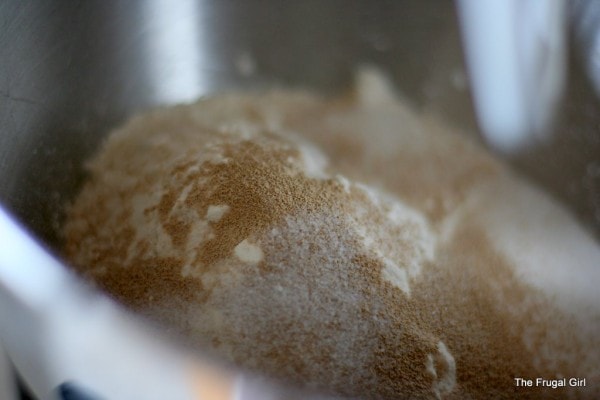
First, mix the dry ingredients together.
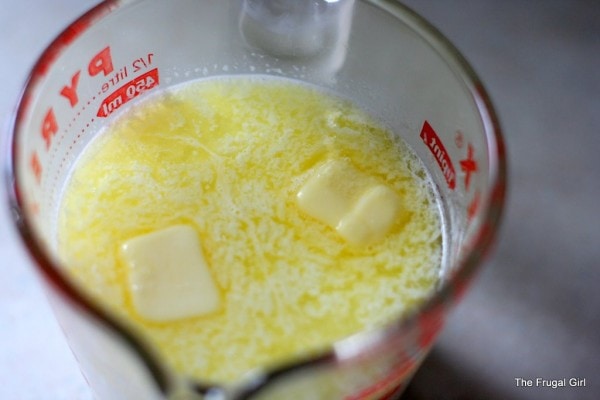
Then heat the milk, water, and butter together to 120 degrees.
Add the wet ingredients to the dry ingredients, beat for a few minutes, and add enough flour to make a soft dough. Turn it out onto a floured surface....
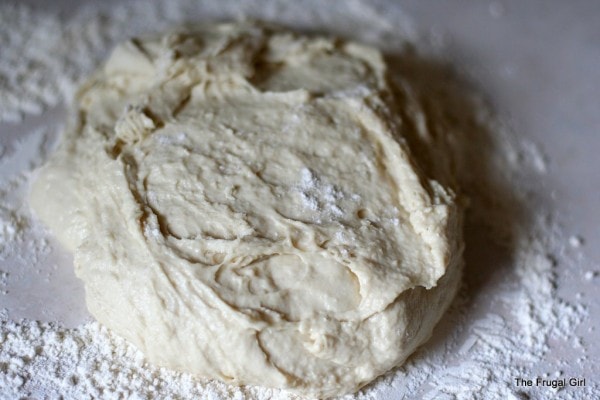
and knead until it's smooth and elastic.
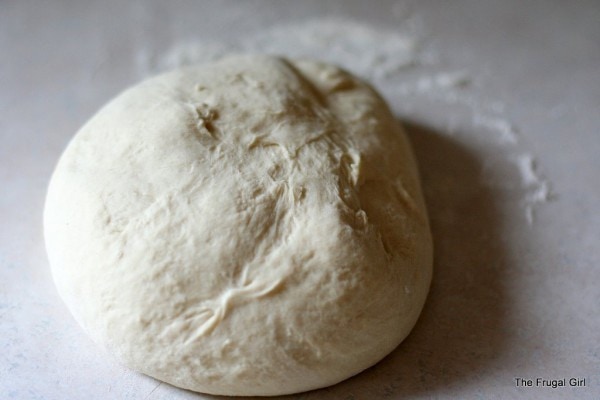
After letting it rise for an hour, punch the dough down and divide it into 6 equal portions.
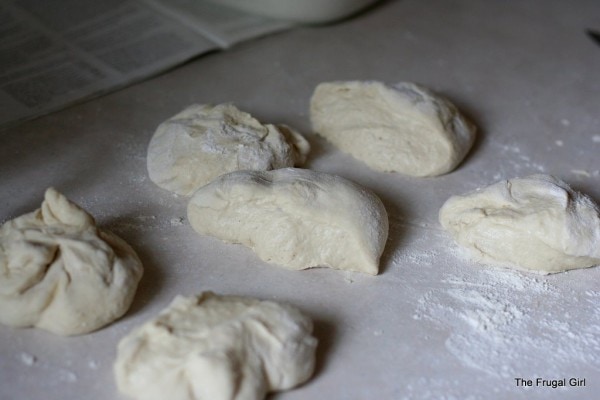
Roll three portions out into 12-16 inch ropes.
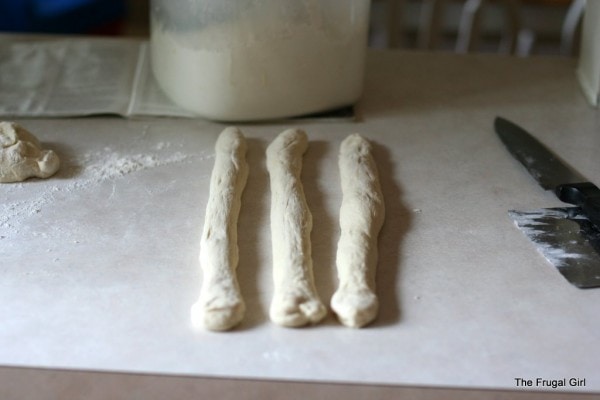
To braid them, you can either start at one end and work to the other, or you can start in the middle, work to one end, and then start in the middle and work to the other end (if you have trouble handling the long strips of dough, this is a good way to go). Repeat with the other three portions of dough and lift the finished braids onto a greased baking sheet.
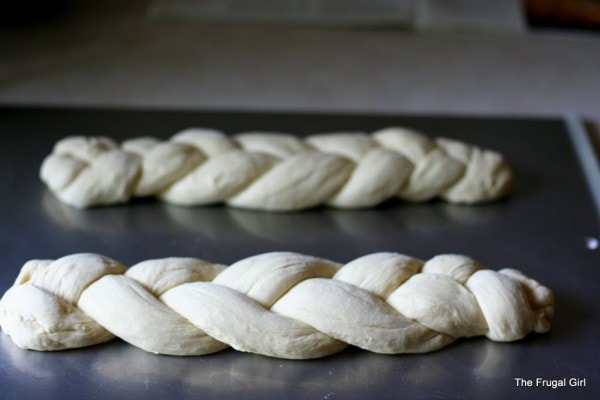
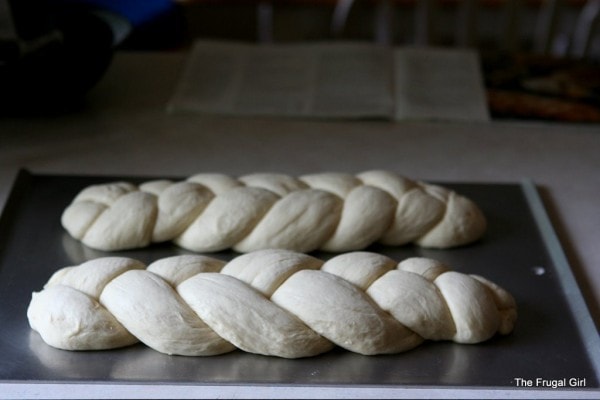
Cover the loaves with a wet tea towel and let them rise for about 35 minutes. The length of time necessary for the rising period will vary depending on how hot or cold your house is, so use a visual check in addition to a timer. They should be puffy and about double in size, like this:
To give the crust a nice shiny finish, you'll need to mix up an egg wash. This is not at all necessary, but it does make an enormous difference in the appearance of the loaves. I always do an egg wash if I'm giving loaves away or bringing them to someone else's house. When I make these for just the six of us, I usually only make an egg wash if I have cheap eggs around as I'm not really interested in using a pricey farm fresh egg to make my bread shiny.
To make an egg wash you just beat an egg with a tablespoon of water, and then use a pastry brush to gently brush it onto the risen loaves.
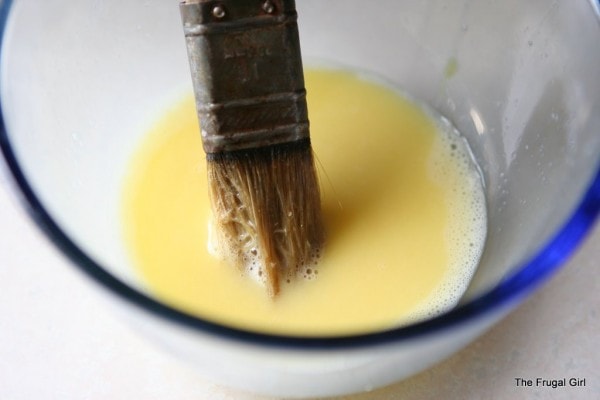
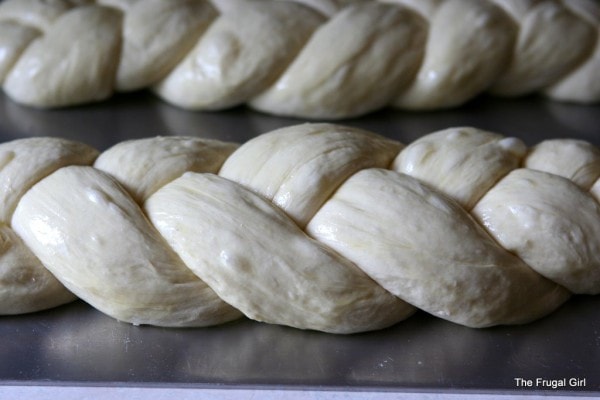
A thin layer of egg wash is sufficient. The loaves should just look kind of shiny when you're done.
Bake the loaves in a preheated 350 degree oven for 25 minutes, or until lightly browned.
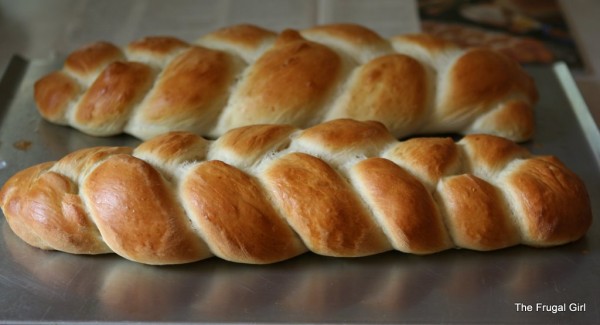
Let cool on a wire rack before slicing. Happily, these cool off fairly quickly, so you shouldn't have to wait long before enjoying a slice, preferably a warm one, so that the butter will melt into it. (Really, as long as you are not opposed to dairy, you ought to use real butter on your homemade bread. Margarine is not the same. Not even close. I'm just sayin'.).
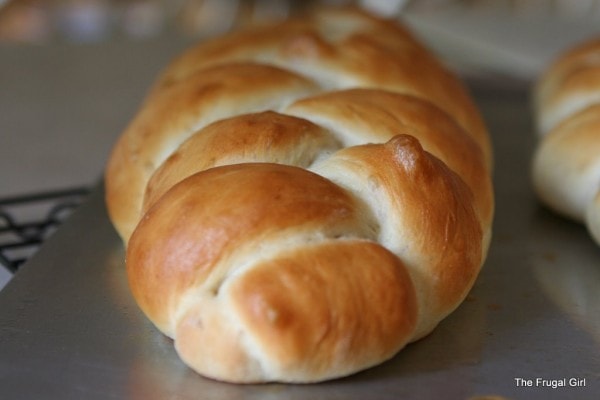
Braided Loaves
6-6 ½ cups unbleached all purpose flour
3 tablespoons sugar
4 ½ teaspoons (2 pkg.) yeast
2 teaspoons salt
1 ½ cups water
½ cup milk
2 tablespoons butter
Mix 3 cups flour, the sugar, yeast, and salt in the bowl of a stand mixer. Combine water, milk, and butter and heat to 120 degrees.
Gradually add warm mixture to the dry ingredients, and beat for 2 minutes. Mix in enough additional flour to make a soft dough. Turn out onto a floured surface and knead until smooth and elastic, about 5-8 minutes.
Cover with wet tea towel and let rise in a warm place for 1 hour. Turn dough out onto a floured surface and divide into 6 portions. Roll each portion into a 12-16 inch rope. Braid three ropes together; pinch ends to seal. Repeat with remaining dough, and transfer braids to a greased baking sheet.
Cover and let rise 35 minutes. Beat 1 egg with 1 tablespoon water and brush over risen braids. Bake in a preheated 350 degree oven for 25 minutes, or until nicely brown. Cool on a wire rack.
Thanks so much for posting this! I have been wanting to make Challah for a loooong time. I'm going to try it this week for sure.
One question I do have -- you often give specific temperatures for the water and/or milk in your recipes (e.g. "heat to 120 degrees"). Do you actually measure the tempurature? And if so, how do you do it? I've been guestimating based on my own body temperature, which seems to be working for me, but I thought it might be worth asking.
Thanks again, and enjoy this beautiful day.
This is not Challah. Challah does not use butter (it is supposed to be parve) but it does include eggs, sometimes a lot of them. It is also usually sweeter than this. I dont post this to be nasty, but so that gentiles don't think this is appropriate to bring for Shabbat.
Barb, Challah is actually a little different, in that the dough is very eggy. I think my Challah recipe has 4 eggs in the dough! I'll post that at some point.
I check the temperature of my liquids most of the time with a kitchen thermometer. I do have a pretty good idea by now of how hot the liquids should be, but if I have any doubt, I resort to the thermometer.
I'd definitely recommend thermometer use to a beginning baker.
Oh yes, you are right (of course!), I didn't notice the lack of eggs. Guess I'll wait for your recipe, or maybe I'll try one from the BH&G cookbook. And I'm going to look for a kitchen thermometer, at the Thrift store, of course 🙂
I have "Overnight Cinnamon Swirls" in the oven right now. They smell divine. I was surprised only at how long it took to make the dough last night (over an hour and a half), though that may have been partly due to the "help" of my darling 9-year-old daughter. It was time well-spent, though, not only because the Swirls smell so good, but because we had so much fun together. It doesn't get any better than that!
P.S. Happy Birthday to Joshua!
I am new to baking bread and I am a wondering if I can use instant yeast in this recipe. As I was doing some research, I found that there are many different kinds of yeast and I don't know if the measurement in your recipe would be appropriate for instant yeast. Thank you.
Anna, yup, you can use instant yeast. I think that's what my two-pound bag from Costco is called, actually!
Speaking of challah, a few years back my son and I made our own---this was when he was about 4. It was a lot of fun but took forever, as BarbS mentioned above, cooking with kids tends to do that to your time. (He especially loved braiding the dough, that was hilarious to him. ) The funniest part was that when my husband told his 95 year old grandfather that we had made our own challah, his grandpa replied "who the hell does that?" He was born in a village in Russia in 1910 and I guess once they got to America, buying challah in a bakery was a sign that you'd made it.
Nowadays, it's cool to bake your own stuff, right Kristen? 🙂
P.S. I baked the English muffin bread yesterday for the first time, yum. Keep those recipes coming!
Darn straight that Margarine is evil. Trans Fats and all that stuff. Plus butter is just that much nicer.
I was thinking of baking tonight and now I feel like making these. We'll see.
Yum, we're already hooked on your cinnamon twists... can't wait to try these too. Thanks!
There are three differences between margarine and butter.
1. Butter melts in your mouth, margarine does not. Specifically, butter's melting point is just below mouth temp, margarine's is a few degrees higher. This has a strong effect on the mouthfeel of products made with margarine and is how some people can tell the difference, even if butter and marg taste the same.
2. Margarine has transfats (= partially hydrogenated fats), butter has saturated fats. Transfats are much more dangerous to one's health altough both are bad for you.
3. Margarine is usually cheaper.
A few more notes: there are now margarines that don't use transfats. They use fully hydrogenated fats, which aren't as bad. I don't know how the fully hydrogenated ones compare to saturated fats. These margs are a lot more expensive than standard margs.
Low fat/calorie butters and margs are NOT for cooking. The calorie counts are reduced by using water in the mix. Baking and frying require a certain amount of fat, the low cal products don't have enough fat (per T, per cup, whatever) and too much water.
Roughly speaking, the more solid a fat is at room temp, the worse it is for you. There are exceptions: the fully hydrogenated margarines and criscos are solid at room temp, and coconut and palm oils are liquid but still about as terrible for your health as they can be.
This public service notice brought to you by WilliamB, food geek and obsessive researcher.
The best part about Challah is grabbing a chunk off to eat. Challah is for the Jewish sabbath (Friday sundown to Saturday sundown) and observant Jews are not supposed to use a knife during this time, which is why Challah is so perfect!
Mmm . . . challah!
Katy Wolk-Stanley
"Use it up, wear it out, make it do or do without."
P.S. I am aware that your bread is NOT Challah.
-Katy
Thanks for the post, and this theme.
@Katy Wolk-Stanley
Yes, but if you go to the temple and after the blessing, people at the front by the challah grab a hunk of bread and pass some along to someone else farther back in the crowd....sorry, as a germo-phobe, that just really gets to me! I like to pull off my own yummy hunk, thanks! 🙂
Does this happen at churches or do you get to pull off/pick up your own piece/slice of bread?
@WilliamB
your public appreciates it!
I have a question with regard to the 61/2 cups flour- I made this bread last night and it was a very heavy, not very elastic dough- Does the 6-61/2 include what you are using on you surface or do you include it all in the mix.
I love heavy bread and It turned out good the dough was just hard to work with. The egg wash made it look so so pretty
Bekki
Bekki, I would just add as much flour as you need to make a soft, elastic dough. The amount of flour will all depend on the atmosphere and temperature of your home, so you have to kind of just go by feel. If 6.5 cups of flour makes your dough too heavy, don't at all feel like you HAVE to use that much. Just use as much as you need to make a nice dough.
Thanks for this great recipe! I love to cook and have recently started to make some yeast bread recipes thanks to your inspiration. Such a great thing to learn to do and it reminds me of my childhood. My mother is an AWESOME baker! Oh and I wanted to note that I used 1/2 wheat and 1/2 regular flour and the recipe still turned out great. I'm always trying to add a little more fiber in our diets when possible. Keep the great recipes coming!
i have so much interest to make all kind of bekery and to open big bekery house in etiopia
how can a get plz give me same adia
Thanks for the recipe. I got a copy of this recipe off the back of a yeast packet when I was in high school some 30 years ago now. I looked for it when I was at my mom's house a couple months back and realized I had lost it. I have really been wanting to make this bread. It is one of the best bread recipes I've ever come across.
HI
I'M REALLY GLAD I STUMBLED OVER UR WEBSITE.
I LOVE BAKING, I AM SAVING TO BUY A BREAD MACHINE BUT AFTER READIN UR RECIPES I DNT THINK I NEED ONE.
PLEASE LET ME KNOW INSTEAD OF EGGS WHAT CAN I USE IN THE RECIPES.
ALSO 350 DEGREES OVEN TEMP? IM NOT SURE
THANKS NEETA
You can leave the eggs out, and your bread just won't be as rich.
And yep, most of my breads bake at 350 F.
Can you substitute olive oil for the butter? I don't like the flavr or smell of butter.
Yep, you definitely can!