
Shoot Better | On Lighting (Part 1)

This post is part of Shoot Better, a weekly (ish) series on improving your photography frugally
(a.k.a. not buying tons of equipment.)
Lighting is a gianormous topic that could fill books upon books, but in this post and the next, I'm gonna try to cover some very basic stuff that will help improve the lighting in your photos.

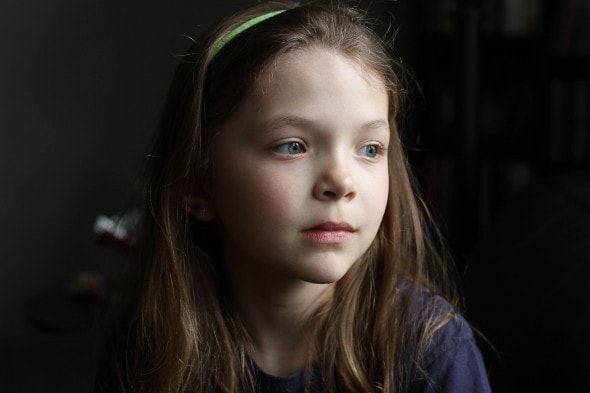
(taken with just window light)
This post ended up being super long when I first wrote it, so I broke it into two sections. Today will mostly be about what NOT to do, and next time I'll talk about what you SHOULD do.
So.
Lighting is pretty much what determines how great (or terrible) your photos will be.
Now, if you've practiced and you've got some good equipment, you can take pretty decent photos in many different lighting situations.

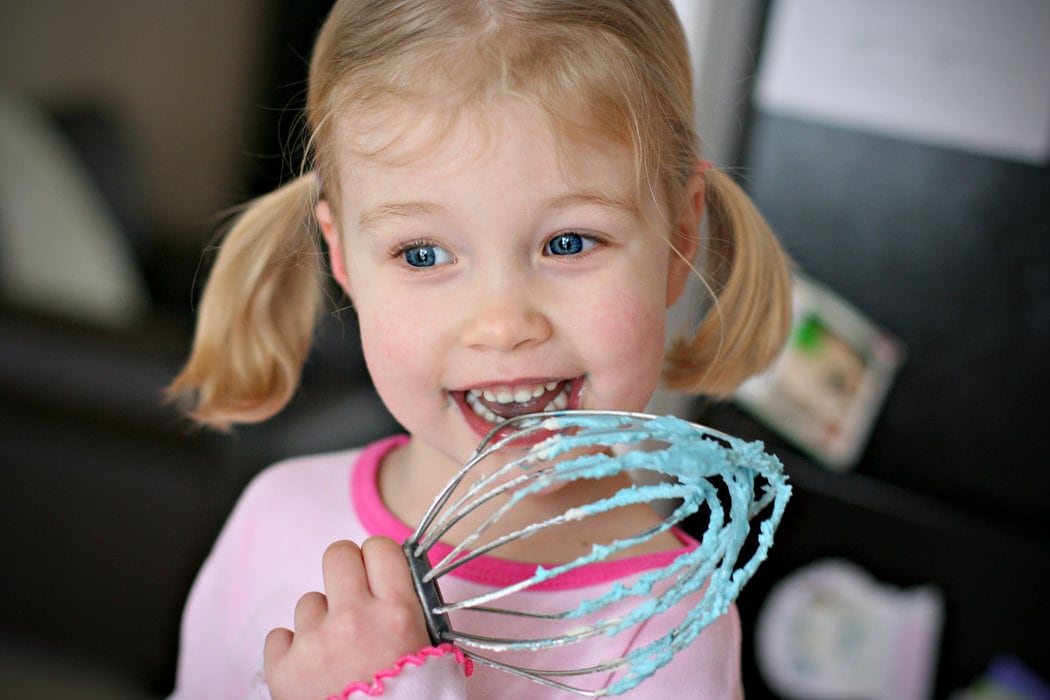
(birthday cake candles don't make for the most ideal lighting situation!)
But since we're not assuming you have experience or great equipment, we're gonna talk about good light and how to find it.
Really, taking good pictures requires being something of a light detective.

You have to notice the light, look for it, pay attention to the temperature of it, notice its direction, and so on.
Thinking about light is probably the largest single thing that improved my photography, and I'm still learning about light all these years later.
A really wonderful thing about light is that using it costs nothing and requires no equipment upgrades. No matter how junky your camera, learning how to use light will still improve your photos.
Yay!
Alrighty...let's talk about what makes for bad lighting in photos.
(Props to Zoe for being willing to be my model in the photos that follow.)
Don't use the flash.
With the exception of fancy flash units that fit on the top of SLRs, flash is pretty much going to relegate your photos to the amateur point-and-shoot realm, no matter how fancy your camera.
Flash is harsh, it's ugly, it overexposes people and underexposes backgrounds, and it makes colors all wonky.
Here are two shots taken back to back with my SLR. The only difference is that I used flash in the first one but not the second.

See how washed out she is in the first photo and how flat her features are? There's much more dimension in the photo without flash.
Here's the same set taken with a point and shoot.

(This one's not quite as bad as the SLR flash, mainly because it's less powerful and washes her out less. Still, the colors are weird and the photo looks kind of artificial.)

Sometimes you have to use it, but dear readers, I beg of you, please try to shoot without flash whenever possible.
At least give it one test shot, and if the result is unbearably blurry or grainy*, you can always turn the flash on.
*I personally prefer grain over flash almost every time.
I'll talk more about shooting in low light without the flash in a future post, promise!
Natural light is ALWAYS king.
For photography purposes, natural light always beats artificial light, whether it's flourescent or tungsten or LED.

So, for the best shots, turn off the artificial lights in a room, turn off your flash, go outside, or get near a window.
Don't mix lights.
Artificial lights have varying color temperatures.
What does that mean?
Well, LEDs emit a bluish light, tungsten bulbs emit an orange/yellow light, and flourescent bulbs usually are a bit green.
Plus, daylight has varying color shades throughout the day!
Most cameras, even point and shoots, are able to compensate for varying light temperatures, but they can't compensate for a bunch at once.
This isn't a great photo for a number of reasons, but for now, focus on the fact that there's a combination of daylight and lamplight. One part of the photo is warm and one part is cool.

For this one, I just turned the lamp off and changed nothing else.

So if you're shooting in daylight, don't turn your lamps on as well.
And if you've got tungsten and flourescent bulbs in the same room, don't turn them both on at the same time.
Don't shoot in bright sunlight.
I used to think bright sunlight would be great for photos (So much light! Woo!), but when the sun is high in the sky, it casts harsh shadows in some spots while shining too much light on other spots.
Plus, it makes people wrinkle up their faces and squint.
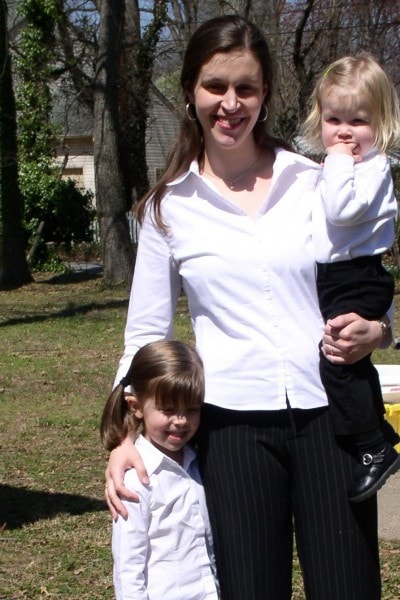
It's much better to shoot in the shade, like so:

________________________
Okee-doke! Next time we'll talk about what TO do to get better lighting in your photos.
If you've got any questions, please leave a comment and I'll do my best to answer!
Also! Feedback on the helpfulness of this would be great. Too much information? Not enough? Too short? Too long? Let me know and I'll adjust accordingly.

Great tips! We don't get much sunlight in our apartment until the afternoon. I only get a few hours to shoot. I've found that I can tweak a lot of photos in Photoshop to fix the lighting. Sometimes I have to deal with bad light when shooting dinner photos and Photoshop saves me!
You know, one of my least favorite things about winter is the fact that it gets dark so early...it makes shooting photographs around dinnertime super challenging.
I LOVE it when it starts to stay light around dinnertime.
Great tips on lighting! You are so right that understanding lighting is key to taking good pictures, regardless of what kind of camera you have. I hate flash too. We have a lot of gray days here, and it makes it very difficult to take good pictures inside most of the time. Will look forward to your next tutorial 🙂
Same here in the wintertime, at least. And sadly, our living areas are on the north side of the house with few windows. My dream is to add at least one more window on the north side (and the motivation is at least 50% motivated by wanting more like for photos! Ha.)
I know next to nothing about photography, so I am looking forward to more posts about this. Could you maybe mention how to optimize your smartphone and/or tablet photos?
Yep-most of what I'm going to share in this series will not be equipment-specific (not just for SLRs!). So for instance, all the tips about lighting in this post can be applied whether you have an SLR or just a phone.
This is so helpful. My husband (the amateur photographer in our house) is always going on about needing shady days, but I didn't QUITE get it until we had to completely scrap our holiday card photo this year because we shot in bright morning sunlight and it was TERRIBLE, everyone's face was in shadow.
Yep-unless you're shooting in the early morning or late evening, the sunlight is usually too shadowy to be any good.
Unless you have a cloudy day in which case you're golden!
I have my flash permanently turned on, because the indoor photos are otherwise out-of-focus. Always. Have you experienced this? My point-and-shoot camera is a decent Canon, but it's old.
And I often use the flash outside, because shade isn't always an option and the flash fills in those shadows. How do you handle situations like that?
Love reading your blog - thanks!
This can definitely be a problem depending on the camera. Some cameras are better in low light than others. Does it matter where you take the photo indoors? Is it blurry even if your subject is right by a window?
I haven't used fill flash a lot, but it can be useful in bright sunlight.
Great tips. I would only amend your "avoid camera flash" advice by saying that it can be useful to force using it when shooting outside when the main light source is behind your subjects and you can't change it (eg due to a building or scene you want to include in the background). It can give just enough light to fill the faces a bit, but won't usually overwhelm.
The great thing about digital photography is you can try it both ways and see which works.
So true! That's why I recommend giving it a try without flash first...if it's awful without the flash, you can always take another shot with the flash on.
Thanks so much for sharing this post, Kristen and Zoe! I really appreciate all of the effort that went into it.
When I photograph my food, I take it outside as often as possible. With the changing of seasons, I am still trying to figure out the best times to shoot. It's challenging when you are doing a recipe for a blog post to get the timing of the cooking/baking and photography all down.
I used to think that the brightest sunlight was the best, but you are absolutely right about the shadows when the sun is high in the sky.
I couldn't agree more about the use of the flash either. I remember when I always used it. Now I hardly ever do.
I'm really looking forward to your next posts on this subject. Thanks, again!
I'll pass on your appreciation to her. We had fun taking purposely wrong photos...I kept positioning her for optimum bad-ness. 😉
"Optimum bad-ness" - I like that!
She did a wonderful job!
Thanks, again!
This is great! Just the right level of information for me right now!
Yes, me too - and it's the perfect length for me as well. I've developed a bit of a mental block around photography because I've tried to read the fancy books so many times with glazed-over eyes. Your writing is better for me, much more accessible.
Thanks so much for your feedback!
I'm shocked that no one else has asked what is the recipe for that delicious dish you have such a beautiful picture of, it made me hungry just looking at it! I appreciated the what not to do, I have never put thatch thought into photos but maybe I will start.
Oh, that's a steak and potato salad from the Cook's Illustrated quick dinners cookbook (the orange spiral bound one). It has a mustard vinaigrette dressing that's quite tasty!
Great post! I have almost stopped using my flash so much because of your posts and it definitely makes a big difference in my pictures!
Thank you so much! Photography always overwhelms me even though I love pictures. Now I have a better chance of taking good pictures.
Thanks Kristen! I like that you show multiple photos for comparison. I usually take a ton of photos with no flash and then a few with the flash just in case but I always end up using the no flash shots.
I know when I read a photography tutorial, I always want to see a right/wrong comparison. Seeing the right way is helpful, but seeing the wrong way is actually even more helpful, I think.
I feel the same way about fashion posts...what NOT to do would be super helpful!
Thank you so much for these great photography tips! I love taking pictures, but I've got an inexpensive point and shoot camera, so my pictures are often just so-so. Now I see what the problem is... I almost always use the flash! Can't wait to try your tips. Looking forward to your future photography posts! PS... I found your blog a few months ago and I really enjoy it. (And I don't read many.)
Well, I'm so honored that mine is among the few you read!
I ABSOLUTELY love this post. I just started my blog and am realizing I NEED to learn more about photography. I have always been super interested in it but haven't taken the time to learn much.
I am noticing lighting All the time now;-) Thankfully our farmhouse is FULL of natural light so I am working on it.
Thanks for posting. I can't wait to read the Part 2.