
On really, truly enjoying things
On a podcast, I recently heard Ira Glass mention that sometimes, he finds himself eating meals and paying no attention to what he's eating at all.

You know how sometimes you drive somewhere, arrive, and have basically no memory of getting there? What he's describing is kinda like that!
This statement of his piqued my interest, mainly because I almost never experience life this way.

For better or for worse, I am generally very IN whatever moment I'm experiencing. I notice the good, the bad, and everything in between.
As I thought about this more, I wondered if this is a key to feeling joyful without needing to spend a lot of money.
If you go through life only halfway observing what you experience, it stands to reason that you would not extract 100% of the joy that life has to offer.
So, then you'd need twice as many joyful experiences in order to reach the joy level of someone who is more observant.

A little while back, a friend said, "You know, something I love about you is that it takes so little to make you happy."
And now that I've thought about this more, I'm wondering if it's because I am really soaking in all the happiness that my experiences have to offer.
When I walk in the woods, I notice things like:
- the delicious crispness of warm, but not humid air
- a brilliant blue sky

- a gentle breeze
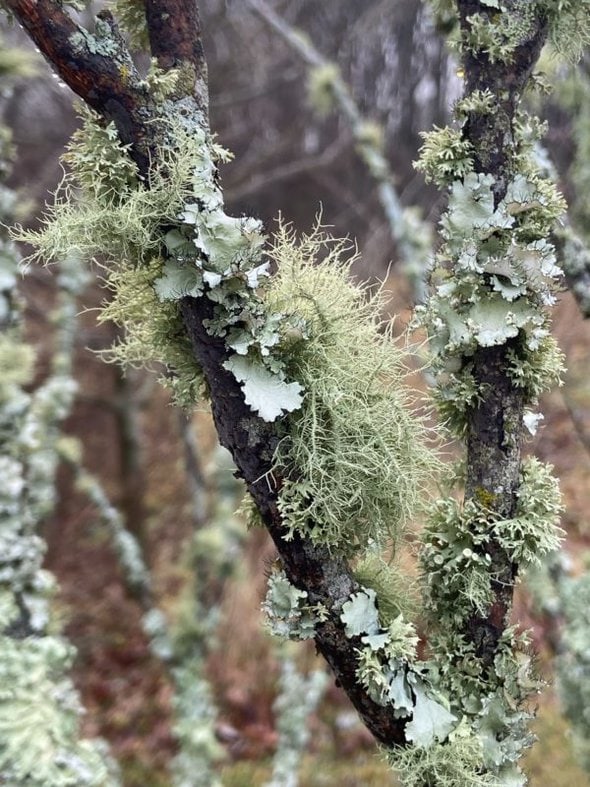
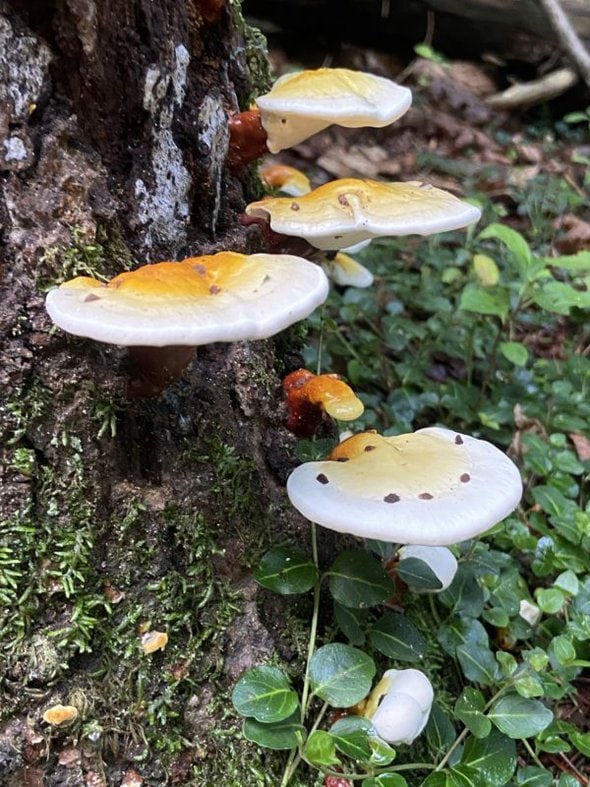
- little plants, mushrooms, lichens, flowers, berries
- a gorgeous piece of ice
- sparkly frost

When I listen to music, I feel all the sounds in my body, sometimes like chills going up my spine, sometimes like the feeling of being enveloped in a warm blanket.
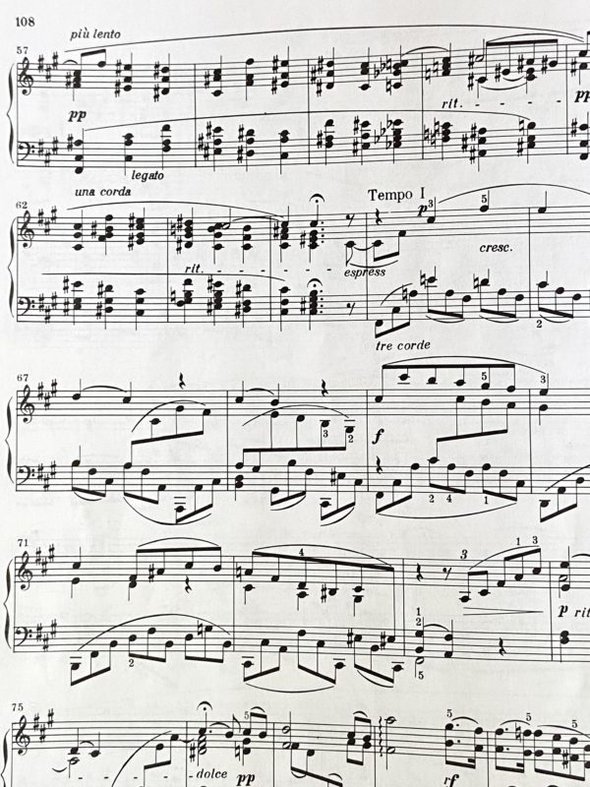
(This is a fascinating article on the psychology of chills in the body.)
I notice sunrises and sunsets, of course, but I also pay attention to beautiful streaks of light, a glow of yellow sunlight coming through my window, the way steam rises off of a pot or a cup of tea.

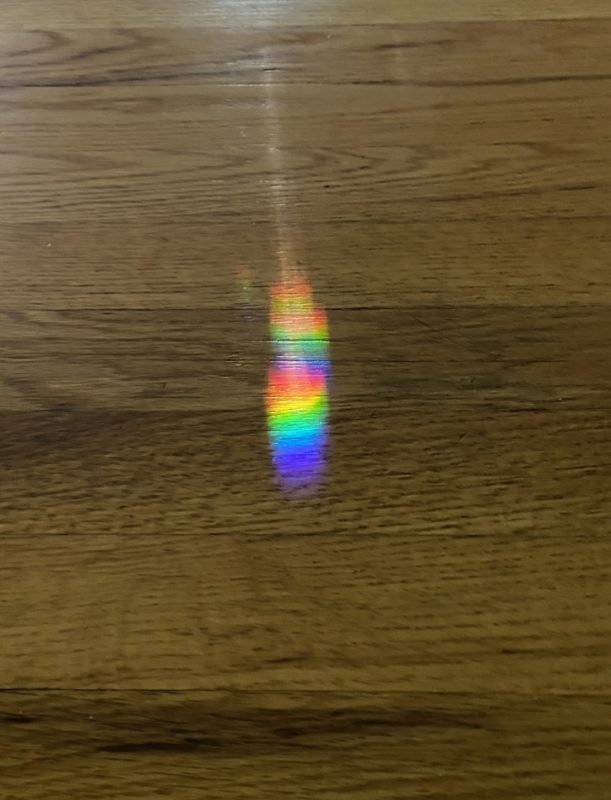
Or the way my front door's glass makes a colorful rainbow on my floor.
I take a lot of delight in sensations like:
- a cool shower after a summer walk
- a hot shower in the winter months
- the feeling of sliding into a bed with fresh, unwrinkled sheets
- fuzzy warm slippers on a cold day
- the pleasant weight of a purring cat on my chest
And when I eat my food, I am always paying attention to what it tastes like, even if it's just a peanut butter and honey sandwich.
(Which IS, for the record, deliciously satisfying.)
One of my favorite eating experiences that just came to mind: when I make my grandma's apricot sweet rolls, I love to eat some of them fresh out of the oven while the sugary coating on the outside is slightly crispy. SO GOOD.

I am obviously not a mental health expert, so I think you should take this whole post with a grain of salt.
But, what I'm talking about here probably falls under the category of mindfulness, which does seem to offer some mental health benefits (for example, see this Harvard article.)
And what I read about mindfulness says that we can get better at it with practice; when we purposely notice and enjoy what's good in our present moment, it becomes easier and easier to do that over time.
A little note about noticing the bad
I said above that I notice the good, the bad, and everything in between. But interestingly, I think observing the unpleasant things somehow makes the pleasant things feel even better.
I hate being sticky and sweaty, but I love the relief of getting into a cool shower.
Being chilly makes the sensation of crawling under the covers even better.
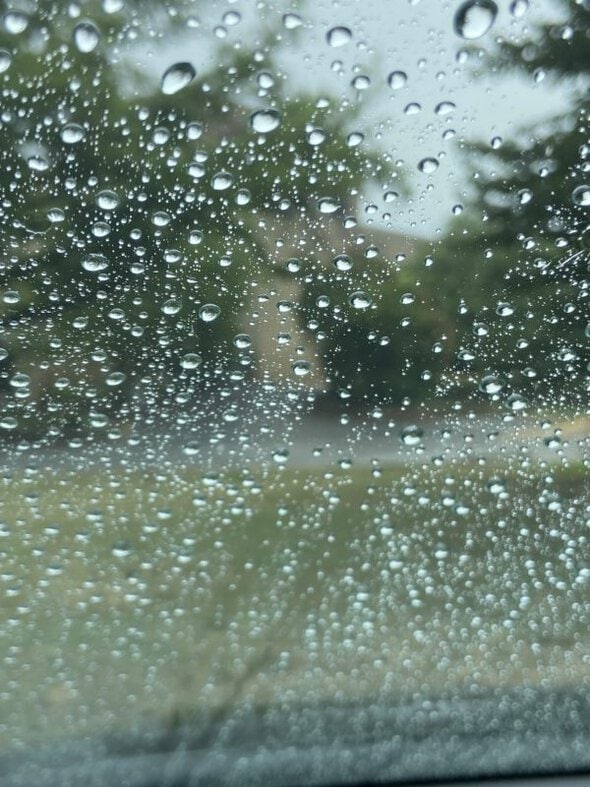
I dislike days with dark clouds, but after a string of those, the sunshine makes me so pleased, I could cry happy tears. Like...sometimes when I get to a sunny spot on a trail I just stop, close my eyes, and soak it in.
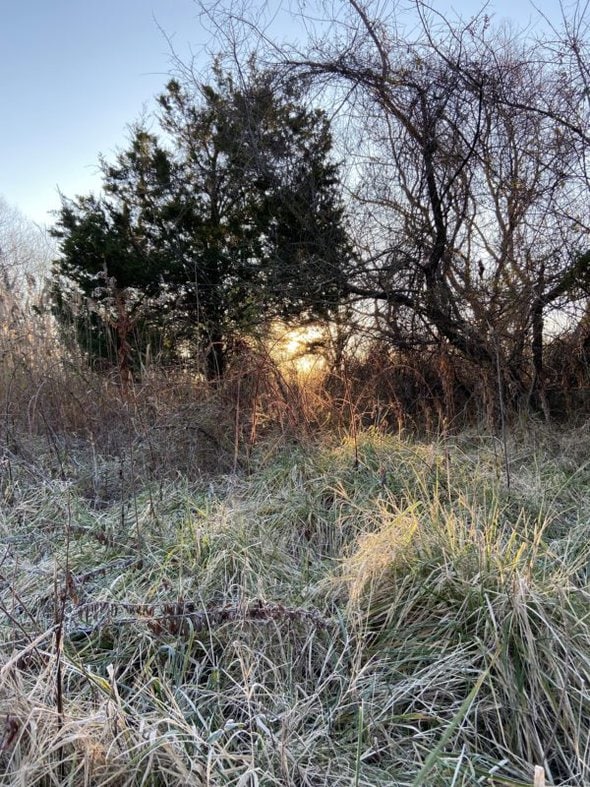
So...I really think that noticing all the flavors of life experiences helps to boost my happiness.
And the wonderful thing is: noticing costs exactly $0. 🙂
What do you think? I'd love to hear your thoughts on this!
(And it's ok to disagree with me. I really am just thinking out loud in this post, and I know my experiences might not be the same as everyone else's.)



Hmm. Thinking out loud here, too . . . Although of course I notice things, they don't really affect me really deeply like they do you. Not emotionally, anyway. This goes for both good and bad things. So while I definitely stop to enjoy the bands of purple shading into pink that fill the horizon just before sunrise and after sunset (one of my favorite things), they don't make me tear up or think great deep thoughts. On the flip side of that is that unpleasant things don't have a very deep effect on me either. Not saying this a good or bad thing; it's just is the way I am. The even keel works for me, I guess.
Is this something you remember your parents talking about when you were growing up? Were you taught to do this, are your parents and siblings like this as well?
My mother is extremely negative- she is a wonderful mother and I love her deeply, she just views the world very negatively. She focuses on the thorns rather than the rose, for instance. I became probably a little aggressively positive in self defense, I always thought. But I had to teach myself to appreciate the good things, as you are saying here. I don’t naturally do that, and I’ve always assumed it was because my mother always emphasized the negative things.
Then I had two sons. We adopted the eldest. He is a very positive, optimistic guy. I was patting myself on the back for raising him this way. Then we had a surprise biological baby. He is extremely negative, just sees the world so much like my mother does. He is a sweet and thoughtful kid, but he always focuses on the hard things and bad things. So I’m wondering how much of this is just nature.
I will say, the flip side is that my older son’s optimism makes some things a lot harder. He never believes that anything bad will happen, so consequences don’t really deter him. And even when he is enduring the consequences, he sees the bright side and will tell us, for instance, that he is glad that he lost video games for the weekend because he then worked on an interesting project instead.
My younger son is extremely well behaved because if there is a possible consequence, he just knows it will happen to him, and then he experiences any consequence as the Worst Thing That Has Ever Happened, so he does not repeat mistakes.
@Tarynkay, I've always thought people don't take nature, genetics into account enough. People always pat themselves on the back for being thrifty like their parents, and their children are thrifty because they modeled good habits and taught them about managing money, but I tend to think it's genetic.
My son used to be ridiculously rebellious, just like my father, for example. The problem is that in the fifties when my dad grew up and in the area he lived, he got away with it. (Think West Side Story. That's my dad's school pictured, and my dad was in a West Side gang too.) Nowadays we clamp down hard with zero tolerance etc which made my son suffer. I've always been very rebellious and individual too. It's our nature.
@Tarynkay,
My mom is the opposite.....well, sort of....she is aggressively cheerful, even if that's not how she's feeling. It was (and still is) very off-putting, especially if I'm going through a hard time, grieving, or similar, because she just can't (or won't) relate, and does not know how to respond. My mom and dad always communicated that trying hard things was risky, because there was a possibility you might fail at that hard thing, so best NOT to try the hard thing. It took me a very LONG time to get past that. Years of therapy, people.....years.
Hmmm. I think of myself as observant, especially visually. I tend to notice and see things that others do not. I'm certainly not what I'd describe as a happy person.
Maybe it depends on how sensitive a person is. Maybe if one is observant and not that sensitive, or a person who can let bad feelings pass, one would be a lot happier. My mother always, always called me overly sensitive. Physically (tags in clothing, an uncomfortable bra, being too hot, not having short sleeves), emotionally (I can remember annoyances from first grade that still bug me, I expect life to be fairer than it is, and I fight with people all the time) et cetera. For instance, my son took a little video of Latest Pup, who was wearing a harness that he bought yesterday. (I sent him off with a small harness but it was still too big.) He hadn't taken the tags off the harness before putting it on the pup and it semi-spoiled the video for me. Or when I asked Kristen about that tag on her lamp that she hadn't noticed.
Around 1996 I read the booking "Raising Your Spirited Child" re my son, and I was practically in tears about how accepting it was. I wasn't overly sensitive--I was more sensitive than other people and that caused me problems--I was just at my own level, no value judgments. It completely changed my life, from always being told I was too much, to feeling acceptable the way I was.
Anyway--I've always felt and noticed more than most and mostly hasn't made me happier. Though collecting art and beautiful things does make me happy. Someone told me last week I was valuing an object over a person (the person not being a particularly close friend) and I thought, "Yeah, so what?"
Rambling! I just got up.
NB: Tag still on harness in this morning's vid. (Puppy is so adorable though.)
@Rose, I was almost always itchy as a child. Of course, my mom would ask me not to wiggle and scratch ("Behave like a lady!"), but as an adult it has given me some pleasure to remove labels from stuff. (I mean actually removing labels, because cutting them out leaves the tiniest edge of the label = still itchy!) When my mom was in the nursing home we bought her nice, comfy sleepwear, but never with lace edging because she said it felt itchy. It must be genetic.
@Rose, I share many of the 'sensitive' issues you mentioned but I was kind of derisively called 'picky' not sensitive. In addition to literally all the clothing and fairness items that bother you, I'm affected by loud music, certain smells and room temperature, that can ruin a restaurant experience for me before I even consider ordering. I consider myself very observant as well, especially about things other can seemingly ignore. Sometimes I think it's a curse.
@Jean, I'm still always itchy! And to this day I dislike form fitting lace because I can remember being four and wearing those horrible nylon lace tights popular in the late 60s to my aunt's house. They rubbed my thighs RAW.
I also absolutely love being brushed with a body brush (yet another symptom of autism I have) and always bring it with me when getting a massage. Or there's one particular spa treatment that involves body scrubbing and scalp massaging that I think is utter bliss.
Pup: https://ibb.co/KW8GnWV
@Bobi, Yes, me too, should have mentioned that. Being too hot, which I always am now, loud music I don't like, fish smells, etc. Then there's my chronic pain etc. My ex once told me to make a list of things that didn't annoy me, as it would be much shorter.
It would be nice not to notice so much bad stuff, but then I wouldn't notice so much good stuff.
@Rose, Jean and Bobi, It is a bit of a curse, yes. I’ve had to change seats in a movie theater because someone's perfume first bothers me then makes me ill.
Everything you guys named is true for me big time, but the worst is ruminating over past injustices. That includes one from first grade when the teacher misunderstood my answer. I still relive that and others.
@Rose, I'm piping in here. I'm an occupational therapist, and what you are describing sounds very much like what is called tactile defensiveness.
https://napacenter.org/tactile-defensiveness/ https://www.autismparentingmagazine.com/autism-sensory-defensiveness/
I prefer the second article on autism sensory defensiveness, but wanted to say that, while sensory defensiveness is often seen with people with autism, you don't need to be on the autism spectrum to experience it. We all experience some discomfort with different sensations--think of it as a sliding scale--but it's when different sensations interfere with daily activities that it becomes problematic. Often children who are considered to be "behavioral problems" are, in actuality, experiencing an overload of sensations that their brain can't screen out. They are seen as inattentive, combative, picky eaters (they dislike many food textures), they may dislike activities that make them feel off-balance (think of many childhood games and playground activities--swings, merry-go-rounds, bikes, etc.--all of these involve the ability of the brain to adapt to different postures), they may be excessively sensitive to bright light or noisy environments .... in short, any sensory experience that we experience can be affected. It can be a huge issue for school-age children because sensory defensiveness has a big influence on their learning. If any of you parents out there are thinking, hmm, this kinda sounds like my kid, I would urge you to find a pediatric OT (it varies state-to-state, but I think most school systems are required to hire one) and get your child checked out. It's best to catch it early and start getting treatment for it (younger kids are less likely to be resistant to the treatment process, and a good OT will make it fun) but any age could benefit from it. Be aware that not all physicians have heard of this, and not all school districts have a good screening process to identify these kids, so you may have to become the pushy parent who advocates for their child. Sensory defensiveness is very treatable and it hurts my heart to think that something that can be easily addressed is overlooked.
And now I will step down from my platform. 😉 Keep in mind that pediatrics is NOT my area of practice, but I'm hoping that my comment will be helpful for someone out there.
@Erika JS, The big thing from first grade is that Stacy was hiding in the coat closet. I took off my coat and then closed the doors, as you were supposed to. Stacy then tearfully told the teacher I shoved her in. I can remember the teacher taking me out in the hallway to say I was lying, and I remember that I was almost as tall as she was, and I figured that was why she was treating me at age 6 like an adult. Stacy, needless to say, was a tiny gymnast and that's why she was believed.
I went home, explained to my mother and asked her to call the teacher, which she didn't. That's why I always, always called my kids' teachers on their shit. You spell "nickle" on homework? I pointed it out. You tell my second grader that the sun is the center of the galaxy? Nope, nope, aaaand nope. You tell me my third grade son is abnormal for drawing pictures of guns and you mention Columbine to me? I'm going to laugh really hard right in your stupid face.
@Rose, I'm enjoying everyone's profound and thought-provoking comments but all I can contribute at the moment is: thanks Rose for sharing the pic of Jasper; I really truly enjoy that and now I'm moving to my next task with a big goofy grin on my face
@Rose, I think what made me fall in love with my husband was that all the negative things I had been told about myself (rebellious, too particular and the list goes on), he saw as positives and encouraged. Not rebellious but spirited. Not too particular, but discerning. Not mouthy but outspoken. Not inappropriate with what I found as funny but able to use humor to lighten situations up. And the things that are not really positive or negative, just preferences, like no tags, no blankets or sheets tucked in because my toes go nuts, reduced noise, no fluorescents and so on, he just accepts without making them negative. In turn, I became better at seeing some things others did as just differences, without assigning them a positive or negative quality.
@Rose, What a face on the puppy! Thanks for sharing.
@Bobi, dripping water faucets and buzzing background noises also set me off!
@Lindsey and @Suz, Thanks! I can't wait to meet him (probably tomorrow evening).
@Rose, that might be the world's cutest puppy. I am partial to beagles. I always thought Jasper would be a great pet name.
@Ava, He also has blue eyes, unusually. And a golden heart on top of his head. We disagreed about names. I wanted "Jonty" (a British nickname for Jonathan), Son wanted "Jasper" and Daughter wanted "Nimrod," which to be fair, does mean "Mighty Hunter." I let Son win since he's the one spending a week picking him up (which he insisted on. The breeder would have been happy to fly him).
@Kris, Thank you so much for this! We've come such a long way since I was a kid. I had so many behaviors easily identified as autism, including toe walking and air writing (I still always air write), not looking people in the eye (which I tried very very hard to overcome in my 20s), but in the early 70s, and also being female, autism wasn't on the radar except for extreme cases. I was bright, verbal, and read very early, so my quirks were just quirks and being overly sensitive etc etc.
@Erika JS, and @Rose, Jean and Bobi,
OMG, yes!! the ruminating over past injustices.....yup. I can remember the other students laughing at me when I named the source of the Nile River incorrectly (this was maybe third grade?). The itchy labels! One year, my parents gave me all yellow clothing as Christmas gifts (multiple different sweaters and shirts, etc), which is my least favorite color. I could go on, but I won't.
@Rose,
Puppy!!!!! ❤️
So cute- and the tag makes it look like a little stuffed animal waiting to be purchased at the store. It enhances the cuteness!
@Lindsey, that is such a lovely description of love and a reminder to all of us to hold back on labeling other’s behavior and preferences unless they are dangerous or damaging to self or others.
My mom to the end of her 93 years of life labeled me prickly whenever I pushed back on her attempts to make me think and behave like her when what I was doing was perfectly fine but different. I did develop a strong ability to stand up for myself as a result but do still tend to push back when ignoring and moving on would be a better strategy.
Practicing being in the moment, taking time to think about what I am thankful for and breaking the habit of complaining have been so positive and powerful for me.
@Rose,
Could your new pup *be* any cuter? I think not. He's adorable.
@Kris,
This so describes my son, especially when he was younger. He has always been a super picky eater, among other things listed here, and we did have him assessed by our local children's hospital "feeding team". They did recommend OT, but then life intervened - my mother in law was hospitalized, plus some other things - and unfortunately, we never pursued it. I really wish we had. Now that he's 14, do you think it would make any difference?.
@Rose,
Whoa...Rose... I'm usually with you on most things, but speaking as a teacher, I don't think it is at all inappropriate for a teacher to raise her concerns to you about drawings of guns. And I certainly wouldn't call it "stupid shit," especially considering the climate in which we live.
I tell my students (who are four and five) that there are different rules for different environments. It would be weird to raise your hand to talk at home, but it's normal and sometimes necessary in a school environment. Likewise, there are certain images, words and hand symbols (for my little people, it's usually finger guns that started this conversation) that might be ok at home depending on your parent's rules but are just never ok at school because they can make people feel threatened and scared, even if you don't mean it that way.
I get what you are saying about expecting more from a teacher, but I do want to point out that teaching is very, very hard under normal circumstances and impossibly hard if you (or the children you are tasked with teaching) do not feel safe.
That being said, it definitely sucks that your teacher didn't listen to you when you were little. I hope that I get things right at least some of the time and I try to be willing to admit I am wrong when it inevitably happens. Even teachers are human.
@Lindsey,
My first child was extremely strong-willed. In fact, he was absolutely as stubborn as a mule. One day when I was completely exasperated, my big sister told me the secret of being a good parent. My job was not to change what my child was, but to channel his energy and innate character in a positive direction. For the positive side of stubbornness is determination which is a wonderful quality to have as an adult. Fast forward thirty-five years, this stubborn son of mine is a wonderful person. He is outgoing and loyal. And he never, ever gives up.
@Liz B., I would absolutely get him checked out and get see if you can get OT services for him. He has a lot of school left ahead (and a lot of living to do) and having strategies to help him manage his sensory issues could make a huge difference for him. I fully understand what you mean about life intervening--I've had similar situations and sometimes you do the best you can do in the moment. Good luck!
@Rose, I'm glad it resonated with you. I'm guessing that you and I are close in age, and you're right, we know so much more now and have better resources than we did when I was a kid.
@Erika JS, I was a very good and studious pupil, and always studied my spelling words thoroughly. But once, in first grade, I couldn't remember how to spell F-I-R-E, because it's actually pronounced F-I-E-R, so I copied the girl who sat next to me. That was almost 70 years ago, and I still feel an occasional twinge of guilt over my cheating. Human brain cells are wonderful things.
@Rose, oh, what a cutie! That adorable baby is well worth all the effort.
@Rose, omg. thanks so much. so cute. could we see gus sometime soon too?
@Rose, Very cute! I just love Beagles. We have two.
https://carlahoag.wordpress.com/wp-content/uploads/2021/10/zelda-and-sissy-2019.jpg
Zelda and her sister, Sissy
When I had my children here, meaning in the house and I was working I let more things pass by me. Sure I saw the occasional sunrise or sunset but probably only the biggies.
Then I beame an empty nester and I realized how fast my life was going by. And in an effort to slow it down I slowed down. Now while I am awake I am hyper aware of everything. For example I have a Spring yard my azaleas are all blooming now. Every morning I wake up and can hardly wait to go downstairs and see all those beautiful colors. I just stand there and soak it in. I will only have this for one more week. And I am so happy and grateful.
Grateful is a powerful word. I don't think you can be truly happy if you are not grateful. I am trying to stress this to my children who are in the busy years of their lives.
@karen,
As I have gotten older, I find that I acknowledge things of great beauty and little moments of happiness much more often. I also have a tendency to avoid negative things and people. It is difficult when you are raising children and working to slow down and savor the moment.
I love everything about this... your smart thoughts, thought-provoking words and gorgeous photos.
As I'm getting older, I think it's the "Thank goodness I'm alive!" moments that keep me from sinking into my chair and giving in to the aches and pains of aging. I'm not saying that I'm being a Pollyanna about it, but taking one single moment to notice, really notice something in the world enriches your life. Small children do this almost automatically, adults not so much, but if you practice being more observant you will be abundantly awarded.
@Jean, I try to be grateful and notice things because BFF was robbed of her life.
@Jean, So true about gratefulness, it’s almost magic.
One good thing (there are others) about being "overly sensitive " to things is how super observant my inclination is to notice beautiful things deeply. And that includes things to be grateful for. Luckily, I have many, starting with a wonderful family (NOT my family of origin). It more than offsets the annoyances.
The article I needed, without knowing it, Kristen. Loved it from start to finish, thank you so much.
I immediately thought of two experiences in my life that relate to this. The first- When I was about 15 years old, I remember being at the top of a ski run for my first run of the day, on a beautiful and cold sunny day, fresh powder on the trail from an overnight dusting, and feeling a sense of euphoria sweep through me that made me shout out loud from the sheer joy of it all.
A second was during a backpacking trip in the Grand Canyon, when the evening stars, including the Milky Way, were so vivid and undiluted that I had to go into my tent, because I literally couldn't process the infinity of what I was seeing.
So, I'm pretty sure I take in lots of the good, ha! (I certainly do so here by the beach on an almost daily basis.) However, my takeaway from your post today is to keep looking for the smaller things that I may be overlooking in my quest to find the bigger thinks (dolphins, barking sea lions, egrets, heron, and the rate osprey).
Lovely, lovely post. Again, thank you so much Kristen.
Yes. I see them. I take their photos, and I write them down. And yet — I also need moments where I do not notice. It's almost like I don't have the capacity to notice all the things that demand being noticed? — because we do have such a beautiful creation to inhabit and the noticing is infinite. Tamara R's experience with the night sky is familiar to me, not specifically but generally.
I am proud to be, as my husband lovingly calls me, a "sensitive and delicate flower." My bedding has to be just right, the room cool and dark enough, and my earplugs in, (I live near a busy road and bridge), or else I find it hard to fall asleep. I'm also very observant as well as empathetic and so I notice a lot of things that other may overlook, and I'm often deeply affected by what others are feeling.
The empathy can be difficult as I can become overwhelmed by it, but I also realize it makes me a caring person who tries to be as kind whenever possible. Although I recognize that there will always be suffering in the world, I will try to do my part to help alleviate some of it. My friends say that I am very supportive and they can count on me to help, and that warms my heart.
Being so observant has allowed me to experience so many lovely things like cardinals and blue jays, pretty flowers, delicious chocolate caramels, big and beautiful trees, rainbows, a lovely piece of music, the sunset reflecting on buildings across the river, the Christmas tree in someone's window, and other people being kind to someone. All of these things bring joy to my heart without emptying my wallet.
@AnnieH, My husband calls me his Georgia peach, so easily bruised but so wonderful (his words, not mine). This started after we were in Georgia for the first time and it was peach season. Turns out until then we had never really known what a peach tasted like and to this day (35 years later) we have never forgotten sitting on a park bench, eating peaches and laughing at the juice running down our chins.
I needed this today.
It’s easy to forget to treasure the moments and beauty as they come. I typically am one who finds joys in little things (taste of blueberries, morning bird chirps, the uncontained laughter of my youngest) but I’m also the one who walks as quickly as possible through beautiful nature because the movement I feel is more enticing than the beauty of the world.
Having a smartphone has numbed me to some extent to being mindful and in the moment more than any other thing/circumstance, and I have to work against letting it take up too much time.
Sublime was an aesthetic idea developed by the philosopher Edmund Burke to describe certain qualities of great art that transcended the possibility of measurement. The Hudson River School of painters went to the American West to paint landscapes that expressed the ideal of the sublime. Their landscapes were both allegorical and awe-inspiring.
@Rose, there’s a stunning collection of Hudson River School paintings at a museum near me (PAFA)
They are swoon-worthy.
@Kim from Philadelphia, Long admired the Hudson River painters, and was a total grown-up when I saw some of them in real life at the Museum of American Art in Washington DC. They're so huge! and so amazing!
Love this post. And the older I get, the more I understand how important it is to notice all the small things. We call it having a Low Delight Threshold.
@Janie H, I like your term "Low Delight Threshold." I'd describe myself as having both a Low Delight Threshold and a Low Amusement Threshold. (I'm easily amused, in both senses of the term "amused": I am very seldom bored, and I can usually see the humor in situations that involve it, even when the joke's on me.) These qualities have gotten me to the age of almost 69 through some pretty tough stuff, and I think that many folks here share them.
@A. Marie, love those! Low Delight AND Low Amusement!
I also notice and stop to appreciate all kinds of visual details in my surroundings, the way light hits object, plants, clouds, water in nature, etc. a bit more than the average person. I've always thought it's because I'm a visual observer and artist, or perhaps it is what made me an artist. After painting, I see my environment not as objects but as shades of color, perspective and lines.
I remember one teacher saying that after painting in nature, you stop seeing the forest as a green mass, instead you see all the different shades and gradations of color forming what we call green.
When I have less time to paint, I take a lot of photos with my cell phone, I'm always stopping to pull it out. After posting them on social media, people are amazed at the beauty that I'm surrounded by, which is funny as they live and move in the same surroundings.
But I agree, mindfulness of this or any other kind leads to more contentment and happiness without spending money.
As soon as we impose goals on the activity, it does usually lead to spending money or other resources to achieving it. For instance, I get great contentment from moving and exercise, but but when I add a goal of getting faster or going further, I need better equipment for achieving it.
I think I tend more to being on even keel like Kristin@goingcountry is. Yes, I see things - as a kid I sat and waited until a four 0'clock flower opened up completely and I now adore watching birds- but I also miss things. One of my problems (maybe Kristin's too?) is being too busy to "stop and smell the roses." However, I come from unemotional stock on my dad's side, so there's that. I do love nature, music, beauty, times with people I love, etc., but I am very guilty of not being in the moment, far too often. Now that I eat alone, I read while I eat, and rarely pay much attention to the food. I will half-experience lovely music because of thinking about other things that need to get done, when I'm supposed to be listening. It annoys me when I do that and I have to remind myself to come back to where I am.
On the good side, I can compartmentalize the bad stuff and deal with it as and when I am able. I hear that is not a good thing, but it works well for me. I don't know how I would have managed, dealing with all of DH's problems, if I hadn't been able to put that stuff aside to deal with when I was ready, so I could carry on with day to day life and not collapse on the ground in a whimpering heap of despair.
@JD, Compartmentalizing is a good thing if it allows you to carry on. (With the caveat that those things will need to be dealt with eventually.) The older I get, the more I appreciate people who don't impose their problems on those around them. We all have problems, but they don't have to become other people's problems.
Then again, I also come from unemotional stock. 🙂
@kristin @ going country,
I'm feeling understood, 🙂
My kids' piano/guitar teacher would say, "That's a problem, but it's not my problem."
I usually say, "That's in the magical land of Not My Problem."
I really needed this post. Thank you, Kristin.
Very interesting post. I think that we all perceive the world differently. We are a sum total of our experiences and our DNA. One may be thinker as opposed to a feeler …naturally more positive as opposed to negative … extremely stressed as opposed to happily relaxed. These things and more impact how one sees and approaches the world. Of all things, I do believe that stress has the greatest impact on mindfulness.
However, I believe that having a positive outlook on life and seeing the beauty in the world are important to one’s well-being, happiness, self-esteem and success. I have been blessed and a generally positive outlook comes naturally to me. However, this does not mean that I’m never unhappy or negative. Everything does seem easier when you are content especially frugality and simplicity.
I do believe that happiness and positivity can be learned. There was a book written many years ago by David Burns who was a eminent psychiatrist who believed in cognitive therapy. It was called “Feeling Good.” It was suggested to me by a therapist friend for a family member who was having a difficult time. It is basically a handbook on how to look at the world and your place in it from a more positive point of view. There are many exercises similar to Kristen’s Thankful Thursday. I highly recommend it. It was also a great help when my teenagers were filled with angst.
Well put, Kristen! Maybe people who aren't fully present to enjoy the moment are speculating about what they need to buy or do next in order to experience contentment, satisfaction, and joy. Maybe they are mistaking happiness (temporary) for joy (deeper, and often despite one's circumstances.
Like you, I fully experience many things, including how beautiful spring is around here, so very beautiful that it almost hurts. I don't need much, and in fact, the more I have, the more complicated and less satisfying life becomes.
Thank you for the gorgeous photos and deep thoughts.
I definitely feel the same way. I also associate colours with letters and numbers so the world is very sensual to me. On the flip side, when I'm stressed, I get sensual overload and in general can't stand loud noise and big crowds.
I do think external factors outside of how we 'perceive' the world have an impact as well, ie, where we live and how our lives are going. I feel less 'in tune' with the world when I am going through anxious times, and some people live in less beautiful areas in terms of nature and accessibility.
A lot of this reminded me of a book I recently re-read, "The Prize Winner of Defiance, Ohio". (It's a great read, sad and uplifting and funny all at once!) The mom of the family holds everyone together with her prize winnings from the contests that were popular with housewives in the 40's-60's. She manages somehow to keep a positive attitude throughout, raising a large family on a small salary thanks to her alcoholic husband, who at one point, during a rant, points his finger at her and says, "You know what your problem is? You're TOO DAMN HAPPY!" Which of course makes her and her kids just bust out laughing! I love that bit. She did indeed find bits of joy in every part of her life, as much as she could, and seemed to never let life get her down, at least not that her kids saw. The book was written by Terry Ryan, one of her children.
@Karen A., I LOVED that book.
@Karen A.,
I have this book on my bookshelf and have not read it yet. Maybe that should be next on my list.
@Bee, I hope you do like it! There are some hard parts to read (domestic violence), but I found the author did a great job of describing the era and the area of Defiance. I grew up in NW Ohio and it all rang very true.
@Karen A., I too have read the book and there is a movie also. Julianna Moore plays the lead.
@Karen A., Loved that book! Thanks for reminding me of it because I had not thought of it in some time.
@karen, I saw that there was a movie of it! Apparently the real children made an appearance in the movie as the grown-up kids. I thought that was nice. I might watch it if I get a chance.
Great post, Kristen!
Fun fact: the pic of the branches with the lichen growing. The hairy looking lichen is Usnea and was used as an anti-microbial wound packing during WWI. I inherited many medical journals from a frontier traveling nurse/doctor couple and Usnea was used in many forms.
I love the night on the farm. The owls and later in the season, the bats. The big night crawler earth worms, stars, galaxies, the soft glow of farms off in the distance.
I wake up each morning before dawn, feed the dog & cats, start the fire and make coffee. Head to the barns for first checks. For the last 3 mornings I have been making a small batch (8 cookies) of loaded oatmeal cookies in the toaster oven. I love watching the hummingbirds come for their first feeding, the birds singing and the pup on her first field hunt of the day.
There have been many decades of burning the candle at both ends, basically being a fireman....putting out flames, going on to the next job, commitment, etc.
Time on this earth is precious and I don't take any moment for granted. Wishing you all a happy day of reflection and joy.
@Blue Gate Farmgirl,
Thank you for the beautiful imagery!
I think being present and mindful and enjoying the little things is a key to contentment for many of us. So much societal pressure these days to just race through to the next thing to do, to buy, to finish.
I love this post so much. I think awareness/presence/noticing is so important - otherwise our lives just kind of . . happen! This was a beautiful reminder that just being here on this earth brings us so many gifts.
I am afraid I notice and wring every single emotion out of sad things but am not so good with noticing the positives. That is one of the reasons I so enjoy your posts. Not only do I see the joy in the things you post but your posts remind me to notice the beauty in things. I think the only exception is noticing the many, many wonderful things about my husband. (Who is, by the way, like you are about music. He often wakes up singing!)
I wholeheartedly agree with you, Kristen. I’m very much the same way!
For some odd reason, the only times I go on autopilot and don’t pay attention is when I’m checking out at the grocery store or if I’m in a state where they pump my gas. They could hand me a receipt that says $500 and I’m afraid I wouldn’t notice.
As a frugal person, this is a little alarming to me!
What a wonderful post, Kristen. I've always been detail oriented, but I think it was when I became a bird/wildlife photographer (about 4 years ago) that I *really* started paying attention to things outdoors. The sunrises and sunsets, the clouds, the way the tree branches look in winter, the lichens and fungi on trees and logs, the way a dragonfly's wings look transparent. When I'm able to take a beach vacation, the way the sand feels on your feet....the soft breeze....the water crashing down around you. It's just the best.
Great post! It reminded me of something I learned about depression, so I rewatched the documentary and transcribed the relevant portion. This is from This Emotional Life, episode 2, Facing Our Fears, starting at about 1:00:00
"Depression doesn't just change the way we feel. It actually changes the way we see the world. Dr. Ian Gotlib, professor of psychology at Stanford University, is trying to understand just how deep these changes go. In one of his experiments, a group of women with a history of depression and a group of healthy control subjects watched faces on a computer screen. The faces started with a neutral expression that slowly transformed into either a happy or a sad expression. The women were told to press a button as soon as they noticed the transformation. Gotlib found that nondepressed women were much faster to notice the expression becoming happy than the women who were, or had been, depressed. Gotlib: "We've been finding that depressed people tend to guide their attention to negative things. When there are both negative and positive things happening, they'll tend to really focus on the negative. They attend to more sadness and importantly, they remember more sadness. So those memories of sadness stay with them longer. Depressed people remember the criticism, they don't remember the praise, or they discount the praise, and they say 'it just wasn't warranted, I didn't deserve it.' And even things that are neutral, they tend to interpret as more negative."
Gotlib's studies suggest that this is something that depressed people are not conscious of doing. Rather, they seem to be especially sensitive to negative information--one of the things that distinguishes depression from normal sadness. Gotlib: “These thoughts are so automatic, they’re part of us. We go through the day. We have all sorts of thoughts, reactions, and I’m sure you’ve been in a car and 15 minutes later you’re at a different intersection with no real memory of how you got from the last one to this one. But you did it outside of awareness, and you did it automatically. And for depressed people, that’s what these thoughts are like. They’re just automatic, knee-jerk reactions.” (time 1:14:42) (I skipped a section about an experiment on stress and cortisol.)
(time 1:16:00) Under stress, people who were vulnerable to depression generally produced higher levels of cortisol than people who weren’t. Gotlib: “In doing this, one of the things we found is that people who are depressed and people who are prone to becoming depressed are actually more biologically reactive to stressors. When they’re confronted with the stressor, they have no control over it. They secrete more cortisol, the stress hormone. They don’t mean to be reactive. That’s a genetic factor over which they have no control. And that goes along with this attention to negative events. There’s a whole picture of just a greater reactivity to negative information. You can’t learn, for example, easily, to control your cortisol, to control the stress hormone. But you can learn to respond differently to stressors. You can learn to recognize stressors, to not have a gut reaction to them as ‘Oh, my god, this is horrible.’ But to say, ‘Aha, now I need to do something.’ And that’s a very different response. And it elicits a very different stress hormone response.”
After decades of depression, I'm finally on an antidepressant that is helping. One way I know that it helps is that I don't focus on the negative all the time. It's a much better way to live.
@Dee in AZ, Wow, this is very thought-provoking, especially the idea that this reaction can apply even to someone who is not currently depressed, but instead is prone to it. Thank you for taking the time to look it up and share!
@Suz, you’re welcome. It had a big impact on me when I first saw it. I was hoping someone else would as well.
@Suz, @Dee in AZ
I second/third the thoughts of both of you. Thank you!!
Love this!!
Hello there! I'm stopping by after reading about this post on SHU's blog. I love this post, and I like the point about noticing ALL the things, good or bad. It's not about going through life, determined to enjoy every moment- it's about being present with whatever the situation is. If you didn't notice the unpleasant, uncomfortable moments, you wouldn't have as great an appreciation for the wonderful times. I like how you describe it as noticing all the "flavors of life."
I know you're plenty busy with nursing school, but I think you would really enjoy the class "The Science of Well Being", which is taught by a Yale professor for free, online via Cousera. What you described is considered "Savoring", and is discussed in the course.
I have absolutely loved the class, and while many things resonated with what I already do, it's so useful to understand more about the why behind it, and I was also exposed to new content. Anyway, maybe for a future life stage for you to consider taking.
I love this post because recently I've had the epiphany that there is no crescendo to life. That is, as a young person who is inching slowly towards middle age one day, there is never going to be an "aha, I've reached my peak moment! This is what I was striving for all along!" moment or day or even year. Life is always going to ebb and flow, and at first that realization was disappointing. I think I had some mythical idea that things would improve and then I'd coast along and suddenly be self-actualized. Not that my life was bad, but there was this striving towards better, better, more, more.
Now I'm realizing that won't ever happen, and that is actually a great thing! It means that every single day is an opportunity for "peak" moments in smaller ways, and that's actually what life is. As a not-very-mindful person, that is hard to do, but important.
I love this perspective!
@Kate, I appreciate your epiphany and how you put it into words! I am super-close to age 40, and also realized over the last decade that -wait- I had subconsciously envisioned that things were supposed to get easier as we get older/wiser/figure more out/increase earnings and savings, etc. but that's not really how it works. (On the other hand, WHEW, am I so glad I'm not in high school anymore : )
You're so right, that each life stage brings new complications/challenges - sometimes even each year, or each day. I think the mindfulness approach that Kristen illustrated so beautifully can help us appreciate more of the peaks, even when small, and weather the valleys, even when deeper.
And @Kristen, Thank you for writing about this topic in a way that is so palatable to so many! My mom has been so resistant to the words "mindfulness" and "meditation" but I keep trying to figure out how to truly share with her the benefits and joys of being more mindful. I shared this post with her.
Living in the moment is a wonderful quality to bring to every day. I don't get chills but I am observant too, with a pretty good memory, and as I am (ahem) now older than 60, I have a lot of memories to think about. People who don't pay attention to their food are probably not cooks, or responsible for family meals, or regular meals--they assume the food will appear without any effort on their part, perhaps. As my experience with weight loss efforts and my DH's diabetes mean we have to pay attention, I notice food and food service closely. Perhaps some people live in their heads and not their senses, and others live in both. One of my favorite memories is landing for the first time in Saigon (now Ho Chi Minh City), around 1962, and the smell of the air as we emerged from the propeller airplane onto the rollup stairs, was of pepper. Dampness, from the river, and pepper. It was wonderful.