
More Materialism, Not Less
There's a post that's been rattling around in my brain for a year or two on this topic, but for some reason, I've never sat down to type it up.

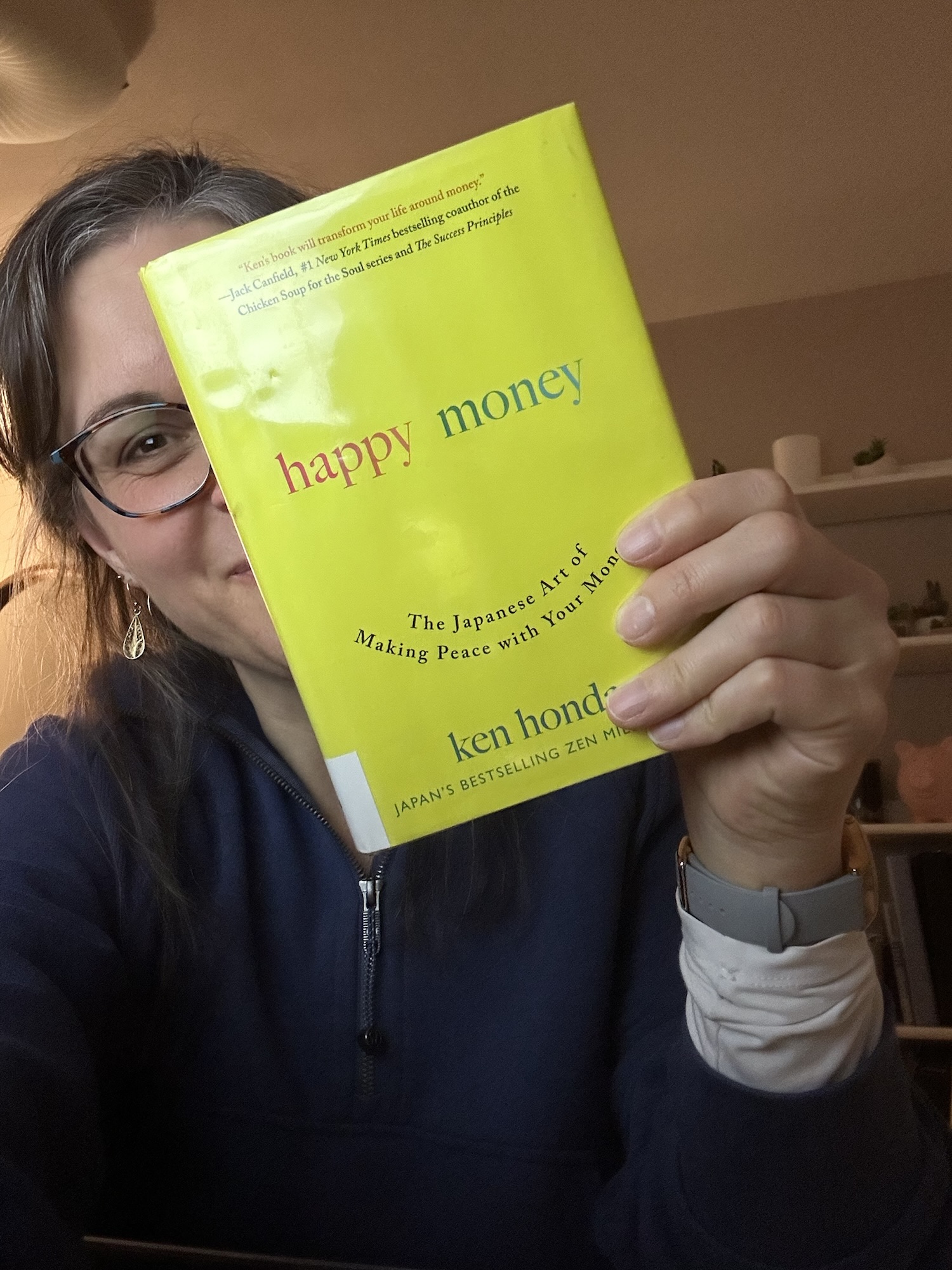
But now that I finished Happy Money, I've moved on to Saved , which I'd had on hold at the library.
(It's sort of funny that after reading a book about how money can buy happiness if spent properly, I am now reading a book about how happiness comes from not being so tied to money.)
Anyway, the other night I came across a paragraph in Saved that was exactly what I've been thinking about. It's like Hewitt was in my brain or something.
Here's what he said:
"We speak of materialism as if it were something bad and even sinful, but sometimes I wonder if we have it all wrong. Maybe what we need isn't less materialism, but more, to the point that we actually respect and even revere our material goods, rather than see them as disposable and constantly begging to be upgraded."
Yes.
A thousand times, yes.
I know sometimes people chuckle at the delight I find in something as small as a stainless steel ladle, (or a funnel, for that matter) but I hope my enthusiasm is an example of the right sort of materialism.
I had an old, junky, plastic ladle which was at the end of its life, and instead of buying a cheap replacement (which would need to be replaced again), I researched the options and bought a slightly expensive ladle that should be around until I die, and which may possibly still be in use after that.
(Future great-grandchildren: I've got you covered on the ladle front, 'kay?)

One issue in our flooded-with-cheap-goods culture is that we pretty much can have anything we want at any time. I think this easy access to Stuff causes us to value our Stuff less.
Though I suppose this is something of a chicken/egg scenario, because I'm not sure if cheap Stuff makes us value it less, or if we value Stuff less when it's super cheap, but no matter how you slice it, it's an unfortunate situation.
I don't know how to solve the cultural problem at large, but I think if we bought fewer items, with less frequency and more thought, we'd really be on to something.
Again, Hewitt said what I've been thinking:
"Of course, it doesn't help that disposability is purposefully engineered into the overwhelming majority of the products offered to us. To seek out true quality requires the determination to look beyond the convenient venues of big box retailers and online mass merchants; needless to say, it also demands a willingness to pay for the upgraded materials and craftsmanship such quality demands."
Yup.
Sometimes people are a wee bit surprised that I frequently recommend products that are on the pricey side of things, but I think this meshes very well with my commitment to frugality and with my desire to reduce my trash output.
I would much rather pay up front for a quality item than "save" money by buying a cheaply made item that will have to be replaced and thrown away.
Interestingly enough, I think that shopping this way gives me more happiness bang for my buck. Sure, I don't buy new things all the time, but the things I do buy are well-made, beautiful things that are a joy to own and use.
(Disposable items are kind of ugly, after all.)
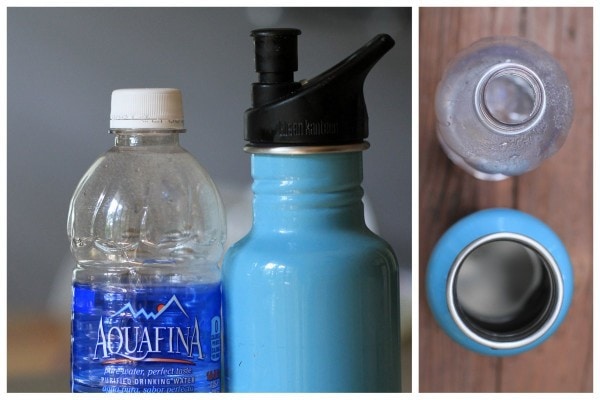 Plus, since the purchase of a new item is very much not an everyday occasion, I derive more joy from the purchase than I would if I routinely bought new stuff.
(Incidentally, the authors of Happy Money shared that we enjoy things more when they don't happen all the time and when we have to wait for them. Want to enjoy shopping more? Do it less often.)
You know, I wonder if maybe the key is switching from consumerism to a more mindful materialism.
It's good food for thought, and if the rest of Saved is as good as this first part, I'm going to be sad when the book ends.
The older I get the more I come to the same conclusion. I do a lot more research before I make a purchase than I did when I was younger. I am so tired of seeing things head to the trash when they break. It is not only hard on the wallet but hard on the landfill. If I had just spend 20 to 30 percent more up front I would not have to spend 100% over again down the road. Good quality stuff is cheaper in the long run.
The Japanese have this tradition. A typical Japanese home isn't stuffed with goods but what they have, tend to be quality products.
I agree entirely but with a variation. If I don't know if I'm going to use an item a lot, I buy an inexpensive one. If I miss it when it breaks or am annoyed by the cheapness, then I know I should replace it with a quality piece. If not, then I don't need the item and I don't replace it.
I've actually been struggling with this very concept for the last week or so. As I'm getting older I realize that stuff just doesn't make me happy. People keep asking me what I want for my birthday and I have no answer. My wife finds it interesting that I'm not content but at the same time I don't have a particular need. It's weird.
Very odd paradox to be in.
I agree - I used to always buy the cheapest of everything, but now I see the value in buying something good quality that will last.
I also feel like this with food - you can eat very cheaply on processed foods, but in the long run it is worth investing in good quality food for your health and happiness.
EXACTLY! My husband calls it designed obsolescence. Buy quality that will last, not flashy and cheap. We have learned our lesson on that front. I used to buy cheap, thinking I was saving money. It never works out well. Also, you obtain more joy from an item you will use everyday for a long time, then an item you will use less often and will have to replace. (My husband feels this way about his coffee cup - It is a French press stainless steel mug with a compartment on the bottom to hold extra coffee. He uses it daily and loves it. He gets joy from a well made purchase.) I HATE paying money to merely replace something I already have.
My dad always taught me that when you purchase something, you should either buy really high quality or really low quality that you plan to replace when you can afford the high quality. This way you're never stuck with something in the middle that you don't like, but that you spent too much money on to just give away or get rid of. It's been helpful advice, especially with the purchase of grills 🙂
I love this! These days I find myself buying very few items. However, when I do I spend time saving for the new item and researching exactly which one to buy. I have so much appreciation for my new item and I love knowing it will last forever.
I couldn't agree more. We have become too conditioned to cheap goods to the point where paying a fair price for a quality object seems outlandish. For me this mental block tends to come out in clothing, where I have a hard time investing much money. But would it really be so ridiculous to spend three or four times the amount on, say, a sweater, if I only had two or three in my closet?
Last spring my husband bought me a Coach purse. I almost choked when I saw the label and realized what it must have cost - I'd never spent more than $30 or $40 on a purse in my life, and I guess I was convinced that the whole Coach following was just a marketing/label/brand-name thing that I found silly. But, after carrying this purse for a few months, I can see how wrong I was. Not only is it beautiful (and the real leather smells wonderful and is so soft!) but the construction is such good quality, and all the little details so thoughtfully done. I will be carrying this purse for many years to come...and the cost certainly isn't more than if you added up all the cheapies I've bought at Target over the years.
One of the benefits of frugality is it allows you to save up more money to buy high quality items, instead of always having to make do with the cheap, disposable stuff. So for me there's no disconnect there at all.
Coach and other companies like LV have refurb and cleaning for their clients, you can take any Coach item into a retailer and have it sent in to Coach to be cleaned, fixed and refurbed as many times as needed for LIFE! They come back practically new.
Rebecca, I bought my first Coach about 15+ years ago. I own 3 now and love the way they've aged. But it may be an urban legend that Coach will clean purses. I have asked a couple of Coach stores through the years and only been told no. This is from their website:
Can I send my bag to Coach for cleaning?
Unfortunately, we do not offer a cleaning or refurbishing service. We do offer a Coach Leather Cleaner and Moisturizer Set for our Classic Collection.
Tiffany's used to offer free cleaning for their jewelry but they charge a fee now. At least it's still available!
Exactly! This is how I feel about food. I find every time I break down and by the cheaper lesser quality ingredients, I always regret it. I end up using more to trying to get the same flavor. Just by the best quality up front, your food will taste better and usually end up using less.
When I was a teenager I would laugh at my mother and grandmother, as they would wash out Bounty paper towels to get another use from them, wash and reuse Solo plastic plates until they cracked from repeated use, take the collar and cuffs or buttons off of a stained shirt and sew them onto new thrift-store finds...but now I find myself doing similar "repurposing," and finding well made, high end items at a thrift store is the high point of my week! I have bought cookware, luggage, and clothing for pennies that I otherwise would never be able to afford in my current financial situation. I have a stainless steel pot that my parents received for a wedding gift 55 years ago. My great aunt bought the pot and several others, used, from a tinker. Those pots could easily be 70 years old, and I am proud to use them! The wooden handles have rotted off, but the pot still works terrific! I worked in retail a number of years, and I had regular customers that would redecorate their homes every two years or replace their entire wardrobes each season. The customers would avoid the higher priced, higher quality items, and spend hundreds of dollars to buy an item that would last, for them, a few months to two years, instead of spending a wee bit more to get quality pieces to last a lifetime.
That's the kind of behavior I thin of as materialism-buying stuff just to have the new and fashionable.
ma·te·ri·al·ism noun \mÉ™-ˈtir-Ä“-É™-ËŒli-zÉ™m\
: a way of thinking that gives too much importance to material possessions rather than to spiritual or intellectual things
I think a couple of generations ago (and still today in many parts of the world) people had stuff that was mostly useful, and just a few decorative things. Now we have to have "everything" and so some of it must be cheap so we can afford to have it all. I'm happy to spend more on better quality useful things, but not at into paying a fortune for something because it has the right label. And for so many people, shopping as become entertainment.
I asked for that ladle for Christmas last year after your recommendation. I love it! I always appreciate your recommendations because sometimes it's hard to know where to find a quality product. Excited to read Saved. It must be good, there are seven requests ahead of mine at the library!
I have found things that are well-designed and made to last invariably age gracefully.
Great blog post and totally agree with everything you've raised. The middle way is finding good quality items with plenty of life in them secondhand. That ticks the frugality and quality boxes at the same time. Kitchen stuff is quite easy to find in charity shops in the UK; I recently found a wonderful stainless steel hand whisk (the sort that you wind with a little handle) for £1 made by Prestige. A good brand, solidly made, saves me electricity, reduces landfill and the use of valuable resources, and a bargain too.
I am in the stage of life where I have stopped spending much on my self because I would rather buy things for my daughter. I think we have done a pretty good job of buying quality items that we know will also be used for future children, but saved money on things like toys. I have purchased most toys second hand, but I do look for items that I know are good quality. Some other moms and I have started a toy exchange as well so that we don't have to constantly be on the hunt for new items.
After having two pairs of cheap sneakers fall apart on me in as many years, I bought myself two new pairs of shoes yesterday. I'll admit, it was hard to pay more than $20 for a pair of shoes, but those cheap shoes have actually been costing me more in the end! My new Keds are super comfy too. 🙂
I totally agree with everything you said.
One thing that is really annoying to me, and sometimes makes it hard not to dispose of items, is that it can be very difficult, if not impossible, to find people to repair broken goods. I had to get rid of a TV set because of this problem and ended up having to buy one that uses much more electricity. Bummer.
Good post, and I very much agree with you. I've found over the years that many times spending a little money is worth it when looking at the big picture. Bei it something small, like your ladle, or a bigger purchase like a car (I have found that buying better quality cars may cost more up front but they really do hold up much better over the years) can actually save you money.
Yes! I couldn't agree more! Over the last two years, I am definitely moving in this direction-mindful materialism in every aspect of my life. It saves time, money and the environment AND I find that I am happier after each purchase.
Food-YES, higher quality items do make food more enjoyable and I find myself savoring food more.
Clothes-In September, I went pulled out my fall/winter clothes to add back into my closet. Imagine my disappointment to have to get rid of almost half of the items. So many were misshapen, stretched out, or snagged. I'm embarrassed that I hadn't gotten rid of them already. With quality in mind, I replaced more than 6 sweaters (all brands from a large chain store) with 2 high quality cashmere sweaters. I actually researched how to buy these cashmere sweaters! These sweaters cost 5 times the price of my old sweaters (and that's WITH a coupon)! Something tells me that these will last longer then a season or two (they better!). Now, while I don't have as many sweaters, I find wearing the ones I do have more special. I'm also more inclined to care for these garments.
Housewares/furniture: I've had to buy two sofas in the 5 years. The first was a $500 sofa that sits in my formal living room. It looked terrible after less than one year-full of snags and the seems were coming apart! It's so ugly, I buy slip covers to cover it (so that adds another $150.00 to the total price so far). The second one was $1500 (a lay-z-boy). This one is in my family room, so it gets a lot of action out of my kids and dogs. Would you believe that sofa still looks brand new more than 2 years later.
. This year, after going through my fall/winter clothes, I found I had to toss more than half of my sweaters.
I agree with your post BUT ther are some exceptions :). We are in the USA as students from New Zealand for three years. We came with suitcases and will leave with suitcases. Also something else to note that the voltage is different here as supposed to NZ. As we are not allowed to work in the USA all of our money is coming from churches in NZ. So my point is that I do buy cheap electrical appliances as they only need to be used for three years. I found aldi to be great. I'm also very aware of money spend and so I buy cheap as most things do not need to have a long time lifespan as it will cost a lot to ship it all back to NZ. So while I wholeheardly agree with your points there are some exceptions :).
I whole-heartedly agree. I love purchasing quality items that will withstand the test of time, and I'm prepared to wait for the 'right' thing. We built an incredible house for ourselves over 4 years ago, and only recently do I have a doorbell. I didn't want just any doorbell. I wanted one with long bells. I treasure that deep resonating tone that can only be achieved with a 'real' doorbell. This doorbell wasn't the cheapest. It was difficult to find. I know that the time I spent searching and waiting, and the value it has will hold because it is a quality item.
Thank you for sharing your post.
Alice.
YES! Yes, a thousand times yes. I tried to explain this in a blog post the other day (http://kitchenrecessionista.blogspot.com/2013/09/when-paying-more-saves-you-money.html), but you've said it much more succinctly here. I don't mind paying more money up front for something that's going to last for years. It saves me money, yes, and also the heartache of having to throw something out when it's past its prime -- which happens all too quickly with cheap materials!
Oh I love this post and I completely agree. We are trying to focus much more on buying quality products. When I first bought my house in 2001 I purchased an iron dining table and chairs for our patio. It cost over $1000, but it looks like I just bought it yesterday. The same thing goes for our expensive Weber grill. It's worth it to pay for more expensive, quality items because they last so much longer and I feel good about keeping junk out of the landfill!
I enjoyed your topic very much. It made me pause and think (always a good thing). However, when I saw the first picture I was sure you were going to post about your family's beloved applesauce with how to and recipe. I was a little sad.
I also agree with buying quality items that will last the longer term. We should place a lot higher value on our non-renewable resources that make up most of these items than we do. What frustrates me is when you are prevented from doing this because the manufacturer has made it so that the items only lasts for a prescribed number of years. Take refrigerators, for example, where they used to last 25-30 years. So, we know they can build them with a longer lifespan, but generally now you are lucky if you get 10 years out of them. I will also complain about how a certain computer company is building their ipads without screws because it is faster and cheaper to build them. Now, even if the battery is the only problem you cannot replace it because it is glued! Shameful.
I have a hard time buying more expensive "better made" clothing, because I find it does not last significantly longer than the cheaper items. I wear out 3 pairs of new jeans every year by spring time, they can't even be patched, sweaters and tops the same. I wear aprons constantly to keep stains and wholes away but it doesn't help. I guess I am very hard on my clothing.
Shoes are the one exception I have found. Leather shoes can often be resoled, others not. My boys have walked through WalMart shoes in 2 weeks, they fell apart completely. But the $90 dollar top notch athletic sandals fell apart in 8 weeks, I don't know what to do?
Great post! I totally agree!
A paradigm shift, for certain. But it makes sense!
Amazon had K'NEX on sale up to %50 off as their deal of the day deal... might be a good time to pick up a Christmas present for one of your children, I remember you saying that this was a favorite 🙂
http://www.amazon.com/gp/feature.html/ref=xs_gb_A1MKSPRSJ8EN1Z?ie=UTF8&docId=1001422601&pf_rd_p=441937901&pf_rd_s=right-1&pf_rd_t=701&pf_rd_i=20&pf_rd_m=ATVPDKIKX0DER&pf_rd_r=0DH8S3C6WK1YPWMJPRVK
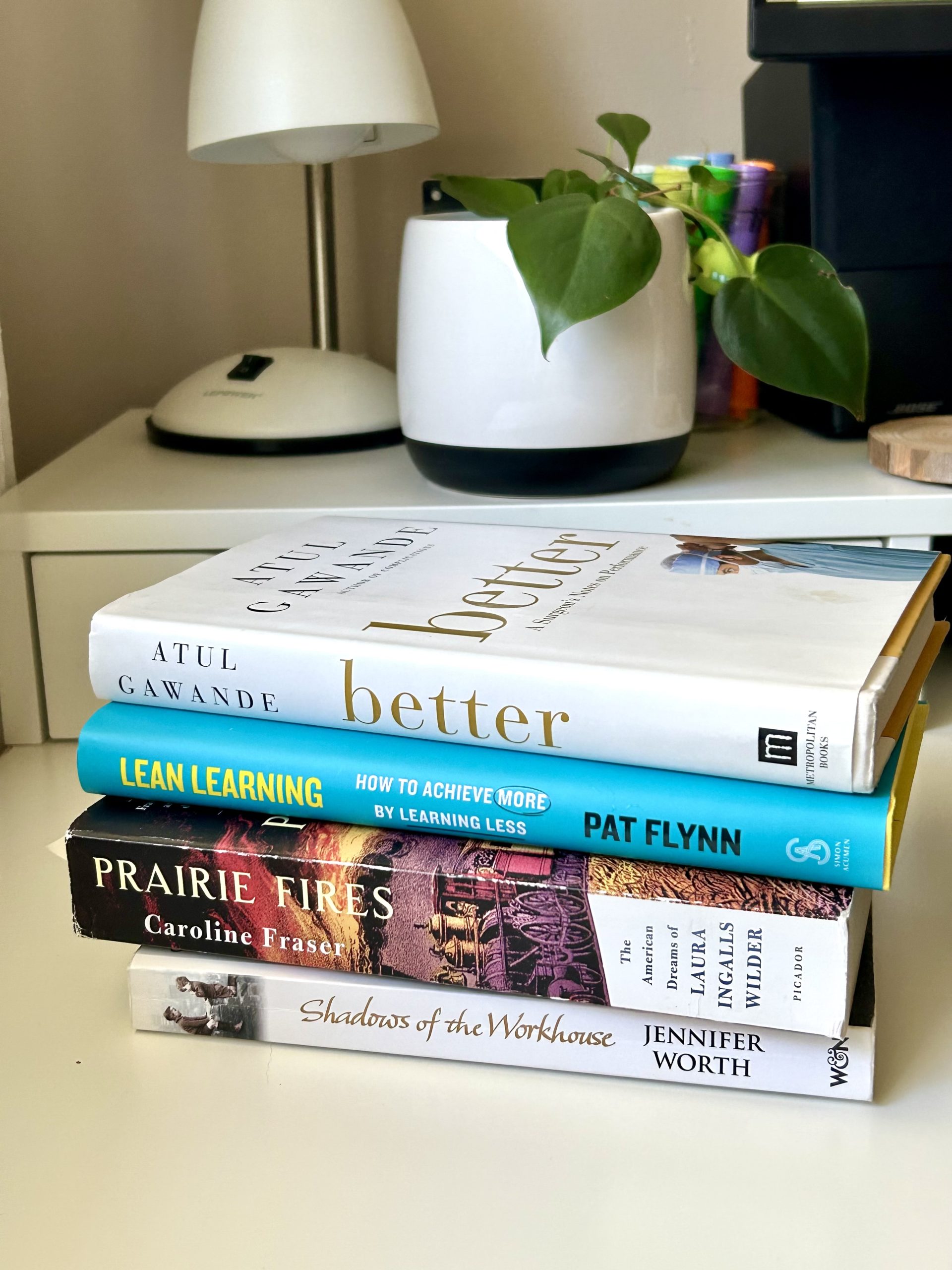
I re-read the Laura Ingalls' books and Little Women on a regular basis as ways to remind myself to value what we have, and that kids can make toys out of almost anything.
Just the fact that in both books the women could remember years, even decades later, the details of the clothing they wore, because they'd put every stitch in themselves, is telling. A tin cup for Christmas (for Laura) was so significant the joy of it comes through clearly in the retelling, which must have happened several decades after the gift. That her first memorable doll was simply a corncob wrapped in a handkerchief, but that she valued it enough to name it, and to make sure the doll couldn't see when she held her older sister's "real" rag doll speaks volumes.
With the girls from Little Women, the time and effort it would take to create a weekly "newspaper" in an era where everything had to be written by hand, just to read the newspaper among themselves while playing dress-up in the unfinished, uninsulated attic shows how creativity can make the best of any circumstance.
I think of the difference in how my dad values the wood-strip kayak he made for himself, vs. how my aunt is really rough on the cheap aluminum canoe she picked up at a big-box store.
How I carefully researched how to get my LLBean backpack exchanged when a strap seam broke (not a weight-bearing part, but in a kind of random place) because, with no car, it's basically my "trunk", vs. another friend who just chucked her cheap-o backpack with the seam broke, then ran over to Target to grab another $20 one.
How we only buy one pair of shoes for each kid at a time, but we go to a good store, have the kids properly fitted, then buy sturdy shoes (right now, we like Keens). We walk a LOT, at least 20 miles per week, and improperly fitted shoes could mean foot surgery down the line for these kids! It's usually about $60/kid per new pair of shoes if I can't manage a sale, but since they only own one pair, there's no arguments about what shoes they wear every morning on the way out the door. I always buy them in relatively dark colors so they can also be worn with dressier clothes, and for my daughter, she's so young at 2 dressy shoes are certainly not a necessity.
This is such a good post. Something I think about a lot!
(jumps to feet and cheers wildly) YES! This is also my mentality. I'll spend more on a quality product and shun the cheaper product that will not only underperform but be more than likely thrown away and replaced much sooner. I'm a big fan of cast iron, stainless steel and real wood. Like you, buying things is very much NOT an everyday action for us, but when we do buy we first try for used (antique stores or thrift stores) and quality. In the end, we spend much less money for much higher quality. Thank you SO MUCH for sharing this post with us today!
~Taylor-Made Ranch~
Wolfe City, Texas
LOVE this post, and thinking about reading the book, too. This is something I am slowly learning. I am slowly making over my wardrobe with more expensive, higher quality pieces---I'm done with my training and pregnancies and in a stage I plan to be in for many years, so it makes sense to have a wardrobe to match. Its an initial investment, but I expect these clothes will last more than a season or two, so cost-per-wear will be similar, if not better.
Similarly in our home, I am waiting to purchase furnishings I LOVE and that are well-made and long-lasting. We went without a dining table for 2 years until I found the perfect one, and it makes me so happy when we sit around it for dinner! Unfortunately, there are some things that just tend to conk out sooner than I would hope for---we do a ton of research and buy what we think are high-quality kitchen appliances, but we've gone through several toaster ovens and coffee makers and rice cookers over the past 10 years. I remember as a child having the same toaster over for 20 years...I'm suspecting they do indeed plan obsolescence (boy that's a tough one to spell!) into the manufacturing of small appliances these days.
I'm trying to take this approach to clothes...but it's really hard to find stuff that doesn't fall apart. The assumption is that you'll want new clothes, I suppose.
My washing machine is 14-years-old. It's motor has been stripped down and rebuilt plus many other things. A bit of labour and a part and we've been back on the laundry road once more, each time.
Recently it stopped working. The Hubby suggested maybe it was time to let it go to the scrapyard in the sky.
£2.85 for a part off ebay and a bit of fiddling....and guess what, the trusty old washer is churning away in the room next to me as I type.
Now if I could just keep it going till I have grandkids...now that'd be something to aim for!
YES. I remember when I finally decided there was no good reason to keep using the cheap plastic colander that was only half usable because of the huge hole that had melted in one side. I bought a new, heavy, enameled colander and gleefully threw the crappy one away; that was 12 to 15 years ago, and I have no reason to expect to ever have to buy another one.
The first time I read this post I was getting ready to go to Lowe's. I needed to replace a power extension cord that SOMEONE sliced through with the hedge-trimmer. The old one was cheap; the new one is heavy and resistant to such mishaps. As with the colander, I really don't expect to have to buy another one for many years.
I'm going to like this way much better, I think.