
A simple (but hard!) way to avoid food waste
Here it is:
Eat more of your fruits and vegetables.
It's not complicated.
But it is hard to do.
Why focus on fruits and veggies?
For one thing, they're one of the food types most likely to be wasted.
(The FAO says fruits, vegetables, roots, and tubers have the highest wastage rates of any food.)
I see this borne out in my own home all the time.
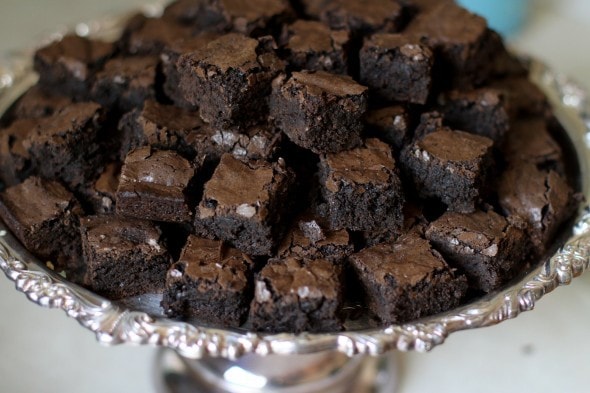
Do I throw out moldy brownies very often?
Nope.
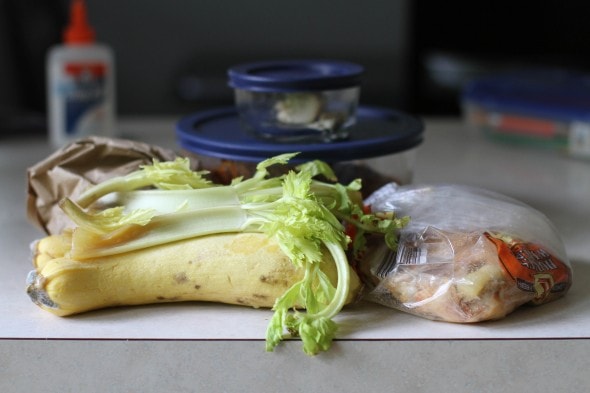
But I have composted a whole lot of moldy lettuce, mushrooms, and peppers.
Why do we waste so much produce?
There are a couple of factors at play here, I think.
First, produce is not as much fun to eat as some other foods.
Most people would choose a chocolate chip cookie over a mushroom!
Secondly, produce requires more work than other foods.
You can just grab a handful of crackers right out of the box.
But if you want to eat a cucumber, you usually need to wash it and cut it up.
Thirdly, produce just does not last as long as those other fun-and-easy-to-eat foods.
Crackers, desserts, chips, muffins, and the like take much longer to go bad than produce does.
So. The odds are stacked against us when it comes to eating up the produce that we buy.
What can you do differently?
1. Get into the habit of produce-first thinking.
When you try to decide what to eat for breakfast, lunch, or a snack, look for produce first.
I'm not saying that you shouldn't eat crackers or cereal or sandwiches. But before you grab those easy things, see if you can find a piece of produce.
2. Make your produce visible.
If you see it, you're way more likely to eat it.
Keep it in the front of your fridge.
Use clear containers in the fridge.
Put produce on your main kitchen counter.
3. Prep some of it.
Some produce isn't great for prepping, but a lot of it is.
I know my family is way more likely to eat grapes if they're washed and divided into single-serving sections (I just use a kitchen scissors to cut the stems.)
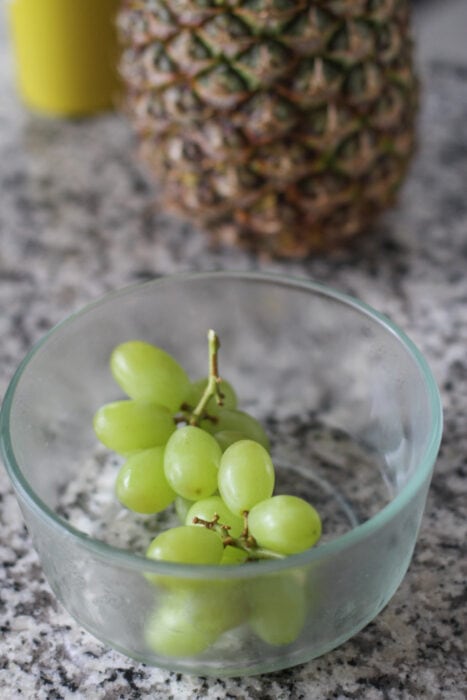
Pineapple will get eaten if it's cut into chunks.
We all will snack on cucumbers if they're sliced.
4. Think ahead about a produce side for dinner.
I am not 100% successful at this, but when I think ahead, I'm much more likely to saute asparagus, steam broccoli, or make a salad.
When I don't think ahead, I end up slicing oranges or apples. Which is not terrible, but it's better to serve a veggie at dinner, since we'll probably eat the fruit at other times.
(We snack on oranges; no one here really snacks on asparagus. If you do snack on asparagus, I bow to you.)
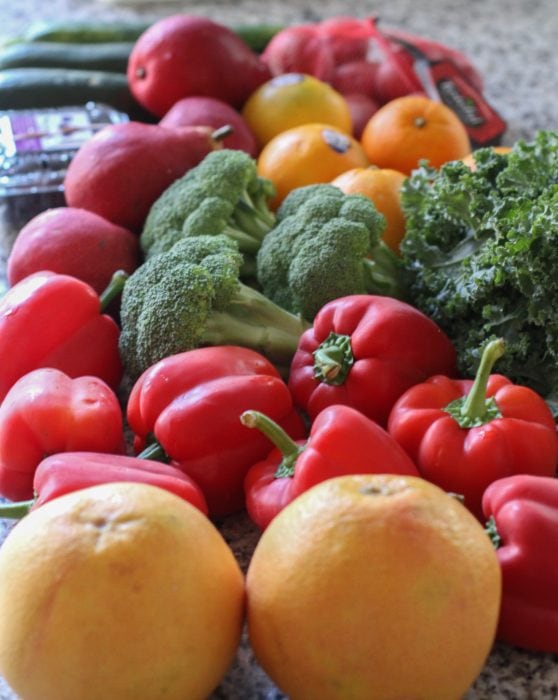
Despite my best efforts, I do still end up composting some uneaten produce.
BUT.
When I apply the four tips listed above, I am much more successful at getting our produce eaten before it goes bad.
What do you do to make sure your produce doesn't turn into food waste?
P.S. I realize I could have added a fifth tip: don't overbuy produce at the store in the first place. I do think mindful buying is a good idea, but I hesitated to include it in the list because most of us probably don't need to buy less produce; we just need to eat more of it!
You could avoid produce waste entirely by buying only a little each week, but in that case, the cure is worse than the disease. I wrote a whole post about that, actually.



My food waste has gone down dramatically since I acquired a pony whose favourite treats are apple cores and broccoli bark. The rest of my veg peelings and limpness goes to the goats and chickens who live at the same barn. Realising that’s not a solution for most people, I’ll also share that I plan produce first when meal planning and only then add a main dish.
Monday nights are “back of fridge” night, where everything in the fridge that needs using up gets assembled into a stir fry or curry or sheet pan roast.
My final tip? Buy produce you actually like. Mushrooms, broccoli and cauliflower never make waste in my house. Celery, cucumber and lettuce are often uneaten until the last limp lonely days.
Ooh yes, the tip to buy what you like is very good.
Better to be realistic than aspirational!
I very seldom have food go to waste but if it does, my laying hens are glad to help out!
Sadly, the only animals we have here are not very useful for that, the cat in particular! The guinea pig does like to eat some veggies, but she makes a very small dent.
I love this! We keep fruit out on the counter (which was a big NO NO growing up - my mom wanted clear counters all the time). Passing by apples and bananas means that I'm more likely to grab one to eat!
I am guilty of thinking this food waste isn't as problematic because we compost it. Way better to buy strategically and eat more of it than compost.
I mean, there definitely are some foods that are better kept in the fridge (berries, I'm looking at you!) But yes, a lot of things are fine on the counter, and they are so much easier to see there.
Bananas actually are much better at room temp, in my opinion.
I do a midweek check and see if anything needs to be prepped and frozen, too, which helps a LOT.
Love this post!
I buy salad mix (kale, broccoli slaw, cabbage, carrots, sliced almonds/toasted quinoa, and feta is the blend I've been buying most recently). I buy three bags per week, which keeps me accountable for eating half a bag per day. It's more expensive than making salad myself, but then I don't have a lot of leftover waste to process...
I put my bananas in the fridge once they're ripe enough (if we can't eat them all before they turn too ripe). It slows down the ripening, similar to an avocado. I'm not a fan of cold bananas, so I take mine out and let it "warm up" on the way to work. My kids eat them cold.
I freeze any leftover produce that's starting to age. It either gets chopped and frozen for future casseroles or smoothies, or it gets dumped into the "broth" bag of veggie scraps.
Something to dip produce in his helpful for us when it comes to bell peppers, carrots, celery, snap peas, cucumbers, etc...hummus, ranch dip, or peanut butter all can be made or bought clean and make it more exciting to eat veggies.
I also saw an idea in a FB group of putting out a veggie tray for snacking before dinner. The poster said she lets her kids pick out veggies at the store to put on the tray-they love having a say in what's served, and they eat more veggies as a result.
and make sure produce goes into a menu - that helps, too!! (I had roasted potatoes and carrots for dinner last night - had a few potatoes I had to use up 😀 )
The pre-prep thing is crucial at my house. Part of my normal Sunday afternoon routine is cutting up and cooking produce, or at least getting it prepped to cook for a future evening meal.
Since I've started eating vegetables at breakfast, I don't have time to wash, peel, cut and cook them in that hectic time of getting ready for work, so I do it on Sunday.
I keep less perishable fruits in the fruit bowl that serves as a centerpiece of sorts on my kitchen table.
I try to buy with the idea of how much we'll use. If I'm making parsnip fries, I know that three medium parsnips will do us, so that's all I buy. I also avoid the vegetables neither of us likes. I know Brussels sprouts are a traditional side at holidays, but my husband and I just don't like them, so they never enter our door.
I use silicone stretch covers on cut fruit and veggies in the fridge, and while I can't prove this scientifically, the cut items seem to last longer with the silicone covers.
While I also bow to anyone who snacks on asparagus (that made me laugh), I will sometimes heat up a leftover container of a random vegetable and have it for a mid-meal snack. One of my favorite after school snacks as a kid was a peeled carrot. I might be a bit odd.
I keep reading that most U.S. residents don't eat nearly enough vegetables and fruit. I agree, the key is not to buy less, but eat what you buy!
Excellent tips -- especially the first one -- begin the day with real food instead of processed, and the fifth one-- don't overbuy fresh food -- which kinda works agains my goal to stay out of grocery stores as much as possible.
Great list! I have two tricks I've learned to keep us from wasting our produce-heavy fridge. (1) Maximize my meal prep time. For example, if I only need three stalks of celery, I'll wash and slice up the rest of it while I have out my veggie scrubber, knife and cutting board. Then it goes into our container of cut up lunch veggies. Only need a half a head of cabbage? Slice and dice the rest and put into a ziplock to toss into salads (or saute and add to scrambled eggs, much to my kids' chagrin... but the cinnamon in scrambled eggs trick helps with their distaste for cabbage eggs). Same for kale. Thinly slice and add to a ziplock for tossing into things. Leftover sweet potato? Mash and freeze to add to pancakes, waffles, and muffins! (2) A great salad trick I've found is to leave salad components uncombined and undressed, but washed and prepared. Shave all your brussels sprouts, thinly slice kale, dice up other veggies, but bag or pyrex it all separately. Don't dress until you're ready to serve. It makes salad greens last longer, but easier to grab and eat b/c it's all prepped. And you can use the rest of it in more useful ways (again, breakfast scrambled eggs). If you're willing to add a little extra time to your already scheduled meal prep times, then you can help reduce food waste AND ensure you're eating extra veggies. Win, win!!
A couple times a month I make an egg bake that is basically all the leftovers or "need to use" items in the fridge. It always has eggs, some cheese (usually the last little bit), a creamy saucy thing (sour cream, aoili, dip, plain yogurt), meat if there is any (last week's had the last few bits of pepperoni that didn't make it onto a pizza) and all the veggies. I do make sure all the tastes go together but it's a great way to use up all my little odds and ends.
When I have an over abundance of fruits or veggies I freeze them for later. Chopped fruit makes for great smoothies! When I see that my peppers are starting to get soft I chop them up and freeze in glass jars. If I have mushrooms or green onions that don't look great, I will saute them and freeze them for later. It makes my life so much easier to pull out already prepared veggies when I'm cooking dinner. I actually had a mini panic attack this morning because my SO signed up for a CSA this summer, which is great, but I always worry about the amount of veggies we have to plow through and how much prep I will have to take care of to make sure everything gets used at some point.
I do a combination of these things plus some others:
1) Add to "prep produce ahead of time" is "buy produce that doesn't need prep. Baby carrots may be more expensive[1] and may waste some carrot, maybe[2], but having them on hand means we eat a lot more carrots. I've also discovered the mini-cukes (which are noticably more expensive) that aren't waxed and can be eaten out of hand.
2) Take it to work. I'm a captive audience at work. If bring produce, I'll eat produce. If I don't, I'll eat junk. Or more junk - I haven't found any system yet that leads me to eat no junk food. Naturally I keep the produce out on my desk and the junk food in a drawer that's not within easy reach.
3) If the produce is going bad, repurpose it. I followed the FG's link about buying less produce and saw that I already have shared many of my ideas. In short: freeze for later, cook now and eat later, smoothies, stir-fry, omelettes (cook the veggies first and let cook, lest they weep), soup.
4) Tell household members about which foods need to be used so they don't go bad.
5) Learn not to buy aspirationally. For me, this means no more asparagus. I love it but I don't love prepping it. Either I throw away half the stalk or I have to peel each damn stalk. Finally I've learned not to buy it rather than let it molder in the fridge.
6) Learn how best to store each kind of produce you buy. I waste much less lettuce now that I wrap it damp paper towel and store in a produce bag.
[1] But I still pay only $1.50/lb for organic.
[2] Although I've read that ugly carrots that otherwise wouldn't be used, now become baby carrots.
My boyfriend makes stir-fry several times a week, and vegetables that "lack the glow of youth" work beautifully! Even slightly wilted, yellowing lettuce that you'd never think of putting in a salad. A great way to eat veggies and reduce waste!
I make a lot of stir-fry too!! It helps eat something larger like an eggplant with peppers & onions.
I like this idea!!
"the glow of youth" I love it!
Plant foods have a spiritual dimension that a bag of Cheetos does not. If I pay attention when I am chopping and give myself time, I can get into a more appreciative mood about these wonderful living cells. How do my green onions and celery keep growing in a plastic bag in the refrigerator door? What beautiful colors can I mix together?
If I had better knife skills, I would be less hesitant during preparation as well.
In an effort to get myself to eat more fruits and veggies, at the beginning of 2019, I signed up for a Misfits Market box (like Kristen's Hungry Harvest.) It definitely is more work to deal with all these veggies, especially, but I definitely have been eating them more often. I like to cook and it's been fun to find recipes for the veggies especially. I can tell when I've been busy because more of the produce goes to the compost, although it's been minimal in any case. I've also shared some items with friends and family.
This fall, I switched to a local service similar to Misfits Market, which allows me to switch items I don't want. This has been a great help in my eating more of it.
So I definitely agree with the advice to process things asap to get them in edible form, and to buy what you like. There's no point in buying it to have it go to mush in the crisper!!
I used to have a salad bar night to clear my odds and ends. I had a sectional server, and then another dish for any lettuces that I had. The trick was to use leftovers such as tomatoes, onions, carrots, peppers, beans, cheese, chicken, beef, cauliflower, broccoli, etc. I would also cut up any leftover fruits and put the slices on a plate. A loaf of bread then completed the meal. I called this type of meal a “day before payday meal.”
A tip I got from a FG reader in the past was to freeze leftover veggies in a bag and make soup when the bag was full. I also add things to the bag that are near the end of their life if I know they're not going to get eaten.
Secondly, I eat salad for lunch most days of the week. I buy the greens I need for it but rarely but veggies specifically for my salads. I'll just rummage in the fridge, see what's there, then chop it up to use on top. Little bit of broccoli? In it goes. Celery that I prepped and still isn't getting eaten? Onto the salad.
A salad is such a great way to use up random produce!
Be cognizant of when produce will not be as fresh. When it reaches that point, cook and freeze (sautee overripe spinach and freeze), dehydrate (grapes, herbs, bananas, strawberries, etc), freeze to use later (overripe fruit for smoothies or compote), be creative with baking (make banana bread or pancakes from overripe bananas), turn it into a soup or sauce (overripe apples/plums/pears make great sauce and overripe veggies make a great soup).
Meal planning on a weekly basis though is the best way to reduce any type of food waste. Then you only buy what you need. Plan for meals that use less hardy produce (greens, mushrooms, etc) for earlier in the week. Use hardier produce later in the week.
These are such good tips! One more, store your stuff correctly!
Store your produce correctly. For example, strawberries can mold so fast. I started prepping them this way, and they'll last a full week in the fridge: I cut off all the little green tops, making them easy to grab and go. Give them a good rinse in regular water. Then SOAK them in diluted white vinegar (like 1/4 c vinegar in a big bowl of water) - kills the mold spores. Give another good rinse to get the vinegar off. Then let them dry before storing them in a tupperware in the fridge. More tips here (not my blog) -https://www.treehugger.com/green-home/7-clever-tips-make-produce-last-longer.html
Those green bags are magic. We go the farmers market pretty much every Sunday but find that things we store in the green bag are usually still good more than a week later.
Buy hardier produce in larger quantities and delicate produce in smaller quantities. Apples and carrots last about a month in the fridge. Kale can be good for weeks. Etc.
Finally, we put produce in everything. This is how, for example, our tiny household of 2 adults is able to get through a giant bag of CostCo spinach before it gets slimy. Add a big handful to soup at the last minute, to pasta, to pretty much anything.
Number 5, IMHO, is the most important. It's also the most difficult, because it really requires at least two trips to buy produce each week. Many things don't last a week, and to really have fresh produce you need to go again after 3 or 4 days. We used to tend to stock up because we'd write up a menu for the entire week (another way to avoid overbuying) and buy it all at once, but by day 5 or 6 some of the things we bought for that meal just haven't held up. Fortunately my husband is retired and he has the time to do a midweek shopping for fresh produce, plus he will replenish eggs and dairy if necessary. He takes advantage of senior discount day on Wednesdays at a local market, so we get 10% off.
And find a way to eat the prepped produce that's about to go bad! Fruit it pretty easy, throw it in the freezer for a smoothie. Veggies can get cooked into a quiche or scrambled eggs or potato hash, or even tomato sauce and pureed a little to get rid of any "chunks."
One of the things I do is when I am planning meals for the week, I only buy for the meals I am going to cook. I also try to make dishes that use similar ingredients, so if the recipe only needs half a bunch, I'll find a recipe for the other half. We keep our fruit out on the counter--easy to grab and washed, so ready to eat. We also try to prep the veggies when we buy them, so it is easy to use them.
What a lot of great ideas! My drastic, intentional dietary changes a few years ago coincided with the long, slow painful death of our refrigerator -- stuff kept freezing in the vege drawers, so I put all the veges on the shelves -- super hard to ignore a rutabaga staring you in the face day after day, so we were pretty successful in plowing through the vegetables. I have continued to do this with our new fridge -- we use the vege drawers for contraband (cheese!) that needs to stay hidden.
This made me laugh. But yes, I will go hunting for the cheese. Will I ever hunt for a rutabaga? Unlikely!
There are so many good tips here, I'll just add one more. When I buy romaine lettuce, I cut off the bottom, wash each leaf, then store the bunch wrapped in a tea towel in a large salad bowl. They last much longer this way and I just pull out what I need to make a salad or lettuce wraps.
Okay, I want to speak up on behalf of the much maligned asparagus. I eat them raw, down to the woody part. Those ends are peeled and sliced thinly and put into a stir fry. I will also et asparagus lightly coated in olive oil and broiled, but I prefer raw.
We minimize produce waste by smoothies for fruit and spinach, frequent meals of strata made with sad vegetables and cheese bits, soups, and, finally a freezer bag for future stock making.
One thing that I don’t see mentioned that we do is freeze produce before it goes bad. Or cook it in bulk to help it last. If greens are on their last legs, we freeze them for smoothies. Peppers or mushrooms get chopped and frozen for soups or sauces. We go through a lot of produce by starting the meal plan from the veggies we have available and build the meals around that.
I started eating whole foods/plant based a few months ago. I hardly waste any produce now. And, all my scraps go in a freezer bag to make veggie broth. But, I am going to take note of some of the tips that have been given. Many are really good!
I'm the only one in the family eating this way, but I have seen a noticeable drop in our grocery bill. As long as you aren't buying the expensive vegan pre-made stuff (which isn't whole food), you can eat very cheap and very healthy this way.
I started this for health reasons, but the bonus is that pounds are now coming off that I had struggled to lose for years even though I'm never hungry.
I too am an aspirational produce buyer - however I just recently started exercising restraint & am buying far less in advance & much less quantity being
I need to prep vegies more
- love the idea of freezing leftover bits for stock I might try that
I have started making a shopping list and I try to stick to that list. I will not replace produce until it is used. I also present bowls of cut fruit for after meals. Some meals are picky meals and. I make sure to use some of the o older stuff up that way.
I make a lot of misc. veggie stir frys. I also roast a lot of veggies. Yesterday I made mashed potatoes with butternut squash and cauliflower. Just mash it all together. Spaghetti sauce with grated carrot, onion and spinach is great. Fruit gets juiced or frozen for smoothies. We are a vegan house so I always have bits and bobs of veggies. If all else fails the dogs get them.
1. Pay attention. I think that’s been the most helpful! Pay attention to what your family actually eats. Don’t buy what you won’t use. For example, we’re really picky about fruit, especially bananas and berries. So I don’t buy berries out of season, and I only buy a few bananas at a time.
2. Figure out substitutes! Just because a recipe calls for broccoli, doesn’t mean you actually need to use broccoli - kale, cauliflower, Brussels sprouts, spinach, any of these may work, depending on the cooking method, and help you use them up!
I have two tips to add that have helped at our house
1. I bought a small plastic veggie try with lid, a smaller version then you would take to a potluck. I keep cut up veggies in it for snacking between meals and I bring out the tray before meals when folks complain they are too hungry to wait for me to finish cooking, I also put it on the table at lunch. The more it is seen the more veggies get eaten.
2. We have guinea pigs! Guinea pigs eat lots and lots of veggies. This helps in two ways. A. I have to prep veggies for them so I might as well prep them for us too. We often are eating the same salad as the piggies! B. And veggie scraps and limp pieces get eaten by the piggies and turned into wonderful compost for the garden. Guinea pigs make great indoor pets and if the guinea pig is eating it, chances are you kid will try that new veggie too!
Yes Yes and Yes! So true and guilty as charged. From my slovenly place of existence I would add -- check through and organize all the stuff you do have! That has been the biggest challenge for me. Just this morning I was rooting thru the freezer for frozen blueberries for the oatmeal (none) and found all manner of stuff -- some of which I have no memory of buying, wrapping, or stashing. I did find frozen ground turkey dated from January 2019. I guess that will be the next meal.
I buy most veggies as frozen as they are likely fresher than the stuff in the "fresh" produce section of the store (it's been written about extensively over the last few years but feel free to google that fact). We consume TONS of frozen veggies and they are so easy.
The fresh staples I always have on hand - onions and celery, bananas, clemintines - I monitor every few days, and if I can't use right then and they're getting iffy, I set aside time to wash, chop and/or freeze ALL of it. I have small plastic containers specifically meant for onions/celery (they tend to "perfume" any container used) and I use the frozen batches for soups, stews, or stir fry. Fruit is usually consumed, but sliced bananas freeze well.
I buy other fresh fruit/veggies ONLY when they are on super sale/clearance and prepare/consume same day. If I can't think of even a ghost of an idea of how to use them, they don't come home with me, but I might look up recipe ideas for next time.
I save my washed ends of the aromatics as well in a freezer bag for making stock.
We LOVE leftovers in my house. So I use up things and we eat on a specific recipe usually until it's gone. Making large batch meals also means I use up all the ingredients and in the event someone doesn't like leftovers (spices/flavors get BETTER the next day!) you can freeze and eat next week as a break from cooking. But batch cooking/eating also means you don't have to cook from scratch every single meal and meal planning is much easier since you're only cooking/planning for 2-3 days a week.
I agree that experimenting with new foods and getting variety into your diet is nice, but if the likelihood is you'll be too tired, don't like cooking, or just don't enjoy planning meals, sticking to standard ingredients for a small rota of recipes that everyone likes and are healthy/easy makes more sense.
It's the same idea for having a capsule wardrobe, or keeping your household items minimal and decluttered. Simple is sometimes best.
I'd love to post the rest of my suggestions, but keep getting "error, comment too long" and it won't let me type much. 🙁
I only use transparent glass containers. If it's not seen and pretty, it gets forgotten. Vegetables last longer in glass and seem to dehydrate in plastic containers.
I have the chopped bottom (green bits and core) of a cauliflower roasting in the oven now- tossed in bacon fat and garlic salt. Like another poster, I like all sorts of roasted veggies.
Kale stems and broccoli stems are great steamed and added to stir fry or frittata- cut them crosswise in case they're tough and you won't know.
My family won't ever choose vegetables, but if they are cut and in their path, they will eat them.
A spiralizer is great for winter vegetables like beets and watermelon radish. Beets are too sweet to eat big chunks raw, but spiralized they are great. Spiralize butternut squash to cook instead of pasta.
If I make my lunch a big salad the evening before, I love a nice salad at work. Caramelized onions and roasted sweet potatoes make it fancy.
Planning ahead or prepping the veggies first is best. Get the protein part of the meal ready afterward.
One thing I try to do: when I'm making a meal plan/shopping, I'll get some veg that does not perish very readily. By this I mean things like cabbage, cauliflower, winter squashes, sweet potatoes, carrots-- things that will keep for weeks in the fridge.
We try to eat the rapidly perishing veg like lettuces, summer squashes, mushrooms etc. first. That way, we can save the slower-rotting veg for the following week if we don't get to it.
Flu season is in full swing here. I have an autoimmune so I stay close to home during the months of January February. This is the one time of the year that I don’t make it to Aldi to shop. Last week I placed my online pick-up order and when my husband brought all the groceries home they had accidentally put a huge bag of apples in with our groceries. Since apples are produce, I had to keep them. So, I got out my canning supplies and I made 10 cups of apple jelly. I would’ve made applesauce with what was left but I was too tired. WINNING
Woohoo for saving the apples!
I do not (anymore) buy more than I need. And I have become a fan of roasted veggies, such as brussel sprouts, those beautiful tri color bags of mini carrots (NOT baby carrots) that they sometimes have at Trader Joe's and sometimes zucchini and/or eggplant. I put them on a baking sheet and add various herbs and spices and coat in a bit of olive oil and roast them in the oven. The best way I know to get my veggies.