A gym for human thought | in the age of AI
This is gonna be terribly off-topic for a frugal blog, so, you know, proceed as you wish. 😉
I am not the world's biggest fan of AI.
I know there are amazing ways that it is being used; for instance, I heard a Freakonomics podcast about how researchers are using it to sort through mounds of data in their efforts to find new uses for already-approved drugs, thus providing affordable, effective ways to treat diseases.
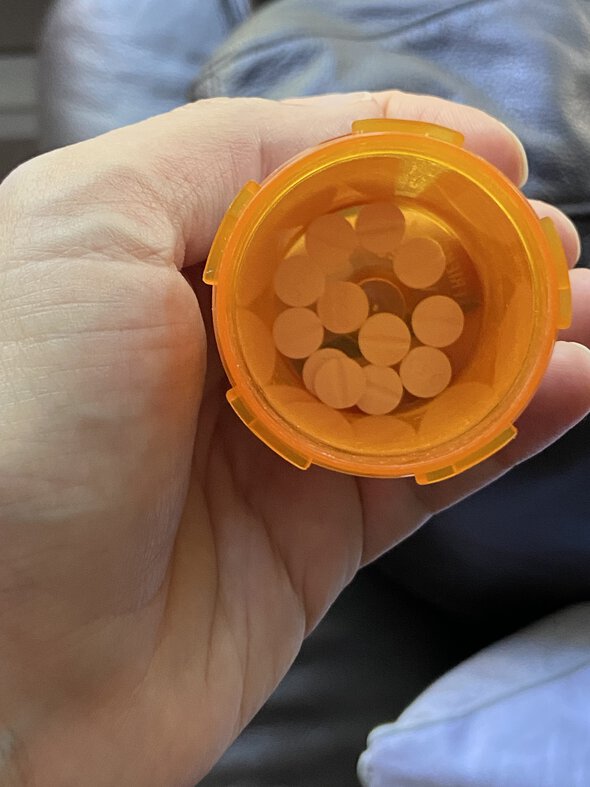
I think this is a great use of the technology!
My beef with AI has more to do with using it for writing. I am sick to death of seeing social media posts, newsletters, and even school discussion boards filled with the inane, robotic sameness that comes from using AI.
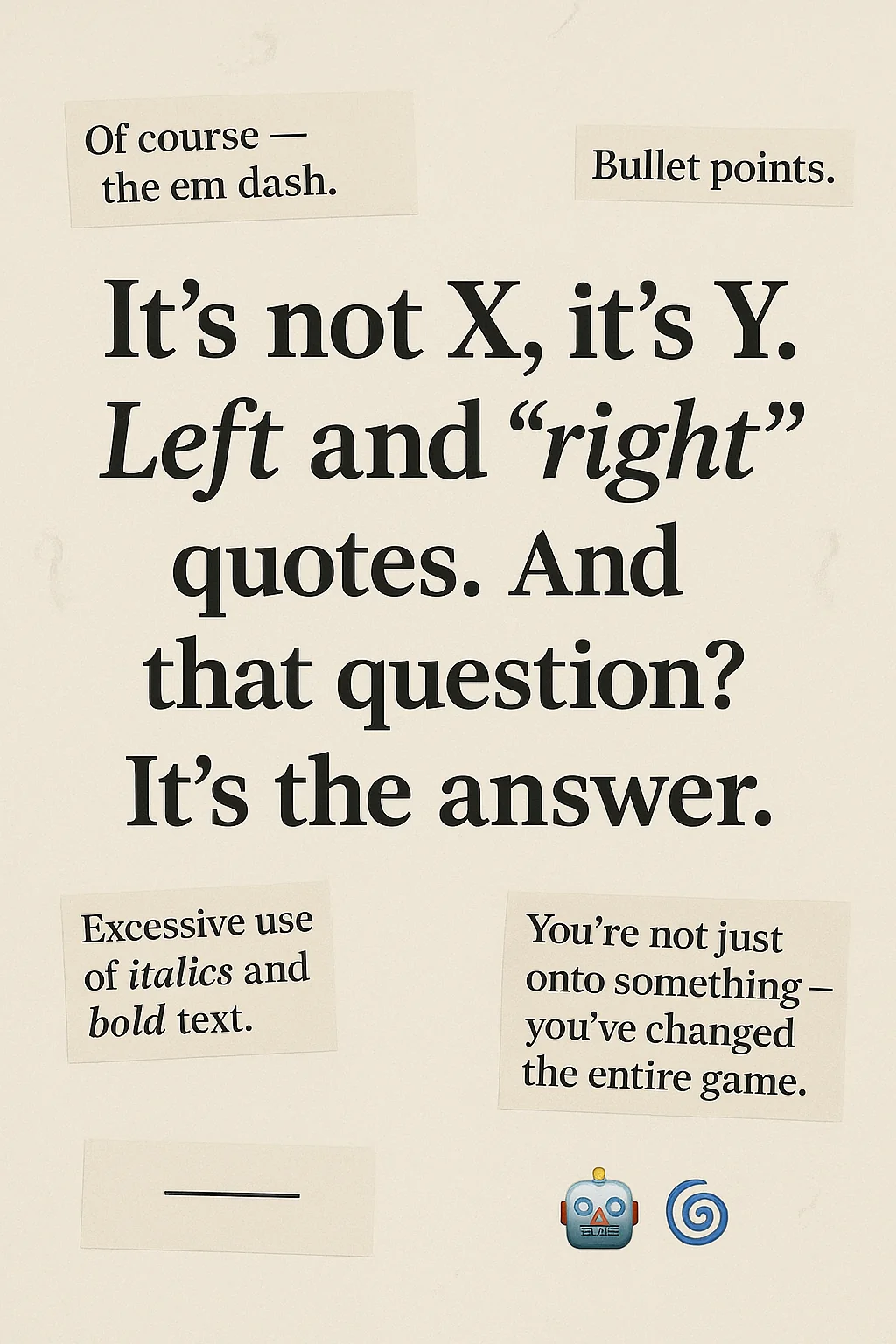
I feel like I am reading the output of a machine, not a person (which is, in fact, the case). Once you've read a few AI-produced things, you can pretty quickly spot the "voice", or really the lack thereof. As soon as I notice it, I am immediately bored, and I click away.
I want something real. I want something human!
So. I dislike being on the receiving end of AI-produced writing, but I also feel deeply concerned about what this is doing to our ability to form our own thoughts and then express them.
This is a skill, one that improves with practice (and conversely, dulls with disuse.) It is work to think about things, and it's even more work to write those thoughts down in a way that effectively communicates those thoughts to other humans. But that work is what builds the skill.

I see people using AI to write emails, blog posts, newsletters, social media posts, announcements, and even thank-you notes.
(That one is especially wild to me, because isn't a thank-you note supposed to express, from the heart, how you feel about a gift or service from someone??)
I know such casual AI-use is even more commonplace than what I've observed, because an interviewee on a recent Laura Vanderkam podcast suggested, as a challenge, that listeners try one AI-free day per week (one where they even write their own emails.)
I am a little disturbed that one AI-free day per week would be a challenge!
I also wonder: if we use AI to write all of our emails and posts and notes, will we lose some of our ability to communicate in person? Talking and writing both require us to organize our thoughts and then express them, so I imagine there's a lot of cognitive overlap between the two skills.
We may be able to use AI when we write, but what will happen when, say, someone at work asks us for an on-the-spot update? Will it be hard to produce something without the AI crutch? I don't know, but I wonder!
Writing as "a gym for human thought"
Last week, I came across an article about AI by Jamil Zaki, a Stanford professor. He compared the rise of AI to the time period when machinery became a common substitute for manual labor.
Because machines did our physical labor for us, our work became more sedentary, and we had to start exercising on purpose to maintain our physical health.
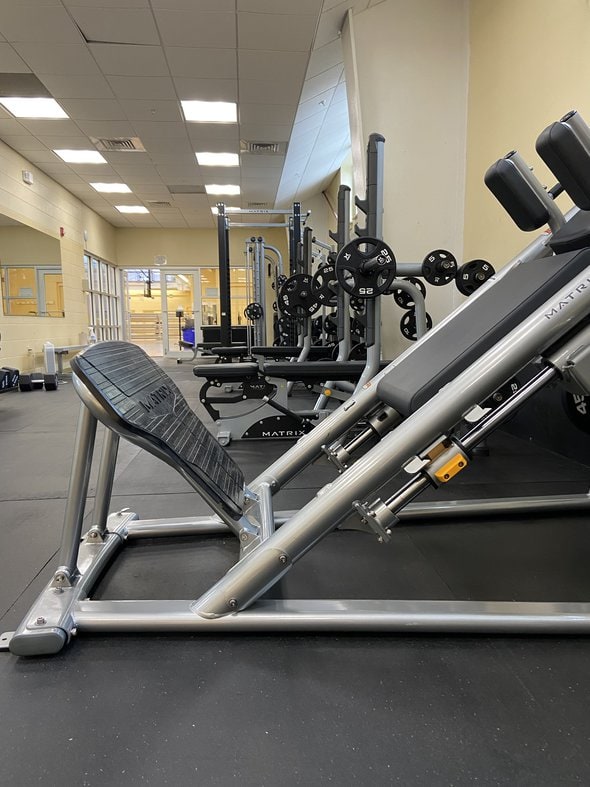
In the same way, if AI is going to do our thinking for us, we are going to need to exercise our minds on purpose, to maintain our cognitive health. Zaki says:
"AI has already allowed us to become cognitively sedentary, and that will only increase over time. But just as we must be responsible for our bodies in an era of office work, we must now keep our minds active. Writing is a gym for human thought we need now more than ever."
Machines replaced a lot of manual labor, and as it turns out, machines often do the work better than humans. Still, physical labor is important for our bodies, which is why we purposely lift weights and use gym machines that accomplish no purpose other than increasing our physical fitness.
(Imagine how surprised our ancestors would be if they could see us working out!)
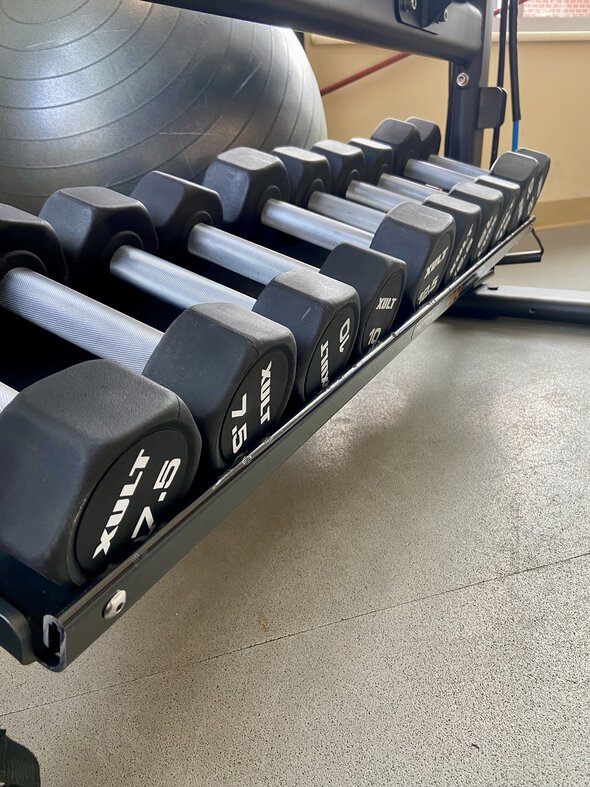
Similarly, AI may advance far enough to adequately replace human writing, but Zaki says we should still be invested in writing practice for our own sake. This writing effort is like a set of cognitive "reps", part of what keeps our minds strong. And if we are not motivated to exercise our minds for the sake of others, we can at least do it out of self-interest.
Obviously, I write regularly, both here and on my Patreon, and I never use AI in any way for these posts. So, I know I'm taking my brain cells to the gym regularly.
But if you don't have a blog, and you want to try hitting the cognitive gym, there are other options. You could journal. You could write letters.

You could try poetry, if that's more your thing. And I suppose you could even write an email or two. 😉
Also: all of you who regularly comment here are working your brains! You read what I write, you think about it, and you type your thoughts out.
(And I hope you are not using AI for that. Ha. If I start seeing comments that say things like, "Measured. Mindful. Intentional. That's not cheap — it's frugal.", I'm going to be suspicious.)
Tell me what you think! Are you concerned about the way AI will change our thinking and writing abilities?
P.S. I had to Google to find out how to type an em-dash for my faux AI comment up there. Ha.
P.P.S. I realize that not everyone is a writer; still, every human needs some thinking/communicating skills to function in life, and writing is a great way to practice those skills.


I don't think its as clear cut as all that, though.
English isn't my first language ( it's either second or third), but my day to day "business writing " at work is 85% in English. It's much easier for me to throw my first draft of an important-enough message into the Claude project I specifically created that improves the grammar, flow and conciseness of that paragraph or three, while preserving MY tone and staying clear of corporate BS as much as possible, than it is to ask for help from an native English speaking coworker ( if available and relevant).
I don't think my command of the English language is any worse for it, and it saves me time. I never copy paste the results blindly, and usually end up editing it a bit, because, indeed, I don't want to sound like Chat GPT, i want to sound like me with slightly better English:)
I am very concerned about AI. People are taking AI summaries as factual truth when it actually frequently hallucinates information. I won't go too far into this, as it's political, but I think a big issue we currently have with fake news and clickbait is down to AI. Another issue with AI is the detrimental effect of the environment.
I have never used chat gpt or other kinds of AI. I like to keep my writing skills sharp!
I work at a government research lab and for years I have been the editor of all papers that our small group at the lab writes. I think this has done wonders for my brain, but I plan on retiring in October. I'm not sure how to continue using my critical thinking and writing skills after that.
As a high school English teacher, AI is the bane of my classroom existence! Critical thinking is one of the main things that makes us human, so it's deeply concerning that AI is starting to do that for us. However, I don't hate AI, and it has actually made me a better teacher in many ways. I have parameters in place for myself when I use it- never to critically think, grade, or write emails/other personal communication for me. But it has saved me so much time making rubrics, lesson plans, and directions and I can use that saved time for creating new/better units. I try to teach my students similar parameters, and Kristen would be happy to hear I'm making my students practice e-mailing me each week using just their brains!
Hi Hana,
Love your email assignment! Great idea. Students share a lot more when not everyone will hear what they're telling you. Solid writing and life skill practice along with relationship building.
I agree that there have been times when AI has benefitted me professionally to the extreme, while I maintain thoughtful use and weigh the factors of efficiency vs. thought and monitor the product for quality (it can produce some real garbage sometimes too haha).
Sending best wishes for the rest of your school year!
Ah, Kristen, you are a woman after my own heart. Well-said. Nicely done. Spot on. Society applauds the many conveniences we enjoy, but most people don't realize how those conveniences can negatively impact our physical and mental skills and abilities. I am most concerned about today's kids who will literally grow up living with AI and depending on it. What chance do their brains have of developing to their full potential?
I have a balanced view of AI. It can be used to help or used to harm. It will probably have both unforeseen benefits and consequences.
In the classroom, I teach Spanish. I try to express and help students understand that technology (including non-AI) can used to enhance learning or to bypass learning and how to use it helpfully. It is a work in progress. Both AI and tech have helped my own proficiency grow through the years, but that is along with my understanding of grammar and expanding vocabulary, pattern recognition, and the cognitive process of actually acquiring a language.
Last week, I had a student turn in a short paragraph I asked them to write with the first sentence (in Spanish) saying, "Of course! Here's a paragraph with the words you requested." (Insert eye roll and yes she didn't get credit for that). I have to continue to express to them that I don't want perfect work (impossible at their proficiency levels). I want THEIR work.
I love this whole article. It is scary to see how little people read and write for themselves.
Another concerning thing is how often it is wrong. As a scientist I see things all the time quoted as fact and they often aren’t true. It can sometimes analyze data, but it is only as good as the commands you are giving it and how it is programmed.
One of my friends is an English teacher and she decided to ask AI something in class as an example for her kids. It was something about geography and it spit out incorrect information each time.
It is the same way with data. Often people give it numbers and it spits out an answer and people quote it as fact. But they have no feel for if the number is rational. When I train my kids to use a calculator in math, I make sure they can also tell me about what the answer should be and the units (if it has units). So often in college my classmates would feed data into a computer and insist that they were correct, but the answer wouldn’t even have unit they made sense. It was garbley goop. Nonsense. Because a computer is only as good as what it is told to do and if you give it bad commands, you get bad data. So yes, I’m sure you can use it to research new drugs and that is a great use for it. But for the majority of us, we don’t know how to use it for those purposes and we should be very wary of the data think it is telling us.
I’m kinda irritated AI uses em-dashes. I’ve used them for years and I’m a smidge concerned that I’ll be suspected of producing AI content if I keep using them. I guess I’ll have to exercise my brain to come up with new ways to express my voice.