
On Bread Slicing and Homeschooling (Q&A day!)
Every other Monday, I answer reader questions. Got one for me? Leave a comment or email me (thefrugalgirl at gmail) and put Q&A in the subject line!
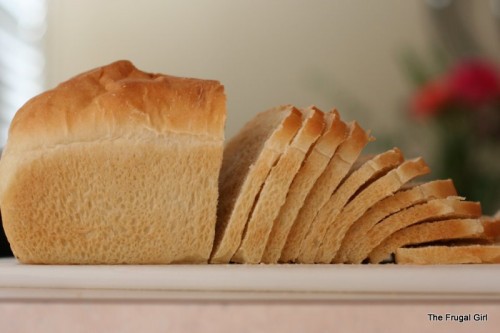
My question is about bread storage. I’ve been making several loaves of several types of bread at once to save time and turning on the oven.
When you freeze, do you slice first or thaw then slice? Also, you routinely make whole wheat bread I see but when I use any wheat (not even close to half and half) my bread is dense and doesn’t turn out well like the white variety. Any tips?
-Holly
I usually freeze loaves whole because my crew can go through a loaf of bread in a jiffy, so it's no problem to thaw a whole loaf (it's not gonna go bad).
But when it was just Mr. FG and me, I'd slice and then freeze so I could take out only as much bread as we needed.

About the whole wheat thing...how fluffy is the white bread you make? If your white bread is on the denser side of things already, then I can see how whole wheat would weigh it down even further.
It's hard to diagnose exactly what's going on with your bread without seeing it, but whether you're talking white or whole wheat, a key part of achieving a fluffy bread is keeping your dough soft.
Many people (especially beginning bakers) add too much flour, and a stiff dough is very hard for the yeast to lift. Your dough should be soft enough so that when you knead it into a ball, the ball shape will flatten out a bit on the counter.
I hope that helps! And if it doesn't, feel free to email me some pictures of your dough/finished bread so I can try to troubleshoot further.
(In case any of you are wondering, here's how to slice homemade bread.)
I always dreamt of homeschooling (maybe this has something to do with the lousy education I received) and I have even started working on an MA in Childhood Education so that I can be properly prepared.
I don’t have any kids yet, but I was wondering if you can tell me more about what homeschooling is like? What are the pros and cons? When did you start homeschooling? Until what age do you homeschool?
I’m afraid that it’ll be too overwhelming! I am a bit of a control freak and I want to know if this is a bad thing for a homeschooler.
-Kayla
A few of your questions can be answered in posts I've written in the past, so let's start there!
- Why I homeschool my kiddos. (Basically the pros of homeschooling for us.)
- A list of the cons of homschooling, as I see 'em.
- A little photo essay giving a peek into our homeschool days.
- Answers to some common homeschooling questions I get.

When do you start homeschool? At what age do you stop?
I homeschooled my kids starting in kindergarten, and I plan to continue on through the end of high school with all of them.
(My oldest is a junior in high school this year.)
But a lot of people just homeschool for the early grades and then send their kids to school for high school, or sometimes they switch to a more hybrid approach after grade school. It's not an all-or-nothing proposition, and you can always take it year by year.
Is it overwhelming?
Homeschooling has its overwhelming days, yes, but the lovely thing is that it's not like you usually jump into the deep end right away. You start with kindergarten, with just one kid, and then things progress from there.
It's tempting for me to think that life would be totally not overwhelming if I sent my kids to school, but the sensible side of me knows that there are overwhelming things about traditional school life too. It's just different.
What's homeschooling like?
Well, it usually looks a little different than classroom education!
(Which means that a fair amount of what you learn in school about childhood education may not be super applicable, though I'm sure some will.)
What our days look like have varied through the years, but here's sort of how it goes currently:
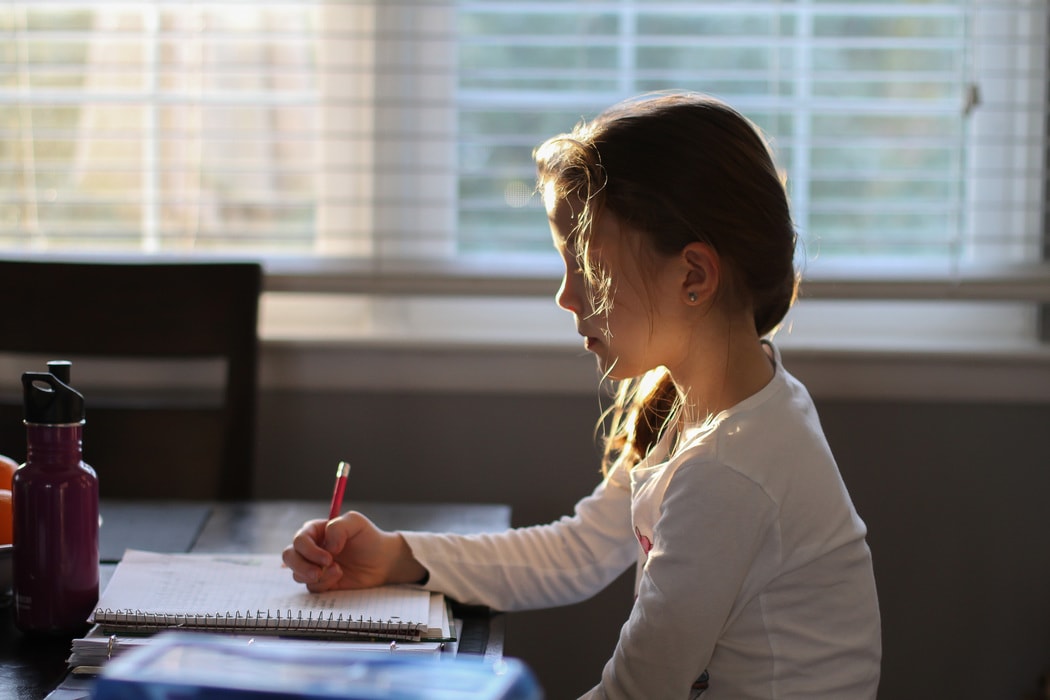
In the mornings after breakfast, I do Bible, math time tests, science, and history with Sonia and Zoe (5th and 6th grade). Then they work on their math, grammar, vocabulary, and reading curriculum independently, with me there to help as needed.
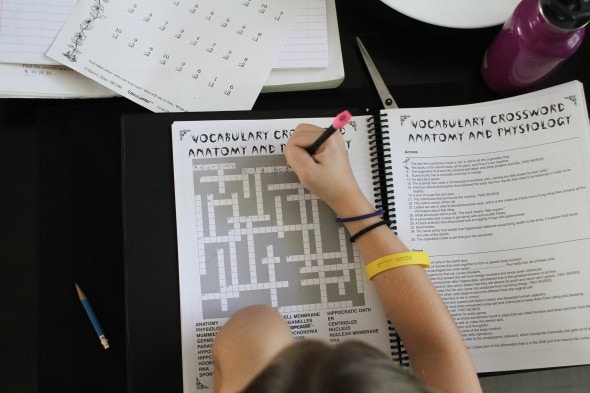
Lisey (freshman) and Joshua (junior) do most of their work independently, coming to see me if they need help.
When my kids come to me for help, I try really hard to help them find the answer themselves. It would be easier just to give them answers, but I want to make sure they've exhausted every possible opportunity on their own first (Did you re-read the directions? Did you look at the example? Did you look up the topic in the index? etc.)
Being able to find needed information on your own is a hugely helpful life skill, and I want to be super-duper sure my kids learn that.
I check all of my kids' work every day, marking things that are wrong. Then they go back and correct the mistakes, sometimes with my help if necessary.
My mom comes once a week to do Spanish and composition with my kids, and she gives them assignments to do throughout the week.
My younger two are usually done with their schoolwork by early afternoon, or sometimes before lunch if they've been diligent. My older two usually get a later start on their day (teenagers! so much sleeping!), but they're generally done by mid-afternoon.
(I know this seems like a short-ish day, but I promise we are getting serious amounts of work done. We just finish promptly each day because homeschooling is efficient.)
Mixed in with our days are things like dance, our martial arts class, doctor appointments, some days off for field trips/park days, a bi-weekly Bible study that two of my girls babysit for, etc. So not every day looks exactly the same, which is kind of nice...our school can bend and flex to fit with our everyday lives.
________________________
I hope that answered your homeschooling questions, Kayla! Let me know if I missed anything you wanted to know.
And the rest of you...if you have questions about anything I wrote today, leave a comment, and I'll chat with ya there.


Kayla, just know you don't need a MA to homeschool. If anything, with as many questions as you have about it, going through college classes can work against you because most of those professors are unionized public school teachers. They will be very pro-public education and negative toward hsing.
My husband is a "unionized public school teacher"(a college professor at a public university) and we cyber schooled our kids at home for four years. None of his co-workers had a negative thing to say about it. In fact, several of them have schooled at home, as well. We need to be careful about painting with broad strokes when discussing public school teachers, just as we should with those who home school.
So true. I've know a fair number of teachers who think really highly of homeschooling, actually. You just have to take people on a case-by-case basis, as is true with so many issues.
Kate, respectfully, everyone is entitled to their opinions. And that is my experience. And technically, you would be considered a cyberschooler. That is a public school at home. I am a traditional homeschooler, and I can tell you from my experience, that I have experienced hostility from the public schools (including relatives who are state certified teachers) because they are annoyed that I could possibly do their job, without "training or certification". Let's not even talk about how incredulous they were that colleges would accept my kids based on my homemade transcripts and mom-given diploma with nary a public school stamp in sight.
I don't think Kate was trying to invalidate your experience...she was just saying that your experience isn't necessarily the norm when teachers encounter homeschoolers.
I'm definitely a traditional homeschooler, and I've had lots of good experiences with public school teachers, so like I was saying before, you just have to take people on a case by case basis. 🙂
I've never been on either end of a homeschool situation, but as a casual observer it sounds a lot more like a college model than K-12. I love the independent learner model, which must encourage inquisitiveness and critical thinking. I wonder if the prospective homeschool mom wouldn't learn more (and save expensive graduate tuition!) by attending homeschool conferences and talking to other homeschool parents. If it is similar to a college model it might be helpful to talk to college professors about how they approach their teaching.
It definitely is a lot more like a university model, which I think will ease my kids' transition to college. When I went to college, I was a little surprised at how lost some of my classmates were, and I was like, "Um, guys! You have a textbook! With answers in it!" 😉
That's interesting about your college experience. My husband works at a university and I've heard many of his colleagues who teach undergraduate students comment that many, many of their homeschool students are SHOCKED when a public-school kid gets a higher grade on a test then they do. As professors, they say they see it every year (when the homeschooled kids are freshman), a cognitive dissonance of sorts: "How could a person with such an inferior education possibly do better than me?" Theses professors also say the homeschooled kids are generally ready for college and do fine academically, they just have to adjust to the idea that there are kids who may do better than they do in a particular class. They also say that a lot of homeschooled kids bristle at the idea of doing projects or assignments that they consider a waste of time.
They also comment that the homeschool kids generally live at home for college and avoid living in dorms. That seems consistent with the attitude that school is for education and not socialization. In my college experience, the kids who didn't live on campus never really got the best of college. They missed out on so much rich interaction, spontaneous discussion, deep friendship, and FUN. But they did get a degree.
I can relate to the waste of time thought! 😉 I think when you're homeschooled, you do get sort of used to not doing unnecessary busy work.
I think there are upsides and downsides to both living on campus and off. My brother finished his four-year degree while living at home and commuting to classes, so he had the delight of graduating without student loans (thanks to the savings), which is definitely an advantage to consider. And for some people, the socializing at college isn't really something they want to do, so for them, living off campus would probably be more fun.
Different strokes for different folks, you know? One choice isn't better than the other...everyone just has to figure out which is the best route for them.
Huh...I really can't understand why someone would be uninterested in developing social ties at college. I guess it's kind of like people who go to church and leave right after the service without getting to know people or get involved in the body at all. They just go for the message and worship. And that's that for them. One way of looking at it, I guess but then you're missing out on the relationships, the community, the sense of belonging, the enrichment you get from interacting with others walking the same path (in church, those on their faith journey, in college, those seeking knowledge and intellectual development in the same subject and usually at a similar point in their life). It's a magical combination both in church and college.
The financial advantages of being a commuter college student undeniable. Going into debt for college is a huge problem for many.
Well, in my brother's case, he did have friends (interestingly enough, many people his age from the church community!), so it's not like he had no social life. He's something of an introvert, and the circle of friends that he had was meeting his need for social interaction, I think.
Now, someone who's really extroverted...I could see that person having a rich social life already but still welcoming even more at college.
One of my kiddos is very extroverted and I could see her having a hankering for All Of The Socializing in college. So, she'll have to weigh that desire with the financial cost and decide what she wants to do.
That's interesting about your college experience. My husband works at a university and I've heard many of his colleagues who teach undergraduate students comment that very commonly their homeschool students express SHOCK when a public-school educated kid gets a higher grade on a test then they do. As professors, they say they see it every year (when the homeschooled kids are freshman), a cognitive dissonance of sorts experienced by the homeschooler i.e. "How could a person with an inferior education possibly do better than me?" These professors also say the homeschooled kids are generally ready for college and do fine academically, they just have to adjust to the idea that they are not necessarily better than public school kids in every area. Another observation these professors share is that most, if not all of the homeschooled kids bristle at the idea of doing projects or assignments that they consider a waste of time.
They also comment that the homeschool kids generally live at home for college and avoid living in dorms. That seems consistent with the attitude that school is for education and not socialization. In my college experience, the kids who didn't live on campus never really got the best of college. They missed out on so much rich interaction, spontaneous discussion, deep friendship, and FUN. But they did get a degree. The kids I had in classes (but never really got to know) that lived off campus were not homeschooled, but just didn't live on campus for various reasons.
Just a tip for the ww bread question. I always add an egg or two to my ww bread and it seems to make the bread lighter. The eggs have to be included in the total liquid ingredients. Also, it is not a well known fact that most ww flours are just white flour with the bran added back in. If you want true ww flour you must use stoneground flour which contains all of the wheat kernel. It is more expensive but worth it because it is tastier and more nutritious!
Here are some observations about my whole-wheat bread baking, gleaned from ATK and experience:
--extra wheat gluten (sold in a box) can really help. Whole wheat flour is less able to form the gluten than white flour, and the leg-up makes a big difference.
--not all wheat flours are the same. Some cheaper wheat flours contain husks that are too large, which further inhibits the formation of gluten. You might want to sift the wheat flour to help remove larger husks, and keep an eye out for future purposes.
--making a starter or biga with white flour - mixing a portion of dough and letting it sit for 20 minutes - jump-starts the formation of gluten, which can make a big difference.
--wheat flours are "thirstier" than white flours, so err on the higher end of suggested measurements for liquids in the bread recipe. (+1 for Kristen's original suggestion about needing a softer dough)
Oh, the biga is a great idea! I should have thought to mention it.
Another option for whole wheat flour is to invest in a grain mill, like Nutrimill or WonderMill, and grind your own grain. You get fresh flour with more nutrients and when I've shared it with friends who were trying to incorporate more whole grains, they say that it makes a big difference in the final outcome as compared with grocery store whole wheat flours. Even if you never perfect making sandwich bread, whole wheat flours can be used in so many other things: waffles, biscuits, quick breads, and desserts.
I was wondering if your kids will be taking any AP tests in preparation for college. That always seemed to be one of the big things that was pushed at those "how to get into college" info nights for my kids, and am curious how that works for homeschoolers. Thanks!
My plan right now is to have them take the SATs, and also, they'll start doing community college classes during their last two years of high school. The associate's degree at the community college will actually make them transfer students, which means SATs will be fairly irrelevant, but I'm still gonna have them take the SAT anyway!
I know you are not in Virginia, but in this great state community college students can transfer to any public university they want, even University of Virginia. I had almost enough dual enrollments credits from my public high school to get an associates degree. If I had been on top of my game I would have done just like you plan for your kids. A couple summer courses and I would have skipped the stress of applications and just transferred straight to the college of my choice.
Kristin,
Perhaps you should look into having them take the PSAT in their Junior year. It is the only way to qualify for the National Merit Scholarship competition and is good practice for the SAT.
Yep, I'm thinking about that! Joshua's just starting his junior year.
Thank you for all the suggestions! I have really seen an improvement in my breads after making a lot, so I'm going to keep at it. I just buy whole wheat flour at the store which may be some of the problem, but my quick breads taste ok (waffles, banana muffins, etc) so I feel motivated to try again! Going to figure out how to watch your post on kneading! Thanks again!!
I'm a college instructor and a homeschooler, and I would say that, while I don't think formal teacher training is a liability for homeschooling, I don't think it's a necessity at all.
I have taken classes where we covered theories of literacy, but I've taught my children to read by basically just working through a well-known program (Teach Your Child to Read in 100 Easy Lessons) a lesson at a time. It's not like I know so much that I could create my own reading program from the ground up, at least not without more time and effort than is worth it (and I still wouldn't create something as good)! A lot of homeschooling is finding out what's out there and then knowing yourself and your own child to know what will work best with them. That's a really nice thing, because often a classroom teacher is stuck with making whatever curriculum the district has chosen work for them, whereas as a homeschooler you are free to choose any curriculum you want or to design your own. And, if you want to design your own, there are a number of really good guides out there to help you do so.
What do your younger two do for language arts?
Thanks!
They do composition with my mom, and then with me they do Wordly Wise and Easy Grammar.
And they both do Spanish as well...not sure if that gets categorized under language arts or not!
Wordly Wise - I remember that, and I liked it, too! (Public schooler, here.)
I am a current homeschooling mom who used to be a public school language arts teacher. I have noticed that my experience in the educational field has both been a benefit and a drawback for me. On one hand, I have learned the theories which has helped me understand what is developmentally appropriate, etc. On the other hand, I have had to learn to loosen up and a bit and be a bit more spontaneous (or something like that). Also, my mil has homeschooled 13 children with only a high school degree. It's so completely possible to be well-prepared without college.
I homeschool my 15 year old, as he has mental health problems as well as Aspergers.
He couldn't cope with high-school, as it was sensory overload for him.
I partly radical unschool and partly structure..it depends on the day. My 11 year old has just started high-school and loves it there, so no homeschooling for him!
P.S. Love the tips about freezing the bread.Mine can be too dense if i over kneed the dough.
Thanks for answering my first post! What do you use for spelling, if anything? Also what do you use for your younger two's reading curriculum?
Thanks!
I've used some Houghton Mifflin for spelling in their earlier years, but right now, we don't use any formal spelling curriculum. It's not required in my county specifically, and all of my kids seem to be naturally good spellers (which is probably at least partially due to how much reading they do.)
The reading curriculum we use is BJU, which I'm not super-duper over the moon about, but honestly, we mostly do the reading curriculum to mark off a check box. Reading has not been at all challenging for any of my kids, and they're always reading books at a much higher grade level than the reading curriculum requires.
Your kids are very lucky and I'm glad they appreciate how wonderful your homemade bread must be. My mom almost always made the bread we ate growing up, (I don't think I tasted Wonder Bread until I was at least 16), and she still makes the best whole wheat bread I have ever tasted. Most of the time when she asks what I want for my birthday or Christmas I ask her to make me a loaf or two. At Christmas she makes these baked pierogies which are like little challah rolls stuffed with mushrooms, sauerkraut, and onions that have been sauteed in butter and white wine, heavenly!
She sometimes substitutes kefir for the milk in her breads and it gives it this really good tanginess, almost like sourdough. She did that last time she made a honey whole wheat and it was so good I had to freeze it so I wouldn't eat the whole loaf in two days.
I just wanted to say, thank you so much for your post! I read all your articles on homeschooling, and they are great encouragements to me. I'm in my second year of homeschooling with an almost 6, 4, and 2-year-old. Although my kitchen table and floor is usually much messier with crayons being thrown and dropped everywhere, or cars or Legos being built, I can already see how efficient homeschooling is. My kids are getting one-on-one time with the teacher, which they wouldn't get at school. Thank you for encouraging younger moms like me!