
I'm not sold on global warming. (And I don't think it much matters. My being sold, that is.)
How's this for an Earth Day post?? Bear with me here...by the end, I hope you'll see that this is more appropriate than you might think.

When I say, "I don't think it much matters.", I'm not referring to global warming. If it is all true, then yeah, it would definitely matter.
What I mean is that it doesn't much matter that I'm not fully convinced about global warming.
(2014 update: I'm honestly not super well-studied on the matter, but it does seem that the climate is having issues. However, that actually is fairly irrelevant to this post, as you will see if you read on. 😉 )
Why?
Well, if I were to suddenly be completely and utterly convinced about global warming, I don't think it would make one particle of difference in the way I live my life.
I don't think you need to believe that global warming is happening in order to live green, simply because there are plenty of other reasons to tread lightly on the earth.
I've often thought that one of the most fascinating about life is the way that virtuous activities overlap. Though there are times that you have to choose between frugality, health, and green living, most of the time these are one and the same.
This simple fact means that we don't all have to agree on climate change in order to agree that we should reduce electricity usage, buy used items, reduce packaging, recycle and re-use, limit plastic in our lives, and grow our own food, among other things.
Take gardening, for example. Growing food in our backyards is certainly earth friendly...it's as local as local can be, and you know for sure that your produce is organic. But the green aspect of this is not the only appeal of gardening. Food grown in our backyards is often very frugal (take, for example, my $.10 packet of basil seeds, which provided me with 2 seasons of abundant basil), and it's better for our health than much of the food at the grocery store.
As another example, consider bottled water. My family and I all own stainless steel canteens, which we fill with tap water (we filter it in our Brita pitcher).
Is this good for the environment? Totally!
We use exactly 0 plastic beverage bottles each day, which reduces the need for producing, packaging, shipping, and recycling. But using canteens and tap water is also insanely cheap. Filtered tap water from my tap is nigh onto free, whereas filtered tap water in bottles (and a great percentage of bottled water is simply filtered tap water!) costs something like 1000 times more.
For the record, I do think that we need to be more responsible in the way we treat our planet. I don't compost, line dry, recycle, and grow basil just to save money. But my main concern for the planet doesn't have to do with climate change...I'm concerned about the amount of trash we produce. Global warming aside, I just don't think that we can continue to produce trash at our current rate and expect to not be living on a garbage-covered planet one day.
Look down your street on trash day, and consider the volume of trash produced just by the houses on the road where you live. The consider that this is only a tiny portion of the trash we produce every day worldwide. I'm no environmental expert, but I can't imagine that we will be able to keep finding places to put all of this garbage.
I know that a lot of my readers are already faithfully working to reduce their trash output, but if you're kind of new to this idea and you're wondering what you can possibly do, here are 5 suggestions.
Try composting.
I am constantly amazed at how much produce waste I used to throw in the trash in the form of peelings, rinds, cores, and the like. And likewise, I am constantly amazed at how much composting has reduced our trash volume. We used to have a full trash can to put out twice a week, and now we produce maybe one bag a week.
Not only does composting reduce your trash volume, it also provides you with a free source of rich soil additive. Check out the pictures of my plants growing in compost (and more of the same) if you're not convinced of the value of this. Compost is magical, people!
I compost using nothing but a simple Rubbermaid bin, which is cheap and easy. If you want to learn more, you can check out all of my composting posts.
Cook from scratch, or at least, closer to scratch.
Prepackaged, prepared, and individually sized foods not only cost more, they tend to come with ridiculous amounts of packaging. Buy real ingredients and cook some simple meals at home instead of buying prepared meals. If you're not sure where to start, check out the Easy, Frugal Cooking series here on my blog. Cooking is not just for the chefs among us...as my mom likes to say, if you can read, you can cook. Give it a try! And take heart, because the more you cook, the better (and faster!) you'll get at it.
Give used stuff a try.
Second-hand items are great for saving money, but they're also good for the environment. Sometimes, you're saving something from the trash, which is great, of course, but choosing second-hand items over new items also means that you are reducing the need for the production, packaging, and shipping of new items.
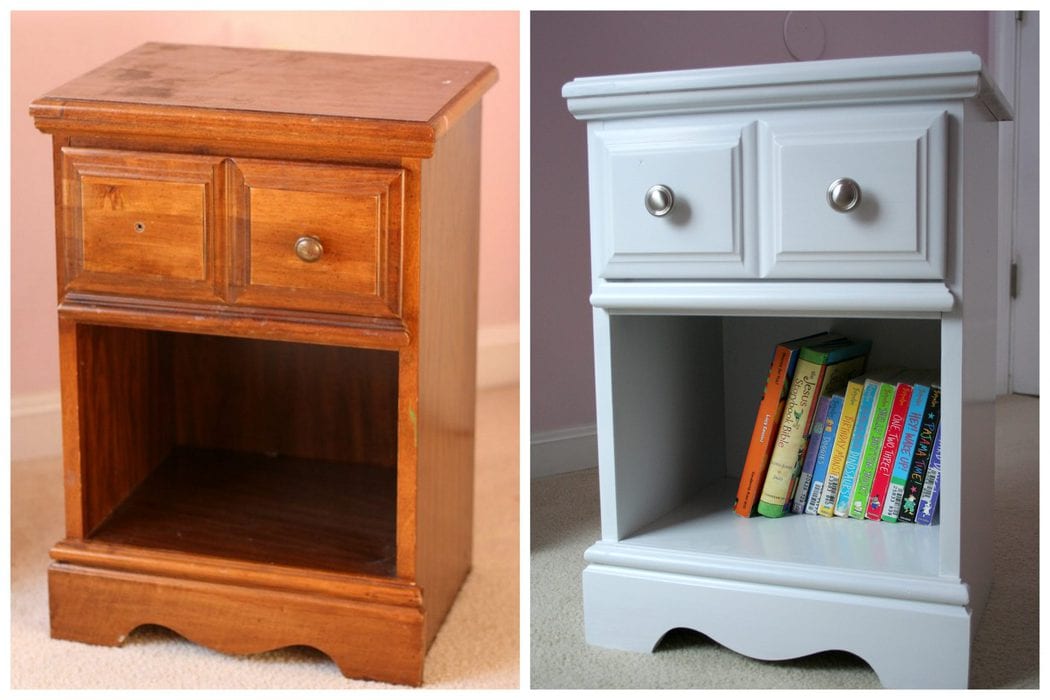
And given how the vast majority of our culture tends to throw away/donate things before they're even half used-up, the supply of used items is amazing. Go check out a thrift store, join Freecycle, peruse Craigslist or Ebay, or try yard-saling. You may be pleasantly surprised at what you can find without buying new. Not convinced? Check out all the great stuff I've gotten from Goodwill and Freecycle, like Zoe's nightstand and dresser, my little side-table, and this tall-boy dresser.
Stop buying bottled water.
Seriously, unless you've truly got unhealthy, unsafe water, get a canteen and a Brita pitcher and you should be good to go. Your wallet and the planet will thank you (though the bottled water companies will not!).
Bring reusable bags when you shop.
This really isn't that hard, I promise! When I unpack my groceries, I just stuff all my bags into the largest of my reusable bags, and then I put the bag of bags (hee.) back into my van. That way I can never forget to bring them to the store with me.
This particular activity saves me money at Aldi (you have to pay for bags there!), and if you're fortunate enough to shop at store that gives you credit for reusable bags, you can earn a little bit of money while you reduce your plastic consumption.
___________________________________
Readers, what are your top 5 suggestions for living green?
Walk, walk, walk!!! That is absolutely my top tip for green living. I live in Scotland where the weather is not very kind to us but my children and I walk EVERYWHERE (helped by the fact that I can't drive!) We walk over a mile to school (and then back of course), we walk to the shops, we walk for fun!
Walking helps me to time manage and plan my day better. I would never consider joining a gym because a walk in the fresh air is SOOOOOOO much nicer than paying to run on a treadmill surrounded by lots of other sweaty people!!
My husband drives to work in the city but apart from that we rarely use our car.
Line drying laundry is also a great favourite of mine - it smells better and it's free!
We are prolific readers in our family and it seems crazy to buy a book only to read it once and then have it sit doing nothing so my family and neighbours have a book swapping box. I mostly buy books from charity shops and when I am done with it then I put it in the box (kept at my mother's house) and anyone can come and get it. We have a charity box into which people can put a donation if they want to keep the book but otherwise they just bring it back when they are done. If you get loads of people involved then all tastes can be catered for. I know that public libraries do the same thing on a greater scale but this is a nice, friendly way to do it!!
Oh yes, I love the library! It's such a great resource, especially for homeschoolers.
That's awesome that you live in an area that is really walkable...my neighborhood, lovely though it is, only has a liquor store within walking distance (!), and most streets here don't have sidewalks.
I second the call for walking! I walk 2 miles (one way, several days per week) to our YMCA for my own weight-lifting/swimming and activities and social time for the munchkin, 0.5 miles to our local park, and between 0.5-1.5 miles to various other places (doc office, stores, library, etc.). On average, I put between 4-6 miles on my tennies and stroller!
We purposely bought our house in an area close to all these amenities so hubby and I could get by with just one car. Although we only live 3 miles from where he works, he can't take a bus (1.0-1.5 hrs on bus vs. 10 minutes in car one-way) or bike (roads are too narrow for that to be safe, and there isn't a continuous route with a sidewalk between our house and his work).
One thing I want to do here in Cincinnati is to find out how to change the zoning rules to make sidewalks mandatory on main streets. It's pretty ridiculous for our various governing agencies to bemoan the poor health of the average citizen, then ignore basic infrastructure changes that could be made to promote a more active lifestyle.
I agree with you. Too many American towns and cities are poorly planned-- they're designed so you can only get around by car. It's unfortunate. Towns built on a walkable human scale--with true neighborhoods that include a good mix of residential AND business--would benefit the American lifestyle in countless ways.
I think you have a good point. I differ, in that I think climate change is very real and dangerous, but when I meet someone who doesn't I try to remind them of an old school environmental problem, POLLUTION! It may be a lot less trendy but is still a great motivator to re-examine energy consumption, consumerism, and non-sustainable food practices. You don't have to look very hard to see the garbage in our oceans, find pesticide runoff in our limited freshwater supplies, etc.
Exactly. Climate change doesn't inspire me to do anything that pollution and the garbage problem don't already inspire me to do.
I'm totally in the "Global Warming is a hoax" camp.The dots just don't connect and when the so-called scientists change their minds every day (snowing? global warming! raining? global warming? etc.)
My number one suggestion is to turn stuff off when you aren't using it. Seriously, it's not hard to turn off the lights, computer etc when you aren't actually using it. We run updates on our work PCs at nights but we at least tell people to turn their monitors off.
Of course much of anything that we do is really so overshadowed by the absolute horrific pollution that China and India dump on the world. Sadly no one will ever sanction them as, like the mega-polluter Russia (and its USSR predecessor) they aren't the target of environmentalists. Most of the leaders of those groups are just displaced Communists and far left radicals and groups like Greenpeace give mainstream conservationists a bad name.
Battra92, there is no evidence to suggest that climate change ("global warming" is a confusing misnomer) is a hoax - all evidence points to the contrary. What makes you think that the "dots just don't connect"? If it is a gut feeling or based purely on reactionary skepticism, then you are doing yourself an injustice.
No other method of reasoning or data collection is as reliable or predictable as science. The global consensus among climate scientists and geologists is that man-made climate change is very real and very dangerous. If you don't believe it, then please state explicitly what evidence you require and who you need to confirm it before you will acknowledge what is happening.
Climategate was the final nail in the coffin. When actual emails surfaced that scientists (requiring government funding, of course) were manipulating data that didn't fit their molds. Plus the supposed increase in temperature (a whole degree!) is so under the established margin of error and chance that there is no basis to assume that 1 degree is going to kill us.
Any warming or cooling has nothing to do with human activity. The sun regulates our temperature much more than my car or light bulb ever could. Read up on sunspot activity and you'll see that many of the phenomenon pointed to by environmentalists are really just caused by sunspots.
Also, remember the next Ice Age? The Ozone layer whole scam? I bought lock stock and barrel into the latter when I was a kid and was convinced we'd all die. Well here we are and the whole thing is proven false. Scare tactics only work so many times.
I do support Arbor Day, though.
I was just reading about the report into ClimateGate. That report, and the earlier one, found no bias or manipulation in the selection of data used. You can find this article at http://www.economist.com/science-technology/displaystory.cfm?story_id=15905891
There's also a good discussion of climate science at http://www.economist.com/displaystory.cfm?story_id=15719298.
You're mixing up "average" and "deviation" in your discussion of one degree. The deviation in temperature in a year has been quite large, the change in average temperature worldwide has not. One degree - Celsius, btw, so much closer to two degrees Fahrenheit - is statistically significant.
The ozone layer deterioration wasn't a scam. Neither was acid rain. The reason these aren't problems now is that nations took effective steps to limit the emission of the gasses that lead to those problems. The ozone layer is still thinner than it was 50 years ago, but as thin as it would be if we still used old-fashioned aerosols and old-fashioned refrigerants. I'm sorry that the problem scared you to that extent but that doesn't change the fact it was a real problem.
So a left wing group exonerated another liberal group? Wow! What are the odds?!
I wish Global Warming was true. If it was I'd be shooting freon into the atmosphere 24/7. a warmer world would mean a much more prosperous and lush environment. I certainly wouldn't complain with the summer fashions being around all year.
Besides, as we've seen in the past couple weeks no matter how much the enviro-nuts want us to think that our choice of car somehow impacts the weather one volcano throws more carbon in the atmosphere than all of human existence. The very notion that we are human beings could cause the climate to change is laughable at best and at worst the most dangerous form of vanity this side of the Tower of Babel.
Battra92, I'm sorry to see that you are uninterested in learning more. I shall cease.
Thanks for the info! Love it !
I'm not totally into the "hoax" camp, but I have to agree with your sentiment. (http://tinyouroboros.wordpress.com/2009/09/11/confession-of-an-environmentalist/)
Hell, the more I blog about green issues, the less I agree with the green movement's sacred cows. I'm still an environmentalist, but spending so much time thinking about organic agriculture, "natural" products, greenwashing, global warming, and the whole green movement in general has made me a very different, and very skeptical, environmentalist. The essence is still the same, but the devil's in the details, as they say.
That's what "going green" should really mean: being informed, having a critical eye 🙂
It saddens me to know that there are still a lot of people out there who don't believe in climate change. Battra92, when you are talking about snowing and raining, this is in no way linked to climate. It is weather. You need a minimum of 30 years of weather data to even begin to talk about climate.
For the scientists, from my knowledge they all agree that climate change is happening. Climate change in itself is a natural process, we have something like 8 000 years of climatic data demonstrating that there are glacial ages (aka, ice ages) which are periods of cold climate, and there are interglacial periods, which are periods of warm climate. We are currently entering an interglacial period, but are still in a glacial age (we know this because there are still glaciers present).
What worries climatologists is the rate at which we are entering the interglacial period. It is unlike anything the planet has ever seen, and this is what scientists have called 'climate change'. This is caused by the increase of carbon dioxide and methane in the atmosphere. The first caused mainly by energy production (driving cars, heating homes, etc) the latter is caused by many different things (burying our garbage, farming cattle, etc).
Therefore, things like eating less (or no) meat products, walking to work or taking your bike, composting... all help reduce the amount of greenhouse gases you put in the atmosphere and help to slow down climate change. Did you know that biking is the most energy efficient mode of transportation? (When you consider calorie consumption against gas consumption in cars) Biking will get you further than even walking for the same amount of calories! GO biking!
On another subject, Kristin, I totally support everything that you do and have been reading your blog almost everyday ever since I found it. You've inspired me to try new things, such as baking bread and making yogurt. Thank you 🙂
I have the same type of thinking. When I pull out my reusable bag I don't often think, "I'm saving the world". It is just something I do now.
I do, however, think about plastic bags if I have forgotten to bring a reusable bag into the store. (Usually an unplanned purchase.) I can't help but to think of that plastic blob floating in the ocean. I have on more than one occasion carried out my purchase with receipt in hand just to avoid an un-needed (is that a word) bag.
The big issue I battle with a lot is paper. We don't get the newspaper but I battle daily with paper. I do recycle it but I wonder how much of it is wasted and the energy it took to make it and now remake it.
I avoid using paper products if I can. It really isn't that hard to wash dishes or dish towels.
Oh, I totally do that! If it's something small, I just say, "I don't need a bag." and I carry my stuff out. It takes vigilance, though...if I'm not quick enough, I end up walking out with a plastic bag without even noticing. lol
And I agree about the washcloths and dishtowels...it's just not that hard. And I think real towels work so much better than paper towels.
I've noticed that a lot more places around here will ask if you need a bag if you only have one or two items. This seems like a new thing. Love it!
Oooh, that would be nice! It'd keep me from accidentally walking out with a bag.
Amanda, if you only recycled one thing out of your house, paper would be a great choice. Even if you don't take the newspaper, there is so much recyclable paper coming out of the average home. Paper, as a commodity, is one of the bedrocks of recycling. This includes cardboard, junk mail, paper packaging, etc. It takes far less energy to make paper goods out of old paper than to use virgin pulp. Manufacturers have been "recycling" waste paper and trim since they started making paper because it's bad business to waste that fiber--we're in on the action now, as consumers. If you need proof that paper recycling is worth it, note that manufacturers currently pay over $100/ton for recovered cardboard!
The next biggest thing to recycle is yard waste. Compost at home, or make sure it's collected properly at the curb. Brush, grass, and leaves that go into landfills create tremendous amounts of greenhouse gases as they decompose, which is why yard waste is banned from disposal facilities. Greenhouse gases degrade breathable air quality--an issue entirely separate from global warming--and take up uncessary space in the disposal system that could be conserved for other materials.
We are doing all of the above and wish more people would! Thank you for the wonderful information, I hope everyone would just give it a chance. It isn't hard and saves a ton of money and teaches children wonderful life lessons!
1. Use old t-shirts for rags. My husband wears Hanes white t-shirts under his work shirts. When they become really cruddy I use them for rags as well as a cover for my baby boy when I am changing his diaper – I have been peed on too many times 🙂
2. Stop using so many paper products and consider using cloth napkins.
3. Recycle your cans, some states like Iowa; give you .5 cents for every can you turn in for recycling. (We don't really drink pop so it doesn't really apply to us but I know some people that have some serious pop addictions).
4. Use less, save more. Do you really need all that shampoo to get your hair clean or all that laundry detergent to get your clothes clean? Start paying attention to how much you use and really need. You'll use less, save money and reduce your trash.
5. Unplug things when you aren't using them and turn off lights. You'll save money too!
Excited to read all of the other reader's suggestions.
In January we started recycling cardboard -- cereal boxes, pasta boxes, etc. It's amazing how much that one act has decreased our trash output. Now our trash bin is only half-full on trash day. I smile everytime I take it to the curb.
Hmmm, we are recycling our cans to pay for the new bin for our paper and plastic recycling. Also, by changing my cleaning detergents has impacted our money spending, BUT since it is safer for the environment, we're not putting as many toxic chemicals into the water supply. I make my own laundry soap, I use vinegar to wash windows and mirrors, etc. I trying to figure out a way of putting out clothes for line drying, but I don't live in the best of neighbourhoods, and we've had people steal stuff from us before. OH and I don't use a motored lawn mower. I have a Reel push mower.
And though I do believe in global warming, I don't get cranky with those that don't. I just hate polluting the environment. It's like my mom always told me. "Don't poop where you eat!"
Great post, Kristen! I have a very similar view, although you are still way ahead of me in some "crunchy" areas. I find that every few months, though, we add some new to our home routine that helps the planet and is an easy change to live with.
We gave up water bottles several years ago and I still cringe when I see so many people buying cases of them at the store or walking around with them at the gym. We have a filter in our refrigerator and I've actually had friends STILL ask me for a bottle of water when they visit!?!
Recycling seems like second nature now. They don't have a recycling pick up where my parents live and it seems so strange to me to put bottles in the garbage can there. I'm trying to convince them to take them to a recycling center, but that's a hard sell to some.
I make all of our household cleaners right now, minus a huge bottle of Windex that I'm trying to use up. This is actually frugal and healthier for all of us...and easy to do!
I really want to try the composting thing this spring and I have an old garbage can that I might recruit. Hoping to use your tips to figure it all out.
Again, great post and Happy Earth Day!
What a great post! I think you're so right--it's all about being good stewards of the earth, in my mind. We have done a few things recently to change the way we use things and produce trash. Some of them inspired by you, actually!
We have cut WAY back on our use of paper products and disposable cleaning products. I use inexpensive flour sack towels for everything in the kitchen (except patting meat dry for even browning). I made cloth napkins out of the table runners and table squares from our wedding (re-purposed, hooray!). I made my own Swiffer pads out of cloth diapers (I don't have a child, bu the diapers cost the same amount as a package of Swiffer wipes and I can use vinegar and water instead of other chemicals).
It's amazing to me just how much I bought into the disposable cleaning wipe craze. I've been trying to use up the last of them, but did I really gain anything by buying glass wipes, floor wipes, counter wipes, and bathroom cleaning wipes? Nope. Just a whole lot of plastic containers to dispose of and bags of used wipes. My use of cloth products doesn't even add a full load of laundry each week--they just go in with our bath towels. Silly, silly me.
I'm really excited to grow tomatoes, peppers, basil and thyme this summer, even though we live in an apartment. I also make a lot more at home now--pizza crust, hamburger buns (that's your recipe I'm using, btw), yogurt (you, again), and things I never thought I could make. Sure, it takes a little time, but I find it so fulfilling.
Thanks again for such a great post!
We do use bottled water here at home - *but* it's because we are on a well and the water has a high level of minerals and just does not taste good at all. It also clogs up my coffee maker and dissolves copper water pipes (learned that the hard way). We cook with well water and use it for all other household needs but we don't use it for beverages or foods that are not seasoned enough to cover the taste.
We use the refillable water bottles and have them refilled at our local grocery store. It's cheaper than buying new jugs every time and cuts down on plastic waste.
I hear you. We have a water cooler and we use 5 gallon reusable containers of water that we just take and get filled up when we are running low.
Hi! I have a question about composting. I really want to do it, but have a concern with leaking/smelling. I live in the city, so the only "backyard" I have is a small stone courtyard and I have neighbors very nearby on all sides. If I do the rubbermaid compost you have directions for, is it going to smell or leak? Leaking could be a problem because there is not much soil to set it on, and I'm concerned that it will smell badly, which would be unpleasant for both me and my neighbors. I'd love your input on this!
BethW - a compost pile *could* leak, and here's how to stop it: use more shredded paper.
The usual rule of thumb is 50% "greens" (things that go stinky when they get old, like food scraps and lawn clippings) and 50% "browns" (things that go dry and crackly when they get old, like paper or leaves). If your pile gets too wet or stinky, add more browns. Specifically, put an inch or more of shredded paper at the bottom of your pile, and when you add kitchen scraps also add *more* than that volume of paper. I recommend shredded paper because it absorbs pretty well. It's also a great way to reuse office paper that you shred.
One more suggestion to make your pile neighbor-friendly, if I may. Don't put proteins in your compost pile. They take longer to decompose than other greens and are more attractive to vermin. You can still compost egg shells, though.
I've started using reusable cloth menstrual pads and even recently bought a menstrual cup. I started thinking about how much disposable product I was using for "that time of the month", and after researching the cost of cloth menstrual pads and how long they last, I quickly made the switch. I love them, they're easy to clean, and I'm no longer throwing away a smelly bag of garbage every month.
Cloth pads and menstrual cups can be reused for YEARS and really save money in the process, too.
Traci,
I've started doing this, and I love it. Another benefit is never having to worry about running to the store at the last minute to get feminie products. With my cloth pads in my closet, I am always prepared! Actually, i was wondering what Kristen and her readers thought of this.
We are transitioning here. Small steps for bigger changes.
Our town just went to single-stream recycling which makes it easier for us to recycle more things. I splurged on a new trashcan for the kitchen (smaller) and use the larger old one now for recycling. Happily the recycling fills much faster than the trash now!
We moved to cloth napkins instead of paper. I remember my reusable bags more often than not at the store. I line dry as much as I can now instead of using the electric dryer. I cook way more from scratch, and bake LOTS now thanks to you! I'm researching more natural alternatives to cleaners, etc. Just got a great book from the library "Better Basics for the Home" that has some very interesting things.
Also - for the book readers - along with the library, I joined the paperback book swap site. It's a great resource for swapping books!
Thanks for a great post and a marvelous blog that inspires so many of us each day!
Blessings on the journey!
Here are a few ways we're green:
1. Grand Rapids, where I live, doesn't allow outside composting of anything that isn't yard waste, but I use my disposal, and the food gets processed at the wastewater plant instead. That's not quite as good, but it's better than ending up in a landfill.
2. I buy dry goods (rice, beans, flour) in bulk whenever possible. We're a few hours from a place called Country Life Natural Foods (http://www.clnf.org/), so every few months the families at my church get together and put in an order. I keep most of it in the freezer, and store small amounts in quart canning jars in my cupboard. This creates so much less waste than buying a box or plastic bag for every 12 oz. of food.
3. I buy from the farmer's market whenever possible, which is unfortunately only about six months of the year. This lets me buy local and cuts down on packaging even more.
4. My husband and I have only one car, even though we both work full time. Sometimes he rides his bike to work, and sometimes we car pool. We run errands together, plan our trips together, and spend more time at home then we would otherwise. It's a complication in our lives, but it's worth the cost.
5. Just like you, we try not to buy pre-packaged foods. My husband has celiac disease (he's allergic to the gluten in wheat, rye, and barley), so we can't have most of them anyway. This is also a great way to be frugal.
By the way, I love your blog. Keep up the good work.
I'm totally convinced on global warming (looking for links now 🙂 ), but you do make a good point. Regardless of global warming, we have a responsibility to take care of our planet! My top five tips for living green:
1. If you have kids, use cloth diapers and wipes. I admit that we're not perfect in this area--we use disposable wipes for #2--but I shudder to think at all of the diapers that would go in the trash if we were using disposables! (Not to mention the money--ouch!). We also use eco-friendly detergent to avoid putting nasty chemicals in the waterways. I'm sometimes concerned about the amount of water used to wash cloth diapers, but I think it pales in comparison to the piles of trashed disposables we'd be producing otherwise.
2. Cook and eat at home. We're at a point where we buy mostly "ingredients," rather than processed foods. There's less packaging, they're healthier, and they cost less! Even if you don't particularly like cooking, there are plenty of quick, easy, and tasty recipes out there.
3. Shop less. Utilize freecycle, Craigslist, thrift stores, the library, Netflix, and other sources instead. You'll save money, produce less waste, and possibly become more connected to your community in the bargain. I love walking into my library and having the librarians address me by name!
4. Eat less meat. When you do eat it, take care to make sure it was produced sustainably. We don't eat a lot of meat because we're committed to buying high-quality, local meat from our butcher friend. It's more expensive, but it tastes MUCH better, and is much healthier to boot. We don't miss the extra meat in our diets because we know that the meat we ARE eating is good quality.
5. Reuse everything you can. Compost your food scraps (and junk mail!), wash out glass jars to hold bulk grains, etc. If you no longer have any use for something, donate it instead of throwing it away. (I was horrified at my mom's house yesterday when she put a handmade angel in the trash. Sure, neither of us liked it, but I'm sure someone would buy it from Goodwill!)
When my sibs started having kids I decided to educate myself about cloth vs disposable diapers. The essence of the issue is waste of disposable vs. washing of cloth. Taken as a group the studies are unclear - some conclude disposables are more environmentally friendly, others say cloth. It depends a lot on the cost of heating in your area, since that's the main component of washing. My thought is that with a high-efficiency washing machine and hanging to dry, and especially if you'd wash them in warm (rather than hot) water, the balance tips to cloth.
But I expected to see a cut and dry answer and was surprised not to find one.
I can't see a way that disposables would be better for the environment. Your water bill does go up a bit, our was like 5$ every 2 months, but water can be treated and cleaned and re used. Cloth is also very frugal, esp when used for multiple kids. Even using hot water to wash, which I found necessary when kids start with solid foods, and a dryer in the winter to dry, our electric bill barely showed a bump in costs.
We also use those cloth diapers for all sorts of things for years after the kids are out of wearing them.
The cost that the research addressed was to the environment, rather than the out-of-pocket costs to the parents. The price we pay for water in the US (and pretty much every other rich nation) doesn't actually cover the full cost of sewer treatment, it's subsidized by taxes. The biggest additional cost for cloth is not the water, it's the energy to heat the water and to run the dryer, and to a lesser extent to purify the water. Which is why I said if one used a solar dryer, I thought the balance would tip in favor of cloth.
I can send you one of the studies if you'd like.
Good post. I believe that global warming is called "Climate Change" now, to take into consideration the unpredictable and strange weather changes that have undoubtedly been happening as of late. Personally, I believe that it is happening, but I haven't been living like a neo-hippy just because I suddenly have the Fear of Mother Nature in me, or because of the growing fad of "going green."
1. Reusable bags - I am so sad when I forget mine. Luckily, they go back to the store to be recycled or I use them to put the cat litter scoopings in.
2. Library and used book stores.
3. Craigslist, Good will, consignment shops and networking through family and friends.
4. Biking, public transit and walking.
5. Farmer's market, since I don't have the audience to garden vegetables.
1. I don't shower every day. Gasp! In winter in Montana, I admit it, I just don't sweat that much and don't really need to.
2. I also hardly use paper towels at all. The times I do use them is when I'm cooking bacon, but that's not often! Also when I want to grease a pan. Buying Pam is SO expensive compared to just pouring a little veggie oil on the pan and rubbing it around. My fingers work, I just prefer paper towels for this. 🙂
3. I bike, bus, walk, or carpool virtually everywhere I go. No car! Next week is Bike to Work week in a lot of places, so check it out in your town! It's great. Plus you'll save money on a gym membership.
4. I'm getting married this summer, so a lot of the decisions I've made recently have been wedding related. One is for our invitations. We did save-the-date postcards (no paper used on an envelope). We are doing invitations on recycled paper, and putting additional information on a website to save on money.
5. Here's my confession: I don't recycle (very often). I used to be hardcore about this, but in MT there aren't very many places to recycle, and glass isn't recyclable. I have piles of bags sitting in my garage waiting for my roommate to take to the center (she has a car!) but since it hasn't happened yet, I've just started throwing things away. I do try to re-use all that I can though.
I love using the environment as an excuse to not wash my hair 🙂 I'll wake up in the morning, say "Oh, I really should get up and take a shower", but then I reason that if I shower but don't wash my hair, then I can sleep in, use less water and shampoo, not use the elecricity needed to power my blow drier, and not damage my hair from heat drying for one day.
It may just be an excuse to sleep late, but I think there actually might be some truth in my sleepy morning rationalizations 🙂
That's too bad there isn't glass recycling as glass is the one that can be recycled indefinitely!
Great article!!
My blog focuses on being "Grugal" (my word) = green +frugal.
http://ourlittlegreen.com/
I want to teach the world that being eco-conscious can save them money! Sometimes you have to put it in perspective for people to see the "point" of being green.
Go watch Wall-E...that's where we're headed!
I'll post my easiest tips for being green today!
Frugeen = frugal + Green! Love it!!!
I don't understand how people can believe that global warming isn't real. From what I've observed it does seem to be people on the more conservative spectrum of politics, religion, and other beliefs. Also don't understand the comments about the scientists changing their mind. The weather changes- when it's cold and snowy in area's that it's not normally warm and the warm where it is usually cold and snowy that's not scientist changing their minds! MOST scientists do agree that global warming is happening and is real but as you've pointed out you don't need to believe these things to treat the earth with kindness and respect.
Things I do are:
1. reusable bags!
2. use a water bottle
3. compost- at least at work where there's one available to me
4. recycle
5. consume less waste in general. such as do i really need to have each veggie i get at the store in a different bag? no! cloth napkins etc.
6. don't let the water run while I wash my face and brush my teeth or any other time that it's unnecessary.
I do more but I don't want to have a huge comment to post 🙂
i live in a studio apt in an urban area, so although there are many things that would be very difficult to do (composting, gardening, line drying) there are other things that are easier, like access to public transportation. here are 5 of my earth friendly habits:
- Reuse! I dontate clothes/household items to a local thrift store when I no longer use them. Depending on the style, I give some to my younger sister to share in her clothing swaps with friends.
- Meals - I go out for dinner to socialize, but other than that, I try to prepare my own food rather than takeout/fast food- more for health/taste reasons than the environment, but it's a great side effect to reduce all the packaging waste! I bring my breakfast and lunch in mostly re-useable containers and take my home-brewed coffee in a travel mug. I also try to buy local when farmers markets are in season, great Jersey corn, tomatoes, peaches!
- Books - I love to read and try to get to the library, but its hours arent very convenient for me. I share books with friends and family (my grandma has a big basket like a reader above mentioned where we share beach paperbacks) and also joined Paperbackswap.com which lets you order books from other members with the credits you earn from offering yours.
Wrapping - i cant stand to throw away beautiful gift bags and always reuse them as long as they are still in gift giving condition. My friends and I often bring a bottle of wine over to share when we get together and many of the bags have been through a few cycles!
No Car - My town is completely walkable and I have access to several public transportation options as well. I commute to work on a bus, take trains to visit family/friends, and when I need a car, I have a Zipcar membership which lets me rent by the hour.
happy earth day!
i'm on PBS too. love love love!
PBS is fantastic! and I love that you can swap your credits to the DVD swap site too 🙂
also - i should clarify - i dont go out to dinner every night, maybe 2x per week. after reading my comment it sounded like i am out every night yikes!
i haven't tried out the dvd swap yet. don't think i own enough to make it worth it. netflix is great though. paper is recyclable and you mail it back and get another.
Okay, global warming:
1. Be wary of "x number of scientists dispute global warming" claims. "Scientist" is a pretty broad term, so what really matters is what climatologists have found, since that's their expertise.
2. The media is big on "the other side," even when the other side happens to be bunk. 🙂 Peer-reviewed journals (wherein other scientists have read the articles to make sure people aren't fibbing) are reputable and have shown global warming to be a reality.
These are good articles on the topic:
http://www.scientificamerican.com/article.cfm?id=is-global-warming-a-myth
http://en.wikipedia.org/wiki/Global_warming
http://www.bbc.co.uk/blogs/paulhudson/2010/02/january-2010-warmest-on-record.shtml
Okay, stepping down from my soapbox now.
I'll go check out your links, Cate. I wouldn't say that I'm on the "climate change is a hoax" bandwagon, but I'm not sold on it at this point either. I'm sitting on the fence. lol
I honestly haven't felt that it's urgent to figure out which side of the fence I'm on, just because it won't change my behavior one way or the other (oh right, I already said that in my post!). So, I haven't put much effort into researching it and forming an opinion.
I am convinced by my own ability to understand physics and math that global warming, caused by human activity, is real. BUT that is beside the point! If it wasn't real, we are still obliged to keep a clean globe. We are still obliged to practice justice to other humans and to the created universe. We participate in Creation with the Creator, and we aren't doing a good job of it.
My simple steps:
1. Line dry, or use a clothes rack.
2. Use reusable bags everywhere you shop.
3. Drive a lot less, and keep the vehicle in good shape.
4. Buy used as much as possible.
5. Sew your own clothes, even recycling old clothes into new.
6. Shop for food that is grown locally, and cook from scratch.
We are anticipating a move again this summer, so we are not composting or gradening, which is a real sorrow to me!
I guess I'm missing something - why not compost if you're moving?
Glass is recycleable, see Glassworks.org, however facilities to handle it may not be available in many areas. We have recycleables pick up along with garbage pick up, but glass is not permitted. It has to be taken to a depot as broken glass is considered a contaminant for paper products. We rinse out glass containers and keep them in a covered bin in the garage to be taken to the depot a couple times a year.
We use rechargeable batteries and keep dead ones (that no longer accept a charge) in an old peanut butter jar to take to the depot when it gets full.
Some areas also have paint depots where they collect, check and label partial and sometimes full cans of paint as being "at your own risk". We obtained enough same colour stucco paint to repaint a house and stain for a fence for free.
A couple retailers in my area accept used water filters like Britta for recycling.
unfortunately i think it's pretty expensive to recycle glass from what i've been hearing. there are piles of glass waiting to be recycled here in Colorado/Wyoming that isn't getting done because of the cost.
Whether we call it reducing our carbon footprint or practicing good stewardship, I think we're all on the same page! I dig earth day because it inspires conversation in our family about what steps we want to take in the upcoming year to live a little lighter on the planet. I'd just say that the focal point in our house for being greener is the trash can---we basically pause at the trash can and consider 1. can I reuse this? 2. can I donate it? 3. can I compost it? 4. Can I recycle it? 5.Should I have bought it in the first place? 5. Is there a way I can buy a better product next time, like glass instead of plastic, whole foods instead of packaged? Our best ideas have come from those little moments!
If you have a front-loading washing machine, you can use WAY less laundry soap! For a large load of laundry, I use half of what the soap manufacturer recommends for a medium-sized load, and my clothes come clean, even using cold water. I take a permanent marker and draw a line on the soap scoop as a visual reminder to not fill it to the top.
Here in Portland we have great curb-side recycling. For our family of 7, we produce a medium-sized bin of trash each week and a large bin of recyclables (paper, metal, glass, plastic). We also compost all produce scraps except for the really hard things like broccoli stems or avocado peels. That lowers our garbage bill!
I am bummed though that sometimes living green costs more, especially when it comes to food. Unless you are able to buy--and store--a quarter or half a beef, local/free-range meat is prohibitively expensive. Healthy bread, brown rice, whole wheat flour--even in the bulk bins it costs more than the processed versions. And of course organic produce is significantly more expensive. I garden some, and we were able to buy a half a cow this winter, and I buy my whole grains in the bulk bins, but we aren't able to afford to eat as greenly or as healthy as I'd like. Sigh.
Michelle, have you had trouble composting broccoli stems? I haven't heard of this before but if you have, have you tried cutting them in half longways? That'll expose the soft inside and they'll decompose faster.
I'm with you on the avocado peels. I think avocados are actually wrapped in leather. And let's not talk about the time my well-meaning roommate put pistachio shells in the pile.
Actually, I've never tried to compost broccoli stems. They just seem so hard that I figured I'd still be seeing them next spring. Thanks for the tip about cutting them lengthwise--I'll give it a try!
I've been debating putting the gerbil shavings into my compost. On the one hand, it's nice shredded pine shavings. On the other hand, gerbil poop?
Michelle,
gerbils are herbivores, so compost away :o)
You shouldn't compost the faeces of meat eating pets (eg, cat or dog) because of the risk of disease (domestic heaps tend not to get hot enough to destroy pathogens), but rabbit, gerbil etc is fine- it's just the same as chicken or farmyard manure.
HTH
Michelle,
I'm not sure what gerbils eat, but my brother had pet rats and they used to LOVE brocolli stems. Just cut the stems into little rounds.
Maybe your gerbils could solve the brocolli stem composting problem?
Have you tried peeling and eating the tender insides of broccoli stems? I believe this is the same stuff that is used in packaged broccoli slaw at the store. As long as you peel the tough outer parts off, there is usually a nice amount of crunchy, mild veggie inside. Also, the thin peelings would compost much more easily I'd think.
Lisa is correct on both counts. The person who invented BroccoliSlaw (a deli owner??) did it to get value from the stems discarded from some other dish. The BroccoliSlaw became so popular that she needed more stems than she needed broccoli. That's always tickled my funny bone.
A vegetable peeler makes peeling those stems a snap. PS, the peeler works great for ginger roots as well.
One more thing--the book Tightwad Gazette is really helpful for living greenly and inexpensively.
Kristen,
I love how you can bring up quite controversial subject matter and your readership is unfailingly respectful in their responses.
Must be something about you that brings out the best in people. 😀
Katy Wolk-Stanley
"Use it up, wear it out, make it do or do without"
It has been a pretty controversial week, hasn't it? First the Easter Bunny and Santa Claus, and now this! lol
Maybe we could talk about Walmart again before the week is out. Hee-hee.
And yes, I have the best readers in all of the blogosphere, I think!
Kristen - I totally think you should bring up the Walmart subject sometime! I enjoy these topics. At least on your blog, you can have a controversial conversation and everyone is respectful of each other.
Good stuff. Great reminders, anyone can live green 🙂
I'm also not sold on global warming (too much monkey business surrounding that hockey stick graph) but all the plastic in the Pacific Gyre has me worried. At this point sustainability is subject to financial constraints, but, as Kristen (and other frugality bloggers) often point out, frugality and sustainability often go hand in hand.
Way my husband and I cut down our consumption:
- Owning only one car. He commutes by bike. We coordinate car errands. I walk to the grocery store and community center. We bike to church when it's not raining. Lovin' it while we don't have kids.
- Re-using all plastic bags, and trying to remember to bring our re-usable bags to the store. We use a tiny garbage can and line it with grocery bags instead of buying bags especially for trash.
- Minimizing loads of laundry (it's $2 to wash and $1.75 to dry in our rental unit!)
- Re-using containers of all kinds. Wash and re-use glass jars instead of buying more rubbermaid containers. Use rubbermaid containers instead of sandwich bags most of the time, and wash sandwich bags for re-use.
- Throw an extra blanket on the bed instead of turning on the heater.
I'm excited that more folks are starting to recycle! Having grown up in a suburb in Oregon, I can't fathom not recycling...I guess that's why I didn't list it. It's an easy step--provided your community has a program.
Provocative title ... and, judging by the number of comments, it worked.
While I agree with you that many frugal activities are also environmentally sound this is, unfortunately, not always the case. A free range organic chicken is considerably more expensive than a battery one. A train ticket often costs more than a budget airline one. Local independent retailers cannot compete with supermarket loss leaders.
Making the 'right' environmental choices may not always be the cheapest option, and that's when it's helpful to have other incentives. I'm persuded by the climate change argument and consider it my responsibility to protect our planet and its people from the effects that are already threatening their existence. So I'm challenged to live in harmony with the earth even on those occasions when it hurts my pocket. Hopefully these are balanced by occasions when I'm quids in.
Cutting our carbon emissions is crucial. My top tips are:
1 Ditch the car in favour of walking/cycling/public transport
2 Avoid flying
3 Cut down on meat consumption
4 Shop at local independent retailers in preference to supermarkets
5 Grow as much of your own food as possible
Like you I find these actions soon become second nature and contribute towards a more meaningful life.
Oh yeah, I have more motivation than just saving money. That's why I forked over $30 for local beef last week. lol
I have multiple motivators working all at once...health, frugality, and concern for the environment. Occasionally they do collide (some cheap food isn't healthy, some green food is expensive) but on the whole I do find that I can usually meet all three goals reasonably well.
Great post, Kristen. And kudos to you for starting a fruitful discussion without putting people on the defensive. You are brilliant at that.
For me, it's not about "believing" in global warming, it's about trusting science, and the preponderance of the evidence is on the side of what is now referred to as "climate change." I think the "controversy" is media created and political. But I totally agree with you that it doesn't matter in terms of our behavior, because back in the 1970s when I learned about conservation, it was more about pollution and being good stewards of the earth and that's more than enough reason for us all to do our part.
Cate's points and links are excellent.
My top five suggestions for living green (that also contribute to my quality of life):
1. The Compact, which is to buy nothing new. Most of the time you can borrow, trade or buy used. And for gifts- consumables, handmade, or experiential gifts are wonderful choices.
2. Host clothing swaps. I have hardly bought any new clothes for 3 years, due to having stylish friends. We all swap what doesn't quite work on us, doesn't fit anymore, or we're just not wearing. I have gotten some of my favorites from it, along with pajamas, slippers, shoes, and workout clothes. Love the clothing swap!
3. Join a CSA (Community Supported Agriculture). It's like having the Farmer's Market come to you- everything is in season, local, and best of all- it tastes delicious.
4. Do without. At least half the time, a few weeks or a few months later you've found something else that will serve the same function or you don't really need it after all.
5. Use the library, for books and magazines, movies and music. It not only saves money, it cuts down on the clutter.
Thanks again Kristen for your excellent post.
Great post, it's wonderful to see such a lively discussion on Earth Day. As other commenters have mentioned it is hard for me to understand why anyone would doubt global climate change at this point, give all the data available. I would really encourage anyone who is unsure or not convinced to really do their homework before determining that it does not exist. Once you take a look at the data, and remove all the political garbage, it is (to me) impossible to deny that these changes are occurring. If you want to debate the implications of those changes, knock yourself out. In any case, even for those commenters who are not sure where they stand, I think it is great that people are making the kinds of changes that seem like they will help solve the problem. I also appreciate the courteous tone set on this forum, despite differing opinions.
You are wise! I once read this same argument in a book called "Living Simply with Children." The argument is basically this: good choices overlap. 🙂 For example, you are trying to be a healthy individual, so you eat locally grown produce. This ripples to affect our world, as you are supporting local growers and small farming. This same choice is "frugal" because it saves you in health care costs. The basic premise was that good choices seem to spread goodness, whereas foolish choices have the same unwise "ripple." Example: you are rushed, so you spend money on fast food (unhealthy for you and your wallet) and produce a small quantity of fast food trash doing so (unhealthy for the planet.) I liked this idea of "overlapping circles of positive choices."
We recently started recycling our paper, cans, cardboard, glass, etc; and that has made a huge difference on how much "trash" we throw out each week. I also do a good bit of canning and freezing to preserve fruits and veggies all year (durable plastics for the freezer, canning jars for canning) and reuse those over and over and over. I use occasional cloth bags for grocery shopping; but the plastic ones I use for waste can liners (diaper can, etc- yes, I (gasp) use disposable diapers). I'm trying to make more of our cleaning products myself too. And have been doing more and more home-cooking; eating out is a special occasion. There are definitely more I could add, but the ideas were mentioned previously. I agree that things definitely overlap. I'm not doing these things so much for our environment, though some of them are definitely for that reason, but more for our pockets to have some more money.
I do the best I can, happily and cheerfully. But I just don't have the time for guilt that gets heaped on by the green(or any really) movement. Sometimes in life we have hard times, illness, unemployment, family trouble, etc. (I'm having one of those times now). These are the times I'm doing good to get anything done, let alone remember to do extra. Though when life is good I can think about all of these things and do more.
I'm very far from the perfect frugal/green/simple living person, I do try though. All I can say is I'm a work in progress.
My biggest tip: GROW YOUR OWN FOOD!!
http://islandmomsarah.blogspot.com/2009/05/frugality-at-its-finest.html
GREAT post!!
I LOVE this. You know I am a hard core greenie, but I believe in doing it for the same reasons as you. I think everyone should! 🙂
I was never under the impression that global warming/climate change was the only reason to be green. What about just preserving our natural resources? Or not depending so much on imported oil? Or so we don't have to start more off-shore drilling or drilling in our few remaining wild areas? Or reduce plastic use because it just doesn't decompose, like maybe ever? Or save trees just because the world is a better place with trees in them? Global warming is only is only one of the many reasons we should be trying to live a greener lifestyle.
For myself, there's really no reason to get up in arms about global warming. The presence or absence of human-induced climate change isn't going to change my lifestyle. There's nothing *to* change...I'm already doing the best I can.
The stark reality is that if climate change is not addressed then changing our lifestyles will no longer be an option, but a necessity, as it already is for the people of Bangladesh.
That's what I've always thought too: do we need to be immediately in danger to be convinced about not wasting, not polluting and such? We should know better by now.
PS
My experience with (real) natural cosmetics and why they are worth every cent
http://thecarefuleditor.wordpress.com/2010/03/29/not-so-skin-deep/
Not sure if I can add anything new. I live in an apartment so I am limited to certain things,no line drying,composting,etc. I do though do what I can not because of global warming/climate change which I do believe in it but because I was reminded a few years ago by my very religious grandmother that its not about those things its about being a good steward to the Earth. While my grandmother and I no longer share the same religious practices we do share that same belief and from then on I've made slow but positive changes.
I recycle all I can and the apartment complex I live in actually picks up my recycling at the door.
I use the library for books,dvd's.
I use reusable bags. I keep them in my trunk and that way I grab them when I go in the store. On the rare instance i forget and get a plastic bag is goes back to the recyling bin when I go back.
I share a car with my mom and I work from home so its hardly used. Though when we do drive we keep the errands in a pattern that allows us to use less gas. I also make sure the car is cared for properly.
I unplug everything that I possibly can before bed. I wash my clothes all on cold with full loads and usually early am or late pm.
I clean with green products,keep all filters used in the vacuum and the air filter for the ac changed out.
We have a filter on out kitchen faucet and drink that tap water. We do keep some bottled water on hand because we live in Florida and hurricane season is on the way.
My only big issue yet is paper napkins and paper plates. I use them way too much and trying to switch to using something else.
I just posted my top five on my blog before coming here to read yours, so great minds think alike. I agree with you that I'm not totally convinced on the evidence for global warming, but there are lots of reasons that it is more ethically responsible to treat all resources with care: time, money, and natural resources.
http://fastcheapandgood.blogspot.com/2010/04/fc-challenge-can-you-do-top-5.html
My number one is to turn the lights off to unused rooms and to unplug any appliance after you are done with it - within reason, I can't unplug big things like my stove. By doing that I drastically reduced how much electricty my home used per month. It saved me money and maybe it was a little less coal that had to be dug out of the ground and burned at the power plant.
One of my behaviours I have changed is joining the library.
As an avid reader it has made a huge difference to my consumption of the earth's resources.
And, if I am not enjoying the book I am reading, I can take it back and find another one I will enjoy for free!
Non Consumer Girl
I do think Global Warming is a real issue.... However you are 100% right... it doesn't matter which of the global disasters are real or not.... We are ruining this planet for ourselves and the other inhabitants.
I always say.... We are not ruining the planet... We are ruining the planet for ourselves. So what if we die and kill all the animals and plants along with it? The planet will just recover or change in a relative blink of an eye.
So, yes let's try and fix this problem for our own sakes 🙂
Just released report that may be of interest to readers looking to educate themselves on climate change data:
http://www.epa.gov/climatechange/indicators.html
Key findings of that report:
Some of the key findings include:
· Greenhouse gas emissions from human activities are increasing. Between 1990 and 2008, there has been about a 14 percent increase in emissions in the United States.
· Average temperatures are rising. Seven of the top 10 warmest years on record for the continental United States have occurred since 1990.
· Tropical cyclone intensity has increased in recent decades. Six of the 10 most active hurricane seasons have occurred since the mid-1990s.
· Sea levels are rising. From 1993 to 2008, sea level rose twice as fast as the long-term trend.
Glaciers are melting. Loss of glacier volume appears to have accelerated over the last decade.
· The frequency of heat waves has risen steadily since the 1960s. The percentage of the U.S. population impacted by heat waves has also increased.
Your answer lifts the inetlleignce of the debate.
Love it! This is what I am always telling my brother-in-law who makes fun of us for being environmental. I don't CARE if global warming is true or not. I have my opinions, but it doesn't matter. The reason I care about our environment and making responsible choices has nothing to do with global warming, and everything to do with being a good steward of what God has entrusted us with.
So, I've been lurking for a while, and exploring your archives. One of the bigggest frugal and green things we do is we have stopped using pesticides and fertilizer on our lawn. We leave the clippings when we mow, and hand weed the really egregious stuff, but leave clover and johnny jump ups. Fertilizer and pesticide run-off is a huge source of non-source point pollution, even if it's not as visible as trash in landfills. Think how frugal it is, too- no bags to haul home, no lawn service to pay.
Great discussion! I'm coming in late, but very much enjoyed/appreciated the comments.
My daughter, who is studying environmentalism, told me a story the other day that I had completely forgotten. I have always been militant when it comes to littering, and she remembers one of the kids throwing something (popsicle stick or something) out of the car window when we were on the highway. I apparently pulled over to the shoulder and made them get out of the car and go back and find it!
It was a surprise when my daughter developed this passion for the natural world, to the point that that she's chosen to follow this career. All the good things that have been mentioned here today, all the ways we each do are part, are being watched by our children and taken to heart. In this way we are all multiplying what we ourselves do to make a difference.
Stopped reading your site when I saw this headline. Really? I don't want to read more than the headline. Good Heavens!
If you read the rest of the article, you might change your mind. My point was that even if you don't think global warming is a danger (I've come to think it's more dangerous than I did when I wrote this five years ago), you still should live a green life. Global warming is not at all the only reason to buy less, consume less, compost more, and recycle more. 🙂