
Wellness Products That Are a Waste of Money
As I have gone through these last few years of science classes and have learned more about how the human body works, I have become increasingly amazed at some of the unnecessary products marketed to otherwise healthy people.
So...let's run through some of them today!
Note: I do actually have some newbie credentials to speak on this type of topic now (oh hey, look at me with an R.N. degree!) but I'll also do my best to link to other resources that back up what I'm talking about. However, I'm not functioning in a healthcare role here in this post! I'm just explaining why I think these products are a waste of money.
If you disagree with me, no problem, but you'd better come at me with a biology-based explanation for why you think I'm wrong. 😉
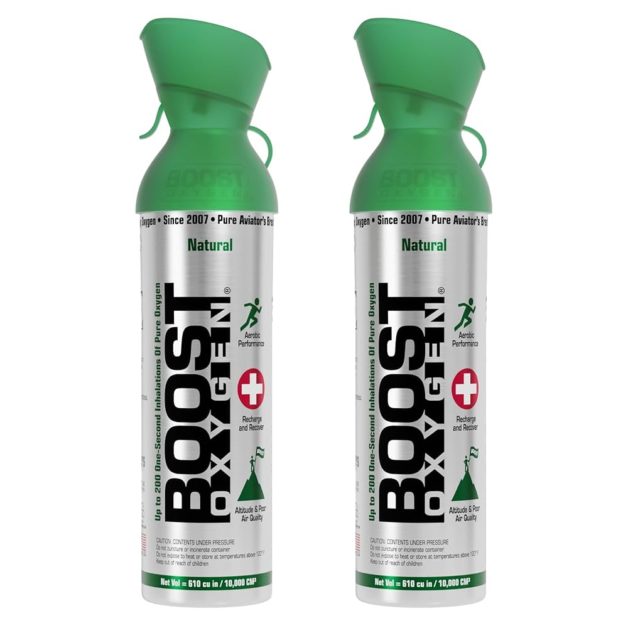
Canned Oxygen
I have seen these products marketed as an energy booster or for athletic recovery (for about $10/can!), and this always makes me raise my eyebrows.
Here's why: imagine that your red blood cells (which are traveling to your lungs for oxygenation) are like a bus with four seats. Each cell can carry four oxygen molecules.

When the blood cell has four oxygen riders, it's full. It's 100% saturated. No matter how much more oxygen that cell is exposed to, it cannot accept any more riders.
On normal room air, which is about 21% oxygen, your blood cells are typically 95%-100% saturated with oxygen.
Regular air provides plenty of oxygen riders for your red blood cell buses, and if you breathe in more oxygen than you need, it will get exhaled.
So, for an otherwise healthy person, there is really no reason to buy 100% oxygen in a bottle.
Just breathe. It's free.
(Obviously, there are legit medical uses for oxygen. I'm just saying that healthy people, at normal altitudes, are not likely to benefit from it. Save your money! Also of note: in the hospital, we are constantly trying to wean people off of oxygen. Evidence-based practice shows that breathing on your own, with room air, is ideal if possible, so we persistently try to get people to that state.)
One more thing: at least some percentage of people who say they feel better from using this product are probably experiencing both a placebo effect and also the benefits of taking deep breaths while using the product.
I'm just saying...you can pause and take deep breaths of room air for $0.
- University of Colorado article on canned oxygen
- Missouri Poison Center article touching on the risks
Products meant to make you alkalinic
(like...alkaline water.)
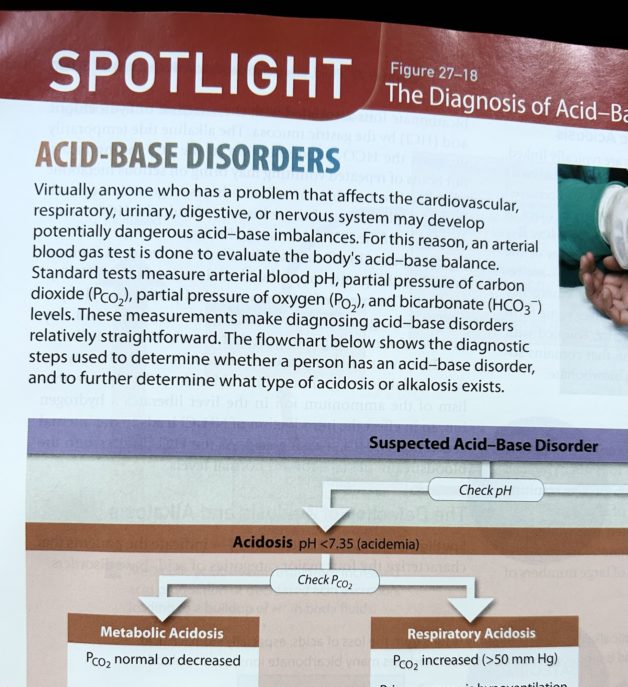
You can't really change your body to an acidic or alkalinic state. Human bodies are always working to maintain a state of homeostasis, and that includes maintaining a pretty tight control over our ph levels (7.35-7.45, baby!).

If your system pH starts to get lower (acidic) or higher (alkalinic), your body has systems to adjust and adapt to bring your pH back into the normal range.

So, if you are an otherwise healthy person, any efforts on your part to change your body's pH will be pointless because your body will just go to work counteracting those. It's like putting ice on a heating pad; the heating pad is just gonna keep winning out over the ice.
And if your body systems fail and can't do these corrections for some reason, you are in big trouble! Lots of things go haywire when your body is out of that 7.35-7.45 range; it's not a path to health.
About alkaline water specifically: water goes straight down into our stomachs, which are super-duper acidic; I can't imagine that alkaline water stands a chance against the acidic nature of the stomach!
Also, once the stomach empties, the pancreas dumps bicarbonate on the contents to neutralize them so that they don't eat away the lining of our intestines.
- Harvard article on alkaline water
- Healthline article on alkaline water
- University of Texas Article on an alkaline diet, explaining why our diet doesn't change our blood ph
Wellness IVs
For a healthy person who is able to eat and drink and has a properly functioning digestive system, I think wellness IVs are an unnecessary waste of money.
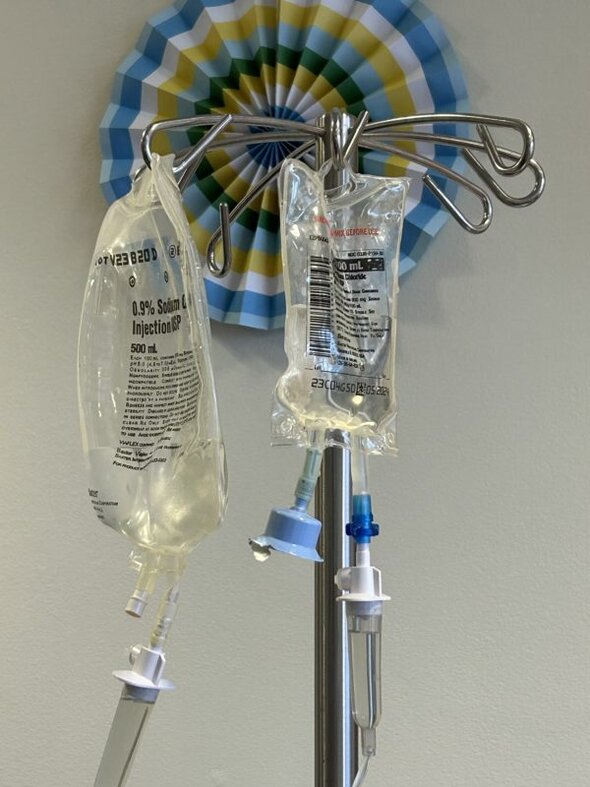
And here is why: in the hospital, we sometimes put people on IV fluids, or sometimes we feed them straight through their veins (it's called TPN).
However, we do this as a last resort, when oral eating and drinking is just not working. I haven't met a single healthcare professional who thinks it is ideal for patients to have their food and fluids go smack-dab into their veins.
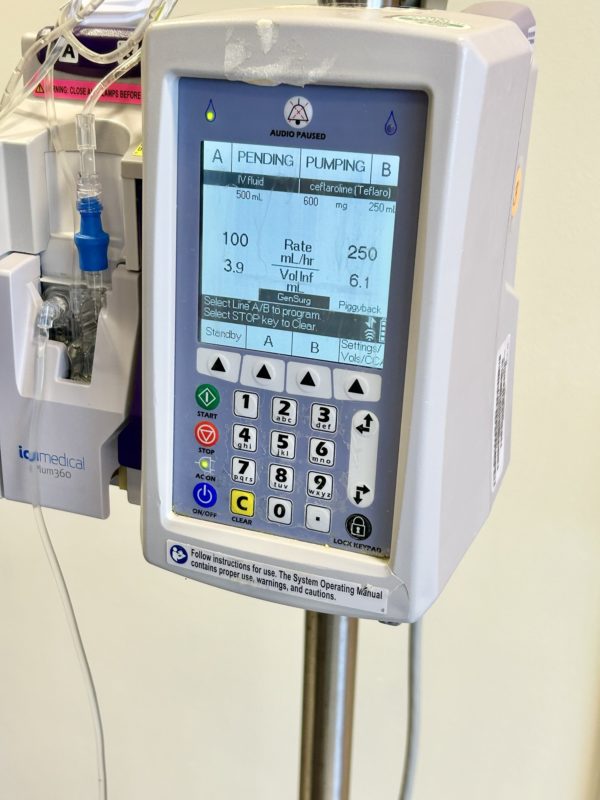
If it were so great to bypass the digestive system, wouldn't all the performance athletes skip eating and just go on TPN and IV fluids?
We have a digestive system for a reason! And unless you have an underlying problem, it actually works super well and has some pretty nice features. 🙂
For example, a lot of what you take in by mouth gets sent to the liver, which works as a detoxifier. And fluids are continually getting sent through the kidneys, which decide whether to keep or get rid of water to maintain the appropriate balance for you.
 For hydration: you could just, I dunno, drink something. Tap water. Bottled water.
Heck, for the price of a wellness IV, you could buy Very Fancy Spring Water and still save money.
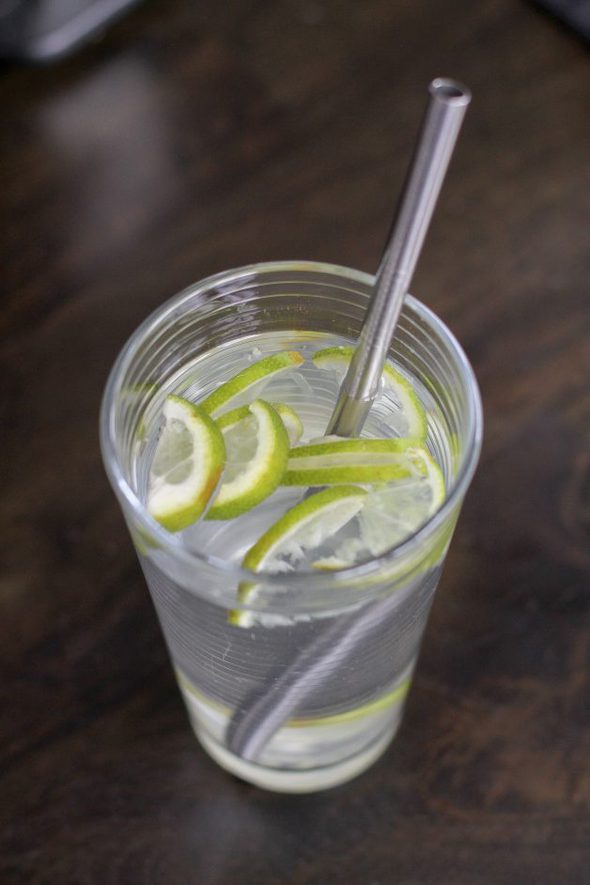
Unless you have some other health problem going on, you can just hydrate through your mouth and your body will put the water where it needs to go.
For amino acids and vitamins and electrolytes...you can also just get those orally by eating food. And if you're thinking, "Oooh, but I want a mega dose!"....if you get a mega dose of those, your body is generally just gonna adjust by getting rid of the extras.
(Unless they're fat-soluble vitamins, which hopefully they are not giving through those IVs!)
I know people go to these places and say, "Oh, I felt so much better afterward!" But that fails to take into account the placebo effect and also the effect of sitting quietly in a pleasant environment in a massage chair for a half hour. 😉
Anecdotes do not equal data.
(Also worth noting: putting stuff directly into people's veins is serious business. Doing so bypasses all the safety guards of the digestive system. So, we have lots of outward safeguards in healthcare to make sure we don't hurt people when we use their veins, and to make sure we don't overload them with fluids.)
I'm not saying these will hurt you
While there are some small risks to some of these treatments, most of them seem pretty harmless to your body.
But they are not harmless to your wallet, and that's my point.

You can save a whole lot of money by breathing room air, drinking (regular) water, and eating nutritious foods that provide vitamins, minerals, electrolytes, peptides and more.
Fewer "wellness" gimmicks, more groceries (and more deep breaths).
The end.
P.S. My gut tells me this post may be a little controversial. And I'm at hospital unit boot camp all day today, which means I can't closely monitor comments. So...whatever level you feel like coming in at, maybe tone it down a step or two to help keep things in order until I get off of work. 😉


I have also wondered about the wellness IVs; in my mind, anytime you poke anything into your body, it's an invitation to infection.
@Jody S., There is always a chance of infection when someone pierces your skin, and that IV is gong directly into your circulatory system.No thanks! Unless I am having a medical procedure in a medical setting with trained people and a real need.
Love your explanations and analogies!
I use nocturnal oxygen because I have severe sleep apnea. Other than that, no wellness products for me!!
@Suellen,
You clearly have a *medical reason* to use oxygen when you sleep. Yay you for treating your sleep apnea, which if left untreated, can have significant health issues. (I have obstructive sleep apnea, too, and use my cpap machine faithfully every night.)
@Liz B., Another faithful c-pap user here, just waving "hi" in solidarity.
@Suellen,
that is entirely different and very good that you do. Sleep apnoea is no joke and a serious potential risk. This is the medical treatment you clearly benefit a lot from.
I would say except for vitamin D. That one for me is non-negotiable. The other vitamins I take because it gives me peace of mind that I’m getting what I need, but I was actually deficient for vitamin D before I began supplementing.
Oh yes, yes, I think vitamin supplementation is fine and necessary sometimes! I’m just saying it doesn’t need to go thru an IV.
(Says she who is on oral iron supplements)
@Becca,
Yes to Vitamin D. Especially if you are deficient.@
@Becca, I too am taking vitamin D because I need to, and taking other vitamins because I choose to. But any wellness treatment that involves IV is strictly out for me--not just because of the expense, but because I'm squeamish about needles.
@A. Marie, I hate to be poked too. It is hard for me just to get my blood drawn. Voluntary IVs are definitely not on my list of must-dos.
@Becca, I totally agree on vitamin d. When I had breast cancer 12 years ago they checked my vitamin d level and mine didn't even register my oncologist put me on a mega dose for 2 weeks. I don't believe my vitamin d level had ever been checked she said it routinely wasn't checked and that only now is it being checked. She said studies show a link between low vitamin d and breast cancer. So as per doctor's orders I take 2,000 units every day. I have auburn hair and freckles and I can't spend much time out in the sun without burning.
@Joyce from Arkansas,
Apparently many people in the northern hemisphere are very deficient in Vit D and this inhibits your body being able to use other things that contribute to immunity and so forth. I grew up in a very hot climate where there was substantially more risk of skin cancer than Vit D deficiency, but now that I am in the northern hemisphere, I take Vit D September - June every year as a failsafe, and do try and get 20 mins outdoor sunlight each day (if at all feasible!).
Great explanation. I imagine almost all positive feelings from these are a placebo effect.
I want more of these posts because out of any blogger I would trust you the most. I hope this is the beginning of a series!
@Valencia, I second this heartily and disregard most social media for being mostly ways to push products on you.
@Valencia, I agree too. I find it's too easy to get into the weeds when I accidentally get exposed to someone promoting ideas and products like these. I don't actually buy them, but it makes me wonder if there's any merit to them and if I'm missing something that would help me. I'd rather have the scientific facts to back up my sense of resistance and bypass the worry.
Thanks for posting and sharing the science. I wasn't tempted by any of these, but I know people who are. I'll be surprised if this is controversial (but then I'm often surprised . . . ).
I didn't even know one COULD buy bottled oxygen like that. I've heard of wellness IVs and they look like an insane amount of money. I think some people do it after hard partying so in that context, I can see it might help them feel better (i.e. dehydration after alcohol consumption)...but the cheapest alternative would be to drink less and skip the IV 😉 Win, win.
@Elisabeth,
......or, drink a lot of water the next day.
@Liz B., also yes!
Shifting topics, I remember hearing a bit about your role/career and wondering if you have heard of the Nutrition Diva (podcast). Same question to Kristen! What do y'all think? I love her short episodes that still manage to fully cover relevant topics and questions, sometimes ones I didn't even realize I had. For people requesting a series of these posts, she covers every nutrition-related topic I can think of!
@Elisabeth,
the only time these sorts of IVs have value is when administered by a doctor or other suitable medical professional for a specific problem.
Eg. My brother in law, NOT a heavy drinker or mad party animal at all, managed to get colossally drunk the night before his wedding to my sister. My brother's partner at the time, a doctor, got him on a saline drip with a little bit of a Vitamin B / painkiller boost *just enough* to get him upright and feeling reasonable so as to be better scolded and shamed, and it was very efficient and fast and saved the day.
It was the weirdest thing though: Mr ''oh I've had 2 beers already, no thank you'' was completely inebriated and in a very bad state.
@Heather Mar, my food scientist sister put me on to the Nutrition Diva podcast because Monica is a scientist, not an influencer. I've learned a lot about nutrition and also how to think about taking good care of my body from listening.
My daughter is a college athlete and her "tummy" cannot handle protein powders. She is dairy sensitive so whey based is out. She has tried a few others- pea protein, vegan etc and I believe there is one she can tolerate if absolutely necessary but taste creeps her out.. so she prefers to get her upped protein amounts naturally. She lives at home and commutes so I just keep cooking family meal portions never knowing who will be at the table- leftovers get packed into lunches. I think husband was bummed she cleared the platter of beef patties last night after her lift...No buns, just meat.. ate a few packed the rest in her lunch for on campus today! lolol
( she is also a Medical sciences student and would agree with you on all your topics!)
@jes, I also have issues with most protein powders (whey). They bother my stomach, and I don't like the taste/texture/after taste/etc. A shake gives me about 20g of protein. A half cup of diced chicken breast does the same. I would much rather just add some chicken to a salad or a pita and call it done!
Thank you for a great post!
Loved this post! Sounds totally sensible to me.
The wellness IV places are good for people recovering from a bout of vomiting and diarrhea and dehydration. I know several people (adults) who used them for that reason and got on the recovery road quicker. That would be the only reason I could see using them. A trip to the ER for this usually isn’t needed. I do worry about untrained people starting an IV and hopefully the procedures and products are safe.
Yes, if you are sick, there are good reasons to use IVs! I mean, we put IVs in people in the hospital all the time, because they are sick and we need to give them medications.
I'm just saying that if you're at your normal, healthy baseline, there is seriously NO reason to go get hydrated through your veins.
Also, as I mentioned in another comment, even though our patients basically all have an IV in their arms, we try to minimize the number of times we access it. If someone can get a medication orally, we opt for that instead of using the IV. I don't know where people got this idea that it is ideal to use IVs because it is most certainly not how we practice in the hospital.
There's a guy in Instagram (probably a lot more than one guy or gal) that talks about the same thing with food. Wellness is a huge industry. I think our forebears had it right: eat whole, healthy foods, move your body, get good sleep.
@Gina from The Cannary Family,
One of my favourite podcasts is one that debunks diets and food fads. It's called Maintenance Phase. The two hosts are also hilarious, which is a bonus.
@Jem, I used to really love Maintenace Phase but then I read that some of the scientific claims they make are inaccurate. I still enjoy episodes about the wellness industry though!
@Sophie in Denmark,
Interesting. I guess I'll have to do some reading on that too....
@Jem, This where I mostly read criticism:
https://spurioussemicolon.substack.com/
Thank you for taking the risk to post something "slightly" controversial. One of those hydration clinics is opening near me, and the owners advertised on our local Facebook page. My eyes rolled so far back in my head at the idea of non-medical IVs for healthy people; the scarier thing is the questions people asked in the comments. It is frightening that so many people might actually take this seriously, so again, thank you for putting the facts out there.
@Bell N,
There's one of those clinics not too far from me. They advertise IV hydration for those who may have special hydration needs (such as cancer patients going through cancer treatment, people who have GI malabsorption issues, etc), which maybe makes sense (I'm guessing your insurance won't cover "hydration clinic" IVs, though? but if you don't have insurance, or your insurance won't cover necessary IV hydration....? I don't know). They also advertise for "wellness" (huge eyeball roll from me).
@Liz B., In my area, the only medical setting where you can get an on demand/as needed saline IV is the emergency room. There are outpatient infusion clinics, but they book appointments about a month out and they handle prescription meds delivered via IV, not plain saline for dehydration.
I've got Ulcerative Colitis, so I don't always have a fully functional digestive system. If I get dehydrated, the ER is mostly going to check my chart and give me some IV saline, and my copay will be several hundred dollars unless I've hit my out of pocket max for the year. The wellness infusion clinic won't do any extra health checks, but they will only cost $50-$100, I'll know the cost up front rather than going through the ridiculous American medical billing system, and it will be a much more enjoyable place to be for an hour or two.
If you don't know why you're getting dehydrated the extra medical checks the ER does are important, but if you've got a known diagnosis, the wellness IV clinics can be convenient and potentially less expensive depending on insurance.
I love this article with all my heart. YES to the waste of alkaline waters. For anyone wanting to take a deep dive into the history of vitamin supplementation in the U.S., I highly recommend reading "Vitamania" by Catherine Price. Very eye-opening and it changed how I view vitamins in general.
@Karen A., thank you for the recommendation. I just reserved a copy from the library.
@Karen A., thanks for the book recommendation! I just borrowed it as an audio book on Libby. Thanks!
I work in a store where they have a nutritional supplement/herbal/health food section. They also have a regular pharmacy/OTC section. Often, you can buy the same vitamins (different brands) for a lot less money in the latter section. It is my personal belief that the health food/supplement stuff is a real racket: people pay a ton of money for products which may or may not really work, and get advice from workers who do not have any kind of legitimate educational credentials in science, health care, nutrition, or medicine. Not to be mean about it, but most have not even been to college. Some may have a "certificate" but it's not from a legitimate school; instead, it is usually issued by a commercial company that manufactures this stuff. Or a correspondence school with iffy credentials. Meanwhile, the pharmacists and pharmacy techs have their diplomas (from accredited universities) framed and hanging on the wall.
@Fru-gal Lisa,
I generally feel like I'm wasting the pharmacist/tech time when I do ask for help with questions about OTC meds. But anytime I ask they have been very helpful & informative. Now I won't feel so bad about asking for help.
@Regina,
That's their job, helping you learn what is/isn't the right thing to take for a given ailment. Along with properly filling the Rxes, of course. So don't feel hesitant to ask. They're the experts! They're there to help!
@Fru-gal Lisa,
Not only do pharmacists have their diplomas, they have to get their doctorate degree to practice pharmacy. That's ENTRY LEVEL. I was stunned when I found that out years ago. The pharmacists that work in the same hospital where I work are awesome.
@Liz B.,
Absolutely!
Also, don't forget about the techs.
A former coworker (and forever friend) of mine got interested in pharmacy after we had to learn the Dean Vaughan Medical Terminology course in our prior (insurance call center) jobs. She was in her mid 30s or early 40s IIRC. Seriously inquiring about this career path, she found out that to become a pharmacist would take oodles of time and money, almost as much (of both) as med school. And by the time she finished, she wouldn't have that many working years ahead of her.
Instead, she went back to school and qualified to be a pharmacy tech. It also pays well (although not in the six-figure range as a pharmacist may receive). There is still a lot of schooling involved to become a certified pharmacy tech. However, for someone who is not just starting out, it is more do-able in terms of years and being able to afford your college courses. And the education was very, very thorough. So the certified pharmacy techs know what they're doing, as well.
My friend got her certification and she can work anywhere in the U.S. Towns of any size, even those in rural areas, have at least one drug store pharmacy. Clinics and hospitals employ them, too. Many major pharmacy chains and hospital chains will help you get on with their locations elsewhere, as they want to keep you working for them; so if your husband gets transferred in his job (or if you just want to relocate), you can find a pharmacy tech job almost anywhere.
Yes!!
There is so much pseudoscience out there on the internet and so many grifters.
If it seems like a shortcut it is probably a scam!!
Huh. I had never heard of any of these. I'm sure not the targeted consumer. And consumer sounds like the right word for this; not patient. No thanks.
@kristin @ going country, same. It occurred to me midway through that this is all very urban, almost like these ideas are for people with extra time and money on their hands (which ... I could help change that, lol) and both the idea and the proximity are attractive.
@Karen., not just extra time and money, also a large amount of fear.
Hehe, well, in the boonies of the southwest, I doubt there are IV spas on many corners.
@Central Calif. Artist Jana,
I think you nailed that one on the head! Fear drives a lot of this, I think. Plus, everyone wants the "easy" route....eat healthy food? Nah. Take a few (free) deep breaths? Why do that, when I can "recover from my workout" faster, using canned oxygen?. As the saying goes, there's a sucker born every minute.
There was a local morning show that had the host get an IV injection and he was a former professional football player. He looked like he was forcing himself to play along. I cringed at the unnecessary treatment. I have no science background but most of these seem like common sense that just basic anatomy and chemistry knowledge to back up your words would suffice.
Yes! I have often thought a few biology and A&P classes would help the public to be much wiser about sniffing out unnecessary "health" treatments.
LOVE the science in this post. You can't argue with facts.
I also wonder about functional medicine. I have a friend who is paying an extraordinary amount of money to a "provider." She has cut all processed food out of her diet and is on a strict food schedule. She says she feels better. But she has also navigated through the death of a parent, a.divorce, children heading to college and back again, the sale of her marital home, and the rebirth of a new life. She’s now on the cusp of a retirement decision. I wonder if the feeling better has to do more with the no processed food and, when she doesn't feel as well, the stress and anxiety of impending change.
I would love to hear if others have found functional medicine to be worthwhile and the science behind it.
Thank you, Kristen, for such a thoughtful and well-written post 🙂
Looking for the physical cause of a problem rather than just masking the symptoms with a pill is a good strategy. Exchanging a handful of prescriptions for a handful of vitamins/supplements is often pointless.
Finding the cause can be healing but as always, know the credentials of whatever advisor/provider you listen to.
@MH,
Functional medicine simply focuses on the full- spectrum of factors that can impact one's health. It does not just treat symptoms by writing a prescription.
I have seen a doctor (gynecologist) who specializes in functional health for more 15 years. I do believe that her care has had a positive impact on my overall well-being and my health.
When I first saw her, I was perimenopausal with debilitating migraines, life-long digestive issues, leg cramps, and creeping anxiety. Within a year, I was no longer suffering from any of these things. I am now in my 60s and aging well.
In recent years, I've noticed that more younger physicians are taking a more holistic or functional approach to medicine. I think that this is a good thing. I personally believe it is important to address all factors that may impact one's health and well-being.
I can definitely say that in my nursing education, we were encouraged to take a holistic approach and to incorporate things for pain management like....dimming the lights, playing music, using ice, and other non-pharmaceutical interventions.
@MH, No formal degree but life experience & some nutritional information/class....I would think first that stress from so many life changes would be foremost the reason, but removing/decreasing processed food definately doesn't hurt & will help balance nutrition in the body which (again) helps to feel good.
My questions would be did your friend see a medical professional & come to a recommendation for anything? And was there any health condition that is now being treated as to the reason for the strict food schedule? Unless yes for these questions I don't quite understand strict food schedule.
Just food for thought. 🙂
@MH, I think the idea of eating more whole foods is a good one, but so many people are looking for a "magic bullet" to make the hard work of losing weight or staying healthy easy. Like the "Easy button" from Staples, if anyone remembers that commercial. Most likely your friend does feel better having less processed food in her diet, but she also may like the feeling of being in control of something in the midst of so much change and upheaval.
I've read a lot of "health bloggers" for years--mostly out of curiosity--and so many times I think they're mostly getting paid to promote products on their blog, so I take everything they say with a grain of salt (pink Himalayan, of course! ;).*
As for functional medicine, I remember when the health bloggers were all up in arms about "adrenal fatigue" (a phrase coined by a chiropractor in the 1990s) and...it's not really a thing. Somebody asked our A&P professor, who is a medical doctor, about it when we were discussing the endocrine system and she said she'd never encountered it, ever, in her years of practice. Unless you have an actual disease that causes adrenal insufficiency, like Addison's disease, your adrenal glands are probably doing their job just fine, and you don't need an "adrenal cocktail" composed of, I kid you not, orange juice, coconut water, and sea salt. I'm sure it's refreshing, but it's not medicine!
*not really. You need iodine in your diet, and most people get that from table salt, and the fancy salts don't have iodine. If you want a goiter, by all means, cut all iodized salt out of your diet!
@MH, I know a little about functional medicine because I support someone who receives this. The basic idea is solid: look at the whole person rather than individual symptoms; and add scientifically-supported "alternate" treatments to the mix, such as chiro, acupuncture, and medically-supervised supplements.
You need to find a reliable practitioner, of course. My friend's is a board certified oncologist and when he suggests a supplement, he gives us research to read.
@Karen A., just yesterday my doctor told she has been seeing people with thyroid problems because they have substituted sea salt for normal iodized table salt!
@WilliamB, I only recently heard the term “functional medicine” and it made me scratch my head in wonder. . . isn’t all medicine supposed to be “functional”? And doesn’t it always make sense to find the cause rather than simply treat the symptoms? Sigh. When doctors are overloaded with patients, I guess they don’t have time to dig deep into causes. Life is full of unanswered questions and unsolved mysteries.
@Central Calif. Artist Jana, Ha! I had to look it up also. It is sad.
@Karen A.,
I think you hit on something important here. There is a huge difference between a board-certified physician who takes a functional or holistic approach to medicine and a health blogger, YouTuber, or other influencer. There are also pseudo-physicians that have opened functional health clinics.
@MH,
I think people turn to functional medicine because regular doctors are too quick to prescribe pills to cover up the symptoms. I’d rather treat the root cause if possible.
@Central Calif. Artist Jana, My professor is from Pakistan and when we were studying the endocrine system she got very het up about the thyroid and iodized salt! She was baffled about the people here in the States adhering to sea salt or "the pink stuff" as she put it. Her MIL had a goiter due to lack of iodine, and she repeated the PSA several times: "Make sure your salt is iodized, unless you want your neck to blow up like a balloon!"
Recently I learned that most doctors are allocated about 10 minutes for a visit so very limited time to sort out the source of a problem. Sadly, that is enough time to write a prescription to mask the symptom and maybe cause an unexpected side effect.
And we wonder why our care is so expensive and often doesn't really make progress in improving anything.
@Central Calif. Artist Jana, My husband has borderline high blood pressure, so he really watches his salt intake. He was very recently hospitalized with pneumonia, where a CT scan found a small goiter. As we wait for the pneumonia to clear before further tests, we can't help but wonder if his salt avoidance has played a role. For now, he's on a special "vitamin" - one Brazil Nut per day. Salted, of course.
Thanks for the reminder to drink more water! Heading to fill my cup now...
I often wonder if parts of my health and beauty routines are wasteful. I also wonder if I could buy similar products for less. What if my routines are pointless? So much marketing. So few facts.
I love the focus on the science! Thanks for sharing some of your knowledge with us! I majored in anthropology as an undergrad and it really shaped how I look at human health. For millenia, humans have survived in all kinds of varied environments. Our bodies are built to adapt and thrive without too much intervention. Now it's wonderful to live in an era when diseases can be cured and injuries healed far more than in the past. But we also have way more marketing coming at us telling us to buy unnecessary stuff for our "health". I think we are way more anxious about our health than in past generations
Not to make this too political, but I suspect part of this marketing is due to pressure on the healthcare industry and/or people not being able to afford seeing a doctor. These products are pushed on us instead so that we think we can manage it without medical intervention, in various cases.
I read a really fascinating book years ago about the wellness industry and how supplements don't have to be approved by the FDA, so 'facts' about their health benefits are encouraged or distorted. I'm trying to find the title and author.
@Sophie in Denmark, It was 'The Vitamin Complex' by Catherine Price. I should note that I haven't studied this, so I can't speak for the overall accuracy.
@Sophie in Denmark,
Most of the therapies that Kristen has mentioned are generally marketed to those who are fairly well off. They can be quite expensive. Most IV therapies run between $150 - $250 a session in the area where I live. Alkaline water is about five dollars a liter, and supplements are also very expensive. Thus, I don't think that those who partake are worried about the expense of medical care.
I think these products address our desire to be better, stronger, and younger. They are also a reflection of the dissatisfaction and perhaps even distrust that some have with traditional medicine. Many of us have seen our parents and grandparents with a shoebox full of medicine and just don't want to follow the same path.
@Bee, Thanks for your thoughts. Maybe in this case it's not so much about being able to afford it, but more a reaction or insinuation that we don't need traditional medicine as you say. I think we all want to feel in control as much as we can.
It's tricky because healthcare is holistic to an extent; eating vitamin rich foods and exercising are all part of looking after ourselves, but these products are unnecessary and lean into 'natural' cures (ironically dismissing the nature of our bodies already, such as with the oxygen). I have a gut feeling (no pun intended) that this is part of a larger movement to discredit medical advice (and the long history of snake oil merchants and wellness companies).
@Sophie in Denmark, I think it was “Vitamania” by Catherine Price. (Credit to Karen A. for mentioning this in an earlier comment.)
@Bee,
I could have saved myself some time and just written "Everything Bee says," as my comment.
@JD,
Same! Well said, Bee!
@Sophie in Denmark,
There's also a huge backlash against the medical industry in the whole conspiracy theory realm. It's scary and sad that many people are lumping all of western medicine in with some of the deception that happened with the pharmaceutical industry around opioids. It's connected with anti-vax ideology as well, and there are some powerful influencers out there who make people doubt everything. It even turns the scientific method back on itself: when scientists do what they're supposed to, which is take new evidence and adjust their hypotheses, that is taken as "proof" that the results of scientific research are not trustworthy. It's truly an insidious process that is undermining the health and wellbeing of many people.
@Jem, Yep. I imagine many of these hucksters and their customers either encourage or are convinced to be anti-vax.
@Bee,
I have an aunty who will not follow her doctor's advice but will spend a fortune on a practitioner, both the consultation and the supplements. I really think she prefers them because the consultations take an hour instead of 10-20 minutes
I am a fan of facts so thank you for this! It is always good to understand what is being marketed to and at us. Critical thinking is so important.
Excellent PSA! Very informative. Much of this I was never even aware was available. On a related note, I just read where the NFL is banning the use of smelling salts, which players have used for years for (supposed) alertness.
@Bobi, what's this about the FDA banning smelling salts?? Jane Austen would be horrified. 🙂
I will need to take to my bed. 😉
@A. Marie,
What does one do when one swoons?:-)
I usually say I take a small Pharmacy every day, 4 Rx and a multivitamin. I really only need the Vit D and the Calcium but the multi is usually cheaper and only one pill instead f 2. But I do wonder if it is overkill.
@Amy cheapohmom, If you're getting vitamins your body doesn't need, most just get excreted out the body (a nurse friend of mine calls multivitamins "expensive pee in a bottle", ha!), but some can build up in the body and cause issues. Specifically the fat-soluble ones. I've found some inexpensive vitamin D and calcium blends at my grocery store, so maybe look into that?
Sometimes I really like being oblivious to some things, like no idea had canned oxygen for other than breathing.
My philosophy is eat as organic/natural unprocessed food as possible (yes we do eat some not great food but not much), everything in moderation, get outside to move your body & get adequate sleep. And listen to your body, you know it best & know if something is off.
Oh, wow, this is the first I've heard about the IV's and huffing oxygen out of a can (ha). The IV's sound like a problem waiting to happen, to me. What is the training for the persons administering the IV's, I wonder? I agree that the best way to get oxygen is to breathe deeply for a few breaths. Come to think of it, I'd heard of oxygen bars... I guess this idea was the next thing.
I never understood alkaline water. As you say, your body is going to keep you at its correct balance.
Some vitamin supplementation is good for us, and as several mentioned, Vitamin D is one of them. My autoimmune condition makes me low on D, so I take it as a supplement, and for decades, I took iron. But I concentrate mostly on getting what I need from my food - lots of vegetables and fruits, good proteins, eating five colors daily if I can, and very little processed food.
@JD, I believe I saw that canned oxygen on the show Shark Tank and it was being hawked primarily to athletes to improve their performance. Don't recall if they got a deal
I believe the people the IV clinics hire are generally trained medical professionals, like people who did IVs in hospitals before.
But still, an IV is an invasive procedure (a small one, but still), and I don't know why I would take on the risks of that just to get vitamins that I could obtain orally.
Just today at work, a patient went off of NPO status, and we were messaging the doctor to ask for several of his IV push meds to be changed to an oral route. So even in the hospital, where literally all of us are trained and licensed, we try really hard not to use IVs unless we really need to. IVs are not best practice when someone's mouth and digestive tract are working.
@Kristen,
We dietitians say (or think), "if the gut works - use it". 🙂
Thank you for this excellent post, which I can’t imagine to be controversial. I do think part of the appeal of such products stems from the natural human desire to control our own destinies. The truth is, beyond basics like not smoking, not drinking to excess, exercising, and (not trying to stir the pot here, but) getting available vaccines unless there is a medical contraindication, we can’t fully control what happens to our bodies. Using myself as an example, I was diagnosed with ulcerative colitis over 30 years ago, which thankfully has been in remission ever since the horrific initial flare. But when I got out of the hospital back then, the number of people who said unhelpful things to me like, “you just need to learn how to manage stress” or “you just need to find the right diet” was beyond belief. My guess is they needed to feel that I had done something wrong to deserve my illness because the alternative, that what happened to me could happen to them, was unacceptable. I think a lot of “wellness” products fill the same need – they give people the illusion that they are in control of their health.
@Meg in SoTx, Exactly!!! We are (mostly) all temporarily able-bodied, and that frightens people.
Heavens! Common sense backed by science. Certainly not popular in current times. Hee hee. Your position is absolutely shared by me. Also, I so enjoy your writings and am thrilled for your success. Good health and we'll being for you.
I agree with you 100%, Kristen! Thank you for sharing.
I really appreciate this post and would welcome more like this from your medical point-of-view. Either for or against products, practices, etc., your expertise is especially welcome as you’ve got the latest info with your recent degree.
Thank you for caring enough to share despite the small risk of controversy. You know us well as a group that is unlikely to indulge in arguing and is full of sensible people who rarely fall for the snake oil salesmen.
@ErikaJS, I was thinking the same thing - I would love it if Kristen continues to share from her medical health perspective. Medical is totally not my field, but that makes for very useful and interesting reading!
I have heard of all these things, but in my mind, never never never would I try any of them. The IV one, as @A.Marie said, needles, JUST NO! I do not like putting anything into my body that is not natural, and by that I mean breathing air, drinking water, and (trying) to eat a healthy diet.
Thank you for this post! As @Valencia said, I would agree with her and would like more of these types of posts, it was so interesting to read. And huge kudus to you as an RN, that's a lot of information to have to retain as a nurse/ medical professional!
I love the red cell/bus analogy! I normally have a very hard time grasping stuff like that (I'm sure it's at least partly because my brain goes, "oh, gross, blood/medical stuff," and checks out), but that makes total sense. And isn't gross!
It makes me VERY happy when I can simplify something like this for one of my patients; using a completely non-medical analogy can work wonders!
@Danielle L Zecher, Agreed! I also get grossed out by medical stuff and loved Kristen's analogy!
You're 100% right!
There's an IV place near me and frankly the idea gives me the creeps. Let god know who inject god know what directly into my veins? There's no federal oversight of this business and even if there is and the feds actually do their job, it'd be too late for the victim.
@WilliamB, please excuse my dark humor, but your comment brought to mind heroin addicts shooting up in an alley!
My husband has a bottle of alkaline water with a packet of an electrolyte drink mix every morning. He swears it helps his "grumpy tummy". This may be placebo, I don't live IN his body so I have no way of knowing. He is getting 16oz of water every morning and he feels better so I will just let this one go.
You could temporarily lower the ph of your stomach this way, just like you can lower the acid level by chewing some Tums. But of course, it is temporary, and I have read that something like Tums is more effective at lowering the acidity.
But like you said, this is a fairly low-risk thing for him to do, and hey, he is drinking water!
Agree 1000% on all these plus others— I am a retired RN/NP and appalled that some of my friends are getting involved with MLM companies selling “patches” and “colored water” for health purposes.As an RN I also kind of laugh out loud at paying $100 for a bag of B vitamins when you can eat your B’s, or, like I do, take a cheap effective oral B complex tablet every day.
I imagine in the coming economy with prices on the rise, less people will be opening their wallets for such silly stuff.I KNOW the placebo effect is a biggie.. but it is COSTLY too..so, just sit in. a nice comfy chair or lay on a yoga mat with your feet propped up and listen to a (free) audio relaxation program on spotify or apple music or something,right??!! Or, trade a back rub with your partner or best friend. Or.. take a long hot bath with your favorite (cheap) bath salts and a candle!!
@Madeline, I think the theraputic salt caves are similar - the benefit is from having an hour to do nothing but relax.
@WilliamB, I think there is, at least in the States, a culture of feeling it's sort of lazy to just sit and relax, so if they can sell it to themselves (and others) as "necessary for my health" it's not just goofing off, it's therapy!
I had asked my mother's neurologist (he was her Alzheimer's physician) about these memory supplements, etc you see. He said don't waste your money. You have to DO things to help keep your mind engaged!
@PBE, sadly, there is no substance out there that does anything much for Alzheimer's. The drugs that are commonly prescribed (donepezil, memantine, etc.) don't do more than slow down the process, and sometimes don't even do that. Antipsychotic drugs can take the edge off things like delusions and hallucinations, but, again, they don't do more than take the edge off (at least in my experience with DH). And, as you say, don't even consider gingko and the various other snake oil supplements.
@A. Marie, “Alzheimer’s prevention” snake oil and pseudoscience is one of my triggers. My brilliant father, who lived the last 20 years of his life with Alzheimer’s, was an internationally renowned scientist and a double amputee since childhood. Nobody, but nobody, could have stayed more mentally active than my father did, even years into his dementia; and thanks to his disability, simply performing the activities of daily living was a strenuous workout. My mother, three of my siblings, and I all took the 23andme DNA test and opted into the Alzheimer’s result. My mother did not have the APOE4 gene. My siblings and I, all four of us that tested, have one normal gene (from Mom) and one APOE4 gene. For all four of us to have gotten a copy of the APOE4 gene, it is mathematically overwhelmingly likely that Dad had two copies. He was going to get Alzheimer’s, end of story. DNA cannot be changed by snake oil, and those who make money by preying on people’s legitimate fears are the scum of the Earth.
@A. Marie,
After my mother in law was diagnosed with vascular dementia, one of her doctors recommended the "MIND diet". (Major eye roll). She was subsisting on coffee and cinnamon rolls at the time, and quite frankly, there was no diet or pill or potion that was going to change her prognosis.
Your P.S. is great!
Thanks for the information, much of which I’ve never heard of. Yesterday I was at the doctor’s office to send blood to the lab in order to find out if intermittent fasting for the past 3 months has lowered my A1C. As she and I were discussing such things, I told her that I take zero prescriptions or vitamins, only using collagen as a supplement because it helps my hips not hurt. It could be a placebo, but if it works, then so be it. She said that placebos are fine if they work, and we laughed at how all those things just make you have expensive pee. (I love this doctor!)
So many ways to (literally) piss away your money!
Not sure why, what with this part of the US having the most available protein that can be locally sourced, I have several friends that require iron infusions for anemia. Any thoughts on that? I know that I have borderline anemic lab values because of not eating enough protein, but I also consume a fair share of black tea.
I was fascinated to see that in the initial Guadalupe River cleanup while it was so hot, IV's of replenishing fluids were being offered and given. I had mixed feelings. I was actually more terrified of the "sick" water people were working in.
@Chrissy, There are people who have what's called "pernicious anemia", that lack what's called the intrinsic factor that allows the intestines to absorb B12. It's basically an autoimmune disease. You need B12 to make red blood cells that carry iron and oxygen. They are made so often and so quickly, without B12 you can't make them. So no B12=fewer red blood cells=low iron and anemia.
I think there is often an overlap between high protein intake and high iron levels, but a high protein intake doesn't necessarily equal high iron intake. It all depends what protein sources you're talking about.
I mean, someone can eat a serving of say, raisin bran, every morning, and get around the recommended RDA of iron!
I would venture to guess that people who are so anemic that they require iron infusions are probably a more complicated case than the typical anemic person, who can be treat just with diet and supplements. I wonder what else is going on that is causing the anemia.
Kristen, it would be interesting to hear your take on the idea that every body needs eight 8 oz. of water every day. I’m hugely suspicious of One Size Fits All in every area of life and wonder if there is a better (and scientific) way to understand and personalize the water quota.
I’ve wondered why we are supposed to “drink ahead of your thirst” when we don’t “eat ahead of our hunger”; I’ve also heard of people dying of “water poisoning”.
In the olden days, we just went to a drinking fountain when we were thirsty, but now everyone is “hydrating”, carrying water bottles around as if we all live in the Sahara in a drought. (And paying up to $12/gallon, plus the fact that it uses water to bottle water AND all that plastic. . . oy vey!)
So, your mission, should you choose to accept it, is to help us understand this aspect of health.
@Central Calif. Artist Jana, there is a body weight and activity equation you can you to see how much water you personally need. Like 8 hours of sleep or 5 veg a day, it depends on each person exactly what they need, those are just general guidelines.
People (women specifically) were told first drink then only eat if you need to, to help make people thinner. You aren't hungry! Just drink water!!
You can die from too much water, it throws off the ph balance of your body and your salts etc etc and yes you can die. Had a friend almost die trying to do a water detox for a workplace drug test.
A lot of medical people say drinking when you are thirsty is good enough, but many people lose any connection to how their bodies feel and don't register thirst till they are very dehydrated.
@Central Calif. Artist Jana,
I read years ago that the 8 - 8 ounce glasses of water a day recommendation is based on zero science. Now, is that true? I don't know. I have since seen some suggest it's closer to 4 or 5 glasses a day, because we get water from our foods as well.
I remember shopping trips with my mother and sisters; we would deliberately plan to include trips to the department stores that had public water fountains, so we could get a drink every so often. Our school playgrounds all had water fountains. Our church had a water fountain. One of the reasons I will stop at Whole Foods when shopping now is for the water fountains they have (at least ours does). Maybe we should have more fountains? I don't like carrying a water bottle everywhere with me. I have a purse to lug around already, and if I had a dollar for every reusable water bottle our churches and schools offer up on Lost and Found days, I'd be rich. I know I'd lose mine if I carried one.
@JD, plus think about all those people throwing their backs out while lifting those flats of water bottles!
@Central Calif. Artist Jana, This article explains it quite well:
https://time.com/6548310/new-years-water-bottles/
'But what is key is that water bottles comprise an individualized solution to problems that used to be solved with social infrastructure, widely available to all citizens.
For example, urban and parks planner Josselyn Ivanov has studied the marked decline of drinking fountains in the U.S., remarking, “In the absence of investment and maintenance [in drinking fountains], many people fill the void by hauling around their own personalized infrastructure:” water bottles.'
Agree totally!!!
I didn't know canned oxygen was a thing. I have no idea about it's use for athletic recovery, but it is useful in nausea control. Not sure I'd recommended it with consulting a physician, but in the right circumstances I could see a case where that would be useful (motion sickness, first trimester).
And because you asked for citations:
https://pubmed.ncbi.nlm.nih.gov/11794455/
https://pubmed.ncbi.nlm.nih.gov/10551573/
I can anadotally tell you a few minutes of breathing oxygen is helpful for motion sickness, but I don't have a citation for that.
I couldn't agree more with this post! The "Wellness" Industry is all about making money and not really that interested in wellness. And they cater to people's desire to be well but are too lazy to work at it. For some people it just seems easier to pop a supplement or drink a "specialized" drink. Save the money and buy quality food. Go back to the basics. Keep it simple. Eat good food. Drink water. Move and be well.
A friend is considering one of those testosterone clinics. That requires regular shots for a LOT of money, after a consultation for bloodwork. When we discussed this, I kept thinking what a lot of money to spend on something that is provided by a non physician. Plus messing with steroids seems really dangerous .
I would most definitely not trust just anyone to mess with my hormones! They better be trained, licensed, and experienced!
@MommaJo, testosterone is a controlled substance - I can't refill mine until so much time has passed since the last refill. I'd be quite leery about those shots.
Glad to know I don't waste money on any of these items. thanks for the heads up
You CAN drink too much water and cause hypnatremia by flushing sodium out of your bloodstream, especially if you strictly limit sodium in your diet or you are dehydrated. But you don't need fancy electrolyte drinks and powders. You can fix this easily by adding a pinch of salt to your water on a very hot day or if you're doing something that might dehydrate you, like running a marathon.
I save dill pickle juice from pickle jars and make frozen pops from it. They are surprisingly refreshing on really hot days (we don't have AC).
@Jan, pickle popsicles???!!! I know 2 people who used to fight with their siblings as children over who got to drink the pickle juice. I will tell them both about your hilarious popsicles —thank you!
GREAT POST!! Thank you for laying it out there.
Ha! I've actually used the item in the first photo. However, our kids live at 8,800'. I was struggling with the altitude because I also had a small cold. I was skeptical and didn't expect much. I know it helped a bit, but I wouldn't expect the same results at home in the flatlands. I must also add that I didn't pay for it. It's so expensive that if I had shelled out cold, hard cash, it probably would have cancelled out any beneficial effects, lol. Is there such a thing as a reverse placebo effect?
I think your frugal take on "wellness trends/hypes" is fun and interesting. Thanks for the links too. You made it quite clear that your observations are for people who are healthy so that is a good caveat.
One wellness trend I tried and stopped: dry brushing (with a very soft brush). Although I think it can be very relaxing, my skin is too sensitive after menopause. Stroking a cat on the other hand does not make me break out in a rash, and is a tried and tested anti stress therapy :-).
I seem to remember that there were oxygen bars in the 90's, in large cities? I was wondering about them because I recently read a book on breathing techniques that said that people tend to inhale too deeply and too often (which may or may not be true). But as the authors stated no scientific substantiation of their theory was needed, I will lay aside their claim that this is a cure for all. As you said, anecdote is not evidence.
I love this article more than I can properly express.
These types of treatments fall into the ''they don't want you to know'' or ''this one cool hack'' spruiking of absolute rubbish to people who are looking for a fix, who may be struggling in various ways and it makes me beyond annoyed.
As you say, a lot of these thing are simple snake oil and not really harmful as such, BUT BUT they are a con, and I hate that. The *one time* I tried out collagen powder (only a pretty low dose of a decent quality product, mind!) to improve skin / hair...
I got... drum roll please... A KIDNEY STONE that lodged in my BLADDER and caused me absolute misery for ages till a urologist finally went in there and got it out... complete with cancer scare, with real pain and worry... Now. There is no actual factual proof that the collagen definitively caused it, but I had no issues before and have had none in the years since and the urologist (who usually deals with me) warned me off it. It only does this to susceptible individuals, obviously, but! Also, as he said, ''what do you think the collagen is actually doing for you, objectively? How are you measuring it?''
Great info! I loved your analogy of red blood cells and oxygen - that's very helpful. I don't think I'd ever buy one of these mentioned, but I'll admit I've been curious. Would love to see more of these. I like taking Airborne, for example, as soon as I'm feeling like I might get sick. Would I be just as good with a multi-vitamin and zinc or is EmergenC better? (non-medically speaking, of course)