
Top Ten Ways to Save Money
(A reader wrote asking what my tip-top money-saving advice would be, so I put together a little list for her. And you.)
1. Don't turn your nose up at used pre-owned stuff.
There's SO much good stuff out there that's not brand new...some free (hand-me-downs, Freecycle), and some for cheap (Ebay, Craig's List, yard sales, thrift stores, consignment stores).
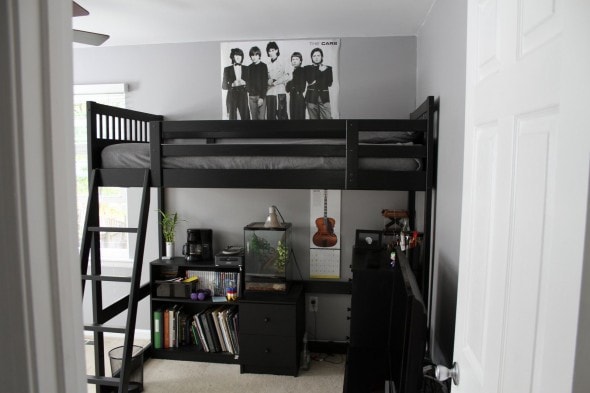
(bed from craiglist, painted black by Joshua and me)
You probably aren't going to be able to buy everything used (even The NonConsumer Advocate buys new underwear!), but even if you just switch out some of your brand-new-buying for some secondhand goods, you can save yourself some serious cash.
2. Live with less.
Living frugally isn't just about obtaining all your usual items at a discount. Sometimes, you can save money by simply not buying something.
Maybe your current cell phone will do just fine. Maybe you don't need 3 different winter coats. Maybe you only need one set of sheets per bed. Maybe your kids don't need 15 new toys at Christmas.
And maybe, just maybe, you'll find that you're actually happier with less. Stranger things have happened.
3. Stop wasting food
I understand, believe me. I was a horrible, terrible, no good, very bad food waster back in my day. But, miracle of miracles, I stand before you a reformed person.
If I can (almost) stop wasting food, there's hope for you too!

Plan a menu, make a detailed grocery list (those two things will help you buy less), take inventory of your fridge each day, eat leftovers, and throw random bits of food into scrambled eggs, on top of a salad, or into soup.
Throwing away food that was edible is a huge waste of money and resources (someone grew that food, harvested that food, and transported that food to the store, and it's very sad when all those resources end up in the trash).
(Related: 10 ways to stop wasting food.)
4. Avoid eating out
Eating out is exponentially more expensive than eating at home. Even if you change nothing else, cutting back on your eating out will have a big impact on your bottom line, especially if you currently eat out a lot.
Here are 7 reasons you're eating out so much (with tips on how to stop!)
5. Be on the lookout for ways to cut costs on services/goods.
There are inexpensive ways to do almost everything, and in many cases, the frugal option is just as good as the expensive option.
A few examples:
-Mr. FG and I use Ting wireless as our cell phone provider ($20-$30 bill each month!), and we bought refurbished iPhones from Amazon Warehouse.
-We bought an Ooma box and now have no home phone bill aside from a few dollars in monthly taxes.
-We buy razors from 99 Cent Razor for just a a dollar apiece ($2 each when you add in shipping, which is still a great price.)
-We use Netflix, Amazon Prime, and Roku to avoid having to pay for cable TV.
(More details on avoiding cable TV here.)
6. Ditch disposables.
I'm not saying you should necessarily get rid of your toilet paper (You'll have to pry mine out of my cold, dead hands.), but take a good look at your life and see which disposables you can cut out.
Could you:
- use real towels instead of paper towels?
- use a water bottle instead of bottled water?
- use real plates, cups, and silverware instead of paper/plastic?
- opt for reusable leftover containers instead of foil/plastic?
7. Buy stuff that lasts.
Well-made items DO cost more up front. But once you buy a quality item, you shouldn't have to replace it for a good long while and that saves you money. And stress.
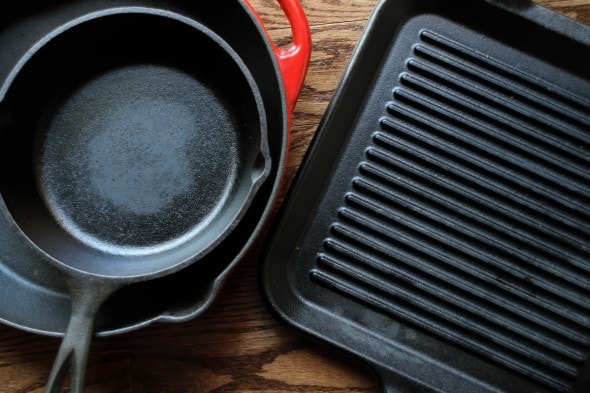
Don't go out and replace everything you own right now (so much expense all at once!) but when things break irreparably, replace them with something that will last.
(Consider refurbished items, or look on Craig's list to see if you can score a great item for less.)
8. Fix things when they break.
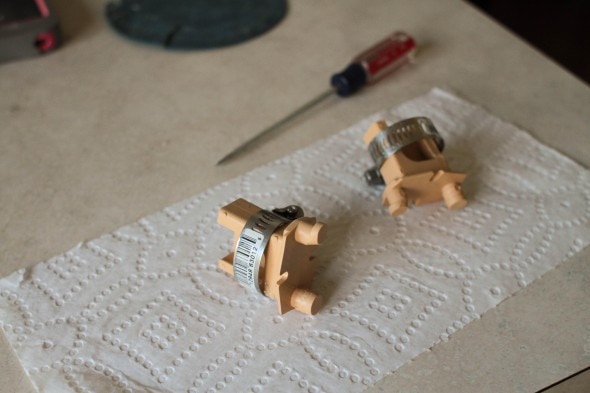
We live in a culture that has a thing for throwing stuff away. It's true that a lot of the junk we own literally can't be repaired, but even in this day and age, there IS still a lot that can be fixed up.
I mend clothes, we repair our appliances, I repair furniture, I glue broken toys, I jerry-rig cabinet brackets (!)...in short, before we replace something, we think hard about whether it can be repaired instead.
9. Write a monthly money email.
This won't necessarily be applicable for everyone, but it's been so helpful for us, I had to include it!
Mr. FG and I didn't have a good way of communicating about money for lots of years, and a while back, I came up with the idea of writing him a money email with a summary of income and outgo for the month.
More details about the money email are right here in this post. If you've got joint finances and you've had trouble on the communication front, give this a try! It has really changed our lives.
10. Learn to be content.
I've written a lot about contentment (you can find all the contentment posts here) because none of us will ever have everything in our lives exactly how we want it, no matter how hard we try.
It's a fact of life.
If you don't accept that and learn to see the good in what you have, you'll always be throwing money at the problem, trying desperately to plug the holes in your life with more purchases.
If you are discontent with what you have now, odds are good you'll still be discontent even if things get better for you. But if you learn to be content with what you have now, you can be happy even IF things never get better.
_________________________
I know I could have written a list with way more than 10 things, but the ones I listed feel most important to me.
What would you add to my list if you could add an 11th key money-saving principle/tactic?


My big one has always been, use what you have. Whenever I want/need something I look around at home first. A lot of the time I find something that will work, it may not be perfect but it's often good enough.
One example is I wanted some usa muffin pans. But I tried using my fiesta ramkins instead. They worked great made a nice size muffin and was easier to clean. I saved around $40 by using what I already own and I'm happier about it.
The second one is knowing there is more than one way to do something.
This list is fantastic! And I absolutely believe that contentment is the key to all of it.
One of the biggest money-savers for us has been driving paid-for cars. This is in line with many of the principles you've already outlined: buying pre-owned, living with less, choosing quality over the cheapest price, and fixing things when they break (or in the case of cars, maintaining them so the don't break down!).
Over the years, we have saved countless thousands on car loan interest, insurance, and gasoline because of our willingness to save up and buy 2-4 year old vehicles that our research has shown to be well-made models. We buy cars that fit our lives, not our egos (i.e., sub-compact commuters when we'd like SUVs), and our commitment to maintaining them well and attending quickly to minor repairs so that they don't become major repairs.
Brilliant! We love our neat, economical 10 + year old cars.
Right there with you! Still driving our long-ago paid-for 2004 Echo and will do so for as long as it's cheaper repairs wise than getting a new car payment. It's a small car but it fits the family just fine. Our second "car" is my husband bike, which he uses every day to go to work, rain or snow or shine!
Oh, my husband LOVED our 2002 Echo... finally died for good this summer and we were so bummed. A great small car that somehow has a lot of interior room!
We bought a 1997 Buick that was 4 years old and drove it 14 yrs. It came to the point that too many repairs were being made, so we finally bought another car. I sold it to a young man who could do the labor needed on it and he just had to buy parts. He was thrilled.
My husband bought a Chevy pickup that was two year old in 1999 and has handed it down to our son, who still drives it now.
We faithfully maintained these vehicles and they are still in use.
I love the statement made by EcoCatLady: Confront your inner snob.
It's time to get over high school and quit trying to be accepted by everybody through what we look like, what we live in and what we drive. When we lay that down we can live a happier healthier less stressed life. And if one is not buying a lot of things, saving money is possible.
We are older and live on my husband's
1)retirement and SS check. (I was a stay at home mom) 2) three rental income properties. We were able to buy and pay for these properties over the years and does that income ever make a difference! The reason we were able to do this is because of tips like I have found here. When you don't spend it or waste what you have spent, you can save it. That let us have the money for down payments and we bought property one at a time. The rent paid for the mortgage payment and helped with any repairs/improvements. It's a great tax write off while you are paying for them.
We are debt free, except for car payments. Those will be paid off soon. Hallelujah !!
Great List. Regarding #2, Marie Kondo said recently that Americans have three times the amount of stuff they need:
http://money.cnn.com/2016/01/25/news/economy/marie-kondo-spark-joy/index.html?section=money_topstories
My #11 would be to take care of your health, it is the linchpin of being able to earn and save money. So, eat right, exercise, get enough sleep, manage stress, and get help when you need it.
My #11 would be "don't be afraid to ask." My parents will always buy me overly-generous Christmas and birthday gifts, so I'm not shy in letting them know things I might need or want. I really love Masterpiece Theater and BBC productions, for instance, but public television where I live is more along the lines of "Pennsylvania Polka" and "Lawrence Welk."(I kid you not.) So, after they'd said how much they loved Acorn TV, I looked into it, asked for a subscription and informed them they'd get a free month on their subscription as well when they got it for me. Win-win. We also ask friends if they have something we need to borrow and then make sure to repay the favor when we can. For instance, I can't justify buying a $300 20-ft ladder for the 30 minutes a year we might need it to clean our dryer vent, and we have friends who are happy to loan us one. Then, when friends need something, we're happy to loan what we have. The key to this would be never borrow (or lend) something irreplaceable or that you can't afford to replace if you do break it.
These are great! We do most of these, except for #9, which I will start implementing now! We do discuss our finances when something changes, but I think starting each month with a recap of last month and refocused goals for the coming month could be really good for us! Thanks for the tip!
We also make saving money into a competition. We each keep a tally of the frugal things we did and assign dollar values. Then at the end of the week we total them up and the winner gets a dinner cooked for them and to pick the activity for the evening (movie, board game, bike ride, etc). It's fun and it makes saving money a game.
Some things I do that has saved us a TON of money are:
driving our cars until they basically give up on us. We pay a ton of money for cars in South Africa = even with the exchange rate factored in, we pay about double that of other countries, and on some makes and models, three times.
not automatically renewing cell phone contracts. In South Africa, it's standard to renew and upgrade your cell phone every two years. Well, I keep mine for 4 years, sometimes longer, and that saves me a good chunk of cash (R400 per month this round - that's R9600 over the 24 months)
but the best thing in my opinion, is to stop looking at the free pamphlets and catalogues, and stop following materialistic people on Instagram. You didn't know you wanted X fancy planner/ shoes/ house decor til you saw it 🙂
The hardest one for me is being happy with what you have. It's is so true, though. I love my home and decorating it, always, always on a budget of course, but when I see the layouts of homes in magazines, mine looks like a dump to me. I realize that they are professionally decorated with an unlimited amount of money...but oh how I lust after these homes. ( I am uninterested in the size of them, I would never care about living in a mansion, it's the decorating I cry over, lol)
I understand what you mean, but consider this--tv and magazines aren't real. Those homes have maids and probably don't have kids or pets. Those homes aren't homes, just houses. Those places are the equivalent of the airbrushed models we see on tv and in pictures-- it's meant to provoke desire in you, meant to make you feel bad, and designed to make you buy things to try to attain a level of reality. Don't look at things if they are going to make you feel bad.
Perhaps instead you could go to open houses for homes that are up for sale-- that way you can see homes but it doesn't have the unrealistic aspect that makes you unhappy and promotes spending. That way, you get to see homes and get ideas but you're looking at a realistic home, not something designed to make you feel envy.
Great point. Even open houses are often staged or at least cleaner than usual. However, some are not. We're currently house hunting and a few places have been shocking!
My sister is also house hunting, by some good fortune her current home sky rocketed in value and she is looking at houses that are way above our price range. I'm really happy for her, however, I don't look at her listings. I have my head on straight about what I can expect from what we can spend on a house. I don't want to put images of a home in my head when I cannot afford it.
Thanks to you both, you are so right. I no longer look at Country Living magazine, which was the one I'm referring to specifically. I sometimes get really down on myself over this. I've raised four kids on NO budget for home furnishings, wanted ceramic tile instead of carpet so badly for SO many years, finally got it and NOW, what do I want? Hardwood floors....I'm hopeless. There's nothing wrong with upgrading. It adds to home value, etc., but is that why I want it? Honestly, no. Part of the issue is, this is also my hobby, something I feel I'm good at; painting, refinishing, choosing colors. I do it all myself, so at least there's that frugal choice, but I need to really start realizing how far my home has come over the years since the beginning, when honestly, I think we had a bed, a chair, and a picture on the wall! Lol
Maybe there is a career in this -- decorating? or at least helping out friends to get experience. It sounds like you LOVE to do this and are good at it and have the skills. Just a thought -- good luck!
I think all those are great tips. Eating at home and not wasting food are really big ones and one I REALLY am focusing on right now.
I think it's also important to mention that I find it helpful to only use cash. Obviously, credit cards are bad (even with rewards and whatnot, they encourage poor spending habits) but I find that when I have debit card usage, I will spend money with no thought whatsoever but if I have cash...it lasts a LOT longer.
Whether credit cards are "good" or "bad" depends on your individual psychology and how you use them. The Frugalwoods (check out their blog if you haven't), who are incredibly frugal, use credit cards and do all their Christmas shopping using their credit card rewards. I'm not a Frugalwoods level of frugal (and don't want to be), but I have plenty of savings, never carry a balance on my credit card, and would find it highly inconvenient to use cash for everything
A quick shout out on credit cards -- obviously, not a good idea to rack up debt, and agree with Kathryn K. -- it's definitely an individual thing. We put everything on a rewards card -- groceries, gas, stuff we need, any entertainment or eating out (we've really cut that back) anything I buy -- and have been able to periodically able to get free or discounted airline tickets to see my family back east. It's been so helpful but it does require us to pay off the card each month, which we do anyway since we hate to pay interest. Just another country heard from . . .
FG, so with you on the toilet paper 🙂 Great list and comments!
Same here with the credit cards. We pay them off every month, use them only for planned purchases, and happily pocket the rewards!
Cash simply evaporates out of my wallet and I never have any idea where it goes.
All of my spending goes on one credit card and I keep a rough running total in my head, which keeps me from overspending.
Obviously that credit card gets paid in full every month, so I pay no interest and carry no balance!
Mr. FG is EXACTLY the same way with cash. It helps some people, but for others, it actually ends up making them spend more!
I'm totally with you on this one Ali. Cash is like Monopoly money for me. If I have it, I'll spend it. But if I put it on the card, and I know I'm gonna have to see it there in stark black and white at the end of month day of reckoning, I'm much less likely to buy things that I don't really need.
Same here we use Rewards Credit cards BUT I pay it off the Night or very next day.... For me To pay off monthly would make me ill to see how much racked up & in the event of an Emergency something happen that we couldn't pay off that at the end of the month...eek
We also Don't Put anything on the Card that we can't pay for.
Getting on the bandwagon that credit cards are not "obviously bad". I've learned that method of payment doesn't affect how I spend and that I pay off the card every month. Therefore for me, a credit card is a good option because I earn rewards.
I disagree with you about credit cards. It's not the cards that are "bad", it's the fact that people can't seem to be able to manage them. We use credit cards with no fees that gives us points and then can redeem those points for free groceries. It gives us at least 500$ per year of totally free groceries, and the cards get paid at the end of each month. We have to stop blaming the credit cards for poor money management skills (not talking about you, just the society in general).
We LOVE our rewards card. We pay it off faithfully every month, but earn an amazing number of points that we usually use for airfare. We live in New England, and I get to fly out to LA every year to see my best friend for free. And all four kids and I were able to tag along with my husband on research trips to London a few years ago and Barbados last month--again all free airfare.
Great list! I would like to add though, that bottle water can be a life saver. I know of a blogger friend who had NO water for over a week. Her bottle water supply got them through. So maybe not as a method of daily drinking but for sure a way to stock the pantry in case of need.
My husband likes to keep a supply of water on hand in case of emergency and we use milk jugs, juice bottles, etc. (all rinsed well, of course) to store the water. It does take a little time to accumulate depending on how quickly you have empty containers, but it's almost free.
I stocked up on water by reusing half gallon juice bottles. The milk bottles were too flimsy for long-term use: after a year or so they'd start to leak. What a mess! As Kathryn K wrote, it takes some patience but once you have enough, you're set.
On the topic of cable...I would like to hear what people do for their internet provision. We have the most basic cable package possible (antenna won't work where we are), and our internet access through the same company. We have a roku and we do stream movies and shows. However, a friend who worked for the cable company for many years said she believes they will soon start charging for digital downloads/data, and in fact are already doing so, or at least testing it, in some markets. Has anyone else heard of this? This could really wreck the savings we get by having such a low cable bill.
Some cable companies are going to caps (generally 250 - 300 GB per month.) I'm a single person who streams quite a bit (plus I work from home which means I'm using data to do my work, and I tend to have Netflix on in the background as I'm working) and use about 170 GB.
Love the list! I would definitely agree with buying used. Our microwave/oven combo just broke and a new one would have been at least $1500. We found a used Kitchenaid for only $400.
Thank you for all the great reminders! I read your blog first each morning and it always inspires me to try harder.
This goes along with #2 and #10....sometimes we will get coupons in the mail, or just see a great sale to save XX% off. Sometimes I do need something and use these deals, but more often I have learned to save myself 100% by not buying anything at all!
Thanks for this list. I just read the food waste post again and it reminded me that I wanted to start keeping a running total of food waste in dollars since it seems more real that way.
This is a really good list. I'd like to add, learn new skills.
I hear some people saying they can't cook, they can't do even the simplest repairs, they can't paint their own walls, they can't bake cakes or yeast breads, they can't sew on a button....
I always say, then it's time to learn. I'm not saying people should necessarily be fixing the computer systems in their cars and re-roofing their houses (although my dad re-roofed my grandfather's house), but some things can be learned with practice, and rather than pay someone else, learn to do it yourself.
It's probably been more than twenty years since I've read it, but when you said "terrible, horrible, no good, very bad" something went off in my brain, an I had to go find out where I'd heard that phrase before... Thanks for reminding me of a piece of my childhood that I'd long forgotten.
(And thanks for the tips, of course! Another great post.)
Yup...the one about Alexander!
And didn't they just make a movie out of it?
I still struggle with disposables some. I particularly like foil. I do reuse it often though. I usually freeze meats in the foil then put that foil pack n a dish in the oven for easy cleanup so I am technically using it twice.I freeze many things so I seem to use lots of foil, freezer bags, and cling wrap. Not sure how to change this. I don't want to buy excessive amounts of jars and bowls to freeze everything in.
I've found that I can wash/reuse my freezer bags multiple times before they are no longer functional (I just always make sure that I use the bags for the same type of product each time-i.e. meat bags for meat, a bread bag for bread, a scrap bag for broth scraps, etc...). I've also discovered that spaghetti sauce jars are great for freezing small amounts of soups/broth...this of course doesn't work for full meals, but it does work for leftovers or for single-serving lunches.
Great ideas!
One thing I do to save wear and tear on freezer quality bags and to reduce the hesitation to use a meat bag for something else later is to take meat and put it in a cheapo bag I've saved from something else or even the wax paper liners from things like cereal, and then I put it in the freezer bag. When I go to thaw the meat, I take out the inside package so it does not bleed into the freezer bag as it thaws, and then all I have to do is rinse the outside bag because it has not been contaminated by meat blood.
I also use foil & cling wrap but I minimize the cost (and packaging garbage) by buying industrial 1000 foot rolls. I can't tell you what the cost savings is but I won't need to buy foil or plastic wrap before 2025.
Excellent post and comments, too! I would add finding a budgeting system that works for you and keeps you aware of exactly where your money is going. I've used YNAB for a few years now and it has helped tremendously. Prior to that, money just seemed to disappear. Now we've eliminated credit card debt and increased our savings just by being intentional about exactly where our money goes.
Kristen, I save money giving myself time to think before I make the purchase. I figure if it is a good deal today; it will be there tomorrow.
I stopped spending based on instant gratification.
My Hubby is good at fixing things but this time our Dishwasher broke again but un fixable this time. & it's about 10yrs old time for an energy saver. I looked up online Best Buy had a clearance energy saver ( Whirlpool ) model clearance $270- so we went there after dinner ( date nite lol ) & bought it. $290.58 w-Tax my hub will pick up & install it. It's just a basic energy saver whirlpool model Reg. Price $400- but all I need is for it to sanitize our dishes. We don't put food in our dishwasher it's not a Garbage disposal ( like some commercials like to show how their dishwasher will clean food off the dishes ) we rinse our dishes in a tub of water before putting in dishwasher. & if the Food is stuck on I spray a Mixer on the dishes n let it sit for a min or 2. ( 1c White distilled vinegar to 2-1/2c water & 1-2Squirts of Dawn Soap original ) we are in Northern California still in a drought so this spray helps.
Plus we Always Air Dry our Dishes
Re #7: I use a modified version of this.
The first tool I buy is a cheap one. If I use it so much it breaks or the poor quality is a constant irritant, then I know I use it enough to make buying a quality tool worthwhile. OTOH if I don't use it much or don't notice the low quality, then I'm good to go without having spent the extra needed for a long-term item.
I think this is especially a good idea if the tool you're buying is for a new venture. Sometimes it's smart to buy an inexpensive version until you are sure you're going to stick with the new habit/hobby/etc.
Also, I'd just add that sometimes a cheap item IS a high quality one. Lots of times Cook's Illustrated has reviewed equipment and found that an inexpensive item has out-performed a fancier, more expensive version. More money does not always equal better quality, which is why I adore places like CI or Consumer Reports. They help you figure out when it pays to spend more and when it doesn't.
Great tips, Kristen!
"Buy stuff that lasts" -- put another way, spend more $$$ up front for something that's high-quality. The sayings "buy once, cry once" and "the bitterness of poor quality remains long after the sweetness of low price is long forgotten" really apply here.
That bitterness quote is one of my faves!
In addition to netflix or amazon/or in place of, I suggest Sling. It is $20 + tax/month- which is still much cheaper than cable around here.
One of the major hesitations that my husband had with getting rid of cable was that he could not watch sporting events (I think nearly every husband I have talked to says this!) Sling has ESPN and ESPN2 live. I like that it has channels I like too. And while it is not consistent, the on demand is kinda cool. I think you can add on other packages too- for way cheaper than you can do with a cable package.
I have no affiliation to Sling. Just thought it was a cool find.
Don't overlook the perks of your employment opportunities as a way to save money.
One of the benefits at my job is continuing education funds. I have used that money to attend conferences like the Global Leadership Summit simulcast and buy books on personal growth.
Last week, my employer offered free regional transit cards to all, for use anytime. They also offer discounts on family and community events, plays, etc.
We use our credit card that earns rewards for most of our monthly expenses like groceries, gas, clothes, etc. and we write the expenses in our check register just as if we had used a debit card or wrote a check, that way the money is already accounted for to pay off the balance each month. We have been using the rewards we earn to buy things we need that are available for a good price on Amazon, like refrigerate water filters, greenies dental chews for our dogs, my daughter's dance shoes, books as gifts, etc. So awesome when our rewards allow us to get something we need for free or greatly discounted! You just have to make sure you aren't using your credit card to buy things you don't need just to get the rewards. We also buy new cars (after reading reviews, although we've learned that isn't always reliable) and then take care of them and drive them for years. Currently we have a 2004 pickup (my husband has an hour commute but carpools with his brother and they take turns driving), 2008 SUV, both paid for, and a 2014 car we bought for my daughter to learn to drive on and eventually take to college. We hope to pay it off this year.
Great post Kristen, your points are very true..especially concerning buying second hand. If you wait and keeping watching you can pick up some great quality items for alot less & it saves them being thrown in landfill.Another one I would add is try to pay off your mortgage as fast as possible I don't know what your interest rates are like there but here in Ireland they are high, when you look at the amount of interest you are paying you get a fright!! So I'm all for reducing the term & being debt free asap:-) I try to remember the Louise Hay quote ' I am enough, I have enough'
A big one is putting extra money on the mortgage if you can afford it. All extra going straight to reducing the capital = less interests = saving a lot of $$$!!
We now are utilizing everything on your list. I was able to give up my very expensive house and start over. I moved into a small duplex where we planned to regroup for a year. Six weeks later I purchased a 10 yr old home for 4100.00 at auction. We had to wait a year to move into it per legal requirements. I am total out of pocket about twenty thousand and have owned my home three years. My house is currently valued at 167,000.00. Yes, it was a gamble but I am now mortgage free. I have returned to school using free money from various state programs. I pay all my bills on my credit cards and pay the balance in full each month. I then use my credit card points to purchase gift cards to pay for my childrens Christmas. We have everything we need and usually what we want. I have learned to save money at every turn in life.
First, I love your blog. I read your list and was surprised that I already do 9 of the ten. I like the idea of number 9 I pay all bills online ( no need to buy stamps) but I have begun to keep a journal of monthly expenses, to help me but also share with my husband. He's completely trusting with the finances but sometimes I'd like an extra set of eyes to monitor spending.
I did want to add something extra about credit cards, while we try never to carry a balance I would wait until payment was due to make the payment. Well, I now look at the weekly expenses and send online payments to the credit card companies even if they are small amounts, sometimes able to make 2-3 small payments prior to due date and balance is paid off.
The thing that's super helpful about the money email is that it keeps Mr. FG in the loop. Having him know how much money we do or don't have, and where it's going is enormously helpful!
For women--buy accessories instead of clothes. A few scarves can make the same blouse look different every time you wear it. This is especially helpful if traveling with a group as scarves take little room in your suitcase.
I don't look at the ads in the Sunday paper (except the one for my favorite grocery store). If I don't see it, I'm less likely to want it. 🙂
Also, I make a point of only going grocery shopping once a week. If we run out of milk (or bananas, or whatever) before then, we do without. I found that I just can't walk into a grocery store without it costing me $20. I buy whatever it was that I came for, and then I "remember" all the other things we "need"--those bananas, an extra loaf of bread, something that's on sale....and there goes $20. (Of course, in order to make this work, I have to make a weekly menu and a grocery list based on that menu.)
Never lease a car. Never buy brand new cars; ideally shoot for a car that's 3 years old. You don't get rapid depreciation of the car value plus the mileage/ wear on the car is still very reasonable.
Great list! Your #1 tip made me laugh. A few days ago one of our dogs put a muddy paw on my pants leg. I looked at the hubs and said "I just bought these pants - NEW!!" It's a rarity for me.
We regularly empty out pocket/purse of change and throw it in a specific (large) jar. Then once a year we bring it to the bank, deposit it, and write out a check to a charity that's very important to us. One year we were a "bronze level donor"!
And because God works this way, after a horrible day at work yesterday I came home and found an actual piece of hand-written mail, addressed to me. I had sent a gift to the lovely young woman who took care of my (now deceased) grandmother and truly loved her. She wrote the nicest, most sincere thank-you note. There is nothing on earth I could've bought that would have turned my day around the way that did!
I love the list and the comments.
I have one overarching principle that helps to keep me frugal: Confront your Inner Snob!
Seriously, I think a HUGE chunk of our unnecessary spending comes about because we're all trying to present a certain image to the rest of the world - an image created by the clothes we wear, the brands we buy, the food we eat, the neighborhoods we live in, the stores we shop in, the cars we drive... etc. I have found that the biggest pay-dirt in my frugal journey has come from challenging those assumptions and embracing a lifestyle that doesn't necessarily "fit" with the ideals to which my inner snob aspires.
Nope. No used underwear here!
I have a quote I love and it is not only a daily reminder to me to be grateful, but also helps me think twice before buying something new. "Gratitude turns what we have into Enough" I just love these words.
Great post! I've only recently started my frugal journey but love it. Contentment is key as you mentioned and I font know about you but I get a feeling of achievement when I lower my bills!
Keep up the good work with your blog, it's so informative! X
Some good stuff. I have had an Ooma for four years now, just over four dollars a month and great sound quality, better than the more expensive VOIP services out there. We do the roku with Amazon prime and my husband out up an antenna that allows us 23 free local channels. I grew up in a house where we rarely ate out and we canned and had a freezer where my dad would buy 1/2 a cow and freeze the meat. My husband grew up in a house where they had a two acre garden, did the canning and freezing of fruits and vegetables. We do some canning and my husband is very handy with tools. He has replaced ceiling fans, light switches, and added outlets. He does plumbing fixing leaks and replacing fixtures and done upgrades. Replaced sliding and entry doors as well as Windows, we have painted the inside and outside of the house. He also changes the oil in the vehicles, spark plugs, batteries, etc. it saves time and money with the DIY. There is also the satisfaction of a job well done and you are more committed to getting it done right the first time. Last year I started seeing too many grays and I told my husband I was too young to go gray. He told me they are natural highlights and they look nice. I was not going to spends hundreds at the salon, so I researched and chose a color of henna as it is free of toxic chemicals that not only destroy your hair but cause cancer. So I told him that being he cuts my hair and does such a great job, he is the only person I trust with my hair so I needed his help. Net result was great color, shine as well as soft silky hair. I bought multiple henna kits because I had a coupon code and free shipping. Net cost for a years worth came to about $35. He does my haircuts and my children's, saves me a lot of money as well as time. It also freed me from the hassles of making appointments, long wait times and questionable results.
We avoid the high costs of doing elaborate birthday parties for the kids by preparing the food at home, limiting the size and doing a free activity like the park or swimming in the pool. My cousin had to have a special birthday party for her son and spent over $700 at one of the party places for food, entertainment and extras.
We don't feel we have to keep up with or outdo the family members that buy fancy new luxury cars or run up their credit cards spending thousands they cannot afford to go on expensive vacations to Disney World.