
Balancing Food Waste & Food Packaging | An Interview with Jonathan Bloom
Back in 2008 when I first dipped my toes into the blogging world, Jonathan Bloom's blog, Wasted Food, was one of the first I started reading regularly.
In addition to maintaining his blog, Bloom has written a book on food waste in America (American Wasteland ).
).
So he's got a lot of knowledge about the food waste that happens in the fields and in the production/packaging/shipping process and he's also very interested in reducing food waste in the home.
Basically, he knows all the stuff I do about food waste plus way, way more.
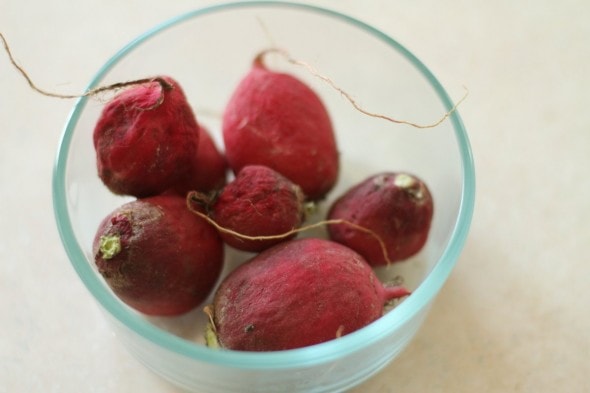
Recently, I've been thinking a lot about the role of packaging in food waste. Unpackaged food is really appealing to me, but sometimes food packaging reduces waste, and that's also appealing to me.
For instance, grape tomatoes fare better in packaging that keeps them from crushing each other.
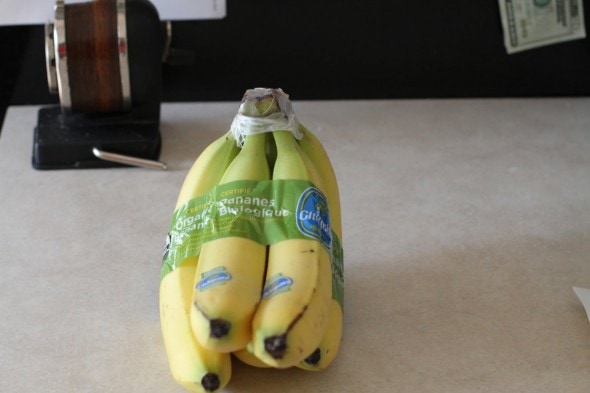
The tape around these bananas from Aldi keeps the bunches from breaking apart (single bananas are much less likely to be bought) and the wrap around the stems prevents them from ripening too quickly (grocery stores typically have to get rid of copious numbers of overripe bananas.)
But how much packaging is too much? And ecologically speaking, do you come out ahead by using some packaging, if that packaging prevents food waste?
It's kind of complicated.
Since Bloom is a veritable font of food waste knowledge, I thought he'd be a good guy to go to with my questions, and he kindly agreed to let me interview him.
1. Ideally speaking, we'd like to get food from the field to our tables with no waste in the production, transportation, and home storage of our food. But unless we grow all of our food in our own backyards, that's a little difficult to accomplish. What are your thoughts on the use of clamshells, plastic wrap, Styrofoam, and plastic bags used to package the produce in our stores? (advantages/disadvantages)
In general, I'd like to see as little packaging as possible. Yet, when it comes down to preserving food vs. avoiding packaging, I tend to side with the former. Because so much energy, water and land usage have gone into creating our food, there should be a higher premium on avoiding waste than eliminating packaging.
In addition to growing our own food and shopping at a supermarket, there's a third way"”buying as locally as possible. So going to farmers' markets, farm stands or local producers is a great idea. These places tend to use limited packaging without sacrificing food quality because their products don't have to travel far.
Also, it's worth noting that there's nothing wrong with reusing produce bags and many other kinds of packaging.
2. When it comes to home storage of the food you buy, what are your personal rules about using disposable/energy-using products? Do you look at a cost/benefit ratio (Does a refrigerator or freezer save enough food to make it worth owning?), and how does convenience play into your decision making?
I have several reusable produce bags, and I try to reuse all of those produce bags I take from the store. Additionally, I don't take bags for certain items that don't need them"”tomatoes, bananas, etc. Like anyone, I feel a certain fatigue factor with the question of sustainability vs. convenience. Yet, by incorporating green habits into our routine"”like bringing our own shopping bags"”we can make those concessions to convenience the exception to the rule.
Honestly, I've never considered going without a refrigerator. I have heard about plenty of folks forgoing that modern convenience, but I'm very skeptical on whether the energy savings would outweigh the environmental impact from wasted food.
3. Farmer's markets typically use less packaging, and since the farms that feed the markets are smaller, I assume their field/transportation waste is less. So, do you place a high priority on shopping for local food?
For so many reasons, I'm a huge proponent of eating locally. Keeping your money local and supporting small (often family) businesses makes sense and feels good. Meanwhile, the food almost always tastes good (and better than food shipped cross-country). Businesses. And local food tends to be more sustainable, both because there's less waste and packaging.
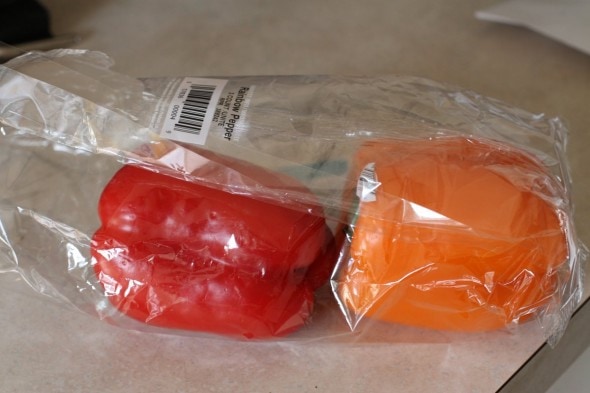
4. Supermarkets sometimes discount damaged produce and package it in plastic or on Styrofoam trays. In such a case, do you think it's better to purchase the discounted, packaged produce, or the unpackaged, undamaged produce?
I'd say you've reached an elite level of waste awareness if you're considering this choice! Every case is different, but I'm a fan of the discount produce rack, for the economic incentives and awareness raising. And it might make sense to ask the store manager about eliminating the Styrofoam trays. Having said that, I wouldn't buy the discount, damaged produce unless I was sure I'd be able to use it. Having a plan is key, such as transforming wilted veggies into a stew or brown bananas into banana bread.
5. Do you have any other thoughts to share on the topic?
In general, discarded food represents a larger waste of natural resources than food packaging. Yet, I'd advise people to focus on the overall sustainability picture and not get paralyzed by the glut of green messages. In the long term, being an aware and engaged shopper is more important than any individual decision.
____________________
Jonathan, thank you so much for answering my questions. And thank you for all that you do to help create a low-waste culture here in America!
____________________
Food Waste Friday is over at Simply Being Mum today.
Amazon links are affiliate links.


great interview - and reminds me that Bloom's website is how I found yours! (I'll admit to having abandoned his long ago and only follow you 🙂
I do a lot of shopping at Aldi and I have to say that I HATE that they put bananas in plastic bags. I haven't seen organic bananas in our store (and honestly I probably wouldn't buy them anyway) but why the plastic bags? I think they get slimy and don't ever ripen correctly. I very rarely buy bananas at Aldi for that reason.
Ditto. I do buy the organic ones sometimes, because they have waaaay less packaging. But I agree about the plastic bag bananas-it seems like they never get properly ripe.
So funny that this interview mentioned a choice between packaged/damaged produce and unpackaged/fresh produce. I was faced with that just this week! I have a potato bake on the menu for this month, and so I was tempted by this packaged set of less-ideal potatoes. (Not green or sprouting, just a little sadder than the rest.) I was tempted, but I knew I wouldn't be able to bake them up for at least several days.... so I left them there, no potatoes bought at all. Chances are I would have paid for the privilege to have them rot in MY house, rather than the store! Hopefully someone else bought them and used them quickly.
"It’s kind of complicated."
It sure is. Daily decisions have to made as to what to keep and what to dispose off. Not everything can be saved. But maybe more than we think can be.
There are so many misconceptions surrounding food, and the food industry. Not just the subject of waste, but what foods contain, what is healthy what isn't etc...
As with much in life, I try to apply common sense when deciding what is edible and what isn't. But of course that isn't always foolproof. A good nose is an advantage. We have our senses for a reason.
Thank you for this interview. It's reminded me that a little swotting up on the subject would be beneficial. I'll start with Jonathan's blog.
YES. Definitely. COMMON SENSE RULES. AND HUMAN BEINGS SENSES RULE.
Sadly these days most dont have any of those 2.
People depend on the stores, fda, government, etc to tell them what do and what to eat with their food.
Our grandparents did great without all those interferences when it came to eating. For some reason those did not pass on much I guess to their offsprings and that has just been deteriorating, making most todays kids tell that a fries grows on plant, whats this and whats that for regular vegetables. I dont blame the kids- the parents of those kids are to be blamed for.
I am sure none of the people who visit these kind of blogs belong to that careless category. But everytime I come across those kind of people I am confused if I should ask them to go hit their heads to a wall or should I just go myself hit a wall.
I love my mesh produce bags! My Sprouts now has bulk carrots instead of packaged ones, and they stopped carrying bananas in plastic bags. One thing they do though it put 2 stickers on organic produce. It would make more sense to have the sticker with the # a different color rather than adding another sticker. A funny thing about buying less packaged produce--it's sometimes more expensive. Bulk carrots were $0.99/lb whereas the packaged ones were $0.79/lb. It seems completely counter intuitive!
I definitely need to check out that book! I hope it has thoughts on buying from bulk sections v. buying packaged food, especially since I'm finding the cost exponentially higher to shop bulk!
These days I seem to do my major food shopping at Costco and fill in with Sprouts produce, as it's the closest store to my home. At Sprouts, I just bring a cloth bag or two and skip all the plastic bags. The cashiers never seem to mind handling wet produce, as I apologize every time. At home, I use my crispers and recycled zippy bags if necessary. If anything gets wilty, an ice water bath revives amazingly. Oh dear, we're having a water shortage here in CA. Hmmm, is a water bath instead of a plastic really a better option? Gah! So many decisions...
I think it is if you reuse the water afterwards- flush the toilet, water a plant, top up pet water (if it's clean enough), wash the floor, soak a dirty pot or bowl...
But I agree, the number of decisions can be almost paralysing- packaging, distance travelled, farming methods, cost, shop. Gah!!
I really like that Johnathan sees the value in buying local. As a farmer, I am always aware of how much waste we produce on the farm and as a family. Whatever we can't use for food goes to compost or the animals. I try to buy items with the least packaging possible. I agree that it takes some guts to buy discounted produce for the first few times. You may get some weird looks but who gets the discounts in end? ha. Our local supermarket throws out TONS of food each day that is not sell-able. Meaning there may be a blemish on an apple or there is one moldy strawberry in a package. I know this first hand because I pick up this left over produce and stale bread twice a week for our pigs & chickens. I am not opposed to taking the occasional organic red pepper or carton of clementines to use for our own personal consumption. Sometimes I actually never have to buy produce for the whole week. I transfer that savings to buying some really healthy and tasty local meat (other than what we produce) and dairy products. Thanks for the great interview.
I have concerns with people bringing their own bags. I see some bags people bring that are in bad shape and probably haven't been cleaned. My food then touches the same area these bags were on and the person bagging my food has also touched these bags.
I understand that people have concerns with people bringing seemingly unclean bags. But there are sooo many other germs/bacteria/dirt etc. floating around. Money is one of the filthiest items around. Money has transferred so many hands and probably fallen on the floor or ground which has been trod on by dirty shoes; possible grubby hands on produce, leaky meat packages and so on and so on. I am not trying to be snarky or gross it is just that while I am sure there are some dirty bags there is so many other contaminates. I wash my bags and my food.
Only bags? what about a whole lot of germs everywhere else, the cart, the milk can, the cereal box, and on and on...and the worst of all- some ladies keeping their hand bags on the restroom floor when peeing, and then touching and hanging the same on their shoulders and if they have kids the kids will at some point come in contact with the bottom of the bag and that same bag goes into their houses on a table or shelf- oh gosh thats the yuckiest of all I can imagine. We dont know with what hands the people in the market handles the produce. I have all those concerns. So when I touch all of those supermarket products in my house anytime I wash my hands other than washing my produce.
For people here reuse anything is like a new IT thing. In my country most people have just done that for ages just because its not good to waste stuff and money BUT now they are copying the americans but there is a time lag.
This is a very interesting conversation. I shop at a local market near home for many fruits and veggies. They have a "mark-down" table where the really ripe, somewhat bruised, etc things go. I always shop from this table. But they put almost everything into those thin plastic produce bags and sell it by the bag. Rarely do I throw away any of this food. I may cut away some very damaged bits and pieces but I think it's better to buy it before it is thrown away by the sellers. The beautiful fruits and veggies will be bought for sure! Thanks for the info.
Thank you for sharing this interview! I can tend to feel overly guilty over anything I have to throw out (ex. a piece of clothing that's beyond repair or repurposing and isn't fit for the thrift store), and both you and Jonathan are good at reassuring people that there's a bigger picture than just one item that will regrettably end up in a landfill.
Buying reduced produce that is heavily packaged is something I worry about as well. I do usually buy it because I am on a budget, but I really don't like the packaging. I guess shopping at markets rather than supermarkets is an answer to that (especially markets with local produce).
I love local produce and I can blindfoldedly tell what fresh produce is local and what is not by the taste /smell of it, because the local produce has a nice flavor and smell, the regular supermarket ones dont have as much.
But local produce is not affordable for me(it costs more than supermarket in my place). I shop in supermarket and when I find a good deal on organic I buy it otherwise organic is not affordable on a daily basis.