
How do you make peace with things breaking?
A reader left a comment on my post about my washing machine breaking, with the suggestion that her questions could be a post topic.

In part, she wrote:
"I am struggling with coming to peace with the fact (?) that things are not going to last forever, and in recent years, they seem to last shorter lengths of time. I struggle with being grateful to have the money to replace or fix some items and then think that there are other things on which I would have rather spent the money. You seem to have a pretty good attitude about these things and you have been honest about not being perfect. But I'd love your words of wisdom to help me keep a good attitude. "
Basically, I hear two things:
- A frustration that things break (and that they break too quickly)
- A wish to spend the repair/replacement money on something else
So!
Let's talk about those.
Frustration with things breaking/wearing out
I and probably a lot of the frugal girl community share this frustration! Frugal people don't want to have to replace things or pay for repairs.
Having experienced this myself, I have three ideas to share that could help relieve this frustration a little bit.
1. Set realistic expectations
My frugal heart would love to buy everything one time, and then be DONE. Imagine the savings if you didn't have to repeatedly buy appliances or computers or phones or socks or hoodies.
Ahhhhhh.
But almost nothing truly lasts a lifetime.

So, if you buy things and expect them all to last a lifetime, you are setting yourself up for frustration and disappointment.
Yes, you can do your best to choose purchases that will hold up over time, but almost everything you buy will break or wear out in your time on this earth.
Expect things to break and wear out, and you will be less disappointed when they (inevitably) do.
Not only will things wear out from normal use, they also will break because of human error, particularly if you have children.
So, a sub-point would be: Expect the people you live with to actually do the breaking sometimes.
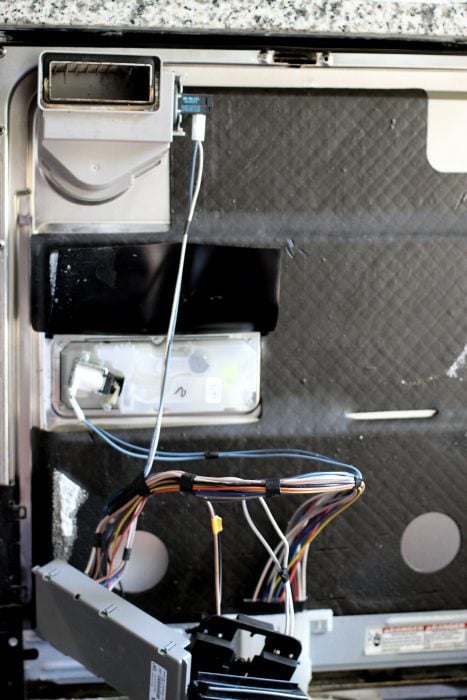
Children and adults (and you yourself!) are going to do dumb stuff that breaks things. Like when I broke my stove this summer. Ha.
2. Pay attention when things are not breaking
Our brains usually like to notice what's going wrong, not what's going right, and that makes it easy to feel like life is one long series of repairs.
Or that EVERYTHING IS BREAKING ALL THE TIME.
However, this is not quite the whole truth about life.
Even in a season where there are a lot of repairs happening, there are plenty of things that are not breaking.
And this is especially true in a season where there truly are fewer things breaking.
So.
Practice noticing when things are working, and you'll get a more truthful view of life.
For instance, I could think, "It is really so nice that my car has not ever left me stranded."
Or, "This hot shower feels so good. I'm really glad my water heater is working."
3. Try to buy items that last and/or are repairable
Nothing's going to last forever, but some things do last longer than others.
When it's time to shop for an item, whether it's a shirt or a blender, do some research and try to buy something that is going to stand the test of time.
Most often, this is going to require you to spend more than the bare minimum. But if you pay 25% more for something that lasts 10 times as long, the extra 25% up front is a good investment.
Plus, items that last save you a lot of frustration! To me, that is worth paying more for.
A bonus of well-made items: Usually when you buy something that's made well, it also ends up being repairable, whereas cheaper stuff is just made to throw away.
For instance, real leather boots can be repaired and renewed; faux vinyl leather has to be thrown away when it peels and wears out.
Still, it's important to remember #1 above: nothing lasts forever, no matter how well it's made. Even hand-made, well-crafted items from years past have worn out or needed repairs.
Alrighty! On to the second issue my reader mentioned:
A wish to spend repair money on other things
I am super familiar with this feeling.
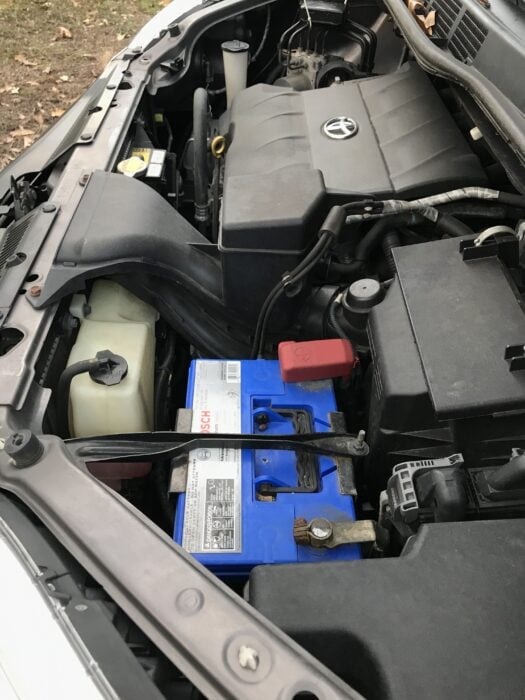
When you have to spend $800 on a car repair, it's very easy to think about how that money could have:
- paid for a trip
- been invested for retirement
- covered lots of restaurant meals
- paid for a lot of new shoes
- covered small-ish home improvement project
All of those things would be so much more rewarding than fixing a car.
You think, "If only the car hadn't broken! Then I could have a working car AND a trip/shoes/restaurant meals, etc."
This is at least partially an expectation problem. Realistically, we cannot expect to only spend our money on things that are rewarding, and as I mentioned above, we cannot expect that our possessions are never going to break.
So. You can adjust your expectations, and that'll help.
But I have one other trick that has really helped me:
Earmark money for repairs/replacement
If you put all of your money into one big pile that you draw from for every expense, it can feel like every dollar has the potential to pay for, say, a vacation.
So then if you have to pull some of those dollars for a car repair, you will feel like you are losing a vacation.
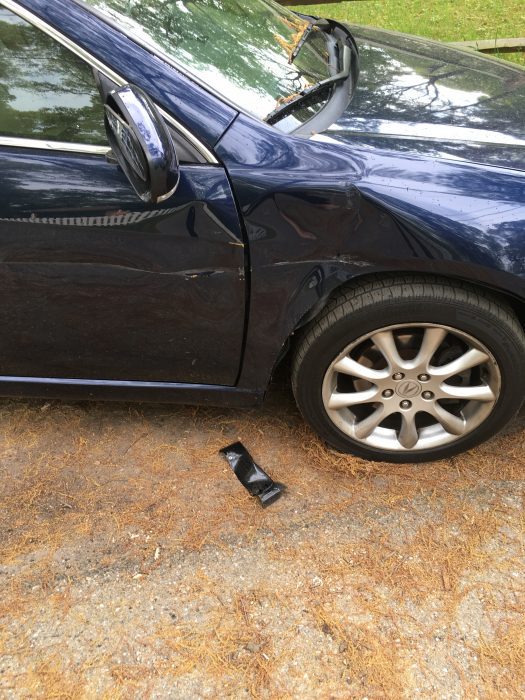
But, if you divvy up your money between different accounts, for different purposes, it's much easier to mentally handle a car repair.
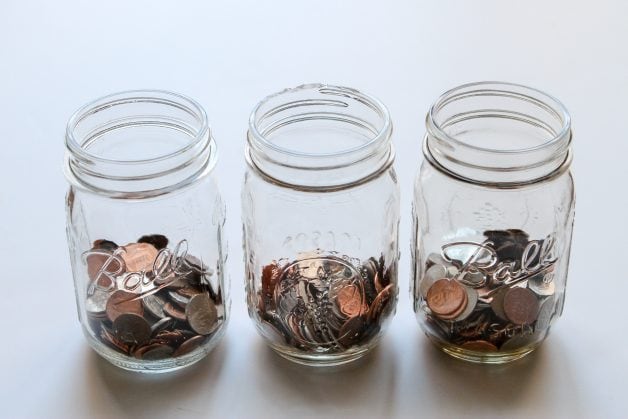
You're not taking vacation money away for that; the vacation money is in a separate account, untouched! You're going to pay for the car repair from the car repair account; the money is sitting there just for that purpose.
Wait. This doesn't actually DO anything to the money!
This is truly a mental trick, I know. Having targeted accounts for different expenses does not actually change the amount of money you have.
But deciding ahead of time that some dollars have the job of paying for vacation and some dollars have the job of paying for car repairs?
That can really help your attitude when you have to pay your mechanic.
How do you earmark money?
There are lots of ways to do this, but we have multiple online savings accounts where we automatically deposit money each month. Among those accounts is a home maintenance budget and an auto maintenance budget.

Homes and cars break at unpredictable times, but the fact of their failure is utterly predictable. So, that's why we set aside some money each month for this purpose.
Even if it's just $50/month (or whatever you can afford), set up an automatic deposit so that when these repair bills come up, you've got money earmarked for them. I really think it will help you.


One of my favorite things about you, Kristen, is that you think so deeply about your answers to EVERY question. It's great.
My husband's (somewhat amusing, sometimes annoying) response to when things aren't working is that we probably shouldn't have that thing. He doesn't really like modern conveniences much, and he really doesn't like fixing them. He would much rather, for instance, only have a woodstove, instead of a furnace. Or composting toilets instead of a septic system. Or live in a tent made of skins that doesn't have doors with latches that need to be repaired. Or whatever.
I obviously don't agree with him on all of these--I have definitely held firm on the toilet issue--but I do think there is merit to the idea that buying appliances with less on them to break is a good strategy. That's why when I bought a new stove, I got an entry-level (read: cheap) stove, because it has no electronics, or buttons, or digital readouts, or ANYTHING that will break easily. And that also makes it easier to repair. So it's not always true that the more expensive thing is a better option. When my brother's expensive smart refrigerator (or whatever it was) broke, he had to get someone out to fix it and they ended up replacing a motherboard for thousands of dollars. I do not believe a refrigerator needs a motherboard to keep food cold.
When I bought my house we had to buy all the appliances except for the dishwasher. My friend was an appliance salesman at the time and he told me, "A fridge should be a box with a freezer on top. Anything else is asking for trouble."
Yes... We talked about that when we needed to get a new vacuum. Retractable cord? One more thing that can break. No thanks. It can be a blessing to have fewer bells and whistles.
We have a 1940s Philco fridge that we bought off Craigslist for $50 ten years ago, and we're of the opinion that it will outlast us both (we're in our late 30s and early 40s). Truly, simpler is often better, at least where appliances are concerned!
Oh wow, I don't often think of myself as a deep thinker. But thank you!
I completely agree about the smart appliances. To me, they just look like problems waiting to happen.
Especially smart appliances that are monitoring us and sending our information to some Big Data complex. Ha! No thanks.
I am with your husband. One of the great things about living in Alaska is that there are lots of people here who like living with the minimum or simplest and there is far less concern with what is new or fashionable (when it is 40 below zero you don't care about anything but staying alive and that attitude seems to remain even when it gets to 40 above). Although I have lived with both an outhouse and a composting toilet and REALLY love a flushing toilet, so I would part ways with your husband there.
When I first read your headline, I thought this was a political post. I was relieved when I saw that it was actually about appliances, cars and such!!!!!!
I “inherited” my coping mechanism from my mother. When something was broken and needed to be disposed of, she would say as it was been thrown away or carted off, “Dear Lord, may all my bad luck go with ____.” I think uttering that little prayer helps to accept the loss. It may sound silly, but it seems to work.
Haha, no, no political posts! I tread into those waters only very, very occasionally. And usually it's kind of by accident; when I posted about why I wear a mask, I did not expect that it would be so controversial.
At any rate, you do not have to worry about opening up my blog and finding a political election post. I am so not going there!
Early in our marriage, we were comically broke; now, I'm grateful to be in a place where life's surprises are worth a grumble but not outright panic. Refocusing on gratitude isn't always the easiest--some repairs/breaks/moments are just irritating no matter what!--but it's really changed how I approach surprise expenses. It's not a day/week/life-breaker if something needs fixed, it's just a grumble and a phone call. I'm also Team Targeted Account for life! That mental trick honestly does wonders. I like to make saving into a game of "Can I get this account to $X by the end of the year, despite everything? YES! Now, what about this account?"
I find the ability to laugh (when possible--I well know it's not always!) is also key. Since I like older, paid for cars, the running joke with my mechanic is "It [whatever needs repaired] is an original part, right?" My favorite "Are you serious?!" money moment remains when, not three days after we'd paid off my husband's hospital bills, I sliced a 2" chunk off the side of my finger while cutting a picture mat. My husband had just had a tooth extracted that morning and was hopped up on hydrocodone, so I got to drive myself to Urgent Care, in our stick-shift, with a toilet paper mitten. $400 later, all I could do was laugh/cry over the DQ Blizzard I'd bought myself on the way home, because it had become a Blizzard kind of day. The scar is a nice reminder to be more careful and that, sometimes, the only thing to do is laugh!
I grew up in a household where if something broke, that was most likely the end of it for a long time. If a dish broke we had one less dish. If a toy broke, we had one less toy. Dishwasher knob broke? Well guess we can use a screwdriver to turn it on. etc. Unfortunately what this lead to for someof my family was a sense of scarcity in everything which leads to some hoarding tendencies and the desire to "stock up" on replacements from garage sales, thrift stores etc.
Personally I've worked to learn how to do some repairs myself. I'm no expert but it's nice to not be totally afraid when a light switch fails that I know how to replace it or when a toilet needs to be swapped out that I can do it and I know the scope of the project. I can't fix everything but sometimes I feel better if I know what it is that broke and why it happened.
I agree! When I have managed to do a repair myself, I then feel much less afraid of that thing breaking. Understanding how something works makes it so much less scary.
I feel compassion for you as a kid; that must be sort of unsettling to live in a family where things don't get fixed. My dad fixes things practically before they even break, so I can imagine that living the opposite way feels a little bit unsteady.
My father is a great guy in some respects but he is not exactly mechanically inclined. I don't think he understands how a lawnmower works and has to be reminded how to replace a roll of toilet paper. He's also handicapped so physical labor was always a bit out of the question.
But yeah, growing up money got really tight for a while as my father had a long stretch of unemployment and physical issues which prevented him from working. It's one of the reasons I'm still so spending averse despite being in a much better financial situation than many people. In a strange way, the earmark method of budgeting is one way that allows me to actually spend money!
Having bought an entire suite of Samsung appliances in 2017, I have quickly learned that nothing is made like it used to be. We have replaced all but one of the appliances we bought in that suite less than three years ago. Growing up I remember my Mom having a washer and dryer made by Kitchen Aid. Our running family joke is that my Mom loves her washer and dryer - pretty much anything in the house is going to be washed and dried. That set lasted her 25 years and when she sold it because she got tired of it and wanted new, she made money on the set and we had only had to replace the timer & heating element in the dryer after 25 years.
I do a couple of things to soften the blow here. I speak to a trusted appliance repair person when I am in the market - what are you getting the fewest calls on, what is simple to repair, etc.
When we buy an item I try to get the best quality for the money even if it is a bit more expensive. In general I feel like the adage 'you get what you pay for' is mostly true. I do tend to go with simpler models of appliances but that is getting more and more difficult to do these days.
I try to remind myself that appliances nowadays are built to last maybe 10 years and if I buy quality and get 15 out of something than I have done better than most.
All that said, I am human. It is never a good day when an appliance or vehicle breaks down. That is where perspective and chocolate comes in 🙂
Chocolate heals many things!
I know this comment doesn't fit it but I wanted to thank the woman who suggested to use Oxiclean and a razor blade to clean the glass part of oven door. It worked like a charm and the glass part of my oven door looks brand new. Also did my toaster oven glass door and that looks brand new.
And I was soaking some socks in the Awesome (Dollar Tree knockoff) liquid and used that. So easy and great results.
I love the last point best...this really helps me so much in this area. We have automatic withdrawals from our paycheck that goes into retirement & savings accounts. Then we keep a spreadsheet for the savings of how that money is divided.
So each week, the money deposited is divided into those categories. We have ALOT of categories because my husband likes numbers & is very specific. If I were doing it I would use more general categories.
For example we have a 500 gallon propane tank. We heat our water & our home with propane. We try to fill the tank once a year in August because we want to go into winter with a full tank & that's the cheapest month closest to winter. We save ahead for the propane by placing a small amount into that category every week from the savings deposit. Once the expected amount is reached (occasionally we save it well before we need it) that amount can go into another needed category or even a fun one if we're ahead at the moment. When we purchase the propane we start over again building that category back up for the following year.
So we do the same thing with unexpected expenses. Car repairs, appliance repairs/maintenance, ect...those kinds of categories we really never stop putting into because we know eventually we WILL need it.
One other thing you didn't mention that we do is set up our budget on a 4 week monthly. So we divide expenses into 48 weeks (4 times 12). Some are yearly, some are monthly & some are weekly but we divide into 48 weeks to save ahead. But some months have 5 weeks! So 4 weeks out of each year we have 'free' money! Of course those weeks still have a weekly expense like groceries or gas to get to work. But all the other expenses are covered in the 48 week budget. That gives us a nice big chunk four times a year to spend how we please.
Often it gets spent to help a budgeted area catch up. Maybe we've go over on a car expense or medical expense...so the big chunk helps us catch up so we can start saving to be ahead of the next one. Usually it gets divided up into needed things & fun things. Of course this doesn't work if you get paid monthly. I guess it could if you are paid every other week? But if you can figure out a way to do your budget to give you a free paycheck a couple of times a year it really is encouraging.
Thank you for the very timely post. It seems the television I bought in February has decided it no longer wants to work. My options were limited and I should have taken the reviews more seriously and waited until something else was available. Live and learn.
Look around every corner - this is an awesome time to buy a new TV. We bought a 55" last spring for $ 550. They are half of that now with Black Friday sales. I think I saw a 43" for around $100 last week.
I agree with everything Kristen has said. I really have to get it out of my head that this purchase will last me 20 years or more. It probably won't, and with some things, I can guarantee it won't. Anything that does last that long, like my water heater, I can consider a terrific bonus. And having designated money for "repairs" hurts less than just taking money out of savings, even though it's really the same money. I know that money is not going anywhere else but repairs/replacement, so it doesn't sting as much to use it.
I think I've mentioned before the year my parents, who lived in a house that was bought new 20 years earlier, had to replace their furnace, central air, water heater, dishwasher, and garbage disposal, all in 12 months' time. It was a year to remember, for sure. I always think, at least I've never had that happen!
So many of the things we have are obsolete, and so often it's because they won't break "enough" to be replaced.
I completely agree that mindset is everything. We had a tractor fire in the summer and realistically the only suitable solution is to replace the tractor because it is obsolete. We haven't replaced it even yet. It could be repaired for the cost of a couple annual payments on something else. BUT IT IS OBSOLETE. It doesn't truly serve the purpose anymore. It did 50 years ago.
Definitely a mindset problem.
I take the "it is what it is" approach. You can't undo it so get to work fixing the problem. Sometimes there is no immediate solution and you just get by. We had a dryer die one time with no money to replace it and no credit to buy one. So, I sucked it up and dried everything the old fashioned way - on the back of chairs and on patio furniture outside in the sunshine. For the bedding and towels, I made a weekly trip to the laundromat. It wasn't easy, but I did it for five months and I can tell you that my appreciation for dryers now is immense!!
Is it bad that I sometimes remind my husband of this fact for a little sympathy?!?
Take very good care of things. Clean them often and use them correctly. Remind myself often of things that have lasted “forever” and served us well (Kitchenaid Mixer, Vitamix, our Sleep number bed, tools, vacuum, washer, dryer, windows, doors, blinds, quartz counters, etc. gratitude for a very long list of things! And so grateful to have these things.
I work out the monthly equivalent of our annual bills, and also the monthly equivalent of what we are budgeting for things like vacations. One payment goes monthly to a targeted account. That account allows for divisions within it, so one for vacation, one for insurance etc. When the annual bill comes due, the money is already there to pay it.
I got my mum doing that too as she has a tiny income and she says it's the best thing ever. She no longer has to calculate in her head every time she shops of what's in her current account vs what bills will be due soon.
When something breaks, whether it was me who did it, someone else, or just luck of the draw, my childhood trauma rises and I must find someone to blame. Me being blamed for everything was normal as a child. It's really hard to manage that instinctive reaction. I've talked about it with my partner and he understands. If he breaks something I obviously try hard not to react negatively to him, but I will say "I'm not angry at you, but I need time to process my upset at the thing I liked/used being broken". That helps me not feel that I have to make him feel better when he is apologising. That helps both of us.
One thing I do is check Consumer Reports for reliability ratings before looking at appliances. I narrow it down to the top few brands and go from there. Like another reader, I usually opt towards the simpler side of things when I buy an appliance, as I figure there is less to fail (especially with all the electronic parts these days).
YES. The simpler, the better. My washing machine is extremely basic, which means there aren't that many things that can go wrong.
Thank you for this post. I struggle with the similar feelings to the reader and this post helped me.
I try to have an emergency fund, but sometimes have experienced many large negative events at once and that hasn't been possible. I'm so grateful to live in an area with a great Buy Nothing group and lots of garage sales. I'll replace something I can't afford to replace with a used item not nearly as good and just tell myself "it is just for now." Then, I work on saving back up for a big item. Having the stop gap item--a used one--and telling myself "it is just for now" somehow helps me.
It helps me to think about how long the item was usable and helpful. This especially came into focus on my 10th wedding anniversary. Anything that we had been given for a wedding present had been used for 10 years already! Wow! Not a monetary thing, but a coffee mug my cousin made as a wedding present broke this last year and I was so sad. It was my favorite mug! But I enjoyed coffee in it for over 10 years and that was wonderful.
Realistic expectations are huge. We got a new dishwasher 3 years ago and were shocked when we were told how long dishwashers last these days, but we're so glad we know and can plan for it. Anything beyond that time will be bonus.
...How long do dishwashers last these days?
Google says around 10 years or so. Obviously YMMV based on brand, how well you care for it, your water etc.
I replaced a dishwasher earlier this year which was about 17 years old or so. The new one probably won't last as long but I hope it lasts more than ten.
Attitude free when things get bad: I always remind myself that this is not the end of the world and it could be worse. That helps me put things in perspective. One year all of our savings for Europe trip went to house repair leak in the bathroom abd we had to replce the pipe and then our furry family had to have surgery. So thete you go
Preventative maintenance is my key. Whether it be an appliance or car. I ensure things are working right, cleaning and inspecting appliances, taking the car in for routine care. Oil chgs, tire rotations etc. Yes these things can cost but the cost is lower vs higher in the end. Example for my plumbing, heating and air, I have a maintenance program that includes reg inspections and lower costs for emergency repairs and for the parts. That has saved me a ton of money!
I have learned to not fret when money can solve a problem, ie broken things, even if I haven't got it at the time. It's only money, I can make some more. I save my heart for things that can't be fixed by money, ie relationships, health, broken hearts. Believe me, at 67, widowed at 36, death of siblings and parents, empty nest, etc. I have learned to prioritize and I sleep very well...
Love this! What a great outlook!
We have to purchase a new dishwasher and my first thought was, "what a boring way to spend $800!" I then quickly realized how much time/effort I'd spend washing dishes by hand and decided the expense was worth it!
Having multiple designated savings accounts is definitely helpful. I have one for property tax, house insurance and federal taxes. Since I never “see” that money as something I could have used for something more pleasant, I don’t get any aggravation when those bills come due.
I'm a big believer in having separate accounts for differently allocated monies! Knowing you have that cushion set aside really helps.
Another thing I do is EXPECT for things to wear out. I have the expectation that I'll have to replace cars, mattresses, and major appliances after 10 years.
I do a lot of driving, and the last car I had to replace because of age was 10 years old with 280,000 miles on the odometer. The car I have now is right at 10 years old and only has 201,000 miles. I intend to keep it at least 2 more years.
I EXPECT to replace major appliances after 10 years, and then when they last longer, I'm thrilled! Our previous dishwasher lasted 20 years. Our previous range lasted 35. Refrigerators seem to go bad on schedule, though - LOL! Our previous microwave lasted 22 years, and the current one is right about 12.
I've written "expiration" dates on pieces of tape and stuck them on surfaces on each appliance where I can see them when I use the appliance, but you can't see them when they're closed.
This keeps me grateful (and amazed!)
when my major ticket items last longer than expected. Plus, if you're expecting to replace an item, you can plan ahead and make some preliminary decisions. Part of the problem when something breaks and you have to replaced it is the crisis-mode decision making process. For example, I know my refrigerator is 11 years old, so (1) I'm happy it's lasted past its expiration date, and (2) I can start "shopping" for a replacement - looking at prices, features, availability. I already have made a tentative decision on which refrigerator I'm going to buy next. So, when the refrigerator gives up the ghost, at least some of the stress is alleviated! "Well, I knew it was getting old and I've already been doing my research and XYZ model is what I'm going to buy."
Sorry this was so long!!!
I remind myself of how long it served me so well. It's hard to feel resentful while also feeling gratitude.
Over the years Ive written the date on the back of new purchases. We've often been amazed at the age of things that felt like we had just bought a year or so ago.
Car batteries and water heaters WILL quit when warranty is up.
I thought we were the only people on the planet that did this. It really helps keep perspective since usually I think we "just bought this" and it turns out it was 8 years ago.
I track it on a spreadsheet but I like writing it on the appliance better 🙂 Thank you!
In December we had to unexpectedly buy car tires. I joked that I got tires for Christmas. In February I was in a 5 car accident that totaled the car. I was SO mad and angry over the expense of tires. My hubby pointed out that the new tires had new tread and that I was able to stop a lot better thus avoiding making it a 6 car accident. It has really changed my perspective on things breaking or big unexpected expense. Everyone walked away from that accident and it could have ended so differently.
I agree that things these days are not made as well as they once were. I inherited the hassock fan that my dad bought in 1974 and it still works well. Each year in early Spring I take it apart, clean it well, put it back together and thank it for its' hard work in the months ahead. Sounds silly but it reminds me to appreciate the items that do still work.
Love your idea about having the separate funds set aside. My mother kept, and regularly added to, a separate emergency fund for such things and she said having it really gave her extra peace of mind as you never know what might come up. Around the time of Hurricane Sandy she had to have the sewer line to house replaced and it cost $13K, but she had saved for so long that she was able to cover it. Did she like spending so much on that?...no, but it sure beats not having a working sewer line!
This really helps. I know my husband gets frustrated with things breaking. But I can't control him, right? Counting blessings - when things work. When some things last. It is a mindset.
Yes to all of these! I particularly love budgeting into repair funds because that way when I use them, I not only am not mentally taking money away from fun things, I get to congratulate myself for planning so well.
Thanks for sharing about your appliance woes - I was reading and feeling sympathy, and then on Tuesday realized that my washer isn’t working! I tried the troubleshooting tips in the manual to no avail, and am having the repair person out tomorrow. I briefly thought, “Kristen doesn’t have whiskers and she could probably repair this ...” BUT, we have money for it, and my 2 elementary age kids school was just this evening called to go virtual til after Christmas, so I’m grateful for not having the stress of the repair hanging over me! Wins all around. And hopefully a functioning washer before long.
Budgeting app YNAB, You Need A Budget, has really been helpful for my husband to figure this out, without pulling out his hair! In less than a year he has been able to save for taxes, insurance, Christmas, and car repair. I think its rather amazing. both daughters are now using it.
My Husband I have followed the Dave Ramsey concept for years. We have tweaked it to fill our needs. We do have multiple accounts for different household issues.
1 Thessalonians 5:18
New International Version
“give thanks in all circumstances; for this is God’s will for you in Christ Jesus.”
This Scripture verse has been helpful to me in all situations. First of all, notice that it says GIVE thanks...not BE thankful. God knows that I cannot always BE thankful. However, I can GIVE thanks. I read a book about this principle as a very young Christian...I wish I could remember the name and the author because it spelled it out so clearly. When something happens in my life that is, or seems to be, disastrous and I can see nothing good about it, if I can remember to give thanks for it, just as it is, God always makes something good come from it, and often let’s me see His work. To me, it’s a way of telling God that I know He’s in charge and that I trust him to work in my best interests, no matter how the situation looks to me. I pray that He will ALWAYS remind me to give thanks.
and often lets me see His work (correction)
Of course after posting this yesterday, I was given the opportunity of practicing it almost immediately. However I haven’t seen the outcome yet even though I’ve been at peace with it and got (almost) a full night’s sleep!!
Ugh. I hate when I get opportunities to practice personal growth! Ha. Usually they involve pain.
Boy these are great suggestions -- both the practical AND the psychological. It is so true -- i never notice when things are humming along, which they usually are. But when something goes wrong I feel so - so persecuted!
We are looking at a lot of home stuff that we put off for 30 years. The roof, for one, and it is an expensive fix -- six or seven layers underneath the current, necessitating to full monty down to studs. But -- we have lived problem free since 1989. We haven't spent a penny on it So, that is what we need to keep remembering. Also, that we are lucky to have that roof over our heads.
I really appreciate this post!
Reading this made me smile to myself.
Yesterday my car refused to start whilst in the supermarket carpark... Just completely dead. I had to call out a roadside repair company (are they a thing in the US? I don't know). I've had a membership with this company maybe 12 years, and have never needed them - until yesterday.
I had to have a new battery installed - £165 please. HOWEVER, I set up a separate bank account for car repairs a few months ago... It only had £80 in it, but £80 towards the £165 bill made me feel quite a bit better. Definitely motivation to continue saving for particular things in separate accounts. I also have an account to save for a new mobile phone (my current one is 5 or 6, I can't see it lasting LOADS longer...) so I'm saving £20 a week for a new one, so I'll have enough saved to buy a new one outright this time next year. I'm also saving for the new prescription glasses I anticipate needing next Autumn. £5 a week saved and I'll have enough to pay for them when the time comes.