
Is frugality innate or learned?
Or can it be both innate and learned?
These are questions sparked by a trip down memory lane inside my brain! At no time in my life from birth through age 19 (when I got married) did I experience financial instability, but as I look back, I can see a pattern of interest in thrift and frugality.

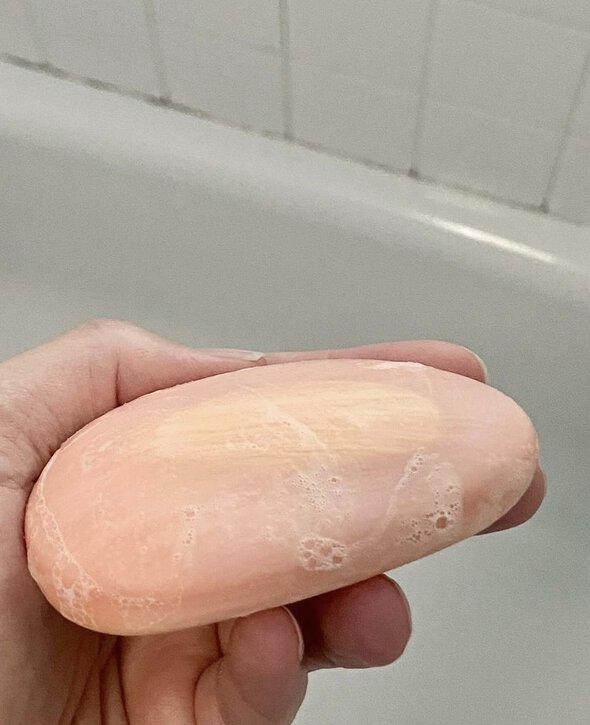
I was thinking about how, as a kid, I saved the ends of our bar soap and pressed them onto the next bar of soap, even though I wasn't buying the soap.
And then I thought about how in a Louisa May Alcott book, a character rummaged through the basement of the house, found some old curtains and other decor, cleaned and fixed them up, and used them to decorate her room beautifully.
I loved that part of the book when I read it as a kid!
I also remember reading the Boxcar Children books, and my favorite was the first one. My memory is vague about the exact circumstances, but I remember the children basically were dumpster-diving, finding old dishware and foraging for food, and I loved that.
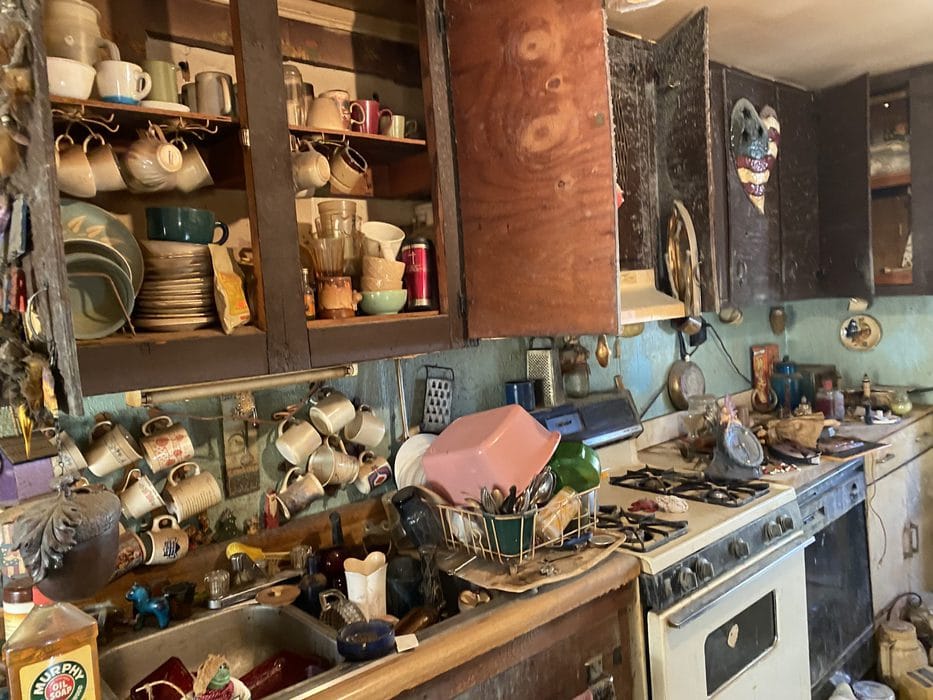
(My abandoned house adventures felt a little like living the Boxcar Children story!)
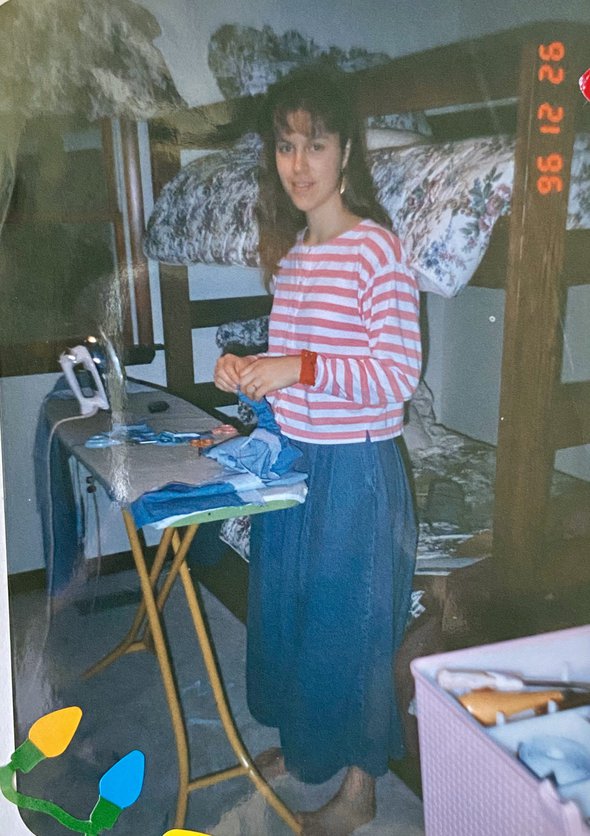
As a teenager, I saved almost all of the money I earned from babysitting and teaching piano lessons, and I had a pretty decent nest egg saved up by the time I got married. I can even remember interestedly reading some Tightwad Gazette books on babysitting jobs (after I put the kids in bed!).
But none of this was forced on me by circumstances, and I honestly don't think it was parental pressure either, because some of my siblings weren't quite such die-hard savers. So, I think I am just maybe naturally inclined in this direction.
(I see this in my own kids as well; I remember Lisey considering a purchase when she was maybe seven years old. She carefully counted her money to see if she could afford it, because as she said, "I don't want to be bankrobbed!" (Bankrupt. Hehe.) She too was born this way. 😉 )
Once I got married and moved out of my parents' house, frugality was no longer a choice. I wrote a little more about this on my Patreon today, but I lived through a lot of very lean years during my marriage, and frugality skills are largely what kept financial disaster at bay.

Basically, I came into adulthood with something of a proclivity to frugality, but my adult years are when I got really good at stretching a dollar. So, I guess my frugality is both innate and learned (forced? Ha.)
If I had married into money, I'd probably still be practically minded and waste-averse. But since I lived the low-income life, I took the frugality thing a whole lot more seriously, and I got really good at it.
Things got better financially toward the end of my marriage, but then, as you know, I plunged back into lean times during the two years of separation/divorce proceedings. I was very grateful for my frugality skills again!
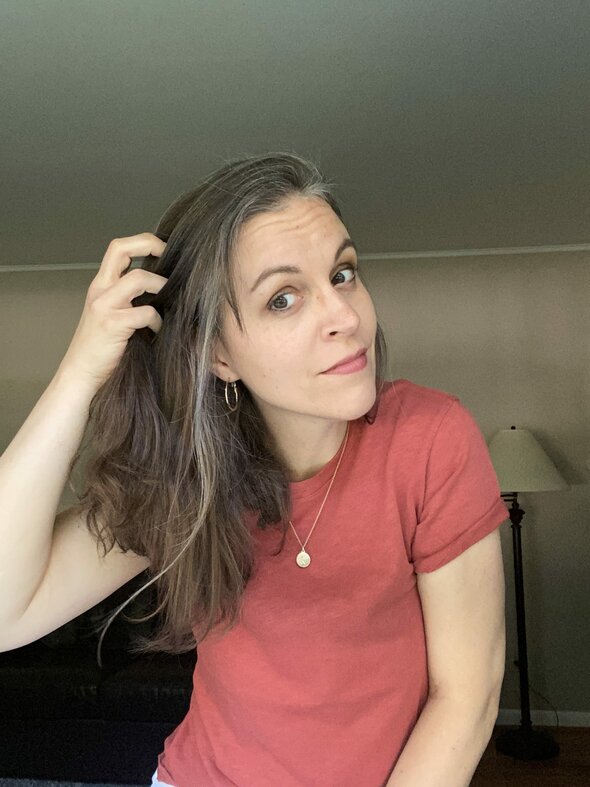
Currently, with no attorney fees and the addition of an RN degree, I'm back in a spot where frugality is a choice rather than a survival strategy. Yay!
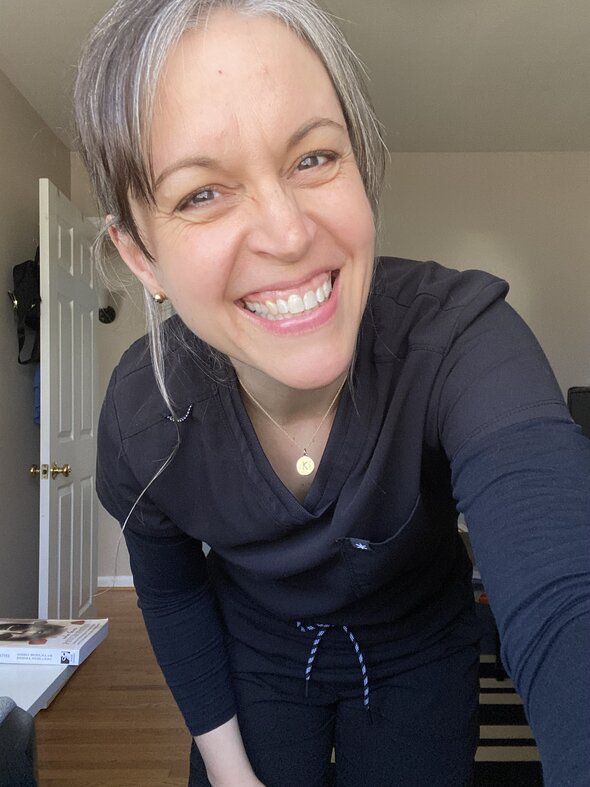
However, I still keep my spending pretty low, I'm still waste-averse, and that will probably be the case no matter what my financial future holds.
(After all, what if you can have the thing you want AND keep your money?)
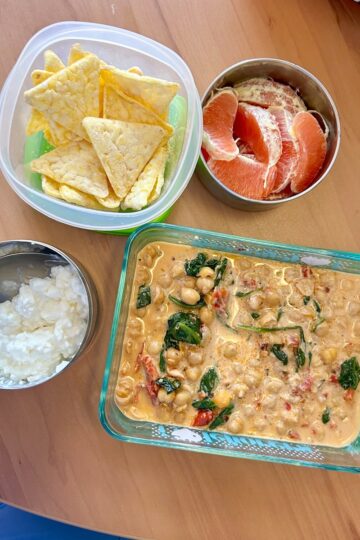


Interesting question. My parents are fairly frugal; I'm not sure how much by nature or nurture. My dad grew up on a lower income but ironically is more likely to splash out something (within reason). I have never wanted to spend money on designer goods or makeup, but I definitely have to remind myself that spending money on small things adds up. I have to resist (and occasionally fail) at eating lunch in cafes or ordering takeout, and all I can think is that it's some kind of subconscious rebellion as we did so very rarely when I was growing up.
One lesson I did take (or maybe it's innate within me?) is that while it's important to save money, you should always spend money on your health (ie, go to the dentist, optician etc and buy good shoes) and you should also have a little money for fun (such as a small vacation or going to an activity, like Brownies and ballet for my sister and I. I have a book which I've loved since I was a kid which has a quote about needing bread to live and hyacinths for the soul. I think of money for things you don't 'need' as for hyacinths (someone else on a blog once - it may even have been here! - made the same comparison from the same book. I thought it was very apt, so I am echoing it). I would never want to save money so much that I never spent money on joy.
My mom taught me: good shoes, good undergarments, good teeth. Everything else you can probably find good secondhand.
There's a proverb, which I think is Italian, along the lines of 'pay the grocer or pay the doctor'. It's important to invest in health.
On an unrelated note, I just saw that I forgot to close a bracket on one of my sentences in my post! Gah!
LOL, Momma Jo. Love that
saying!
I think I was raised to be a good steward of what I have, including money. Mom bought things that lasted and taught me what to look for, including good seams, quality material, solid dovetailed furniture, and took me to antique stores a lot. I still don't like polyester, even though the clothes look pretty! Living in England for a few years shaped my thinking too, I think part of that culture is to preserve things, not throw them out.
I also like to be in control of what I can, and not be indebted to anyone. Money to me = control. I've felt that way as long as I can remember. So that's where my frugality with trying to find what I want or need at the lowest price, and using what I already have.
Its funny to think about frugality being nature vs nurture.
That's interesting about England; I am from there and generally would agree with you, although there has been a move towards fast fashion. This is a minor example but when I went to NYC a few years ago I was shocked at the amount of disposable plates and cutlery in cafes and the hotel my friend and I stayed at, and at a museum. It's not quite the same as 'preserving things', but in England you would always get real plates and knives and forks - disposable goods are mostly only used at fairs or food vans.
I don't mind being 'indebted' as long as I know I can pay it back. I don't love being in debt, but it's not an absolute for me.
I think it's a blend. I grew up with a family whi were careful about money, and as I kid I would save. As a teen and single lady, some indulgences. As an adult, a large family and an extremely thrifty husband made frugality important. And I look at my kids, some are naturally frugal ( one of mine saved birthday money for years because he couldn't find anything he wanted); some have frugality thrust upon them after spending way too much and not listening to advice ( and they were the "big spenders" as kids). I'd go with mostly inate.
I recall growing up with Mom able to s-t-r-e-t-c-h her budget for our family of 6.
My mom was a great seamsstress and made a lot of pretty clothes! Tailored suits, dresses, etc.I do recall a skirt made from one of my Mom's maternity tops for my 3rd brother!! Yes, frugal she was, and it wore off on me. I recall making 6 curtains from a ream of fabric on sale for a few dollars!
I clipped many a coupon, because I enjoyed saving money on groceries. It came to be a hobby! But now, it is rare to see a few coupons at all... Yes, learned experience for me!
I never felt that I lacked anything as a child even though my parents divorced when I was five. I attribute this to my mother’s attitude and hard work. Her frugality was quiet as in she never complained about finances and the need to save. But quietly, calmly I picked up her frugal skills. For example, when there was damage to the front of our sofa she and a friend removed some fabric from the back to fix the front and then use inexpensive sheeting to cover the back. Such a genius solution to my young eyes. She taught me that there is always a solution to a problem. Thankfully when in our early marriage years with children that “can do” attitude carried us through many a dark day. Innate or nurture…probably both for me.
For me, it’s innate. Until fairly recently, I always lived in affluent neighborhoods where we were the only frugal family. We drove 10-year-old sensible cars, and the neighbors drove brand new luxury cars. I had plenty of opportunity to see how kids at my school spent money, and feel resentful, and pick up bad habits, but I didn’t. I think it’s because saving is innate to me. My parents’ example just reinforced it.
I’ll note that some of my school friends have mentioned that their parents squandered all of their money on “stuff”, didn’t save enough for retirement, and have to rely on their grown children to help pay the bills! Nightmare!
My mom began working full time when I was in kindergarten and we caught hell from a lot of my teachers and mothers of my classmates for it. Some years Mom was the sole support of our family. But somehow she was able to save money for my college. I attended a state college (worked in the dorms years 2, 3 and 4) and graduated debt free. Those classmates were up to their eyeballs in student loans, guess their SAHMs weren't so superior after all.
With me it is a mixed bag.
I too LOVED the original Box Car Children book but until you mentioned it I never saw the connection to thrift/being resourceful (duh).
My parents were very frugal but also generous with opportunities and spending on education. Other families were more extravagant and at times I envied friends whose family could shop at a nice retail store for clothes instead of sewing their own or who could buy “matching” shoes like Capezios that came in a variety of colors.
Somehow I learned to recognize and seek quality, I enjoy nice things and seek them out at thrift/consignment stores. It’s a curse (smile). I don’t want lots of stuff (as I age clutter makes me anxious) but what I do have I want to be attractive, functional and useful. For example, I keep my cars much longer than most - I maintain them well and don’t long for anything fancy. Reliability is my goal when it comes to transportation.
I find I am very frugal in some ways so I can enjoy being extravagant or generous in other ways.
In my case, nurture I think. For me security is an important aspect. I will prioritise stability and financial stability is part of that. This is partly due to (the financial impact of) health issues in my family and also due to having a working class background, with large families and little education. I do not know other than that you have to work for what you need, let alone want. Having said that, I definitely want both Sophie's "bread and hyacinth". I was fortunate enough to be exposed to art in school, and I love how people can express themselves through art. I enjoy classical music and have a museum card so I can get a discount on museums all year round. However I do not feel remotely tempted to go on distant holidays, buy gadgets and do other things that the majority of my colleagues do. I gravitate to colleagues practising a prudent lifestyle.
We have enough. Buy what we need? Sure. Spend on food for the soul? Definitely. Comfort? As much as is reasonable. Keeping up with the Joneses? No, not that. Better save for something that will give us more pleasure.
I do love to travel but I'm not interested in keeping up with the Joneses! My father's side of the family also had large families and less education (also due to the times; both his parents had to leave school when they were fourteen).
I also love visiting museums and art galleries!
Travel is surely food for your soul Sophie!
It is good to understand what makes one happy, and prioritise spending accordingly.
I cannot imagine living without books and music. Books are fairly cheap (because libraries!) but I will definitely splurge on music and all kinds of related costs (travel to concerts, cost of sheet music, workshops etc.)
Fun fact: recent research indicates people need less local anaesthetic if they can listen to their favourite music!
Yes, it is! I appreciate music but don't listen to it as much, so that is less of a splurge for me.
When I had my wisdom teeth removed I had a local anaesthetic so made a playlist to listen to, as recommended by my friend who'd had the same procedure, and it definitely helped a lot!
Love the library! I have fond memories of taking a plastic bag there on Saturdays as a child and returning with it filled with Babysitters' Club books lol! My dad would also pick them up for me from charity shops 🙂
Hi Sophie-I love your memories of library Saturdays! We also went to the library every Saturday, and I was allowed to get as many books as I could carry (sometimes my sweet dad helped me). Some weeks they lasted me all week, and some weeks they didn't and I would have to start rereading. I am older than you, so my fondest memories are of the Nancy Drew and Hardy Boys books.
Amy, that sounds lovely! We didn't have those books in the UK but I read a lot of Enid Blyton books, which I guess is the equivalent (lots of children solving mysteries or being off at boarding school). When I was older I read a lot of Point Horror. My parents weren't wild about the quality of the writing but those books definitely encouraged my love of reading 🙂
One time I was so engrossed in my book I didn't hear the bell ring for the library closing - luckily the librarian saw me! I think it's only fitting that I studied a master's in Information Science, which included library studies 🙂
It must be something from our generation, as I, too recall that part of the Boxcar Children series.
I grew up poor, using garage sales and thrift stores for clothing, toys, etc. When I married and had kids, money was also super tight, but better when I divorced, yet still I found myself relying on garage sales and thrift stores. Now that the kids are grown, I’m in the best spot financially than I’ve ever been in my entire life, and I’m so into thrifting that I’ve made it my side hustle just because I love it. I don’t see that ending until my last breath lol. Thrifting allows me to splurge in other areas (not feel guilty about using the AC in the summer for example).
I never read the Boxcar Children but I loved the Little House books and used to play at being on the prairie and making do! It's somewhat ironic as in real life, as discussed in the book Prairie Fires, they went back to Wisconsin and left other places they were staying in the night due to debt they couldn't pay back, so some of it didn't work out.
I also adored a British book series called Milly-Molly-Mandy, where she lived in a cottage and had one dress for summer and one for winter, and mostly seemed to entertain herself by playing outside with friends or taking the occasional trip to 'the pictures'. As an adult I can see it was very idealised and I don't know how she, her parents and extended family (and a cat and a dog!) all fit into that tiny cottage, but they were and are very sweet, simple stories.
Embrace the power of "and"!
In my case it has to be innate, given my background and familial preferences. To my mother thrift meant poverty. While her shopping wasn't problematic, she didn't practice frugality if she didn't need to. My father was just so certain that business would work out that he was ok with spending (at least some) money.
Somehow both my sibling and I aren't problem spenders so my parents must've done something right.
William, though I wonder if what you saw and your experiences watching your parents helped mold your frugal mindset?
Though I feel like I'm less frugal than I used to be, I think that was in relation to circumstance. I grew up with Frugal parents. My mother grew up with parents that weren't good money managers, so I think that pushed the frugal mindset. She turned it into a game for us as kids. We clipped coupons and saved the difference in a fund to do something fun, like a trip to the movies (with homemade popcorn in bags) or a new family activity like a baskeball hoop. But it taught my brothers and I to save for what we want. Its different now in our instant gratitude life to instill the same values in my kids because the temptations are everywhere. But slowly they are learning that money comes from hard work and just because we COULD afford something, doesn't mean that's a good use of our money. I think for sure there is a natural inclination towards frugality, and I do think it has to do with being risk averse, but it is certainly a skill that can be learned/taught.
I thought of this very question this weekend. Shopping with daughter and grandchildren, daughter very excited at sidewalk sale and later at Goodwill. Purchased many quality items. Grandson #1 (20) has always loved a good hunt and was especially successful at the Goodwill bins. Granddaughter #2, who needed a shirt and belt for a dog show. was happy with what was found for her. Grandson #3 (12) never misses a garage sale sign or a "free" box. He was on the hunt, even finding things for others. It is the same with our 3 adult children. All raised in a frugal household and 2 of the 3 excited about frugality. I think it is a combination taught and caught.
With me, it's a combination of innate thriftiness and learned behavior that was necessity. I, too, struggled through the financially disastrous aftermath of a divorce. And I was pretty poor growing up, too. My father was an alcoholic and was sometimes unemployed, sometimes in rehab. My mother got us through, and I learned so much from her. She herself was an orphan, raised by an aunt and uncle who had moderate, spotty income, but tremendous thrifting skills.
But it's innate, too. I was always fascinated by stories about children in challenging circumstances -- Little House on the Prairie, The Five Little Peppers, A Tree Grows in Brooklyn, etc. Maybe I was looking for the magic solution? At any rate, my sister is clearly the opposite, an extreme spendthrift and unbelievably wasteful. An opposite reaction to our upbringing.
Perhaps your sister spends so much because she is afraid she might not have money forever, so wants to enjoy it (if in an unwise way). Sometimes people don't want to spend any money and sometimes people spend too much as a reaction to growing up on low income. I think finding a balance is key.
Ah, I was wondering if there was another Five Little Peppers reader out there. I found the Peppers mildly nauseating in general and never got past the first book, but my favorite part was the section where Polly, Ben, and Mamsie spend the eight weeks and three days before Christmas assembling homemade gifts for the younger Peppers. I actually sort of wished that their rich friend Jasper hadn't messed up the homemade vibe by showering them with surprise gifts on Christmas night.
Frugality is making careful and considered decisions about how to manage your resources. The value system that guides how you do that is learned. My parents taught me to avoid debt, my husband’s parents taught him to manage debt. Neither of us are impulsive, so we were able to develop a financial system that embraces some things from the way each of us were raised. So we have credit scores and invest in things other than property but we also eat leftovers and buy secondhand. We have a credit card, but pay it off in full every month. We are not rushing to pay down our 2% mortgage because we don’t think having a mortgage is inherently bad or stupid and we can make more than 2% on other investments.
The self control necessary to pull off any system of resource management is innate. That’s not to say that you can’t learn better self control! You can! But people really are born with different levels of impulse control. I’m one of 3, and my parents used the same methods of teaching us all about money. These lessons took for me because I was naturally never impulsive. My brother and sister both struggled with impulsivity their whole lives. I have 2 kids. The oldest is so impulsive and money just burns a hole in his pocket. The youngest has extremely high self control. We are teaching them the same principles about money management, but we’ve had to use different strategies for each. We’ve tried to teach the eldest to accept that he has these struggles and develop workarounds for his impulsivity rather than seeing it as a moral failing. My parents saw impulsivity as a moral failing and constantly yelling at my siblings for it wasn’t actually helpful.
It would be interesting to hear some of the workarounds you are using to help your child handle their impulsively if you are willing to share tips.
The missing teefs and Dorothy Hamill hair ❤️😭❤️😭 Also, I wanted to be a first book Boxcar kid SO BADLY.
I wouldn't call myself frugal, but ever since I was a small child I've felt panic in my body if I didn't have some form of savings. And yet, I cannot make traditional "budgeting" work for me. I'm beginning to wonder if my miserly tendencies are part of my neurodivergence 🤔
My parents never struggled to meet our needs, but also spoke freely about their financial decisions. I remember the selling of a town house to move to military housing when they realized that they'd made a poor decision with the home purchase. When the car of my childhood began to fall apart, we had many dinner table conversations about purchasing new vs. used vehicles. They used Larry Burkett's kid curriculum to attempt to teach my brother and I how to budget.
And yet, when we left home, it instantly became obvious that two people raised in the same house with the same financial education behaved completely differently with finances - and that has not changed in 30 years. My brother and I have always been two very different humans, but nothing has been so consistently glaring as the way we handle our finances. There are times when I look at our differences and remember that while we experienced many things together - he is older and so his brain processed them differently than mine. But I'm not sure that's what has caused our financial decisions to be so different.
Hahah, yes, so many of us had that haircut at the time!
I always feel better having a savings, and clearly, so did grade school Lisey. 😉
Necessity is part of my desire to spend carefully plus I refuse to pay more for anything if I can get it for less, no matter how much money I have to spend. I always look for bargains and the least expensive option that provides the level of product or service I am considering purchasing. I don't have huge sums of money to waste so I always want to get the most for my dollar. To me that is common sense. And I see wealthy people applying this same principle.
I'm guessing I'm frugal mainly by circumstance. I'm low income, so I try to keep track of as much of my money as possible. I came up with a system where if I save enough money, I'll get what I want. But that's a once in a blue moon event.
My grandmothers were both housewives during tbe Great Depression and my folks grew up then. My dad worked in the trades and various recessions and economic downturns would affect us The curved top refrigerator my parents bought in the 1940s served us until the late 60s. Its handle broke and Dad fastened on a trunk latch to keep it closed. When times were good, I had new clothes and the dresses I wore to school were seen by Grandma and Mom. When times wére rough, I was given hand me downs from a cousin. She did not want to part with her pretty clothes so I got the ugly stuff from her closet. The only thing good was that she was a lot shorter than me -- so the dresses and skirts that reached below her knees in 1963 had hemlines that hit me above the knees in the miniskirt era when I wore them 4 or 5 or 6 years later.
My dad was unemployed for several years añd we lived in a school district where I'd have to attend high school with many wealthy kids. My mom worked at a school attended by children of blue collar workers so I got to transfer; most of the kids wore whatever they had, so no stigma in not having the latest fashion. I went to a cheaper state university and lived in a 1930s era dorm where the housing fee was cheaper. Upon graduating I rented a garage apartment from Grandma.
However my real conversation to frugality was getting a copy of the first Tightwad Gazette at a Target store. That took it up a notch and I ve been happily living on the cheap ever since.
Sewn not seen. The dresses were sewn by Grandma and Mom. Spellcheck strikes again....
Conversion not conversation. I hate spellcheck!
I was mostly frugal until I got this job (in 2020). The frugality before 2020 was mostly because single earner mostly low paid jobs. There were a few years when I was on SNAP and the Oregon Health Plan. Visited food banks pretty often as well
When I was converted to a full time employee in 2022 I chose to put the maximum towards retirement and TSP because I didn't want to be poor as a church mouse when I retire. Because we're short staffed I work a lot of hours, clear around 3K or more per month and NEVER think about taking money out of my TSP.
I do buy what I want when I want it for the most part BUT all the bills get paid first. I came thisclose to eviction at one point, not doing that again.
Personally, I was raised frugally (many kids in the family, thrift store shopping, etc.) but as soon as I was a college graduate and making my own money at a good job, I went crazy. All frugality went out the window! That lasted for 8 years or so then I reined myself in after marrying and wanting children and needing to live beneath our means. So I think it’s both innate and learned. But my case proves it can be cast aside in a heartbeat! LOL
I wonder if it's more a side effect of one's optimism/ pessimism level and anxiety/trust level. Those both seem mostly innate. My experience is that pessimists and anxious people lean heavily towards frugality.
Oh, that is so interesting because I am most definitely an optimist!
Total optimist here! Because I am financially careful, I can help my community, my family and friends. Nothing brings me more joy.
Even in times of tight fiscal situations, frugality was the balm. Knowing we could tighten the belt, find side hustles and pull through.
Life experiences can truly cause anxiety, knowing you can control your budget and gives you peace of mind.
I think about this often: My husband and his sister are very close in age and grew up with very similar childhoods and on so many topics, including money issues, one said “this is how I grew up and I will continue this way” and the other said “this is how I grew up and I’m going to do the complete opposite”. I know tiny experiences can impact a person in tiny ways that can add up to a different overall path but it still so interesting to me how they each responded to the same situation. My sisters and I are definitely on the frugal spectrum, but to varying degrees and I often wonder what made us that way. I moved a plane ride away after high school but my younger sisters stayed in the area in my parent’s later years when they had more money. Is this why I am more frugal than them? Was it my sense of responsibility as the oldest? Was I just born this way? So interesting!
Right...there can be such a difference among siblings who have had an almost identical upbringing, being in the same house!
Loved the Boxcar Children books! I did that same thing, playacted and imagined making a home from cast-offs in a small, empty outbuilding on our rural property. LOL!
I have always liked browsing consignment stores...have found some bargains along the way.
Some of both for me, I'd say. My parents optimized well on a very small budget, and we definitely discussed frugality, and making good choices. I worked a lot to be able to afford college, and operated on a shoe string budget while in school & the few years after. That said, after that period, my income went from lean to more than enough, and I've been well paid to very well paid for the rest of my career. Add in that DH was also well paid to very well paid, that really becomes significant. At this point, we are focused on optimizing our money because it feels wasteful to do otherwise, helping out others (both from a donation perspective & family), and ensuring our money is aligned with our values. I like to track our frugal choices because it's motivating for me, and again ensures it's both aligned with our values & optimized. It is most certainly not a requirement at this phase, and I feel grateful for that.
I'm a natural saver and have always thought about waste. My siblings and I grew up in the same house, but one was a spender right off and one is middle of the road.
My kids are complete opposites. My older son is a spender and never worries about it. My younger son has saved his pennies since he was a toddler. My older son eats out, spends money on silly things, etc. My younger son will go without something to be able to invest more. They both came from the womb that way.
I think frugal behaviors can be learned, but it usually comes from need, and it is very difficult when it isn't a natural behavior. I do things frugally without even thinking about it. My older son would have to put a lot of thought into doing it, and it wouldn't bring him joy at all...it would cause some discomfort.
And maybe that's the difference...the pay off we feel. Some could be frugal all the time and never feel a joy from it. Others can be frugal over the smallest things and feel really good about it so there's incentive to continue.
What ever happened with the abandoned house?
It's finished now! And my brother rents it out as an air bnb. 🙂
just the other day i was wondering what ever happened to the house and now i have the answer. thanks so much.
First of all I have to say, you are so beautiful.
Again you made me think. I'm 70 and my first decade was spent yearning for many things because my parents didn't have a lot of money. They were quite frugal and I didn't understand it. However, with the sort of hippie era coming in as I entered my teenage years, I began to be entranced by the whole idea of reusing, remaking and living off less. This served me well because for the first 20 years of my adult life I was rather impoverished due to my choice of career and being a single parent. However I lived like a queen, because I could purchase a blender for a dollar or make side tables out of Asian wooden packing boxes. Everything always looked like I had a lot more money than I actually did. Going into my mid-40s, things got much better in terms of finances, but at that point being frugal had become so much a part of my life that I couldn't imagine being a spendthrift. It's like a game to figure out how much more you can get out of something than the last time. This morning I researched how to collect seeds from my favorite plant so I can start in the spring to make lots of color in my garden, for free! Have a wonderful week and try to stay cool!
Learned it because I had to. When my parents separated, Mom and I sometimes only had corned beef hash to eat. My dad rarely paid child support. Mom did not drive so we had to take the bus. When I got married, I had a nice nest egg built up as I went to my senior year of high school in the morning, then to my first job at a bank in the afternoon, and my other job at night at JC Penney. My husband and I bought a two family fixer upper so my mom could live with us in her own area of the duplex. Times were tough as we now had a place to fix on tight budget. We did most of the work upgrading both units and yard and outbuildings. The place became a showcase. We had it paid off when we were 39. Have not had a mortgage ever again. We lived there for 30 years...only moved due to location getting dicey to live in. Bought a condo with cash and have lived here for 20 years ..now going to move to a nice senior complex that we can easily afford in a wonderful location. Spending less has made this possible.
.
Well, I'm not sure I could argue that frugality is innate, based on my family. My sainted mother was always frugal. My father, like my mother, grew up poor during the Depression and was frugal when he had to be. But the family went off the rails after my mother got a job when I was 11. On the one hand, Daddy went a little haywire with the extra money, and on the other hand, I think that his always fragile masculinity was threatened. (No actual domestic violence, but serious paternal alcoholism and related unpleasantness.) Mom was contemplating divorce as early as my late teens and finally did it when I was in my 30s.
As for me and my siblings, we're two and two: My oldest sister and I are diehard frugalistas, and my other sister and my brother are our opposites. I could a tale or three unfold about the opposites, but I won't in the interests of respecting their privacy.
Grandparents survived 2 world wars, the great depression and were business owners. My frugality is generational, by rote, autonomous. My kids are also learned frugal. Most of them were rescued from drug induced squalor and have learned to respect your belongings, yourself and your community.
I'll give you a good example from last Friday. It was a big garage sale in a retirement neighborhood. I wanted to find a walk behind lawn mower, I found a nice one with a Honda motor, that was 7 yrs old. He couldn't start it, it had $20 on it. I called my handy mechanic, he picked it up and in 30 minutes had it purring. That model sells for $650. Same mechanic cousin asked me to find him a pair of crocs, I found a new pair in his size still in the sealed bag for $10. it was a good day!
I read Boxcar children, too! My brothers and I were all raised the same, we all worked our way thru college, all started our own businesses. One lived big, died young. One lived conservative and sold his company and retired early. His wife just retired, but still has her business. They spend on experiences. They also helped me start my foundation. Pay for the best nutrition and doctors, your life will be fantastic.
My parents were really bad with finances. In flush times my mother received gifts of gold jewelry from Dad and in lean times we did not have groceries.I married young and learned a lot about “normal” budgeting and living well on less,from my in laws. In the meantime, my parents went through 2 bankruptcies and lost their home .. My mother’s health suffered from the stress. I never understood their way of life.
I learned how to budget, enjoy the ‘hunt” of thrift and consignment stores and feel kind of smug about living larger on less.. and even after my husband and I became more successful, we always lived below our means.
So.. we were able to retire early and enjoy a paid off home, and a nice way of life without too much stress.
I feel I have always had a sense of needing “order” and frugality in general in my life..I hate waste, I LIKE to manage my household, not just live by seat of my pants.
So..a combo for me, but mostly, the instability of money in my parents’ home was a very insecure feeling.As a frugal person, I make my own security (along with my husband’s efforts..we are on the same page, though he is a little more spendy than me.)
I think my frugality is due to my parents. They grew up during the Depression, although my mom’s family did ok. However, there were 6 kids in my family and my mom didn’t work outside the home. My younger brother and I were born when my dad was in his late 40s and he soon after started saving for retirement. We grew up in a different household than my older siblings—lots of saving money and talk of retirement. My little brother is the tightest person I know of when it comes to money.
What an interesting question. Both my parents were born in the 1930’s, and were quite frugal. So even though I was bought up that way, unfortunately, I am not naturally frugal at all. I have to force myself… I think it is such a valuable life skill!
But I abhor waste, and when I see it in those terms it is easier.
Looking back, I believe some of the frugality I was immersed in a a child was fear of depravation. My parents were children of the great depression. They made everything last even past its usefulness, to the point of being packrats.
I have a very comfortable income now. I do not NEED to be as frugal as I am.
I have fine-tuned my innate frugality to reflect my life and convictions.
"Live simply so others can simply live" is one of my favorite quotes.
I love that motto Linda. <3
This is such a good topic! I agree with those who say that frugalness is both learned and innate. I know that applies to me.
I didn't know much about my parents finances as a kid, but I noticed that in our middle class neighborhood, we had things other families didn't have like central air conditioning before it was a thing and two cars. We were always well fed and wore new clothes, but nothing flashy. My mom sewed a lot of clothes for my sister and I. I believe all this was possible because my parents were good savers and frugal, too. My dad was a blue collar worker at a trucking company and my mom worked on and off, mostly in restaurants. Neither of them graduated from highschool. I remember watching them at the kitchen table carving up his paycheck each week and they always put money on savings. They practiced that advice, pay yourself first.
But for as long as I can remember, I've been frugal. I remember borrowing my aunt's "Hints from Heloise" book when I was about 10 because I was fascinated by hints and saving money. I sewed many of my own clothes thru highschool and beyond. And I always saved money. When my friends had no money, I was never broke even though I didn't make a lot of money. I figured out that being frugal was a way to stretch my money to get what I wanted. My husband and I once took an old furnace apart screw by screw because I asked the company installing our new furnace what they would do with the old one. They were going to charge us $50 to haul it away. They told me they'd take it down to the junkyard (and get paid for the scrap metal, I figured). So we told them to leave it in the backyard. We took it apart and then with some friends we loaded it into a truck with some scrap metal they had and took it down to the scrap yard and got paid for it.
Being frugal also helped when I went through a divorce because I knew I could get thru it financially. I even did my divorce pro-se (did my own) and saved a ton of money. So yes, I believe frugalness for me came from both example and is innate. And now I'm a happy retiree with no financial worries.
I grew up poor in an economically disadvantaged area, everyone was in similar circumstances so I but didn't realize how bad it was until I moved to a different part of the US. Trading childhood stories with friends and no one else had tales of day old bread giveaways on the neighbor's porch, government cheese, dumpster diving for scrap metal and picking up cans on the side of the road - I got some funny looks.
I knew how to get by on nothing, but once I started making a decent wage I had no idea what to do with extra money and got myself into debt. Fortunately I turned it around pretty early, dug myself out and started saving regularly.
I have remained frugal even though it's no longer by necessity. I joke that frugality is my hobby, because I enjoy thrifting and looking for a deal, stretching what we have, avoiding food waste, creating meals from random ingredients, coupon shopping, etc. I also give wherever I can.
I think the Boxcar Children are online today. I read the beginning of the first book by sampling it on Amazon. It was definitely a product if it's times: 1920s or 30s or maybe earlier. The mother had died years before, the dad was described as the town drunk. He died and an elderly neighbor was sent to spend the night with the kids. They heard the adults talking about putting the kids in an orphanage or foster homes so the older siblings waited until the elderly babysitter was asleep, then roused all the others and they ran away. That's how it started.
Hmm, that's a different version than I am familiar with. The books we read in my class the last three years have a different start. It still has children running away, but it is a less gritty start.
For me it is definitely innate. I was the big saver of all my 4 siblings. I, too, had a nest egg when I got married and I also owned my car outright. When I was young, if I wanted something for, let's say $3.25, I really struggled with breaking a $10 bill to pay for it. I also hate waste and we always use the back of all paper before we recycle it. I had (still have) a bank that was locked and you couldn't get your money out until you had $10 in there. (You do a LOT with $10 in the 1960's) I think that taught me delayed gratification.
I do not think frugality is innate. It either comes from necessity, or watching those who raised us practice some form of it. I do think certain people/ personality types have tendencies that make them more aware of their surroundings and are more observant. Some people are also better able to focus on their bigger/ longer term goals in life versus immediate needs. These types of people might be more inclined to initiate less wasteful/ more frugal behaviors
Kristen, I’ll add that when I see those teenage pictures of you, I feel you have reverse- aged! You seemed
prematurely mature, and now you seem totally (if not younger appearing) than back then. I think this is a very good thing ☺️
I think it's the reduction in stress over the past four years. 😉 And it says something that my life has been less stressful while getting a degree, launching a new career, and navigating a divorce. Hehe.
When I got my first full time teaching contract, I had a hard time breaking out of my extreme frugal mentality. Buying a dress (I needed a teacher wardrobe!) from a retail store was a stretch. I was so accustomed to buying second hand that I had to convince myself that I deserved something new!
I learned it from my Dad who pinched every penny in order to build up savings. I didn't know about the savings; I just saw the penny pinching. After marriage, there were a few profligate years when my husband and I were new parents and we went too deeply into debt. Then some very lean years when being frugal was mandatory. Now that we can afford to buy anything we want, I still have trouble spending money; I have to justify even reasonable purchases.
I grew up in an upper- middle class family/neighborhood in the 1960s. It wasn't until I married at 25 and had children that I learned about frugality! (I was a Navy wife and learned how to stretch a buck in short order.)
I was very glad to have had both experiences in my 70 years on earth! 🙂
I think my frugality is innate although I learned a lot from my mom's example. I remember loving that Fraulein Maria made the kids' outfits out of her curtains in the Sound of Music when I was just six years old.
I feel like I absorbed a lot of my mom's frugality as I was growing up and I hate waste. And even now, when I am not experiencing hardship, those old frugal habits are still with me. Because, really any day now, I might be in a compromised position again. So I try to keep some basic day to day frugal skills handy.
I grew up watching my money -- because we had to. My parents were small-time farmers who did okay IF they were careful. (They took short-time loans every year, then paid them off after harvest. I did not know this until The Mama died, and I inherited her ledger.) Brother and I were working in our teens to buy the extras we wanted. (I also saved for college.)
This, incidentally, was called "being a Hollander." (My dad was Dutch.) And if you got a particularly good bargain, you called the folks up to brag about it. I still do this with my daughters -- and they with me.
Although we made more money after I was married, I continued to be frugal -- because it just seemed the smart thing to do. Which it was, after Husband got very sick and quit his job. We had pretty much nothing for 3 months...then he got a job as a schoolbus driver. We ended up living on mostly $20,000/yr for several years after that -- in one of the richest high-income counties in the U.S. And we did it.
So was it innate? Maybe, but out of necessity. Definitely learned, though. I still learn from you and others.
I always say that my parents and grandparents did their best to teach me how to be a frugal saver, but it didn't take. 😉 I do think being frugal or not can be tied to the sort of personality you have. I am very impatient, so I have never been good at saving up for things. I've explored this with my therapist quite a bit. One of the worst decisions I ever made was to say "yes" to that first credit card offer way back in my 20s. I dread to think how much interest I have paid in my lifetime.
As much as I want to be frugal, I am just not, but I don't want to give up hope, thus reading here and the NCA.
My issue is that I think about living in late stage capitalism and then I start feeling like small savings are futile, and then I have to talk myself back on track lol! When I got my first 'big' job I definitely got excited to spend because I could, and should have saved more!
I had a very stable, secure and generally happy upbringing in the 70s. I was vaguely aware there was little money to see spare, despite 2 working parents: secondhand bikes, new clothes only at Christmas and birthdays, purely camping holidays, really old cars, etc. But it was never an issue, just a fact. Then my first job in the 80s was for a bank subsidiary. You had to have your salary paid into one of their accounts and it was drummed into us that an unauthorised overdraft would be a disciplinary matter. I’ve always liked jumble sales and charity shops - you could find some really interesting stuff back then. So I guess various factors made me frugal, and I’m glad they did!
I believe I learned it from my upbringing. My parents divorced when I was seven but both were frugal. I guess that was one thing they had in common! My mother worked full time plus so my grandmother watched us a lot. She was as frugal as they were. I remember a little notebook she had wherein she kept track of every penny spent. She had been a bookkeeper earlier in life so I think she enjoyed writing in that little book. I remember as a kid not asking for anything because I knew I wouldn't get it. I seemed to have a sense that money was tight and my parents and my grandmother were keeping a close eye on it. I believe it's all good because I have lived through some lean times and for the most part didn't feel deprived.
I think for me, my frugality comes out of my creativity and general aversion towards waste. My parents were frugal, so I did have it modeled for me, but they were also very creative problem solvers and I think I am that way too. I get a kick out of being able to see unusual uses for things or repurposing something that was previously just trash. I do spend money sometimes too, but I’m also pretty change-averse, so I don’t love the idea of getting a new car, for example, and I think that is probably an innate tendency.
this is a really good question. when i started working i did not want to live check to check like everyone around me. my parents always fought about money. i went to private schools my whole life. never set foot in a public school until i was looking for an elementary school for zozo. in the beginning of our marriage hubby and i fought over money. many times i had to sell stock to pay his credit card in full. he uses his card for everything, i pay cash. today thank to inheritance from my mother, aunt, and stepmother's best friend we never fight about money. only about going to irvington every five minutes. i got to go to exercise class at the library this week. YAY.
Until I had kids, I had no idea there was more than one The Boxcar Children books. I still have an old copy of it.
I grew up lower middle class, there were some tight times. I never knew actual numbers growing up but knew when things were tight. My late mother sacrificed the most when things were tight - dad had work clothes (office job but not suits) and sibling and I school clothes. Mom was last on the list for new things.
At early age, I taught the kids to shop the sales rack. One time youngest found a garment that would likely only fit for a few months at best - it was maybe $2. Kiddo spent a long time looking through the sales rack, I bought it. It was passed along to another family kid when kiddo outgrew it.
I remember when frugal jesus was found during the 2008 great recession. And thinking to myself that when things got better, that frugality would be forgotten. Always reminded me of a baseball saying - "if you pitched as hard when you weren't in trouble as you did when you were in trouble, you wouldn't be in trouble in the first place".
I tend to vote for innate.
I see myself as a moderately frugal person. I don't like risk or change, and have been a naturally cautious person since a young age. I would spend allowance money on candy and then keep it in a big stash, eating it slowly, so some of my frugality is innate.
My parents modeled hard work and frugal ways, but also spent money according to their values. Both are do-it-yourself types in different ways. My dad learned trades in non-formal ways (not certified), but worked in various areas of construction and carpentry. He has had his own cabinet-making business for the last 30+ years. During my lifetime my parents developed a property and built a house from scratch twice, doing much of the work themselves. Second-hand cars, appliances, furniture, and clothes were just normal ways of life. My mom was a stay at home mom until I was about 15, when she went back to teaching part time. Later she taught full time once most of us were through highschool. She gardened, sewed clothes for us, cooked from scratch, and helped us develop practical skills.
I am not nearly as handy as my parents, and I am not as frugal, in that I don't do as many things for myself. However, I still have many of the values I saw modeled for me in valuing a simple lifestyle.
As a single person, I am sometimes wasteful of food, ending up throwing things out that have gone bad. I am hoping to get better at this.
I definitely relate to your experience! I had thrifty parents, but I don't think any of my siblings are as thrifty as I am. I think it's definitely a both-and kind of thing!
Saving soap ends, always a good idea, I still do this.