
This and that from around the web
I rarely do roundups like this, but I keep coming across articles lately that make me think, "Ooh, I should share this with my readers!"
So, here ya go.
Yesterday, a reader shared a link to this article about American Giant, a new company who is making their sweatshirts and tshirts entirely in the U.S. (even the fabric is 100% U.S. made.) I thought it was a fascinating read, and I hope there are great things ahead for this company.

Their clothes aren't cheap, but it sounds like they're manufactured with care and designed to last for years and years. I think they'd make Elizabeth Cline, the author of Over-Dressed, smile.
________________________
At Becoming Minimalist, there's a practical guide to owning fewer clothes.
(which is one of the things I suggested in my follow-up post to my Over-Dressed review.)
________________________
In light of the recent factory tragedies in Bangladesh, a bunch of clothing companies, including H&M, have now signed a factory safety accord. I think this is a step in the right direction, but it hits me the same way Wal-Mart carrying organic products hits me.
On other words, I certainly wouldn't discourage it, and I think it's the right thing to do, but H&M is still a fast fashion store that carries poorly made products which have to be bought at great volume in order for the store to be profitable. If they start to treat their workers properly, that's awesome, but it still doesn't fix the problems caused by their production of clothes that are, in essence, semi-disposable.
________________________
Still on the clothing topic: I was encouraged to read this article in the New York Times, which talks about how consumers are beginning to demand change in the clothing industry, just like we've begun to demand change in the food industry.
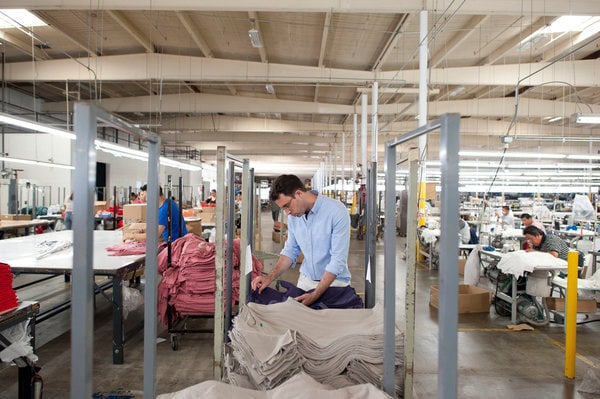
The clothing problem, like our food problem, can seem overwhelming and impossible to change. But consumers have power, and though we can't change things overnight, our collective voice is indeed heard.
________________________
We've had several discussions in the comments of late about picky eating, so when I read Christine Gross-Loh's HuffPo article about the way people parent around the world, the section about the way Koreans handle food and children piqued my interest.
The whole article is worth a read, though, and I was especially fascinated to learn that though Finnish children spend fewer hours in school than American children do, they generally rank above American students in testing.
________________________
I'd be really interested to hear your thoughts on any of these articles...do share!
On the topic of clothing and brands, I saw this video this morning and just about spit out my tea. A great response to a really obnoxious brand.
http://www.thehollywoodgossip.com/videos/abercrombie-and-fitch-brand-readjustment/
Thanks for these links, Kristen. I'll check them out.
I enjoyed the parenting-around-the-world article. Many good points (although I can't get excited about co-sleeping with toddlers!). Between state and federal mandates for education, I feel as though my kids are spending more time testing their achievement levels than learning (and the teachers feel the same way!). The ironic thing is, my kids consistently do well academically and on achievement tests, and we as parents emphasize a lot of "down time"--reading for pleasure, creative, active play, etc. There are many studies documenting how kids NEED play, not structured learning, to enhance their overall learning, and I am frustrated with how, as a culture, we brush this aside and pushpushpush these kids to "achieve". Let's bring back longer recess times and lunch breaks! And fewer extra-curricular activities and more free time!
The part of the article stating that kids need to have greater freedom in terms of being exposed to "dangerous" situations was also an interesting point--I think it very much depends on where you live and how engaged the caregivers are. We live on a main road so, no, my kids don't have carte blanche to ride their bikes alone--but they are forever climbing on top of the swingset (NOT where they are supposed to be) or flooding the sandbox with the water hose and we turn a blind eye to this.
The school near my house built a slide into the side of a hill. It's a long slide and really fun. A few years ago they backfilled under the slide so that it is actually sitting on the dirt. I was told it was a safety concern. When the slide was 3 feet off the ground children could get hurt if they fell.
How will children ever learn to discern danger if they live in a perfectly safe world?
I think that the schools real concern was not that children might get bumps & bruises but that the district might get sued.
I enjoyed the parenting article. We were co-sleepers and it made the baby/toddler years much more enjoyable for all of us and now my school age boys sleep just fine on their own in their own rooms. The education portion really struck a chord with me. My boys are currently taking their state tests this week and next and they will have no homework at all for both weeks. The tests take less than two hours of the day! I feel that a lot of their school day is wasted time and wish I could homeschool but it's not an option right now for us.
Thanks, Kristen. I enjoy looking around at articles that interest me. There are so many things to check out so its nice to find them through the filter of someone I already read.
I co-slept and none of my kids have never suffered any ill-effects. I always felt like the comfort they felt through the night would help their feelings of security as adults. So far, I have no regrets.
Thanks for the links - I really liked the guide to owning fewer clothes. I am in the middle of another round of purging my clothes, and it will leave me with a minimal wardrobe where everything fits well. I really liked his advice to own only one of certain things. In my climate I can definitely own only one winter coat, and I also own one pair of nice shoes and one handbag.
Please don't misunderstand me--I see nothing wrong with co-sleeping, it just isn't right for me. There were many interesting points made in this article and it's well worth reading.
I feel bad that my co-sleeping post came after your post. I didn't take any offense at all to you not co-sleeping! I just happened to post right after you. We are the only parents in our group of friends that did co-sleep. We sort of happened on to co-sleeping by necessity. My first son was a horrible sleeper and I was at the end of my rope when I fell asleep with him on my bed for a nap. We slept so good for several hours and that's how we ended up co-sleeping with him and his little brother. If they had been good sleepers I'm not sure if the co-sleeping would have happened or not. For sure once they became wiggle worms in the toddler years we encouraged sleeping in their room!
I really enjoyed the Huffington Post article. Having traveled to Finland last December, my brief visit resulted in me believing it to be one of the most beautiful countries (in many ways - not just for it's scenery) I have ever had the privilege to visit.
And I must mention one of the most memorable signs I've ever seen. It was at an outdoor pool in France. There wasn't a long list of do's and don't - just basic guidelines - concluding with "Set your children an example and behave how they should" (highly paraphrased).
So I may be the only one, but I don't necessarily care if something is "Made in the USA." I prefer to buy quality, from stores/retailers that take pride in their business, use reputable factories, and are priced fairly for the developed product wherever they are. That said, I wouldn't pay $80 for a zip-up hoodie. Ever. I feel like I can get a well-made one that will last for a fraction of that price ($25-ish).
I clicked on the link about a minimalist wardrobe and was a little disappointed. Her reasoning baffles me. Sure I'd have more disposable income, but, having more time to live my life? My clothes don't take up a lot of time. I don't wash everything everytime I wear it. I make sure to put it back on a hanger afterward. My mornings would feature less stress? They're already stress-free as I pick out my clothes the night before..and it's not stressful. It's FUN. My closets are well-organized and uncluttered...and I have multiple dresses, multiple cardigans and multiple shirts. Sure, packing for vacations would save time, but I hardly go on them.... so if I spend a few extra minutes deciding what to wear to the once-in-a-lifetime luau, I figure it's ok. And laundry takes the same amount of time for me.. I go to a laundromat. It'd save in how much I'm lugging there though. Which could definitely be a bonus. But for me, the article was merely Meh.
I was hoping to learn more about what people have in their closets...not a subjective approach to what it would do for me 🙁
I also was not very impressed with the minimalist post. I didn't understand how having less clothes would lead to less time doing laundry as mentioned in the article. My washer takes the same amount of time to run whether it is completely full or half full. Right now I wash my clothes about every two weeks, but if I had a lot less clothes I would need to do laundry every week or less which would actually be a lot more time doing laundry.
I second that. I have a small wardrobe, but having fewer clothing doesn't mean I sweat less or the baby rubs snot on my shirt less. 😉
With kids this may be true. Sometimes kids throw clothing in the laundry when it's clean just because it fell on the floor, so if they had fewer items, they would be less likely to do so (less overstuffed drawers).
I really could relate to Christine Gross-Loh's article, probably because my husband is the helicopter parent and I compensate with a chance for risk taking and making their own judgement calls for safety.
I read the American Giant article and found it really interesting. Though I'm not sure I even want that level of quality. I think it's great for a guy that's doing physical labor that's tough on clothes. But beyond that, I'm not sure I would want to spend extra money for that level of durability. I either get spots on things (and I don't even have kids. Oops...) or tire of them after a number of years. The things that I'm sick of can be reused by someone else. But clothing with stains that just won't come out has a limited re-use factor. In other words, I think there's a place for lesser quality clothing, IF IF IF both workers and God's creation are treated properly in the process.
By the way, I love how your blog posts are getting people to think and discuss the clothes we wear!
Re: Finnish schools and achievement. I highly applaud Finland's approach to education that is developmentally appropriate, that does not focus on testing, and their dedication to paying well and treating teachers with respect. However, when making cross cultural comparisons it is important to point out that Finland is small and highly homogenized without the percentage of poverty (something that their own educators point out often when speaking about their success). We can learn a lot of from Finland for sure, but not everything is an equal comparison.
I love tour blog. Thank you for a dressing The clothing industry issue. Elizabeth Cline has an article in last weeks Nation that might be Of interesting.
My two (Finnish) cents for the discussion about the Finnish education. First, I want to second Jess's comment about Finland's homogeneous population. It applies to language, culture, and economic state of people (the last of which of course isn't just a happy coincidence but a result of politics which could seem as socialistic in American context).
Second, I want to emphasize one thing also Gross-Loh wrote about: "Equity, not high achievement, is the guiding principle of the Finnish education system." I think this is one thing which separates Finland from quite many countries, also many of those which do well in tests. Here, a lot of effort is aimed at the below-average pupils, so they, too, achieve fairly good results. (This equity in education for its part evens out the economic inequalities, too.) One consequence of the education policy, however, is that top talents may not get enough challenges at school, so we may lose high-achievers.
Ooh, how lovely to get a Finnish opinion!
It's really awesome that your system works hard to help kids who need extra help. It would be especially awesome if they could figured out how to do that while still challenging the high acheivers.
Kristen, that was indeed an interesting round-up--thank you! I was particularly interested in the HuffPo article about how different cultures raise their children (I'm going to look into the author's book). A while ago, I finished the book "Bringing Up Bebe" about an American mother married to a Frenchman and living in Paris. It was a fascinating read and we're incorporating some of the "French common sense" in our own household--such as not fixing separate meals for the kids. Not always easy, but a good exercise for everyone.
Wal-Mart and Gap have not yet signed the factory safety accord. It will be interesting to follow this news to see if they eventually do...or not.
I will support any manufacturer of items made in the USA with USA materials. I have been unable to find sheets manufactured with the same quality fabric of those made in the 1970's and '80's. The last time I purchased sheets only because I had to and paid a lot for them, thinking I was getting a quality product. That was NOT the case.
I am always looking for vintage sheets for this reason! I've had luck at one second hand store near me that buys up estates.
Loved that HuffPo article and funny, I just mentioned those literate Finns in my last blog post. I don't do formal instruction in our homeschool until 7, before that it's phonics and reading lots of books.
Interesting article on clothing manufacturing. While I see another posters view on that price being rather high, I think the point is when it comes to items you plan on keeping for a REALLY long time, we need to start coughing up the dough. I really do get being more minimalistic and shopping more made in USA, BUT the reality is that I can't and won't do it 100%. But for my quality items and my non-trendy items, I think it is worth spending the extra money. Thanks for the articles -- it just proves that even if we can't make a full turn around, there are options coming up for making improvements.
Oh, and as for disposing of well... disposable clothes. There ARE options. Instead of just throwing items away, they can be re-used for so many things. Within your own house, they can be made for cleaning rags, art rags, or even for other projects -- we've turned old clothing into decorations for Halloween! But you can also donate or sell them -- even stained items. Just because you can't use them doesn't mean that someone else can't. Also, many large donation centers now take donated items such old sheets and shirts or anything fabric and sends them to a company that cleans them and turns them into 'green' insulation and other products. So... while some clothing may be cheaper, it's not necessarily 'throw away'.