
How do you know if it's ok to spend more on groceries?
Hey there! I have a question… I must admit that I have not been closely tracking your spending (I know, shocking!!) so I might’ve missed something along the way. I seem to recall that a few years back you were reporting something around a $400/month budget for food and now it’s averaging a lot higher.
If this is true, could you explain how you decided to make this shift, if you feel good about it, if it’s all because of growing kids and higher quality foods, etc.? I have had this idea in my head about my own family’s budget that if we increase our spending we must somehow be wasting money or being less efficient… meaning it’s a negative thing. But at the same time, we just tend to be spending more money overall year-over-year and I am frustrated by that at times! Any thoughts?
-Leah
Yup, I was spending around $100 a week when I first started blogging in 2008. That was what we could afford at the time, and luckily, I was able to make it work for us.
Over the years, my kids have gotten bigger and hungrier, so $100 a week would be tough now. In that sense, a larger grocery budget hasn't been a choice.
Also, food prices go up over time, and I obviously can't control that either.
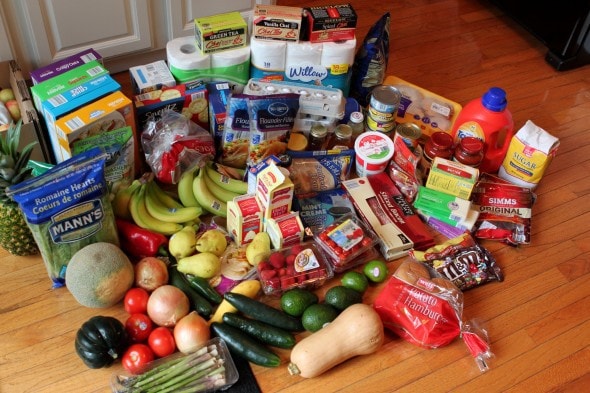
However, I'd say that when compared to 2008, I currently make some spendier grocery choices than I used to.
For instance, I buy more organic and/or local produce and meat than I used to, and that's a mindful decision on my part. I have more money to spend now, and I'm choosing to use it to buy healthier, more ethically produced food for my family (and to support the people who produce good food).
Also, 2016 Kristen is more prone to buying slightly expensive foods such as cheese and berries and nuts then 2008 Kristen was.
(Though mercifully, Aldi makes berries and blocks of Parmesan quite affordable! I love it.)
Basically, I could spend less on food than I currently do, and if we got into a tighter financial position, I would adjust and pinch my pennies a little harder.
But at the moment, we've got enough cash to allow for a $200/week budget, so I'm cheerfully giving myself the freedom to spend that much if I need to.
If your spending is slowly creeping up, I wouldn't necessarily say that's cause for worry. Kids eat more and more as they grow, and food prices rise. Just make sure that you're employing smart grocery habits, and as long as you're doing that, your spending should end up at a reasonable level.
(In case you missed it before, here are my top ten ways to save on groceries.)
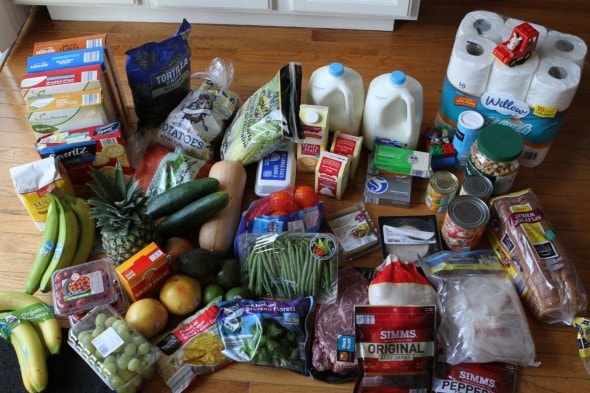
Of course, if your grocery budget is creeping up faster than your income, that IS cause for concern, and maybe you'll need to employ stricter measures.
For instance, you could eat less meat, choose produce varieties that are cheaper (apples cost less than raspberries!), make sure you get yourself to Aldi regularly, keep a watchful eye on food waste, and so on.
______________




My grocery spending went up by at least 25% in the last year. Of course, that's partly because I'm adding baby formula to my shopping list and that stuff is expensive.
One interesting thing to note is that we used to be big into coupons and sales and stuff and while we still check for sale prices on meat and some produce we now just buy generics at Aldi and well, we're actually remaining within our budget most months. So I have to wonder if a lot of that couponing was a lot of energy that we don't have to expend now that we have an Aldi nearby.
Amen to that! I seriously adore the simplicity of shopping at Aldi. You can save so much money while spending zero time clipping coupons and shopping sales.
In 2008 I was spending, on average, $425 per month. We had a breastfed newborn, a 2 1/2 year old that ate very little and a 6 year old that ate a lot for his age. I shopped at Aldi and sales and got our meat from Meijer. In 2009 our 6 year old was diagnosed with autism and a gastrointestinal disorder and we had to switch gears and buy better quality everything to improve his absorption of nutrients, plus going grain and refined sugar free. Aldi couldn't meet those needs at the time and replacing inexpensive rice, potatoes and regular pasta with almond flour and lots of organics caused our gricery budget to soar above $1000 per month. It was horrific BUT, luckily, we had become debt free 3 months prior, which freed up some of our income for this drastic change. Our son has gotten dramatically better, as have the two younger boys that turned out to also have some milder GI issues. Now we are just gluten and lactose free, which is comparatively easy. However, food prices have increased a lot, especially meat and eggs, and we now have a 13 yo that is taller than my husband, a 10 yo and a 7 yo that is the height of an 11 yo. Needless to say...they eat a lot. As in...2 lbs of meat, 2 lbs of pasta and 3 jars of sauce in one meal. My husband and I eat one plate each. Lol! Our current budget is $200 per week and that is doable because of how Aldi has upgraded the options, and shopping sales at three stores, plus meat from that darn Whole Foods. The latter obviously being the biggest percentage of the budget.
This is just the season we are in...growing boys and high food prices. One day they will be on their own and I will miss having to make 7 pounds of food for dinner...even though they ate an entire bunch of bananas and a bag of clementines when they got home from school. Every day!
Wow - that's a lot of work and a dramatic change. Congratulations on the successes involved! I was curious - have you looking into buying meat in bulk? I find that, for red meat, that's less expensive than buying cuts from Whole Foods. It doesn't help with poultry, though - there's just no way to raise a bird humanely and cheaply at the same time.
I think it depends on where you live. I'm in western Washington state, and I buy part of a pig and part of a cow from a 'local' farmer (about 150 miles away). Their prices are on average comparable to what you'd pay at Whole Foods for grass-fed meat. I like this farm and am happy to support the people that run it. And their meat is excellent.
From what I've read though, in most parts of the country it is cheaper to buy grass-fed meat in bulk from a local farmer.
I have looked into it but I don't generally buy grass-fed anyway. The price point isn't much better here, my husband doesn't care for it and I would end up with a number of cuts we are not that interested in anyway. We mainly eat hamburger and stew meat from chuck roasts. Besides...my second freezer is always pretty full of other kinds of deals and so I would need a THIRD freezer. That seems a bit excessive.
Thanks for the kudos. It was hard work at times but healthy kids make it so worth it.
I guess I'm just curious (so I apologize for asking this at all). You mention you get meat from Whole Foods because it fits within the healthier lifestyle for your children. Does Whole Foods offer beef that is not grass-fed? I guess...what's the other option?
I thought that grass-fed was the standard of quality for better beef.So if you're not looking at that, what kind of beef? Would love to just learn as I feel I'm lacking in knowledge here.
Thank you!
Yes, most beef is "grass fed" for at least part of its life. But large commercial producers collect the cattle and they spend the last portion of their lives (I'm not sure on the percentages and I don't want to just guess) in feedlots, also known as "CAFOs." This is where the horrific images come from - cattle crowded together in knee-deep mud and manure, eating pure corn - which their rumens are not designed to digest. This diet makes then gain weight quickly and gain a lot of fat, but it also makes them sick, and they usually are dosed with antibiotics as well. This kind of giant operation involving thousands of cows is where dangerous new strains of E. Coli emerge, as well as antibiotic resistance. The law allows these cattle to be described as grass fed as long as they have spent some significant portion of their lives on pasture. There is another designation "grass finished" to describe cattle that have only ever been on pasture and never grain fed. That is hard to come by. But most small stockmen are reliably using the term "grass fed" to mean animals that have not been held in feedlots and have eaten mostly grass. In my area (western washington) I am lucky enough to be able to buy beef by the quarter or the half from my neighbors.
I would add to Aimee's excellent post that one has to cook grass-fed (grass-finished) beef differently from grain-fed. It's either low and slow or fast but medium. In other words, sear it quickly and cook only to medium or medium rare, or cook it on low and for longer than grain-fed, as in a low oven with a little moisture added, a crock pot, or a good covered skillet with liquid added. It's not as fatty as grain fed so you don't want to dry it out, but the flavor can be excellent! I had to adjust my cooking methods from what I was used to, but the farmers from where I get my beef are happy to hand out information sheets on the best way to cook differing cuts. Instructions can be found online, too.
I don't know why I feel vaguely defensive. We like WF hamburger better and it is better quality than the other non-grass-fed options available.
I have been doing this a very long time and it is easy to go crazy trying to achieve food perfection. I don't do that any longer.
I need to reply here, but very carefully. It's important to know that farmers have to keep their animals alive and healthy to be able to eventually sell them into the marketplace as meat. A beef animal (steer or heifer) on a strictly corn diet will die, similar to a person who eats only sugar. A ration at a feedlot (not all of them are CAFOs, and many, many feedlots are extremely well managed) will include grain, ensilage (hay, grass or wheat/rye grass, or corn), prairie or alfalfa hay, and/or other stover products. Beef nutritionists are careful to balance the ration to achieve the goal of healthy meat produced in a healthy animal at a profitable rate of gain.
It is absolutely your choice how to purchase your meat, or indeed any food — organic, all-natural, grass-fed, grain-fed, some other variation — deciding by flavor or by supporting a farm you like — but keep in mind that all farmers have to behave with good stewardship or their source of income for their family will actually die, and that's generally bad.
Thank you for the information! I'm always trying to figure out the healthiest meat here at my house (along with trying to cut down on how many times a week we eat it at all). I'm curious, do you know anything about the grass fed ground beef that Aldi sells? I was happily assuming it was completely organic grass fed but after reading your post I'm not sure.
This is so true regarding poultry. I do get our chickens from a local organic farmer where they spend their days outdoors. .It's too late for me to go back now though, I've seen the videos on YouTube of the factory farms unfortunately! We just don't eat it quite as often now lol.
We used to carefully track every cents spent on grocery to make sure we don't spend over 500$/month (2 adults, 2 small kids). That was when we had 2 houses to pay for. Now that the old house is sold, we don't keep such a close eye and we are back buying more organic produces and meat and a better variety of fruits/veggies/meat, etc. Plus, my husband does not eat gluten and I don't eat any grains or sugar, so the food we buy is not pre-packaged crap, hence it's more expensive. Same for my kids anyways, I will buy a 5$ loaf of bread containing only 4 ingredients before I buy the bread with 20 chemicals into it costing 2$. Not because "we eat so much better than other people", but because for us healthy food is a priority and that's it. So I will spend more on quality food and cut somewhere else if need be. And we also have to keep in mind that the price of food keeps getting higher and higher, not much to do about this.
We have definitely done a similar increase in spending on food. We are able to afford it and realize that spending more for higher quality food will likely have long term pay offs. We also just like eating better and supporting better choices. We do not track food spending but I buy most produce at Aldi and sometimes at the local Asian market or occasionally at COSTCO or SAM'S Club.
Sometimes there is no choice. In the last few days our petrol has gone from $1.06(AUS) a litre to $1.30. Beef is one of our foods affected by drought so it has gone crazy in price. Food allergies affect our choices too. My other bugbear is to buy local produce and support the producers and I pay extra for this if necessary. I'd like to keep our food down to 150 for the 3 adults but that is an absolute challenge.
Groceries are my biggest challenge! We've been eating so much healthier than we were a year ago, and we've seen a good drop in our grocery prices. But we're at a point now where we're trying to cut and save and it's been difficult. This post makes me feel a little better. 🙂 We're trying to buy organic a lot more and focus on a high-protein diet of nuts and veggies. We'll get there eventually!
We raised the grocery budget when we found that even with careful meal planning, buying less expensive foods, shopping at ALDI and avoiding waste, we STILL consistently went over budget and found that we ran out of food (after a "weekly" shopping trip) in 4-5 days. Life requires us to adjust.
Dear Aldi, please expand to Denver. Please!
We had our first kiddo in the middle of February, and our grocery spending has been inconsistent ever since. We eat a lot of dollar menu food. I'm working on getting back on track, but I would estimate that with the grocery shopping/eating out combo, we spend about $500 on food each month. For me and my husband. Oops.
However, last week I decided that THIS WEEK was the week to end the eating out (because we don't want high cholesterol by the time we hit our 30s and also because we want to retire at some point in our lives). So, I'm sitting at my desk eating grapes and eggs from home, and I brought leftovers for lunch. I'm drinking free work coffee with milk I brought from home. AND I'm grocery shopping this week. Woohoo!
That's a very good point to bring up: that eating out is almost always WAY more expensive than eating at home. So if you're going to choose an area to battle first, the eating out is a prime place to start. Groceries are cheaper than eating out.
Amen to the Denver Aldi request! We have Trader Joe's now, can't we have their cousin too?!
Aldi is expanding their western presence, so there's hope! It may one day happen.
I guess the trick is to be mindful about it. There's no one-size-fits-all solution. We are in a situation where we can have a big garden and raise some livestock, but not everyone has that opportunity or is interested in it. I have time to stop at multiple places when I run errands, but not everyone has that time.
Out in the boonies like we are, Aldi is just something I read about on your website. I don't even think there's one in the state! We have a Save-A-Lot, which is a discount grocery chain, and I do some selective shopping there. They have good prices and quality on meat and some dairy items and staples, but I'm not usually very impressed with the produce. So I spend a little more money to get my produce at a different supermarket, and try to buy the things I need wherever the price is best between those two stores and Walmart. It is frustrating that healthier food is so often more expensive than cheap, low-nutrient food, but I have to remind myself of the trade-off, and to the extent that we can afford it, I try to make good choices. Had I more discretionary money to spend on food, I'd probably buy more organic veggies and meat than I do. It always feels like a tightrope, trying to make healthy choices and trying to keep grocery prices down.
As far as the couponing, we don't have double coupon stores or the like around here. I usually take a quick look at coupons.com, and print off only things that I would normally buy anyway. I do the same thing with the Rite Aid flyer. If they have a good price on something I would normally use, I will make a stop there. Toilet paper and peanuts seem to be my repeat purchases there. Kind of funny....
Well, if you eat enough peanuts you'll sure use the extra TP! (Couldn't resist that one, sorry)
I believe Save-A-Lot is fairly similar to Aldi, though I've never been to one. I hear that Save-A-Lots tend not to be quite as nice as Aldi stores though...they're more like the older, low-ceiling-ed Aldi stores.
Food 4 Less is similar too. Limited assortment, lower prices.
We have both Save-A-Lot and Aldi. I went to S-A-L once--Aldi's prices were comparable, had more variety, and was a cleaner, more pleasant place to shop. That was only one store in one location, and if I didn't have Aldi, I would be more open to S-A-L.
My kids are getting bigger, too, and grocery prices have gone up. We aren't the house where all the neighborhood kids hang out, but even so, having friends over and being hospitable by offering food costs money. Bringing food to kid's activities costs money. Certainly you have to look at your bottom line and make choices, but I don't see hospitality as optional. I can be savvy on the food I serve, but I'd rather feel people can come to my house and feel at home, including having a good meal or a tasty snack, and cut corners in other areas.
Another possibility re food spend up but overall budget not: choosing to spend more money on groceries and less on something else.
About one of your items on how to save money on food: be open to the possibility that sometimes smaller containers could be less expensive than larger ones. This could happen when
1) Manufacturers mess with us, because they knew we think that large containers are generally cheaper;
2) A coupon makes the smaller unit less expensive on a per-unit basis;
3) A really good sale. Last week a store-run sale made individual yogurts less expensive than quarts. Then I had to decide whether to favor my budget or my environment.
Me, I decide it's OK when I either have a larger budget, or decreasing spending on something else.
I'm also pretty good about not wasting food, which helps me give myself the OK to spend on pricier food. This should be re-evaluated every now and then: in the past month I've wasted both meat and berries, which tells me I need to be more careful, shop more frequently (to avoid buying too much), or buy cheaper stuff.
Though I do much of my shopping at Aldi, it is not very close to home. Thus, at times I run into one of the grocery chains when I need something quickly, usually milk or bread. Whenever I go into one of these stores I check out the meat department's reduced section. These are meats that are about to pass the sell by date, but are still good, but might be 30-50% reduced. Then I divide them up into single portions (I live alone) and freeze them. Even though I do not eat a lot of meat, this helps with my budget.
I do the same! I shop for marked down foods when I go to the regular grocery for milk or bread and I freeze it for future use. Good items I find marked down are meats, fish, baked items, etc.
There are two of us but we often buy the family pack of meats at a cheaper per pound price then repackage and freeze them.
Our grocery budget has definitely gone up. We used to have two whole choices for groceries in this town, neither very good in selection, so I shopped carefully, as best I could. Now that we have health food and healthier-type food stores opening up or enlarging to expand their selection in a city that we visit anyway once a week, we shop more at those stores to get local, organic foods. I also shop farms directly, which is not cheap, even getting the side or quarter prices for meat. For instance, to get grass-fed organically raised cow's milk, raw, I can pay $12 per gallon directly to the farmer or get organic, pasteurized, but not all grass-fed milk for $6 dollars a gallon shipped to my store from wherever. It's painful, but I go for the local farmer's milk. But I am vigilant about not wasting food and using less meat in our diets, making it go farther. We also can grow our own to some extent, which not everyone can do. We've made it a priority, and I'm so grateful that although we are on a tight budget, we can save in other places to be able to splurge there. To Leah, I'd say yes, inflation and growing children are always going to make your budget go up. When my kids were tiny, I could get conventional ground beef on sale for 59 cents a pound -- grass-fed ground beef now is $7.50 to $8 a pound.
A few years ago a friend wrote about the USDA's "Cost of Food" analysis. Whenever I feel like maybe my spending is out of control or a bit too high, I can use this chart and know that it's not me: it's food prices! It's been really helpful for my peace of mind. http://www.cnpp.usda.gov/USDAFoodPlansCostofFood
A comment, you mention cutting down on meat but I could point out that more and more I am seeing that many things cost more than meat. For example chips work out at several times the cost of meat per pound! Even fruits and veg are often as much or more per pound than many meats! Many processed foods cost more per pound than meat. Chicken - which is still available for a little over a dollar a pound - and the cheaper cuts of meat are less than many processed foods. I can get whole chicken for $1.49 a pound or less, but apples and most veg are $1.99 a pound or more. Cheeses - it is not all unusual for it to be $10 a pound or more.
That is true. Individually packaged snack foods are especially expensive per pound.
That's why I look at price per serving instead of price per pound. I get 4 servings from a pound of meat. How many servings of chips do you get per pound?
One resource I've found helpful with figuring out what grocery number is realistic is this USDA pdf of average family food costs: http://www.cnpp.usda.gov/sites/default/files/CostofFoodFeb2015.pdf - it breaks down average grocery cost per age and with 4 budget levels. It's helpful for me to look at it and see the correlation between my grocery spending and income.
Tragically, Denver doesn't have Aldi. I do check the clearance section of the grocery store every time I go, though - they always have the good rolls and bakery breads for half off, and last week I found 10 slightly squished boxes of store brand Lactaid for 85% off (dream come true for a lactose-intolerant person such as myself)! Generally I've found that meal planning and limiting extra trips to the store helps keep my spending in check.
Incidentally, Kristen - according to that USDA chart, "thrifty" level spending (which is their lowest cost level) for your family's ages would be ~$234/week, so you are ROCKING it at grocery budgeting!
Something must be wrong. I feel I spend liberally on food, yet I'm in the "low cost" category (not including eating out). Either their categories are off or I REALLY need to recheck how much I'm spending on food.
Yipeeeee! There is an Aldi opening next week a few miles from my house! I went to Aldi's 30+ years ago when they carried dented &S outdated canned food. They have sure changed! I know that they are part of the parent company that owns Trader Joe's. I don't shop there! My daughter in downtown Chicago swears by Aldi's. I am a firm believer in skipping non-essential foods like olives, pickles, dips, etc when times are tough. I also use the $2 a lb rule for nearly all my meats. If the meat is between $2-$2.50 a lb I'll buy it. Anything over I usually skip it. It's possible & I have been doing it for over 10 years.
We have a family of three (soon to be four!) and we're doing groceries for $180/month for a long time. It was hard, but we made it work. A year ago I hit 3-4 months straight where I just couldn't make the budget work. My child was growing, which is good! One of the big deciding factors for us was that when we were talking about having a second child I felt like, "I can't make our food budget work for 3. How on earth could I make it work for 4?" We knew we wanted a second child and with things not working for 3-4 months in a row, decided to increase it to $240/month. I felt such relief! We found other ways to cut spending to make it work. I still struggle sometimes (my kid keeps on growing) and I'm sure we will need to reevaluate once our second child starts eating solid foods, but we make it work for now.
Hi,
which meals do you make that seems like a mommy would need to find tons of great deals? thanks! I saw from other posts of Aldi, i shop at Shoprite also looking at deals but that seems little. great job!!!
Kristen, I am curious about your toiletries. Are those in your grocery budget? all toiletries too. we have 5 kids and our oldest three are girls, I am finding also that the "girly" monthly items are also jacking up my budget. what about makeup? do you get that from the grocery store as you run out and it just adds into your grocery budget? shampoo, deodorant? etc. I shop at Aldi and Meijer every week and Costco every other week. I usually hit the Dollar Tree for toothbrushes and toothpaste, it seems to be cheaper there. I would love a post on these items.
Yep, I include toiletries in my grocery budget. I try to watch sales, we use a lot of Suave hair stuff, and I also tend to buy some toiletries at Target instead of at the grocery store.
I think makeup expenses will probably go up a bit as all of my girls enter the teen years (only one is there so far!), so I expect to have to add a little more wiggle room over time.
I raised my food budget a year ago when I found that I was consistently going over budget and getting frustrated every week, despite careful planning. Food just costs more than it used to and I hadn't raised my food allowance in 6 years. (It didn't help that I made less and less each year due to frozen wages and increases in health care premiums and copays.) I had stopped buying my "luxury" foods like real vanilla and real maple syrup. Then I cut down on the frequency of meat, and cheese. I remember regretting promising to make a particular cookie recipe for a work event when I discovered it would cost 25% of my weekly food to buy the ingredients. I realized I was sacrificing more than I was comfortable with. I really like to cook (mostly) and I like good food and so when it got to the point where I was buying what was cheap instead of what I wanted/was good/ was healthy, I just had to raise the food budget and make cuts elsewhere.
And I feel really lucky to be able to that because there have been times in my life where I didn't even make enough to have that choice.
Huh. Looking at the USDA charts, I bumped myself up from the thrifty plan to the low income plan when I gave my food budget a boost last year. Interesting . . .
I mean low-cost. Not low-income.
There's an old saying "Pay the grocer or pay the doctor" which is very true. If you eat good unprocessed whole foods in the long run you will be in better health. My grocery budget has gone up recently as I am expecting twins, am eating very often and a lot of protein such as steak which I would have eaten very little based on budget. Also I feel that when you shop at Aldi, watch sales and discount prices, cut out waste and eat at home instead of eating out, all in all you cant go too far wrong on the frugal front;-)
I agree on raising costs mean you have to increase the budget also. We rarely eat out & that has really helped. we do eat well. I may buy the steak 1 at a time if broke but realize that it is important to enjoy food & special occasions also. I watch sales , buy locally when possible on produce, just joined a CSA, not cheap but organic. I have 2 diabetics & 1 kidney disease in my family so healthy eating is important. Cutting meat is not & cheese is not going to happen with the higher protein diet..The only individual snacks I buy are stick cheese for the diabetics .
Drat... can't see the recommended cost !different budgets. I'm on a cell phone and I need to cleanup my files. (Also save and delete pics and video of my 7yr old.) It won't let me load the pdf file. It's me, a 7yr old, and a at. I do pretty good at budgeting. I mostly shop sales and rotate my pantry. I have enough stocked for multiple months. It would still be quite varied. I spend around $150 a month for just food. I only wear eyeliner and a bit of shadow most days. I stock my favorite perfume at Christmas time. Shampoo and body wash last awhile. I keep an eye out for sales on toiletries.
(And a) * Cat
I've been all over the spectrum on grocery spending - from spending $20-$30 on food per week for two, to $75-$85 per week now (with some ups and downs in between). I try to prioritize eating relatively healthy these days and am willing to spend a bit more on convenience foods to avoid eating out. I'm vegetarian, so I'll buy a package of Chik Patties or something to have on hand - the almost $4 for those and maybe another couple of dollars for some frozen veggies is much better than spending upwards of $20 for takeout. Same goes for brown rice - for whatever reason, I'm horrible at cooking it, so I am willing to pay for the Trader Joe's frozen, microwaveable rice.
When we were spending $20-$30 per week on groceries 10 years ago, we definitely noticed health differences, but spending more wasn't an option at the time. We ate mostly white rice, ramen noodles, and apples. In that period, I got canker sores and sensitive teeth from eating too many apples, a zinc deficiency, and a potassium deficiency. Now I always try and keep getting nutrition in mind! Haha (It didn't help that we were two 18 year olds not knowing much about shopping/cooking/nutrition either - we certainly could have spent our dollars better!)
When I just couldn't make it work anymore the budget had to be increased. We're pretty thrifty - we always make stock after roasting a chicken, we make our own marinades and salad dressings, etc. We grow our own herbs and scallions since fresh herbs are $$. Regardless, you can't ask your 8-year-old to wear a 3T and you can't expect a food budget from a different life stage to still pull the wagon.
Grocery shopping was out of control at my house. My checkbook reflected daily trips and outrageous amounts being spent. Couponing was even worse. I may have been a compulsive shopper. We were not eating healthy and never sitting down together to eat. I was working 20 hours a day and fast food was taking a toll on my waistline. My budget is not set in stone. I meal plan for a whole month and make a large trip for that list. During the month, I stop in Aldi's once a week to pick up a few fresh fruits and vegetables. I am feeding 3 adults and usually spend 200.00 a month. I am cooking healthy from scratch and loving it. If we venture off budget, it is not a big deal. If I see a supper deal on something, I stock up and then don't pay full price later. I am afraid that coupon strategy may be one I never get past. Today I bought og canned tomatos, chicken, tuna and Annies mac n ch for 50 cents an item. Thats an unheard of price for organic in my area. My son will be out of school in two weeks and I expect we will be over budget every week. It usually balances out in the end.
Although it has been many years ago, food costs for a family will and should increase when the children in the family are between 12-18. This is because (especially with boys, it certainly happened with my brother between ages 14 and 16) eats a whole lot more. They are "hungry" and need a lot. I know my mom was really upset for a long while, and for a while, she actually was telling him he had to stop eating so much, because all of a sudden, her food supplies in the house were disappearing fast, and it was my brother who was fixing everything and anything, practically, to feed his body. My son entered the same stage at one point, and I just ended up buying a lot more ramen (luckily he loved that and it was incredibly cheap) as well as finding things he would like, since his tastes were changing. You have to deal with that.
Years ago, when we were in a better financial situation and the kids were in elementary school, we spent $800/mth on food. Now, we're extremely cost conscious and are spending $400/mth. I cook mostly from scratch and we don't go out unless someone gives us a gift card. I try to buy organic meat but that's not always possible. Due to medical issues, I have to avoid fiber and high fat foods. That saves a ton. I will buy those items for the kids, if requested. But we have all learned to adapt to my menus and it's not too bad.
I'm sorry to make you guys jealous, but I live in a very rural part of Ireland and I have a Lidl and an Aldi within 15 mins drive from my house. I honestly don't know how we could afford healthy food other wise. I also love the fact that each week, Aldi has a super six offer, 6 varieties of fruit and veg for 39cent, and meat/fish offers too, sometimes the offer includes an unusual fruit or veg so its always fun to try new recipes.
Have you written on what you do (and don't) buy organic and why? I'm trying to figure out what makes sense but I feel like most of what I read about buying organic is so heavily "buy organic unless you hate your children and want them to die" that its hard to figure out what's really worth it. I'd love to read your take--you're always so sensible!
This post is a bit on the old side, but it's about that topic: https://www.thefrugalgirl.com/2009/06/local-organic-buying-vs-frugality/
So, maybe I need to do an updated post!
For 2 years we have been empty nesters other than the occasional weekend/holiday visits from our daughters. The youngest just finished her 2nd year of college and moved home for the summer on Friday. I know I'm going to see a shift in our grocery budget which is fine. Actually, it's more than fine because I'm thrilled to have our girl home for the summer. What I think will be most challenging is adjusting the amount of food I'm going to need to prepare at every meal. When it was just the 2 of us, I could prepare a recipe/meal that would serve four and we'd get a lunch out of it too. Now that same recipe/meal will allot only a single lunch so I'm going to need to prepare meals for 6 and/or think ahead to have packable foods at the ready daily as we all three will be packing a lunch. It will probably take me the whole summer to finally get a handle on this and then she'll be moving back to campus! LOL.
Heh...you'll adjust right when it's time to go back to the normal!
At one point I noticed my average weekly cost jumping up. It wasn't until I examined the prices of individual items that I realized that certain brands that I always chose had gone up dramatically, so simply switching those brands for a comparable product helped. In terms of meat and dairy, again, you may need to shift your mindset and swap. Cream cheese in my area, for example, jumped from $0.89 to $1.25/brick over night! Now I make my own yogurt cheese which is similar in texture but far cheaper. Also, are you buying produce out of season or that gets shipped from far away? Once I switched to buying produce only when its in season I saved a lot there - and it tasted far better. Even at Aldi, prices fluctuate so keeping a "price list" of my 10-20 most commonly purchased items helps me notice when an individual product's price is way out of line with what I normally pay or when a sale item in a different brand is actually a good deal for me.
It also helps to put some thought into things that are most important to you. I cannot stand scented laundry detergent but I also don't like making my own. So I do spend more to get the "sensitive skin" kinds. But I don't notice any difference in dish soap brands so I buy whatever's cheapest. Give yourself permission to spend more on items/brands that are most important to your family's health/lifestyle and spend less on things that you care less about.
Great insight. I work at a Kroger Marketplace in my area in the South and one thing I notice is some people don't have a plan what they are going to buy when grocery shopping. A person has to find creative ways to save money.