
Monday Q&A | Dyeing Jeans, Glass Storage, and Green Oven Cleaning
 Every Monday, I answer a few of the questions that my readers send me. If you have a question you'd like me to answer in a future Q&A post, just leave me a comment here or email me (thefrugalgirl [at] gmail [dot] com) and put Q&A in the subject line. I look forward to hearing from you!
I know you are a fan of dying clothing. I just bought a nice pair of new Eddie Bauer bermuda jeans. I don't like the light wash. It's particularly light on the backside seat area - so unflattering. I'm wondering if I could dye them a dark blue jean color. Any suggestions? I'd so appreciate your help. I'm wondering if I should return them or try fixing them.
-Nancy
While I do love to dye clothes, I'm torn on what to recommend to you because dying things is always a bit of an iffy proposition. It's hard to predict exactly how each piece of clothing will turn out, and so I generally prefer to dye older clothes that have faded, hand-me-downs, or clothes from Goodwill. That way if the dye job turns out sort of oddly, I won't have ruined anything of great value.
So, if you paid a lot for those jeans, I'd probably just return them. If you got 'em for a steal on a clearance or something, though, you might want to throw them in the dye bucket.
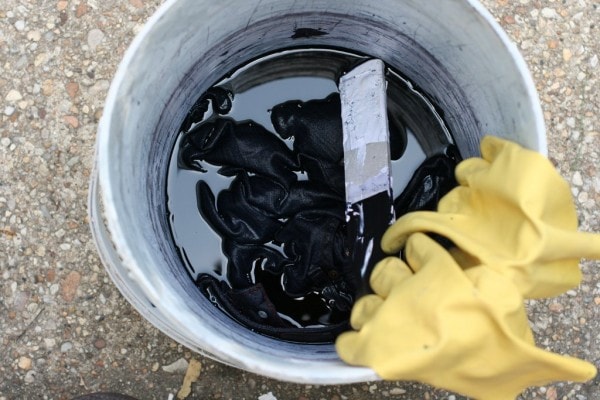
If you do decide to dye your jeans, I'd strongly recommend that you use either black dye or a combo of dark blue and black. When I've tried dying denim with just navy blue dye, it has always, always come out with very purple tones.
I do believe you can buy denim blue dye, but I haven't tried that myself.
Why do you try to avoid using plastic for food storage? In a recent post you said you were using glass mason jars. I have been re-using glass spaghetti jars for leftovers in the freezer. Are mason jars better than the jars I have been using?
Thanks,
Jill
Well, I'm mostly concerned about the possibility of the plastic leaching chemicals into my food. It's not like I think using plastic containers is the most horrible thing in the world, but since glass containers (which don't leach) are readily available, I prefer to use them.
I also don't like the way plastic containers stain and absorb smells from food.
I'm happy to tell you that your glass spaghetti jars are just as marvelous as Mason jars (maybe even moreso, since you're repurposing something!) They're only inferior if you're wanting to actually process and can something, but for storage, they're a-ok.
I love the fact that you clean using all-natural products and avoid chemicals whenever possible. I have a very messy oven and wondered if you had a foolproof way for cleaning ovens without using a strong product like Oven-Off. Whenever I try to use the self-cleaning function my smoke alarms go off like crazy, so I need another solution!
Misty
I feel your pain with the smoke alarm. Mine sits right outside of my kitchen, so every time I heat my oven up to anywhere above 400 ° it's almost guaranteed to go off. Fortunately, it does have a hush button, so I just push that and go on about my business. Do your smoke alarms have anything like that?
Or could you use the self-clean function on a warm spring day when you can open up the sliding glass doors and windows to provide some ventilation?
My ovens have always had a self-cleaning feature, so I'm not very well-educated about alternative oven cleaners. I am very confident that some of my readers are experienced with natural oven cleaners, so I'm going to open up the floor to them.
Have at it, people! If you've got some good advice for Misty, leave it in the comments. And feel free to pipe in on any of the other questions as well.
__________________
Joshua's 365 post: Interlaced Stone



I pinned and tried at least half a dozen different natural oven cleaning methods and found what worked best is to grab some baking soda, vinegar, and a few fresh lemons. First wipe out all the crumbs from the inside of your oven. Then apply a paste of baking soda and water and leave it there for at 30 minutes. Then cut 1 or 2 lemons in half and start using them to scrub the surface. Once you have the worst off, rinse the oven. For the remaining spots use a mixture of vinegar and baking soda and a good scrub brush and really get some elbow grease going on the spots. For the really really stubborn ones a bit of salt and a squeeze of lemon juice should do the trick. These methods stink less than the self cleaning setting, but they do require a lot more muscle.
I read (I think on Pinterest) that using the self-cleaning feature can dramatically shorten the life of your oven. I have heard of putting a dish of ammonia in the oven overnight and it is easy to clean in the morning but I have always been afraid to try this myself. I always line the bottom of my oven with foil which I suppose everyone does! I'll look forward to the green solutions from your readers!
I'm sure different kinds of ovens are more or less prone to specific problems, but I have experienced some of it firsthand. We had to replace a solanoid in our Hotpoint gas oven a few years back. The parts guy said that the self-cleaning cycle uses such high heat that it can sometimes damage parts, especially the more often that setting is used. We were able to buy the part and install it ourselves, so we didn't make out too badly. I still use the self-cleaning mode, but a lot less than before.
Seems to me I've read more than once that lining the bottom of the oven with foil can be hazardous. Can anyone add more on the subject?
Yes, lining the bottom of your oven can be hazardous. Usually your oven manual will warn you about this practice because it can cause sparks with the electrical element when heating. Check your manual!
I've had a self-cleaning over for over 10 years now and never an issue with using the self-cleaning feature...yet. The main reason I have a self-cleaning oven is because they are usually more energy efficient since they have to be very well insulated to operate at the high cleaning temperatures.
My husband and I just decided to use canning jars for food storage in the refrigerator rather than plastic containers or buying new glass containers. I didn't even think about using glass jars that are heading to the recycling. Duh. 🙂 Thanks for the suggestion!
I agree about how wonderful using glass jars for storage is, and have slowly been building up my collection. I really like the idea of using them for freezing soup, because then I can just heat them in the microwave without any worries with leaching. I also hate how the smell gets into plastic containers, particularly the ones I use for my lunch. I should probably save up for a good Pyrex leakproof one!
I'm also looking forward to hearing about green oven cleaners. My green tip is that I rarely clean my oven, but I'm sure there are much better solutions 🙂
I just cleaned the oven door just a few weeks ago. Before doing that I just used the vacuum to get out the burnt food on the bottom. It was very brittle, very easy to vacuum it out. Now the door took a bit more work and time. The process will work inside the oven as well. Make a thick paste of baking soda and water, add a few drops of dish detergent. Remember..a thick paste, it takes quite a bit of baking soda. Then just smear it all over nice and thick. Walk away for an hour or two. Get back to it with a scrubby sponge and work in small sections. It will come off with very little effort.
Using the vacuum... that is pure genius!!!
Just a note on dying denim. I read that using a combo of denim blue dye and black dye will give the jeans that dark wash look.
Norwex oven cleaner! It may seem pricey initially BUT you use very little, no chemical odours and it works amazingly! I prefer it to using the self cleaning option on my oven.
I would agree with Norwex. While it may be "pricey" to begin with it lasts FOREVER if you only clean your oven once every few months...which is more often then I used to before I found Norwex. Another reason I like it is it is relatively quick and not much elbow grease is needed!
I second Victoria's suggestion of using baking soda, vinegar and lemon. The only thing I would add is to use heat to your advantage. When you clean a microwave, the trick is to heat up a glass of water in there first, so the evaporated droplets moisten the gunk and you can wipe it right off. Same thing with the oven. Be careful and don't get it too hot, but if you can add some water to the mess, turn the oven on and let it warm up just a bit , then scrap (use a heat resistant flipper with an oven mitt on your hand) the spots, they should be easier to clean. Follow up with the baking soda, vinegar and lemons like Victoria described.
good advise on the dyeing part.. I´ve been thinking of dyeing some jeans, but I`m still not sure. At least now I know which kind of colours I should use. Thanks:-)
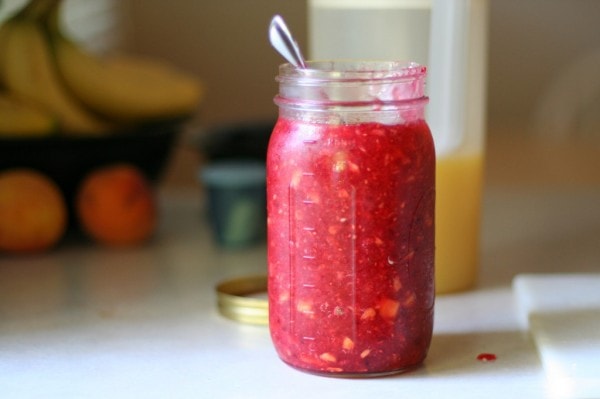
I'm very curious, what's in the jar? Looks quite yummy!
I clean my oven using the bowl of ammonia over night method. I've found it's much more effective for my drip pans and racks that I can seal inside a garbage bag with a small bowl overnight. They come out looking brand new with very little scrubbing. It has also seemed more effective in my past electric ovens than my current gas oven. I don't know if it's just this oven not sealing as well or if there's a difference between the electric and gas as far as ventilation goes. The ammonia gets most things off, but doesn't do as well with the REALLY burned on stuff. The ammonia does not react with natural gas, at least at room and low-heat temperatures, so you don't need to worry on that front. I'll have to try the lemon, vinegar, and baking soda method. Sounds interesting.
Just a little something you didn't mention, but I use my washing machine for dyeing clothing and fabric. I've never had a problem with the inside tub coming clean afterwards. I just follow the instructions on the dye packets.
And the other thing that Nancy should be aware of, Nancy, you said the back seat is more faded. Dyeing will color/darken the fabric, but it can't even out the color. So, if you have a dark splotch on a piece of clothing, dyeing might make it slightly less noticeable, but it will still be darker than the rest of the garment. And conversely, a lighter area, will be lighter than the rest, but the whole garment will be darker overall. If it were me, I don't think I'd bother trying to "fix" the color on a brand new pair of pants, but I would return them, as that is still an option for you.
For older clothing (and 2nd hand stuff), I use the Rit denim dye. I'll save up a pile of the family's jeans and do a large batch in the washer all at once. They look great, and give the older clothing a fresh look.
I've dyed blue jeans many, many times in order to extend their life. I use RIT blue jean dye and it doesn't have a purple shade at all....more like stonewashed.
I agree that dyeing will not even out the faded parts - it will just lay down color across the garment. I have heard of dry rubbing dye into parts of the fabric, letting it sit, and then proceeding with the regular dye process for the entire garment but I have never needed to try this.
And finally on a totally different dyeing note - RIT can be used to color items which are not fabric. I used to dye basket weaving reed using it!
I just pulled this off BlogHer. Hope its "legal" for me to copy and paste this info.
Natural Oven Cleaner
2-3 Tablespoons liquid soap–I used Castile, but Dish Soap would also work.
1½ cups Baking Soda
2 Tablespoons Salt
¼ cup Vinegar
Water {optional}
Essential Oil {optional}
Combine the soap, baking soda, salt and essential oil {if using} in a medium sized bowl.
Slowly add in the vinegar {it will fizz} until it forms a paste. If it's too thick to spread on easily with a pastry brush add in some hot water.
Cover your oven completely with your natural oven cleaner. I found that a pastry brush made this task pretty easy.
Let it sit overnight for best results.
Wipe off.
I just pulled this off BlogHer. Hope its "legal" for me to copy and paste this info.
Natural Oven Cleaner
2-3 Tablespoons liquid soap–I used Castile, but Dish Soap would also work.
1½ cups Baking Soda
2 Tablespoons Salt
¼ cup Vinegar
Water {optional}
Essential Oil {optional}
Combine the soap, baking soda, salt and essential oil {if using} in a medium sized bowl.
Slowly add in the vinegar {it will fizz} until it forms a paste. If it's too thick to spread on easily with a pastry brush add in some hot water.
Cover your oven completely with your natural oven cleaner. I found that a pastry brush made this task pretty easy.
Let it sit overnight for best results.
Wipe off.
I'd be careful using liquid cleaners in a self-cleaning oven. I've heard that cleaners can damage ovens with a self-cleaning function. Also, you could end up voiding your warranty if you use a cleaner in it. So, unless your warranty is expired anyway, I'd be wary of the cleaners. My solution to the smoke detector going off? Remove the batteries (just while using the self-cleaning function), open up the doors and windows and turn on your exhaust fan.
Personally I don't use the self cleaning feature of my oven. When you use this feature it puts very harmful fumes into your house. How do I know that? We used to raise parrots and one of our customers had her birds die from using the self cleaning feature! I checked into it further and found that toxins are released into the air similar to non-stick cookware that is 'burned'. Guess what non-stick cookware is coated with? Formaldehide, yep, basically embalming fluid. Not dangerous unless you over heat the pan and the surface burns. I'm very careful and I've done it. I was frying chicken and turned my back to the stove to sit something on the sink and the pan burst into flames. The surface of the pan burned right off and was rolling! We put it out with a fire extinguisher, opened all the windows, etc. That was years ago. Way before we raised birds, but most pets can be seriously affected if this happens. It is very very bad for humans too so I never by non-stick cookware. A veterinarian at the vet school told me that similar fumes are emmited when using the self cleaning feature so, I choose not to use that either. When either happens birds will die and other animals including reptiles will be seriously harmed as well. Not to mention what happens when
we breathe it. It's just my own personal decision and I've never looked back. I use the method of putting a dish of ammonia in the bottom of the oven overnight and wipe it out in the morning. If it all doesn't come off, I repeat it the next night. This always works for me. I also use stainless steel and cast iron cookware only. I don't miss non-stick in the least. I should mention that the pan that I had the problem was one on my bridal registry and wasn't cheap. It was a $70 pan not an el cheapo $10 one from the corner store.
I know about the risk of highly-heated empty nonstick pan. But how does formaldehyde get into an oven? Absent other information, I'm thinking that it happens when one first uses chemical-heavy oven-cleaning spray *then* switches to high-heat self-cleaning.
As far as I know, my self-cleaning oven is enamel coated...no teflon. Teflon is Polytetrafluoroethylene so I am not sure how formaldehyde is involved with your experience.
During the self-cleaning feature, carbon monoxide can be released so ventilation is needed. I'll have to do more research on any other harmful chemicals being released, but as far as I know the chemicals used in cleaning are the most concerning. I guess it also depends on the oven model you are using.
If that oven was new, the parrots were killed because of the out-gassing from running the cycle for the first time. Various compounds leftover from the manufacturing process burn off during that first cycle, releasing some icky chemicals. This is a known problem, and unfortunately, there's no solution except to remove any birds in the house from the house during the cleaning cycle.
After the initial cycle, the volatiles still present from the manufacturing process have burned off, and it shouldn't be a problem again.
This problem frequently shows up because customers get a brand spankin' new oven, run the cleaning cycle for the first time while ignoring the instructions to adequately ventilate, stink up the house, then call to complain that "my old oven never smelled this bad!". Probably because the "old oven" had its initial cycle run before the current owner bought the house.
While pregnant (and avoiding chemical fumes), I cleaned the 50-year-old oven in our new home with a baking soda-salt-water paste. Smear it on the oven, bake at a high temperature (over 400), let cool, wipe out. The oven in question was beyond dirty, and the cleaning process worked very well.
I should add that I was told about teflon containing formaldehyde by several veterinarians and 3 medical doctors. My understanding is that there are actually about 6 different harmful chemicals contained in non-stick coatings. I have also read that they are safe if not heated above 500 degrees, but Good Housekeeping did a study that showed how easily they reach and even exceed 500 degrees. I guess the advice is to do your own research and make your own informed decisions on what is best for you and your family. My intent was just to make you aware that there are dangers associated with non-stick cookware and self cleaning ovens.
We use mason jars for just about everything in our house (or pyrex glass containers) Another great thing about glass food storage is if you pack something with a red sauce (spaghetti, ravioli, etc.) I find that it is really difficult to get them clean (even in the dishwasher.) But the glass always comes out like new. 🙂
Just wanted to pipe in regarding the glass jars thing. I gave up plastic food containers about 20 years ago after I saw a documentary about synthetic estrogens - there was a woman doing breast cancer research and all of her samples were somehow getting contaminated with a synthetic estrogen, which caused them to grow wildly. Her study was totally ruined, and she couldn't figure out where the contamination came from. Finally, she decided to test everything in her lab to try to find the source of the contamination and it turned out to be the plastic test tubes that she was keeping her samples in.
Anyhow, I have migraines that are triggered by fluctuating estrogen levels, so I decided to try switching to glass food containers, and I went from 3-4 migraines per month to 3-4 per year! People at work thought I was totally nuts carrying around my little glass jars, but it completely changed my life.
One thought... if you're gonna use them in the freezer be sure to leave a good inch or two of air space at the top for the liquids to expand - and it's best to use the actual mason jars for this purpose since they're more resistant to cracking.
I hav never heard about a hush button on a fire alarm...I think I will need to grab one with this feature when we update our alarms 🙂 Thanks for the heads up
Just a comment about setting off the smoke alarm. We live in a small apartment, and the smoke alarm at the top of the stairs collects any heat/smoke. It goes off every time I turn my oven past 350 degrees. I have a box fan that I set so it is blowing towards the smoke alarm, usually leaning it against a step stool so it is angled towards the ceiling. That lets me finish whatever I am baking.
Advice for Misty... funny enough I wrote a post today on how I clean my own oven naturally. I don't use the self-cleaner on my oven, because I don't like the smell.
Sorry for the confusion. I didn't mean for anyone to think I meant that ovens are coated with teflon. I was just pointing out the dangers of the fumes from self cleaning ovens. And I'm not talking about the first time you use the oven either. It doesn't matter if the oven is 10 years old, there are still dangerous fumes emitted when using self cleaning ovens. I even re-verified this with several friends that are still raising pet birds, a veterinarian and a doctor. Most people aren't bothered by the fumes, but some are. Especially if suffering from health problems. Very dangerous to pet birds and some small animals. Another friend has asthma as do 2 of her children and her doctors advised against using this feature as well. As I said before, I'm not suggesting that anyone else ignore their self-cleaning oven feature. It's just what our family chooses to do. Unfortunately, it's almost impossible to buy an oven without this feature anymore so our new oven has it, but we ignore that it does. Teflon pans are another danger altogether.
Get a pumice stick in the cleaning aisle from walmart and use it along with water and a cloth to wipe the mess off with. Pumice sticks are AMAZING! I used to clean houses and that is what I always used even on the dirtiest ovens.(And there was a lot of those) They also work great for rings around the toilet and lot's of other things.
I have never tried dyeing jeans and I don't know if jeans often have synthetic thread, but if there are synthetic threads in the jeans they may or may not take the dye the same as the cotton threads. I once dyed a khaki colored pair or linen pants in order to hide a stain. Worked great, but all the stitching stayed khaki color! it wasn't bad in that situation--actually looked kind of cool. But a lot of jeans have other fibers woven in them now and so be wary. Like those jeans with the "belly panel" that tucks in where your baby bump was. I'm pretty sure those cross weaves are some other kind of fiber.
I store everything in canning jars. There are only 2 size lids so it makes it easy to find the right one. My dry goods are mostly in 1/2 gal or quart jars. Refrigerated goods are mostly in pint jars. Frozen foods (meats with the marinades) are mostly in quart jars. With the garden and preserving I no longer by foods/sauces so my source of free jars has dried up.
But mt fancy olive oil & vinegar jars I've been collecting. I use them to border my herb garden. I dig a hole and stick the bottle in upside down, it is buried about 1/2 way up. Looks awesome when the sun shines through them. I am about 1/8 of the way around the 20 feet garden.
Forgot about the "green" oven cleaner portion. Best way I found to keep a clean over is not to dirty it in the first place. I have 3 ovens (2 are 6 yrs old & 1 is 4 yrs old) each has been only cleaned once; I felt I had to when we moved from the east coast to the west coast and I was packing them up to move with us. Here's what I used. 1 whole lemon (minus the seeds), pureed in the food processor. scrape into bowl and add a whole lot of baking soda so it is super pasty, then 1/2 C of peroxide, then more baking soda to get it back to being pasty. Apply thickly. Set for at least 2 hrs. Wipe with wet rag, 2 hours later wipe with wet rag again.
My method for not getting it dirty in the first place. I keep mine clean by placing an old cookie sheet on the rack under what ever I bake and a dollar store cookie sheet I partially bent in half to serve as a "tent" over top for splatter prone foods. I clean those sheets in the dishwasher.