Kindergarten Homeschooling Basics on the Cheap
Amazon links are affiliate links.

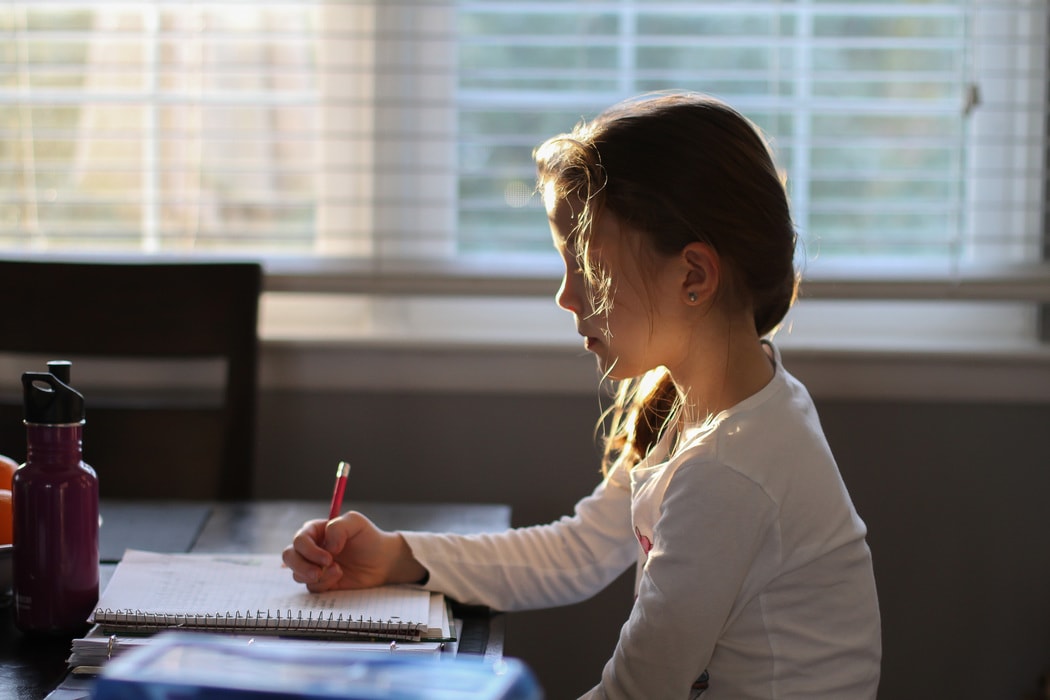
This past March, Sonia turned five, and so she will be starting kindergarten in just a few short weeks.
This is the third time I've embarked on the kindergarten journey, and since Joshua and Lisey seemed to gain sufficient amount knowledge in their kindergarten years, I'll end up doing kindergarten with Sonia in much the same way that I did kindergarten with my older two.

My sister has a five year old this fall too, but this will be her first year of homeschooling. I promised her that I'd send her a list of the materials that I use, and since I thought that this information might be useful to some of you out there, I decided to use my blog to get this job done.
My apologies to those of you who don't homeschool. You'll have to come back tomorrow for a more relevant post! 😉
Handwriting
I use the Handwriting Without Tears series for all of my kids. The books are easy to use and present the letters in a sensible order. Instead of working through the alphabet from beginning to end, the book groups letters together based on the way they're formed.
For instance, all the letters that start with a stroke from top to bottom (like L, F, and K) are learned together.

Happily, these books are pretty inexpensive. Even brand new, they're less than $15 and I've often managed to find cheaper new ones on ebay or half.com.
We start with Letters and Numbers for Me and since we usually finish that before the end of the school year, we also use My Printing Book.
I haven't found most of the HWT accessories to be necessary, but I did buy the slate chalkboard, which I've found to be very useful. Writing the letters on a large scale like that really seems to help my kids when they're having trouble forming a new letter.
I don't usually manage to have chalk on hand, so most of the time we just practice writing on the chalkboard with a wet finger.
(You could also make a chalkboard if you have an old frame around the house. Just spray the glass with chalkboard paint and you're good to go. Details about how I've done there are here.)
Phonics
I don't actually use an official phonics program, as I haven't found it to be necessary, at least as of yet! My method is super-duper cheap and easy, and it's worked well for us. When Lisey started kindergarten, she only knew one or two letter sounds (I don't put very much effort into preschool, as you can tell!), and even so, by January of her kindergarten year, she was learning to read.
Here's what I do.
Using 3x5 plain, unlined notecards, we make a flashcard for each letter of the alphabet. On each flashcard, I write the uppercase and lower-case version of the letter, and I do a simple line drawing of an object that begins with that particular letter. For example, here's our "W" card.

I am NO artist, but I can usually manage to make something recognizable. For our "D" card, I just drew a stick figure with a goatee to represent "Daddy". 😉 This doesn't look much at all like my husband, but it's close enough for phonics purposes!

In case you weren't sure, that's a doughnut that I drew, and Joshua added a duck.
The handwriting book I mentioned above introduces new letters on a regular basis, and we made flashcards to go along with each new letter. Again, this will not be in alphabetical order, but I don't think that matters a whole lot. We start out with only one flashcard (the F card, since that's the first letter in the handwriting book), and add them one by one until we've got the whole alphabet covered. I like this gradual approach.
Each day, we go through the flashcards, saying the letter name, its sound, and the word that begins with the letter. For example, for this card:

we'd say "M says mmmmm for Mommy and moon". Yup, that stick figure is me. The bread and the notes differentiate me from all other stick figures, you see. 😉
When we come to vowels, we always learn the short vowel sounds first. Since the long sounds are really easy to learn (they're just the name of the letter, after all! A long O says "oh", a long U says "you", and so on), we get the short sounds out of the way first.
Every day, we work our way through the growing pile of flash cards to review each letter we've learned. By the time we get almost through the alphabet, my kids can do this pretty much on their own.
Once they've learned all the consonant sounds and the short vowel sounds, we're ready to start reading.
Reading
Not all kindergarteners will be ready to read in their first year of school, but Joshua and Lisey both have been, and I think Sonia will be too.
(update: Yup, she was! And so was Zoe.)
I use some very, very, very easy readers at first, as I find that most of the "I Can Read" type books are too hard for a brand new reader. The Bob Books are really small, really short books that are perfect for beginners.
In fact, the first page of the first book has only one word( "Mat.") on it.

The beginning stages of reading are somewhat slow and laborious. When my kids try to read that first "Mat" word, it sounds kind of like "mmmmm. aaaaa. tuh.", because they're not too good at blending letter sounds together yet.
We take it slowly, though, only reading a few words a day at first, and both Joshua and Lisey's blending skills improved in a short amount of time.
The Bob Books get progressively longer and new words and sounds are introduced in each small book. The first two sets have nothing but short vowel sounds, so your kindergartener can get lots of practice with those before embarking on those tricky long sounds.

Joshua progressed far enough in his kindergarten year to learn to read long vowel sounds, but I think that Lisey didn't get to those until first grade. If you do get to that point, you simply have to explain that when an E is at the end of a word, the vowel makes a long sound instead of a short sound. My kids have needed a fair amount of reminding about this at first, but with some patience and persistence, they did catch on.
I bought my Bob books from Amazon, but they can also be found for a good price on Half.com.
Once my children got through the Bob books, I took advantage of the library's massive collection of early reader books. I have heard that some people's libraries actually have the Bob Books too, so you might want to check there before purchasing a set.
Math
Kindergarten math books have seemed a bit on the easy side for my kids. I got a couple of Scott Foresman Kindergarten math books really cheaply on ebay a long time ago, and we've generally managed to finish those in a very short while. At that point we move on to using the Grade 1 Saxon math books.

The basic concept behind the Saxon curriculum is that lots and lots and lots of review is essential. Most other math textbooks teach a concept, drill the student on it for the rest of the unit, and then drop that concept until it's time for the cummulative review. Saxon math books are very different, in that nearly every previously introduced concept is reviewed each day.
I like this for several reasons. First, it makes it almost impossible to forget how to do a certain kind of problem. Secondly, it provides variety in each lesson. Instead of doing 30 addition problems, each day the student gets to do a word problem, a clock problem, a money problem, an adding problem, a fraction problem, and so on.
Saxon books can be awfully pricey if you buy them from a retail outlet, but I can usually manage to get the first grade set of workbooks for $20 or less by watching Ebay or looking on half.com . It's particularly easy to find a teacher's manual on Ebay or Half.com, though I haven't found the manual to be especially necessary for first grade math!
The newer edition is pictured above, but the older edition that I used with my kids is currently less expensive on Amazon. And really, it worked just fine!

Total Cost
So, those are the basics...reading, writing, and arithmetic.
The handwriting book cost less than $15, the phonics cards are free, aside from the cost of the notecards, the Bob books cost between $10 and $15 each for two sets, and the Saxon math books will be around $20-$25 used (The older version I'm linking you to here includes book one and two for just $30.)
This means that the total cost for a year's worth of kindergarten basics can be less than $100, which I think is quite reasonable.

This sounds very much like our approach to kindergarten, sing some, read some, learn to follow cirections, generally just have fun! After all, the literal word translates from German to "child's garden". One of our favorite curriculum was Rod & Staff's Pre-K/Kindergarten series, books A-F. Inexpensive, easy to use. nice paper, fun fun fun for my kids. One game we played was a variation on 52 pick-up. As the kids learned the sounds of the letters, we'd take our letter flash cards and the current kindergartener would toss them up in the air letting them fall where they may. I'd then sit in my chair, coffee in hand, and say, "Find the letter G". Child would then hunt for the letter and upon finding it we'd review the sound. Onto the next letter until all were picked up. A variation was "Find me the letter that says 'oh'". Bonus was the floor was cleaned up when we were done and the kids loved moving around while learning.
I used to tutor in beginning and remedial reading and we had a lot of homeschool kids who came in once a week for some extra practice with our tutors. Kristen's methods are fantastic! The Bob Books are the best beginning reading books out there. The kids really like the funny pictures and because they are so easy to read, they feel really accomplished when they finish a book. I would also recommend, for those of you who are having trouble or feel like flash cards aren't quite enough, Teach Your Child to Read in 100 Easy Lessons which you can find on Amazon for less than $10 used. It is full of great tips for parents and it involves some hands-on learning which is good for kids who are kinesthetic learners. The book is long, but the lessons go really fast once you figure out what you are doing. For a little more challenging work, I have always liked The Reading Lesson: Teach Your Child To Read in 20 Easy Lessons. These are a little harder and the lessons are longer, but I like to use them in conjunction with 100 Easy Lessons once the kinds have mastered the first few phonics sounds (m, t, s, short a). If you are homeschooling a beginning reader, good luck and have fun!
Do you use the Handwriting without Tears teacher's manual? Do you think it's necessary to purchase it?
Barb
I am not currently homeschooling my children but I have done it a few times in the past. My oldest son has some behavior issues that made traditional school difficult. I would have been a lot less overwhelmed it I had your blog (and others like it) to read and give me guidance. Even if I am not a home school parent I still enjoy your posts about it. Thanks.
If your drawing is anything to go by, your husband is very good looking, you lucky, lucky lady!
Barb, I have some manuals that were handed down to me, and honestly, I don't use them. lol I suppose if my kids were having lots of trouble, the teacher's manual would offer some good ideas, but really, handwriting isn't all that complicated. They're pretty inexpensive, though, and you could reuse them with other children or sell them after you're done with them.
Tania, I think my husband is awfully handsome, but I don't think my line drawing does him justice! lol
A couple years in your future but I'm curious as to how much you'll stress handwriting and cursive. I know the public schools are lacking in this these days (writing properly isn't seen as important, I guess) so I'm curious as to know what homeschoolers do on the subject.
@Battra92
In response to Battra92's curiosity about handwriting and curvise in the future: you'll need it. We've been homeschooling 20+ years and it is vital to know cursive. Why?? Any legal document requires a signature, not a printing of one's name. Driver's license, bank account, marriage certificate, a will or trust, permission slips for field trips, the list is endless. If the schools aren't teaching it, work on it at home. Your kids may grumble but they won't be able to get their learner's permit if they cannot sign their name. That should be a sufficient motivator!
I am such an admirer of you in so many ways. I was a teacher for over 21 years and your methods are so sound and far better than some of the adopted programs that change yearly in schools. Just wondering if your children participate in organizations with other kids outside home.
As a public school teacher I must tell you that what you have described for your Kinder program is awesome! Great job!! I totally respect you.
@Theresa
Yeah, my school after the fourth grade decided that it wasn't necessary and thus I never developed great penmanship. Now I'm teaching myself to better my handwriting. Coworkers find it funny that I write using a fountain pen, though.
Battra, actually, that's not in the future! Joshua will be 10 next month and has been doing cursive for a couple of years now. He's gone through the entire Handwriting without Tears curriculum, and I'm taking a wait and see sort of approach with him this year. If his handwriting seems like it needs more practice, I'll probably just have him copy down one sentence each day. I've done that before with him...often we pick a Bible verse to copy.
Jinger, they don't participate in anything formal at this point, but yep, they have lots of interaction with other children. I'll describe that more in a future Q&A post, since you're probably not the only one who's wondered!
and to the rest of you, thanks for all the encouragement!
I am pretty convinced that you have talked me into homeschooling Isaac in two years. Thanks for the great info in this post.
A homeschoolin' we will go. LOL
I am new to homeschooling starting this fall. I am "over the moon" excited, the kids *mostly* are too! Ha. I can't tell you what a relief this kindergarten post was. The simplicity of your approach is so refreshing. I think I will return the pre-packaged curriculum I ordered (at $150 +) and get back to basics. Have you ever considered packaging these ideas as a curriculum? (Smiling) Handwriting book, math book, blank index card, library card. Amen. 🙂 )
I am looking forward to delving more into your homeschooling posts. My kiddos are 10, 7, 4, and 1. I will be seeking your frugal wisdom for all those age levels.
Blessings. You are a motivating force for me.
Thank you for this post, I might be unexpectedly homeschooling my five year old this year, so now I've got a good starting point!
I love all your tips- one more- to speed up blending words, you can assign a sound to each finger- touch index finger with your thumb, say mmm, touch middle finger, say a, touch ring finger, say t, then run your thumb along all three fingers and say "mat". It is really helpful for kinesthenic learners. We also have a membership to our local science museum, and go there a lot, but it also has a reciprocity agreement with many other science museums around the country, so we can get in free to many places, which makes the $45 annual membership well worth it.
Thank you, thank you! I am very interested in homeschooling my two children but, having been raised in the public school system, I am very intimidated and at a loss for how to start. This seems so simple and easy to do. I did wonder, though, should I order separate books for each child or buy one book and make copies for each child? I have pre-school age daughter and a son who is only 6 months.
You'll need a separate handwriting and math book for each kid, yes. But the Bob books can be used by multiple children.
Unless you have a license to do so, it's generally not legal to make copies of books that you buy.
Oh, you are so right. I didn't even think about the license issue. Thank you!
Kristen - our kids used HWT in school and it was fabulous! I highly recommend it 😀
Hi! You mentioned at the end of your post that you might write another post about some of the others subjects in kindergarten (science, history, etc.). I would love to read the subsequent post but am not sure where to find it. Could you point me in the right direction?