
How to grocery shop less often: 10 tips
If you've ever read the comments here on my blog, you are familiar with Kristin, from Going Country. I knew that Kristin is a seasoned veteran in infrequent grocery shopping, so I asked her if she'd be willing to share her tips for the rest of us.
And she graciously said yes. Thank you, Kristin!
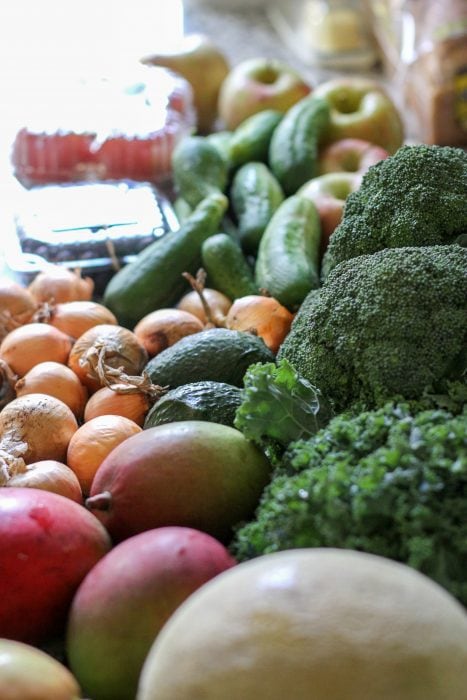
For most of my adult life, I have lived at least 25 miles from what the majority of Americans would consider a "normal" grocery store.
And for the past two years, I've lived with my family of six 90 miles from the nearest standard grocery store.
Needless to say, I do not go grocery shopping very frequently.

(Please note: photo was from the past, when it was ok to bring babies to the store!)
In fact, my average span of time between trips to a grocery store is four weeks.
Now that people are trying to shop much less frequently in order to stay out of grocery stores, my own experience of shopping so infrequently has become a bit less strange.
Okay, so maybe you're not trying to go a full month between grocery shopping trips. That's a little excessive.
But maybe you want to go every week instead of your usual every few days. Or maybe every two weeks instead of every week. It's doable. It just requires a little adjustment in your planning and execution.
So, without further ado, here are my ten tips for less-frequent grocery shopping.
First, before you go to the store:
1) Sort through your kitchen and think.
I find it helpful to physically open the doors of my food cabinets and refrigerator and stare in them while I think about what I need to buy.
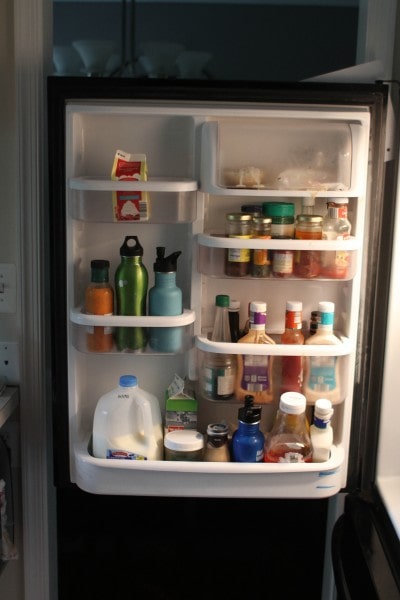
What do you use a lot of? How much of it do you use in a week?
A week is a manageable amount of time to consider your food use, and then you can just multiply that based on how long you want to stay out of a store.
We, for instance, go through about three pounds of cheese a week (my dad is from Wisconsin, which means that my four children are genetically part Cheesehead and they eat accordingly).
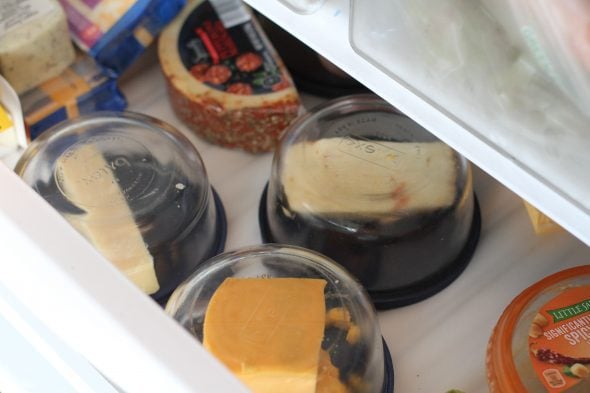
Therefore, when I go to the store, I buy at least twelve pounds of cheese. If you're not used to shopping for larger quantities, figure out beforehand how much you need to buy and put that number next to the item on your list.
I should note that detailed menu planning is not the best fit for this sort of shopping. It works much better to buy the ingredients and then figure out what to make with them.
You should have a general idea, but must be willing to deviate from the details.
2) Next, make a list.
No, seriously.
You must have a list.
Perhaps you're an impulsive, fly-by-the-seat-of-your-pants sort of person who finds the idea of a grocery list restricting.
I understand this, but those flying pants are going to be looking pretty dirty if you forget to buy that laundry detergent you ran out of.
This is particularly true for things like laundry detergent that you may not buy regularly. Those are the things you will forget.
Keep a running list--either old-school with a piece of paper on your refrigerator or new-school on your phone--of things you run out of as you run out of them. To that running list, you will add the things from the previous step that you figured you use frequently.
For my fellow throwbacks who prefer to use a paper list, remember to bring the list with you to the store. I'm sure this isn't a problem for those of you accustomed to keeping lists on your phone, but if you have a paper list, make sure it gets to the store with you.
(Not that I have ever driven almost a hundred miles to go to the grocery store and forgotten my list at home. Ahem.)
When you get to the store:
3) Shop from your list, except when you don't.
Your list is important as a reminder of what you want to have, but you don't have to be--and shouldn't be--blindly devoted to it.
If, for instance, you have "six packages of chicken" on your list, but the store is out of chicken (I understand these things happen in this brave new world we're living in) or pork is on sale, consider if you can manage with the pork instead.
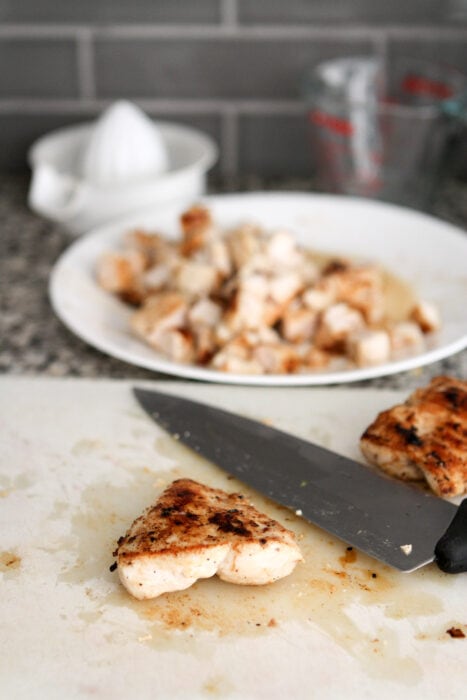
Or fish. Or whatever. Substitute like for like as far as is practical and necessary.
Just be sure to keep the quantities the same.
4) Buy with longevity in mind.
If you love salad and always buy loose leaf lettuce, by all means, get that. But then consider that romaine lettuce lasts about twice as long as loose leaf lettuce.
So get one of each kind to extend your salad days (heh).
And then get cabbage, because it will last for over a month in the refrigerator.
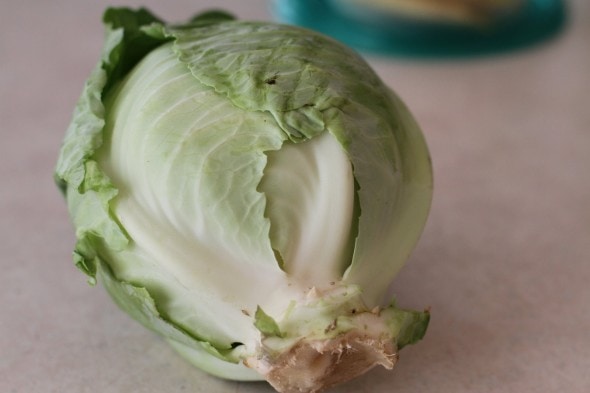
I always buy mushrooms to use within a week or so, but I also always buy carrots and cabbage in quantity, because they will still be hanging on when everything else fresh is long gone.
And then, buy frozen or canned produce. When the last carrot has been consumed by my locust-children, there will still be frozen green beans to fall back on. And speaking of frozen green beans . . .
5) Make friends with your freezer.
I absolutely couldn't go a month between grocery runs without our big chest freezer. But even if you only have a small freezer, put it to good use.
This is where the extra perishables are going to live, as far as is possible and practical.
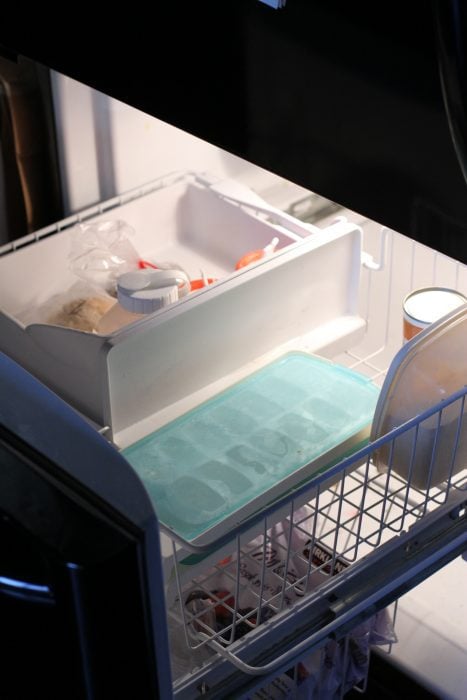
Meat, butter, milk, grated cheese, nuts . . . all these things will keep in the freezer for months.
Frozen fruits and vegetables aren't as good as fresh, but they'll be there in the freezer when the fresh is gone. I shop my freezer far more often than I shop at a store.
6) Plan on spending more than you are used to.
You don't need to go crazy and buy without regard to price, but do expect to be spending a lot more than you would normally.
You are not going to be buying twice the amount of food for less than twice the cost. It will probably make your heart skip a beat when you see the total at the register.
But it's almost a guarantee that spending more, but more infrequently, will save you money in fewer unnecessary purchases over the long run.
When you get home:
7) Find a place for everything as soon as you get home.
Obviously, perishables will go in the refrigerator or freezer.
If you have purchased, say, meat in larger packages than you usually do, make sure to break it up into smaller, more usable packages before you put it in your freezer. (I use gallon zipper bags most frequently.)
You may have to be creative when it comes to storage of non-perishables. I have a miserably small glorified cupboard that claims to be a "pantry," and therefore store extra non-perishables in my children's bathroom cupboard, in some of my pots and pans cabinets, and even on the floor behind my woodstove.
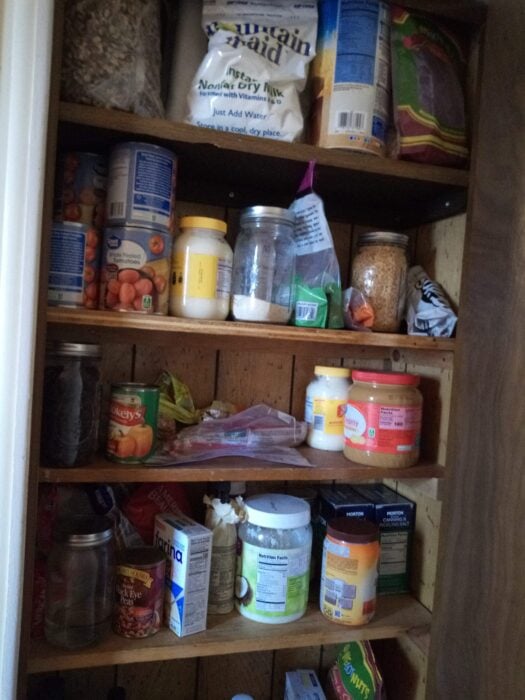
Just make sure to group like with like and remember where you've stored things. Write it down if you need to.
Or else you may find you've somehow misplaced the gallon jug of white vinegar you were sure you bought three weeks ago. (Speaking from personal experience there.)
8) Use your food wisely.
Yogurt before cheese.
Lettuce before kale.
Bananas before apples.
Ripe avocados before everything.
Keep an eye on your perishables and use them in the order in which they will last, from most-perishable to least. This means that you will be flush with all sorts of foods in the beginning and will be down to the immortal cabbage and hard cheeses at the end.
This is the natural cycle of infrequent grocery shopping and means that you will be REALLY EXCITED to have avocados and bananas again when you do go to the store next.
9) Be flexible.
This may be difficult if you're a real planner, but if your lettuce is on the verge of collapse, you need to have salad that day, not the stir-fry on your menu plan.
You must also be willing to use substitutes for things. If you're out of sour cream, try yogurt. If you run out of chocolate chips for cookies, make oatmeal-raisin cookies instead.

Put the ingredient in your search engine with "substitutions for" and let the Internet be your guide.
And if there's no substitution? Resign yourself to making something else.
It's not the end of the world, even if it feels like it when those brownies you were counting on are a no-go without the crucial chocolate chips that someone seems to have eaten.
10) Accept that you will forget something and also that you can live without it.
Yes, it will be a sad week without the cream for your coffee (a true sad story from my own life), but the milk will be a workable if unsatisfactory substitute in the meantime.
And you will most definitely not forget it the next time you go to the store.

One last note: it's going to feel stressful the first time you do a big shopping trip. It takes more time, more mental effort, more physical effort (an overly full grocery cart is excellent resistance equipment for a workout), and more money.
But it will get easier with practice. You may even find that this method of shopping works better for you and your lifestyle.
Even if it doesn't? This too shall pass.
In the meantime, definitely buy some cabbage.
___________________
Kristin, thank you, thank you for all this helpful info! You are the best.
Readers, if you have even more tips for infrequent grocery shopping, would you add them in the comments?
P.S. You can visit Kristin's blog, Going Country, by clicking right here.


Thank you for these wonderful tips.
Long time reader, first time commenter.
While all these tips are good, I think it misses out on some key reasons why many don't shop to cover longer periods of time.
For instance, in my case, I'm feeding a family of 6. We go through 3 gallons of milk and 6 tubs of yogurt a week. Sure we can make yogurt but at that quantity, buying/storing the milk for it also gets tough. (Also any of the shelf stable non-dairy milks cause stomach aches to someone or the other in the house). Our main constraint -- the space in our fridge/freezer. We live in a rental -- we can't upgrade. Or buy a standalone freezer without the landlord's permission. And even if we do, where would be put it?
I digress but my point is that a lot of this advice works only if you're in a suburban or rural home where there's enough square footage for extra storage.
Oh, for sure. There are definitely cases where this is easier to do or more difficult to do. A small apartment in a big city is not a place where most of these ideas can be implemented. Kristin has always lived pretty rural, though, so she's just writing from her experience.
And for those of us who do have a little more space, hopefully the ideas will be helpful.
Like Kristin, I do not have a pantry in my kitchen at all, and I don't have a lot of unfinished storage space. So, food is stored in my cabinets, and my appliances are sprinkled throughout other random closets (my griddle lives in my linen closet!).
But at the same time, I do have a chest freezer, and that gives me a lot more flexibility.
Saras, you might want to check out a copy of the book, The Tightwad Gazette from the library. While the author, Amy Dacyczyn, is much like Kristin, and lives a rural lifestyle, she offers pages of work-arounds for grocery shopping, storage and cooking for a large family or single folks. I specifically remember one of her readers from NYC stored canned goods under the bed. 🙂
If you want to do something, there's always a way to accomplish it, you just need to be creative, flexible and willing to think outside the box.
Yes, Bobi, I do this too. I have under the bed plastic storage containers so I can easily see what I have and it keeps out dust and "vermin". Ha!
We used to live in an apartment that had the toilet in a sort of recess in the bathroom, with a fair amount of space between the toilet and the wall. My husband built two narrow shelves and we stored canned items in those shelves. He put them on small wheels and we kept the open side of the shelves toward the wall, mostly for sanitation but also because I didn't want to have visitors staring at our canned beans in the bathroom, so when we needed to access the shelves we could pull the entire bookcase forward enough to pull a can off a shelf. I thought is was a pretty ingenious use of space.
I love this! Realizing that we could freeze milk was a total game changer for us. I live in NYC and we usually shop once a week at the farmer’s market and at the regular grocery store. The farmer’s market is now too crowded with people who don’t wear masks or distance 🙁 we’ve obtained many items from online ordering (eg, bulk nuts and oats) to keep the grocery runs for items that are really hard to get elsewhere (eg, dairy, produce). We’re still getting used to online ordering for dry goods and planning further out as deliveries take a couple weeks to arrive, but this skill building is a good thing.
Yes, milk and dairy are a big issue. Milk was actually the one thing I was most concerned about when we were thinking of moving to our current very-rural area. And we do run out sometimes, even with our big freezer.
I certainly do not have the experience to write something like this from the standpoint of a space-challenged city dweller, but I hope there will still be something here to help people who are in that situation think a little more about what they may be able to do to stretch the time between grocery runs.
I've been buying the shelf-stable whole milk for a grandbaby who is over infrequently. It keeps very well, and if she doesn't finish it, I just use the rest in recipes, as we drink skim--aka "white water" to some. 🙂 I also keep powdered milk in the house at all times. Used dry in recipes, but also I mix up the quantity I would need (a day in advance) to make homemade mac&cheese. You can't tell the difference once it's made and baked. I make a lot of it in the summer for picnics. I hate using 4 cups of purchased milk. A litle pre-planning isn't hard.
If you want to make yogurt, my dad always used reconstituted powdered milk for ours - in fact we only had powdered milk for everything. Anyway, it works for making yogurt and is easier to store than liquid milk.
Thank you for the tips. I'm down with the flexible meal planning, the on-going list, using the freezer, and so on. The stumbling block I have with less-frequent shopping is fresh produce. We're big on fresh produce and getting enough of what we want for even a week, is a challenge. My hat's off to you for making it work for you.
Especially with that little "pantry" of yours.
I'm big on fresh produce, too, and it's very sad for me when I run out. It does make me much more appreciative when I DO have anything I might want on hand, though, and my kids get way more excited about bananas than you could imagine possible. 🙂 I also have the space--and experience--to have a big garden, which is a very important part of the equation for me.
Prior to the quarantine, this was a little easier as everything was in supply, but, I shop once a week. End of story. Clearly, it’s not as infrequent as Kristin (great tips by the way!) but a lot less infrequent than many, many others who shop daily or several times a week. I feel like it cuts down on impulse buys (in the store less), saves gas and time and allows me to take advantage of sales. It’s the right mix for us.
I’m not cruel but I’ve asked my family to adopt the once a week shopping with me. I’m obviously going to run out and get Tylenol if we’re out and someone gets sick but we try to only shop (again pre-quarantine) once a week. We’ve all gotten good at substitution or doing without. We won’t die if we have to wait two days for more chocolate. But, it has helped me to learn how much to buy of what. I’m so used to it that we likely only break the once a week rule about twice a year, and that’s usually an “emergency” run for someone who is sick.
I think starting with a new goal for your family is good - if once a month is too much, try for once a week.
At the beginning of the quarantine, when stock was plentiful, I did every two weeks to limit my trips. I’m using online shopping to try to fill in the gaps for me as well. I’m using curbside pickup now that I can get a spot. I had to use delivery for a bit, which was more expensive but it kept me out of the store.
Anything you can do to limit your trips helps.
If we run out of something we do without. We don’t “need” milk. It’s okay if our kids drink water until we get back to the store. It’s not always enjoyable but it sure teaches them to be grateful.
These were good ideas and a lot of what I have been doing. I don't know a month is a long time, but I am managing 2 weeks pretty well. We ran out of milk once, and I now know what I need for a week and plan accordingly. With produce, I find that I plan to use the most vulnerable produce first and the most shelf stable items last and that works really well. I've also been using my freezer more. We've been making homemade pizza and we always seem to end up with more toppings than pizza (esp. pepperoni), so I've been making a double batch of crust and we make a whole lot of pizza (12 personal size pizzas). I bake one up for each person the day we make them, then the rest get frozen (using up the toppings) and will be baked later for a super easy meal. I have found writing out a menu plan for 2 weeks works well for me. I have the ability to flex it, but if I plan 2 weeks of dinners, I know I have plenty to feed my family for the 2 weeks before going to the store again. It has been working really well. Fortunately, fresh fruit doesn't last long around here and we all like hearty apples and oranges.
Kristin, Great tips! I'm happy to see you eat a lot of cheese with your elk! 😉 (please know a lot of us really enjoy your wild game reports! It's SO different from my suburban life that I truly look forward to your food comments every week.)
Thank you, Bobi. Would you believe I grew up in the suburban life? My current life still seems exotic to me sometimes, so I get it. 🙂
Once avocados and bananas ripen, place them in the refrigerator, which will stop them from ripening further. They will hang out in their happily for up to another week, sometimes longer.
I love this column. It reminds me of a favorite conversation I had with my mother--born in Georgia in 1909. We visited the site where their home had been, long gone. I asked if we walked around the property we might find old bottles or anything. "Oh, no! We didn't throw anything away." They went to the store in Braselton, Ga. twice a year! The mule hitched to the wagon. It is where she went to the book counter and asked for a recommendation for her first book: Alice in Wonderland. Thank you!
The only way shopping at 2 week intervals came to play for me was because that is how my husband gets paid. Buying things in larger packages and separating them at home was a huge help. You get better prices that way as well. The only zippy bags I don't reuse are if they hold meat or fish. Those just get tossed out but all the others get a wash and dry. And I choose not to have to go to the store every week. When my girls were little, now gone from home, I even planned out our snacks for the day so I would know how much to buy.
I separate out meats and fish and poultry and put them in old bread bags. And then I put them into gallon freezer bags, which usually fit several bread bags of meat into them. That way, I throw out the less expensive bread bags when I am using a packet of meat up (I have also used wax paper bags from cereal boxes, although we seldom eat cereal anymore) but keep the outer (and still clean in the sense of no contact with meats) zip locks and reuse them constantly until they fall apart.
These are great tips! I used to shop once a week, and now I'm trying to do every two weeks. My biggest challenge is storage. I have a pretty small house/kitchen so I've had to get creative too.
Here are the tips I would add:
1) You can fit an awful lot in the trunk of a Honda Civic, or any other car. That has become my extra pantry!
2) Be sure to clean out your fridge/freezer. Don't waste space with a container of freezer-burnt mashed potatoes from last year.
3) I get why Kristin advises against meal-planning, because flexibility is the key, but I would push back a little on that. Just a little, and maybe because I view meal-planning a little more flexibly to begin with. Don't create a definitive schedule, but definitely be sure to list out some meals and recipes that you want to have and be sure to buy the ingredients if you can. And you may need to think a day or two in advance about what you are going to eat so that you can pull stuff out of the freezer in time.
Great tips! I shop every two weeks, but with the pandemic, I've been stretching it to three. I find I am saving money and wasting less food -- this forces me to use everything. In addition to cabbage and carrots lasting a long time, apples and oranges keep a long time, too.
Thanks for the tips, Kristin. Being flexible about my menu plan has long been a problem for me. but now I'm forced to bend a little because I often get to the store and something I planned to get is sold out.
I also enjoy your "wild food" reports. I live in the city now but I grew up in a rural area and reading your comments take me back. I never ate elk but I have had moose!
If you have an Android phone, there's an option called Keep Notes. You can have multiple lists here, I swear by it. I have a list for each store I may visit (Costco, Target, etc). I just keep adding to it as I think of something. I also use this for books I want to read. I also have a list for meal plan ideas.
My favorite app in the world. I love a list!!
I use Keep Notes, too. I have a master list of everything I buy at Costco. I just put an "X" next to the items I need. When I'm done, I leave the list as-is. Next time I'm prepping for a Costco run, I can see exactly what I bought last time. Then I delete the old exes (lol) and put in new ones.
I thought of another tip: use shelf-stable substitutes when possible.
* powdered milk in recipes
* boxed tofu instead of fresh
* buttermilk powder instead of buttermilk
* dried mushrooms
What else? I'm sure there are others, I just can't think of them.
I've used powdered eggs for baking. I actually started this with powdered eggs whites because I hate separating eggs. 🙂
I buy the water-packed tofu and always store it in the freezer. After thawing, the texture get firmer, which my family prefers, plus it stores for much longer that way.
This is hilarious! And I can relate. Every summer I do a big shop right at the beginning. The kids are home and it is my busy season for work. I usually spend 5 or 600 hundred and buy two of every household supply you can imagine and stock the freezer with meat, frozen peas, broccoli and butter and, always, buy several cabbages. I was crying laughing about the "immortal cabbage". I have one in the fridge right now that is from the middle of March. Still going strong!
Have you noticed, Kristin, that the Sysco foods are a similar price or higher than the prices for non-bulk, retail-packaged foods? I was a little surprised when I checked prices with our local restaurant wholesaler that nothing, literally nothing, was cheaper.
My hint is to read the store's ads — either online before you go or in the doorway of the store. Often something that's not on your list will be on sale and can add some variety or depth to the menu. This meshes with several of the tips above and sometimes can be a very valuable addition.
Some things are definitely cheaper--the only time I see butter for less than $3/lb. is holiday sales, for instance--but some things, like bacon, are not. The point of the Sysco program is that when I use the Sysco food, I'm not driving into a populated area to get food. That's why the school set it up: to further isolate community members. So I guess if it's something I really needed to have but it cost more through Sysco, right now I would still get it through the Sysco program for that reason.
I'm glad it's competitive, at least! And that's a good rationale for doing it. I know that the pattern change has also resulted in spending more overall for us, but that is what it is.
While the idea of once a month grocery shopping doesn't appeal to me, Kristin's tips like using most perishable items first and being flexible when shopping are good for tips for everyone. And I loved Kristin writing style. So much so that I immediately jumped over to her blog after finishing this post. Thanks Kristen for introducing me to her.
We keep a menu planner on a white board in the kitchen. It's a loose guide, but it helps us stay organized. I make notes on the planner so that we remember steps to making the meal. For example, Monday I may write "thaw meat" if we plan to make meatballs the next day or I may write "make bread" if the next day we plan to have paninis. We also keep a running grocery list on this board, so we know what we need when we go to the store.
Wow—this was helpful. I have a question about freezing milk and butter, and other dairy products. Do you keep them in the same containers? Or something else? How long do they keep in the freezer? Thanks in advance.
I put butter in the freezer the same way it comes from the store. I think it would probably last over a year, but I bet that the USDA probably has some other guidelines for it.
Milk can be frozen in a gallon or half-gallon container, as long as you open it and take some off the top to allow for expansion. I often split my milk into smaller containers, though--I use old peanut butter jars, because we have big ones and a lot of them (four kids=a LOT of peanut butter consumed). Plus, they're plastic so I don't have to worry about breakage. The main benefit of this is that they thaw a lot faster, so I don't have to wait a full day for an entire gallon of milk to thaw. I freeze whole milk, and have to shake it wildly before using it. I sometimes notice a bit of separation of the solids if the milk sits in my kids' cups for a bit, but they haven't complained yet. I can keep that for a month with no problem, and I bet it would last longer.
Unfortunately, the only kind of cream I can get--which is ultra pasteurized commercial heavy whipping cream with additives--doesn't freeze well. It's weirdly thin when it thaws. I bet real cream wouldn't be a problem, though.
Grated cheese lasts months. I've never tried freezing yogurt and sour cream, but I've read they separate. That might not be a problem for baking, but would certainly be a problem for fresh use.
Thanks!
I just freezer my butter in the original package too. So easy and it works great!
Sour cream when thawed changes texture. It becomes kind of grainy (hard to explain it without tasting), but it does taste the same to me.
I don't think there would be a problem freezing yogurt. Remember frozen yogurt stores were all the rage once. But how would it look/taste after thawing? Can't answer that.
If you freeze yogurt by just putting it in the freezer, it will usually become hard as a rock. Kinda like how if you just put cream in the freezer as-is, it'll freeze solid.
To make a soft product like ice cream and frozen yogurt, you usually add other ingredients and churn it while freezing.
Frozen and then thawed yogurt could be used in baking, but it wouldn't be very good just eaten in a bowl with fruit. 🙂
Fresh berries will last much longer if u rince them in vinegar water( about a 1/4 to a 1/2 c) let dry and ut in multiple containers,covered by a paper towel. If u add sugar do it to 1 container at a time. We eat the more perishable raspberries first saving the blueberries. I have gotten 3 weeks out of the blueberries this way.
this was a great post!! thank you so much!!
How do you teach your family to pace themselves when you have 2 weeks or more worth of food come in at one time? I have tried hiding a few of the more expensive/less healthy things, but that only goes so far.
Now that I'm getting 2 or 3 of a thing at the same time - trying to cut down on trips and also take advantage of what they have when they have it, I'm noticing we're going through the food more quickly. I know it's a good problem to have, but my daughter ate all the celery and the bit of cantaloupe I bought on the day I bought it! We had a chat about portions and making things last, but how do I help her get on my side with the new food plan?
Any tips on getting the family to pace themselves when the new grocery hauls come in with all their favorite things?
My 10 year old and I came up with a plan to make our cookie haul last for the 3 weeks. We agreed that 1 serving could follow every meal (3 total per day) but that we could eat them whenever we wanted but when our servings for the day were done, they were done. We also explained that when the sweets were gone, they were gone- we were not going back to the store "early" for treats. It's mostly worked and it's helped route him to other options when he goes for a snack. I'm also trying to help by forseeing when he will be hungry and making a plate for him of things I want to use (berries, celery, the last of a box of crackers, etc). (We also have a general rule that we eat what is open before we open a new box- cereal, crackers, etc).
I am a complete dictator in my kitchen. My kids know that they don't eat anything without asking. Not that they don't occasionally sneak into the refrigerator and eat like a whole bag of apples without my knowledge, but they also know that once it's gone, it's gone.
That said, I have some small children who I can't trust not to waste food/eat too much of it, but if you have older children, older kids will eventually figure out that they're going to not have what they want all the time when they want it. They won't like it (mine don't), they'll whine (mine do), but they will learn.
If we buy multiples of something shelf-stable - we've taken to leaving the extra bags in the car to discourage mass binging of the crackers and chips. 🙂
Thanks! These are all great tips. (It's not just my kid - but also my husband.) I think the key for us will be if I can be more proactive and head off the snacking as suggested and get a bit better at rationing the food. I can't really police them, but I can try and make the food less accessible.
Sounds like I also need to be more patient as we all settle into new habits.
Love this post! This seems like a good time to ask for advice. My son does shop once a week for the household, but with seven in the house and three of them being huge cereal/milk users we use at least six gallons of milk a week (about $4 a gallon here), which necessitates frequent runs also to get milk and means more chance of exposure to infection. And I have no/nada/zilch freezer to use. Only have fridge and its freezer gave up/waiting for Memorial Day sales. So, anyone know of good/best shelf stable substitute, or other advice. Powdered milk, if even available, is dreadful for just drinking. I guess making a hearty eggs and toast breakfast would be doable, but-so-much-work for me.
If mixed powdered milk is really cold and a little vanilla is added, it's palatable. 🙂
I buy the shelf stable milk homogenized whole milk. Once it’s put in the refrigerator and cold it tastes the same to me. I’ve always kept some on hand for emergencies. I bought a package of 6 recently from Amazon. The brand I bought is Natrel.
How about my muffins (make as healthy or unhealthy as you like)? Quiche or frittata? Hot breakfast cereal (could be oatmeal or any other grain; we often reheat rice w/a bit of liquid to make it creamier). Another option is to make a breakfast casserole—assemble the night before and bake in the morning.
You might also take a look at how much milk your family is adding to the dry cereal. Maybe they could cut back?
Should have just been muffins... No idea where “my muffins” came from.
Try mixing powdered milk with liquid milk. find the ratio that is acceptable to you. it will stretch your fresh milk somewhat.
Oatmeal is cheap and filling. Your son's can add a little milk to make it more like cereal. You could make up pancakes or waffles at the beginning of the week. They can then just warm them up. Yogurt with fruit is also quick and easy.
I've not done this personally, but my grandmother used to mix 1/2 fresh milk and 1/2 powdered milk to stretch her milk supply when pennies needed to be pinched. She'd save and clean an empty milk jug, pour half of a new gallon into the second bottle, add the appropriate amount of powdered milk, and then top both gallons off with water, seal and shake. 🙂 I'd test a small amount first to see if the real milk is enough to offset the powdered milk. She would also use only reconstituted powdered milk when baking.
I came on to say just this.
Also, prioritize what milk you use for which purpose:
- 100% fluid milk for drinking as is; and as you do this, gradually increase the dilution rate (maybe 10% the first gallon, 20% the next, and so on);
- 50% fluid, 50% condensed for things that use a lot of milk and taste like milk, such as milk shakes and hot chocolate;
- 100% condensed for things that use a lot of milk but taste like other things, such as soups and french toast; and
- 100% powdered for things that use only a little milk, such as baking.
Maybe get dairy milk for the first week and nut milks for the rest of the time? Nut/soy/coconut milks last way longer and you can even get shelf-stable varieties so they don't take up fridge space. You can't tell the difference when they are in smoothies and baked goods as long as no one is allergic to it. To free up fridage/freezer space, you can sub some of the fresh meat for canned meat, dried jerky dried/canned beans, and nuts for different sources of protein. I think dairy milk can also be frozen and just blended back together when thawed. In that case, freeing up even more space by having canned veggies could be helpful!
When we lived in Alaskan villages that were not connected to the road system so everything was flown in, milk was over $10/ gallon, and this was nearly 20 years ago. My husband seldom asks for anything special, but he does love his milk so we swallowed hard and bought a gallon a week. I bought full fat and then after he had used up about a quarter of it, I added filtered water to fill the gallon container back up. It tasted more like 2% after that, but he didn't mind it and it saved us a few bucks on every gallon. I still do that now. The only thing is that I use tap water because our water tastes fine, while village water tasted heavily of chemicals so I used something like a Brita filter system back then.
Thank you for all these ideas! The situation seems much more doable now.
To make powdered milk taste better, add a splash of cream.
At the beginning of this, we bought some shelf stable almond milk from costco. Totally fine for cereal and in baked goods and take up less room in the refrigerator because you only need to have the one that you're using refrigerated.
I made half a gallon of 1.5% fat milk from powdered by mixing 61.3 oz of powdered milk (6.1 oz milk powder, water up to 61.3 oz), and then added 2.7 oz of heavy cream.
I thought it tasted like normal milk, though my wife and daughter didn't like it, but that could be worth a try, assuming you don't get non-fat milk.
Great post chock-full of helpfulness and humor. One of your pictures made me say out loud "now why didn't I think of that?!" - the one in which your glass Pyrex storage containers with the dark lids are stored upside down so you can more easily see what's inside. Thank you for that!
That photo was from Kristen-with-an-"e," so she gets the thanks for that one. The only photos I provided were the one of my daughter in our grocery cart (despite the caption, I would not recommend bringing a baby--or anyone else--to the grocery store right now) and the one of my ridiculous pantry. The other photos are much better; that's how you can tell I didn't take them. 🙂
Ah, yes, I like to store my cheese upside down. The cheese drawer is on the bottom of the fridge, so if I store them right side up, we can't see the cheese very well. Upside down, it's easy to see what there is to eat!
Two of my favorite tips are to use a shopping list app (I use the free version of OurGroceries and really like it. You can categorize your list by store area- dairy, produce, baking, etc.-so you’re not running around aisle hopping). I am prone to forget a paper list, but I always bring my phone.
My second one is a new-to-me idea, which is to make a household inventory sheet. I include pantry items, health/beauty, paper products, pet supplies, even lightbulbs, so that I can check the sheet before I shop. That way I’m certain we have enough in stock and I don’t have to randomly run to the store for one or two items.
I mentioned this on another post recently, but it bears repeating. Debbie Meyer Green Bags are amazing for making your fresh fruit and veg last longer. These handy bags at least double fresh food's usual life expectancy, in my experience. Just pre-pandemic, I impulsively bought a new pack. I paid $6.99 for a 20 pack at TJMaxx, but I see Amazon sells the same assortment for about $10. A little poking around on the internet might "produce" a lower price (yuk, yuk). They supposedly are good for ten uses each, but I never count, I just keep using them until they disappear, like socks.
Pro Tip: Use twist ties, or twist bags closed and just tuck under. Bread closures are hard on the bags and shorten their life.
Disclaimer: Um, there's really nothing to disclaim. I have no connection to DMGB or any of their channels of distribution. I'm just a happy customer. In fact, it was my mom who turned me on to them. Apparently they're one of those "As Seen On TV" things, but I don't watch much TV, and never commercials.
One more thing: I'm a die-hard Costco fan, which totally helps space out the grocery shopping trips. The last time I went was because I was low on dog food. If you have critters, I would add pet supplies to your list. They're easy to stock up on and that saves trips, too.
I love this guest post. Thank you KrisTEN and KrisTIN!
My dad was a career military guy, and he only got paid once a month. When he retired and took a position as a college professor, he still got paid only once a month. Mom would go to the commissary (35 minutes away) once a month and load up the car. When she got home, everyone helped unload and put things away. The food was really stacked up all over. She only went to the "normal" store (around the corner, literally) for milk and bread and produce.
A wonderful guest post, thanks Kristen and Kristin!
I'll be honest, I would dread moving to a place so far from a store, but I see it can be made to work. I used to buy much of my groceries one weekend a month and just do little pickups about once a week for fresh goods. I've never had to go without getting anything else for a month, though.
One tip, and I think it was here that I read it, was to store your milk in the back of your refrigerator, not on the door. It will last much longer, especially important if you are storing a second gallon for later. It allows my husband and me to buy it by the gallon, which is cheaper.
Give yourself time to do all this shopping and take a snack!
I find that if one tends to have a set repertoire of menus, one can shop with a list to restock the pantry and fridge, just replacing the usual items, then make meals out of what is in the house. If one likes to try new recipes, it's best to take a list made with the menu in mind.
Have a backup plan and shop for it. Culinary disasters, emergencies, extra-long events, all make for days when it's good to have back up quick foods, like frozen pizza or soup in a can or box, so be sure to include that on your list.
We lived in a small home for years. I stored food under beds in tubs and in the cabinets over my washer and dryer. I didn't have a pantry, so part of my kitchen cabinets stored food, too. My sister replaced some kitchen chairs with a bench and stores food in the bench, and I know someone else who uses a flat-topped trunk for a coffee table, and keeps food in it. Hanging baskets can hold some produce that doesn't need to stay cool.
With this pandemic, I've been thinking about reducing my trips to the store for now and for the future. I currently shop every two weeks, down from every week. It's harder now, since some items are still chronically out around here, but I think this might be the start of my effort to shop less often, and hopefully save more.
So... any cabbage recipes to share with us?
I make slaw and roast cabbage wedges in the oven with olive oil, but I would be happy for suggestions! Thanks for the article, totally agree with all points except the meal planning: I find a loose plan helps ensure I do buy yeast or mozzarella
I tend to mostly make coleslaw with cabbage for my family--both a more traditional creamy one and a more vinegary one that I like with tacos and so on--because my children prefer almost all vegetables raw. When I cook cabbage, I most frequently make what my grandmother called "burned cabbage." It's actually caramelized, and basically is just a lot of butter and thinly sliced cabbage cooked covered until the cabbage is soft, then cooked uncovered at a slightly higher heat until it's browned and sweet and delicious. I also make a variation on that with thinly sliced onion and grated carrots in it. And sometimes I'll add grated cheese to the burned cabbage. That mixed with mashed potatoes is a complete (and completely delicious) meal for me.
With cabbage I sometime make cabbage soup and add onions, celery & shredded carrots to it. A meal I do is; cabbage rolls made with rice, ground beef, onions add spices, made with can of tomato sauce & can of tomato. You can check recipe on internet for details.
Here's a different one, a flexible Japanese cabbage pancake-like thing - Okonomiyaki.
https://www.seriouseats.com/recipes/2016/05/okonomiyaki-japanese-pancake-cabbage-recipe.html
Or this recipe, which does a better job of explaining how to vary it.
https://www.washingtonpost.com/recipes/okonomiyaki/13281/
Thank you so much for all the cabbagy ideas! We also do okonomiyaki. Oh and I forgot homemade sauerkraut
Cabbage rolls or if that's too fussy, cabbage roll soup or casserole. Also cabbage and keilbasa soup - so good!
Also chop cabbage thin to used in homemade ramen bowls, with a bit of chicken or fish, my kids love it.
@kristin @ going country, I add cooked noodles to the sautéed cabbage and onions. Delicious.
Having canned goods stored when bought on sale is helpful for bulking up meals! Canned tomatoes can be made into almost anything. Also, opting for dried fruits, can maintain nutritional benefits (like with banana chips since they last way longer than bananas). Choosing to buy dried beans, nuts, and seeds don't take up the precious freezer and fridge space and also help cut down on costs when substituting these for more expensive proteins like tofu, chicken, and beef.
Kristin, you are a hoot! Thanks for your advice and your humorous presentation. I typically try to avoid shopping more than once a week but I usually go to multiple stores in one day. I've changed my shopping practices and mostly stick with one store a week. I find I am spending more money as I never know what the stores will have week to week. It's been a learning experience for me. Your thought processes are helpful.
I saw comments where people are concerned about having enough milk on hand. Not sure if I am repeating what others have said, but when all this craziness began, I bought several cans of evaporated milk. If we have to completely avoid stores, we could always reconstitute it. No, it's not the same as fresh milk but it would do in a pinch. I also keep hot chocolate canisters on hand to sub in for milk when I need to stretch it out. Yes, there is more sugar in it, but the kids think it's a treat.
Powdered milk is what we have available here, and while it's not as delicious, it lasts an eternity on the shelf!
Excellent suggestions. I admire your ability to maintain a once-a-month shopping schedule with a large family. When my children were teenagers, we used 5 gallons of milk a week. It was not unusual for one of the boys to dump an entire box of cereal into a mixing bowl with some milk for an afternoon snack.
I cannot imagine trying to feed them in the current climate. We have 3 adults in my household and must shop once a week. The stores near me have put stringent limits into place. I had 2 packages of chicken breasts (4 breasts) and 2 packages of thighs (8 thighs) in my cart at checkout. I was told that I could have one or another, but not both. This is what I needed for a two-week period.
I wondered if this was an issue in other parts of the country
We haven't shopped for meat recently, but are baffled why there is no margarine! For over two weeks now, in the Midwest. Any small shipments seem to sell out quickly.
I live in Arkansas. Butter and margarine are tough to find here too. We can only buy 1 bag of rice which is always sold out, 1 package of pasta, I tomato sauce, 2 cans of soup, 1 container or milk or soy milk( not both), 1 can of tuna or salmon, 1 bottle of shower gel. It’s crazy how they put limits on everything. I have to bring my husband or teenage daughter with me when we shop for our family. They get their buggy. I get mine and we go thru separate registers. My husband has his credit card snd I have mine so that works out okay. I have to give a big ole pile of cash and cross my fingers she isn’t too tempted to impulse purchases at the register like m and m’s and bubble gum.
These are some great tips! One thing that I found particularly helpful in my ability to buy bulk is exploring how to freeze different things. Even beyond the obvious things like meat, you can freeze SO MANY things. I freeze loaves of bread, gallons of milk, shredded cheese, uncooked tortillas, mashed avocados for salsa, cream cheese, butter, and so much more. It's amazing how many things are 100% the same when you thaw them (or so inconsequentially different that I just don't care). It's just taken a bit of time for me to figure out what exactly we need a lot of (like aforementioned milk, kids go through so much!) and search if it freezes well. The answer is almost always a yes. 😀
Great tips!! And if you don't have freezer space, canning is an option.
Katy in Africa,
I am curious if you are the missionary blogger. If you are, I miss your blog, and hope everything is going well.
i totally came here from kristin's blog to read this.
do you guys have a kristin club?
These are great tips! Tomorrow will make it 4 weeks for me. I, however, am a pretty careful meal planner. I started using plan to eat six months ago and it is a huge help. It isn't free ($30/year maybe?) but it is amazing. I don't need someone else's recipes like most meal planning services, but my old system involved my google calendar, pinterest/cookbooks/whatever for recipes, and an app for the grocery list. I'd plan the recipes, go in the kitchen and check what I didn't have to add to my list and then do the usual things (milk, eggs, etc) based on what we had.
Once I put my recipes in Plan To Eat (yep, took forever, worst part), I can schedule them into my menu....and then it autopopulates my grocery list. The list remembers where I like to buy things, so if it says milk it knows to put that on my Costco list but cauliflower is from Aldi. Then I just go to my staples list and add anything from there that I still need. The major change is now I take things off my list (when I already had that ingredient) instead of putting them on. I had to buy some ultra pasteurized milk (and my kids have recently stopped drinking so much of it) and send 3 extra gallons to my moms, but we're on our last gallon and I'm pretty sure that moving into the frozen and canned produce I have, me and my last 2 eggs can limp along almost another week.
You've all convinced me to get some powdered milk and give it a try for recipes though--I only drink milk & water and I'm not about to drink it (I'd rather just drink water I think) but I can give it a try for mac & cheese. Does it separate like real milk?
Every morning I check the fridge to see what needs to be used up, and I use it!
Thanks so much for your helpful tips! I'm trying to get long lasting grocery recipes as I start a Covid cooking club with friends.
It’s so funny! I shopped this way for years and found this article by Googling “how to downsize grocery shopping.” After reading your article, I don’t think I need to. I just got in the habit of making a trip to the store when I run out of salad instead of making do with something else. Thank you for the tips!