Gain-framing vs. Loss-framing
Warning: this post is gonna be one of those rambly ones where I think as I type. Don't expect a lot of cohesiveness here!
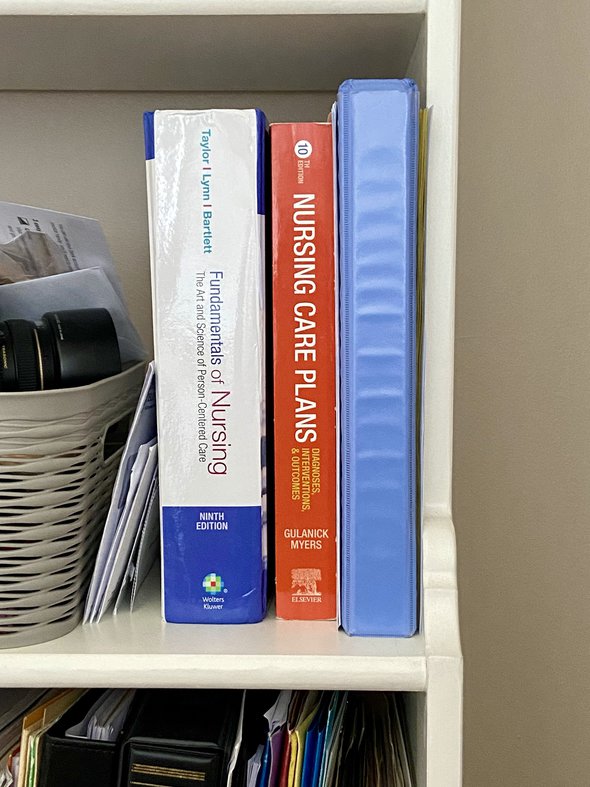
Last week, I had a school assignment that involved pretending to be a nursing school instructor. So, I had to do some digging into the research about effective teaching methods.
We were supposed to design a class focusing on self-care for nurses (and nursing students because nursing school is kinda...hard. Ha.)
You guys already know that some of my favorite forms of self-care include:
- Prioritizing sleep
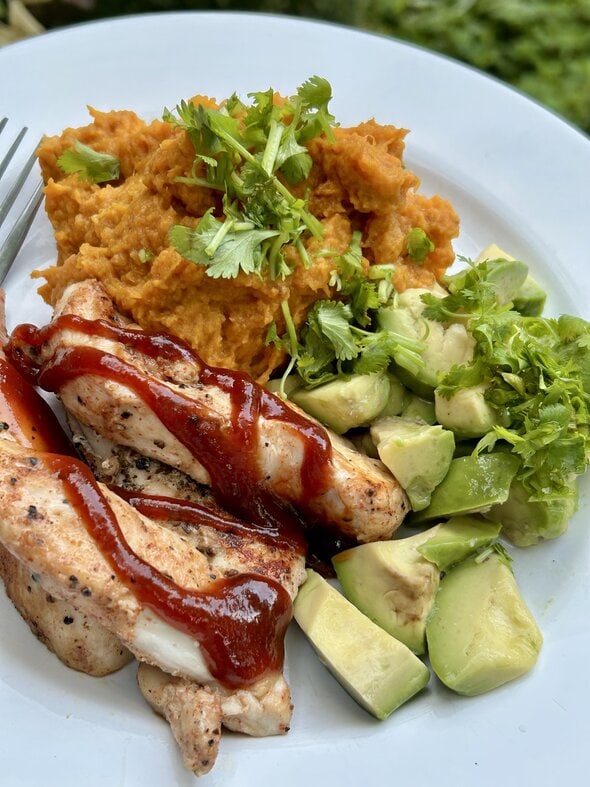
- Eating foods that fuel me
- Moving my body
And you also know that especially when it comes to dietary choices, I prefer to approach it from a positive direction.
I don't think of it as saying no to some foods; I think of it as saying yes to foods that make me feel good.

Anyway, in my search through the endless world of scholarly articles, I came across the concepts of gain-framing and loss-framing.
Basically, when you're trying to convince someone to change a behavior, you can inform them of the benefits they will gain if they make the change (You'll have more energy! You'll sleep better!) or you can warn them of the losses they might incur if they don't make the change (You'll be tired at work. You'll have blood sugar crashes.)
As I thought about this, I concluded that my personal mental framing is usually a combo of gain-framing and loss-framing.
I go to bed on time because I want to feel good the next day (and the implied corollary is that I hate feeling tired! I don't want that.)

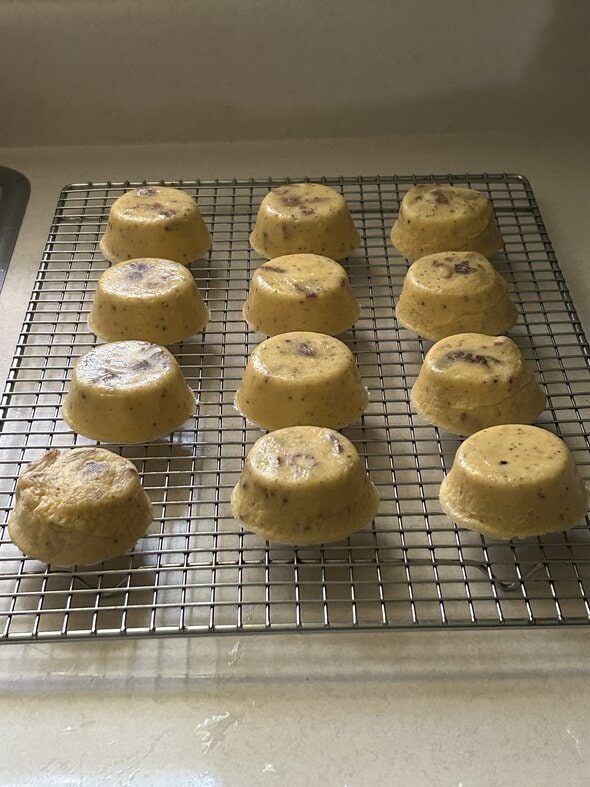
I eat eggs, whole-grain toast, and fruit before work because I want to have energy and stamina for my shift (thus avoiding the misery of feeling shaky and tired at work).
ANYWAY. This train of thought also led me to think about gain-framing and loss-framing when it comes to spending.
Gain-framing would be something like, "I want to have extra money at the end of the month, so I'm going to cook at home."
And loss-framing would be more like, "If I keep eating out, I'm not going to be able to pay the credit card bill, so I'd better eat at home."
Loss-framing seems to tap into fear as a motivator, so it's definitely a less warm and fuzzy way of motivating oneself; I'd rather gain-frame.
However, the research I read indicates that, at least in cases of health topics, a warning of loss is sometimes more effective than gain-framing. And I would guess that our individual personalities also play into whether loss or gain is more motivating.
I'm curious to hear your thoughts on this. Do you find yourself more motivated by making gains or by avoiding losses?
P.S. When I think back to times in my life when I was closer to poverty, I lived in more monetary fear, which made it a little easier to default to a loss-framing way of thinking. So, while I do prefer gain-framing, I acknowledge that this is much simpler to do when you are not living on the razor edge of financial ruin.


Gain framing works best for me. What I do is think of how my future self will be happy - stocking up on food and leaving leftovers on the fridge made me very happy when I got back from vacation. Going to the gym and eating well will make my future body strong. Paying off loans now will make my future self less stressed. Future Me will appreciate clean sheets on the bed and cold water in the fridge. Present Me is very happy when Past Sophie has made the effort;)
Having said that, there's a balance, and I don't want to go through life having an impulse buy or never enjoying the moment!
*never having an impulse buy!
Well put, Sophie! I definitely prefer gain framing as well, but as my dad always says, “none of us are getting out of here alive.” It reminds me to relax and live a little when fear and worry becomes the motivator.
Fear, especially about money, is exhausting. I personally find it more helpful to frame goals/reasons positively on either side, while also acknowledging the consequences I fear. This "sandwich method"--positive, negative, positive--is how we were taught to critique work in college. No one is receptive to a long list of " This is terrible because X, Y, Z," but "X really explained your point well; Y could use _____; and Z brought everything together." We also weren't allowed to say just "I like it/dislike it" about anything, we were required to articulate WHY. Statements aren't helpful, reasons are.
"I want to be healthy; my family has a history of diabetes; I'll replace empty snacks with fruit and only eat when I'm genuinely hungry."
(Not the greatest example, but the coffee is still kicking in!)
First of all, I am thankful that you and your family left the slopes when you did.
I am more inclined towards gain thinking, but like you I am not paralysed by financial strain. There is a huge difference between choosing, and needing to.
@JNL, Agreed!
The gain/loss framing theory made me think of the push/pull factors when making a life change: what are all the aspects of your situation right now that push you towards your goal, and what are all the aspects of your goal that are pulling you towards it? If you think of buying instead of renting, changing jobs, moving across the country, etc. there are usually things that attract you towards the change, and things that make you want to leave your current situation.
Like push and pull factors, a combination of gain framing and loss framing can be a good way to motivate someone, as you’re using some fear activators that can create urgency and lead to action, but also some optimism activators, ‘it’s not all an obligation’.
This is so interesting. And pairing the loss/gain with the push/pull is thought-provoking.
Well said, F. (Bonjour et bienvenue!)
F from France, thank you for saying so well what I was thinking.
I definitely prefer gain framing because I find that it’s more encouraging and uplifting as opposed to being more on the lines of fear mongering. I do live my life with a balance of both, but one motivates me in a more positive way.
Such an interesting topic. I find I do best with making changes or responding to challenges by having some kind of concrete goal - it cannot be too far away or unlikely, it has to be within sort of striking distance - to aim for, i.e., a positive frame. A little bit of shock and fear doesn't hurt when it's health-related, particularly something very serious. I'm NOT advocating for being nasty and over-dramatic, but occasionally a bit of plain speaking can nudge a person to at least start thinking about their choices, but only if there is concrete help offered at the same time. ''YOU'RE FAT LOSE WEIGHT OR HAVE A HEART ATTACK'' is horrible, ''You are very overweight and your heart is struggling in Y and B ways. Can I suggest that you see our dietitian down the hall, she's got some really useful, practical advice, or I can get you discounted rates for the local gym / do you want to talk to someone qualified about how to deal with whatever is causing this" (depending on responses and situation) is actually kind, though it sounds negative to start with.
Interesting topic today. I don’t think in either terms when I’m stressed. I simply react with my habits. To me, you succeed so well because you have such excellent habits prior to Poverty and stressful times. You automatically cook at home because you learned as a teen. You automatically go for walks. You automatically seek peaceful people (your SIL, parents, brother). You automatically practice gratitude (after developing the habit, of course!). You automatically read your Bible, prayed, and sought counseling when times were tough? (That’s a question).
April, ooh yes, what you're saying about doing things automatically via excellent habits is spot-on. I grew up with parents who had good habits, so it was easier for me to develop them. However, my older brother and sister had the same parents and they have terrible habits, especially when it comes to their health. I'm the baby in the family and could die first, but the quality of my life is far better.
very interesting. i was diagnosed with type 2 diabetes in 1994. the nurses taught me what i could eat and what i coudn't. i never tested my blood cause it hurt and seemed unnecessary. did not want to put the focus on diabetes. i just lived my life. all these years later i live my life stay a way from a lot of stuff but once in awhile....anywhoo i am grateful so grateful not to have complications. knock on wood.
with finance i just put every spare cent i had when i had nothing into investing. in 1991 i bought 4 shares of proctor and gamble at $50 a share. now i have more than 30 shares cause i reinvested the dividends. i reinvest all my dividends since i got married almost 26 years ago, it makes a huge difference.
I also do a combination of both. Too much loss-framing and I shut down. The way back from that is to switch to gain-framing. But sometimes I need the shock of a little loss-framing to remind me of something’s seriousness. It can be a little too easy to ignore gain-framing and make the not-great choices in the moment.
Good morning! I am a Libra and to keep the scales balanced I actually consider both the positive and the negative...and try to reach the best decisions for my own joy and happiness.
Good way to change the narrative. I've been in a fear mode for three plus years about everything since unexpectedly becoming a widow, son tend to default to the negative. "I better eat fruit and veg rather than junk or my kids will worry about me." I'll need a good think to try and see the gains in every situation that might give me choices.
I totally get this. I always think "I am my own fall back and no one is coming to rescue me". So the worst case scenario motivates me to think all things through and do the best I can to avoid the pitfalls.
This is such an interesting topic, but first I want to shout out that TODAY IS FRU-GAL LISA'S BIRTHDAY!
Happy birthday, Lisa, from your frugal friends!
Happy Birthday Lisa!!!
Three hearty birthday huzzahs for our Fru-gal Lisa!
Thanks to everyone, Sophie, MB, JNL Erica, J S and A. Marie. BTW, A.Marie, I thought of you today. I went shopping and World Market had kitchen sponges designed to look like classic books.... including Pride and Prejudice...
Happy birthday!
Happy Birthday and all the good wishes I can send to you, Ms. Fru-gal Lisa! Hope you are enjoying your day and many more days with BD treats galore.
Happy birthday!
Singing to you!
Thanks MB. Being the sole survivor of my family, I don't have anyone to party with -- so your greeting is an especially nice surprise!
Fru-Gal Lisa,
I'm late to the party, but happy birthday! Celebrating your day here in Ohio!
I like this framework (pun intended, ha).
I think the idea of what is more effective to change behavior or motivate action depends on what area of life the gain or loss is coming from.
For me, loss-framing is more powerful to motivate healthy actions. Once your health or mobility is lost, it is much harder or impossible to regain it as our bodies cannot just bounce back from everything. Therefore, I focus on increasing my strength and taking action to lower health risks to minimize health loss. Yes, becoming stronger or faster is also a gain, but I know I will max out pretty quickly in this and would rather focus on maintaining what I have in the long run.
As far as gain-framing, I think this works better in your financial life. If I save or work to earn more, there is clear path of gain in more security, experiences, comfort, etc. Also, just to ward off loss, it helps to have gained a buffer.
Yes, loss of security can be a motivator and one can be happy with a baseline where one's needs have all been met, but continued upward mobility needs more of growth gain mindset.
I also prefer gain framing. I often think “My future self will thank me for doing this” and that motivates me to put in the effort as kind of a gift for future me 😊.
I don't really see a difference in the end.
If I eat badly, I'll have low energy. If I eat good food, I'll have higher energy. To me it sounds the same.
With my patients I use a mix of both, I don't really question it.
I guess that from an attitude standpoint the "gain fraiming" would be best, but many actually respond better to what they stand to lose than what they could potentially gain (especially those with low attention span/instant gratification tendencies), since they are already experiencing the thing they could lose (it's factual) VS a "maybe benefit" that is not tangible.
Isa, that's an important point about a factual benefit vs. a maybe benefit. Such interesting perspectives from everyone today!
I always need to think gain framing. I tend to depression in any case, so if someone frames it as a some bad thing will happen if I don't change, then I just fall into the pit of depression --- and nothing good happens with that. But, somehow, medical people often think that loss framing will work.
Ann,
It's very true that many medical people think loss framing will work, I think partly because they want patients to understand what they're up against. Example: you have diabetes, so you need to check your blood sugar levels, eat a healthy diet, exercise, take this medication (etc etc) OR ELSE you'll get heart disease, your kidneys will fail, (etc etc). Nope, it doesnt work, at least not long term. Perhaps we need more medical people who can change that dynamic: you're diabetic, and you'll feel better/have more energy/have fewer hospitalizations/etc. if you fo x,y, and z. (Not picking on diabetes, just using it as an example).
I'm the same way.
In my 35 years of teaching, I have found that it is less about carrot or stick and more about setting a goal and then creating a structure that provides incremental, overt success/gratification. In the classroom, this means I created a task analysis of all the micro steps it takes to achieve a benchmark. Then I scaffold activities on a daily basis that are very achievable with built in motivation for each step. (The definitive book on motivation in the classroom was written by Madeline Hunter.) What does motivation look like for 16 year olds in American History? I found grades weren't sufficient. I used peer acknowledgement, games, cooperative learning, lots of mental breaks, group and individual presentations, a variety of input methods including art, movement, singing, interpersonal and instrapersonal activities ( I would, for instance, jigsaw a lesson so each student had to learn a vital piece of a puzzle and then share/teach to the group).
All these activities created long-term learning, habit building and buy in which eventual leads to mastery learning. Every benchmark was heralded by an on-demand activity and a self assessment of achievement and next steps.
What does this look for my life?
1. I gamify a lot! I have new financial goals this year. I want to save $1,000 of my pension into an emergency so I will not touch my IRA again for 5 years to let it grow. This weeks game was to use the $11.00 I made on ebay selling a book to amek as many high protein healthy meals as I could. I ended up making 22 freezer beef and cheese burritos at .50 a pop with 14 grams of protein each.
2. I involve peer interaction. I post of frugal blogs. I text a buddy when I make a sale.
3. I am using up the odds and ends around the house to make beautiful cards, redesign a room, sew a quilt. No money output and i get my creative juices flowing.
4. I give mysel lots of hours in the day to putter, enjoy, rest so that my mind can float and come up with new ideas to achieve my goals.
Gosh, this is making me miss the classroom.
Mary Ann, wow, what an awesome approach. Your students were lucky to have you!
That sounds like a wonderful approach to preparing lessons! Thanks for sharing.
How refreshing to hear of a history teacher who actually TEACHES! Around these parts they put coaches in Social Studies classrooms and very little of anything gets taught. As a direct result, some of the biggest morons in the country get elected to office because people who were "taught" by those coaches are clueless about how our government is supposed to work.
It sounds like you had a fantastic classroom! I wish I could come learn with you how to implement these things in my classroom.
You seem amazing! I love everything you wrote. Super motivational
This is the old “carrot or the stick” paradigm! I am a CARROT PERSON. I do not get motivated by ideas or threats or thoughts of loss. I stop paying attention when you pull out the stick!!!!! I am a CARROT GIRL ALL THE WAY.
Tell me if I lose weight my current wardrobe will fit better , and I will look cuter in my clothes and I am motivated! Tell me if I save money I can go on a cruise next year, and I am ALL IN on scrimping and avoiding squandering money going out to lunches I don’t enjoy with friends who talk too much! I’ll have those cruise ship photos on my bathroom mirror!! I’ll eat beans if I have to.
There is one natural health doctor whom I do love, but his methodology is scare tactics and STICK loss focus.He will let you know just ow SICK YOU WILL BE if you continue to follow the sad American diet. And then there is my OTHER fave natural health doctor who focuses on the BENEFITS and gains of eating wholesome foods, LONG LIFE! BETTER SEX! ABLE TO HIke longer AND EASIER! He focuses on the fun and good feelingsof exercising,meditating,etc..and I get MUCH MORE MOTIVATION from that guy!!
It’s funny, my husband is the opposite.. he is a very disciplined person and able to keep good habits going so he AVOIDS the bad..
SOMETHING FOR EVERYONE,RIGHT!!/?
I like to think of it as “what’s in it for me” framing. In the case of cooking at home instead of eating out, I have a list of benefits. It costs less. It’s healthier. I’m less likely to get food poisoning. It’s a way to be more mindful about eating. Trying new recipes is something I can call a hobby.
I vote for gain framing, although I rarely encounter it. Meanwhile I'm at Denny's getting my fee birthday slam meal, having just gone over to the credit union to pay off the car loan. Now my car is 100% mine!!!!!!!! Paid it off early. GoHow's it for frugal?
Meant to say: How is that for frugal? (Not sure how the "gohow" got in there....)
Go, you! What a great birthday gift to give yourself!
I would say I definitely motivated to mitigate my losses. I try to choose the path that will lead me to gains, but that in itself is not enough to keep me from backsliding. When I consider the worst case scenario, the right choice is clear and thus easier to follow. I want a break from work this weekend, but I don't want to lose half my paycheck and not be able to afford my house note. I am craving a pint of ice cream, but I must be able to fit in my shorts for going and doing this summer. I don't feel like brushing my teeth before bed, but also? I like my teeth and want to keep them. (I imagine my dentist giving me the stink eye, too) The rewards naturally follow and I hopefully avoid some common preventables...
I am 100% about positive validation.
If you do anything that`s connected with not great content, you may subconciously dread it, even if it may bring you joy if it wasn`t malconnected. That is sad and unnecessary.
Yes, fear IS a great motivator, but how long does it hold up until it is only stress dulling you?
Plus, stress and fear are really unhealthy. Not need to pile that up and deal with either.
I have 2 autoimmune diseases and I follow a very strict exclusion diet to keep my symptoms in check. Is it fun, easy, not time-consuming? No. Does it work? Yes. Every time I slipped I realized how import that is.
My take on it is: I am doing that for myself, motivated by self-love. Not out of >you have to<. I don`t shame myself if I slip, but I try to make a plan to not let it happen next time so easy.
So I am convinced that the positive way is the better way, especially if people are dreading what the advice may be, because it is less confrontational.
Still, there are a few people that need the cold plain truth to even blink.
That´s on them, and I may decide not to put in the effort.
Definitely avoiding loss framer here. I tend to "invert" (instead of looking for carrot, avoid what never results in carrots) It's a more complicated approach, but has brought me tremendous success. For me, it tends to set realistic and manageable expectations, thus greater returns. And yesss to sleep. Ben wasn't wrong... early to bed, early to rise, healthy, wealthy and wise 😉
Can you expand on your strategy please? I'd love to get more insight into your train of thought. Definitely looking for some of my own tremendous successes. 🙂
*Expound, not expand. :/
I am of the you do what works for you. It might be gain, it might be loss. But it isn't all or none.
After the heartbreak of three direct line family members get the "short stick" of dementia/Alzheimer's, I'd rather die of cancer than the no one wins, "waiting for a miracle" fate of the aforementioned family members.
I've reached the financial point that I have enough for retirement - no matter the length. My only wildcard is the "oh crap, dementia" but I didn't realize it until it was too late for me to end my life on my own terms.
Sorry to be a bit of a downer but gain/loss isn't always a rosy picture.
I've never heard of this way to frame things but I love it. Thanks for sharing!
I find budgeting works better for me with gain framing - “set alimony aside for the cat for longevity & quality of life” rather than idea of not saving = not being able to provide for cat. When it comes to health/nutrition it’s more of a split for me. But less fear based, if that makes sense.
I find your homework and class learning that you choose to share quite interesting!
Oh, I'm glad it was interesting for you!
Gain framing or loss framing, wants or needs, push or pull.
I have things that need to be done in my new home. How to achieve them. Going without (not buying coffee out) or creative substitution (fillling the thermos from home)? There are ways to achieve the goal--it may be a little slower, that's all.
How to accomplish the objective.
What did you end up using for your assignment?
I chose gain-framing!