Nursing School Advice From an Almost-Graduate
Hello, everyone!
Today we have a question that is rather specific about nursing school; it comes from a reader who wanted help assisting her coaching client. I thought it deserved a thorough answer, and I wanted to share my response here because I know it could help some of you out there.
However, I know it'll be irrelevant for others of you, so I apologize in advance for how niche this post is.
Here's the question:
I am a life coach with a client who is struggling with nursing school. You are doing a phenomenal job at navigating life challenges and nursing school simultaneously so I instantly thought you would have some words of wisdom in this situation.
Recently reading how you had so many study groups set up for your test instantly gave me the idea to reach out to you on behalf of my client. I think at this point I would like to work with her on some time management, study skills and habits that will help her confidently complete her nursing school. I, too, was a homeschool mom to my three (now adult) sons, so teaching good study habits is not new to me.
However, I have not navigated a fast-paced, rigorous, and intense course load such as this. I was wondering if there are any study aids and methods that have helped you be successful throughout your process that you might feel like sharing.
I love that you are helping your client through the challenges of nursing school; I bet you are a godsend to her. 🙂
Every nursing school is a little bit different so I'm happy to share my best tips for how I have managed my time.
A caveat: I know that people are unique and their learning styles vary. I can only share what has worked for me because that's all I know!
A second caveat: the program I'm in is an associate degree, with prereqs. So, the tips I'm going to write are largely applicable to nursing-specific and scientific classes. They won't be as helpful for more general classes like Women's Health.
1. Have a "but why?" approach rather than memorizing
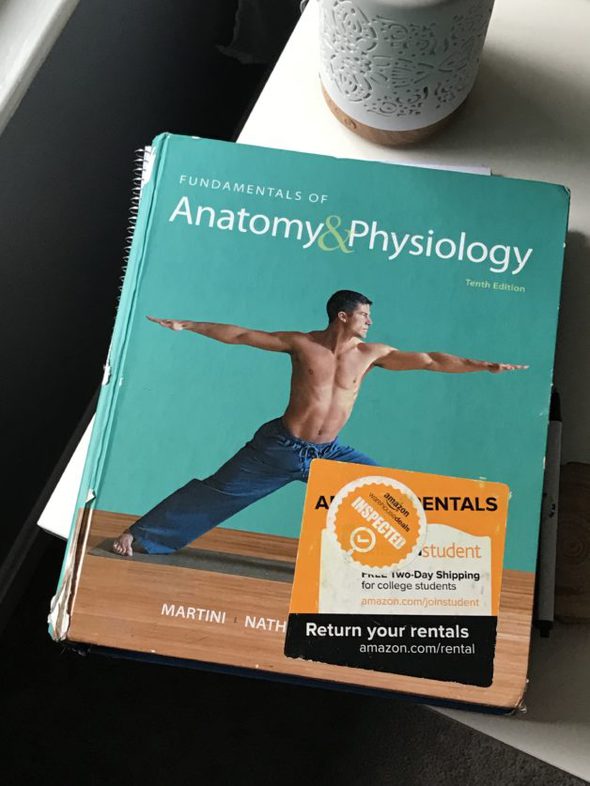
I attribute a lot of my success in nursing school to this approach. Starting from when I took my prereqs (Bio 101, Microbio, Anatomy and Physiology, etc.) I have really tried to understand the why of everything I was learning.
Why does an antibiotic not work on a virus?
(Most antibiotics work by interfering with the cell wall; viruses don't have cell walls. Ergo, an antibiotic is useless against a virus.)
Why does an enteric-coated tablet not harm the stomach?
(The coating is dissolvable only at a basic ph, so it passes through the acidic stomach unscathed until it reaches the basic environment of the post-stomach digestive tract!)
Why does left-sided heart failure cause shortness of breath?
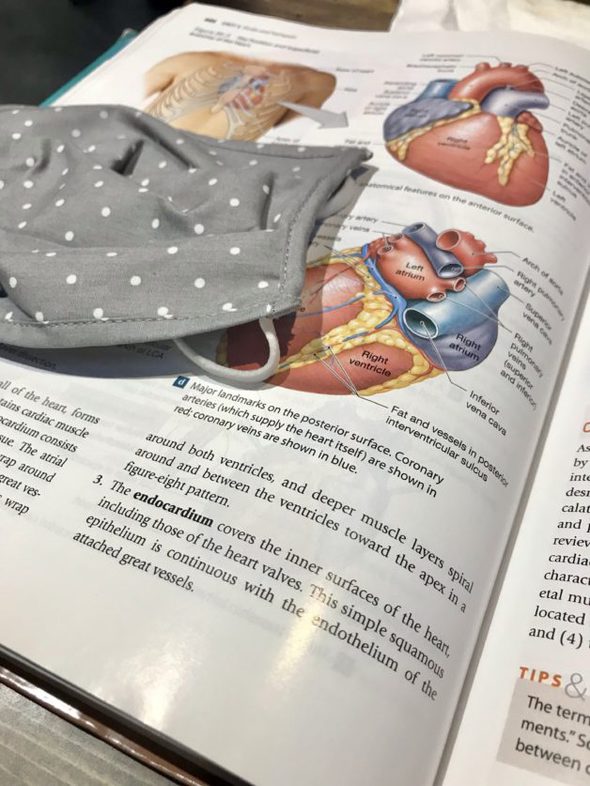
(Because if that side doesn't pump well, the blood goes backward to the lungs, causing a fluid overload, and lungs can't work well when they're drowning in fluid.)
If you can really understand how the human body works, then you can think through exam questions so much better without needing to resort to rote memorization.
2. There are some things you need to memorize
I know, I kinda contradicted myself. There's a place for both things, though! Understand whatever you can, but also know you're gonna have to memorize some things.
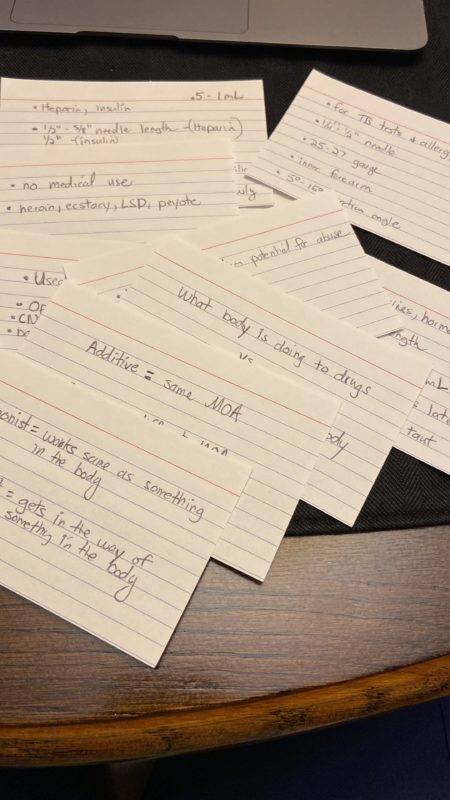
Lab value ranges, side effects, drug classes...there's some stuff you just have to commit to memory.
Use flashcards. Make Quizlets. Make Kahoots. Tape things up on your wall. Drill with fellow students.
When I've had memorization-heavy units, I've made Quizlets and then I like to play the Quizlet matching game. It's good for getting fast at recall, and you can easily do it on your phone while you eat breakfast. 🙂
3. Do not, do not, DO NOT wait until the last minute
Nursing school goes at a tremendous pace, and there's a lot of heavy content on almost every exam. I don't think you can survive by cramming.
Get the assignments started early, do the pre-lecture work early, and perhaps most importantly.....
4. Start studying for the next exam as soon as the last one is done
I start working on the next module's worth of material pretty much as soon as I get home from an exam.
This gives the information lots of time to marinate in my brain before the next exam rolls around, and it also means I am not panicking right before the exam.
5. Try explaining concepts at a grade-school level
If you can simplify a concept so that a grade-schooler (or a non-medical person) would understand it, you will know you have a good grasp of it. Get together with a friend and teach each other. If you can teach it, you know it.
(Some of those answers that I gave at the beginning of this post are an example of what that can look like.)
Bonus: You're gonna have to teach your patients, so it's good practice to be able to simplify concepts!
For instance, when I have a patient who needs to wear sequential compression devices on their legs, I say something like,
"Human bodies don't have a dedicated pump to push blood back up to your heart. Normally, when you walk around, your muscles squeeze the veins to move blood back to your heart, but since you're lying in bed, the blood has a hard time moving.
So, we're gonna put these on your legs to do the squeezing for you. That way the blood won't stay in your legs where it could form a clot."
6. Pair a body task with a head task
This is one of my best keys!
When I am doing something that requires bodily effort but not much focused brain effort, I almost always listen to a lecture, podcast, or YouTube video on my current nursing topics.
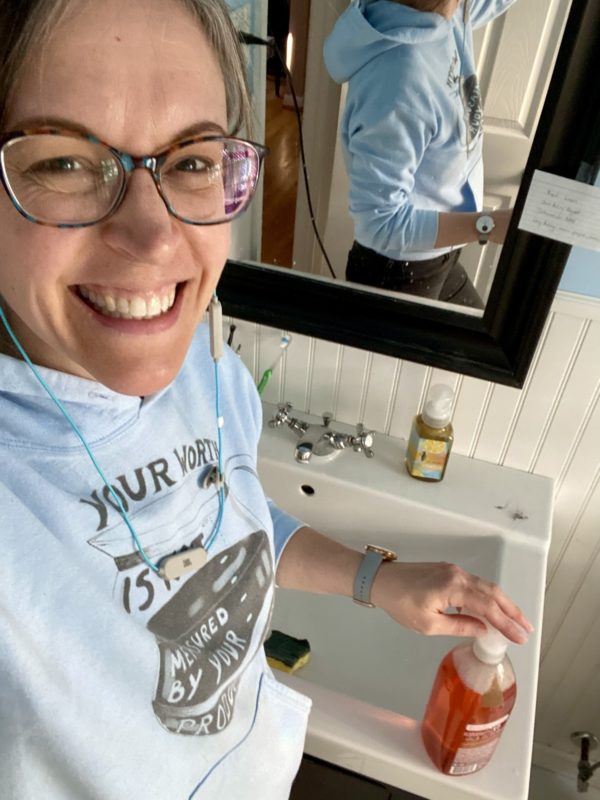
For me, this includes activities like:
- going for a walk
- driving
- cooking
- folding laundry
- misc. household chores
- brushing teeth/washing face/putting on makeup/doing my hair
There's also a way to listen to an audio version of my textbook chapters.
And I listen to almost everything on 1.5x-2x speed. Maximum efficiency.
My mind would drift if I tried to just sit down and listen to a nursing podcast; I pay way better attention to audio learning if my body is busy.
7. Look up some extra resources
The nursing program provides lectures and textbooks and such, but I always supplement with stuff I find on my own.
For instance, when I figure out the current topics, I go to my podcast app and search a disease/med with "nursing" added on the end. Like...."acute kidney failure nursing" or "ventricular fibrillation nursing" and then I download some podcasts on the topics.
That way I always have a bunch in my library.
I like to add "nursing" on because podcasts aimed at med students aren't as helpful. We are trying to learn nursing interventions and those are different than what a doctor would need to know.

Straight A Nursing is one of the best nursing podcasts I've come across; I definitely recommend her as a resource! She also has quite a few podcasts on nursing school survival and time management.
I also use YouTube with the same process.
- Osmosis videos
- Nurse Mike of Simple Nursing
- Sarah from Registered Nurse RN
- Nexus Nursing (great for NCLEX question practice)
- Cathy from LevelUp RN
8. Try a small study group
Large study groups devolve into socializing very easily; I think a group of 2-3 is perfect. Find one or two friends and meet up at school in an empty room.
You can teach each other, brain dump onto a white board, quiz each other, and talk through concepts.
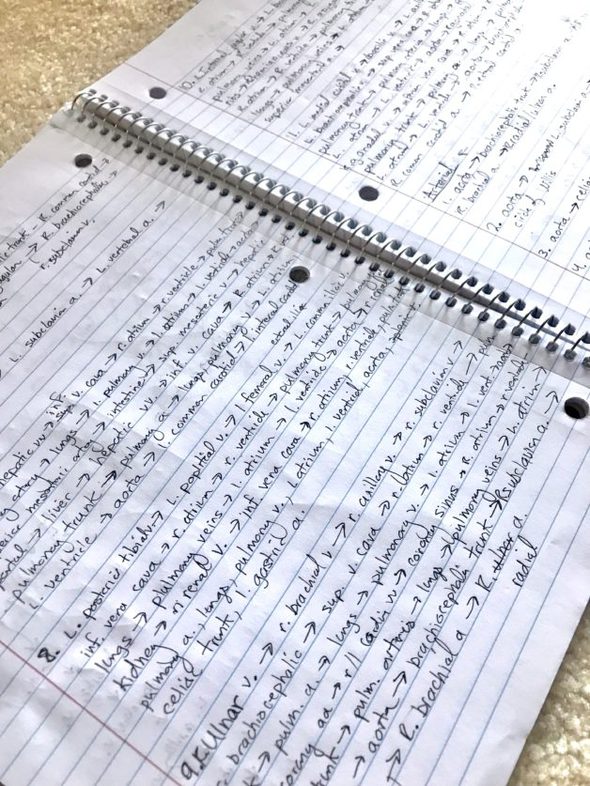
9. Try concept maps/active recall
Skimming through a PowerPoint presentation to review is not actually super helpful; it's better to try writing down what you know about a topic and then you can look back at the PowerPoint to fill in the gaps.
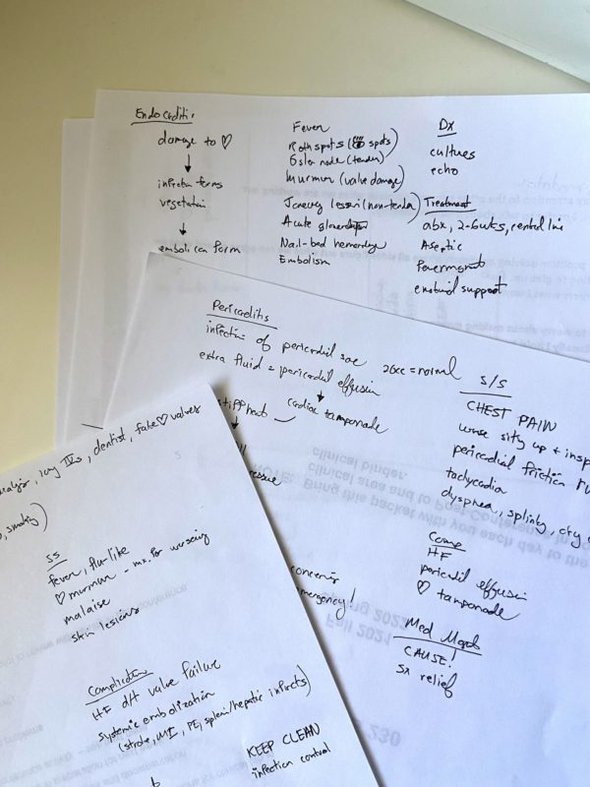
This really shows you where your weak spots are!
Keep doing fresh concept maps as you study, and you'll have fewer and fewer gaps each time.
10. Find a schedule management style that works for you
At my school, no two weeks are ever the same, which means I can never get into a routine. I live week by week!
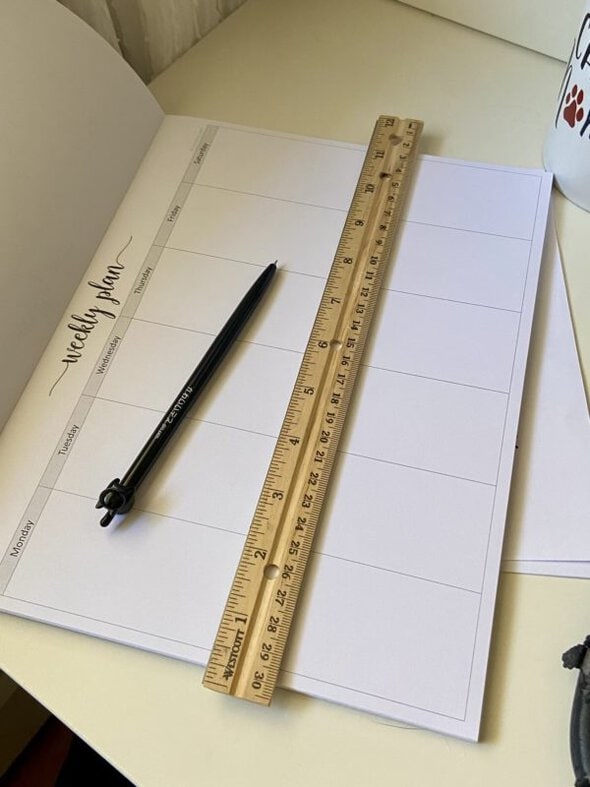
Usually I sit down on Fridays and map out the upcoming week or two so that I know when I have lectures, labs, simulations, clinical, exams, and so on.
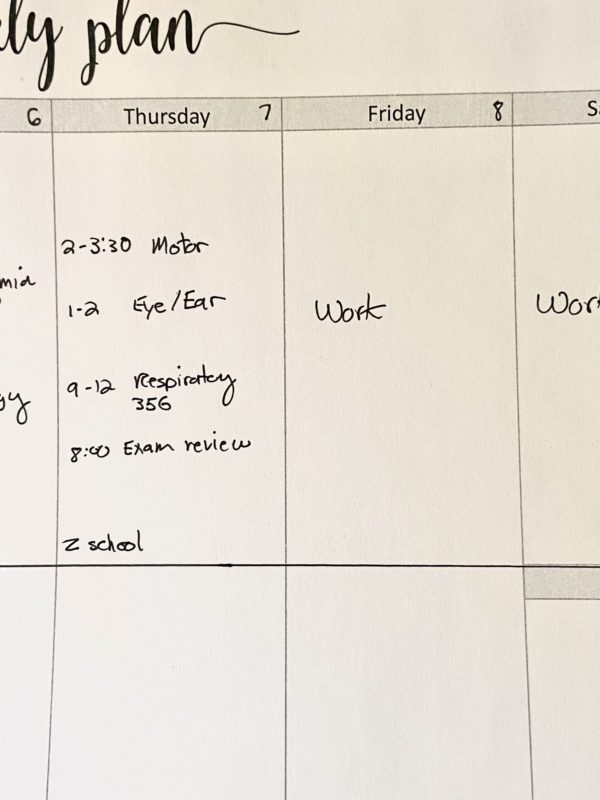
For me, it works to do it on a paper planner, but the important thing is to use a method that works with your own brain!
11. Take good care of your body
This is not a study tip specifically, but I still think it's an important way to round out the list. A body that feels good will help you withstand the high stress of a nursing program!
And nursing school IS stressful: studies show that nursing students tend to experience higher stress than non-nursing students (See this NIH article which references this Science Direct article.)
Three things that I think are important:
- Put yourself to bed on time
- Move your body
- Feed yourself with foods that make your body feel good
These things are not a waste of time; they are an investment that pays dividends. All of your school efforts will bear more fruit if your body and brain are rested, exercised, and fed. 🙂
_____________________
I'm sure I could think of more advice, but this post is long enough already.
Readers, do you have advice to add to mine?
(and it's ok if you haven't done nursing school; any advice about how to thrive in a fast-paced college program is welcome!)



Not a nurse, no intention of becoming one but loved this post. If you have more advice then maybe you could do a part 2?
@Mandy,
Yes please.
What great advice! I recently tried to teach some of my teaching staff to always set a purpose for learning, purpose for listening, purpose for reading, etc, and that lines up well with you learning the why of what you are learning. I'm going to read your post a few times and apply it to what I'm training my teachers, thank you Kristen!
@MommaJo, our district calls that Teacher Clarity and we have been working on it for a few years now.
Kristen, I love your strategies. I work with a lot of students with ADHD and many of your strategies overlap with what I try to teach my students. Pairing academics with body movement is one of thr best ways to learn. Also, doing “heavy work,” or core engaging resistance work such as push-ups, planks, mountain climbers, or bird dogs, prior to learning activities and throughout learning activities helps improve focus.
@Kaitlin, My teenage son has ADHD and that portion stuck out to me, too. He wanted a quiet workspace where he didn’t need to sit down, so I put a desk, minus the chair in his room. He likes to walk around and toss his pencil while he thinks.
This is all excellent advice for medical students, too. (I mean, they should probably listen to medicine podcasts instead of nursing podcasts, but learning more about what nurses do would also be really valuable for doctors-in-training!)
I also suggest being intentional about seeking out patients with different diseases or treatments during clinicals, and then making sure you understand the “why” behind their treatment plans. A lot of complex pathophysiology - heart failure, liver failure - didn’t come into focus for me until I took care of patients with those conditions.
Seeing it in real life helps so much, yes! If you keep seeing that patients on the floor with hyponatremia have seizure precautions, it makes it easier to answer a test question like, "Select all the risks associated with hyponatremia."
@Katie,
I think it also makes a difference doing this, because often patients don't have "just" one thing....they might have heart failure AND diabetes, for example.
I would say that’s true more often than not! It is rare for the ones I’ve seen to have just a single problem.
I studied civil engineering and am now a college professor of engineering - my best tips for students overlap with yours: Planning out each day to see where the time is going, and form study groups. I would not have made it through without connections and mutual support.
Also - many of your teachers will list learning targets or learning objectives at the beginning of class... Be sure to use them as a place to start when studying!
When my daughter was in med school, with a lot of virtual classes and meetings in the first years, she took up knitting to keep her fingers busy while sitting in front of the computer. It helped her focus, and she could easily stop and add to notes while doing it.
Kristin I know it is a small silly thing but the way you explained SCDs was so absolutely perfect. I can tell you were a teacher to your children for all those years because it was perfectly said. You are going to be an awesome nurse!
For nursing school I second moving your body. Long walks and bike rides were absolutely essential for my mental health to get through.
For memorization tasks like medication names or lab values I made a ton of flash cards. It is the easiest way to memorize fast and you can take out the ones you know and just keep doing the hard ones until you get them.
I always highlighted my textbooks. It’s not for everyone but for me it forced me to evaluate what I was reading and use my brain to pick out what is a priority. Plus then when going back and studying you only have to read the highlighted portions.
For anatomy/physiology and toxicology drawing out and labeling processes and parts and such helped me too. Anything where my brain is using the info and processing it helped. Plus then I would have a nice study sheet set up how I liked.
Like Kristin said you can’t just study the night before or do things last minute. That is my default setting personally but there is just so much stuff to know you really have to keep on top of it. I am not good at forcing myself to study, and get distracted very easily so I would often go elsewhere to study (smartphones weren’t around yet but if they were I would have had to leave it at home to go study). I used the university libraries or a coffee shop or if I really had to buckle down this one library had literal metal cages you could lock yourself into in the basement. If you are like Kristin you might not have to be this extreme but if you are like me you know who you are just lean in and lock yourself in a basement cage haha.
For clinicals, learning from the nurses as much as possible, and getting as much done as you can as soon as you can (both in prep the night before and while there).
Lastly GET A JOB AS A CNA OR AIDE. (Or phlebotomist or tech or some other patient care job) This will help more with clinicals than anything else will. I did assisted living aide and then home health aide for people with disabilities and I even wish I had done hospital CNA beyond that. It makes a huge difference.
Aww, thank you! It makes me so happy when I can explain something in simple terms to a patient; I find that helping them understand the "why" increases their willingness to comply with the interventions. You can just say, "these prevent blood clots", but an extra 30 seconds of explaining the why might save you a whole lotta time because the patient may actually keep the SCDs on!
And yes yes to the CNA job. It has made a world of difference for me.
@Becca C, For those that like the idea of highlighting textbooks but don't want to mark in their book, I found outlining my textbooks on notebook paper to be a very helpful study tool. My field of study was different, but perhaps the concept would overlap into nursing textbooks.
Kristen, this is all excellent advice that can be tailored to all kinds of medical professional programs (and even college in general!)
@Kim from Philadelphia,
I thought the same! My teen is headed to school for kinesiology. I will print this post for her.
I love that my mom mentor can now be my teen’s study mentor.
Thanks, Kristen.
Also, I let my teacher certification lapse while I homeschooled my children. I have to retake exams in math, social studies, science, and the teaching of reading. I’ll use your study tips. I don’t want to retake $400 worth of exams. (Although I am technically retaking them since I passed 20 years ago. Ha. Laws changed. New test required.)
@Kim from Philadelphia,
One thing I’ll add is figure out what time of day you do your best memorizing work. It’s not the same for everyone!
@Kim from Philadelphia, I was just popping to the comment section to say the same thing. I am NOT a morning person and in university I would eat supper and then sit and study from 7 - 9 pm, watch an hour of TV to unwind, and then go to bed. Whenever I tried to study early in the day, it didn't work. I think some of that came from being a science program because between classes and labs I was mostly tied up from 8:00 am to 4 pm, but when I learned that was my best time, I really leaned into it.
Wow. This is a very thorough response! We knew nursing school was hard, this shows how hard it really is. Were you aware that you did all these things or do you realize some of them only as you were answering the question?
I do have three pieces of advice to add.
1) Figure out how you best learn. For example, FG learns very well by listening whereas I learn by reading and writing down. I just don't pay full attention when all I'm doing is listening; I do pay full attention when I listen and take notes.
2) Take notes by hand and not by keyboard . Many, many studies have shown that this is more effective. A la FG, here's why: when you take notes by hand, you don't have time to write everything down so you have to assess what's the most important and write only that. This means there's learning and thinking going on. Typing is much faster (so is shorthand) and as any l transcriber can tell you, the words can go from your ears to your fingers, skipping your brain entirely.
3) Learn, pause, review. Many, many studies have shown that this is the most effective way to learn material. You learn for the first time; then let it sit for a while and it's ok if you forget it during that time, then you review And relearn. It's the anti-cramming.
@WilliamB, Terrific suggestions. They explain how helpful Kristen's handwritten notes were for her.
Oh, I would actually say listening is my least effective way to learn, at least if it's just sitting and listening. If I listen to a lecture in person, I take notes and make diagrams and such. And if I am listening outside of class, I have to have my body moving and engaged with some other task; otherwise I zone out.
I think I did know that I do all of these things, mainly because other classmates have asked me what I do. So I've given the oral version of this post out before, unofficially!
@WilliamB,
I think you put into words what I've been thinking as I read Kristen's post (which is excellent, BTW).
I find some of these ideas apply to everyday life, too, thinking of a home project: we need to re-stain our wood deck. Steps: Choose stain color. Buy stain and appropriate equipment needed. Check deck - are any nails popping up? do we need to sand before applying stain? Should we watch some YouTube videos, so we sort of know what we're doing?. Make sure power washer is functional. you get the idea. 🙂
In case anyone may have been wondering how you've maintained that 4.0, Kristen (although I doubt that anyone has), this post would answer the question. Maybe Maureen Osuna should have you as a guest on Straight A Nursing!
I LOVED this post. So much great advice.
My background is in the sciences, but it was nothing like the rigours of a nursing program. From my more general experience, my top tips would be:
1) Re-write notes. I used to write notes in class, then condense/highlight those. I'd study that set of notes and then the material I was still struggling with would become a new set of smaller, more targeted notes. Everyone learns differently but for me the best way to study was to write and re-write material.
2) I don't know how nursing school works, but going to see my professors was crucial. I remember going to a help session hosted by my organic chem prof and being shocked it was just myself and one other student that showed up. I immediately felt like a fool/stupid and I've never forgotten what she said: "You're here because you understand the material enough to ask questions." What I took as a lack of knowledge, she understood to be a sign of knowledge. I now work with university students and I often tell them that if your professor knows your name and knows you're trying, you're a lot more likely to move from a C+ to a B- versus them having no idea who you are. Most professors love to see students and for many of them office hours are empty. Students just...don't go see them, even though you're paying huge money to get this access to them.
3) Study groups. 20 years later, I can still remember some silly dance moves we came up with in a study session about how to tell the difference between a dicot and monocot! Everyone came to the session with different strengths and weaknesses and so in teaching others my strength-points it solidified that information in my own mind, and then of course other people were able to help me with areas I was struggling with.
4) Take breaks. I knew so many students who pulled all-nighters. I didn't pull a single all nighter. I knew sleep was going to be more important than anything I might learn after 10 pm.
5) Don't be ashamed to look for a tutor. I hired two tutors when I was in university and they made such a difference on my academic career; more than helping with the material, I felt like they gave me confidence. I went on to tutor many people myself, and I am now coordinate a tutoring program at a university! Don't underestimate what a difference tutoring can make.
6) Reviewing right before a test may backfire. I remember going to wait outside the final exam space and being surrounded by people with textbooks and notes furiously studying. I always felt bad about just...sitting there. But I would try to calm my mind and trust the process. I think that last-second cramming/review made students more anxious and I had to fight the urge to feel like I should be doing it. But I held the course and never once in my university career took notes to the waiting area for exams.
I'll stop there. Again, such a great post!
@Elisabeth,
As a math major, rewriting my notes was my go-to. Or leaving the opposite side of the paper blank to add notes, reword, and write questions.
My college roommate would take a short nap becore major exams- she figured she had studied all she could and wanted to refresh herself before the test. It worked very well for her!
@mbmom11, I had a good breakfast: cheesy scrambled eggs on wheat toast. It had lots of calories and hit all the long-lasting food groups - protein, fat, whole grains - and I could carry it out of the dining all on my way to the test.
@Elisabeth,
Ahhh, organic chemistry was my kryptonite in college. I COULD NOT understand it. I didnt have any money to buy 3 D models, and I've come to learn that I can't visualize things that I've never seen before (or "theoretical" things) in my head in 3D. I didnt go to see my prof, because I was so, so lost, and didn't have a clue what I was doing. I also had to work my way through school, so free time was at a premium - which also made it near impossible to join any study groups. I very nearly flunked out. That's when I switched majors to Dietetics.....that program had issues, too, but I could understand the material.
@Elisabeth, thank you for sharing that great comment from your professor: “You’re here because you understand the material enough to ask questions."
Kristen, this was a spectacular post, as usual. I continue to be amazed at what nurses need to know. Whatever they make, they should get paid even more!
Totally agree with "Do NOT wait until last minute"!! I didn't do nursing school, i went back to school in my 5os for Theater (costuming) while rehabbing a house and working full time. Being ON the assignment as soon as I got it was crucial; if the syllabus at the beginning of the semester indicated some type of research would be needed, I started that research immediately.
Cannot even imaging doing what Kristen is accomplishing, but that one item really struck me as critical for success!
I think this is good advice for all medical career people, especially those who need to work while attending school. I had to compartmentalize school and home those many years ago. When I was in clinic, I was already in the mindset of being a technologist and was very focused on patient care. At home, I was mom. Always, I thought to myself "this is who I am and what I do now". When in clinic, I applied what I was learning and it became second nature. Prospective employers notice this! This was definitely a mind shift for me at the ripe old age of 34. And it worked. (:
I'm a law librarian and professor, so this applies to all higher ed: go to professors' office hours! If you just don't get something, or need a quick answer, talk to the professor at office hours. After several years of teaching, I can tell you that students who come to office hours to ask questions and probe the material do better in my classes than those who don't.
@Somcak,
It is wonderful that you want to help your students learn. Sadly, not all professors are approachable or helpful. Academia at higher levels can be brutal.
It is true that just being good at your job/trade does not make you a good teacher. You have to also want to help your students learn.
When I was in college right after high school, office hours were the only way to get questions asked. But now you can also email professors with questions. I ask plenty of questions in class but if I run up against something confusing in my at-home studying, I email the professor and ask for clarification.
I am getting this to my granddaughter in nursing school. She is working part time and going to school, so she needs to know these tips to maximize her learning and her time.
She's a good student, but thanks to poor advice from the school's nursing director (!) she is doubled-up on what would normally be sequential classes this semester and may not be allowed to take anything this fall - the next class she needs to take won't be until January, whereas they were told it would be this fall. She's trying to work that out and luckily, she has a good relationship with her professor.
Like WilliamB, if I listen to it or type it , I usually forget it, but if I read it and take notes by hand, I remember. Important for anyone in school, learning a new job, etc., is to know your learning style.
I studied best by having another person ask me questions from my notes which I answered, then asking that person questions from his or her notes, so I always preferred studying with one other person. In pre-college days, my mother asked me the questions from my notes, but I didn't make her answer questions, too! She was a natural writer - poetry was her thing - so she was good at helping me get to the heart of the answer and with phrasing it clearly. Thanks, Mama!
This is a great list and beneficial to students beyond nursing school. In fact, there are tips here that can be helpful in all stages of life.
It’s ok to cry! I had a few crying spells throughout nursing school when I thought I could t do it. I got my feelings out and got back to work!
Take a day (or a few hours off) from school things/business. My daughter (now 18) was 3 when I started my program. I had been a SAHM until that point so her undivided attention from mom went wayyyyy down. Every couple weeks, she and I hit the local McDonald’s for nuggets and a play date.
I’ve been a nurse now for 14 years. The hardest thing I’ve ever done and I love what I do (psych).
If you are interested in pursuing a BSN, see if your employer helps pay! I was able to get my BSN for about $3k out of pocket. I rolled the tuition reimbursement every semester. THAT program took everything I had but so grateful that I persevered.
I am currently at a conference and we have many medical students in attendance. I want to print off your list and hand it out to all of them!
What an excellent blog post. Thank you so much. This is great advice for anybody having to study and get through school courses not just necessarily for nursing. I forwarded this piece to my daughter who is hoping to get into grad school for her GIS (geographical information systems) studies.
What a fantastic list of study tips! I am bookmarking this page. What a great way for anyone to learn anything. So, so helpful.
I don’t have an answer, so I may not have followed the proper procedure. I would like to be referred to your prior reference to a bra you like from Target.
Thanks.
This one is my go-to! https://www.target.com/p/true-co-true-everybody-women-s-adjustable-strap-scoop-neck-bra/-/A-54236891?preselect=54146750#lnk=sametab
It probably doesn't work if you are well-endowed but I am not. Ha. And it's so comfy.
Write or think about questions you have about the topic prior to studying-this primes your brain to look/remember the answers.
this is your blog and anything you write about is interesting and fun to read. you are AMAZING.
This is a fantastic list and not just for nursing.
My kids who study things outside their usual for FFA topics use Kahoot, Quizlet and Gimkit a lot. Gimkit has a lot of prefab topics and is a good technique especially if you want to study remotely with friends. Text the link and go.
If possible I would suggest doing as many practice problems as possible. I'm an academic scientist who had to do a lot of school and the best way for me to learn was always to do practice problems/tests and it helped me see where my gaps were to focus studying in those areas. I'm strongly on the pen/paper camp and I would suggest in addition to writing words down, to also try writing out your notes in visual or graphic ways - draw a picture or mind map or something like that.
I would like to add for the student to ask themself if this is really what they want to do and to be honest with answering. Difficulty aside, I think there is a lot more motivation to succeed for some if it's something they're doing because they want to and not because their parents/society says they should. A surprising amount of high school/college aged students I talk to are choosing a career because of the money. It feels like there's been an uptick in people who list this as a deciding factor than when I was that age or in the last twenty years or so.
I think you nailed it.I also went to nursing school as an adult while married with a 7 year old. PLANNING PLANNING PLANNING. Week by week,I would pencil in my class time, my study time, what we were having for dinner, day I had time to grocery shop, time to walk, etc. Back in the day (80’s) small indoor trampolines were a thing and often, my exercise was a 10 PM trot on my trampoline to some jazzercize music! One week at a time.I had a 14 day meal rotation of basics and we stuck to it.Spaghetti night,taco , pot pie night,fish night, one take out night, easy
Study groups:AGREE. BIG study groups were not useful to me.I had one study partner.
FLASH CARDS..I had things on index cards and had those cards with me 24/7.Can review the circulation of the heart while in line at grocery store! Or reviews medication side effects! CARDS CARDS CARDS!!
USE your advisor. If you are having difficulties in one area, make an appt. and get some advice! My nursing advisor was a great resource.
DON’T stress out over “STRAIGHT A “ test scores. As a young student I was an easy learner and those A’s came easily.As a grown up with many responsibilities,sometimes a B was ok by me… I refused to stress over getting PERFECT grades..I just wanted to learn to be a good nurse!!!!!!
DEFINITELY NEVER EVER try to cram.it can’t happen in nursing.STAY UP TO DATE ON YOUR STUDIES NO MATTER WHAT.
Get used to the fact that your fellow students are your “TRIBE” for the duration! LOL.They became lifelong friends. Only they understood that if we went out for milkshakes, that afterwards we had to review some meds or unit notes! They will be your best support too.. I was great at heart and my friend was great at renal, my weakness..we coached one another… (BOTH of us became OB GYN nurses down the road..)
GOOD LUCK!!
My dad went to college when I was in junior high. He literally hand copied his text books as his best way of learning.
Nursing tests are often a new challenge. They require application of learned material, not simply recall (based on Bloom's taxonomy).
Practice test questions from HESI, API, or NCLEX review books with good rationales can help your skills in this kind of thinking. Older used books are usually fine, most nursing schools are not teaching from the most current guidelines.
As a community college political science professor, I think your list is ABSOLUTELY BRILLIANT! I may actually share this post with my classes because you captured everything about how to study. The only thing I would add is to remind yourself every day about your long-term goal and how the class you're working on supports that goal.
This set of helpful tips is deceptively well organized, a good representation of Kristen herself. So readable and informative, and applicable across many academic situations, it also reinforces my feeling that a book that contains this as a section of helpful hints in a busy life, would be a strong seller. A microcosm of Kristen's life, which is essentially her blog!
Excellent advice
But the bottom line is two-fold: Someone must have the ability to study, learn and memorize great quantities of materials. Some truly smart people can't do that and others simply don't have the bandwidth.
The other is commitment to do the work. Because it is demanding, so they must make the time and study.
If they cannot or will not make the time, then...not sure nursing school is the path for them. Perhaps they can be a PCA, HHA or CNP or other ways to help.
Some of us are good at some specialities...others not so much.
If any course I took depended on advanced math or chemistry, I would never have graduated with honors or maybe even graduated at all.
Words, languages, writing skills, reading skills. My strengths. Math, chemistry, biology, NO.
The reality is that despite all the help that the life coach is providing and I love that she went to an expert like Kristen, her client may not have the bandwidth to become a nurse given the nature of the training required.
Kristen,
It is very clear that you are much smarter than the average person of any age in nursing school.
The strategies that you detailed apply to so many other things, and talking about the importance of understanding how and why something works---should be obvious but isn't and you are one smart person to employ this technique.
You should think about teaching some nursing classes at some point. I bet you were a real asset to your study groups.
It's clear your years homeschooling and the organization and discipline this required, along with sheer knowledge, is a big asset to have kept your brain really running well.
I'm pretty sure I could not have gotten through even the first few weeks of nursing school given the courses and course load (Luckily I excelled in the curriculum for my major: Communications!) in my 20s, let alone later when life had filled up my brain.
This was a terrifically interesting and relevant post. Thank you.
As usual, the comments have tons of additional ideas! I especially find the ones that apply to specific types, like the neurodivergent and wildly different ways of taking in the information, very helpful.
All of this makes me want to go back to school!
You are going to be an excellent nurse. I studied constantly while in nursing school and when I took the board exam, most of the questions were critical thinking scenarios. The clinical experience you've had with yor job will help you pass the board exams easily. Good luck.
This is great advice! Is anyone in your immediate family a nurse or part of a medical team? You posted how Lise is a mechanic for airplanes. What about your other girls?
Contradicting Kristen (all great tips, applicable on other studies too) a bit, but for those who get easily distracted:
design a dedicated working space. This can even be a part of the kitchen table that is empty and quiet. Empty is important here. Then sit there at the designated time until it is really over and only effeciently spent. Your body and mind will tune in and it will get easier to concentrate and not get distracted. This is a problem I had in my younger years, so not knowing how old the client is, it might help.
Breaking up bigger projects and documenting the progress helps too.
Use glasses of marbles where you transfer the done into the next jar, you get the idea - anything that you can and will see.
Great info Kristen! Much appreciated.
This is awesome! I’m in the “about to start” phase, and really appreciate the tips!
I thought of one, and it’s something I’ve seen you do: figure out which balls are plastic, and which are glass.
If you’re trying to keep a lot of balls in the air, it’s worth taking a moment to figure out which ones you can drop & pick back up, and which will just shatter.
That might refer to classes (which classes could you not do as well on, if you need to focus attention on another class, or a home issue) or home life (if you live with other people, could one of them pick up something like cleaning or making meals, or could you outsource something like grocery shopping).
Thank you! This is GOLD. I am a new 53 year old nursing student starting an Accelerated BSN and these tips are super motivating & helpful. I have been following along and I am so proud of you that you are almost done!!!