Miscellaneous goodness, frugal and otherwise
I can't resist bruised apples.
I stopped by the produce stand the other day, and found two almost-full half-bushels of bruised apples.
So of course I bought them.

The discount, plus the opportunity to save fruit that would otherwise rot = irresistible.
I got through one half-bushel yesterday and I'll probably finished the other box up today.
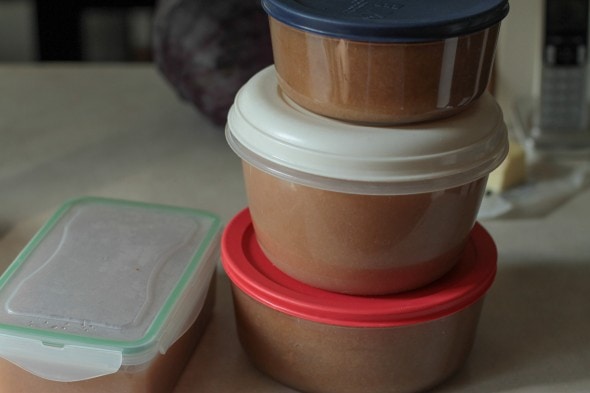
At that point, I'll probably have to stop buying apples, only because my container stash is running a bit low. 😉
(Here's how I make applesauce.)
I was on a podcast.
Remember Sandi, from The Mrs.?
Well, she went and started a business (Spring Financial, for those of you up there in Canada), and she also does a video podcast called Because Money with two other cohosts.

They asked me to be a guest recently, and you can watch my episode right here.
I started a bread recipe index.
It's still a work in progress, because uploading all the links and photos takes some time. But, I'm about halfway through.
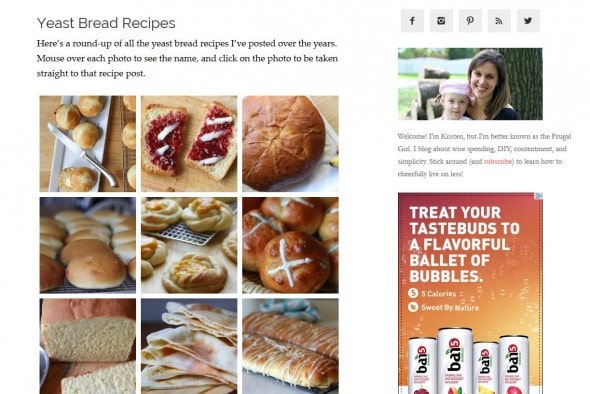
And you can feel free to bookmark the page now for easy future access because as I upload recipes, the page will automatically update. Whee!
I'll add a button over in the sidebar too, once I finish putting the page together.
Foreign Bread
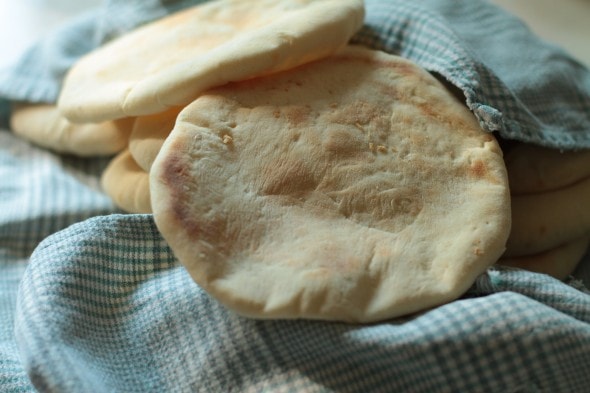
Yesterday, I made a batch of pita bread.
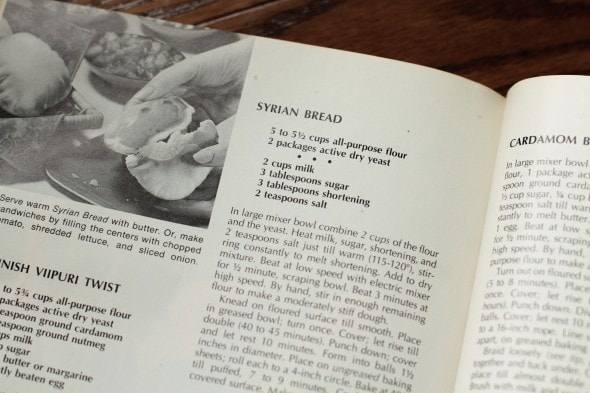
Which was from this book.
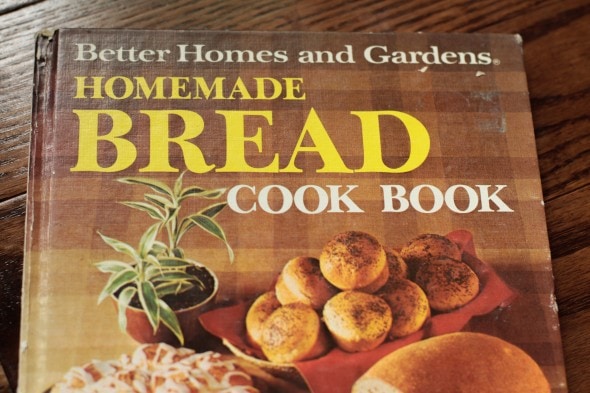
And I chuckled when I saw the heading for that section:
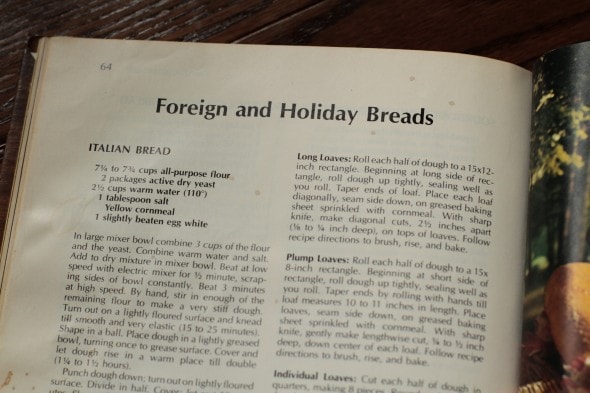
This book was published a good number of years ago, and I suppose at that point in time, Italian bread did seem somewhat foreign. But that still made me laugh.
American food culture has become far more diverse over the years, hasn't it? And I'm so used to hearing food referred to as "international", the word "foreign" seems odd to me, though perhaps back then it had slightly less negative connotations.
"Maybe the water is too expensive to wash them."
The Refashionista tweeted out this video the other day, and I watched it this morning. It's sort of staggering to see the incredible plethora of clothing that we in the west have.
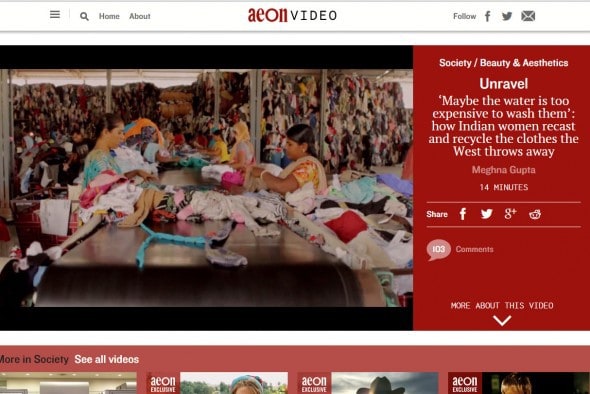
And while it's super that they're recycling it into something new, it's a little embarrassing that we discard/donate so much of our clothing, there's more than thrift stores can sell. So then it gets sold as rags and perfectly wearable clothing ends up shredded into yarn for blankets.
I'm not sure exactly how to feel about all of this, but it seems sad that our clothes are made by low-income people in overseas factories, shipped here for a short period of wear, and then shipped back to be shredded by low-income people in overseas factories.
I don't know...I guess the unfairness of it all really hit me as I watched, and I feel freshly motivated to be a mindful clothing consumer.
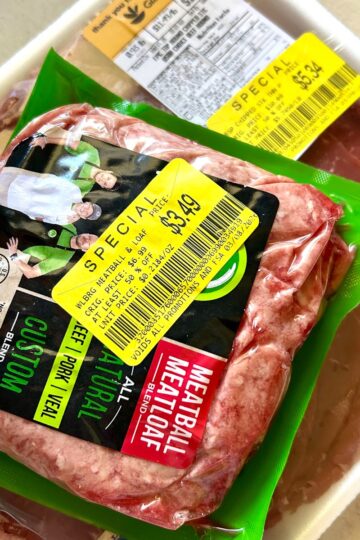
How much do you pay for bruised apples? Either dollar amount or percentage of unbruised cost.
There's another downside to cheap clothing as rags. Because the West considers them trash, they're sold very cheaply. This, in turn, has the effect of suppressing local clothing manufacture and production, which can be bad news for locals - particularly women. I think we'd all be better off with fewer, high quality clothes and less fashion merry-go-round.
Well, the price of them seems to vary depending on the produce stand employee I happen to get!
If you buy just some of the bruised apples, they weigh them by the pound (I think it's 50 cents?), but there's a steeper discount if you buy the whole box. The half bushels I bought that day were $7.50 apiece.
And yes to fewer clothes, but clothes of higher quality.
Oh yea for the bread recipe index! I will use that a lot. I smiled when I saw the BH&G bread cookbook....I have that same one and still use it. I have been making a cinnamon roll recipe from it for many, many years! Funny at what was considered "foreign" back then.....
I have a small freezer and to save space I package my applesauce in plastic bags. A little harder to scoop out when ready to eat but it saves so much space laying them flat. I try to use the bags over so I feel like I am not wasting money on 'plastic' bags.
I was gifted that cookbook by one of my husband's coworkers years ago! It even has the original $2.95 price tag. The pumpkin bread recipe is a favorite because it's not too sweet.
I don’t know that you could get that much applesauce for $22 in the store. I’ve been making homemade applesauce for the last 4 years and you’re right, the store stuff doesn’t even compare. The last couple years I’ve been buying a paper grocery bag full of seconds for $15 from a local farm, but this year my dad found me some for free. My mom made most of the applesauce I ate as a child.
Really enjoyed the video. I have to say that I've gone through life with the thought that "anything worth doing is worth doing well," but took it to the place where I never felt I could get enough done because of the time it took to do a "great" job. Fortunately, I have learned that not every job need be done perfectly. The new mantra I keep repeating in my head, to "not let the perfect be the enemy of the good" 🙂 has helped me immensely, in all areas of my life. I also appreciated the part where you said that gardening wasn't your thing, and that really resonated with me. For so many years, I've tried to force myself into doing stuff which just wasn't my thing but felt was what I should be doing. Thanks for sharing your experiences with us!
I am so with you on the clothing! My four-year-old and I have been reading the Little House books (currently on On the Banks of Plum Creek) and it makes me feel like I own waaaay too much stuff. Mary and Laura each had a nail in the wall--you know, to hang up their one dress when they went to put on their one nightgown! The family owned three books and one decorative china shepherdess and that seems to be it except for essentials. They thought they were really getting somewhere when they had glass windows and curtains made from worn-out bedsheets trimmed with worn-out calico!
I agree about the lessons and insights from the Little House books. (Even if they did, in fact, have more than 3 books and one dress per child - IIRC it was usually 3: two play dresses and one fancy dress.) What really struck me was the Christmas gifts. One year it was handmade mittens, a stick of candy, and a penny. Another it was store-bought candy, brought by Mr. Edwards in a storm, and shortbread - deemed fancy because it was made with white flour and white sugar.
To your last point (haven't yet watched the video) - since moving to a large city, I'm struck by the amount of thrift stores packed with clothing that is in perfectly acceptable condition.
I'd like to know what, if anything, you think ordinary American consumers can do to curb the tide of cheap textile production from overseas. Is it enough to simply buy second hand and minimize consumption? I'm not sure that gets the message back to the suppliers. It seems like the public in general is more conscious of what they buy, the amount and source, but the oversupply of textiles continues to grow. Can we stop/inhibit it and if so, how?
I don't really know. I mean, I know that companies pay attention to what sells and what doesn't, and consumer demand does drive production to a degree. So, I suppose that if enough people stop buying junk and stop buying so many clothes, manufacturers will sit up and take notice.
But this kind of thing happens slowly, which is a little discouraging.
If you look at the food movement, though, consider how much more interest there is in local/organic food than there was 25 years ago, and how much more of that kind of thing is available. There are huge problems in the food industry, of course, but there are some encouraging signs too.
I think it's a mindset change that has to come about by people becoming aware of what's going on. Most people have no idea of what the cost of our cheap clothing is on others around the world.
The law of supply and demand will govern production, eventually. If people stop buying loads and loads lower quality stuff, stores will stop selling as much!
In my opinion, it's best to buy whatever possible fair trade and thrift/reuse/refashion the rest. The trouble with fair trade stuff isn't just the expense, it's that it's often hard to find.
I agree with your thoughts on this video, Kristen. Recycling = great. As a matter of fact, I wish it were easier to find places to recycle fabric scraps. But oh my is this ever embarrassing!!
I don't expect that buying second-hand will help curb the flow of nominally cheap clothing. Speaking from an economic perspective, buying pricy, good-quality clothing will send the signal to manufacturers, rather than (apparently) not buying at all.
I suppose that's true. The one sends an ambiguous message (why are they not buying the new clothes we make? Are they not stylish enough? Not cheap enough? Not marketed well enough?) and the other sends a clear, "We want quality clothing." message.
I try to limit the amount of clothes I have by wearing basically the same things until they wear out. Then I make rags, I am working on a braided rug also.
I've often thought there are too many clothes around because when I see yard sales that is all they have out.
We live in a house that was built in the 30's. It has two bedrooms, one bath with very small closets. It reminds me that people have got along fine for years with way less than I have. And the plus of living in a small place is no space for junk I don't need, though I still have too much.
The bread recipes look so yummy! I have mixed feelings about the whole clothing thing. Does our consumerism give employment where there otherwise wouldn't be any? I know I'm thankful for people who buy nice clothes and hardly wear them and then donate them...so I can buy them at thrift stores. On the other hand, I encourage my readers to be thrifty and thoughtful with their purchases. Such a conundrum.
I don't know enough about the situation to say! But I have to wonder if there's some other, more productive way that those people could be employed?
The problem is that there's WAY too much supply of clothing to the thrift stores. It's outpacing the demand, so I think there could be quite a shift in consumerism without negatively affecting thrift store supply.
Interesting video on clothes. The thrift stores I have been to (not too many) have mostly worn or very dated clothes. And the prices are still fairly high. And I'm guessing there are still a lot of people that could use less expensive, wearable, used clothes from thrift stores. So I don't understand why there are so many clothes from thrift stores that can't be sold.
I needed to dispose of a large quantity of men's clothing as part of my duties as executrix of an estate. When I took them to my local Goodwill store, I asked the attendant if they would dry clean some of the fine wool items. He said that if an article was not clean enough to put on the sales floor, it was automatically recycled. The store has no laundry or dry cleaning facilities. I was upset because, although most of the clothes were of excellent quality, I did not want to wash them or pay to have them dry cleaned. I took subsequent loads to a Salvation Army store in a neighboring town because I heard that it has an in-store laundry.
Another fantastic bread recipe book is the Sunset Cook Book of Breads, the 1970 edition. I can't tell you how many delicious things have come out of there, classics in our family, especially the sour cream doves on Easter.
What a fun pod cast! You were splendid -- informative and funny! Well done. ~Sherry
Ooh, that is a nice compliment! I'm not often told I'm splendid, so I will file that one away. 😉
I live in Senegal, West Africa, and there's a market that I like to shop at. They sell clothes, shoes, etc.... Some brand new and lots of used things. I've been told that the used clothes are from the States and you can sometimes find Goodwill tags still on them.
I remember a story told by a missionary/teacher I visited in the center of Australia. His kids had just received a gift box of videos. Their Aborginal friends weren't impressed by the videos much, but oh man! the wood boxes they came in? Best toys for weeks. (I hope the kids remember that as they get older.)
Great post, I really enjoyed your insightful comments on changing food culture and clothing wastage in the developed world.