
Frugality and Alzheimer's | a guest post from A. Marie
Reader Shelagh is traveling the tough road of having a spouse who is living with Alzheimer's, and she emailed me to ask if I could connect her with A. Marie for some help.

A. Marie sent me what she wrote to Shelagh, and offered to let me share it here so that it could help any of you who might be facing this challenge as well.
________________________
Shelagh,
Kristen contacted me with your request for advice about your husband with Alzheimer's. If you want to know more about me, here are my "Meet a Reader" interview and the follow-up post Kristen did after my husband died:
I'm so sorry that you, too, are in this situation. Welcome to the club none of us wants to join, where there are too many questions and not enough answers.
The first and probably the best advice I can give you is to do some reading on the Alzheimer's Association's forum for spouses and partners of folks with AZ. The commenters here have absolutely seen it all, and this forum was probably the single biggest thing that kept me sane during my DH's AZ.
Now, here's my attempt at an answer to the question you asked Kristen: "My husband also lives with Alzheimer’s and I am curious about how to balance frugal tactics and what is best for him, eg. not worrying about him washing just a few items of clothing during prime time multiple days a week, because it’s great that he can still use the washer (just one example)."
I'm afraid that this is something you're going to have to work out on a case-by-case basis--with the question of his remaining independence vs. safety considerations first, property damage second, and frugal tactics probably running a distant third.
Safety
First, if he's trying to do something that will compromise his or your safety, that must be dealt with.
Examples might include trying to cook something on the stove and leaving the stove on--or (unfortunately) driving, if your DH is still driving.
AZ affects reaction time, coordination, and judgment as well as memory--and if your DH does have a formal diagnosis of AZ or some other dementia and gets into an accident, he and you could be sued for everything you've got. The spouse/partner forum on the link above has numerous comments about this, plus ways to redirect/distract about driving.
Property Damage
Second, if he's doing something that causes more than minor property damage, that's going to need a work-around too.
With my DH, this involved most of our big lawn care/snowblowing equipment, which he wrecked by putting oil into the gas compartment or doing other misguided "maintenance."
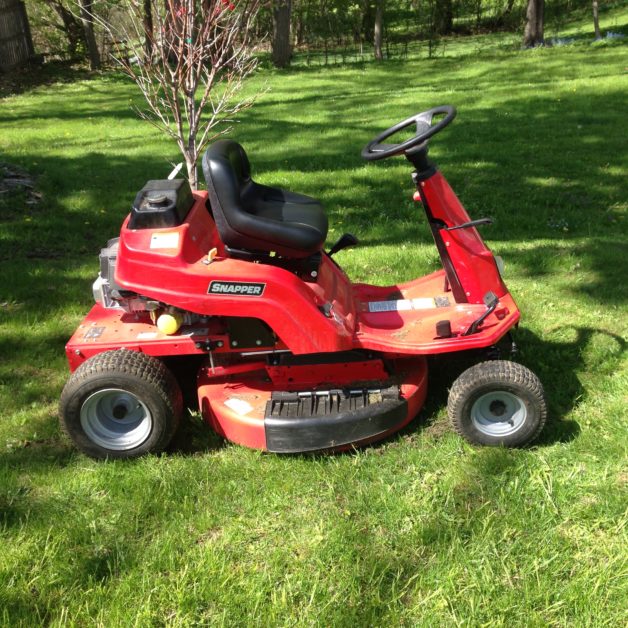
I was finally able to redirect him from this (thank goodness, he never put up a major fuss about it) through simply suggesting we save him a bunch of trouble by hiring a reliable lawn/snow guy.
Frugal Tactics
Third, there are the many, many things like your example about the laundry.
In these cases, I tried to go by two principles: "Pick your battles" (wisdom from a friend who was parenting teenagers), and "Redirect/distract rather than argue." In other words, decide what's important enough to you to intervene about, and then try to redirect him to some other activity if it's important. As I'm sure you've already discovered, there's no point in trying to reason/argue with a person with AZ; his "reasoner is broken," as the commenters on the forum often say.
And I can't sign off without this recommendation, which may cost $$ in the short term but will be frugal beyond belief in the long term: If you haven't already done so, please consult a certified elder law attorney (CELA) about getting your DH's and your end-of-life paperwork in place (health care proxy, living will, durable power of attorney, and will/executorship), while your DH can still (sort of) understand what's going on and produce a signature.
My DH and I put this off almost too late: Three weeks after we got the final paperwork done, he couldn't sign his name anymore.

A CELA can also give you the appropriate advice for the state where you live re: long-term care Medicaid. Sooner or later, you may need to consider long-term care for your DH, and this advice will be vital. Even though my DH had long-term care insurance, he was within 6-8 months of exhausting his LTCI funds at the time he died, so I was about to sit down with my attorney and my financial advisor and start working out the Medicaid issues.
Medicare, unfortunately, does NOT cover long-term care.
I hope I haven't gone on too long about all this, and I hope that at least some of what I've said will be helpful to you. What I've been trying to say = what I wish I'd known when I was starting out on the AZ journey with my DH.
With heartfelt best wishes, A. Marie
_________________________
A postscript after more correspondence with Shelagh
Since I wrote the advice above, I've heard back from the original questioner, and I feel I need to add a few things.
First, she mentions that she is in Canada--so it's clear that our wonderful international readers will need to adapt my advice above about paperwork, certified elder care lawyers (CELAs), and Medicaid/Medicare to the legal, governmental, and financial situations in their home countries. My apologies for my temporary lapse into US tunnel vision!
Second, Shelagh does seem to have most of the major things pretty well in hand (legal, financial, etc., as applicable in Canada). But I completely agree with her that it's the day-to-day issues (laundry, etc.) that can drive us caregivers batty trying to maintain the balance between what our loved ones can still do vs. what just isn't working out.
Shelagh offers this excellent advice: "I work hard at supporting his remaining independence, so perhaps will make sure our budget is a bit more generous in areas like this."
___________________________
A. Marie, thank you for sharing this with us! You navigated a tough road with grace and courage, and I appreciate that you want to help others who are also traveling this path.
Readers, if you have other helpful advice for Shelagh, do chime in!
P.S. Shelagh also emailed me this little tidbit:
We got our life insurance years ago, so when they mentioned that it included critical illness coverage, I couldn't have imagined a time when we would use it. Yet here we are...
My husband's diagnosis of Alzheimer's is on the list, so I applied and (after quite a bit of paperwork from me and the doctor) received. We haven't used it yet but took your advice to look for a high-yield savings account (Kristen here: I recommend CIT platinum) so that it's readily available when we need it, for either his care and/or a special trip.


I can't add any advice but just wanted to say thank you to all involved for this post and send my best wishes to Shelagh and anyone else going through similar.
Having lost two relatives recently to long illnesses it is heartbreaking to see them slowly disappear, and that was with them both being mentally sound. May you all find a way to navigate through this.
Thank you for sharing. You never know when the advice may apply to you personally.
As someone who spent years working in the Alzheimer’s world, I appreciate this post and hats off to those who are caregivers. May I offer one bit of advice…. Caregiver, please take care of yourself too! Whether this is a weekly coffee date with a friend or a couple of days of respite care for your loved one, you need some time away from caregiving. Many LTC insurances will cover a few days of respite care periodically and our local Alzheimer’s Assoc gets grants to be able to offer free/reduced fee help. So see what help is available and take advantage of it. You need it whether you think you do or not! God bless you!
@Addy, thank you for adding this. Before I had to place DH in a nursing home, I was lucky to find such help from two sources: the cognitive care programs that DH attended during his early stages; the AZ-oriented home care agency from which I was able to secure two 4-hour shifts per week from December 2019 (just before the pandemic started, so the aides were still able to come during the pandemic, since they were deemed an "essential service"). And once we'd gotten through the 90-service-day waiting period, the home aides were covered by DH's long-term care insurance.
Still, the difficulties of taking time for yourself as a caregiver are real. One of my two Sunday morning walking buddies is the widow of a "classmate" of DH's in the cognitive care programs (the other one is the former director of those programs), and she and I first bonded when we were commiserating with each other and I said, "You know, everyone tells you to take time for yourself, but nobody tells you how to do it."
@A. Marie, I totally get that it’s hard to know what resources are available. And sometimes I think family/friends are afraid to volunteer because they think they might not know how to “handle” the person who has Alzheimer’s.
@Addy,
I want to second Addy's advice. My mom was frantically taking care of my dad (and her mom before him)...was under tons of stress...and ended up dropping dead of a heart attack before he did. I found her dead on the kitchen floor while he was in the hospital. I was told this happens to a lot of caregivers.
My terminally ill dad didn't have Alzheimer's, but there was an Alzheimer's support group in my area. Caregivers could drop their loved ones off for half a day, then go take a nap or run errands or participate in the group. Meanwhile, the patients were treated to activities that reminded me of Vacation Bible School when I was a child: fun, simple games, arts and crafts, music, etc. They had a volunteer pair up with the patient to help him or her. At noon, they'd serve lunch to both the patient and family member, and then have a little bit of entertainment, such as a musician.
Also, they said if you can play the music the Alzheimer's patient loved when they were young, this (temporarily) brings back some memory and function, and puts them in a good mood. (Do you have any of the songs that played on the radio when he was a kid? Recordings of hymns in your church? Opera, if he loved going to the opera? Songs you two danced to? His favorite music from years ago? That sort of thing. )
@Fru-gal Lisa, thanks for your comments, especially the ones about early caregiver mortality and music. It's true that the stress of caregiving can be deadly. And it's also true that music can get through to our loved ones in ways nothing else can. Although my DH was profoundly unmusical himself, I could sometimes soothe him by putting on some early Beatles or some of his favorite classical music.
@A. Marie,
Yes, this is SO TRUE. My mother in law, who I loved like she was my biological mom, had vascular dementia that required 24/7 care. It was a long, grueling year, helping with her care, and then visiting her in the nursing home long after she did not recognize me. It was awful watching this strong woman dwindle away to nothing both physically and mentally, and the stress of all of it almost cost me my marriage. I still have PTSD-like symptoms related to that year - trying to work FT, taking care of our son, and helping with her care.
I distinctly remember a doctor telling me to "take care of myself" during this time, but....how?? There was no time for that. No one offered help except my mom, and there would be strings attached (her passive-aggressive verbal disapproval of the dirt and clutter, etc) so I did not take her up on her offer.
If I might add: *it is okay* to feel relieved once your loved one passes away after dealing with AZ or any other kind of dementia. It is okay to feel whatever it is you feel. Yes, I grieved the loss of my MIL (long before she passed), but my DH and I, after some time had passed, agreed that we were both relieved that her ordeal was over, and relieved that we could move forward in our "new normal". Maybe that sounds selfish to some, but we were both exhausted, and needed a sense of normalcy to return to our lives.
@Liz B., this can be so true. I transitioned my mom from a house to a senior apartment where she made many friends. A final fall led to a short term rehab and then transition to assisted living. Once her care level progressed to being dependent of two carers, and also the depletion of her funds, led to needing a Medicaid nursing home.
I was fortunate in that I had worked at this facility, knew its reputation, and had friends there. I was also fortunate that all of these moves were close by. One was just 4 blocks and the others 4 miles.
I intensely loved my mother and providing assistance and care for her over a ten year span was a gift, but a tiring one. My boys were in lower grade school ages when this started and my younger was heading to college.
The stress was evident in small and large fractures in all aspects of our lives when she passed.
The majority of our grieving took place as she went through various stages of decline.
I know it was confusing to some that two days after her funeral I spontaneously, and not frugally,planned a family trip to NYC to help us all recover from the prolonged grief and to focus on each other. The return of peace and the relief that she was no longer suffering was palpable. It was our way of processing everything and was a blessing because the younger had to return to his final intensive year of engineering.
@Fru-gal Lisa,
I would sing to my Mom some of the songs that we used to sing along with in the car. She could still sing along (sort of) long after she lost other skills. Country Roads by John Denver, and My favorite things from the Sound of Music were her favorites. Almost always helped in crises moments or as a distraction.
@Liz B., I so appreciate you saying this and giving everyone “permission” to be relieved that their loved ones are gone. My mother died after a long horrible battle with cancer and the best thing people said to me was “at least she is out of pain.” It actually helped me to heal and find peace, even though I was very young. (8)
@Liz B., "Yes, I grieved the loss of my MIL (long before she passed)". Yes, the mother I knew was gone long, long before she was dead in the eyes of the law. It happens, don't take it personally.
@Liz B.,
It's not selfish at all. My mother died of Alzheimer's. I had been living with and caring for her, as well as for my son and his friend who lived with us at the time, up until my mother went into care. It was a brutal, exhausting, emotional, guilt-ridden time. My mum died after five years in care and I absolutely was relieved. She would have hated what she had become, what her loved ones went through becasue of her illness. There was very little left of her and for her when she died, and it was a huge expense every month for her care. It was time. And no one would have agreed with that more forcefully than she, before she lost her incredible steel trap of a mind. Dementia and Alzheimer's are hard enough without that layer of guilt on top, and I wish it was more widely understood that relief at the death of someone both suffering and inflicting suffering in this way is justified, and essentially comes from compassion, NOT indifference or selfishness.
Thank you, A. Marie, for your thoughtful response, and Kristen, for sharing this valuable information! As with anything challenging, it helps to know one is not alone xo
@Shelagh, sending hugs, support, and good wishes your way.
@Shelagh,
It's such a tough road, with so many unknowns, but unless something is prohibitively costly, I'd let the non-frugal / non damaging things roll. The more he can do, however haphazardly, the better.
My aunt used to get my uncle to help her weed out flowerbeds and he would happily do this for HOURS. Saying that, she did have to lock up the car keys very carefully because - as you will know - dementia does not = ''stupid'' and my uncle had always been a car guy, loved driving and drove well. He ''stole'' the car a couple of times before they worked out where the keys could go that he could not get at them. Luckily, during this period, he was still an amazingly competent driver, no change in reflexes at all, but OBVIOUSLY unsafe and untrustworthy on the road nevertheless. His reason for being so set on driving was - and this gets me each time - so that he could go and see his parents because he felt like he hadn't seen them in a while and thought they'd be worried about him. His dad died in the early 70's and his mum died in 1986. Such a wonderful, clever man, very loving right to the end.
@Shelagh, and thank you in turn for reaching out. Hands across the miles to you and everyone else here who has a loved one with any type of dementia or other cognitive impairment.
Thank you for sharing, A. Marie. Your openness about your experiences have helped many to understand the difficulties of having a loved one with AZ or dementia. As always, I wish you peace.
No advice to offer, a lot of sympathy and moral support. It's a rough road.
Also thanks for the phrase cognitive reserve. I expect it'll be useful as the years go on.
Shelagh, we are dealing with the same thing. After being frugal and eco conscious for a lifetime I am struggling with the disposable pull ups, wipes, so many garbage bags etc.,. I do so much laundry each day that there is no hope of doing it on off peak hours.
I had to simply decide that this is a season of life that we simply need to get through and then I can go back to frugality.
Tkae care of yourself, yes. But just coffee with a friend was not right for me and may not be for you either. DH is my very attached shadow. If I have an hour where he is being cared for by someone else I luxuriate in a shower where I can be unobserved. Otherwise DH is in the same room with me all the time 🙁
DH was diagnosed at age 61. I was 49, our kids were 19 & 17. We had to quit working during what would have been our peak earning years. While I resent the loss of ability to earn an income, I am grateful for the prior frugal lifestyle. You never know what hand you will be dealt and a frugal life will give you the ability to pivot, and sometimes not be frugal as needed.
I'm sorry you are in this situation with us.
@jess, I send sympathy and solidarity to you. You're absolutely right that worries about things like disposable diapers just have to be put aside, in the interests of your own sanity.
And I also get it about "shadowing," which was a major issue with DH. On days when I had aides coming in, I used to run for the door so fast you couldn't see me for dust.
Finally, because of your DH's early onset, you've taken a far bigger financial hit than I did. We lost money because both DH and I had to retire earlier than we'd planned, along with all the incidental expenses--but, as you say, you both lost many of your prime earning years. Hugs.
Oh @jess, that is a lot! Thank you for sharing. All too much too soon in your lives, your kids too. That reminds me of an additional factor: we are fortunate that our son is very good with his money and picked a good university program (geological engineering) that allowed him to get a well-paying job. Although "playing with rocks" (as I don't fully understand what he does) keeps him far away from us, his financial independence is a blessing at this unique time in our financial lives.
I appreciate being reminded that this is a "season of life" and will continue trying to put extra waste (financial or otherwise) into perspective xo
My heart goes out to everyone in the same or similar situation. Excellent advice from A. Marie and others.
Best wishes to Shelagh, and thanks to A. Marie for sharing so much.
The only thing I can add is this: remaining frugal can be very much a necessity because illness is expensive, and you still have your own financial future to keep in mind. But at the same time, some caregivers feel guilty and bad about spending money on things they might not have (disposable products, taxis, parking, wanting to buy coffee or lunch a hospital etc.) And I would say, if these are things that you can afford, let go of any guilt. These hard times are exactly the times that people save for. Not just for the big expenditures, but also for the little things that help you both get through the day.
I endorse everything A. Marie said, with the same caveat that I have no idea how some of that applies in Canada.
My mother-in-law had Alzheimer's and for her last year at home, I was her caregiver. I was 24 and had no idea what to do. I'm grateful that there is better information and connection out there now, but even with that, caregiving for a loved one is still probably the hardest job you will ever have.
My brother-in-law had Parkinson's dementia, and my sister recommends the book "The 36-Hour Day," by Mace and Rabins. She found it very helpful.
In these cases, frugality has to be lower on the list. DH had cognitive issues, not dementia, but it was still a struggle. I was lucky that the VA provided us with a hospital bed, wheelchair and scooter, but I still spent money on things such as lawyer, home care workers, washable bed pads (highly recommend them over flimsy disposable pads - I bought Epica brand on Amazon), bedding for the hospital bed, special clothing, tempting food, extra gas for travels to appointments, and of course, laundry was an everyday affair.
Taking care of yourself is the next hardest thing you will have to do. If there is any way to get help, get it and don't feel guilty for doing so. Family or friends may be able to take on a a few hours of caregiving. There may be centers for respite care. Ask, look, and don't give up. And try not to get exasperated when people in your sphere who have no intention of helping you to do so, tell you that you should take care of yourself.
I am praying for you and your spouse.
Thank you Kristen, for posting this. Thank you A. Marie and Shelagh for permitting it.
@JD, thanks for mentioning "The 36-Hour Day," which is probably the one best book out there. And thanks also for your perspectives on your MIL, your BIL, and your DH. (The husband of my walking buddy mentioned above had Parkinson's and its related dementia; a lot of other diseases besides Alzheimer's can cause dementia.)
Thank you @A. Marie and @JD - I've put "The 36 Hour Day" on hold at my library!
Alzheimer's can be a long journey and my heart goes out to you. We helped care for my MIL for six years and the last year of that journey we learned she qualified for hospice care. At that point she needed significantly more assistance than it sounds like your husband needs at this time, but it's something to keep in mind for the future. Hospice paid for all the incontinence needs, and for someone to come in twice a week to assist with bathing, monitoring medications, etc. They provided some equipment to make life easier too. Their whole goal is to make the person as comfortable as possible, but they also counsel the family. And the service is free (well, I think it was covered by Medicare.) They were a lifesaver for us.
@Cindi, thanks for mentioning hospice care, which can be a godsend in many situations (as described by the commenters on the spouse/partner forum). And I believe you're correct that hospice services, unlike almost all other long-term services, ARE covered by Medicare.
@A. Marie,
DH's hospice care was covered by Medicare. We were told it normally is.
@Cindi, hospice care for my mom helped me to stay sane as I knew more eyes and staff helped in her
Hospice services CAN BE part of a nursing home stay. You just have to know to ask. Also you can choose which company provides the service so you can pick one that you know the reputation of.
I cared for my Aunt for 4.5 years in my home. She has dementia along with another neurological disorder that specifically attacks motor skills. Having never cared for someone in this condition as is the case for most of us, I found myself drinking from the firehose every single day. Even though she was and is a grown adult, she has reached the stage in her disease where she behaves as a toddler. Whatever is important to her moment by moment is all that exists in the world. I read a lot about distracting or redirecting her but it never seemed to work well for me at all. I found it useful to occupy her with a task under the guise that she was helping me around the house or in the kitchen. These tasks were carefully chosen of course to make sure there were no safety issues and they were things that she could still do. She would help fold laundry for example or remove the meat from a chilled rotisserie chicken for soup or salad. At Christmas we made a craft and she helped sort the sequins by color and package up homemade cookies for storage. She loved game shows and word search puzzles too.
These things did not happen every day but on the days that they did I could almost feel normal and that helped me to get through harder days.
Most importantly I urge you to try your very best to remember to take care of yourself through all of this. I know that is easier said than done - I have been there. If/when you arrive at the point that you have to consider outside care/residential care, give yourself grace. These illnesses ravage our loved ones and in many case turn them into someone we can barely recognize. Handling the care of someone in that state is nigh on impossible.
I am cheering you on and praying for you and wishing you all the very best. You are such a tremendous blessing to your husband. Don't forget that 🙂
@Angie, you give several excellent examples of redirecting/distracting in the ways you managed to occupy your aunt with tasks. You succeeded in this better than you may have realized.
A. Marie, thank you for the term "cognitive reserve," which explains how my mom coped for so long. She was physically healthy and came from a long-lived family, so we dealt with her Alzheimer's for over 15 years. I was her primary caregiver and managed to keep her in her home for four years, but she also had long suffered from depression, anorexia and eventually hoarding disorder, so it became not safe for her to be at home. She went to assisted living with a a memory care facility, and then a nursing home after a fall left her permanently in a wheelchair.
I did hire an elder law attorney to get her affairs in order and that was an enormous help. We were living in a small town in the deep South and there were few resources. It was heart-wrenching to go to AZ support meetings and hear other caregivers' stories. My aunts were so kind and helpful, even though they were all quite old themselves. It was just great to get emotional support from them.
@Ruby,
I suspect it was "cognitive reserve" that allowed my mother in law to cope as long as she did.
Shelagh, I'm so sorry you're having to go through all this. Hugs and prayers for you and your hubby!
When my dad was terminally ill, he thought he could still drive OK. (He couldn't.) The social workers suggested we take the distributor cap (? I think it was, but I'm not sure) out of his van, so it couldn't start. (This was some kind of plastic-looking thing, located under the hood, and it wasn't difficult to remove.) His BFF went out and took out the car part and we hid it. If Daddy somehow got hold of his keys (also hidden) and went out to the van, he couldn't go anywhere. We could then redirect him to do something else.
We used steering wheel locks on the other cars, and hid the keys to the locks apart from the other car keys.
And we locked the doors on all the vehicles, another delaying tactic to keep him from getting in.
He wasn't happy about any of this, but it kept him safe. And, he'd soon forget he couldn't get into the vehicles and drive off. So everything was OK until the next time he got such a notion.
While I see occasional lapses in my dh, who is 65 and disabled from a stroke, I am nowhere near ready to think that it's Alzheimer's. Thank you ladies for all of this information because it gives me things to look for and an avenue if it he ever is diagnosed.
The small book publisher I work for has a specialty in dementia care books. There's a memoir on spousal care that's incredibly moving and hopefully beneficial to anyone walking the same path. The press is too small to share the name of without giving away more of my private information than I'm comfortable sharing publicly, but I'd be happy if Kristen could match us over email if anyone is interested.
A. Marie, your point about your DH's baseline intelligence is an issue I've seen before in this field. One of our memoirs is not published yet, but the author shares the anecdote of her mother finagling her way out of a high-security facility based on her communications skills. She almost "got away with it", except her helper realized the situation when she said, once outside, "Well, what do I do now?"
@Andrea G / Midwest Andrea, your publisher probably isn't the same as the one I worked for (on-staff, off-site) for 36 years, since mine doesn't do memoirs. But I'd be interested to know which one yours is.
And just to give a shout-out to both my employment and my employers: Copyediting several books on neurocognitive disorders gave me a better background for caregiving than many folks have. And my company's top brass--princes and princesses among men and women, every one of them--had my back every step of the way, precisely because they understood what I was going through. I wish every working caregiver could be so lucky.
@A. Marie,
Im so glad your work place was so kind and compassionate, and I, too, wish that for anyone going through this. My work place was neither kind nor compassionate, and I almost got a "verbal counseling" for having so many call-offs that year. And I work for a hospital.:-0
Thank you for sharing your stories, A-Marie and Shelagh.
Wishing you all good things.
DH has Parkinson's & dementia which presents its own difficulties. He had always wanted to go to Hawaii so threw any frugal thoughts out the window and went, taking our 2 daughters & their families. It was a great trip and I hope to travel more with him before the diseases completely eliminates the ability. I am his "person" and he will follow me anywhere;-) Hopefully you have all your paperwork in order, i.e. health care directives, POA, and depending on assets either a regular trust or irrevocable trust. Each person/caregiver has to figure out how they can navigate this unwanted journey, be thankful for the small things and stay as "normal" as possible for as long as possible.
Thank you for this post! I truly appreciate the "redirect/distract rather than argue" recommendation. My husband is dealing with Parkinson's and he wants to continue to do the things he always did (cut the grass, cook, drive, etc.) and I get frustrated at times. I long for the help I used to get from him but understand that it won't happen and so I get sad and sometimes angry when he won't let go of doing something. I will definitely work on redirecting his need to help out rather than argue with him.
Perhaps as part of discussions of medical end-of-life and living wills, discussion of potential dementia care should be included.
My aunt made her daughter, who lived with her and never married, promise that the aunt would never ever be put into a care home. Honoring that promise was the wrong choice for both of them for many painful years.
Thank You so much for All of this.
Sending you love. I have no advice, but do have a friend going through this with her mom. It’s a bit of a nightmare. Thanka for giving me a glimpse into how to maybe be a supportive, understanding friend. Even when there is not much that I can do.
I'm a Canadian, and I'm working in an hospital on a dementia secure (locked) unit.
I only have one thing to say : if you ever decide to have your loved one sent to long term care/acute care/hospital setting to live, don't ever let people around you - who have NO idea what it is really like to care for someone living with dementia - make you feel bad about your decision. It is NOT selfish.
People living with dementia are a hard population to work with, I can't imagine how difficult and physically/emotionally draining it must be to take care of them 24/7. We have multiple patients here because of family burnout.
@Isa, Thank you for your expertise on this!
I suspect the pressure is even worse from outsiders on women.
@Isa, And it's a relentless downward spiral. It's not at all like convalescent care after surgery which, while draining and difficult, at least has the promise (or even just hope) of recovery or, at the very least, some improvement. Been on both sides with a mother who recovered from a quadruple bypass at the age of 76, but went on to die of vascular dementia 12 years later at 88. Both harrowing in their own ways, but completely different experiences for me and my father.
@JDinNM, absolutely. There is not ""little glimmer of hope"" you can hang on to, like you said it's a downward spiral.
@Heidi Louise, yes. People who have no idea often have a lot of opinions.
Such a difficult and important topic - thank you Kristen, Shelagh, and A. Marie for sharing this. I have a friend who is caring for both of her ninety-something parents in her home. This will hopefully help me be a better friend to her.
To Shelagh, my heart goes out to you.
My father lived with Alzheimer’s for the last 20 years of his life. For nearly 16 of those years, he was able to stay home with my mother – when you start out brilliant, you can lose a lot of ground and still function (and thank you for the phrase “cognitive reserve,” which perfectly describes my father‘s experience). At the end of his life, he was in a nursing home. Thankfully, my parents had taken out long-term care insurance years before.
There were two comments frequently made by well meaning, or sometimes not so well meaning, people which set me off:
1. *I* would never put my parent in a “home.” Such a judgmental and ignorant comment. You don’t know until you’ve tried to live with it. We tried 24 hour care when it was clear that my mother could no longer manage things. When Dad finally moved into the nursing home, honestly, he started doing better. The stimulation was good for him, and he received much better care there than he did from the home health aide. My mother did what she could, but she was elderly also. My mother and my sister visited him every day. I lived half a continent away, but I flew out as often as I could to visit and to give my sister a break.
2. All you need to do is keep your mind and body active to stave off Alzheimer’s. NO. Just no. No one could have stayed more mentally active than my father did as long as he possibly could, and as a double amputee with an artificial leg, simply going through the activities of daily living was strenuous exercise for him. We now understand that he very likely had two copies of the APOE4 gene. He was going to get Alzheimer’s. Perhaps his mental and physical activity helped keep his decline slow for so long, but it was inevitable.
One final thought, a friend of mine recently lost her husband to early onset Alzheimer’s. When they realized what was happening, they legally divorced. My friend still took care of him and they lived together, but they needed to separate their finances to prevent her from losing everything as his need for care increased. It is shameful that in the USA people feel the need to do this, but that was the best legal advice she received.
@Meg in SoTX, my mother did better once she was in residential care. The stress for her of trying to remember what to do at home was awful. With staff helping her out, she became much more pleasant and formed new friendships.
The kindness and wisdom in today’s responses and A.Marie’s sharing of her experiences reaffirms the ethos of this group.❤️
What grace both of you have shown in sharing your experiences. Thank you.
I've watched my mammaw, mother, and now my mom's sister have the "pleasure of waiting for the miracle" BS. The other sister lucked out in my book, cancer took her before she could have possibly endured this cruel and unusual punishment. My mammaw had the distinct pleasure of aspirating on her own vomit. Such a nice and peaceful way to go .
My mammaw got to spend the majority of her time "waiting for a miracle" in the nursing home. To show you how nasty arse this disease is, she forgot she smoked. My dad took care of my mother at home until she died. I'm still quite bitter that a law change in my state "gave" my mom 1 1/2 years longer to live (let's creep up up the efgr number a few ticks so she's not *technically* in kidney failure). If I could have ended my mother's suffering without getting caught, I'd have done so.I know my father grieved, I had no tears to shed when my mother died. I was glad the sh*t she had to endure was over. It was hard on her watching her mother have to suffer. I hope her sister goes sooner than later.
I find the medications that "prolong" the disease to be nothing but a revenue source for big pharma.
I am on high alert for any indication I too am getting the short end of the stick. My goal is to leave this earth on my terms before I am a emotional, physical, and financial burden. What a waste of money to keep me "alive" but no where close to living/having a life.
Thank you for thoughtful insights. Truly priceless.
My husband was diagnosed with Alzheimer’s disease at 55; he would hallucinate and have conversations with who he was seeing. Last year he turned 64 and was no longer able to walk; his speech was becoming impaired. The doctor prescribed Seroquel. It helped, but not for long. Around January this year we started him on the Neuro x program that was introduced to us by his primary care doctor, 2 months into treatment he improved dramatically. At the end of the full treatment course, the disease is totally under control. No case of dementia, hallucination, memory loss, the disease is totally under control. visit www. uine health centre . n et I hope someone finds it helpful.
Thank you, A. Marie for a hugely helpful post.
@Shelagh: Take care of yourself too, hon. I've seen my younger sister age faster than me. It's heartbreaking to see her take care of everything by herself.
We helped her move (nearly 2000 miles) to her daughter up north. At least she won't be alone all the time.
Thank you Kristen, A. Marie, and Shelah, for an excellent post. This is such as important question that so many of us will eventually face. My husband and I are still young, but last fall, my brother and I helped our mom check our dad into memory care. It was a very difficult thing to do, but he had gotten so bad, I don't know how Mama was doing it all.
One thing that gave me great piece of mind is that Mama and Daddy brought us into their finances twenty years ago. I helped them set up investment accounts (they have always been very frugal, but knew nothing about investing). We looked at long term care insurance options when Daddy retired, but instead decided to just roll his pension to a rollover IRA and watch it grow. Thank God for that money now. He's got enough to spend ten years in memory care, if necessary, and Mama still has plenty for the rest of her life.
We plan to bring our own kids into our finances as soon as they are of age because you just never know.
What a lovely corner of the internet this is. Gold star to all.
Thank you so much for this post. This is an area of financial strategy that I am very familiar with and STILL struggling through.
My mother was diagnosed with dementia at age 68, when I myself was 35, with three children under five--including a nursing infant and another child with special educational needs. As my dad had passed away 10 years prior and we have no other family willing to take care of her, her care fell to me. It was immediately apparent that I could not take care of her (and my children) by myself and we were blessed to find a wonderful facility to care for her. By that time she was already in the moderate stages of dementia and needed to be in a secured facility.
But this has been a long and VERY expensive journey. My mom was, and still is in very good physical shape, and so she has now spent five years in a memory care community....to the tune of approximately $600,000. I am grateful every day for her government pension, as it covers about 2/3 of her care, and the savings that she has to cover the rest. However, her savings will run out in the next few years and we will be faced with some difficult choices. She is already 45 minutes away from us (a concession due to the fact that we live in a very high COL area)--should we move her to a good community three hours away (effectively cutting us off from regular visits) to save money (though we would have peace of mind) or should we bring her to a subpar community that's closer to us and just be really pushy to help her get the best care there?
We have asked estate attorneys, geriatric care managers, financial advisors, and friends to help us find someone who can help us plan for this and manage her care, but it seems like nobody has any advice or direction to offer. There simply isn't a category for "long-term intensive memory care" in most people's minds. They think about short-term expenses, but nothing like we are looking at.
I'd be very grateful if anyone has experience working through a scenario like this and can offer help.
And it goes without saying that I am also thinking about how to not put my OWN children through this. What do I do, as a healthy 40-year-old with a reasonable chance of developing dementia, to prepare in advance?