
Why is my pizza crust doughy/soggy?
Good Tuesday to all of you! Sorry for the radio silence yesterday. Real life got in the way of my blogging time this weekend. 😉 So, we have a Tuesday Q&A to make up for that.
Hi Kristen!
I have tried making homemade pizza a handful of times using your crust recipe, and every time the middle of my dough comes out soggy. It's so frustrating! Have you ever had this problem before, and do you have any tips on what I can do to make better (not soggy!) pizza?
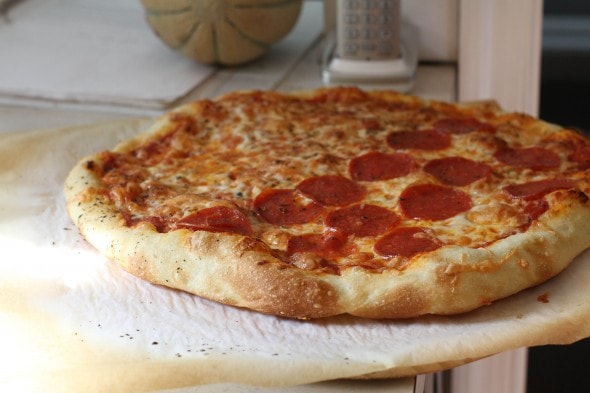
I bake it on a preheated stone, I'm not putting loads of toppings on, I've tried par-baking the crust before adding toppings, and none of that has helped to fix this issue.
Thanks!
Amanda
After Amanda sent me this question, we emailed back and forth a bit, since it sounded to me like she was already doing all the things I'd suggest. I needed more info!
Since I was a bit stumped, I asked Amanda about the location of the doughiness and also about the texture of the dough. She said the doughiness is all over the pizza, and that her dough is fairly firm, and that it doesn't rise much.
And then I got un-stumped.
Bread dough just does not function well when it's really stiff. Yeast bubbles are quite powerful, but they have a terrible time trying to lift a stiff, heavy dough.
So, a stiff dough doesn't rise well, and then because it's dense and heavy, it doesn't bake properly either (the outside will burn before the inside gets cooked all the way.)
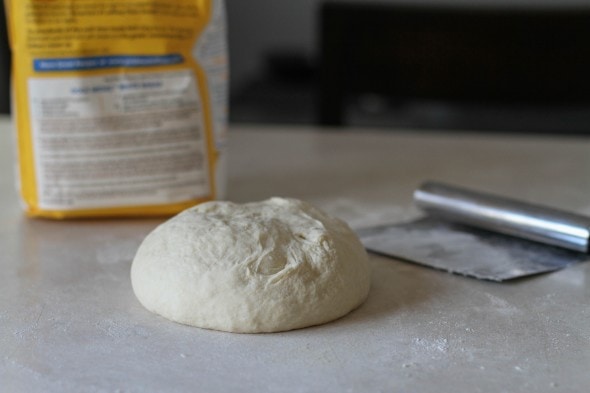
Sometimes, the fix is as simple as using less flour. Regardless of what the recipe says, you should only use enough flour to make your dough soft and stretchy. It should bounce back when you poke it with a finger, and if you shape it into a ball and place it on the counter, it should immediately relax into a slightly flattened ball shape.
You have to go by feel a bit here, because the amount of flour necessary for this texture varies due to differences in climate, season, and also variances in flour.
Which brings me to my next tip: all flour is not created equal.
In my experience, cheap store-brand flour tends to make a heavy dough. If I make a dough with 4 cups of Gold Medal unbleached, the dough is far softer than dough made with 4 cups of store brand flour.
So, if you're using cheap flour, it's very easy to get your dough too stiff, even when you're using the amount of flour called for in the recipe.
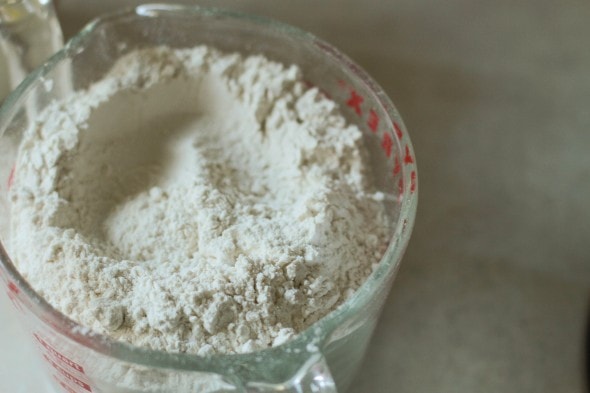
For most bread-baking, I like Gold Medal unbleached, but for pizza dough, King Arthur bread flour really cannot be beat.
The taste and texture of pizza dough made with King Arthur bread flour is amazing, even when compared to Gold Medal pizza dough.
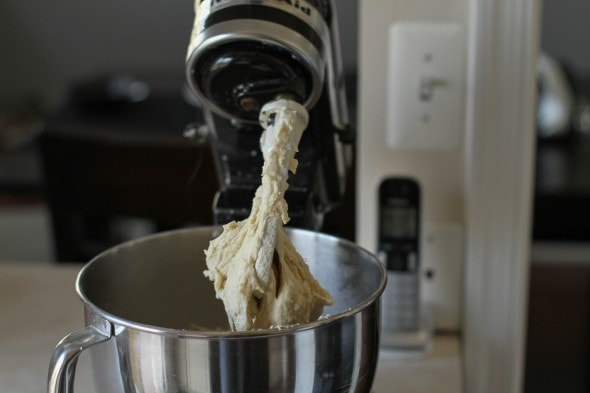
So, my two suggestions for Amanda are:
1- Use less flour
2- Make sure you are using super-awesome King Arthur bread flour
I'm pretty darn confident that those two suggestions will take the pizza from doughy to fantastic.
Do report back to us, Amanda!
(I'm not affiliated with King Arthur. I just happen to dig their bread flour.)




When I was learning to bake the most frustrating part was kneading dough. My mother taught me to add flour until it “feels right”
How is a novice supposed to know what “feels right”?
By trial and error I have figured it out and love baking of all kinds.
Yes! It's a hard thing to explain when you're not there in person.
But "right" is usually a lot softer than most people think it should be, so adding less flour is generally sound advice. A lot of new bakers end up with dough that feels more like pie crust dough or cookie dough, whereas bread dough should be a lot lighter and fluffier than that.
Nice looking presentation for the tomato/sausage Tortellini soup! A soup to warm up to!
How much flour is my biggest challenge, too. I live in Florida, where it is humid 90% of the year, so I frequently have to add more flour than the recipe calls for. I use King Arthur a good bit, but I also use organic whole wheat pastry flour, a much softer whole wheat flour, for my baking. When I use regular whole wheat flour, it can be too dense, so I add wheat gluten to the dough to lighten it. Obviously, no one in my home has gluten issues!
I admire Amanda for continuing to try -- so many people get one bad bread-making experience and give up. Good for you, Amanda! You'll get it.
I had a friend who was trying to make bread which would never rise, and we went over and over her technique, flour, kneading, etc., until one day I happened to ask about the yeast prep, and found out she was adding the yeast to boiling water! Mystery solved.
Oh, that's funny about the boiling water! That's an easy fix, at least.
I agree about "how is a novice supposed to know what feels right". I have made a few homemade pizzas that turned out really good but not enough to call myself experienced. My advice is fake it till you make it..Go buy some already made dough from a local pizzeria. They usually sell it super cheap and it will be delicious.Also, you can get a good idea of how your dough is suppose to feel. We usually just get takeout pizza because I get home sorta late on Fridays and that's the day my family usually wants pizza.
We make homemade pizza almost weekly, and I thought the dough I was making was pretty tasty. I started using King Arthur Bread Flour after seeing you used it, and it totally upped our pizza game! Highly recommend.
Also, I'm too lazy to "feel" my pizza dough most nights, so I started weighing my flour instead of scooping cups. That improved our pizzas as well.
I've made your dough a ton of times and it comes out great. I generally preheat the stone for about an hour, but my oven is crappy. I found rolling it out hard though, even after letting it sit as suggested. I just took an Italian cooking class, and was telling the chef about it and he told me I wasn't letting it rest long enough. He said to rest it all day. The last time I tried it, I didn't do the whole day, but I did let it rest for about 4 hours. It made a huge difference. The pies rolled out easily and kept a rounder shape. He explained that when you roll the dough and it pulls back, it means the gluten isn't relaxed enough. He also said humidity can have a huge affect on the dough, so what works where you are may not work here. As for the newbies, all I can say is don't be afraid to fail. Just try it and if it isn't how you like it, or realize it wasn't stiff enough/too stiff, just try again the next time. Thankfully flour and yeast isn't that expensive!
long time reader, first time commenter. I love yeast bread and cake, but it took me a long time to figure this thing out.
After starting the yeast, I measure out all the ingredients, but only add three quarters or a little more of the flour to the mixing bowl. This will most definitely be a very sloppy, moist mixture in the beginning. Luckily, my mixer is heavy duty, so I don't knead by hand anymore. I knead the dough with the hook attachment for maybe 3-5 minutes. Then I stop to check the texture.
During these first minutes of kneading, a transition happens, the flour soaks up part of the moisture (regardless of whether your dough has water, milk, oil or butter as liquid). It starts out soppy and sticky, but after these first minutes of kneading it becomes smoother and way less sticky. If that is not the case yet, a little more flour goes in, 1-2 tablespoons. Then, kneading for 3 more minutes and check again. If it still looks wet on the surface, some more flour.
When you get to the point of smooth, not wet anymore-looking surface, you need to knead another couple minutes. Then it will rise nicely.
So basically, I start from the end of too little flour and then add bit by bit. You could also go the other way around, start from too-dry and add more liquid to get the right softness, but that is harder for me to get right.
Yes...you can always add more flour, but it's much more difficult to add extra liquid.
Another vote for King Arthur bread flour! I make pizza once a week using KA bread flour and my bread machine. So easy and awesome pizza every time. I would also recommend using this yeast which KA sells but you can also find at Whole Foods and probably elsewhere. Fool proof every single time (I used to struggle with yeast breads). You can buy this large size and freeze it, keeping a small jar in the fridge. I use it in my bread machine right out of the fridge with no problem, although bringing it to room temperature would probably be more ideal.
http://www.kingarthurflour.com/shop/items/saf-red-instant-yeast-16-oz
I will add that where you live makes a difference on the flour too. Flour in the southern US is just different. When I baked in Tennessee, I had to use non-store brand flour like King Arthur, because their flours tend to be more for biscuit making and such. I have never seen a store carry so many kinds of self-rising flour and almost no regular or bread flour. In Wisconsin and California, I use some store brand flour, after a time trying them first before buying much, and I tend to like most store brand in California, but only some store brand in Wisconsin and in Tennessee, almost no store brand seemed to work right for me.
Agree about King Arthur flour; interestingly, Cooks Illustrated rates Pillsbury flour above Gold Medal. Me? I can't tell the difference between the two. One thing to know is that even 'all purpose' flour varies by brand and region. For example, KA AP flour is harder (ie, has more gluten) than Pillsbury or GM AP flour; and AP flour sold in the U.S. South is softer than AP flour sold elsewhere, because Southern cooks are far more likely to make biscuits, for which you don't want much gluten.
I have hell's own time making pizza crust. No matter what I do, it springs back. I carefully weigh ingredients. I make it "too wet", I let it rest as long as a day, I use KA flour, I use Pillsbury flour, I use some bread flour to make the dough harder, I use some cake flour to make the dough softer, I watch videos on YouTube and CI; I use instant yeast/regular yeast/pizza dough yeast, I don't add the salt till after mixing begins, I test the water temp carefully, I do proof the yeast, I don't proof the yeast, I use a rolling cloth, I use the bare granite counter, I use a lot/a little/no flour/cornmeal on the surface, I preheat the hell out of the stone or metal baking surface.
No matter what, the dough springs back when I roll or pat it out. It's always chewier than I want and thicker than I want. I mean, most people think it's OK - or they're from Chicago and like deep dish "pizza" - but for me, it doesn't justify the effort. Maybe I can get a video link to FG so she can tell me what I'm doing wrong.
Or if we had the technology, I could video-send you a piece of my pizza and you can decide if it's any good or not! Ha.
That technology does exist - FedEx! Hey, if they send organs for donation via FedEx, they can send a slice of pizza. Let's just ignore the fact that it's a tad impractical for this purpose, shall we?
I feel like the texture will suffer a bit by the time it arrives at your house. 😉
You have a point there.
I have been using King Arthur bread flour for all bread baking needs. Then I got to see Costco has bread flour for a really cheap price. I started using that and I am loving it, too. For the soggy pizza, I also had that problem and I figured the low moisture mozzarella cheese will help big time, too.
For my pizza crust I use pizza yeast and let it rise as I get the toppings ready. I also put corn meal on top off my pizza stone before I put the dough on. Years ago I read this lifts the dough up just enough so the hot air can circulate underneath the dough. This helps make sure the middle is cooked.
I always use Pillsbury bread flour and I only use KA whole wheat flour. It is the only kind of wheat I like. I will try KA bread flour now too. Great post.
King Arthur also makes a pizza blend flour which is fabulous (though pricey). You can order it from their website.
I actually prefer Gold Meadow all purpose to King Arthur for pizza because I find the dough is a bit softer and easier to stretch with LESS protein. I also learned to weigh my ingredients rather than measure--that helps account for the difference in humidity, IMHO and provides more consistent results. (Plus you don't have a dirty measuring cup to clean!).
I have learned over the years to deal with very wet doughs, so I rarely add any flour when working the dough--I will lightly oil the board if I'm kneading, so as not to add flour.
Some final things if you are new to yeast doughs:
1. The dough feels "right" when you pat it with the palm of your hand and it feels like a baby's bottom. Seriously! Go find a baby and compare!
2. Guidelines for rising times are just that--guidelines. Your dough may take more or less time, depending on the dough and the room temperature. The way you tell it has risen sufficiently is to poke your finger in the dough. If the depression stays or fills in slowly, it's done rising. If it pops back out, it needs more time. If you strictly follow the time in the recipe, you may under or over estimate the rising time.
My kids are gluten-free and the KA gluten free multipurpose flour is the best gf flour blend out there. I have never attempted from scratch bread or pizza dough with, though. They have separate pizza and bread mixes that I avoid due to use of xanthan gum. Yuck. So...hmm...I need to experiment because our current gf pizza mux is fine but veers either too chewy or too crispy. Meh.
My GF pizza crust improved dramatically when I started adding cooked quinoa to the mix - about 1:3 quinoa to flour by volume. The quinoa grains dissolve into the dough when you bake it, which gives you the extra protein to make it stretchy. I was totally skeptical, but tried it and will never make GF pizza crust any other way!
SERIOUSLY? That is so clever! GF bakers are ingenious. Thanks!
Another thing to add is the thinner she can make the dough the better. I'll make it paper thin sometimes. If you can't make it thin your dough isn't ready yet. I use a recipe that gets it ready in half an hour or less (yes, the key is bread flour). So the thinner the dough and the hotter the oven the better the pizza.
For consistent results, weigh the ingredients. You may have to experiment a bit to get optimal hydration. Hydration is the water/flour ratio, by weight. Something in the range of 0.60 to 0.65 would be about right. Once you get the numbers down, good results are just about locked in.
Flours make a difference. Using a high-gluten (hard) bread flour is best for pizza crusts, but not absolutely required. Softer all-purpose flours will work fine, but stay away from low-gluten flours (e.g., White Lily). Those are for cakes and biscuits. The problem with some of the store brands is that you don't know what you are getting.
Knead generously. It is hard to over-knead. Do it by hand to learn the feel of the dough. It's good exercise! Use the "window" test to check gluten development. (The dough should stretch thin enough to see through without tearing. Note: If you use whole wheat flour, the bran will make it tear more easily, so compensate a little.)
Letting the dough rest, as stated, is very good. In addition to the gluten relaxing, the longer it rests, the more the yeast develops the complex flavors that add the extra 'yum' to the crust. An hour is the minimum.
Baking on a pre-heated stone instead of in a pan let's the moisture escape from the bottom. High-moisture toppings (onions, peppers, mushrooms, okra [Yes, okra! Try it.]) release a lot of water in baking. If they are covered with a blanket of cheese, the only route of escape for the moisture is through the crust. Even on a stone the crust can be wet. If you love the veggies, back off on the cheese so that the moisture can vent out the top.
Thank you for saying use less flour. I usually make the pizza dough recipe on the pizza yeast packet, and I made it the other night with less flour and it was SO much better. Thanks!!
YAY!! It makes me so so happy to hear that.