
Monday Q&A | Bacon Grease and Frugal Stock (the soup sort)
So, after I posted about frosting our fire log with bacon grease from my freezer, a lot of you had questions like, "Why in the world do you keep bacon grease in your freezer??".
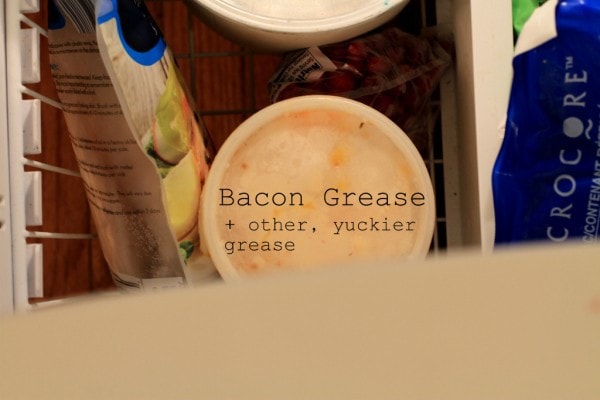
Sadly, I don't have a fantastic answer...I don't really cook with bacon grease or use it for anything. I usually just keep a takeout container in the freezer and add bacon grease or any other kind of rendered fat (like beef fat or chicken fat) until the container is full.
And then I throw it away.
Yep. That was kind of anti-climactic, wasn't it?
Up until now, I haven't really be able to come up with a green way to dispose of grease/fat, since it's not good for compost and it really shouldn't be poured down the drain. But of course, I now know that it's at least good for getting stubborn logs to burn. 😉
I also know that some people cook with bacon grease. If you were going to do that, you'd want to avoid mixing the bacon grease with other rendered fats...chicken fat isn't nearly as yummy as bacon grease.
Do you make your own stock? I'm a fairly accomplished cook but I have to admit I haven't mastered stock. I've thrown bones from rotisserie chickens in a pot to boil them up, but the stock is salty and not particularly tasty. And it doesn't seem very frugal to me to buy chicken backs and necks or beef bones just to make stock. Recipes from cookbooks also have you throw in vegetables that you fish out and throw away after making the stock. I've seen on frugal cooking blogs that people keep a bag in the freezer of vegetable trimmings to use for stock, but I don't trim much off that isn't moldy or gross. And how to make vegetarian stock that tastes good is a complete mystery to me. I'm also mystified by the occasional addition of vinegar.
I realize this isn't a very summer-y topic for those of you in hot areas, but thought I'd throw it out in case you were gathering topics for the future. Would love to hear what you and your readers have to say!
Jenny S.
I do this occasionally when I have chicken bones around. My method isn't particularly scientific...I just pour water over the bones and add in whatever random vegetable ends I have in my fridge (mostly I stick with onions, celery, and carrots). Fortunately (or not?) I usually seem to have some carrots and celery that have seen better days, so I don't really feel like it's a waste to use them in stock.
Sometimes I add some poultry seasonings, and then I just boil whatever is in the pot for, um, a while, maybe a half hour to an hour, depending on how much I'm cooking.
Then I strain the broth and pour it into Mason jars, which I refrigerate. I skim the fat off once it's congealed (it goes into the afore-mentioned freezer container!) and then freeze the stock until I need it.
I have beef bones in my freezer, but I've yet to make stock with them. I hear that you really need beef meat to make good beef broth, and I'm loathe to use my beef for that purpose.
And if you were going to make good vegetarian stock, I'm guessing you'd have to use a goodly amount of vegetables. I wonder if you could make stock and then save the vegetables to make a pureed sort of soup. Although, then you might want to add the vegetable stock to that soup and then you wouldn't have any left over.
Readers!! We need some help here. How do you make stock, especially beef stock or vegetarian stock?



We make a ton of vegetarian stock around here.
We keep a big sturdy bag in the freezer, and add veggies as time goes by. Frequent additions are:
Onion skins
Green onion tops
Slightly dried out mushrooms
A few carrots (these are usually fresh, we just don't go through enough)
It probably helps that we travel a lot, so whatever veggies don't get used up before we have to leave get chucked in the stock bag.
When the bag is looking full, we toss the veggies in the crockpot with some bulk bin black peppercorns, and stew away all day while we're at work. Strain into reusable containers and freeze.
We live in an HCOLA where a 500 ml container of preprepared stock goes for 2.99 and is super salty (not to mention tasty super carroty or celery-like). We also eat a lot of stews, curries, etc. In winter so we o through a lot of stock. For us, making our own is a no-brainer. Your mileage may vary.
I do my stock in the crock pot, too. I have made chicken, beef and ham. I think ham is very good.
I have been saving my bacon grease and using it to make biscuits and tortillas. It works well:)
The best vegetable stocks contain an assortment of veggies that have been roasted with some olive oil...
I buy alot of whole chickens because they are so inexpensive when on sale. I can cut up the chicken for chicken pieces, debone for boneless skinless chicken breast or thighs or roast them whole...all for $.59-.99 per pound. It's a great deal!
Any chicken bones I have left (including the backs and the bag of inards) go into a bag in the freezer. When the bag is full, I make a chicken stock or chicken soup. I saute the bones first in a little olive oil, add onions, celery, carrots, and garlic. Add water to cover and bay leaves and various spices (whatever I have). I boil it for a few hours and I have my stock to make soup. I normally take off whatever meat I can use in the soup or add tiny meatballs to make an Italian Wedding Soup. I never add salt until the end.
That's how I make my chicken stock or soup.
I recently started making stocks. We were cutting out most meat, and I make a lot of soups, and wanted a substitute for chicken stock. The Moosewood New Classics cookbook has a pretty good selection of vegetarian stock recipes, including one for a really good mock chicken stock.
From a frugal standpoint, and a health standpoint, the homemade stocks are great. It's cheaper than buying cans of stock, and it's healthier than buying bouillon cubes (much less salt). But, in terms of food waste, I do make some. Generally the recipes call for lots of onions, and then some carrots, celery, and potatoes. I usually have big bags of onions, carrots, and potatoes anyway, and I honestly tend to not use them all up before they go bad, so I figure that using them in a stock is better than just throwing them away. Celery is the one that we wouldn't normally buy, but I do try to use what doesn't go into the stock as snacks for the kids (I hate celery and so wouldn't use it unless I was straining it right out).
If you compost, you could compost the veggies. Or you could, as others mentioned, save veggie scraps in a bag in the freezer and turn it into stock when it's full. Just don't include cruciferous veggies (broccoli, cauliflower, cabbage, brussel sprouts, greens) because they'll add an icky taste given how long stock cooks for.
I use the veggies that I'm not going to eat - limp carrots, wobbly celery, beets that have gone squidgy - plus the bits of veggies that are otherwise inedible, for example, the (well scrubbed) skin of a squash, parsnip, sweet potato, or carrots; corn cobs (assuming you've scraped the kernels off instead of eating them); or the tough green parts at the top of a leek. The only hard and fast rule is no brassicas - they'll make your stock bitter and give you gas. If you're truly dedicated, you can also save the liquid from boiled veggies and use that in place of water in your stock for extra flavour and nutrition.
For beef stock, it's a myth that you need actual meat, though you do need scraps sticking to the bone - smooth, dry bone is useless for stock. The smaller your bone pieces, the better your stock, but if you're not up for hacking them to pieces, go ahead and use the whole thing (just bear in mind it will take longer). Roast your beef bones in a hot oven with onions and half an inch of water (skip this step if your bones are leftover from a roast or ribs) for about 40-60 minutes, then simmer gently with carrot (peelings), leek (trimmings) and spices for 4-6 hours. Try to poke the marrow out of any large bones into the stock as well for extra flavour. For more concentrated stock, simmer again for 1-2 hours after straining.
For chicken stock you can also ask your butcher very nicely: sometimes they will give away caracasses either for free or for very little (mine sells organic whole carcasses for $1.75/kilo), since otherwise they're waste (unless he makes his own chicken stock). You can also start buying whole chickens and butchering your own (it's not hard once you get the hang of it - Danny and Shauna Ahern do a very good video tutorial), just remember to roast the bones before you make stock from them.
Congealed bacon fat can be used almost anywhere you'd use butter (and in the same quantities) - try using it when cooking pancakes, stir frying veggies (particularly delicious with brussels sprouts!), or making the roux for your sauces. Also good stirred into gravy (if you're a gravy maker).
I've made stock for years and love it. Easiest method (and recent discovery to me!) is using the crock pot. I save chicken bones from whole roasted chickens in a container in the freezer. When I have a decent amount (usually 3 chickens worth), I break up the carcasses and add carrots, onions, celery, bay leaves, and peppercorns to the pot. I read that adding vinegar (1 TBSP per carcass) helps to draw the proteins out of the bones and into the broth. I then let it cook for 24 hours. This requires remembering to re-set the crock pot timer. The most recent batch of broth was super. I drank some of it and could almost feel the nutrients nourishing me. It was really odd to be craving (literally!) drinking the stock for a week - which I then did. I freeze the extra in containers for use in soups and stews. I add salt when using the stock NOT when making it - just my preference.
When I make my own stock, I simmer those bones and veggies for hours! Low and slow. The longer you cook, the more flavor you can get out of the bones. I shoot for 4 hours minimum. If I get low from evaporation, then I add more water.
If you're a bird lover, you can feed the birds (for less than a tuppence!) Just save an old tuna can and punch a couple holes in the side and hang it from a tree. Birds love to eat fat!
I remember baking bread a few years ago with a friend. We followed a recipe from the Little House on the Prairie cookbook, which used bacon grease. It was yummy! I don't remember whether we just greased the pan with it, or whether it went into the actual loaf, but it was definitely very good!
You do need a little meat sticking to the bones to make beef stock, and you need to roast them first to get some extra flavor, but it's totally worth it. Just save all the bones and trimmings from your beef in the freezer until you have enough.
It's true, you do need a little meat, but you can use the trimmings you get from removing excess fat or connective tissue from your other cuts. Just toss everything in the roasting pan together when you do the roast prior to simmering.
Do NOT skip the roasting step! It make a huge difference in the flavor, like between boiling a steak and grilling it.
Also, if you want your homemade stock to be more clear, don't let the water boil. Just bring it to a gentle simmer and keep it just hot enough to be a simmer. If it comes to a boil, the stock will be cloudy. See the Joy of Cooking for methods to clarify cloudy stock if it accidentally boils.
Store-bought rotisserie chickens tend to make very salty stock because they're typically brined (soaked in salty water) prior to roasting. On that note, if you brine your Thanksgiving turkey or other bird, don't count on getting very good stock out of the bones.
One way to mitigate the saltiness problem is to blanche the bird - boil it for a minute or two, discard that water, and then make stock with fresh water. A disproportionate amount of salt will go down the drain with the first batch of water.
I always make my own stock.
2 whole chickens from COSTCO. Boil with 1 carrot, 1 onion, 2 sticks celery , salt, pepper, bay leaf, thyme, oregano--all herbs are fresh from my own garden, including bayleaf. When the chickens are falling from the bones I remove them carefully and put all the respectable pieces of meat into little bags in the freezer--portioned for meals and pies.
I strain the stock and freeze most of it for using in soups.
I keep some stock back and add all the shreds of chicken, plus rice and barley, and then a diced fresh onion and carrot. It makes a lovely chicken soup for our main meal the same day.
I don't remove any of the fat--it's a part of our diet
I am a frugal vegetarian and buying vegetables to make stock would never occur to me. Whenever I cook something, whatever liquid is left in the pot goes into a container I keep in the freezer. When it's full, I make soup adding whatever I have a taste for plus one or two bay leaves. Yum - and practically free.
Not really on topic, but we love Mexican cookery and need lard for authentic flavor. I recommend looking for a Mexican food store. Here in Delaware we have a small one which sells really good cream-colored lard with little fragments of crackling. It's the real stuff, unlike the creepy ice-white blocks sold in supermarkets..
PS (Sorry, it's me again) Don't peel your stock vegetables. Scrub them well and cut into chunks., just remove the onion roots if any. With 2 chickens, well covered with water to 3 inches above the birds, in a very big stock pot, there iareca 3 quarts of stock made.
hi
here we eat LCHF(low carb high fat)
so we eat the fat!:-) so no cointainers here...
now i have decided to write my blog in american english.
so you are more than welcome to take a look.
i´m a swedish girl at age 35.
http://www.metrobloggen.se/silverglans
(writing in american english)
I've become a stock making addict since I started eating meat again. The bones are key since they contain whatever it is that makes the gelatin. If you roast your chicken and don't use the pan drippings for gravy, they are great added to stock. Also if you have cheese rinds from buying bulk Parmesean, they add a lot of flavor. I too keep a stock bag in the freezer and fill it with various veggie scraps - mostly onion skins and ends, and the occasional stem of spinach or broccoli (would do celery & carrots if I wasn't allergic.) I agree that in order to get good tasting broth you need to simmer it for at least 4 hours - hence it's usually a winter activity. Although you can do it in a solar oven on hot summer days.
I use the $5 dinner mom recipe for vegetable stock. Save your vegetable trimmings and leftovers in the freezer. For instance, if you have a tablespoon of veggies left after dinner, throw it in the bag! The recipe is
2 cups veggie trimmings
6 cups water
2t pepper
Salt to taste
Bring to a boil, reduce heat, simmer 1 hour.
As for vinegar in bone broth, it draws out the calcium into your stock.
And I concur regarding long cook times. I allow my stock to cook in the crockpot for 24 hours! Delicious, and with a long cook time you can stretch the carcass further by adding more water and still getting lots of flavor.
I'll have to give the vinegar thing a try next time I make it. Thanks for the info!
This is an old-timers way to use bacon fat -- I've experimented with using it after the bacon fat has been clarified several times with water. You add new bacon fat (not stuff that's been stored for a while) to a pot of water, bring to a boil, simmer 5 minutes, then cool. After fat solidifies, scoop it out,and pour off water. Add clean water, bring to a boil with the fat, simmer again 5 minutes, cool and skim off. You repeat this about 3 or 4 times. It removes most of the bacony flavor and the fat can be used in baking, such as pie pastry.
For chicken stock, after roasting or smoking on the grill, we pick as much meat off a whole chicken, then I wrap in plastic and toss I the freezer. When I have 2 chickens carcasses, I put them in a stock pot and covered with water, bring to a boil and simmer for an hour. Allow to cool, then I pick the remaining meat off the bones. A single chicken carcass will yield about 1 cup of meat. I don't bother skimming the fat before freezing. I just adjust recipes when using the stock. If my chicken stock has some fat, then I add less oil to a soup I'm making. For ham stock, it's really much better if you roast the bones in the oven for 20 minutes before making the stock.
For veggie stock, I save things like clean inner onion skins, the root end and inner skins of garlic cloves, carrot tips and peelings if they're organic, wilted greens, the stems of fresh herbs like oregano, basil, parsley, mushroom ends, the seeds and inner membranes from peppers, celery tips that don't look as fresh --all still edible parts of the veggies, just not as appealing. I keep them in plastic containers in the freezer. When I have about 1/2 gallon or more of these veggie trimmings I make them into stock, then strain out the solids. I freeze in small and large containers for use in soups, gravies, sauces.
Never thought of saving herb stems to add in--that's a great idea!
You just described how to clean lard (which is all bacon fat is - pork fat is lard)!
We keep a bag of chicken bones (leftover from dinner; carcasses from whole chickens) in the freezer. I also keep a bag of vegetable ends (onion skins, carrot peels, celery leaves). When I get about two carcasses worth of bones, I throw these and a couple handfuls of the vegetables in the crockpot. I usually add some peppercorns and maybe some herbs from the garden (thyme, possibly sage). Cover this all with water, and add a tablespoon of vinegar. I learned this from NourishingDays.com – letting the stock sit with the vinegar for an hour leeches some of the nutrients out of the bones. After about an hour, I turn the crockpot on low and let it cook for 24 hours. Then I strain the broth through cheesecloth and freeze it. This usually makes about three quarts, and it's totally free, which I love. We've also done the same thing with just vegetable scraps, skipping the vinegar step, and it's been great, although I agree that the best vegetable stock would include browning the vegetables in olive oil.
The dump here (Ontario, Canada) takes grease for biodiesel. Hopefully your area will start doing something similar 🙂 (Obviously, I wouldn't make a trip just for grease but I go fairly often to pick up free compost for my garden anyway.)
Adding the vinegar helps pull the gelatin from the bones into the stock.
FYI: Stock gels when cooled, broth does not. They are not the same thing, but can in ways be interchangable in cooking. Stock requires cooking / slow simmering while broth is just a short cooking to pull flavor into the water.
The last batch of barbeque sauce I made up, I subbed bacon grease for the oil. It added a nice smokey depth and a fuller flavor to the sauce.
I keep my bacon grease in a container in my fridge. Occasionally I use a teaspoon, or so, when I fry eggs, but it mainly gets used when I make refried beans. Our Spanish neighbors taught me their recipe and I've never bought another can of refried beans again. My grandmother also greased her bread pans with her bacon grease. I do once in a while. I gives the loaves a nice flavor.
I keep my bacon grease in a container in my fridge. Occasionally I use a teaspoon, or so, when I fry eggs, but it mainly gets used when I make refried beans. Our Spanish neighbors taught me their recipe and I've never bought another can of refried beans again. My grandmother also greased her bread pans with her bacon grease. I do once in a while. I gives the loaves a nice flavor.
How do you Make Refried Beans ?
Yum !!!
I make stock whenever I have a fresh chicken - roast the chicken and throw all the bones and the usual celery, onions, carrots, peppercorns - and usually a few thyme sprigs - because I have a lot of fresh thyme and I love the flavor. The rest I do pretty much like everyone else - though I do use cheese cloth to get a clear stock/broth.
I didn't know vinegar helped pull out the gelatin. What I DO know that about a tablespoon of cider vinegar in a finished soup adds a finishing SOMETHING that is noticeable - but not as vinegar. Sort of like lemon juice as a finishing to brighten up flavor - they are both acids.
I do what you do with bacon grease and other rendered fats - have not come up with a better way. We have so many squirrels and cats in the neighborhood, I hesitate putting it out for the birds.
Like others have written I keep a zip lock bag in the freezer and it gets filled with chicken bones etc. We also eat a lot of wings and I save the very tips as they make a lovely jellied stock. I find the crockpot is an excellent stock pot.
This weekend I made my very first beef stock. It was far from frugal as we rarely eat beef on the bone and bones are expensive here. Initially I roasted the marrow and meaty bones until brown. I then added very basic vegetables. After an overnight simmer in the pot I had a firm jellied and clear dark stock. I was so pleased with the results and my chef son said he'd employ me to make stock! I used this stock in a Vietnamese soup called pho.
I felt very guilty as I threw the fat away. There was so much. In days gone by I know it would have been kept for cooking and other things such as soap making. However we all struggle badly with extreme cholesterol problems so the fat goes every time.
I keep a one gallon ziploc in my freezer and I throw all my veggi scraps in there. Onion skins, garlic skins, the stems from mushrooms, cucumber and carrot peels, tops and root ends from green onions, leaves from cauliflower or broccoli, anything that would normally go to compost pile, I throw into this bag. When it's full, I dump the contents into a big dutch oven or slow cooker, fill with water and simmer it for 2-3 hours (8-10 hours in a slow cooker). It's a really nice FLAVORFUL veggi broth and I haven't had a bad batch yet doing it this way.
For beef or chicken stocks I've found that browning the bones in the oven before boiling them adds ALOT of flavor to the stock, especially when you scrape up the frond and add it to the stock.
For those of you fortunately enough to live near a butcher, you can usually buy beef neck bones directly from the butcher. These are usually pretty meaty and they are a lot cheaper then buying "soup" bones from the supermarket.
~ Mikki
I keep a bin in my freezer and toss in carrot ends, limp celery, herb stems, leftover chicken noodle soup, an occasional apple, onion peels and ends, "dead" mushrooms, etc. I also toss in bones off our plates after dinner (nothing with bbq sauce, or Asian flavors, or other strong flavors)...I know that might be a bit icky to some, but I think it's what The Tightwad Gazette calls Selective Squeamishness (or something like that). When the bin is full, I empty it into my canner, fill it up with water, bring it to a boil, and then let it simmer all day. Then I strain it, chill it and remove the fat, then put it into 2-cup boxes in the freezer.
This doesn't give me a purely "chicken" or "veggie" or "beef" stock, but it's all pretty interchangeable, and best of all, it's free!
I never thought of using herb steams! And I love The Tightwad Gazette too!
I use bones I've eaten from as well. The water gets boiled, then simmered for hours after all.
I also freeze unfinished fruit for smoothies or ice cream, after paring off the wrinkly brown bits that someone (ahem -me- ahem) bit into then didn't finish.
The vinegar will help to draw out nutrients from the animal bones. Homemade stock made with bones is a great way to get gelatin into your diet. Which is great for you! Especially if you are worried about osteoporosis. Lots of other commenters have left their recipes, so I will not. I just wanted to add that tidbit 🙂
If you want to make chicken stock without having to save leftover chicken bones, you can cook a whole chicken (or chicken parts) and make broth and shredded chicken at the same time. Here's how I do it:
http://purposelyfrugal.com/2012/03/27/crock-pot-tuesday-whole-chicken-and-broth/#.T8zQhR1KLZR
I was able to make 4 cups of shredded chicken and 9 cups of broth for about $3.60!
When I was practising Midwifery, I used to make "Potassium Soup" for my homebirth clients. I'd usually get to their home with hours to spare, so I'd put some root veggies - like carrots, turnip, potatoes as well as celery and pretty much whatever they had - in a pot to simmer for hours. Usually after many hours of labour, the Mother would need a boost so I'd give her some strained Potassium Soup..... this broth gave her fluids and vital vitamins and minerals she needed. Plus I had a meal for the kiddies and husband whenever they were hungry!
The best way to make chicken stock is to use the carcass from a roasted bird -- turkey, chicken, etc. Put the bones along with whatever meat is still on the bones, any roasted veggies still in the pan, an onion, whatever other veggies and seasonings you want, whatever and cover with water. Cook until it tastes good to you, strain, and use. This makes the best stock EVER!
I'm a big stock maker and I keep a little container of bacon fat in my freezer. Most stews and soups I make are vegetarian (we are not vegetarians but I do try and trick my family!) but I add a tablespoon of bacon fat when pan searing onions, carrots, garlic, etc. and it makes the meal seem like there's meat in it!
Whenever I have bones, I make a stock and use whatever I've tucked in the freezer from onion skins, carrot tops, cheese rinds or celery ends. Roasting the bones first like Jessie suggested makes a huge flavor difference but I don't always take the time to do that. And, I'm with Lili, I don't bother skimming off the fat when making chicken stock. Too much work. We had chicken the last 2 nights and all the bones will go into a stock tomorrow. I'll use that stock to cook lentils. Then, luckily for our once-a-month garbage collection family, our city now accepts meat bones in the compost bins - yes!
I take care of alittle Chinese Boy (3yrs now)
& he has Twin Sisters. His Mom made ALL
of Their Baby Food.
But she kept the Stock from the Veggies.
she Boiled & Pureed the Veggies with Some
of the Stock.
Carrots (Cleaned & Peeled)
Celery Stocks
White Onion
1- Can of Stewed Tomatos (or Fresh Tomatos)
Water
Soy Sauce
Boil 10-15 mins,
This Purée Tastes Good on White Rice
With some shredded Chicken.
LoL, I know this cuz she made me some to try
I told her it Smelled Good & asked what it was 😉
I now make this as a side Dish w- Rice
I've used the Stock to Cook Pasta but I haven't
Used fir anything else yet.
A great use for bacon fat or any animal fat is soap, lock for a method online, soapcal is good. Making your own soap is pretty easy to do . Just make sure no one under 12 is around for a few hours.enjoy.
I make chicken broth about once a month when chicken goes on sale. Bring the chicken parts and whatever vegetables you have around to a boil and then simmer for around 3 hours. I use two pots and boil 5-6 pounds of chicken/bones at a time. Cool the chicken separate from the broth. I shred the chicken and freeze in separate packages to use for later dinners. The cooked vegetables should be pureed and put back into the broth (which adds some body to the broth). After broth cools for 24 hours, I remove the extra fat on top and then freeze the broth for later use.
I love making stock. I don't always freeze up bits but rather make a small pot right after dinner. I do find that potato skins (if organic) make a really nice addition to a veggie broth. When I buy chicken wings I cut off the wing tips and use them for chicken stock. They have a lot of flavor and gelatin in them but not a lot of meat so I don't feel like I'm wasting meat. I don't always take the time to roast the wings and when I'm making a lighter-flavored stock I add green onions, garlic and ginger for an Asian broth that is good plain as well as in noodle soups. I also use dried mushroom stems for our veggie broth when I want a stronger flavor. Believe it or not a little dried prune will also add richness.
There are a lot of interesting vegetarian broth recipes at your local library, especially in ethnic cookbooks. When I'm looking for a new flavor idea I check there.
Send your bacon grease my way! I use it for everything... hearing that people throw it out is synonymous with throwing away butter, to me.
I used it to fry eggs in the morning and make tasty wilted salads (http://allrecipes.com/recipe/wilted-lettuce-salad/). I have also found that using it to saute onions in adds a fantastic flavor to most anything, from soups to pasta sauce. Using it to grease pans of savory breads, replacing olive oil when making croutons, adding to mashed potatoes...
I am starting to get hungry.
A tablespoon of bacon grease adds great flavour to boiled greens like cabbage, spring greens, turnip greens, spinach, brussel sprouts. You can use it to sautee green beans, squash, leeks, onions, mushrooms etc, either on thier own or a combination. Basically where you want more flavour and need or want to use a little extra oil or fat. The wilted salads mentioned were a favorite summer meal. My husband sometimes fries his bread in it for breakfast. Too greasy for me, but it does taste nice.
If you don't want to cook with the bacon grease, you could always use it to make bird treats - just melt it and mix in some seeds or oats and form into balls or press into an old carton - hang them from a branch - the birds will really appreciate it in winter!
My Mom always stored bacon ond other used cooking greases in the freezer so of course I do too. It is funny, I thought everyone did the same.
Wow. You guys are a veritable wealth of stock information!
I blogged about making stock and a beef and vegetable soup here: http://simplyinspiredbymegan.wordpress.com/category/recipes/leftover-makeover/
Leftover T-Bones are excellent for this process too! Steak soup!
I also do the same process with chicken. I buy chicken breasts with bone and skin, simmer them all day with salt, pepper and some veggies, then take out the chicken, shred it for use in enchiladas, pot pie, etc and throw the junk back in the roaster with more water. Strain it and you are good to go!
I cook pancakes in bacon grease! Yum. This is a trick I learned from my mother-in-law. It also works well if you have a soup that calls for bacon (like corn chowder or lentil soup), but you don't have any - just saute the veggies for the soup in a little bacon grease.
Good broth:
1. don't just save to bones from a roast, save the drippings too. It adds lots of flavour.
2. put the onion, skin and all, into the pot with other veggies.
3. Martha Stewart also uses swiss chard (besides carrots, celery, onion) to make veggie broth.
4. use bayleaf
Making stock (a.k.a bone broth) is one of the most frugal and healthy things you can do. So many good vitamins and minerals that you don't want to just throw away--and it's nearly free. This is great medicine for your bones and joints, and cures colds (Jewish Penicillin!).
We usually have a soup night when I've made a fresh batch of stock. There are so many soups you can make with a broth base. My husband was sick, so last night we had chicken noodle soup (I don't eat grains, so I had julienne zucchini in place of the noodles). BTW, he feels much better today ;o) Beef broth can be "doctored up" with canned tomatoes and veggies for a hearty soup. Add fresh tomatoes and veggies and serve cold as gazpacho.
I'll freeze the rest of the strained broth in ice cube trays to use whenever we need a sauce, gravy, or broth to add to a recipe. During the colder weather, I often melt a few cubes of broth in the microwave to drink hot like tea.
It's so easy to make, it seems like a sin to throw good bones and bits of veggies away.
I just read that a metal reusable strainer you can buy for making coffee is a wonderful strainer for broth. It catches everything that is not pure liquid. Then you just wash the strainer and save it for next time. I'm going to try putting a whole chicken or two in my crock pot and cooking it forever so I get shredded chicken and broth both from the same cooking time.
I do leftover bone stock and have done veggie scrap stock. But now I have a new most favourite bouillon mix that I make every couple of months and I freeze. It is this recipe, basically a mash-up of veggies and salt: http://www.101cookbooks.com/archives/homemade-bouillon-recipe.html It is so delightful. I make it in a vitamix so unlike the photo in the link, it comes out a very smooth puree so there is chunky bits in the soup or whatever you're making. The full batch makes lots and because of the salt it doesn't really freeze, so you can scoop it out. If you make it without salt you can also just freeze it in an ice cube tray and use it by the cube.
After going through most of the posts, I don't see one with a mention of a pressure cooker, which is the most frugal and fast way to make stock. Use every or any or the recipes mentioned and put it in a pressure cooker for 45 minutes and it will be magic. For a great blog that uses a pressure cooker to make turkey, chicken and beef broth, see dadcooksdinner.com. But even a quick google will help you use a PC for this. It pulls the flavor out of the bones!
OK... I realize this is totally off topic, but since everybody's saying what they do with bacon grease... In junior high school I used it to win two science contests.
The first was the egg drop - you had to devise a contraption that could be tossed off the top of the stadium with a raw egg inside and keep the egg from breaking. The smallest contraption was the winner. I took a half pint egg carton from my school lunch, filled it half way with bacon grease, stuck the egg inside, then poured warm bacon grease over the top to fill it up. The egg survived (and miraculously didn't get cooked!)
Then there was the "marble in motion" contest - you had to devise a non-motorized contraption that would keep a marble in motion... whoever kept the marble moving the longest won. I smeared my marble with bacon grease, and smeared a baking dish with bacon grease. Then I set the dish at an angle and it took 45 minutes for the marble to roll to the bottom. They didn't say how fast the marble had to move!
So there you have it... my creative but alas, not very practical uses for bacon grease! If only I could have figured out how to use it for the toothpick bridge contest... sigh.
Stock - pretty much same as Kristen. I will cook a whole chicken the week I plan to do a batch, then slow cook (overnight) the carcuss with a variety of odds and ends of veggies. Keeping carrot tops and all the bits you wouldn't eat is a great way to use up foodstuffs that may go to waste. They can be frozen as you chop them to be used when a batch is planned. Top up with water, and a few dried herbs and black pepper. Cool, skim and freeze! I find slow-cooking it reduces the saltiness as it doesn't 'reduce' as much. However it can be too unsalty for certain things (aka UK brown gravy), if that's the case chuck in a couple of pinches of salt, when you do your recipe rather than in the stock.
I don't salt my stock until using it in a recipe, as well. Salt inhibits the ability of legumes to absorb water. So if I'm using the stock to make lentil soup or something like that, it will take the lentils a much longer time to cook, if the stock has been pre-salted. Also, I don't know what type of recipe I'll use the stock in. I sometimes will make a stock reduction for the base of a sauce, and in that case, a pre-salted stock will be overly salty by the time it's been thoroughly reduced
If you are in to soap making, you can use the bacon grease and animal rendered fats to make home made soap. With the exception of lye (which you can pick up at a hardware store, like Ace), you probably all ready have the ingredients to make bacon grease soap in your own kitchen. Adding a few drops of essential oils will give it a nice smell.
I always keep a jar of bacon grease in my fridge. We use it when making home fries and also to make refried beans. It gives both a really terrific flavor!
A local chef (does lessons and newspaper articles) did a story on this a few years ago. Most people peel carrots, cut the ends off of onions carrots and celery, maybe don't eat the broccoli stalks or somewhat withered mushrooms, maybe mushroom stems get cut off for a different recipe....all those go into a container in the freezer. when you have time or it's full...boil them up with a few standard soup seasonings and boil up for a while then toss the veggies and strain the liquids. You'll end up with veggie broth without spending extra cash or using up stand alone veg.
I do the same thing with bacon fat & other cooking fats. Just seems like an easy way to dispose it I guess. We have curbside compost now - and even fats are accepted. It goes to some kind of high heat composting farm.
These are awesome ideas. I'd been wondering how to make my stock less boring. Thank you!
Lazy no-waste broth or stock... when I cook a roast in the slow cooker, mostly in Winter, the 'juice' that is left makes the start of a pretty good broth(without bone) or stock (if the roast has a bone) consentrate. That is, once the roast is out, cook the liquid down by half to consentrate the flavor and so you aren't taking up room in your freezer just freezing water. I save it by freezing into icecube trays, then dump the cubes into a ziplock for longer storage. The broth freezes hard, the stock ones stay rubbery. For clear broth I put a coffee filter into a medium strainer with a bowl or pot under it to catch the clarified broth. This makes tasty 'Au Jus' for left over roast sandwiches with the roast onions sauted. If you saute the caught bits from the strainer, they are good in rice or pasta dishes. I tend to use the frozen cubes to add flavor to rice or pasta dishes and defrosted as liquid for gravy to my rue. But then maybe this way is cheating, because I put Worchesterchire, salt, pepper, onions,(sometimes whole garlic cloves), carrots and either potatoes or yams in with the roast then serve the veggies with the roast so there is no waste. I also use herbs, usually rosemary, thyme, and/or parsley, which seems to help the flavor a great deal.
I would also highly recommend using roasted chicken to make stock. I roast a whole chicken for dinner every couple of weeks. We carve off the regular cuts of meat and throw the carcass in the freezer. When we've got about four chickens-worth in the freezer I throw them in the big Dutch oven with any other leftover vegetables (carrot tops, leek tops, onions, celery, carrots...) and some herbs (bay leaf, thyme...) and simmer for up to six hours, adding boiling water as necessary. When the biggest bones feel squishy you know you've gotten all the gelatin out of them. I also don't add salt until the end.
The number one trick to making the best stock is adding water last!! I always chop up onions,celery(including leaves and the hearts) and carrots and saute in olive oil until very brown and caramelized. At this point I add garlic (we are big fans but not of burnt garlic!) and the saved bones,bits and skin (if available ) of the meat I making stock with. Continue cooking until meat has started to get brown and then add water...a little at first so you can scrape all the good bits off the bottom of the pot. Then cover and cook on low heat for at least 2 hours.
I pressure can my stock so I always have a good supply on hand. If you want to freeze it, use ice cube trays . Once frozen put into ziplock bag or large container in freezer. This makes it easy to throw a little into the roasting pan bottom for gravy or to add just a bit to something.
Vege stock is done the same way except you brown all vegtables and add water. I keep a bag in freezer for end pieces of celery,carrot peels,asparagus ends etc and use them in stock as well.
If you don't peel your onions and just quarter when making chicken stock, the skins give a beautiful colour to the finished broth.
Ooh, that does sound yummy. I've always added water first.
RE: bacon grease....the very best use I have come up with is to make homemade suet balls for birds in the winter. The internet has lots of recipes and it is cheap and a great kid friendly exercise. I would leave out peanut butter (not necessary) and hang in trees/outside in winter. In fact, I am making an outside bird friendly Christmas tree and hanging the suet up...you can put it in left over plastic mesh that the turkey comes in!!! Birds need the extra calories from the bacon fat in the winter. Add bird seed and/or oatmeal and/or sunflower seeds and/or crunched up peanuts and some nonfat dry milk....oh there are lots of possibilities. I have a pint jar about once a year and this is where it goes!!
Hi Kristen,
I found your site after looking around for a "how to make yogurt from goats milk" search. Love your recipe. Turned out perfectly!
Anyway, making stock has to the easiest thing ever. My husband and I raise dairy goats and meat chickens (once a year - about 30 of them) He does the butchering, our son assists him. I can't kill anything so they bring the chickens to me looking like it came from the grocery! After cutting them up as I want, I toss the carcass' into my big stock pot. I throw in one onion, chopped up, carrots, celery, or whatever it is I have in my fridge that needs to go into the pot! I also throw in one chicken foot. My husband cuts off the toenails and into the pot it goes, after being washed of course. I cook the bones and whatever until I get the taste I personally like and then I strain it all. I find it fascinating how much more meat I get after cooking it. I do can my broth, so we do the pressure canning thing, I put alot of the meat into some of them. And, VIOLA you have chicken broth that people will beg you for.
As to beef stock. the trick is to broil or roast the leg bones until the bones are brown and the marrow is soft or melted. After the bones are roasted toss them into a stock pot, scrape the drippings off the bottom of the pan as well and pour water over it, toss in whatever veggies you want and it's the same as the chicken stock, minus the foot of course. Good luck on making stock, it's addicting and I get a perverse sense of satisfaction out of it because I made it.
Take care!