
3 medical concepts I love to explain
I have spent a good portion of my life teaching in one way or another, so it is unsurprising that I love teaching things to my patients. When I can take a medical concept and make it easy to understand, I feel so happy!
And I really love it if this understanding has the potential to lead to better patient outcomes.
A lot of you enjoyed the post where I wrote about wellness products that are a waste of money. And since, like my patients, all of you have bodies, I thought you might enjoy three of my favorite little educational topics too. 😉
Note: I promise this is not going to be really gross; it'll be along the lines of my "your red blood cells are like a little bus with four oxygen seats" analogy. So, if you were ok with that, you should be ok with this post, and it's safe to keep reading.
1. Why antibiotics do not work on viruses
Most bacteria have cell walls, which basically serve to hold all the bacterial components together.
Human cells do not have cell walls; we have cell membranes instead.
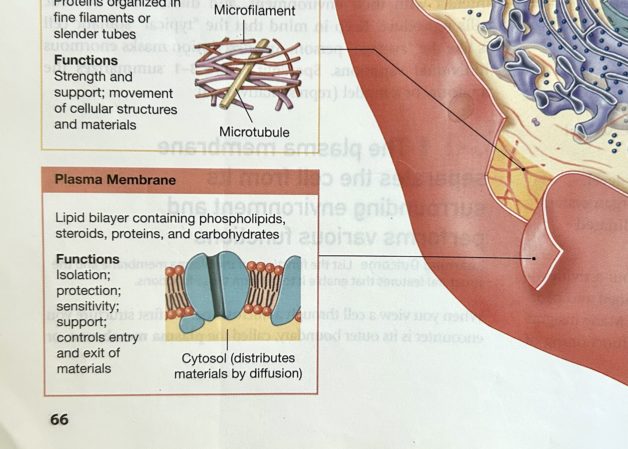
Most antibiotics work by basically attacking cell walls and poking holes in them. This renders the bacteria useless because all of their components leak out, leaving what amounts to a deflated bacteria balloon.
Happily, since we don't have cell walls, the antibiotics cannot poke holes in our bodily cells! Our cells are safe; the bacterial cells are not.*
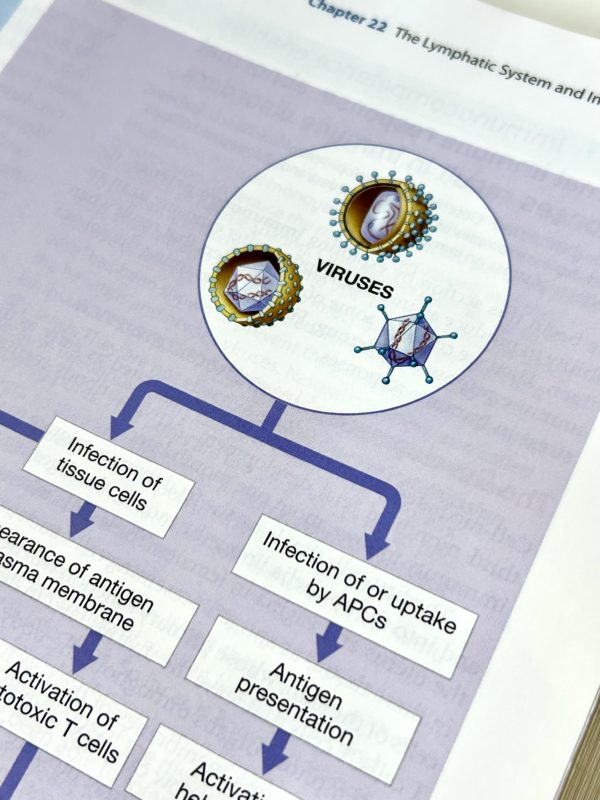
Know what doesn't have a cell wall? VIRUSES.
And this is why antibiotics are powerless against viruses. Antibiotics are awesome at attacking cell walls, but viruses have no cell walls to attack; they just have a protein coating.
Ergo, antibiotics are not gonna help.
When I learned this in microbiology, it felt like such a light-bulb moment. I had always heard that antibiotics don't kill viruses, but until then, I hadn't understood why.
And I love to understand why.
*A relevant thought: Ideally, we want to use treatments that will fix the disease but will not also destroy the rest of the body in the process. Antibiotics are a nice example of that: they kill bacterial cells but not human cells. Continuing this train of thought, I started to type about why what works in a petri dish does not always work/is not always safe in the human body, but that might be a topic for another post.
2. Don't leave the strongest soldiers! (aka "why you need to finish your antibiotics")
When you have a bacterial infection and you take antibiotics, they do a lot of their work right off the bat, which is why you feel better pretty quickly.
(I imagine the antibiotics floating around the body, going, "Pop! Pop! Pop!" as they poke holes in the bacterial cell walls. This is probably definitely not what actually happens.)
Not all the bacteria get taken down right away; there are some strong bacterial enemy soldiers who manage to hang on for a while, even after the weaker bacteria have succumbed to the cell-wall-poking.
If you quit taking your antibiotics a few days before you're supposed to, you have killed off the weakest bacteria while leaving the strongest ones to survive (and replicate).
And replicate is what they will try to do. If they're successful at regrouping and rebuilding, then you'll have an infection full of these strongest soldiers, which you've probably heard of: antibiotic-resistant bacteria. And these guys are harder to treat!
So, this is why your doctors are always telling you to please finish your antibiotics even if you start to feel better. 🙂
Fact check me here: Johns Hopkins article on antibiotics
3. How to get blood back to your heart
Our bodies have a pump (the heart, obviously!) that works to send oxygenated blood away from the heart through our arteries and out to the rest of the body.
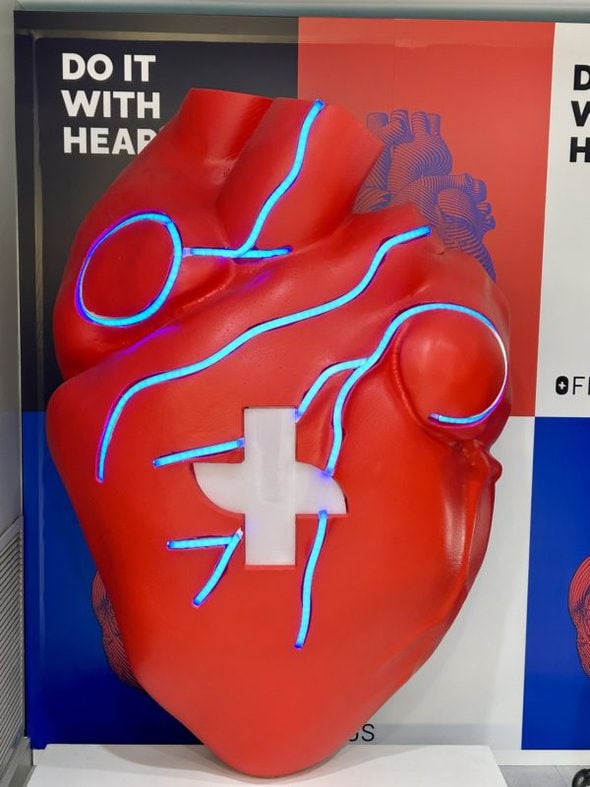
But we do not have a dedicated pump to send our deoxygenated blood through our veins, back to the heart.
Gravity helps us with some of this, particularly in our upper body. But something else also helps: muscles! As we contract our muscles, they put pressure on our veins, which pushes blood through them.
Our veins have these nifty little one-way valves that keep blood from flowing backward, which means the repeated pressure from our muscles pushes the blood progressively toward the heart.
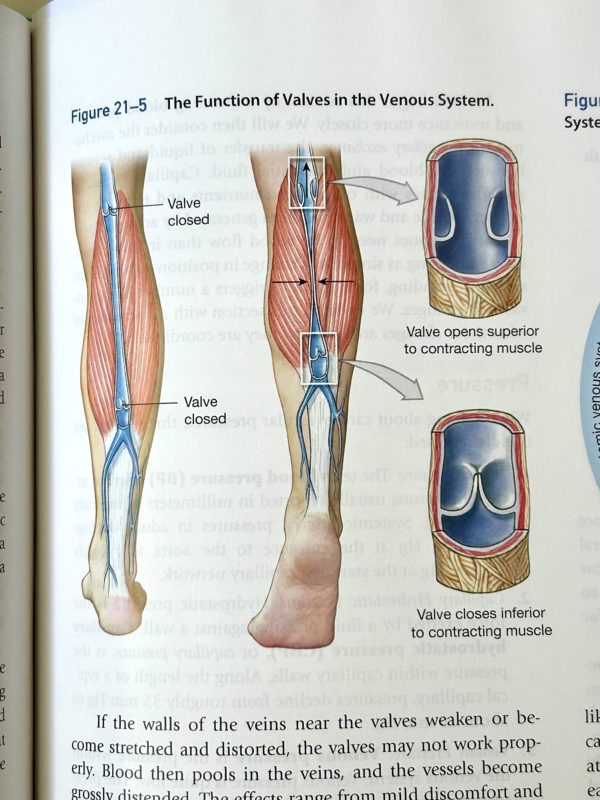
If you have a typical level of mobility, you walk around during the day and your muscles squeeze enough to keep your blood moving on back to the heart.
But...if you are immobile in the hospital, or are on a long car ride or airplane ride, you are not moving those leg muscles, which means blood can hang out in the veins for too long.
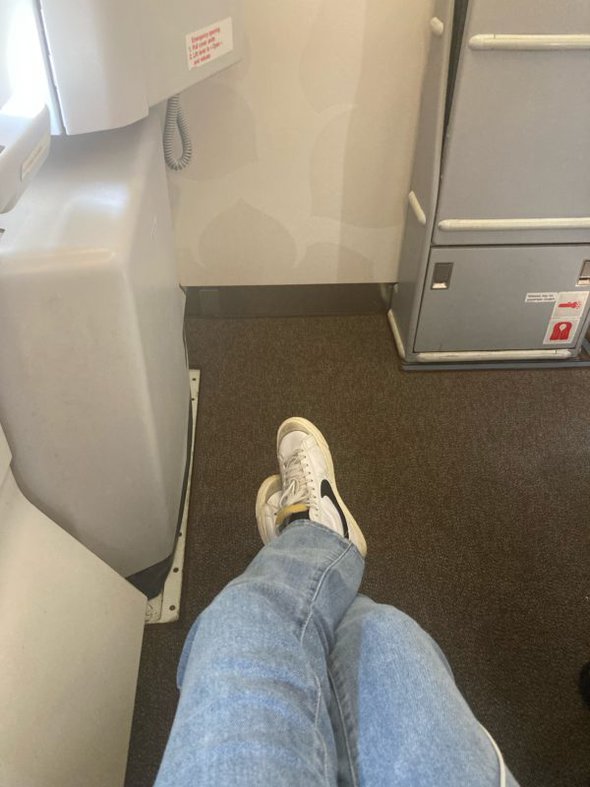
And blood that is still for too long can form a clot, which is bad news (see this Mayo Clinic article).
That's why we use sequential compression devices (SCDs) in the hospital (basically intermittent leg massagers); they're like an external muscle pushing on those veins.
It's also why we try to get patients up and moving as much as possible!
Obviously, most of us do not have access to an SCD machine, but if you can stand up and walk around a bit when you've been sitting for a while, that will help.
Or if you can't stand up, you can do ankle rotations; that motion engages your calf muscles, which means you'll help your blood to get moving. 🙂
Fact check me here: Anatomy and Physiology textbook
How many of these did you already know?
(I personally learned about all of them in nursing school/prereqs!)
P.S. I have other medical tidbits I love to talk about too, so if you want this to be an occasional series, let me know, and I can keep a running list as I think of topics. 🙂
This is so interesting! I get grossed out by medical stuff, so I really appreciate the analogies!
Am I correct in understanding that vaccinations work by attacking an imitation of an infection or disease, and therefore your immune system knows what to do with the actual infection, so to speak?
Basically that's true, yes! A weakened version sometimes, a dead version sometimes, a partial version...enough to make your immune system remember that bug enough to fight it better next time it sees that bug.
@Kristen, The analogy I heard is that the different version is giving out a sign to the immune system saying 'Warning: There Will Be Others Like Me' and then the immune system is prepared. In regards to medical facts you posted above, I knew about the heart and why it's important to move around, but I also never understood why antibiotics were ineffective on viruses or exactly why you need to finish a full round of antibiotics.
I love this post! I knew the ideas - e.g. do some ankle rotations on the plane (and even got my son to do this last week when we were flying) but not WHY. I will revisit this post and links again to make sure I remember and can explain to others. Thank you.
I had no idea about why we are told to get up/moving. I've always figured from the car rides I was comfortable enough that it didn't matter to me. Now I will stop and stretch my legs more. Thanks!
Orrrr at least do some ankle rotations in the car!
@Kristen, sitting all day at your desk is not ideal either.
Great information!?
We just had our exam on blood vessels and respiration (ahem, I got a 96% ;)), and the venous valves (and muscular pumps) were emphasized. And thanks to you mentioning the muscular pump in a earlier post on here, I was already familiar with it! I also love making these concepts relatable, especially to my kids.
Definitely make this an occasional series!
@Karen A., congrats on your exam! ????
Yes, please! This was fascinating, and I'd love to see your medical tidbits as an occasional series! I, too, like to know the "why" behind the fact. It's so important to understand your health, and "knowledge is power." Nicely done!
I also think knowledge is compliance! Once you understand that quitting antibiotics early = leaving only the strongest enemy soldiers, you'll be motivated to finished the whole prescription. 🙂
It helps so much to understand the rationale behind what the doctor/nurse tells you to do!
@Kristen, yes!
@Kristen, Yes it is compliance and also interesting to have this knowledge about your very own body.
Importantly, your explanations are so very clear and concise.
@Kristen, well.... Sometimes. Probably for most people. But I'm extremely squeamish. I don't actually want to know why for medical stuff, I'm happy to just follow the rules! hahaha
Yes please to making this a running series! I hadn't heard the "why" behind any of these things.
I knew the information but not exactly why. What a great idea for an occasional series of posts. You are providing PSAs and being taking care of health is frugal in the long run.
I would love for this to be an occasional blog. As I get older it is important to have medical knowledge so I can help myself to have better quality of life.
My sisters and I always share medical and or dental knowledge with each other.
More tidbits please. Your explanations make a lot of sense.
She is spot on about taking ALL of your antibiotics. My FIL got a tooth implant and stopped taking his after a few days, because he felt fine. He died, due to an infection in his jaw and other complications. TakeALL of your antibiotics!
You explain these things so well. I have a question. Do anti-virals attack the protein coating on the virus walls?
@Bee, I'm interested in how this works also.
@Bee, I know this! (Waving from the balcony.) Keep in mind it’s been a while since I was in virology class. Kristen probably has a better explanation.
Viruses reproduce by making copies of themselves. They do that by invading the cells of whatever organism they have entered and using the cells’ internal “machinery” to make the copies. These new viruses burst out of the cells, often destroying them and go on to infect other cells. Anti-viral drugs work by disrupting the process. Some block the receptors on the cells surface that the virus uses to get inside. Others interfere in the “manufacturing” of the new viruses. Still others prevent the new viruses from getting out of the cells. My professor compared it to making photocopies. There are lots of ways things can go wrong from a paper jam, to running out of toner, to the machine itself breaking down.
Yes, I can add this to the list of topics for a future post, but I agree with what Darlene said. A lot of anti-virals work by trying to stop the replication pattern of a virus, and that's why you gotta get on an anti-viral so early in a disease (You know how you have to get on Tamiflu within two days of having symptoms?).
If the virus has already gone bananas in your body, it's a little late to try to use a drug that interrupts the replication process.
@Darlene Too,
Very interesting. Thank you gor sharing your knowledge.
I ... do not want this to be an occasional series. I am not interested; I prefer the furniture rehabbing, daily frugal habits, thankfulness kinds of posts.
Very clearly explained and it is really nice to know the why behind things. So many doctors don't bother with that and so people just have to guess. LOL. This would be a great occasional addition to your posts.
I knew all! I love reading about medical topics (and implementing good advice). Sadly, my family does not like me talking about what I read, particularly if I pass on the good advice. So please continue interspersing the frugal talk with medical talk!
I knew about the antibiotic tips - this was drilled into me when my kids were younger. When I was much younger I would "forget" to finish the antibiotic when I got to feeling better and no one ever counseled me!
ooops.
In my job I love to explain two things: the use of the Piggostat for pediatric chest xrays, and the process of reducing and intussusception under fluoro (moving xrays). The most important thing is to make sure the parents (i.e. the helpers!) understand the problem/exam, and how we will get the job done. After 31 years of it, I feel pretty confident. (:
@Gina from The Cannary Family,
I've never heard of a Piggostat before, but if I had any say in it, it would have cartoon pig faces on it. 🙂
ONE CAN HOPE.
@Liz B., ummm...no it doesn't have that... the Inventor's last name was Pigg. Its been described as a torture device many times (sometimes by nurses, sometimes by parents, always by those who want to exaggerate) but its the very best way to get a diagnostic upright chest xray on someone younger than age 3 or 4. A lot of things we have in the medical field seem scary and dangerous to patients, when the opposite is almost always true.
Intussusception is way scarier.
I have a friend that was a nurse for years and now she teaches nurses. She loves that it has combined her two favorite things. You may end up looking into that as the years go by with your interests.
I knew some of this, like why to keep taking antibiotics, but I couldn't have explained it as clearly as it is explained here, so I enjoyed this. I really love it when a medical professional explains things clearly when I ask questions; how much nicer to get explanations and I didn't even have to ask, which is good, because I never would have thought to ask about these particular things.
I knew antibiotics didn't help with viruses, but now I know why! Finally, it makes sense.
I am much happier to comply when I know the actual reason why I'm being asked to do so. I get irritated when I get a glib answer or half answer. I feel much more confident about handling a health issue when I fully understand it.
Yes, exactly. An explanation that non-medical people can grasp and understand goes so far in helping to promote teamwork between healthcare professionals and their patients.
I really enjoyed this post! I look forward to reading more, if you do share them. I knew blood clots were a danger, I didn't know why/how they formed? Very interesting and you made it easy to understand.
An excellent post, especially with the increase in viral illnesses this time of year. Antibiotics are lifesavers but they are still strong medications and there are repercussions when they are used excessively or inappropriately.
Love this! I can tell you have been teaching in one way or another for a long time! I too, like to know the "why" component! With a recent A-fib diagnosis, it was good to have it explained why an anticoagulant is necessary.
Yes, for sure. Taking an anti-coagulant long-term is a little scary for people, but a-fib can definitely cause blood to hang out in your heart too long and form a clot. I'm so glad your health care providers explained it well to you!
I knew about antibiotic resistance. I knew that antibiotics only work against bacteria, but I didn't know about the mechanism that explains why. But I had NO IDEA about the muscles pumping blood back to the heart thing! I always just kind of figured it was like a closed loop where new blood coming in would push the old blood back to the heart. Today I learned!
I “knew” these things but your explanation educated me on the why
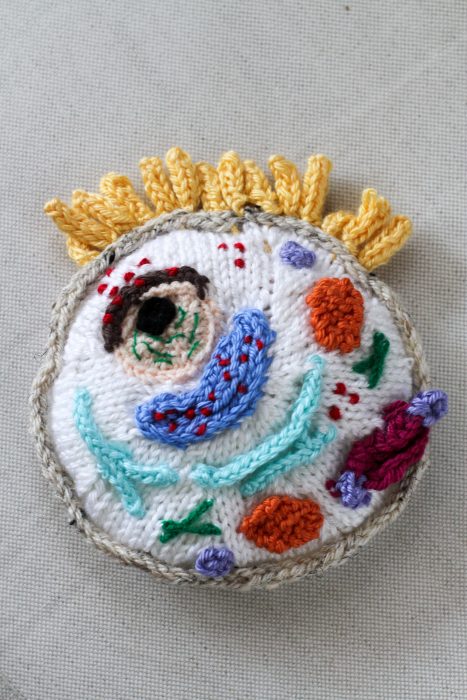
Your cell is how my son made his in 5th grade. I still have them
Love this stuff, keep it coming.
I definitely want more in this series.
- I knew why to use all your antibiotics.
- I knew, and had forgotten, the specifics about muscle action and blood return. (I give myself half a point for this one.)
- I had no idea about why antibiotics don't work against viruses.
I would like to know more about cell walls vs cell membranes. What are the differences? What are the benefits and detriments? Any idea why they developed as they did? How does this play out in other creatures (or whatever we want to call bacteria and viruses)?
@WilliamB, Ooh! I know a bit about that. Cell walls are found in plants, bacteria and fungi. They're made of cellulose/carbohydrates, act as energy stores for the plants, and only allow small particles through. Cell membranes are found in animals and people, and they are made of lipids (fats) and proteins and are selectively permeable (which is how nutrients get into your cells from the capillaries!).
Here's a good page that explains the differences in more detail: https://byjus.com/biology/cell-wall-and-cell-membrane/
I also think I remember from Bio 101 that since plants don't have a skeleton, their cells need to have more structure. 🙂
@Karen A., thank you!
@WilliamB, Just FYI- All cells have a cell membrane (also referred to as a plasma membrane). Even cells with a cell wall have a cell membrane.
Yes, please make this a reoccuring post I never knew about the blood pumped back to heart......Also, so much easier to explain to my friends why to finish antibiotics when they do not.
Just recently my husband was saying that he wishes that there was more education on our bodies for the general population and himself. Your explanations are very clear and interesting.
I agree! People would be much less susceptible to health scams if they all had to go through biology classes and anatomy & physiology courses!
Love this info!
Impressive biceps there !! ? After 46 years in the gym I guess my muscle pump is OK. I knew them all, but then I studied some anatomy and physiology as port of my MSc studies some 35 years ago. Thank you for a very nice blog !!
I like this and would welcome more!
I love this topic!
Thank you! Always enjoy "refresher" courses to remind me of what I forgot-- or DIDN'T know.
oxoxoxox
Love this! PLEASE continue to teach us!
Oh I love this post! In physical therapy, I always asked about the 'why' of each strengthening exercise. My wonderful therapist caught on and made me aware of why and which muscle is being impacted at every point. I followed it up at home with research on the Mayo Clinic website.
Please, let’s do more of these.
This is really good Kristen!! I'm a nurse and so appreciate the way you put things in layman's terms. I can tell you're not just a nurse that says "Here take this/do this because the doctor says so". You want your patients to get better and be better by understanding certain assessments and treatments. I'm now in the stage where I'm beginning to care for an aging father. He bucks things he doesn't understand, but when I explain why things are done and how out bodies respond to certain things, he's a much better patient 😉
Thank you for the ankle tip! I read lots of wellness tips but never heard this one. I really appreciate learning basic things about staying healthy and sadly most doctors spend little time explaining how to take care of yourself beyond pills and tests. Also, in my experience, nurses are reluctant to answer questions in any detail (perhaps because of insurance regulations?) It's very frustrating. They'll tell me to ask the doctor who usually doesn't have the time or inclination to give me the answers I'm seeking. On a more positive note, I've discovered that seeing a NP is often a better solution as they take time to address my concerns and give me practical advice and solutions. I'm up for more Wellness Wednesday posts! 😉
@Bobi, I like how you put it! - I too am interested in learning more about how to keep myself healthy and basically being a more educated participant in my medical dealings. I currently really like and trust my doctor, but some I've had in the past seemed to be on a generic script, not attuned to my personal lab results/circumstances.
It is true that we are limited in the questions we can answer; sometimes I know the answer to a patient question but I know it's the doctor's job to handle that explaining because it's outside of my scope of practice!
But I love to explain what I am allowed to cover.
And yesss, we have an NP who works on my unit and she is so so thorough in her interactions with patients.
@Kristen, My best friend is a doctor and I think she must get pretty tired with my random medical questions! Haha! Of course, I go to my own doctor for actual issues, but sometimes I ask her for follow-up advice or clarification.
This was very interesting. I knew to finish antibiotics but did not know the why. I would love this as a series.
To add to your explanation, would it be possible for you to explain about my spider veins. I have some on the inner side of my left knee, and some (more) behind my right knee. I'm wondering if this is from standing too much, or the opposite, sitting too much? or neither?
So timely for me, as I just started some antibiotics. Cool to know how they work. Also, my husband and sons are flying to Japan in two weeks. Since my husband has had a heart attack, I will be sure to tell him to get up and walk. Thanks!
I'm extremely squeamish, and I admit I couldn't get through the last one though I appreciate you trying to make it not gross haha. The first two were fine. I think cells must be abstract enough for me. But blood..... No.
My husband thought it would help me to understand what happens when you faint and make me less likely to pass out. He showed me a YouTube video about it. I fainted partway through the video. I will happily remain uninformed lol
@Carla G, I have one son who is the same way. When he was in Civil Air Patrol they had a class on First Aid Training--he didn't make it through the video that described circulation in the body. Of course he ended up being the kid who needed major surgery at one point!
@Carla G,
I'm not generally squeamish about medical things, but several people asked me if I had watched any YouTube videos of a total knee replacement surgery being done, before I had mine almost 2 years ago. Ummm, NO THANK YOU!! Lol!
Haha, yes, you are a person who should probably not watched medical videos.
I have a question for you, though: does this level of squeamishness make it really hard to deal with it when you cut yourself? Or also difficult dealing with periods?
@Kristen, I know you didn't ask me, but for some reason I am fine with seeing my own blood, just not other people's (although any situation with blood isn't preferable!). It's the same with vomit.
@Kristen, yes, it is a problem if I cut myself though just a paper cut wouldn't make me squeamish (usually... lol). For example, I had to have my husband take out a splinter because I simply couldn't do it for myself. It's also challenging as a parent. I can't really watch when they do blood draws or vaccines for my kids. I'm fortunate that this stuff doesn't phase my husband in the slightest.
Weirdly, the blood from my period has not been a problem. Though I admit I try not to think about it too much. I'm not sure why that is. I was worried about this when going through pregnancy and childbirth, but I got through it (3 times!)
As I have gotten older, I have learned more strategies to manage this. I always bring water and a snack if I know I'm going to have blood drawn (except for fasting blood work, boo). Ideally, I also bring a buddy but at least I try to engage the phlebotomist in some sort of distracting conversation. I ALWAYS lay down, even if I have to lay down on the floor haha. And most importantly, I TELL everyone that I'm extremely squeamish. I used to think... Oh I can be brave, I don't need to say anything. NOPE. "Hello, I will be your problem patient today. Let's all work together to help me remain conscious, thanks." I have a lot of funny (in hindsight) stories of fainting in various circumstances.
Love these! Yes, please keep them coming on a regular basis. Thanks for all the info!
Love this post! I agree with Kristen, as an RN myself, I find patients are much more likely to be adherent with recommendations when they understand the ‘why.’ Some aren’t interested, some will follow instructions regardless, and some won’t no matter what you say. But for many, teaching is so effective.
Nursing involves SO MUCH teaching, especially in certain settings. I worked as labor/delivery nurse for over a decade, and also took care of postpartum patients often. (We would float to postpartum, or occasionally keep postpartum moms and babies on the labor unit for staffing reasons.) So much of that role is teaching-especially breastfeeding and newborn care. If you don’t like teaching, nursing may not be for you, although there are a few roles that involve less (OR nursing comes to mind-hard to teach patients who are asleep!)
Kristen, I can tell that all of your years of teaching are still being put to excellent use! We never know how what we are doing today will affect us tomorrow. I hope you’re hanging in there - sounds like your night shift stretch is almost over.
Have a great day everyone!
I love this- keep doing it!
Yes, please do continue to educate us, and thank you!
Please do more of this! I love understanding how my body works. The information was already useful in getting my husband to understand why I don’t go to the doctor for antibiotics if what I have feels viral, and why I get on his case to finish antibiotics. I grew up with an immature immune system, as did two of my three kids. I learned a lot in the process, but there is always more to learn!
Oh gosh, these are all interesting since I don't have any kind of medical background AND I'm flying today! Keep 'em coming!
I guess I don't know a lot about our bodies and medicine because I only knew #2. Very interesting read for me, Kristen!
Fascinating. Yes, please, more of these posts.
Love this!! Please continue with this mini medical series. Thank you!
Love it, thank you for sharing. I knew the facts but not the reasons. Why so thank you for that.
I loved my SCDs after my hysterectomy. I told the doctors and nurses that someone needed to create a commercial version of these for cubicle workers.
Overall, I'm fascinated by medical concepts. If I hadn't become a teacher, I would have gone to nursing school. I kept that part of me happy by teaching science and keeping my first aid training current.
Also, they would honestly be a delightful experience for healthcare workers after a 12 hour shift!
I like your concept explanations, please keep these coming! ☺️
You should do how vaccines work next!
Wow! These are all so fascinating! Please do more of these posts 🙂 Each one is like, ding! lightbulb! This will also be so helpful if my kiddos ever ask about colds. I had no idea bout the veins/pumping back. Very cool!!
I loved this. Please keep it up! Kay
Does this article have me sitting at my desk rotating my ankles? Why yes, yes it does!
Thank you!
I guess I'm old. I already knew all these things. HA!
But yes, there are so many people who don't get the antibiotic stuff. I had a grandmother of a girl in my daughter's Girl Scout troop who had a terrible sinus infection that never seemed to improve, even though she'd gone to the doctor and gotten a prescription for an antibiotic.
I asked her how it was going and she said she was miserable. I said I thought she'd gone to the doctor and he gave her a prescription. Oh, yes, he did, but SHE DIDN'T FILL IT. I said well it's not going to do you any good if you don't take it. She said that when they told her the antibiotic instructions (take it all because of you don't you may get sick again and worse because not all the bacteria were gone) it SCARED her, so she didn't take the antibiotic.
So I explained it to her again. I think she did fill the prescription and take it because she was much better the following week. I don't know whether it was originally explained to her too fast and she didn't absorb it all or what. And she want that old - only about 56 at the time.
WASN'T, not want. Good grief.
Also, LOVE the soldier analogy!
Thanks for the explanation about why stillness (for example, on a long plane flight) can increase the chances of clots. I'd always heard the suggestions about walking around on the plane, if you can, but hearing the why behind that is so helpful!
I work in an ICU as an administrative assistant and have learned a lot about a lot but it is always good to know more. And I love your way of explaining. I sometimes hear doctors talking and they could learn from you. LOL.
Very interesting! Thank you so much. I actually didn't know any of them!
I knew that antibiotics do not work for a virus, but not really *why* they do not work. I knew that you are supposed to finish off your antibiotics, but again, not really *why*.
I had a surgery 4 years ago and I had the SCDs on from my surgery time to the next morning. They really bothered me and kept me from resting well. In my post-surgery haze, I kept asking when they were coming off. The nurses were all very kind, so no complaints there! but no one explained to me the why's and wherefore's of the devices.
Yes, exactly. There is a definite patient-education gap in our care sometimes. And honestly, it doesn't take very long to do the explaining; the SCD spiel takes under two minutes.
But it takes realizing, "ohhhh, right, the average patient is not aware of the rationale behind SCD use!". We get so used to doing things in the hospital, it's easy to forget this is all new for a patient.
Thank you for this! And I look forward to any others you care to share! You are a gem!
I love this! If you ever tire of being a nurse, you have a bright future as a science communicator. We need more of those these days.
Maybe start a "medical Mondays"?
I love this post! Thank you for sharing. I'd be happy to see more of these.
I would love to hear more medical tidbits!
I knew about these only vaguely. Please do more! Maybe you could address my heart question: I have had a heart murmur all my life. It is detectable on a stethoscope, but my cardiologist says it is inoperable and not to worry about it. But he wrote on my record, "congenital heart failure." I don't know what to make of this or who to ask about it, it sounds so dire! Meanwhile, my ankles swell...
I am definitely not qualified to give individual medical advice, but it is true that heart failure can cause ankle swelling. However, as I understand it, a heart murmur does not necessarily equal heart failure, and I'd want to follow up with my cardiologist and ask more questions about this. 🙂
Yes, please. More of these. You definitely have a gift for sharing this type of thing, and as someone else already pointed out, it is very frugal to be informed about basic health concepts. In fact, a post, or addendum to this type of post, about why that is true would be a great topic too.
I knew about the first two but the muscle/vein system was new to me. You sort of explained part of that talking about compression stockings but this helped even more. Thank you.
I love your medical analogies! Very helpful...and yes to finishing ALL of a cycle of antibiotics. I realize I only took a short walk to the grocery today, not my usual long walk (morning rain) so I am doing ankle rotations right now...good stuff, Kristen!
Yes, please!
Topic for medical education: drugs for osteoporosis. Pros and cons. Side effects.
Every now and then is okay. I presume most knew what you posted. And that antibiotic resistant bacteria just loves people who take antibiotics for anything but a bacterial infection. Hopefully the era of doctors prescribing antibiotics because moms expected an Rx (no matter the diagnosis) is over.
So important to be able to explain the science behind things in an easy to understand way! Your patients are so lucky to have you.
Just a small correction - some antibiotics, specifically antimicrobial peptides, poke holes in bacterial cell walls, but most of the antibiotics we take block critical processes to kill bacteria (processes that are very different from what happens in us). For example, penicillin blocks cell well synthesis (instead of poking holes, the walls can’t form). Viruses don’t have the same processes as bacteria either because they aren’t really alive, though have the ability to infect and replicate in other ways.
Signed,
A long time reader and biochemist
I loved this post! Keep them coming!
Everyday is a learning day/ re-learning day Thank you.
I love this! You have a way of making it easy to understand. Keep it coming! (I can definitely see you moving toward education in the health field at some point in your career....)
I enjoyed this post. I knew #1 and #2, but only had a vague memory of #3. I am a science nerd so I would enjoy more posts like this.
I LOVED this, thank you! Now I’ll know exactly how to explain to my kids WHY they need to finish their meds, instead of just saying because I said so!!
"other medical tidbits I love to talk about too" Yes Yes, more of this!
I want to know Why! How!
Excellent and helpful post. Thank you.
Loved them, keep them coming regularly
I didn't know any of these and I feel so much smarter now! I would love this to be a regular series. Thank you!!